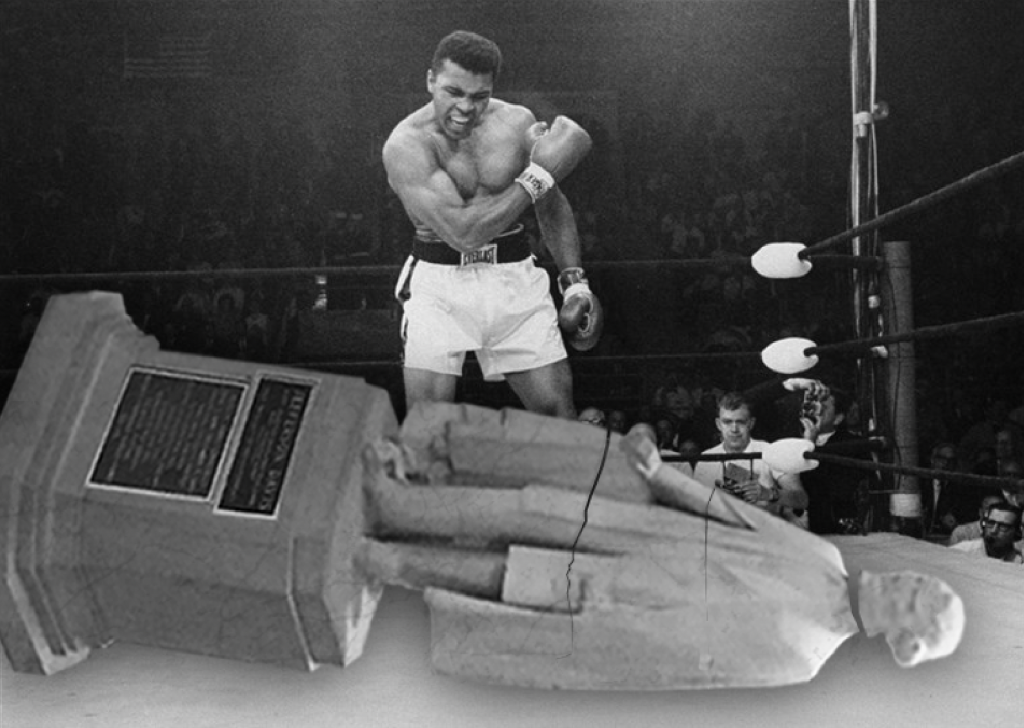
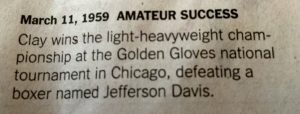
Please sign the petition below to remove the statue of Jefferson Davis currently in Kentucky’s Capitol Rotunda, and replace it with a tribute to Muhammad Ali, “the Louisville Lip” and “the Greatest of All Time.”
I just heard from the Ali family: It is the Champ’s belief that Islam prohibits three-dimensional representations of living Muslims. Accordingly, I have adjusted the petition to call for a two-dimensional representation of Ali (a portrait, picture or mural) in lieu of a statue.
UPDATE (Tuesday, December 2, 2014)
In this interview with WHAS-TV’s Joe Arnold, Governor Steve Beshear endorses the idea of honoring Muhammad Ali in the State Capitol (although he disagrees with removing Davis). Arnold explores the idea further on his weekly show, “The Powers that Be.”
Click here to check out WDRB-TV’s Lawrence Smith’s coverage of the story.
And here’s my op-ed in Ali’s hometown paper, the Louisville Courier-Journal.
UPDATE (Saturday, June 4, 2016)
In the wake of the 2015 Charlestown tragedy, in which a Confederate flag-waving murderer united the nation against racism, all of the most powerful Kentucky policymakers — U.S. Senator Mitch McConnell, Governor Matt Bevin, Senate President Robert Stivers and House Speaker Greg Stumbo — called for the removal of the Davis statue from the Rotunda. Today, as we commemorate last night’s passing of Muhammad Ali, there is no better moment to replace the symbol of Kentucky’s worst era with a tribute to The Greatest of All Time.
UPDATE (Wednesday, June 8, 2016):
Great piece by Lawrence Smith of WDRB-TV in Louisville on the petition drive to replace Jefferson Davis’ statue in the Capitol Rotunda with a tribute to Muhammad Ali.
UPDATE (Thursday, June 9, 2016):
Excellent piece on the petition drive by Jack Brammer that was featured on the front page of the Lexington Herald-Leader.
Highlight of the article:
Miller said he has received a few “angry comments” on his call to honor Ali.
“One of them encouraged me to kill myself,” he said. “You can quote me that I have decided not to take their advice.”
UPDATE (Friday, June 10, 2016)
The petition drives continues to show the Big Mo(hammed): check out these stories from WKYU-FM public radio in Bowling Green and WKYT-TV, Channel 27 in Lexington:
UPDATE (Saturday, June 11, 2016):
Still not convinced? Check out this excerpt from today’s New York Times:
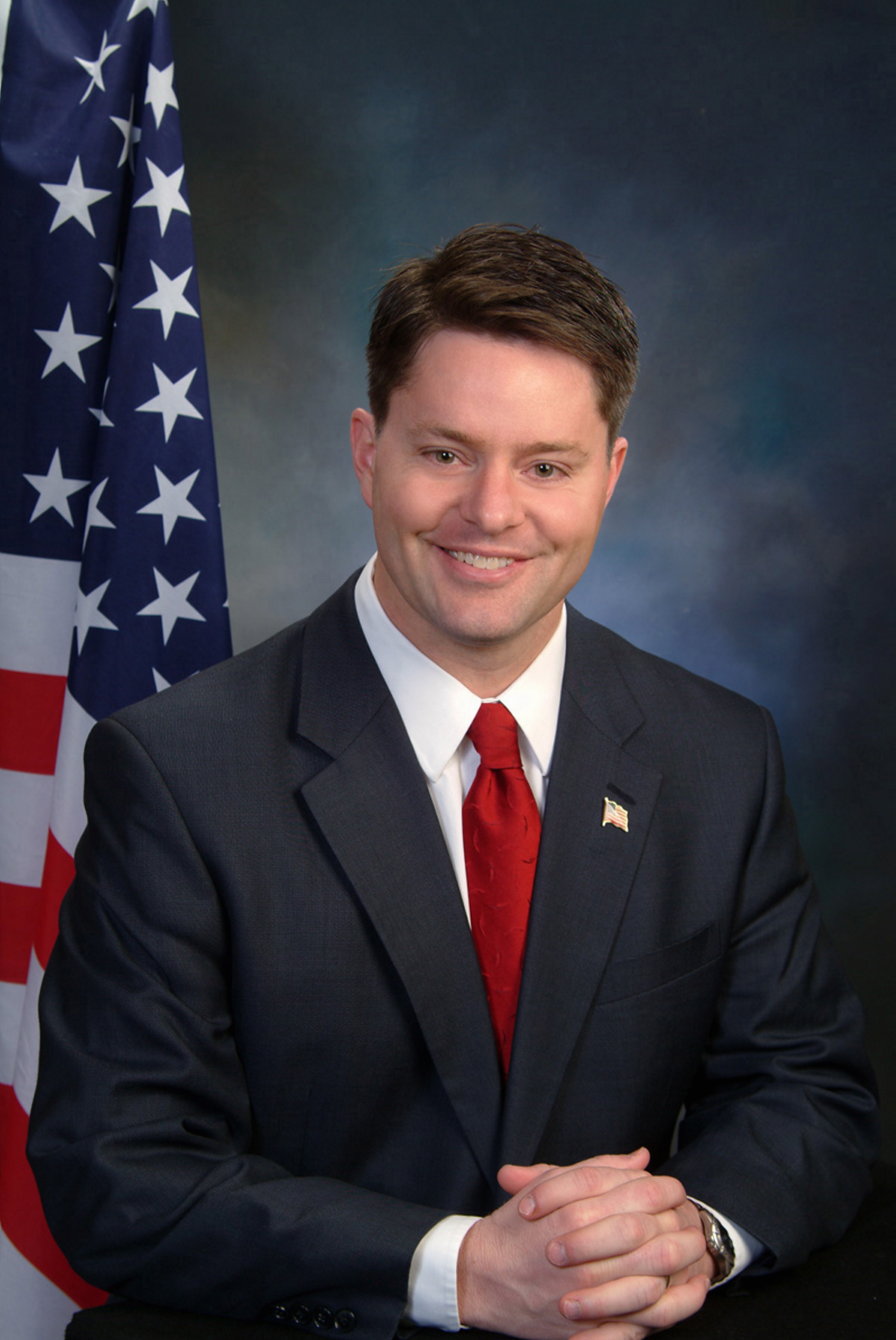
Jason Atkinson makes a powerful indictment of legalized medicinal marijuana from his unique vantage point as a legislator in a state (Oregon) that has gone this route.
I couldn’t agree more. As I argued in my initial post, legalizing medical marijuana is a half-measure that while well-intention creates some enormous complications for law enforcement and extraordinary challenges for physicians. That’s why in another state that has legalized medicinal marijuana, the California Medical Association has urged its legislature to move to full legalization.
This illustrates one of the key lessons I’ve learned from the sausage-making factory that is lawmaking. The middle-of-the-road approach that might test best in the polls can often have unintended consequences that create a situation that is worse than the original status quo. Jason vividly illustrates the consequences that Albert Camus spoke of when he said, “good intentions may do as much harm as malevolence if they lack understanding.”
Where I disagree with Jason is in his conclusion that the problems associated with medicinal marijuana suggest that full legalization would fail as well. Indeed, the horrible developments Jason outlines — “patients” gaming the system; medical cards being counterfeited; local law enforcement overwhelmed with violations; drug cartels moving in to handle the illegal traffic — all would be mitigated by full legalization.
If we implement a fully-legal, strictly-regulated domestic marijuana industry, we eliminate all of the crimes and frauds associated with trying to get around the proofs of medical need. No system will be perfect, and we will never be able to eliminate illegal activity. But the folks who fear legalization the most are the mobs and cartels who are getting rich as long as the drug remains legal. That’s the most important lesson the country learned in the Prohibition Era.
Jason does raise one concern that gnaws at me — the notion that marijuana is a gateway drug, a slippery slope to the use of harder drugs which I strongly agree must remain illegal. I’ve spoken to addicts too, and some suggest that the transition from pot to cocaine was made smoother by the fact that both were illegal — if I can handle one illegal drug, I can handle all. Under that reasoning, if we legalize cannabis, the connection is eliminated.
I concede I could be wrong about the gateway issue, and I would love to see some scientific evidence on the issue. But regardless, I still believe the equities fall in favor of legalizing the drug.
Pot is already legal, or at least hard to enforce beyond medical cardholders, in Oregon. I used to joke in my state camouflaged PVC pipe was sold in local hardware stores. (For those of you who don’t watch “Moonshiners” camo PVC is harder to see from the air.) Sadly though, when the voter’s legalized marijuana has almost become more than jokes.
Massive greenhouses have popped up across the landscape like a teenagers first outbreak of acne. What is not seen everyday is the hundreds of plants being grown with a single marijuana medical card or the thousands of plants being grown illegally by the cartels in the forests.
I understand the arguments from pain-management and from the economics of cutting the profit motive out, however those positions are too narrow for the reality of the modern herb industry:
Marijuana is a gateway drug. Ask anyone in recovery.
People on drugs, legal or illegal, should not be driving. From the highway to a forklift: Society pays the price.
Medical cards are easier to get than fake ids. The ease of getting medical cards is the biggest problem and the hardest to get under control.
People with grow cards can grow anywhere.
Mexican drug cartels are using the illegal system to grow and distribute. (Do you think the cartel’s care about your Grandma’s glaucoma? Me neither.)
My local Sherriff does not have jurisdiction, or the manpower to even cruse the legal grow sites, let alone the illegal ones seen from air. Moreover, local law enforcement has no idea when they check on a complaint if they are walking into drug-induced hostility. DEA is trying to crack down, however every instance of a pot bust is with someone who has a card. Citizens call me daily complaining about the rental house in their neighborhood being used as a grow site and distribution.
Every one of these issues we’ve tried to change the law, but to not avail. The pot lobby is strong, well funded, and makes an emotional case for chronic pain. If it were only limited to chronic pain, needing a doctors prescription and manufactured like the drug that it is.
Look man, the Dude Abided- without a card. Lenny Kravitz confessed to Piers Morgan last month he walked around in “wall of fuzz” before he took action to get off the stuff. True the cat is out of the bag. Governments on the left coast need to step in.
However, I am hard pressed to call it a moral choice when the societal consequences are so overwhelming. This debate is akin to state’s getting into, then addicted to gambling. When morality comes crashing in that gambling hurts the poor, government’s answer is “gambling addiction help awareness TV commercials” paid for by lottery revenues.
By Jonathan Miller, on Tue Jan 17, 2012 at 8:30 AM ET
Last week, we began a new tradition at The Recovering Politician: a great virtual debate among our recovering politicians; with provocations, rebuttals, responses, and defenses. This week, we ramped up the controversy level by tackling a highly explosive topic: legalizing marijuana. The RP starts off with his provocative article arguing the moral case for legalized cannabis. Tune in every half hour to read what other RPs have to say.
SPOILER ALERT: There will be fireworks.
This week, the contributing RPs take on The RP’s recent controversial call for legalizing marijuana in The Huffington Post. (As well as a Kentucky-centric version dedicated to Gatewood Galbraith, published in the Lexington Herald-Leader).
While a recent Gallup poll revealed that a majority of Americans support legalizing marijuana, and Ron Paul — a proponent — has run well in the early GOP presidential primaries, most mainstream politicians still refuse to touch the subject, and many journalists continue to refer to legalization as a “radical” position.
It’s no wonder. The loudest voices for reform usually come from the political margins: the “hippie” Far Left and the libertarian Far Right. And while emanating from different directions, the two extremes share a similar credo: An out-of-control government has no business telling me what I can ingest.
A politically-influential cross-section of Americans, however, disagree. Many associate pot advocacy with the “anything goes” counter-culture of the 1970s that they blame for the decline of personal responsibility. Others worry that the logical extension of the philosophy could lead to legalizing “harder” drugs, prostitution, even polygamy. All of them — liberals, moderates, and conservatives — believe that there must be some moral standards established to guide public policy.
I’m part of that moral majority. But unlike Jerry Falwell’s version, my values system is based on the multi-religious mandate to “love your neighbor as yourself.” I’ve even written a book, The Compassionate Community, which applies Bible lessons and other religions’ texts to advocate for progressive policies that promote the common good.
And I’ve recently concluded that these same enduring moral values compel me to support legalizing marijuana.
Read the rest of… The RPs Debate Legalizing Marijuana: The RP Provokes
By John Y. Brown III, on Mon Jan 16, 2012 at 2:00 PM ET
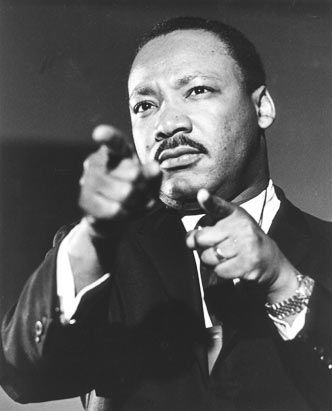
Martin Luther King, Jr in his own words.
Historic words that changed a nation and defined an movement one afternoon not too many years ago. Words were MLK Jr’s weaponry.
He proved that the pen can indeed sometimes be mightier than the sword (or gun, or burning cross or fire hose, as the case may be). But only if the words are borne of conviction, selected masterfully, and used in the service of a calling.
Which brings me to my oddest but personally important lessons from MLK Jr.
Years ago when I was in college I read somewhere that MLK Jr used to be caught reading the dictionary. He loved words…and saw early on the power and force verbal persuasion can have on a nation.
It encouraged me to “read” my dictionary. My old college Merriam-Webster dictionary, by the time I finished college, was the one book in my library that left no doubt that the owner had gotten his money’s worth.
Read the rest of… John Y’s Musings from the Middle: What King Taught Me About Words
By Michael Steele, on Mon Jan 16, 2012 at 1:30 PM ET
The importance of Dr. King’s contributions cannot be over-stated or diminished by the lapse of time. His fight for the freedom, equality, and dignity of all races and peoples remains as important today as it was on April 4, 1968, the day he was killed.
So, as we reflect on this man of history, I hope we appreciate Dr. King’s courage, vision, strength, humanity, but most importantly, his perseverance.
Dr. King’s perseverance transformed him; it made him not just a legendary leader, it signals to us in these times the challenge remains to “take up the cause of freedom”.
Perseverance enabled Dr. King not only to achieve success, but to achieve his dream; a that dream that draws us even today; a dream that embodied the civil rights movement but importantly, a dream that created a legacy for future generations;
Dr. King’s efforts helped close a chapter in America’s history, a chapter which chronicled the burden of slavery and institutionalized discrimination. A chapter which imprinted segregated public accommodations and schools on the very soul of African American life.
A chapter in which the foundation of America—freedom and equality—was rocked by water hoses, police dogs and racism.
However, Dr. King also knew that this movement towards civil rights would open a new chapter for America—a chapter we are still writing today; a chapter steeped in hope, opportunity and true equality.
But, for many this new chapter, which reflects America’s journey from slavery to emancipation; from Jim Crow to affirmative action also, belies an accomplished agenda.
The illiterate, the suffering, the addicted, the homeless—they demand more from our generation than nice words or one more government program.
What they demand, and what you and I must provide is an opportunity to heal and to teach, to turn dreams into reality and hope into action for the kid growing up on the streets instead of in a home; for the family struggling to make ends meet; for the teacher mired in paperwork while her students are mired in a failing school.
Thurgood Marshall once said, that “none of us has gotten where we are solely by pulling ourselves up from our bootstraps. We got here because somebody bent down and helped us.”
Read the rest of… Michael Steele: Dr. King’s Perseverance
By John Y. Brown III, on Mon Jan 16, 2012 at 12:30 PM ET
What has been our greatest act honoring MLK?
A fair question to ask ourselves today.
In 1984, I had the privilege of studying abroad with a group of 500 other students. We spent 4 days and 3 nights in Capetown, South Africa. Nelson Mandela, an anti-Apartheid activist, was in prison and we were taught that he’d surely die there.
Apartheid policy, South Africa’s legal segregation, ensured that the 20% of the population that was white would keep the 80% that were non-white in subjugation.
But that didn’t happen. Apartheid was on a collision course with history. Nelson Mandela not only left prison but in 1994 was elected the first black president of South Africa.
But in 1984 things were very different. Of the 500 students in the program only 4 visited a “Township,” an impoverished urban area where non-white workers were housed.
I was one of them….and encouraged the other three to join me in a taxi ride through a nearby Township. I wasn’t being a martyr. I was mostly curious. My heart went out to the non-whites in South Africa who weren’t allowed to walk on city streets after midnight.
I had given half my cheeseburger the night before to a black man who asked for it–but wasn’t allowed in the diner at that time of night. I felt like I’d traveled back in time 20 years….but wanted mostly to understand.
The cab driver drove us through the Township offering commentary about how the men were bused in from hours away and would stay for several weeks at a time. The scraps from cows (tongue, nose, unwanted parts) were sold on the streets as flies were swatted away unsuccessfully.
I brought a book by MLK with me that day–a collection of his thoughts and quotes. I’m not sure why. Before leaving the Township, I asked the cab driver to slow down. Several men looked inside the cab curious about the 4 young white boys inside. I rolled down the window and handed one the MLK book on civil disobedience and waved good-bye.
The cab driver warned me that was dangerous to do and I shouldn’t have done that. He was an Africaaner. A race with slightly more rights than blacks but still significantly inferior rights to whites.
I doubt the book ever got read becoming a source of inspiration. Who knows? But I’m proud of my act….not really a brave act but a small but caring act showing I was engaged…..and in response to a system we all knew was untenable.
I was not rebelling or meddling where I shouldn’t. I was trying in some very small and almost insignificant way to help —that was personal to me. Of course, the book I gave didn’t matter in the scheme of things….but mattered to me. It was something I could do at that moment. And I did it. And 27 years later, it stands out to me as the personal act that most honored MLK. A great man we honor today.
By Jonathan Miller, on Mon Jan 16, 2012 at 12:00 PM ET
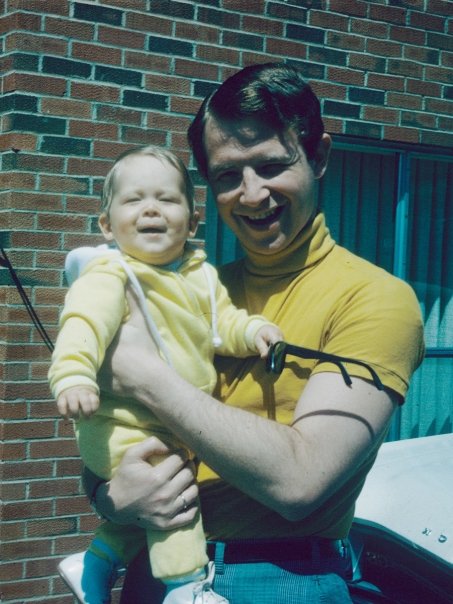
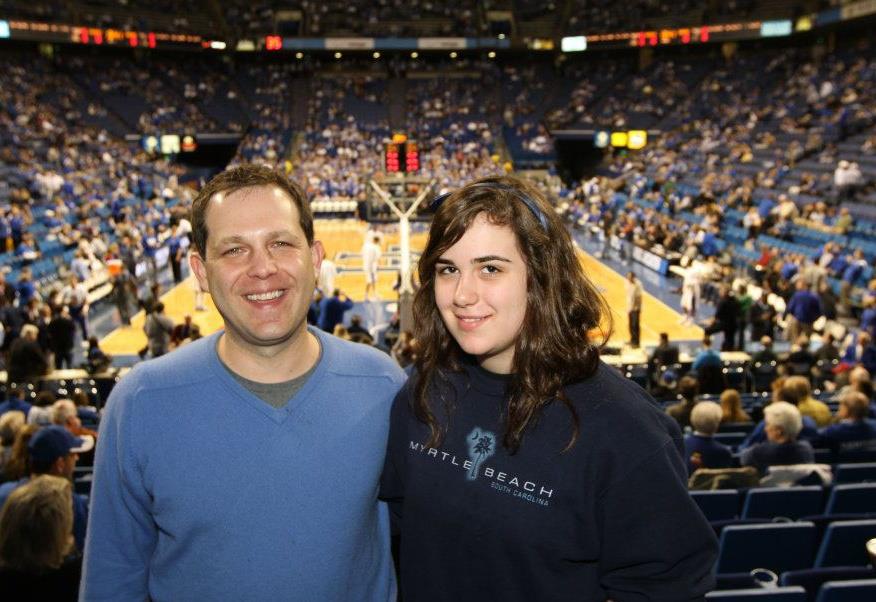
My dad and I circa 1968
On this day of celebration of the life of Martin Luther King, Jr., we re-run this piece — in which the RP honored King, his father, and contributing RP Kathleen Kennedy Townsend’s father — that first appeared at The Recovering Politician on April 4, 2011.
Today — as on every April 4 — as the nation commemorates the anniversary of one of the worst days in our history; as some of us celebrate the anniversary of the greatest speech of the 20th Century; my mind is on my father. And my memory focuses on a winter day in the mid 1970s, sitting shotgun in his tiny, tinny, navy blue Pinto.
I can still remember my father’s smile that day.
He didn’t smile that often. His usual expression was somber, serious—squinting toward some imperceptible horizon. He was famously perpetually lost in thought: an all-consuming inner debate, an hourly wrestling match between intellect and emotion. When he did occasion a smile, it was almost always of the taut, pursed “Nice to see you” variety.
But on occasion, his lips would part wide, his green eyes would dance in an energetic mix of chutzpah and child-like glee. Usually, it was because of something my sister or I had said or done.
But this day, this was a smile of self-contented pride. Through the smoky haze of my breath floating in the cold, dense air, I could see my father beaming from the driver’s seat, pointing at the AM radio, whispering words of deep satisfaction with a slow and steady nod of his head and that unfamiliar wide-open smile: “That’s my line…Yep, I wrote that one too…They’re using all my best ones.”
He preempted my typically hyper-curious question-and-answer session with a way-out-of-character boast: The new mayor had asked him—my dad!—to help pen his first, inaugural address. And my hero had drafted all of the lines that the radio was replaying.
This was about the time when our father-son chats had drifted from the Reds and the Wildcats to politics and doing what was right. My dad was never going to run for office. Perhaps he knew that a liberal Jew couldn’t get elected dogcatcher in 1970s Kentucky. But I think it was more because he was less interested in the performance of politics than in its preparation. Just as Degas focused on his dancers before and after they went on stage—the stretching, the yawning, the meditation—my father loved to study, and better yet, help prepare, the ingredients of a masterful political oration: A fistful of prose; a pinch of poetry; a smidgen of hyperbole; a dollop of humor; a dash of grace. When properly mixed, such words could propel a campaign, lance an enemy, or best yet, inspire a public to wrest itself from apathetic lethargy and change the world.
Now, for the first time, I realized that my father was in the middle of the action. And I was so damn proud.
– – –
Click above to watch my eulogy for my father
My dad’s passion for words struck me most clearly when I prepared his eulogy. For the past two years of his illness, I’d finally become acquainted with the real Robert Miller, stripped down of the mythology, taken off my childhood pedestal. And I was able to love the real human being more genuinely than ever before. The eulogy would be my final payment in return for his decades of one-sided devotion: Using the craft he had lovingly and laboriously helped me develop, I would weave prose and poetry, the Bible and Shakespeare, anecdotes and memories, to honor my fallen hero. In his final weeks of consciousness, he turned down my offer to share the speech with him. I will never know whether that was due to his refusal to acknowledge the inevitable, or his final act of passing the torch: The student was now the author.
While the final draft reflected many varied influences, ranging from the Rabbis to the Boss (Springsteen), the words were my own. Except for one passage in which I quoted my father’s favorite memorial tribute: read by Senator Edward Kennedy at his brother, Robert’s funeral:
My brother need not be idealized, or enlarged in death beyond what he was in life, to be remembered simply as a good and decent man, who saw wrong and tried to right it, saw suffering and tried to heal it, saw war and tried to stop it.
Read the rest of… The RP: My Father, King, RFK & The Greatest Speech of the 20th Century
Our most popular writer, hands down, has been contributing RP and former Missouri State Senator Jeff Smith. Jeff’s first piece — the story of his rise into national celebrity, his dramatic fall that resulted in a prison term, and his hopes for redemption — put the RP on the national map, earning recognition from New York magazine’s “Approval Matrix.” Jeff’s followup — about love and sex behind bars — drew in nearly 100,000 readers, literally crashing the Web site. Jeff’s become a national sensation — expect much more from him in 2012.
Contributing RPMichael Steele was already a national sensation before he joined the site — you know him as the former Lt. Governor of Maryland, as well as the Chairman of the Republican National Committee. Now a regular contributor to MSNBC, Michael shared with RP readers his vision of the new American Dream, and assessed both President Barack Obama and Supreme Court Justice Clarence Thomas. Over the next few days, Michael will report from the Iowa caucuses; and in the year ahead, he will share his lively take on politics — and other subjects as well.
Another familiar face at the site in 2011 was another former Lt. Governor of Maryland, contributing RPKathleen Kennedy Townsend. Kathleen elucidated her well-versed take on faith and politics, while slamming a then-ascendant Rick Perry for misusing faith, defended Sarah Palin(!), and shared her unique perspective as a member of the nation’s most iconic political family. Her most popular piece was on, of all things, home births. Expect the same kind of wide variety from Kathleen at The RP in the coming months.
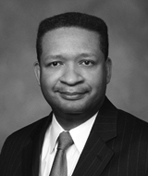
One of the RP’s most prolific contributing RPs was former Alabama Congressman Artur Davis. Artur wrote a fascinating, insightful piece about political authenticity, plunged into the centuries-old debate on race and politics, and explored the Democratic Party’s faith gap. Some of his most popular pieces were book reviews, taking on new works about Harry Truman and Bobby Kennedy. Artur’s not been shy about controversy, angering conservatives by attacking his home state’s “ugly” immigration law, and riling liberals by supporting its new Voter ID law. Don’t expect Artur to pull any punches in 2012.
Contributing RP and former Missouri state House Speaker Rod Jetton is also one who is not a stranger to controversy. At the peak of his power, Rod was charged with ethics and criminal violations, and while he was cleared of everything, he stepped down to begin his second act. Rod’s 3-part series about his “Success, Scandal and Change” was one of the site’s most widely read, and he concluded the year with a touching 4-part series on his best friend, a fallen Marine. In the middle, he showed off a wry sense of humor in a video interview with his unlikely pal, contributing RP Jeff Smith (you have to see Rod’s imitation of Jeff).
Jason Atkinson, an Oregon State Senator and contributing RP, underwent a different kind of political recovery — he had to withdraw from a promising gubernatorial campaign after he accidentally shot himself while hunting. He writes about the experience — with graphic charts — in “A Real Political Recovery,” but also created an Internet sensation with short films he directed on more successful outdoor adventures fishing for trout in “Big Mo” and “Half Pounder.” He also showed off his own wicked sense of humor, imitating Abe Lincoln and citing the wisdom of Homer…Simpson that is.
Our newest contributing RP, former Virginia Congressional Democratic nominee Krystal Ball, has already generated considerable reader interest with her first piece about Why We Need More Women in Politics. Krystal should know; her first campaign for office was interrupted by a ridiculous media inquiry into pictures taken of her in college; PG-13 pictures that caused a mini-national-sensation only because of Krystal’s gender. As a regular contributor to MSNBC and here at The RP, Krystal will help us view politics in a much different way.
Finally, I feel very fortunate — and so is the RP Nation — to have convinced my good friend, contributing RP, and former Kentucky Secretary of State, John Y. Brown, III to share his incisive social and political commentary, along with his uproarious sense of humor, at The RP. John Y. helped set the theme and tone of the site with his early piece, “What Do We Do Now?,” in which he offered a 20-question quiz to help readers determine if they were in need of political recovery. More recently, we’ve launched a regular feature, John Y.’s Musings from the Middle, in which he shares his wit and wisdom on topics varying from fruitcake to the death penalty to Lindsay Lohan. We guarantee a lot of laughs, as well as thoughtful advice, in the year ahead.
Last week, we introduced a new tradition here at The Recovering Politician: The RP Debates, featuring our contributing recovering politicians — coming from all sides of the partisan and ideological spectrum — duke it out over a controversial issue. Last Monday’s battle addresses contributing RP (and former Kentucky Secretary of State) John Y. Brown, III’s provocative views on presidential leadership and the 2012 campaign. Click here to find links to all of the debate posts.
Tomorrow, the RPs will take on The RP’s controversial piece that he published in The Huffington Post, “The Moral Case for Legalizing Marijuana” (A Kentucky-centric version, “Gatewood Was Right” appeared over the weekend in the Lexington Herald-Leader.)


 Blog this!