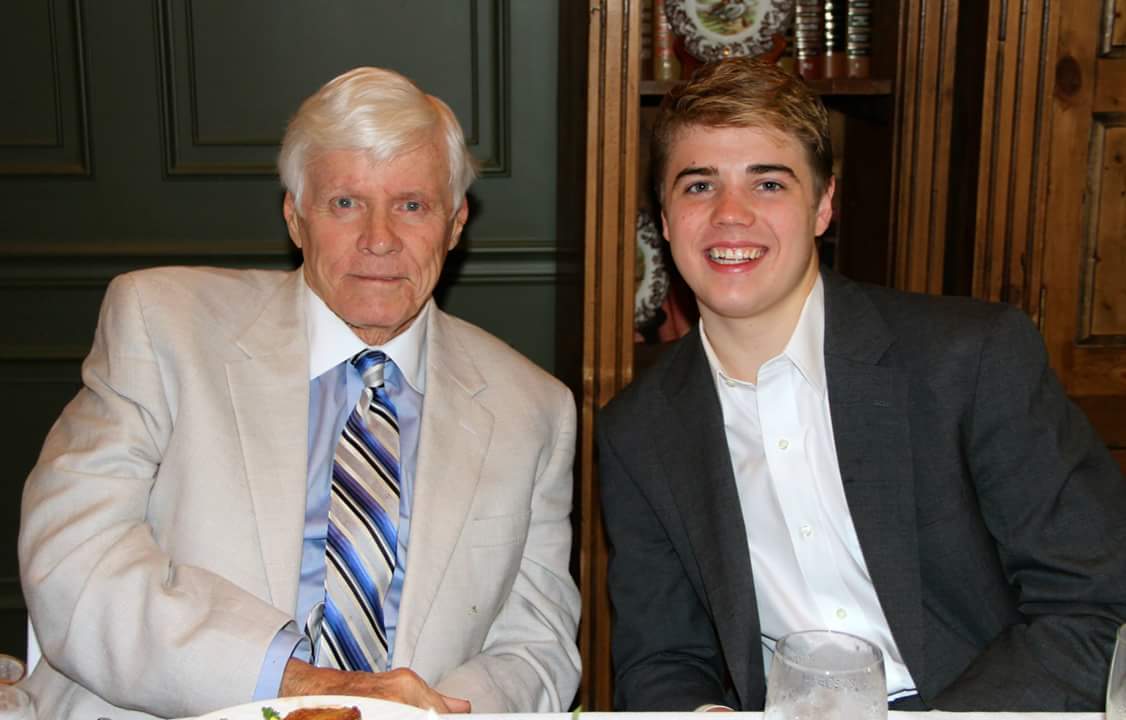
By John Y. Brown IV, on Sat May 16, 2015 at 11:33 AM ET 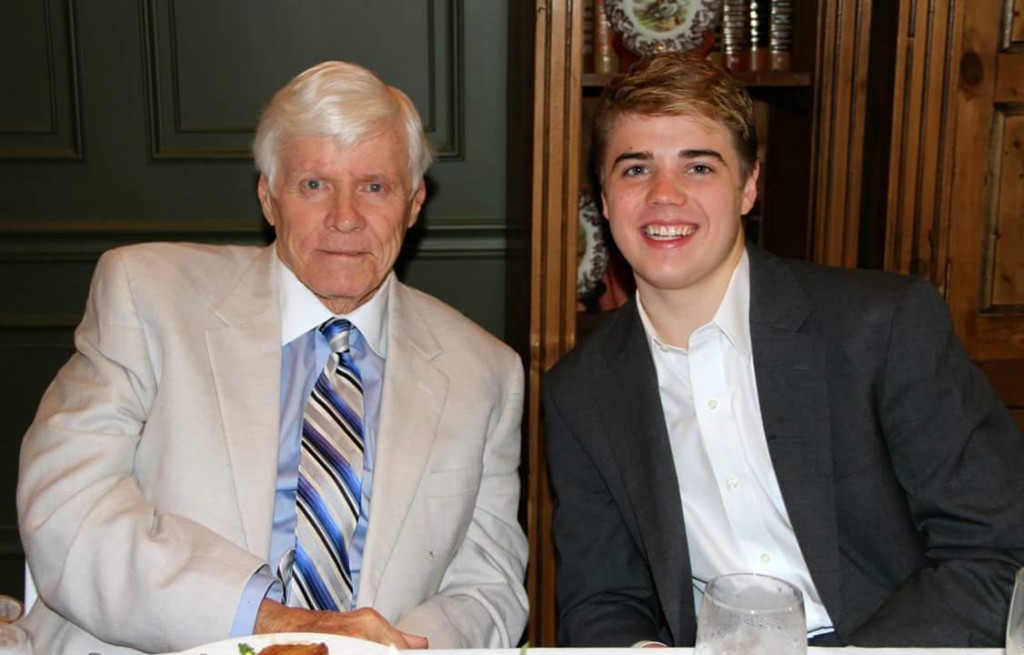 Less than a week from today, Kentucky Republicans, such as myself, will choose our next nominee for the Governor of our commonwealth. The choice we make will have major implications for the future of Kentucky. For 60 of the past 68 years, a Democrat has occupied the Governor’s Mansion. One of those Democrats was my own grandfather and namesake, who was governor in the early 1980s. Less than a week from today, Kentucky Republicans, such as myself, will choose our next nominee for the Governor of our commonwealth. The choice we make will have major implications for the future of Kentucky. For 60 of the past 68 years, a Democrat has occupied the Governor’s Mansion. One of those Democrats was my own grandfather and namesake, who was governor in the early 1980s.
Times have changed, however. The Democratic Party has moved far to the left, a development that led me to join the Republican Party. Our nation is deep in debt. Our own state is among the bottom 5 in terms of credit rating. The most recent monthly jobs report showed a loss in private sector jobs in Kentucky. Years of Democratic leadership have clearly failed our state.
We are in dire need of bold conservative leadership on the state level. I have come to the simple conclusion that the candidates best suited to win the general election and move our state in a bold, conservative direction are James Comer and Chris McDaniel.
In order to get the kind of bold conservative reform Kentucky needs, we must first win the general election against likely Democrat nominee, Jack Conway. The most recent polling has all of the Republican candidates except for James Comer down double digits against Jack Conway in a general election match up. Comer, on the other hand, is within the margin of error. We also know that in 2011, when both Jack Conway and James Comer were on the statewide ballot, Comer got 70,000 more votes than Conway. This was a year in which Democrats won every other statewide election. James Comer was the only Republican to win statewide, and he won with over 63% of the vote.
It’s also of great importance that whoever wins the nomination is able to successfully execute a conservative vision when elected. James Comer also has a record of success in this respect. When James Comer first was elected as Commissioner of Agriculture, in 2011, the office was mired in waste and corruption. Commissioner Comer immediately began reforming the office and restored transparency and fiscal sanity. For his success, the Bluegrass Institute gave him an award for restoring transparency in government. He was even able to return $1.65 million dollars to the treasury. The only earmark funding ever returned by a constitutional officer.
I had the privilege of personally getting to know Commissioner Comer. To say I have great respect for him would be an understatement. He is a man of incredible integrity and a strong commitment to bettering Kentucky. Along with his wife TJ and their three children, the Comer family stands for everything that is good about Kentucky.
I am very proud to support James Comer and Chris McDaniel for Governor and Lieutenant Governor. Their candidacy is simply unmatched in terms of personal integrity, achievements, and vision. Nominating Comer and McDaniel would be the next step towards a better Kentucky.
By Greg Harris, on Wed Mar 25, 2015 at 10:00 AM ET 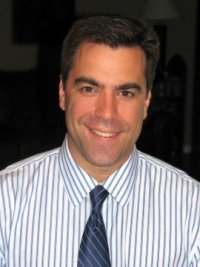 Speculation about a Kasich presidential run is still very much alive and well, and deservedly so. By any objective measure, Ohio’s economic situation has improved greatly under his leadership, which was affirmed in his landslide re-election. Kasich has emerged as somewhat a maverick at a time when other presidential contenders are sounding very much alike in making appeals to a small base of the Republican party (with some exception for Jeb Bush and Sen. Rand Paul). Speculation about a Kasich presidential run is still very much alive and well, and deservedly so. By any objective measure, Ohio’s economic situation has improved greatly under his leadership, which was affirmed in his landslide re-election. Kasich has emerged as somewhat a maverick at a time when other presidential contenders are sounding very much alike in making appeals to a small base of the Republican party (with some exception for Jeb Bush and Sen. Rand Paul).
Governor Kasich stands out for a track record that no other contender can offer: a track record of effectiveness at the state and federal level. While many presidential hopefuls spout the need to cut spending and shrink government, Kasich actually led Congressional efforts to accomplish a balanced budget while in Congress. And Ohio’s economic recovery outshines that of Wisconsin, the home state of current frontrunner, Governor Scott Walker.
As a fulltime Governor, Kasich cannot camp out in Iowa. But he can distinguish himself from other candidates by tapping his inner-wonk and letting it shine. He would quickly distinguish himself by releasing a specified plan on exactly how he would balance the budget, which would quickly make the rhetoric of other challengers—lacking specifics—sound empty. Furthermore, Kasich can espouse at the national level what he is trying to do at the state level: convert from taxing income to taxing consumption.
A Kasich candidacy could spark a more deliberate policy discussion on tax reform. As I asked previously in the RP, does the income tax complement the American entrepreneurial spirit, or serve as its harness? Perhaps a national sales tax instead of income tax is more in line with the American experiment? Exempting the first $10,000 in worker earnings from payroll tax (FICA) could offset the regressive nature of a sales tax. The message of doing away with the IRS would certainly have appeal to Republican primary voters.
Policies that encourage savings, a real individual-level valuing of goods, and genuine control over what you earn and how you spend what you earn, should be part of some new reckoning with an economy that is ever changing. It also addresses hundreds of billions in uncollected taxes, and would not exempt the very rich if applied to financial transactions and capital gains.
More exciting still, such tax reform would have a strong cleansing effect on democratic institutions hijacked by powerful interests that currently manipulate the tax code to the advantage of elites that pay for their services—you know, the very institutions that were formed to give power to the people.
Kasich is currently fighting to return some of the money to Ohioans from the natural resources on which energy interests’ profit. A carbon tax on energy interests that likewise profit off our land could be used to reduce personal and corporate income tax rates, while incenting industries to reduce their carbon footprint.
A Governor Kasich presidential platform could be built on re-empowering the individual in an otherwise consumption-driven nation while bettering our economic and environmental well-being.
While the Governor wouldn’t capture the bank of big donors initially, his platform of substance would ride a wave of earned media and capture the imagination of much of the primary electorate by offering specifics where others only produce rhetoric. He would emerge as a reformer with results and a compassionate conservative in one.
In the process, Kasich would revive the long dormant Teddy Roosevelt wing of the Republican Party that is decidedly not in the pocket of special interests, and that cares about a clean environment and clean government. In so doing, he would appeal to a silent middle that does not currently have a home in the two-party system.
By John Y. Brown III, on Thu Dec 4, 2014 at 10:00 AM ET 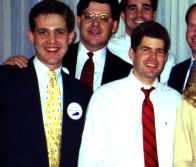 Miller, Hale and Brown in 1995 25 years ago this fall, I found myself shoveling books in and out of a law school locker next to a tall, clean-cut young man who was soft spoken and kind yet also very thoughtful and keenly intelligent.
We became easy friends and enjoyed each others company through our law school years. We went out weekends with our wives and served together as summer associates at Brown, Todd and Heyburn (now Frost, Brown, Todd). By the end of our legal education I counted David Hale as one of my closest friends in life.
A few years after that, David was my closest advisors in my effort to run for Secretary of State. When my campaign seemed in trouble, David intervened. He introduced me to his dear friend, a Harvard College and Harvard Law grad named Jonathan Miller. The two men single handedly managed my campaign, wrote my commercials, and David even used the backyard of his parent’s house (and his father’s office inside) to film my commercials. I was 31 and David and Jonathan were in their late 20s. We had a lot of pluck and energy and had no real idea what we were doing —but had the youthful exuberance that led us to believe we could do it successfully anyway. And we were right.
David continued to be a dear friend and advisor ever since. We became neighbors for many years and in times of personal self-doubt or spiritual upheaval, David Hale was always there…always offering to be helpful and give his time and thoughtful and caring insights. But perhaps most importantly, to always listen. David listens better than about anyone I’ve ever known. And has the rare gift of being a person who has never heard a stupid or silly question. I remember pulling David aside in my mid 30’s one day after we had lunch and asking embarrassingly, “What exactly is the Holy Spirit? I think it is something I’ve felt before but didn’t know there was an actual term for it.” David explained it to me calmly and matter-of-factly without ever wincing — just like I had asked him directions to the nearest convenient store.
David’s priorities have never wavered. When he wasn’t at work, he seemed to be involved at his church or doing something with is family. And if he wasn’t doing any of those things, he was reading some meaty book or talking to a close friend about history, law, politics or religion.
In the 25 years I have known David he has never spoken a curse word or shared an off-color joke. At least not in my presence. It’s kinda maddening, to tell you the truth. And forces me to reign in my own salty language and penchant for occasional coarse humor when in private. This side of David may be maddening to me. But it also makes me a better person. David has that affect on people. Most remarkably of all, you never feel like David is judging you or feeling holier than thou. You just get the sense that you are with a good friend, no better and no worse, but who is perhaps trying a little harder than you to be a little bit better person that day.
David is a devoted father and husband who pays attention to the big things in life. But he also tends to the smaller details. I remember several times walking or driving by David’s house and seeing him pulling up “crab grass.” He explained to me what it was and why it had to be yanked out— but I never paid close attention because I never wanted to feel compelled to comb through my yard pulling out irritating weeds. I never said it to David but thought to myself, “Hell, I can’t tell the difference between crabgrass and real grass…why don’t you just leave it and pretend it all blends together?” And I didn’t say it, of course, because David would never do that.
David sees the big picture about as well as anyone I know. He stays focused on the main point of the main thing and for the main reasons in every matter. But he also deals with the details just as deftly — and prunes away the extraneous crabgrass as he mentally mows through a complicated concept or situation he is analyzing — whether in his personal or professional life. And when he is finished explaining to you why he has decided whatever conclusion he has come to, you feel grateful David has so thoughtfully simplified and clarified such a complex and thorny situation for you. And pointed you in the right direction.
And the same traits that have helped make David Hale such a great friend to so many and a model person I look up to so admiringly, are many of the same traits that will help make him a great federal judge, just as he has served so honorably as our U.S Attorney in recent years.
It’s a cliche to say when something good happens to someone that it “Couldn’t have happened to a better guy.” Except in that rare instance when it is not a cliche. And such is the case with David J Hale’s appointment today, by a unanimous U.S Senate vote, to make him our new federal court judge for the Western District of Kentucky.
And we are all fortunate to have David in this role overseeing the proper dispensation of justice –where he is sure to be as good and decent and thoughtful a federal judge as he is a good and decent and thoughtful person.
By Will Meyerhofer, on Wed Aug 27, 2014 at 1:30 PM ET  If law students are annoying, then pre-law students are twice as annoying. There’s something about observing these lemmings scrabble their way into the maws of ruthless law schools, despite dire warnings and appeals to common sense, that just…gets under my skin. If law students are annoying, then pre-law students are twice as annoying. There’s something about observing these lemmings scrabble their way into the maws of ruthless law schools, despite dire warnings and appeals to common sense, that just…gets under my skin.
Even after so much effort has been expended for their benefit – i.e., which part of “Way Worse Than Being a Dentist” didn’t you understand? – these piteous creatures patiently queue up for their punishment, hungry to “learn to think like a lawyer.” If your resolve weakens, and pity prevails over contempt, you might mistakenly engage one in conversation. For your trouble, you’ll receive an earful of a clueless pipsqueak’s master plan to save the world. Because – you hadn’t heard? – that’s why he’s going to law school: The betterment of humanity.
Because that’s what the world so desperately needs: Another lawyer.
Somehow or other, these automata get it into their programming that, if they actually did want to save the world, becoming a lawyer would be a sensible way to do it. They are unaware of how imbecilic their words sound to anyone not entirely befuddled by the miasma of law school propaganda.
Law schools inundate proto-lawyers with ‘lawyers save the world’ nonsense, cramming their crania with musty tales of Brown v Board of Ed. That’s because the schools are well aware of the likely effect of such indoctrination: Greasing the rails to the killing floor. If a kid can tell himself he’s going to “change the world” – as opposed to, say, “make a lot of money and feel like a big deal” – then he’ll line up that extra bit more smugly for the $160k/year that makes his eyes roll up into his head and a little string of drool form at the corner of his mouth.
It’s simple: If you can tell yourself you’re doing it for the good of humankind, you won’t feel so guilty selling out in the most soulless, stereotypical way imaginable.
You know the vast majority of law students will end up deeply in debt and unemployed. We all know that. But before that happens, the sorry little shlemiels honest-to-god tell themselves they’re going to save the world.
The problem is lawyers very seldom do change the world, at least for the better. The bulk of significant positive change that the world experiences at any given moment – surprise! – doesn’t derive from the actions of lawyers. It derives from the actions of non-lawyers, or, at very least, lawyers acting in non-lawyer-y ways.
Evidence? Let’s start with a quote from one of the nation’s top civil rights attorneys, Michelle Alexander, from her book, The New Jim Crow: Mass Incarceration in the Age of Colorblindness:
In recent years…a bit of mythology has sprung up regarding the centrality of litigation to racial justice struggles. The success of the brilliant legal crusade that led to Brown has created a widespread perception that civil rights lawyers are the most important players in racial justice advocacy…Not surprisingly…many civil rights organizations became top-heavy with lawyers. This development enhanced their ability to wage legal battles but impeded their ability to acknowledge or respond to the emergence of a new caste system. Lawyers have a tendency to identify and concentrate on problems they know how to solve – i.e., problems that can be solved through litigation. The mass incarceration of people of color is not that kind of problem.
Got that? Here’s a top-flight lawyer, at the center of a struggle to address the disaster of a nation that locks up a vast percentage of its poorest, most vulnerable citizens based largely on their race (whites don’t go to jail for minor drug possession offenses, blacks do.) What’s she saying? There are too many lawyers.
Read the rest of…
Will Meyerhofer: Save the World
By Jonathan Miller, on Sun Aug 3, 2014 at 7:08 AM ET
By John Y. Brown III, on Mon May 26, 2014 at 12:00 PM ET  As I walked out my front door this morning carrying my laptop bag, I pulled the door behind me with a prolonged tug that caused my index finger to mash between the door and the door pane. As I walked out my front door this morning carrying my laptop bag, I pulled the door behind me with a prolonged tug that caused my index finger to mash between the door and the door pane.
I clasped my throbbing finger as my voice strained to curse loudly enough to offer relief but not so loud that neighbors could hear.
I slowly uncovered and peeked at my swollen finger tip and then went back inside for no other reason than to sigh loudly and curse louder than I had outside in hopes someone would wake up and ask me about my injured finger.
But no one did.
So I left. Again. This time with a sore finger tip and hurt feelings.
It was at this moment I realized how grateful I was for the brave men and women and who fought and died in combat so wimpy and whiny guys like me –who would never have made it in combat– can have a good life today.
And even do frivolous things like writing on Facebook this morning about mashing a finger tip.
And also to do easy but more thoughtful things like thanking the many stronger and braver American service men and women who came before me –and many others like me — and had our backs. And gave their lives for people they would never know but who someday, like today, might want to say “Thank you.”
Thank you. And thank you again. Every day, of course- –but especially on Memorial Day.
==
SALUTE
Those who fought and died so that those who came after could live freely and in peace.
By Lauren Mayer, on Wed May 21, 2014 at 8:30 AM ET I’m probably dating myself by referencing that antique, fairly offensive Virginia Slims tagline, encouraging women to embrace feminist progress by flaunting their own florally decorated brand of cigarettes. Now it comes across as hideously dated, but in the 1960s, the idea that women could do anything that men could – including poisoning themselves with nicotine – was both novel and incredibly exciting. When I was around eight years old, I remember struggling with whether I would prefer to be a world famous concert pianist or the first female president. (Yeah, I was thinking small . . . . )
I got a taste of politics as a college intern in Washington (although no one made a pass at me except for a bartender with bad breath. . . but I digress), and learned fairly quickly that I didn’t have a thick enough skin to survive in that arena. But I always wondered whether I’d get to see someone else achieve that ‘first female president’ goal.
Like all good starving artists, I was working as a waitress in New York when Mondale selected Geraldine Ferraro as the first female member of a major party presidential ticket, and all of us called our mothers in a collective burst of feminist solidarity. So by 2008, I was ready for some more groundbreaking – excited for Hillary Clinton to be even a viable candidate, and thrilled that I resembled Sarah Palin enough to come in 2nd in a lookalike contest.
But now it’s looking like Mrs. Clinton isn’t just a possibility, she’s already assumed to be the de facto nominee for 2016 (if she chooses to run; the suspense over that choice has been as gripping as any of the soap operas that have gone off the air). It’s fascinating to see how people react. If nothing else, she has proven that she definitely has the resilience, thick skin, and quick reflexes to rebound from whatever gets thrown at her, from insults to conspiracy theories to random shoes (to insulting conspiracy theories about how she was somehow behind that shoe throwing . . . )
By John Y. Brown III, on Tue May 6, 2014 at 12:00 PM ET Thank you– to a real public servant.
Louis Hall, a quiet and unassuming man, who went to work every day at our State Capitol for 62 years, retired today.
Louis never held elective office. And never aspired to.
Louis never helped shape public policy or wrote a Supreme Court decision or issued an executive order. And that was fine with him.
But Louis was a personality, a smile, and a sunny disposition who did his job dutifully every day in our state Capitol and made it a little bit better place to work. And has been doing so since Alben W Barkley was the vice-president of the United States and presidential candidates relied on corny musical jingles like “I like Ike” to get elected.
Lewis was a friend to everyone who took the time to say hello back to him. As well as a friend to those who didn’t. And in a place where friendliness can often be suspect, there was never an ulterior motive with Louis.
He was a constant fixture at our state Capitol for over six decades. While history was getting made –or not getting made– Lewis was quietly and graciously doing his job and never failed to deliver a kind word or humorous remark whenever he had the opportunity.
And those things are important in ways that are difficult to measure and are never fully appreciated –until they are gone.
Monday morning will start off like every other Monday at our state Capitol, for those who work there. But by lunchtime –or certainly by late afternoon–something will feel like it is missing even though it will be hard to put your finger on what that something is.
It will be the daily smile you took for granted and the friendly face you always enjoyed seeing as you turned to walk down a hallway at the state Capitol.
And could never imagine not being there.
By Jonathan Miller, on Fri Apr 25, 2014 at 10:00 AM ET 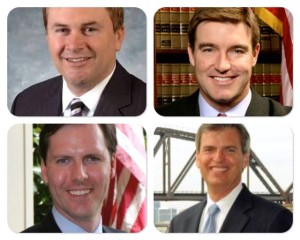
With Crit Luallen’s announcement yesterday that she would NOT be seeking the Democratic nomination for Governor in 2015, the field that will be jockeying for the Governor’s Mansion next year should be coming into sharper focus soon after the next Kentucky Derby winner poses with its garland of roses.
The RP’s Kentucky Political Brief is turning this political horse race into an opportunity for you to WIN BIG BUCKS. OK, actually something more valuable — two lower Rupp Arena tickets to an early season University of Kentucky men’s basketball home game. (And they are going to be stacked!)
Here’s the contest:
In the comments section below this post (note that you need to use your Facebook account to participate), guess the names of each Governor/Lt. Governor ticket that will be officially formed by the start of political speaking at the 2014 Fancy Farm Picnic. The tiebreaker will be the recorded air temperature in Fancy Farm, Kentucky at 2:00 PM CDT, Saturday, August 2, 2014. Entries can be made NOW, and you can make your guess anytime before the conclusion of the Kentucky Derby, late afternoon, Saturday, May 3.
Your entry will be judged as follows: 1 point for each correct gubernatorial prediction. 5 points for each correct ticket (Governor and Lt. Governor). You will lose 2 points for each Governor candidate you incorrectly predict (that is, if they have not officially chosen a running mate by Fancy Farm). There will be no penalties for incorrect LG picks, because those are hard.
While I won’t claim the prize if I win, here are my bets (in alphabetical order so I don’t get in any trouble):
Cathy Bailey and Matt Bevin
Jamie Comer and Ellen Williams
Jack Conway and Sannie Overly
Adam Edelen and Rocky Adkins
Hal Heiner and K.C. Crosbie
Daniel Mongiardo and Todd Hollenbach
Fancy Farm Temperature at 2:00 PM CDT, August 2: 94 degrees
OK, now your turn. And a reminder — only entries made below this post before the finish of this year’s Kentucky Derby will be eligible, and the contest is not a reflection of who makes the post next May, but rather, which tickets have been officially entered by Fancy Farm 2014.
All right — your turn:
By Jonathan Miller, on Fri Apr 25, 2014 at 9:35 AM ET
|
The Recovering Politician Bookstore
|


 Less than a week from today, Kentucky Republicans, such as myself, will choose our next nominee for the Governor of our commonwealth. The choice we make will have major implications for the future of Kentucky. For 60 of the past 68 years, a Democrat has occupied the Governor’s Mansion. One of those Democrats was my own grandfather and namesake, who was governor in the early 1980s.