Contributing RP Eva Moskowitz received a major endorsement for her efforts to promote charter schools in New York City — from the Wall Street Journal’s editorial page.
Read here:
We write frequently about the charter-school wars in New York City because the battle touches so many aspects of the effort to give children from poor families the education necessary to escape their circumstances.
Today’s report has good news: Results released yesterday of test scores in the New York State Assessment Program showed that the most relentlessly attacked charter schools—Eva Moskowitz’s Harlem Success academies—have outperformed their public-school peers, often by a wide margin.
At all New York City’s public schools, 60% of third, fourth and fifth graders passed the math exam; at Harlem Success, 94% passed. In the state language arts exam, 49% from the city schools passed compared to 78% at the charters. The 94% pass rate for the academies’ black and Hispanic students surpassed the 73% pass rate for white students taking the exam in New York state.
Our second installment of RPTV’s Great Debates features a regular here at The Recovering Politician, former Atlanta Deputy Mayor and contributing RP Lisa Borders debating our newest team member, GOP pollster, rising political star and Friend of RP Kristen Soltis.
Speaking of music, below the debate video you can find links to the No Labels theme song that Lisa co-wrote with the rap star Akon, as well as the music video of “The Frustrations,” featuring Kristen on lead vocals.
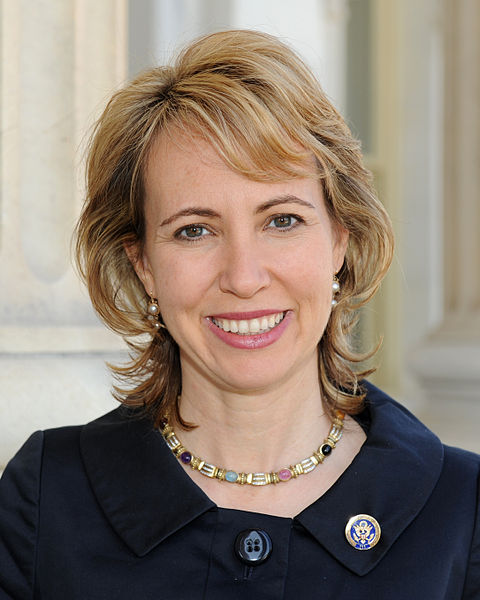
(Oh, and by the way, since the RPettes weren’t around to help the RP figure out how to Skype properly, there’s no video of Lisa, only her disassembled voice. This is not a Newsweekian attempt to demean a powerful female leader, just simple incompetence on the RP’s part. We have provided a picture of Lisa below to allow you to pretend that you can watch her on the video.)
Contributing RP Rod Jetton has launched his own blog to comment on Missouri politics. Here is his first entry:
There was a lot of talk about tax credits in the last legislative session. I would like to recommend one tax credit that would only cost a maximum of 2 million per a year, but will help thousands of Missourians get enough to eat. It’s the Local Food Pantry Tax Credit Program (LFPTCP) that was started in 2008 and is scheduled to expire in 2012.
The Oversight Division of the Joint Committee on Legislative Research issued a report showing that the first three years of the four-year program, only $1.5 million of the $6 million available credits were claimed, but use has grown significantly each year, with nearly $800,000 claimed in 2010. The average donation was $450 with 99 percent of the statewide credits being claimed by individual taxpayers.
While the battle rages in Jefferson City about how to reform our tax credit programs. This program already includes many of the reforms that have been debated. Most tax credit reformers have four main goals, which include:
1. Cap the amount of tax credits one individual can receive
2. Keep tax credits from being sold or transferred
3. Cap the overall amount that can be spent on any one program.
4. Sunset all tax credit program
Most reform advocates believe these changes will make budgeting for future tax credit expenditures more accurate. They also feel it will allow the programs to be better monitored, so that needed changes can be made.
By Michael Steele, on Thu Aug 4, 2011 at 8:30 AM ET
I, like many of you, probably spent more time than I really wanted watching political “leaders” in Washington free-fall to a decision on our nation’s debt. As I listened to the partisan excuses, whines and outright misrepresentation of what triggers a “default,” it occurred to me that all of the drama and general posturing by both Democrats and Republicans over raising the nation’s debt ceiling could have been avoided.
When asked on Dec. 8, 2010, whether he and the other Democrats would raise the debt ceiling, Senate Majority Leader Harry Reid responded, “Let the Republicans have some buy-in on the debt. They’re going to have a majority in the House. I don’t think it should be [done] when we have a heavily Democratic Senate, heavily Democratic House and a Democratic president.”
So as I watched members of Congress, especially Sen. Reid, looking sullen and complaining about the Tea Party caucus in the House and the “intransigence of Republicans” overall throughout the debt-ceiling talks, I thought back to that Dec. 8 interview and wondered what we would be talking about right now if the Democrat majorities in the House and Senate (under the leadership of the White House) had passed an increase in the debt ceiling in December. Perhaps we’d be talking about jobs?
It is no wonder, then, that this proud nation and its hardworking citizens found themselves on the brink of financial default and bankruptcy because some in Washington would rather play “gotcha” politics with our problems than solve them.
A Federal Fiscal Crisis
And yet we can no longer afford to deny what we already know: Federal spending has spun out of control, surging 47 percent between 2001 and 2008, with spending increasing 9.1 percent (or $249 billion) in 2008 (the last year of President George Bush’s term) and now reaching a whopping 30 percent of the gross domestic product after the first two years of the Obama administration. Annual entitlement-program spending accounts for 54 percent of the nation’s budget, and these fixed costs have soared by 6.4 percent since 2000.
Read the rest of… Michael Steele: Debt Deal Is Not About Who Won and Lost
By Kathleen Kennedy Townsend, on Wed Aug 3, 2011 at 8:30 AM ET
The headline in the passenger’s Washington Post Express newspaper two seats in front of me on the Metro caught my eye: “Home Births Up 20%.” Wow, I thought, that’s impressive.
Inevitably, the headline brought back memories of my children’s births. Three of our four daughters were born at home, and the fourth would have been, but I went into labor while visiting my mother in McLean, Virginia. Instead of rushing back to Baltimore, I hustled across the Potomac to the Bethesda Birthing Center, where Kerry Sophia was born.
Since the turn of the last twentieth century, the trend has been toward hospital births, and now less than 1 percent of all births are at home. Still, that 20 percent increase reported by the Centers for Disease Control is stunning.
Expense may have something to do with the uptick. One woman quoted in the Associated Press article that ran in the Express said that her home birth cost $3,300 as opposed to over $10,000 in a hospital.
But the trend toward home births is not just about cost. It’s about the kind of experience one wants. That’s why my husband, David, and I chose to have our children at home. The decision took a lot of thought and consideration.
When I was pregnant for the first time, I’d never considered a home birth. My mother had given birth 11 times, each time in a hospital. Without knowing the alternatives, I imagined that was where I would have my own children.
Read the rest of… Kathleen Kennedy Townsend: Giving Birth at Home-A Good Idea?
Let’s get the obligatory observations out of the way first: avoiding a default on the debt ceiling was a necessity for an economy that in many respects is already lifeless. That economic reality, and the refusal of House Republicans to budge on their priorities, tied the hands of both President Obama and congressional Democrats.
But politics grades results by who won and who lost, and on that core question, this is not close: The “compromise” reached Sunday night is a full-throated Democratic concession. It is a stunningly good deal for Republicans and the opposite for Barack Obama.
To take inventory, Republicans secured their most cherished priority by averting a rollback of corporate deductions or the expiration of the Bush tax cuts on the wealthy. Ten days ago, one or the other appeared to be within reach of Democratic negotiators. In addition, John Boehner and Mitch McConnell have installed a “trigger” for future cuts that will muddy the Democrats’ message on Medicare.
In fairness, it shouldn’t: There is a vast difference between handing over Medicare to the private insurance market, as all but four House Republicans voted to do earlier this year, and trimming the growth of provider subsidies. But Democrats failed miserably at making that case during the healthcare debate, when cuts to Medicare Advantage subsidies were ruthlessly, and effectively, turned against Democrats and there is no particular reason to think they will do better next year.
Republicans have also stripped Democrats of the additional discretionary spending they need to shore up their domestic priority list, including job training, education, and infrastructure. Nor did Republicans have to make a tradeoff by giving ground on extending unemployment benefits or the payroll tax cuts. It should gall Democrats even more that Republicans have had to pay no political price for their hostility to middle tax class tax relief and extra assistance to the unemployed–both deeply unpopular GOP stances that Democrats have utterly failed to exploit.
Read the rest of… Artur Davis: A Breathtaking Comeback for Conservatism
After many self-inflicted wounds, Rod Jetton’s life is healing, he says.
Approaching two years after accusations surfaced of an assault on a Sikeston, Mo., woman during a sexual encounter with her, the former Missouri House speaker wrote a blog about his personal and political free fall at therecoveringpolitician.com. It appeared July 22 and was the first time Jetton had addressed the issue publicly.
Jetton pleaded guilty May 27 to a reduced charge of misdemeanor assault with the admission he struck a woman in the face and choked her during sex at her Sikeston home in November 2009. The victim had previously testified in court that after finishing one glass of wine she started to drift in and out of consciousness.
Attorneys for the victim and for Jetton said they were ready to move on once the guilty plea was reached. That appears to be the case for Jetton, in some respects. While he still carries a tattered reputation, he says his life has become much more content recently.
Jetton, divorced about a month before the assault, has married again. He now works at a growing civil engineering company in Poplar Bluff, Mo., where he helps with sales, marketing and public relations plans.
A tumultuous era began, according to his blog, once he was elected as a state representative. Over time, his political pursuits and self-indulgence ruled, and ruined, his life.
Rod Jetton says he is turning his life around after what he called self-inflicted wounds.
Jetton was a rising Republican star, ascending to speaker of the Missouri House. But in May, he pleaded guilty to a reduced charge of misdemeanor assault, admitting he struck a woman in the face and choked her during sex at her home in Sikeston.
The Southeast Missourian reports that Jetton used a blog at therecoveringpolitician.com to make his first public comments about the issue. He says he has married again and now works at a growing civil engineering firm in Poplar Bluff.
By Jonathan Miller, on Mon Aug 1, 2011 at 12:00 PM ET
Thanks to the magic of Skype, RPTV introduces a new feature today, “The RP’s Great Debates.”
Our very first installment features a debate between two former Missouri state legislators, from opposite sides of the political spectrum, who somehow found a way to become good friends: contributing RPs Jeff Smith and Rod Jetton. In this interview, Smith and Jetton discuss their relationship, debate the debt ceiling crisis, and — best of all — do pretty accurate and very funny impressions of each other.
If you are new to The Recovering Politician, you probably should read the following pieces by the two men:
Rod Jetton’s 3 part stunningly candid essay on his rise, scandal and renewal: Part 1, Part 2 and Part 3.
As a former Member of Congress, I am no longer asked how I will vote; instead, the question I get almost every day is how did Congress become so dysfunctional? The second, less interesting question: Aren’t you glad you’re not there?
The generalized anger at “Washington” is misplaced. Not all parties are equally at fault. While political posturing is apparent, it’s not all about politics. Ideas matter more than most commentators will acknowledge, and ideas that morph into convictions impervious to evidence are the root of our distemper.
Tax cuts pay for themselves. We’ll be welcomed as liberators. Climate science is a hoax—or at least not “proven.” None of these claims was or is true; the evidence against them is overwhelming. But they remain for most congressional Republicans absolute convictions. Why? I believe they are rooted in a profound aversion to collective action by Americans through our governments.
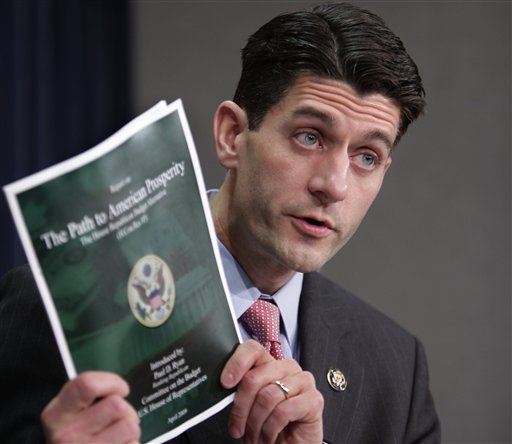
Rep. Paul Ryan
I served on the House Budget Committee for four years listening to Paul Ryan, Jeb Hensarling and my other Republican colleagues rail against “spending” (in the abstract) and promote the idea that tax cuts—in all times and circumstances—drive economic growth. The economists who testified at our hearings took a different view; they emphasized the importance in the long run of keeping revenues and expenditures in some sort of balance. Those were views not well received during the tax cutting frenzy of the Bush Administration.
The Tea Party Republicans are not promoting different ideas than their more senior Republican colleagues. They both disdain government, but the Tea Partiers reject political compromise as well.
How did we get here? George W. Bush’s signature line for his massive 2001 tax cut was just one step in the promotion of self-interest over common purpose that is weakening America economically and politically. “It’s not the Government’s money, it’s your money.” Right wing Republicans argue that federal taxes “diminish human freedom.” That world view, promoted with increasing intensity and success for over 30 years, leaves little room for a pragmatic debate about how governments can improve the well-being of the people.
Read the rest of… Tom Allen: Debt Dysfunction Has Deep Roots