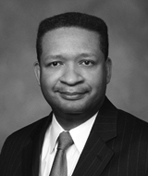
There’s something unnervingly genuine about Jason Atkinson. Unnerving because he’s a politician – once a member of the Oregon House of Representatives, today a member of its Senate, in between a determined but failed candidate for governor – but he doesn’t sound anything like one.
His speech lacks curated sound bites, and he tends to talk about solving problems, rather than who’s to blame for them.
This could be subjective. I met Mr. Atkinson only once; we had several conversations over four days this summer at the Aspen Global Leadership Network’s ACT II conference. (The AGLN paid for my travel and accommodations.)
He is an Oregonian, and I’m an East Coaster, far more comfortable with irony than sincerity.
But with all the blather on cable news, what explains his reasons for practicing politics in a time of intense partisanship like this?
“I used to tell people that I was the guy who actually believed the commencement speech,” he says.
Atkinson, a Republican, has taken some stands considered controversial in Oregon political circles; by his account, that’s at least in part because he thinks of public service before politics. For a long time, these were important but mostly invisible battles guys like him waged in their hearts and souls – or in the proverbial back rooms where political deals are cut.
That changed, for Atkinson, in January, when Rep. Gabrielle Giffords (D) of Arizona was shot at a “town hall” style meeting. Atkinson knew Ms. Giffords – the two had been in the inaugural class of the ALGN’s Rodel Fellowship in Public Service.
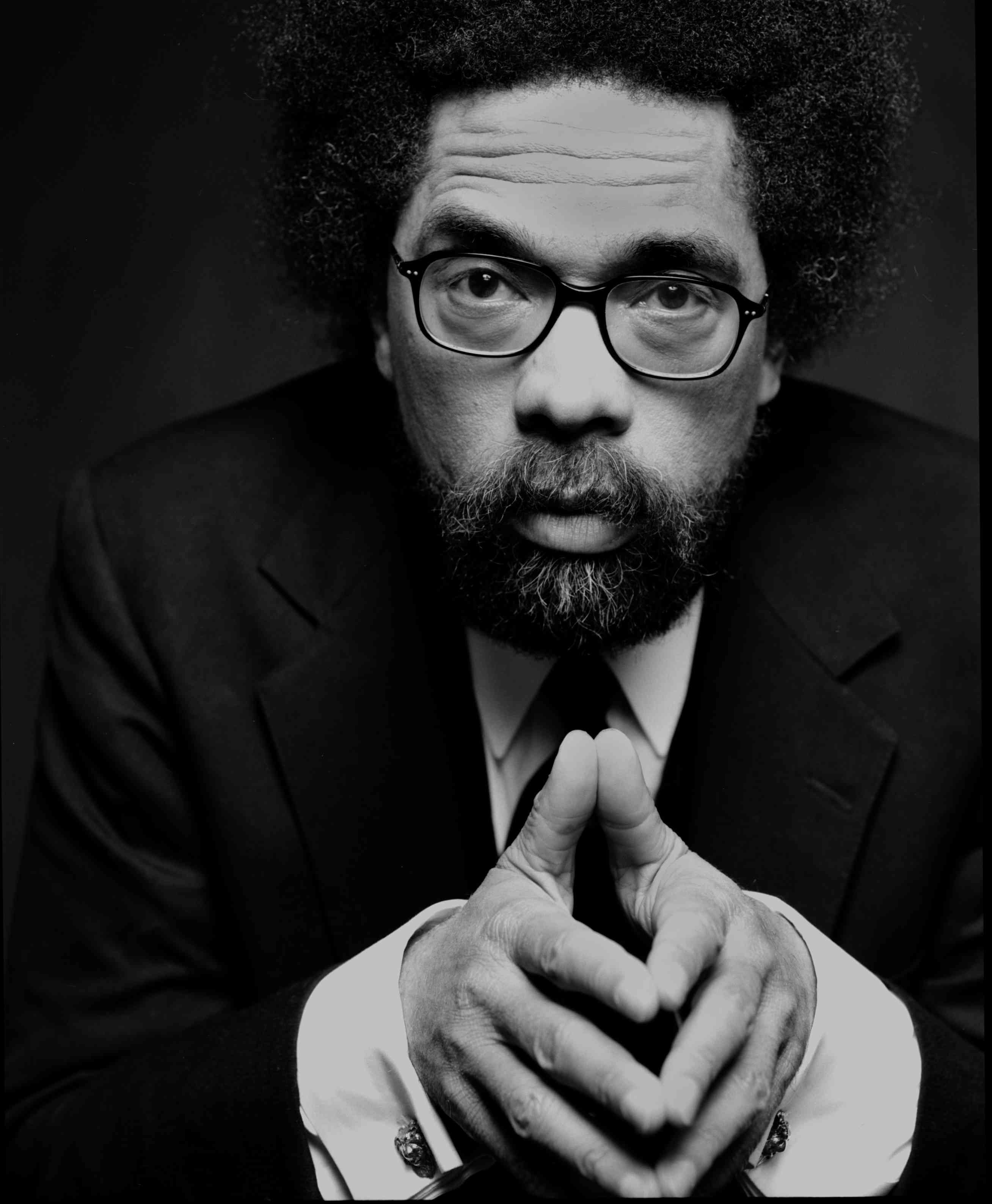
Let me damn Cornel West with some praise that is hardly faint: the Princeton philosopher writes with the lift of poetry even when he is describing something as unsentimental as the nature of American power. He also has the virtue of barbed honesty and has never let the lure of traveling among political princes and celebrities restrain his candor.
Not surprisingly, those traits–candor and grace–explain why his essay in the New York Times on August 25, 2011, “Dr. King Weeps From His Grave”, has touched nerves in all manner of places.
West’s critique is best captured in one scathing, beautiful sentence: “the recent budget deal is only the latest phase of a 30 year, top-down, one-sided war against the poor and working people in the name of a morally bankrupt policy of deregulating markets, lowering taxes and cutting spending for those already socially neglected and economically abandoned”.
Dr. Cornel West
These are arrows aimed at Republicans from Ronald Reagan to John Boehner for the contraction they have forced in the social contract, and at Democrats from Bill Clinton to Barack Obama, who in West’s view have left that contract too thinly defended and have done their own damage by trying too hard to sample conservative rhetoric on deficit reduction and taxes. To put a crescendo on the point, West, an early Obama supporter, calls the “age of Obama” a time that has “fallen tragically short of fulfilling King’s prophetic legacy”.
West is absolutely right about this much: the season of our first African American chief executive has most certainly not reshaped the foundations of our politics in the way that a million plus freezing bodies aligned on the National Mall on January 20, 2009 imagined it would. More Americans self-describe as conservative today, and fewer call themselves liberals, than on the day Obama shattered his glass ceiling, and the net effect is a nation that by roughly two to one leans right rather than left. That is not exactly, in West’s words, a place that sustains a “radical democratic vision.”
Read the rest of… Artur Davis: King Would Have Understood Obama’s Civility
When LBJ was a young legislator burning with ambition, the famed Georgia powerhouse Richard Russell cautioned him not to lose his Southern accent as he maneuvered on Capitol Hill. The accent, counseled Russell, helped ensure that the Yankee liberals would underestimate him. During my first year in the Missouri Senate, I was a stereotypical urban liberal who got hoodwinked just that way by more than a few canny country boys.
So: do I think Rick Perry is as smart as LBJ? Of course not. But I think he probably has some similar qualities. Intelligence isn’t just about who can mark up a bill at a granular level, although that’s a great quality for a legislator to possess. Rather, the ability, on any given issue, to understand the critical leverage points with another legislator or interest group or agency is the most important trait for those seeking to obtain, accumulate, and wield power. And my gut is that Perry has plenty of that wiliness.
Does that mean he’d be a good president? No. Does it offset what appears to be a rather parochial world-view? Definitely not. But the fact is that unlike GWB, Perry didn’t have an instant leg up over his opponents in all his races. He’s skilled at reading people, polls, and situations and should not, as the longtime observer notes in Jonathan Martin’s piece this morning, be underestimated.
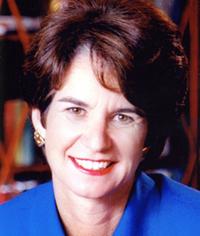
By Kathleen Kennedy Townsend, on Tue Aug 30, 2011 at 8:30 AM ET
Ayn Rand has a large and growing influence on American politics. Speaking at an event in her honor, Congressman Paul Ryan said, “The reason I got involved in public service, by and large, if I had to credit one thinker, one person, it would be Ayn Rand.”
A few weeks ago, Maureen Fiedler, the producer of the weekly radio show, Interfaith Voices, asked me to participate in a debate with Onkar Ghate, a senior fellow at the Ayn Rand Institute. I eagerly accepted. I wanted to hear how a follower of Rand would defend proposals to cut Medicare, Medicaid, and food stamps while exempting the wealthy from paying their fair share.
Ayn Rand
In one sense there was agreement. Maureen, a Sister of Loretto, argued that Republican budget proposals turned their back on Christ’s admonition to care for “the least among us,” the hungry, the sick, the homeless. Ghate did not dispute that. Rand, he said, was an atheist who did not believe in government efforts to help those in need.
Ghate countered Sister Maureen’s religious position with a moral argument. He maintained that redistribution of wealth was unfair to the rich and weakened the ambition of the rest. I wasn’t surprised by this position, since I’d heard it repeatedly during the fight on welfare reform.
What I did find startling was Ghate’s insistence that just as there should be a separation of church and state, so there should be a separation of economics and state. That notion really got me thinking.
I’ve always understood that one’s loyalty to God should take precedence over one’s patriotic duty. Churches are exempt from taxation, and conscientious objectors aren’t required to serve in war. Our high regard for the First Amendment shows the preeminence of faith in the American consciousness.
But to place economics on the same level as religious freedom seemed to me almost blasphemous. Are we really to believe that the freedom to make money should stand on the same level of religious liberty? Are the words of Milton Friedman equal to the Sermon on the Mount? I don’t think so. But maybe in the eyes of Ayn Rand and Paul Ryan, they are.
Read the rest of… Kathleen Kennedy Townsend: Ayn Rand vs. America
By Kathleen Kennedy Townsend, on Wed Aug 24, 2011 at 8:30 AM ET
America is a religious nation. Polls may differ, but most find that over 80 percent of Americans say they believe in God. Fifty percent also say they go to church on Sunday, while only half of those actually do. I guess this shows that we want to look better than we actually are, at least to the public — if not to God, who presumably knows what we’re really up to.
Most political candidates also profess their belief in God. At the same time, they rarely make a big deal of their devotion. They’ve probably read Matthew 6:1, which warns, “Beware of practicing your piety before men in order to be seen by them.”
Texas Gov. Rick Perry, who just announced he’s running for president, has taken a different tack. A week before announcing his candidacy, he led a prayer meeting for evangelical Christians in Houston. The Freedom From Religion Foundation filed a lawsuit trying to stop him from participating in this rally, arguing that he was violating the First Amendment by using his position, stationery, and website to promote the event. The court dismissed the complaint, saying that the plaintiff didn’t show sufficient harm to merit the injunction.
I disagree with the court’s ruling. I think the governor misused his office to promote a particular religion. That might have been clearer to the judge if Perry had organized a rally in support of Islam rather than Christianity. There’s no difference as far as the First Amendment is concerned.
Read the rest of… Kathleen Kennedy Townsend: Is Rick Perry as Christian as He Says He Is?
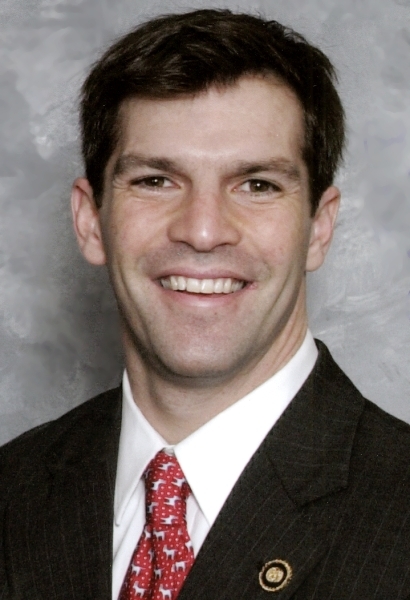
1. Fix the political redistricting system once and for all – States across this nation are currently going through the process of redrawing State Representative and State Senate lines. In the end members from both parties and appointed party loyalists will not be able to agree on a map and the court system will be prompted to step in. This process takes place every ten years and is truly outdated and way too political. Why not save time and take the human element out of the process? In an age where people do almost everything electronically why are nonpartisan computers not setting these lines? Start the new process with a checkerboard pattern covering the whole state. Then the computer will adjust the squares based on population so every Representative and Senator represents the same amount of people. A grid with large and small squares that has nothing to do with which neighborhood has nicer houses, who votes the most, where a golf course is located, or what school district is where will decide rational districts once and for all. It is an absolute joke and truly unfair to the citizens of this nation for political gerrymandering to continue to go on in 2011. How great would you feel at the start of an election cycle if whether you would have a Republican, Democrat, or Independent elected official was not in a sense predetermined? Leave this up to computers and not partisan individuals who are protecting themselves and their party when drawing geographically ridiculous political district lines. Isn’t this about fair democratic representation? Instead of backroom bickering and fighting over half of a small suburban neighborhood or which urban corridor is more important, we should be asking is there an app for that!
2. Blanket primaries – Shouldn’t the goal of any election to be to elect the best candidate regardless of political party or persuasion? Some states have already implemented top-two, non-partisan blanket primaries with success. The city of Kansas City, Missouri currently does this with its Mayoral election. Just last winter this system resulted in the two most qualified candidates for the job reaching the general election. Basically, this election method puts all candidates, regardless of party affiliation, on the same ballot in the primary. The top two voters then face off in a general election to be held usually in the next one to three months after the primary election. I can’t count the number of times Republicans came up to me and said they were sorry they couldn’t vote for me because I wasn’t on their primary ballot. This system would also stop candidates from running so far to the right or left to win the votes of party primary voters. We all know voter turnout is low in primaries. Most Americans are sick of voting for extreme candidate 1 or extreme candidate 2 in general elections. They want common sense solutions and are tired of partisan rhetoric. It doesn’t have to be a nonpartisan election; candidates can voice their party affiliation, but why not just have the two best candidates face off in the general election based on the issues of the day and ideas. Blanket primaries will solve many of our general election malaise.
3. Get rid of term limits – Many states and voters have implemented term limits for elected officials such as legislators. In Missouri, State Representatives can serve four two-year terms and State Senators can serve two four-year terms. The reasoning, legislators become fat and happy, become too close to lobbyists, and run out of creative ideas and motivation. The problem is that just the opposite has happened. Legislators are running for reelection before they even find the bathroom in the capitol, they are forced to think about their next elected position they will run for up the ladder, lobbyists begin to have more influence on the process because there are so many new people every two years, and legislators are so wet behind the ears they have no idea how to effectively legislate. Would you tell your family doctor or specialist that you could only see them for a limited amount of time even though they are great at what they do? Would you tell an amazing teacher that after 8 years they could no longer teach in your community? Would you tell a successful small business owner, sorry buddy I have to shut down your incredible entrepreneurial endeavor? Lastly, would you tell a world-class athlete that they could no longer dominate a sport and bring a smile to a fan’s face because they can only play for awhile? I want the best people running and holding political office. For some reason I think you would agree. Elections are held every few years where people can elect or vote individuals out of office. We saw a Republican “Tea Party” tidal wave in 2010 where many incumbents were voted out of office. The pendulum could and probably will swing back and many of these same individuals will be put back into elected office in 2012, 2014, or sometime down the road. This is the great thing about the process; we don’t need arbitrary numbers of years to police the system. I want the best people running my community, my state, and my country. If someone is doing a good job or excelling at their job let them face the voters not time.
Read the rest of… Jason Grill: Five & a Half Steps to Fix American Politics
When I first saw the name of this race I wondered why they called it 1 Insane race, but after running it I totally understand.
First of all, who starts any kind of race in July at 5:00pm? I don’t know what I was thinking when I registered for this 15k or why I thought it would be cool by 5pm, but I was wrong. In July the sun is not even close to going down at 5pm; as a matter of fact it was still quite high in the sky, and I am slightly sunburned from the “late” afternoon race.
I made a wise decision before this race and stopped at a gas station to use the bathroom. Turns out there were no bathrooms at the race, so I avoided the problem with going I had at the July 4th half marathon I ran.
For the record, it was 102 degrees when we started this painful session at 5pm. As soon as I got out of the car to go check in at the registration table I started sweating. I checked in at 4:43, changed into my running shoes and put on my camelback. Unfortunately, I didn’t double tie my shoes and when the race started they came untied, and I had to stop about 50 yards into the race to retie them.
I really didn’t worry about that much because I wasn’t running for time, but I thought how that would have driven me crazy back in my college days. Needless to say I was in last place at that point.
Soon after the start, another aspect that drove many of us insane were the course markings and turns. I have no idea what language they were written in but it was not English. This race took place at Camp Galilee so I assume it was Hebrew, or maybe Greek, but I had no idea what they met. While it seemed like most of us were nice Christian runners, I don’t think we had many Hebrew Bible scholars in the crowd because we all got lost (except for me- Marines are never lost just occasionally disorientated). I knew things were not going as planned when I met the fast runners coming towards me about a mile into the race.
By Jason Atkinson, on Mon Aug 15, 2011 at 12:00 PM ET
A first here at The Recovering Politician: Contributing RP Jason Atkinson directed and produced the following short film about a trout-fishing trip he took last week with his son in Montana. Stay tuned to the end for an hilarious, live-action imitation of Big Mouth Billy Bass (You know…the singing fish mounted on the wall):
Last weekend, on my last day in St. Louis before moving to NYC, I co-hosted a free 3-on-3 basketball tournament and community fair in North St. Louis. The event is in its sixth year; I started it during my first state Senate campaign in 2006, and it eventually attracted several thousand people each year. Dozens of businesses sponsor the event, which features a traveling health clinic, free school supplies, and brand-new bicycles and iPods for the winning teams in each age group.
North St. Louis is struggling. It’s about 95% black, and unemployment among men in their 20s approaches 50% in many neighborhoods. Parts of it resemble the Detroit that you see on the news or the Baltimore on The Wire, but people forget that families live there. It’s a community fighting to regain its lost glory – ironically, the days of segregation, when black doctors, lawyers, teachers, principals, and morticians lived among the laborers and housekeepers, in larger homes but in close proximity.
The first couple years of the tournament, people weren’t sure about me. Who is this white guy coming up in our neighborhood? Just another politician sniffing around for votes, making more promises? Using us for a photo-op? Well, he can dribble…but we’ve been fooled before. Remember that Schoemehl boy, when he first ran for Mayor…then turned around and closed City Hospital?
The next few years, people began to see that my commitment was genuine. As the group of city charter schools I’d co-founded a decade earlier grew to 3000 students, people noted my involvement. Others saw the legislative work I did on behalf of incarcerated fathers struggling to pay child support.