By Michael Steele, on Wed Sep 14, 2011 at 8:30 AM ET
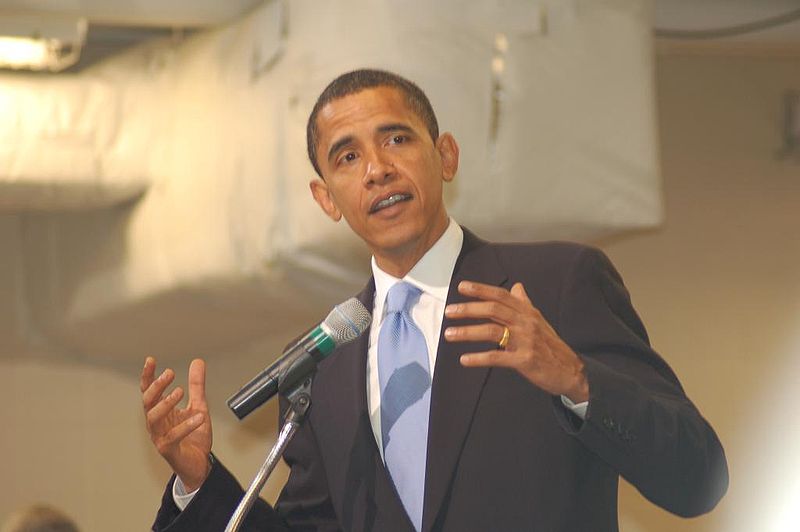
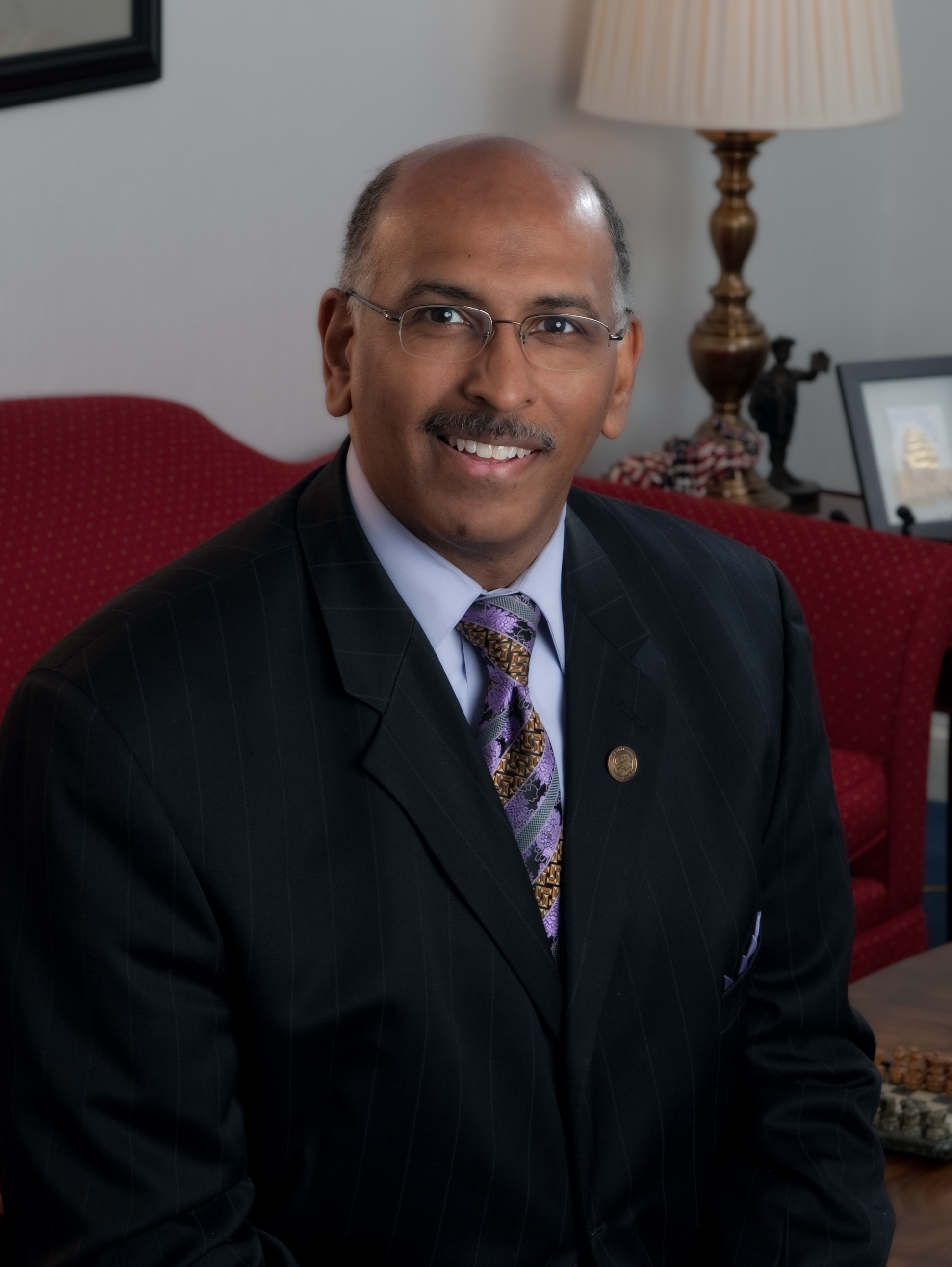
 Ten years later, President Obama has carried on President Bush’s mission to keep our homeland safe. Ten years later, President Obama has carried on President Bush’s mission to keep our homeland safe.
Sept. 11, 2001, 8:46 a.m. You remember where you were. You remember what you felt. American life would never be the same again — how we boarded a plane, how we viewed our neighbors. The images of hijacked planes slamming into skyscrapers, streets covered in ash, a scorched field in Pennsylvania, people running — but not knowing where to — are etched in our memories. Our friends, neighbors and family members — 2,977 of them — are gone. And within hours of realizing that a new enemy had emerged, defiant, we, too, became resolved: Never again.
Ten years later we are wiser, smarter and safer; our homeland security is strengthened. The American people have adapted to the new normal, and life, as they say, goes on. But we have paid a price. From the streets of Baghdad to the caves of Afghanistan, America’s blood and treasure have been spilled. To date, 6,234 men and women in uniform have made the ultimate sacrifice to preserve the very freedoms and liberties that have defined this nation.
The decade since 9/11, however, could have been very different if not for the leadership of Presidents George W. Bush and Barack Obama.
Often the answer to the question, “What happens next?” can be a heavy burden for leadership to bear. Every decision matters and carries with it consequences. So in those hours and days immediately following the attack, decisions were made that would define very clearly for America what happened next.
Read the rest of…
A President’s Grasp of the Post-9/11 World
By Patrick Derocher, on Tue Sep 13, 2011 at 12:00 PM ET 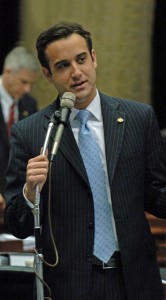
With over 60 percent of Americans supporting an end to the Bush tax cuts for the richest one percent, would you support going back to the Clinton tax rate for the richest one percent of Americans in exchange for cutting of the corporate income tax from 35 percent to 20 percent?
(Cross-posted, with permission of the author, from Politico’s Arena)
By RP Staff, on Tue Sep 13, 2011 at 8:30 AM ET Contributing RP Evan Bayh is leading an effort to promote regulatory reform in Washington. Check out coverage of his mission in the Charleston Daily Mail:
Former Indiana Sen. Evan Bayh and former White House Chief of Staff Andrew Card told a friendly audience at the Business Summit that some layers of federal regulation need peeled back and the Obama administration needs to also review all of the regulations currently in the works.
Bayh, Card, U.S. Rep. Shelley Moore Capito and U.S. Sen. Joe Manchin all spoke about the need to reduce government regulations on Friday during the Business Summit at The Greenbrier Resort.
Bayh and Card have teamed up as U.S. Chamber of Commerce spokesmen on the topic.
“In the short term, we need a moratorium on new burdens on business,” Bayh said. “We’re close to tipping back into a downturn. We don’t need more burdens on business.”
Bayh said a proposed law that would require a Congressional vote on any rules or regulations that would cost more than $100 million a year makes sense.
“Look at some of the rules and regulations that are coming down the pike,” he said. “The ozone issue could be a trillion dollars of additional cost. My home state, Indiana, is a 95 percent coal state. Our electric rates are modest, which is one reason we have the largest number of manufacturing jobs of any state. The last thing we need is an increase in the price of production when we’re competing with China, India, and others who don’t have these rules. There are 300 more rules and regulations proposed this year at a potential cost of $65 billion.”
Click here to read the rest of the article.
By Jeff Smith, on Mon Sep 12, 2011 at 12:00 PM ET 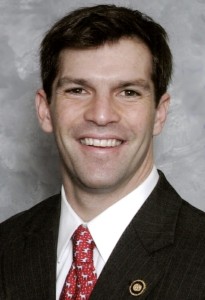 If Romney’s problem were the health care law, per se, then I’d attempt to answer this question directly. But I don’t think it is. His problem is that too many Republicans primary voters neither like nor trust him. If Romney’s problem were the health care law, per se, then I’d attempt to answer this question directly. But I don’t think it is. His problem is that too many Republicans primary voters neither like nor trust him.
The list of his flip-flops is well-known. In his ’94 Senate bid, he said he would be more pro-gay rights than Teddy Kennedy. At various junctures over the course of the next decade, he took mildly progressive positions on immigration, abortion, guns and most prominently, health care.
It is one thing to flip-flop on an issue, and then apologize unequivocally for it. Before his implosion, Edwards did it effectively on Iraq (the “I Was Wrong” Washington Post op-ed), and Pawlenty is following a similar model on climate change.
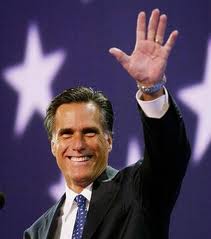 It is quite another thing to flip-flop on nearly every major social issue of concern to primary voters, and then a) claim that you have been consistent, and b) have the audacity to attack your primary opponents on said issues, as Romney did throughout ’08 – earning special enmity from his competitors in the process. It is quite another thing to flip-flop on nearly every major social issue of concern to primary voters, and then a) claim that you have been consistent, and b) have the audacity to attack your primary opponents on said issues, as Romney did throughout ’08 – earning special enmity from his competitors in the process.
The sad thing (for him, not for the country) is that the economic collapse beginning in late ’07 and climaxing in late ’08 had voters thirsting for a capable steward of the economy — exactly his profile had he simply been true to himself and not taken the cultural red meat detour. That has to gnaw at him.
The New New Romney might actually be the Real Romney. But it’s too late now, because he does not have a health care problem. He has a credibility problem. That’s why — even though his argument for health care federalism actually makes some sense – most people will merely see it another episode in a long series of flip-flops and pandering.
(Cross-posted, with permission of the author, from Politico’s Arena)
By Artur Davis, on Fri Sep 9, 2011 at 12:00 PM ET 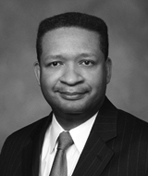 There is no spot left for Sarah Palin in the starting lineup. The evangelical woman with a grassroots appeal to the party’s base? The unvarnished conservative who thrives on the liberal establishment’s disdain? Both roles are firmly taken. There is no spot left for Sarah Palin in the starting lineup. The evangelical woman with a grassroots appeal to the party’s base? The unvarnished conservative who thrives on the liberal establishment’s disdain? Both roles are firmly taken.
What should gall Palin is that it did not have to be this way. Neither Michele Bachmann nor Rick Perry were remotely plausible national figures a year ago, and they exist today because of ground that Palin was too unfocused to occupy.
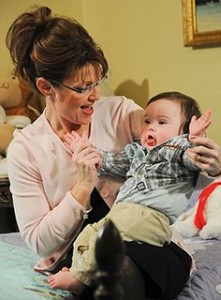 Palin doesn’t add up: she is a gifted stump speaker who still kept repeating her convention speech in 08 for months to crowds who had heard all the lines before; she frets about the establishment’s failure to take her governing skills seriously, but abandons a governorship that would have allowed her to burnish her credentials as a substantive reformer. She wonders why her toughness is questioned, then confesses that she left the governorship because she was worn down by ethics complaints from a gadfly. Palin doesn’t add up: she is a gifted stump speaker who still kept repeating her convention speech in 08 for months to crowds who had heard all the lines before; she frets about the establishment’s failure to take her governing skills seriously, but abandons a governorship that would have allowed her to burnish her credentials as a substantive reformer. She wonders why her toughness is questioned, then confesses that she left the governorship because she was worn down by ethics complaints from a gadfly.
Sarah Palin has formidable campaign talents, but none of the will to use those assets to gain power. That makes her reassuringly normal as a person, but it will never carry her anywhere near the presidency.
(Cross-posted, with permission of the author, from Politico’s Arena)
By Jason Grill, on Thu Sep 8, 2011 at 12:00 PM ET 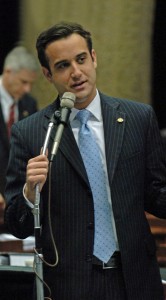 President Obama must step up to the plate and hit a home run next Thursday night. However, let’s be honest here, Congress has to be willing to put politics aside and do what is in the best interest of this country and our economy. President Obama must step up to the plate and hit a home run next Thursday night. However, let’s be honest here, Congress has to be willing to put politics aside and do what is in the best interest of this country and our economy.
Our government came together to bail out Wall Street and the banking system, using taxpayer dollars, almost as fast as Usain Bolt runs a 100-meter dash. Why are they not doing this with jobs, the economy, and unemployment?
This is a serious crisis. President Obama needs to present a strong jobs plan on Thursday night and put some new ideas into the fast lane. Congress needs to think about the future of this country rather than the 2012 elections. Congress has to be willing to play ball on job creation and the economy at such an important time. So is it election politics as usual or is Washington D.C. really going to help find real solutions to the problems that face our economy? Is the 2012 presidential race really more important than a 9.1 percent unemployment rate? We shall see…
(Cross-posted, with permission of the author, from Politico’s Arena)
By Artur Davis, on Wed Sep 7, 2011 at 8:30 AM ET Countless events will obviously reshape the answer to this question. But this is what should hearten Obama supporters about 2012: presidents in the modern era (post 1932) tend to be reelected, regardless of their political position a year out. And the three who have lost – Ford, Carter, and the first Bush – all overcame huge polling deficits and weak economies to become competitive in the final weeks. In fact, if Reagan and Carter don’t debate in the final week in ’80, and if Perot does not collapse the GOP base in ’92, as weak as they were, even Carter and Bush might have won.
This, however, is what should keep Democratic strategists up at night: not counting blacks, Obama’s approval ratings have dipped dramatically with every sector of his 2008 majority, including Latinos, Jews, independents, white working class voters, and whites under 29. In other words, even if Obama achieves the 2008 turnout model, there is no guarantee that he will duplicate his ’08 demographic performance levels. And if he does not, he will have almost no margin for error.
(Cross-posted, with permission of the author, from Politico’s Arena)
By Kathleen Kennedy Townsend, on Tue Sep 6, 2011 at 8:30 AM ET 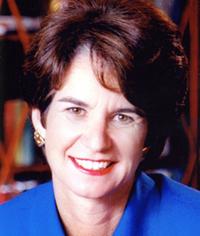 A few weeks ago, I wrote a piece asking whether Governor Rick Perry could call himself a Christian given his opposition to government actions to help the hungry, aged, and ill. Not surprisingly, many challengedmy view of Christianity. In letter after letter they pointed out that Christ spoke to individuals, not government. My observation that He was speaking to a conquered people, not free individuals who could use their power to make a more just state, was not convincing. My reference to the prophets Micah, Amos, Jeremiah, and Isaiah, each of whom called on governmental leaders to help the poor, was dismissed as being from the “Old Testament.” A few weeks ago, I wrote a piece asking whether Governor Rick Perry could call himself a Christian given his opposition to government actions to help the hungry, aged, and ill. Not surprisingly, many challengedmy view of Christianity. In letter after letter they pointed out that Christ spoke to individuals, not government. My observation that He was speaking to a conquered people, not free individuals who could use their power to make a more just state, was not convincing. My reference to the prophets Micah, Amos, Jeremiah, and Isaiah, each of whom called on governmental leaders to help the poor, was dismissed as being from the “Old Testament.”
I will surely return to the issue of Christianity again, but I devote this piece to Rick Perry’s character and the character he would nurture in American citizens. Teddy Roosevelt said, “Character, in the long run, is the decisive factor in the life of an individual and of nations alike.” So what is the character that Perry embodies? What is his view of the American citizen and the citizen’s responsibility to our country and to one’s fellows?
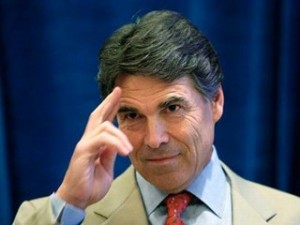 First, Perry himself. First, Perry himself.
His persona evokes the rugged individualist. His warning to Ben Bernanke, chairman of the Federal Reserve, not to come to Texas so that he can avoid being subjected to “real ugly” frontier justice evidences a character antithetical to one of the crowning achievements of the United States — a nation under law, not men. In a phrase, he dismisses the Bill of Rights — due process, trial by jury, the right to confront one’s accuser.
The real question is not what character he would make of the United States but whether he believes in America at all. He has threatened to secede. Central to his campaign is his pledge to shrink the federal government — making it impossible for our noble nation to lead the world, to serve as the “city on the Hill.”
Read the rest of…
Kathleen Kennedy Townsend: Is Rick Perry as American as He Thinks He is?
By RP Staff, on Fri Sep 2, 2011 at 10:00 AM ET Last night, the RP Family grew by one early yesterday evening, in the name of Charlie Wallace Smith, the first child of contributing RP Jeff Smith.
We here at The Recovering Politician heartily welcome Charlie to the world and hope that he inherits his father’s writing abilities and sense of humor, and his mother’s looks and height. At 8 pounds, 5 ounces, he’s well on his way to the latter.
By Artur Davis, on Fri Sep 2, 2011 at 8:30 AM ET Michael Bloomberg is not running for president, but he is about to engage a presidential size problem -the intractable poverty and alienation of young black and Latino men in the inner city.
The New York mayor has just announced a comprehensive campaign on several fronts, including the location of job recruitment centers within public housing complexes, revamping supervised release programs to confront recidivism, establishing parenting classes for new fathers, and most controversially, the city’s Education Department will be directed to factor in the performance and graduation rates of black and Latino boys in its annual assessment of schools. A school that lags in graduating black and Latino teenagers will now be at risk of being closed.
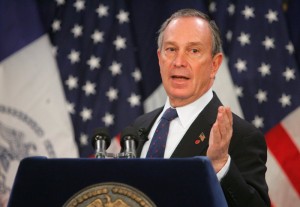 It is a smart strategy that is typical Bloomberg – funded two thirds by his own money and the money of his billionaire ally, George Soros, and one third by realigning public resources from less successful efforts; and unafraid to poke at some sacred cows in New York politics. As in most communities, the decision to close a school touches nerves, and Bloomberg’s accountability measures will shutter schools that can’t lift up their most vulnerable students. It is a smart strategy that is typical Bloomberg – funded two thirds by his own money and the money of his billionaire ally, George Soros, and one third by realigning public resources from less successful efforts; and unafraid to poke at some sacred cows in New York politics. As in most communities, the decision to close a school touches nerves, and Bloomberg’s accountability measures will shutter schools that can’t lift up their most vulnerable students.
Read the rest of…
Artur Davis: Bloomberg’s Campaign for Minority Men
|
|


 Ten years later, President Obama has carried on President Bush’s mission to keep our homeland safe.