By RP Staff, on Fri Sep 30, 2011 at 5:00 PM ET We have an exciting week in store for you come Monday.
We will start it off with an exclusive expose of a generally taboo subject — sex behind bars. You will never guess who is writing it.
OK, you already know, it’s contributing RP Jeff Smith, who spent a year in a federal prison in southern Kentucky. So you also know it will be entertaining, hilarious and informative, while offering some big-picture lessons about politics and society.
And, as previously mentioned, next week is Resolutions Week here at The Recovering Politician, so send in your own New Year’s Resolutions by Saturday at 10 PM to Staff@TheRecoveringPolitician.com. We want to hear your stories.
Have a great weekend, and see you Monday morning!
By Zack Adams, RP Staff, on Mon Sep 26, 2011 at 12:00 PM ET 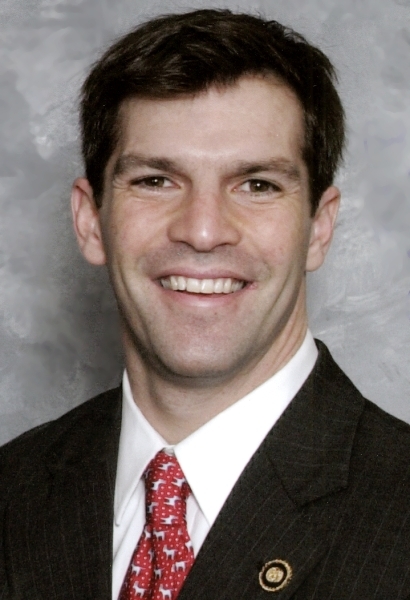 God bless him. I’m not sure anyone could control that bunch. But he’s definitely not the guy to do it – all lobbied up, consummate dealcutting insider, the cigars, slick suits, and golf outings…he’s about as temperamentally unsuited to manage the new teapublicans as anybody in the caucus since Chris Shays left. God bless him. I’m not sure anyone could control that bunch. But he’s definitely not the guy to do it – all lobbied up, consummate dealcutting insider, the cigars, slick suits, and golf outings…he’s about as temperamentally unsuited to manage the new teapublicans as anybody in the caucus since Chris Shays left.
(Cross-posted, with permission from the author, from Politico’s Arena)
By Rod Jetton, on Mon Sep 26, 2011 at 8:30 AM ET  Being out of politics is such a peaceful life. Reading the press reports about the debt ceiling debate, special election campaigns and overall fight between the President and Republicans in Congress makes me chuckle. Being out of politics is such a peaceful life. Reading the press reports about the debt ceiling debate, special election campaigns and overall fight between the President and Republicans in Congress makes me chuckle.
Watching the Republicans and the Democrats tear each other apart would be a lot more funny if their decisions did not have such serious consequences on us poor average citizens. What is so infuriatingly funny is the hypocrisy.
Let’s start by looking at the debt ceiling debate.
Normally, raising the debt limit or borrowing money is a no-brainer for elected officials. Politicians are heroes when they spend money. They are given awards, trips and plaques, for just spending your money. Sometimes they even get buildings and bridges named after them, even before they die all because they spent someone else’s money. I still have a few of my old plaques hanging on the wall.
It doesn’t take long for even a stupid politician to learn that spending money, not cutting budgets, is the path to admiration, love and that most important priority of all, winning re-election.
There are two ways to get the money everyone wants them to spend. They can raise taxes (not a very popular option), or borrow the money. As you can imagine, borrowing the money is very popular because most citizens don’t care or understand borrowing or deficits, and the majority of elected officials are more worried about the next election than the future re-payment plan.
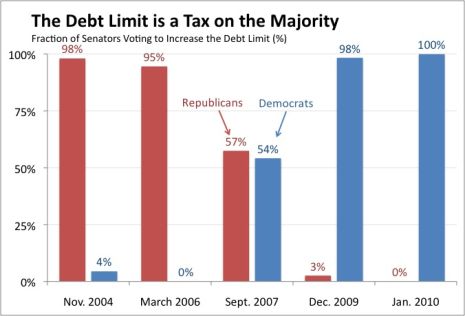
 Usually, raising the debt limit happens quietly with little fanfare or press attention. With the exception of a few “hardcore fiscal conservatives,” the President’s party always supports raising the limit, and the other party opposes it. Apart from a few campaign mailers sent out in freshmen legislators re-election campaigns, it is never even used as a campaign attack. (It’s hard to attack an opponent for voting the same way you have voted) Usually, raising the debt limit happens quietly with little fanfare or press attention. With the exception of a few “hardcore fiscal conservatives,” the President’s party always supports raising the limit, and the other party opposes it. Apart from a few campaign mailers sent out in freshmen legislators re-election campaigns, it is never even used as a campaign attack. (It’s hard to attack an opponent for voting the same way you have voted)
But this year was different. With deficit spending exploding faster than anyone thought possible, along with Republicans throwing out the Democrats in November, the stage was set for a showdown. Normally, the President could have cut a deal to increase military spending or throw a few key projects in big highway bill, and they would have increased the debt limit; but because these pesky tea party “crazies” have the general population stoked up over deficit spending, the Republicans were forced to play hardball.
Read the rest of…
Rod Jetton: Hypocrisy Abounds, But Jobs Can’t Be Found
By Artur Davis, on Fri Sep 23, 2011 at 8:30 AM ET  As a political instrument, the speech was effective and will pull Obama’s polling numbers back to an even approval/disapproval split: each element of the plan was poll-tested to cover the right bases, and the relatively non-conciliatory, “pass this now” tone will energize disaffected liberals. As economic policy, it is the 09 stimulus cut in half, and the parts of it that pass (extension of the payroll tax cuts, tax credits for new hires) will have a predictably mild stimulative effect. As a political instrument, the speech was effective and will pull Obama’s polling numbers back to an even approval/disapproval split: each element of the plan was poll-tested to cover the right bases, and the relatively non-conciliatory, “pass this now” tone will energize disaffected liberals. As economic policy, it is the 09 stimulus cut in half, and the parts of it that pass (extension of the payroll tax cuts, tax credits for new hires) will have a predictably mild stimulative effect.
But congressional Republicans have the votes to exact a price, and they will push Obama toward spending cuts that he does not want to make. They will not yield on taxes any more in the future than they have in the past because, frankly, they don’t need to: Obama has to have a jobs bill and will give ground on taxes to get it. Republicans know this.
Read the rest of…
Artur Davis: Will Obama’s Jobs Plan Work?
By Jason Grill, on Thu Sep 22, 2011 at 8:30 AM ET 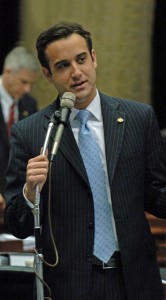 Google is just supporting who is in power. There is nothing wrong with supporting Republican members in the House, while at the same time supporting Democrat members in the Senate. Google is just supporting who is in power. There is nothing wrong with supporting Republican members in the House, while at the same time supporting Democrat members in the Senate.
As for 2012, Google is just hedging its bets in the presidential race. They want to be behind the winner no matter who it is. The choice is to donate to both nominees, donate to one candidate, or donate to no one. Most companies will chose the former or the latter in a tight race. Partnering with Fox News on a debate is just a way to expand their brand and hit millions of more people (Republicans) that will be watching these debates. The political pendulum swings back and forth very quick these days.
This is a reality. Google just wants to make sure it is on the right side of the pendulum no matter what happens.
(Cross-posted, with permission of the author, from Politico’s Arena)
By Kathleen Kennedy Townsend, on Tue Sep 20, 2011 at 8:30 AM ET  By 2060, the Americas are projected to have a larger population than China, so shouldn’t we direct more attention to our southern neighbors? By 2060, the Americas are projected to have a larger population than China, so shouldn’t we direct more attention to our southern neighbors?
A great nation defines itself not by what it fears and opposes but by what it believes in and champions. This year is the 50th anniversary of the Alliance for Progress, President Kennedy’s visionary effort to promote social justice and economic development in Latin America. The Alliance had a short ten-year life, but its influence was real, and its vision of the Americas is still relevant today.
The Alliance was a wager on the capacity of progressive democratic governments to carry out a peaceful revolution with the help of political support and carefully designed economic assistance.
The idea for the Alliance grew from my uncle’s capacity to listen to the leaders of Latin America, and from his openness to what he heard. The leaders said, “The United States in all its power and wealth and influence should be our partner as we build a more just society for all our citizens.” They added, “This partnership must be built on respect for the values and vision of the southern hemisphere.” John Kennedy took their arguments seriously.
In launching the Alliance, he built on the work of Douglas Dillon, who in 1958 had attended a three-week meeting in Brazil as a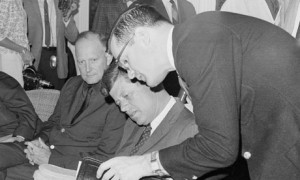 State Department employee. Dillon was impressed by Latin America leaders, particularly those from Brazil and Mexico, who were urging a new coffee agreement and a new development bank for the Americas. He eventually prevailed on President Eisenhower to take up the cause and to create the Inter-American Development Bank. He also piqued the interest of the Democratic presidential candidate from Massachusetts. State Department employee. Dillon was impressed by Latin America leaders, particularly those from Brazil and Mexico, who were urging a new coffee agreement and a new development bank for the Americas. He eventually prevailed on President Eisenhower to take up the cause and to create the Inter-American Development Bank. He also piqued the interest of the Democratic presidential candidate from Massachusetts.
As Arthur Schlesinger recounts it, Senator Kennedy read a memorandum from ten leading Latin American economists, and, impressed with the urgency and energy of their ideas, conceived of a new approach to inter-American development.
He had an idea but no name.
Read the rest of…
Kathleen Kennedy Townsend: Renewing the U.S.-Latin American Alliance For Progress, 50 Years Later
By Jeff Smith, on Mon Sep 19, 2011 at 12:00 PM ET I know academics. I’ve worked with academics. And Elizabeth Warren is no typical academic. She’s grounded where many academics are theoretically-oriented, direct where most academics are wordy and circuitous, unpretentious where many academics are impressed with themselves and their own pedigree.
Scott Brown is clearly charismatic and formidable. But Warren’s no Coakley, too good to shake hands with the common folk. She’s a gritty working-class girl made good. And having lived through Coakley she has a playbook of what not to do.
I think that the toughness, candor, and populist passion that turned off some D.C. elites will play quite well with independent Massachusetts voters. It will be a great race to watch. some D.C. elites will play quite well with independent Massachusetts voters. It will be a great race to watch.
(Cross-posted, with permission of the author, from Politico’s Arena)
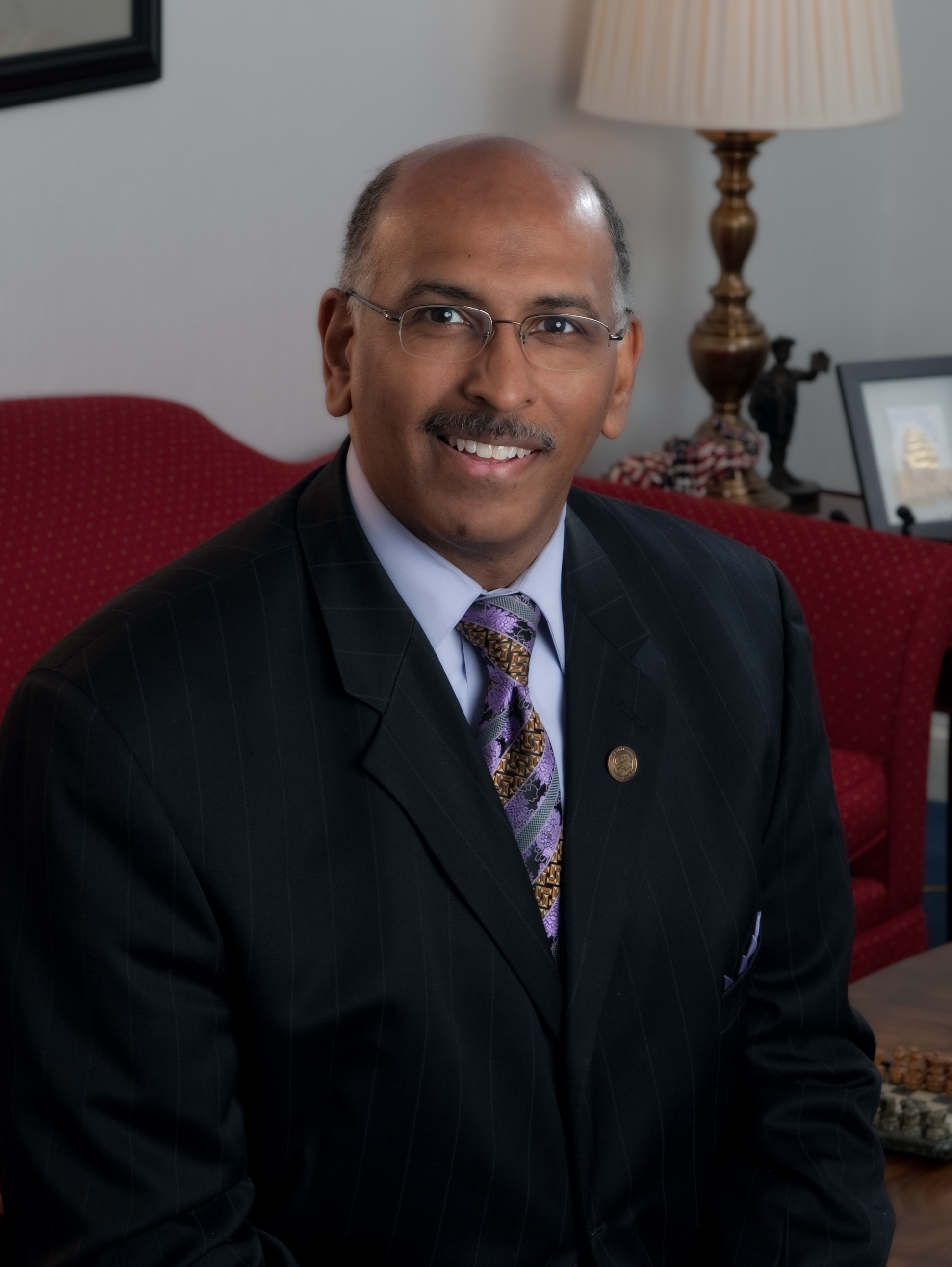
By Michael Steele, on Mon Sep 19, 2011 at 8:30 AM ET
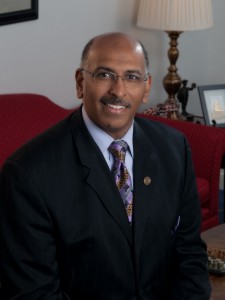 Racial and economic profiling in education endangers black students’ success. Why put up with it? Racial and economic profiling in education endangers black students’ success. Why put up with it?
Fifty-seven years ago, the U.S. Supreme Court ruled that the standard of “separate but equal” in our education system was one that is fundamentally unequal — and, moreover, is un-American, unconstitutional and immoral.
In the nearly 60 years since the Brown v. Board of Education Supreme Court decision, we have seen incredible progress. But we have also witnessed a steady decline in the performance and self-esteem of our children as they grapple with a cumbersome and often myopic educational system.
Sadly, far too many students entering classrooms this fall have already been taken hostage by the politics of the moment and a zero-sum mentality in education that serves no purpose. The truth is, there remain inherent disparities in our education system that have eaten away at the very spirit of the Brown decision.
For too long, federal and state bureaucrats have talked about what they want to do for education without an appreciation for what they have already done to education: made it harder to bring our education system into the 21st century.
In my 2005 report on the state of education in Maryland during my term as lieutenant governor, I noted, “The most important work of a free society, other than defending its very existence, is the education of its population. For Maryland to be serious about preparing all of its children to succeed in tomorrow’s America, it must provide for consistent, high quality instruction and stable, effective leadership in all of its schools.
“In the fast-changing world that future generations will inhabit, the highest quality education can no longer be viewed as a privilege of the few. It must be the norm for every child. Any other course of action will doom our future generations in Maryland and our nation to a second-class status.”
Legislation Alone Doesn’t Work
Such clarion calls for reforms and the creation of realistic standards have largely been met with a mixed response from educational professionals and parents. From Maryland to California, we’ve applauded every form of experimental methodology there is, but somehow we’ve forgotten how to do the basics.
 As Dr. John Jackson, president of the Schott Foundation for Public Education, recently noted, “We cannot become so affixed on the spotlights that we constructively ignore the larger headlights from the train wreck facing our country by the 1.2 million [American students] we are losing each year [as they drop out of school]. We have too often settled for the sweet taste of minor success over stomaching the bitter taste of the reality that without systemic reform we are winning some battles, but largely still losing the war.” As Dr. John Jackson, president of the Schott Foundation for Public Education, recently noted, “We cannot become so affixed on the spotlights that we constructively ignore the larger headlights from the train wreck facing our country by the 1.2 million [American students] we are losing each year [as they drop out of school]. We have too often settled for the sweet taste of minor success over stomaching the bitter taste of the reality that without systemic reform we are winning some battles, but largely still losing the war.”
Read the rest of…
Michael Steele: Learning While Black
By Artur Davis, on Fri Sep 16, 2011 at 8:30 AM ET This late summer should have been prime time for a centrist third party movement called Americans Elect. With Barack Obama’s approval ratings around 40 percent, and a profound fear that Republicans are too extreme and too un-serious to govern, the case for another political path is arguably being made by events.
But unless you are an avid reader of Tom Friedman’s columns at the New York Times, or Matt Miller at the Washington Post, you’ve likely never heard of Americans Elect and their audacious plan to qualify for the 2012 ballot in all 50 states. They are well-heeled, based on starting capital from some major hedge-fund players; respectable enough to have caught the attention of serious people like Friedman and Miller; and essentially still an anonymous blip on the public radar.
 A major part of the skepticism is historical in nature – the last credible third party, the Progressives in 1912, had the virtue of being led by a popular ex president, and the updated versions have been regional demagogues or self-appointed provocateurs. Then there is the Nader factor – the experience that a third party often guarantees that the “evil”, rather than the “lesser of two evils”, wins. A major part of the skepticism is historical in nature – the last credible third party, the Progressives in 1912, had the virtue of being led by a popular ex president, and the updated versions have been regional demagogues or self-appointed provocateurs. Then there is the Nader factor – the experience that a third party often guarantees that the “evil”, rather than the “lesser of two evils”, wins.
All true. Yet, the national atmosphere lately has been unsettled enough that the past has ceased being the predictor of the future in politics. The grip of Democrats and Republicans on voter loyalty is weaker than it has traditionally been. We are also on the cusp of a double dip recession handmade by dysfunctional two-party politics.
Read the rest of…
Artur Davis: A Pathway for Americans Elect?
By Jeff Smith, on Thu Sep 15, 2011 at 8:30 AM ET 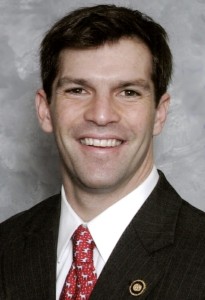 Sorry, but the die is cast here. Dick Cheney was the Bush administration’s most powerful proponent of a decade of failed wars of choice that cost our nation dearly in prestige, treasure, and most lamentably, blood. Two-thirds of the country strongly agrees with that sentiment. Sorry, but the die is cast here. Dick Cheney was the Bush administration’s most powerful proponent of a decade of failed wars of choice that cost our nation dearly in prestige, treasure, and most lamentably, blood. Two-thirds of the country strongly agrees with that sentiment.
He was the guy who argued that “deficits don’t matter” even as the tax cuts he relentlessly pushed exacerbated our already-difficult fiscal situation that every demographer (and most policymakers) understood would become perilous upon baby-boomer retirement.
In every major policy area in which he was involved, Dick Cheney was dead wrong – and many of his co-partisans actually agree with that assessment. If he thinks it will help him now to trash the people (I.e., Rice, Cheney) who at various junctures made rather ineffectual attempts to slow the train of destruction he conducted, he is sorely mistaken.
(Cross-posted, with permission of the author, from Politico’s Arena)
|
|