Artur Davis: Occupy Wall Street Has Sound & Fury of Tea Party

This time, the fire is rising on the left. The “Occupy Wall Street” movement has the sound and the fury, and is matching the size, of the 2009 tea party rallies. OWS is the hard left version of the animus toward elites that is fervent in every sector of the country and there is every reason to think it, or something like it, is about to transform liberalism as much as the tea party has remade conservatism. If you value a politics that can foster consensus and overcome gridlock, this is one more thing that should make you very afraid.

Arguably, the “occupiers” and the tea partiers are the latest flavor of a populism that runs deep in our history. While misunderstood as a conservative phenomenon, populism is actually the ultimate big tent, and has been owned and abused by bullhorns on both sides of the spectrum. In the last hundred years, the populist label has been worn both by southern segregationists who wanted to force a “sharing of the wealth” and garment district leftists who thought industrial unions were too tame. 

Read the rest of…
Artur Davis: Occupy Wall Street Has Sound & Fury of Tea Party

Kathleen Kennedy Townsend: Why I Agree With Sarah Palin

While I admire Sarah Palin for breaking ground as a woman candidate, we don’t agree on many policy issues. But her tirade in Iowa a few weeks ago against what she called “corporate crony capitalism” captured my attention. She said, “It’s not the capitalism of free men and free markets, of innovation and hard work and ethics, of sacrifice and of risk. No, this is the capitalism of connections and government bailouts and handouts and influence peddling and corporate welfare.”

Good for Sarah Palin.

Naturally she singled out President Obama, but, to her credit, she also took on her own party. Republican candidates “who raise mammoth amounts of cash,” she said, should be asked what their donors “expect in return for their investments.”

I admire Sarah Palin for speaking out loudly and forcefully against crony capitalism. It’s all too common for the rich and powerful to bend government to their own purposes and get contracts, tax and legal breaks, and other preferential treatment through their political connections. This cronyism distorts our markets and promotes distrust of Washington.

People with less money can’t get these special privileges. This at a time when the richest 1 percent already receive 25 percent of all income and control 40 percent of the country’s wealth.

In her speech, Palin blamed the president for the help he gave the auto industry and for the bank bailouts that actually occurred under George Bush. As far as the auto industry goes, I think President Obama made a gutsy call that saved thousands of jobs and one of the most important businesses in our country. Eventually the government will be paid back in full. 

Read the rest of…
Kathleen Kennedy Townsend: Why I Agree With Sarah Palin

Artur Davis: The Herman Cain Phenomenon

For a medley of reasons, Herman Cain’s ascension in the polls is not going to lead him to the Republican nomination for president.

He has never won an election, has shown no capacity to run any massive public institution, much less America, and his campaign has been operated in a chaotic, haphazard fashion: all of the above are equal opportunity disqualifiers, regardless of race.

But it is no small thing that a steady, dedicated stream of white conservatives are embracing Cain’s candidacy and that he is still standing strong when more accomplished rivals have fallen or are lagging. My guess is that Cain will end up mattering, for the same reason other losers like Howard Dean, Jesse Jackson and Mike Huckabee have made a difference. Just as Dean foretold the emergence of the internet as a campaign tool, and Jackson paved the way for a black/progressive alliance, and Huckabee discovered early traces of the Tea Party, Cain may be onto something too: the eventuality of the next serious minority candidate for national office arising in the party of Lincoln instead of the party of Jefferson and Jackson.

The very thought will rankle some of the liberal hierarchy, which views the right-wing’s loathing of Obama as racial antipathy.

But the facts are inconvenient for Democrats: the 2010 primary cycle was atrocious for black Democratic candidates running statewide in Alabama and Georgia as moderates, and the general was a graveyard for worthy black candidates in Florida and Georgia who campaigned as conventional liberals. Even the exceptions are weighted with qualifiers: Kamala Harris, an incomparably gifted candidate, won as California’s Attorney General only after lagging well behind the rest of the Democratic ticket, and Governor Deval Patrick’s reelection would likely not have happened without a conservative independent siphoning Republican votes.

The breakthrough artists in 2010 were Republican minorities who won large shares of the white vote in a variety of different environments: Tim Scott and Allan West in the House; Marco Rubio in the Senate; Nikki Haley, Susanna Martinez, and Brian Sandoval in statehouses. 2012 promises to continue the trend. No plausible Democratic minority has surfaced in any competitive district or state in this cycle, while Ted Cruz is a first tier Latino Republican Senate contender in Texas.

Read the rest of…
Artur Davis: The Herman Cain Phenomenon

Artur Davis: Did Christie Make the Right Choice?

We will know about 13 months from now if he made the right move from the standpoint of his presidential dreams, but his choice seems right for the voters who elected him in 2009.

For some reason, the Christie speculation never focused enough on the fractiousness of New Jersey politics and the disruption and mischief his in-state adversaries would have caused his campaign. Unlike their counterparts in Perry’s Texas, New Jersey’s Democratic legislators have real power and the undoing of Christie would have become their primary obsession. Give Christie credit for knowing this.

As for the race, with Perry imploding and Cain implausible, Romney has one real thing left to fear: the cascade of independent conservative expenditures that are going to link him to tax hikes, and Obamacare, and social liberalism, for a Republican base that still does not know the details of Romney’s Massachusetts record.

(Cross-posted, with permission of the author, from Politico’s Arena)

Greg Harris: A Herbivorous New Year

Eating a good steak is almost like a religious experience for me.  It’s an occasion … such as a birthday dinner at a throw-back steakhouse whose environment encourages even the most effete of men to talk like Goodfellas.

Cincinnati’s most well known restaurateur, Jeff Ruby, plays up this pageantry at his steakhouses.

The grand opening of one of his restaurants came in the form of an invite tied around the neck of a dead fish, playfully evoking the mafia intimidation tactic of sending would-be victims the message that they would soon be “sleeping with the fishes .”

Often outside Ruby’s restaurants you’ll see men awkwardly smoking a big cigar, trying to look the part, but perhaps tying a little too hard.  (I also enjoy an occasional good cigar, but smoke mine in private.)

My Grand Pa Leon became a well regarded restaurateur in Chicago after years as a kosher butcher.  He knew a good cut of meat, and never strayed from quality.  His restaurant, Frenkel’s, had the best corned beef and even earned a reference in a David Mamet play.  He actually looked the part of a gangster … a cigar aficionado who drove big Buicks and resembled a thicker, stronger version of Robert DeNiro. Yet his ethics and honesty were very much unlike that of a Mafioso. In his early years as a shop owner when the mafia came by for their take, he chased them out with a meat cleaver.   Year later, he abruptly left a thriving restaurant and nightclub in downtown Chicago when he learned his partner had mafia ties.  (No offense, Mr. Ruby and other would-be goodfellas, but I share my grandfather’s disdain for the mob and wannabe’s that glorify thieves and thugs.)

Read the rest of…
Greg Harris: A Herbivorous New Year

Jeff Smith: Should Chris Christie Run for President?

If he’s ever going to be president, now’s the time. He doesn’t have to look very far for two case studies: Newt Gingrich and Barack Obama.

The former missed his chance to strike while the iron was hot, passing up a race in 1996 when he likely could’ve taken the nomination from the laconic Bob Dole.

The latter went back on his pledge not to run in 2008 because he understood how quickly and ruthlessly media churns through its sensations. You can only be Bieber for a while (although if you have any actual talent or savvy you may be able to reemerge a decade later a la Timberlake).

I don’t think Christie will have the opportunity to re-emerge in four years, though; my sense (as a recent transplant to Jersey) is that he will not be reelected here. All of the adulation of the national conservative intelligentsia doesn’t seem to have affected folks here; indeed, I’ve heard a few call him too big for his britches (not sure if pun was intended).

And so while he could pull a Romney, quit the governorship w/o contesting re-election, and begin running for the 2016 nomination in the last year of his term, I wouldn’t advise it. You can’t catch lightning in a bottle twice.

(Cross-posted, with permission from the author, from Politico’s Arena)

Paul Hodes: A Public Apology to My Son, The Wall Street Protestor

I got a call recently from a staffer at the New Hampshire Democratic party.
It went something like this:

“Congressman Hodes?”

“Yes”

“We’re getting calls from the Press. What do you want us to say?”

“Press calls? What about?”

“You don’t know?”

“No, what’s going on?”

“I can’t believe I’m the one telling you this. It’s about your son.”

“What about my son?”

“Well, he’s been arrested on Wall Street. You didn’t see the story in the Wall Street Journal?

When someone calls and says they have news that you should have known about your son, all kinds of things go through your mind. In this case, I breathed a huge sigh of relief.

Arrested on Wall Street? Piece ‘o’ cake compared to the other possibilities that cascaded through my mind.

It turns out Max was arrested for wearing a mask while demonstrating, under an ordinance dating to 1845 banning masked gatherings in New York City. He was held for a couple of hours and charged with loitering.

Read the rest of…
Paul Hodes: A Public Apology to My Son, The Wall Street Protestor

Rod Jetton: New Year’s Resolutions for Some Famous Politicos

Here are my ideas on what I think a few of our leaders New Year’s resolutions might be.

President Obama– I’m going to start being non-partisan, stop the name calling and work with everyone in Washington just like I promised in 2008.

Vice-President Biden– I promise to stop saying stupid stuff so folks won’t say I’m stupid.

Secretary Hillary Clinton– I’m going to force the President to stand strong for Israel, and I’m going to stop listening to Bill tell me how I need to take Obama on!

Speaker Boehner– I’m going to keep my temper under control and resist the urge to momma slap the President in the Oval Office.  And I’m going to try not to momma slap those pesky fiscal Republican members as well.

Read the rest of…
Rod Jetton: New Year’s Resolutions for Some Famous Politicos

Artur Davis: What Bill Clinton Left Behind

Last weekend, a horde of dignitaries and operatives gathered in Little Rock to mark the twentieth anniversary of Bill Clinton’s entry into the 1992 presidential race. The affair, which in substance and tone easily could have been dubbed “the Making of the Last Successful President”, will contribute to the wave of Clinton nostalgia that is alive in the Democratic Party. And well it should: the Clinton saga is one of triumph on multiple levels, from a victory that broke the Republican hold on the electoral college map, to a presidency that recharged the economy, balanced the budget, faced down Serbian genocide, and ended with a 65% approval rating.

All of this is still sensitive, touchy territory in some Democratic circles. The left of the party has not forgiven the deregulation of Wall Street or the retreat on health-care reform that happened on Clinton’s watch; Rachel Maddow’s jibe that Clinton was “the last great Republican president” resonated with the ideological rivals in his own party that Clinton thrashed but left embittered. And then there is the Barack Obama/Bill Clinton interpersonal dynamic, a dance laced with ambiguity, the mutual wariness of two self-made men with a strong sense of their own gifts. Sometimes, the tension spills into plain view. Clintonistas recall the pointed barbs—candidate Obama’s unfavorable comparisons of the “transformative” powers of the Reagan and Clinton presidencies—and the more subtle intimations. If you saw the glare in Obama’s eyes when Clinton stole the show at their White House press avail last December, you know what I mean.

How this story ends is indeterminate, and even when the political book is closed, historians will still pick over the bones. But it is undeniable that Obama’s presidency is at its lowest ebb, stymied in Congress and stuck around 40 percent in the polls. It is worthwhile, therefore, to reflect on exactly how Clinton wore down a Republican opposition that was as fierce and contemptuous as anything Obama has faced, and how he regained the center of the debate both substantively and politically—two events that have heretofore eluded his Democratic successor.

I have a theory that the most discernible distinction in the Clinton and Obama mode of leadership is rooted in their respective paths to the presidency. Clinton rose to power in Arkansas, a conservative state trending toward Republicans, and his survival depended on convincing a trove of Reagan and Nixon voters that he was neither the spend-thrift nor the permissive cultural elitist that they generally believed national Democrats to be. Obama climbed the ranks in Illinois, a state with a progressive tradition moving inexorably toward Democrats, and his ascension required him, principally, to win over liberal leaning primary voters.  Clinton, on one hand, lost a statewide race to Republicans, and came uncomfortably close to losing another in his last campaign in Arkansas. Obama, in turn, lost one intra-party primary that nearly wrecked his career but was not even grazed in winning a laugher over a hapless Republican in 2004.

Read the rest of…
Artur Davis: What Bill Clinton Left Behind

Jeff Smith: When J.T. Met Pork Chop… (or Sex, Lies & Prison Love)

Click the picture above to read Jeff’s critically-acclaimed piece about his path from rising political star to federal prisoner to hopeful redemption.

Last month, I moved cross-country from St. Louis to the New York City area. The other night, a colleague invited me to a party. It was teeming with Brooklyn hipster-intellectual types – young college profs, Times reporters, social entrepreneurs, assorted do-gooders.

The only person I knew was the host, but he kindly introduced me around as a New School prof teaching in their public policy graduate program (yawn) who once ran for Congress (yawn) and served in the Missouri Senate (slightly more polite yawn). They were Brooklyn-ites, after all.

Midwestern-ness emanated from me like stink from a skunk. I could feel it when I used the word “wife” instead of partner, the self-consciously gender-neutral term they used when referring to spouses or long-time companions.

Email Jeff at jeffsmith2006@gmail.com for press inquiries or to be notified for book/speaking events

Then the host told them where I spent 2010, and their curiosity was insatiable.

Was it white-collar? (Maybe 5%.) Was it violent? (Occasionally.) Did you get in fights? (A couple.) Did you get hurt? (Yes.) What were the people like? (More interesting and less pretentious than you.)

They reached for the gin, hoping the liquid courage would help them ask the question they were dying to ask. But it didn’t. Instead, one stammered, “Did you get…, uh…was there a lot of sex?”

***

Click above to connect with Jeff on Twitter

A few weeks after you get to federal prison, you go through orientation. The first thing they do is take you down into the visiting room to show you a mandatory sexual assault video featuring a 40-ish white guy warning you not to eat the Snickers bar that may be waiting on your bed when you return to your cell. (He ate his, unwittingly signaling the predator who left it for him that he was ready and willing.) All the guys in the visiting room laughed. So did I. But at 117 lbs, I reminded myself not to accept any sweets during my tenure, lest I “get my windows tinted,” in the parlance of Federal Correctional Institution, Manchester.


As you might imagine, things can get pretty nasty when several hundred guys are confined in a small area without the benefit of female interaction, other than a pair of (arguably) female prison administrators. Outside muscle-building substances, pornography was perhaps the most prized possession on the compound. Its value hinged on a woman’s measurements, which were, up to a point, proportional to the price of the material. Depending on how brazenly a woman displayed her ass(ets), one magazine could fetch up to $200 in stamps, due to the recurring revenue stream available by copying pictures and selling them individually and/or renting the magazine (after laminating it in plastic). The purveyors of such contraband, who could become quite wealthy by prison standards, were dubbed “entrepre-niggaz.”

My first cellie, who favored a young Morgan Freeman, was a frequent customer. One day about a week after I moved in with him he told me was going back to the bathroom to “get married to (his) baby Coco,” his slang for masturbation. He was partial to magazines featuring the impossibly curvaceous (39-23-40) bleach blonde who recently burst onto the reality television scene as the wife of rapper Ice-T. My cellie would return from the bathroom fifteen minutes later and announce, “Now I need a muthafuckin cigarette!”

He was unusually open about his sexual proclivities, which probably should not have surprised given that he had been locked up for most of the previous 20 years. As he liked to tell me, “I got more time in this place on the toilet than you got time.”

One day I was on my way down to the visiting room to see my now-wife and he approached me with a business proposition. “Ten stamps if you can get me a lil’ Teresa on here,” he said, thrusting a tissue into my hand and inhaling theatrically. “Mmmm-mmmm, I bet she do smell like fresh strawberries!”

He was astonished when I declined his offer. “Cellie, you ain’t even got to DO shit. Easiest ten stamps you ever make. And I bet she love that shit, knowin’ I be gettin’ off on her.”

Um, no, Cellie, actually, I don’t think she would love knowing that. But thanks for thinking of her.

I would not have been surprised had others accepted his offer. First, some inmates were desperate for stamps. One was nicknamed Five-Stamper; word was, there was nothing he wouldn’t do for five stamps. And visiting room shenanigans were not uncommon. For instance, one newbie got sent up the road to a higher-security facility for manually pleasuring his girlfriend in the visiting room one day as I sat nearby.

***

When it came to women, there was really no limit to inmates’ imagination. The quickest way to get into a fight was by switching the channel during a women’s softball game or track meet, events that are watched with as much whooping and hollering as homemade porn at a frat house.

They assumed I was sleeping with any woman who visited me, regardless of the woman’s age or attractiveness. Some of my work colleagues at the prison warehouse even fantasized about our boss, a squat woman with the build of a high school wrestler, the demeanor of a drill sergeant, and the sensuality of an amoeba. “Lemme catch Miss Horton in the club once I’m sprung, bihhh,” said my friend ‘Ville as he pumped his hips.
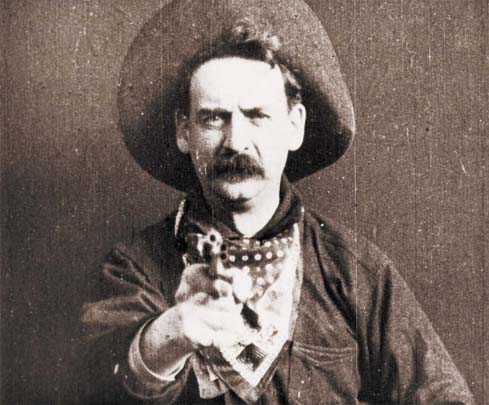
My cellie often told stories of “gunslingers” he had met during his time. There was one female guard who occasionally patrolled, and one day while she was patrolling the show hall, he contemplated whether it would be worth it to “gun her down.”

“You crazy?” I asked. “You’re almost to the door!” He’d been locked up off and on for 20 years, but only had a year left.  “What she do to you anyway?”

He spoke to me slowly, as if I were a child. “Prance around in front of me with that fat ass, is what she did. Fuck they gon’ do, throw me in the hole?”

“Cellie, they’ll give you life!” I exclaimed.

He scrunched up his face. “How they gon give me life fo’ gettin’ off on some bitch?”

Only then did he realize that I didn’t understand his slang. He explained that “gunslingers” were men who ran strings from their toes up their leg to lubed up toilet paper tubes fitted around their penises. To “gun her down” would’ve been to wire himself and go to the chow hall at mealtime, position himself at a table near her post, and toe-tap away until he…well, I won’t extend the gun metaphor any further.

* * *

Most inmates at FCI Manchester were non-violent (though as a warehouse buddy of mine liked to brag, that didn’t mean they hadn’t shot people – just that they didn’t get caught).  They were crack or meth dealers at their last, lowest-security-level stop on a multi-facility national tour, courtesy of the U.S. of A. FCI Manchester was usually pretty calm. Sure, we had lockdowns when they found steroids or dangerous contraband. Sometimes there were fights; guys might attack each another with slocks (padlocks wrapped in socks) or homemade shanks, other times there were just were normal fistfights. And since most people were close to the door – you couldn’t be in a minimum-security facility unless you had less than ten years to go – most inmates avoided beefs, lest they be shipped to the hole.

But one act of violence I did not see was prison rape. Actually, I saw prison love.

* * *

If felons were cars, Porkchop was as standard-issue as a Ford Taurus. Like several others (Popcorn, Peanut, Hot Dog, etc), he was named after his favorite food. He was 6’2” and husky, with close-cropped dark hair, a goatee, and more tattoos than teeth. In and out of state and federal prison for nearly 20 year, his offense ranged from selling meth to kiting checks to stealing cars. He spent every waking hour smoking, on the weight pile, or watching TV. A habitual offender, the law called him. To us he was just a regular thug, always trying to get over for a cigarette, a beef jerky, or a pack of mackerel, the $1 protein source of choice at FCI Manchester.

The minute J.T. came on to the compound, Porkchop had his eye on him. Now, J.T. wasn’t flamboyant – not one of the dudes who wore makeup (grape Kool-Aid on the eyes, cherry on the lips, Tang on the cheeks). He wasn’t the type we got warned about by the gruff veteran staffer during orientation: “You might wanna move now if you got a single and go move in with somebody you know,” he’d warned. “You don’t wanna get a cellie with boobs.”

J.T. was just a regular drug offender, nondescript, mostly kept to himself other than the occasional poker game. But Porkchop took a shine to him, pursuing him quietly but relentlessly. First it was bringing J.T. into his “car”, the small group with whom he worked out. Then it was showing him how to make a nacho, a unique prison dish made in a bowl with rice, chips, beef jerky, cheese, beans, onions, peppers, most smuggled out from the warehouse. Finally, it was ironing J.T.’s greens before Visiting Hours on Sunday.

And then one day, as I walked down to the bathroom late one night, I saw it. They were in bed together, snuggling and talking quietly. I saw a newbie snicker, and then a prison old-head ice-grilled him. “It ain’t none o’ yo muthafuckin bidness,” said the look, and the newbie scurried back to his cell. After that, no one said a word about it. And it remained that way every night for the next few months until I left.

* * *

I hadn’t thought about Porkchop and J.T. for over a year, until the other night, after that Brooklyn party. Those incomparably enlightened and erudite hipsters, themselves mostly unattached and plotting their next conquests (“So, she’s not looking for anything too serious, right?”), were palpably fascinated with the sexualized brutality of prison rape.

I wonder if any of them will ever experience the type of intimacy that J.T. and Porkchop shared.

===================

Editor’s Note: To learn more about Jeff Smith’s fascinating path from rising political star to federal prisoner to hopeful redemption, read his critically acclaimed piece, “The Long and Winding Journey to My Second Act.” 

==================

For media requests and individuals interested in contacting Jeff to be made aware of future book events and speaking engagements, please email jeffsmith2006@gmail.com.

==================

If you’ve enjoyed this piece, you may also like to read our most popular pieces, all written by former politicians gone good:

Or, if you need a good laugh, our most hilarious pieces:

And don’t miss this one from our “Recovering College Republican”: