By Artur Davis, on Fri Oct 21, 2011 at 11:30 AM ET
The Internet tubes are abuzz over a highly controversial op-ed piece penned by contributing RP and former Alabama Congressman Artur Davis in the Montgomery Advertiser. As you can read below, Davis has changed his mind from formerly opposing a voter identification law in his home state. As always, we encourage a healthy debate, and your opinions are welcome in the comments section below:
I’ve changed my mind on voter ID laws — I think Alabama did the right thing in passing one — and I wish I had gotten it right when I was in political office.
When I was a congressman, I took the path of least resistance on this subject for an African American politician. Without any evidence to back it up, I lapsed into the rhetoric of various partisans and activists who contend that requiring photo identification to vote is a suppression tactic aimed at thwarting black voter participation.
The truth is that the most aggressive contemporary voter suppression in the African American community, at least in Alabama, is the wholesale manufacture of ballots, at the polls and absentee, in parts of the Black Belt.
Voting the names of the dead, and the nonexistent, and the too-mentally-impaired to function, cancels out the votes of citizens who are exercising their rights — that’s suppression by any light. If you doubt it exists, I don’t; I’ve heard the peddlers of these ballots brag about it, I’ve been asked to provide the funds for it, and I am confident it has changed at least a few close local election results.
There is no question that a voter ID law, in order to pass legal muster and in order to be just, must have certain characteristics. It should contain exceptions for the elderly or disabled who may not drive, and as a consequence lack the most conventional ID, a driver’s license. There should also be a process for non-drivers to obtain a photo ID, and the process has to be cost-free, for the simple reason that even a nominal financial impediment to voting looks and feels too much like a poll tax.
It is my understanding that the Alabama statute contains each of these exceptions and a few others, including a provision for on-site polling officials to waive the requirement if they attest that they know the voter.
The fact that a law that is unlikely to impede a single good faith voter — and that only gives voting the same elements of security as writing a check at the store, or obtaining a library card — is controversial does say much about the raw feelings in our current politics. The ugliest, hardest forms of disfranchisement were practiced in our lifetimes, and its still conventional rhetoric in black political circles to say those times are on the way back. Witness a last-minute automated call to black voters in the 2010 general election by state Sen. Hank Sanders, an ingenious lawyer and a skillful legislator who knew better, but who also knew the attack would resonate.
Read the rest of… Artur Davis: I Should Have Supported Voter ID Law
By Jonathan Miller, on Thu Oct 20, 2011 at 12:30 PM ET
I’ve written earlier that the only things I hate worse than negative ads are the political commercials of the “false positive” variety: You know, the ads that exaggerate a candidate’s record and/or make them out to be something that they are not.
The Kentucky Secretary of State’s race is probably not one you follow closely, even if you live here. However, you’ve got to watch the following ad in support of Alison Lundergan Grimes, a young Democrat in her first run for office. Unlike the hyper-serious false positives you may be used to, this one is clever, funny, and even throws in a short, clear policy message:
I think that it is the best ad of the cycle, and perhaps even the best ad produced for a Kentucky Secretary of State’s race since this one below from 1995 (for contributing RP, John Y. Brown, III):
Perry’s attack itself may not have been that effective, but the reply he elicited from Romney was sure damaging: “I’m running for office, for Pete’s sake,” Mitt said he told his contractor. “I can’t have illegals!”
Debates are about moments that (appear to) crystallize candidates as human beings. After the hostage crisis and other blows to American prestige, people craved strength in 1980, and so when Reagan boomed, “I paid for this microphone!”, it suggested that he could be provide America the backbone it wanted at that moment.
When George H.W. Bush looked at his watch in the 1992 town hall, it indicated that he just wasn’t that concerned with people’s plight – as opposed to the famed Clinton empathy to which a recession-weary nation responded. A simple gesture spoke volumes, because it comported with what Americans suspected was true: Bush was out of touch with their suffering.
In that vein, “I’m running for office, for Pete’s sake – I can’t have illegals!” Romney offered a window into his character: ambitious, practical, hands-on, and utterly lacking in principle. Let’s see if Perry can capitalize on this gift in the coming days.
By Michael Steele, on Thu Oct 20, 2011 at 8:30 AM ET
Over the years, I have had the privilege of being “in the room” with quite a number of amazing people. From presidents to philanthropists to ordinary folk who did extraordinary things, each has left an indelible mark on America’s history. But more important than how history views these individuals is the immeasurable contributions that many have brought to the black experience in America.
Most recently I was honored and pleased to find myself in the green room at MSNBC with Harry E. Johnson, president and CEO of the Washington, D.C. Martin Luther King, Jr. National Memorial Project Foundation, Inc. He was about to go on TV to talk about the dedication of the memorial — a stunning accomplishment and testament to perseverance — and what it means to the nation, but most especially to African Americans. Johnson shared with me that many who walked through that narrow entrance to the memorial have just stopped and wept when they came face-to-face with the towering figure of King.
As Johnson and I parted, it got me to thinking about how gifted we are to have individuals who rise from within our nation’s experience to define and to set in stone (figuratively and, in King’s case, literally) a uniquely American story born out of success and failure, pride and prejudice. Political fights between red and blue, right and left, may roil about us, and we may experience tough economic times, but we don’t have to reach too deep into history to see that this great nation still has unlimited potential. Indeed, our history teaches us that today’s hardships can build the character of one person or an entire people.
Which brings me to another individual I’ve met “in the room”: Supreme Court Justice Clarence Thomas. I consider it a rare privilege that I have had the opportunity on several public, and some private, occasions to see and to speak with Justice Thomas. From his full-throated laugh to his silent acquiescence to the fact that he is not accepted by most in the black community, I have found his story — and his sharing of it — to be both a genuine and an important representation of the black experience in America.
Read the rest of… Michael Steele: Are We Ready to Understand Clarence Thomas?
By John Y. Brown III, on Wed Oct 19, 2011 at 1:35 PM ET
Looking back on our lives, we are usually proudest of things we’ve done.
I’m perhaps proudest of something I stopped doing.
Although I rarely mention it, today is 26 years since I had my last drink of alcohol. It was an awfully good decision.
And I mention today because maybe some young person who is where I was 26 years ago will reach out for help. I’m glad I did. And grateful help was there….and more help is available today than ever before.
I won’t comment more on this but if anyone wants to message me personally, I’m happy to try to help.
(To send a confidential message to John, you can send an email to JYB3@TheRecoveringPolitician.com. That will go directly to John’s personal account.)
Read the polling. It’s more suicidal for the Republicans to kill it than it is for the Democrats to push it. Let Republicans spend the next year defending those who earn over a million a year. Not a good look.
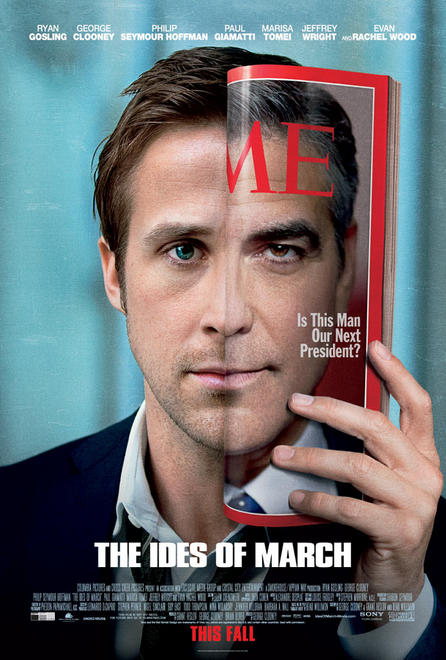
Let’s begin with what “The Ides of March” won’t be: it will contend for no Oscars, it does not threaten the exclusive club status of “All the President’s Men” or “Primary Colors”, and it lacks the camp appeal of “W.” It is, however, the latest cinematic attempt to demonstrate that the past-time of people like us is actually kind of watchable, and interesting, and if we selfishly want to see more of our dreamworld being glamorized, our kind should care if this sort of thing still makes good movies.
Hollywood, by the way, senses that politics usually does not sell, and it makes its accommodations to this reality. This spring’s “Adjustment Bureau” shunned its political story-line in its own advertising, and another momentary flash in the pan, Bradley Copper’s “Limitless”, tacks on a political sub-plot only in the final ten minutes (it works as well as trying to work a fender bender in the studio parking lot into the action.) Even a film that is unambiguously about a political figure, the upcoming “J. Edgar”, exists more because of the tangled webs that apparently existed in Hoover’s private life, than because he blithely abused the prerogatives of federal law enforcement through the terms of eight presidents.
So, when the big screen goes there anyway, and tries to make cash out of politics, its strategy is to bet on the best and most charismatic talent it can get. “J. Edgar” has DiCaprio, and the “Ides” has George Clooney–this generation’s successor to Robert Redford as the man progressives wish were as politically ambitious as he is politically active. Clooney is excellent for the usual reasons–the effortlessness, the cool, the sense that being him is a pretty good, unfair for the rest-of us deal. Ryan Gosling, at this stage in his stardom, has a charisma rooted more in a look than a persona, and he is neither strikingly good nor appallingly bad here. Then there is the wickedly brilliant Phillip Seymour Hoffman, who is superb, and continues his gift for making warped personalities likable–no accident that he pulls off one of the movie’s few surprise turns, doing a slimy thing for the most high-minded of reasons, and making a pretty good speech about it!
Read the rest of… Artur Davis: “The Ides of March”
If you are new to the site — introduced to The Recovering Politician by today’s NPR/”Q” broadcast of an interview with contributing recovering politician Jeff Smith — welcome!
Here are some handy links to Jeff’s most popular pieces:
To learn more about Jeff Smith’s fascinating path from rising political star to federal prisoner to hopeful redemption, read his critically acclaimed piece, “The Long and Winding Journey to My Second Act.“
You may also like to read our most popular pieces, all written by former politicians gone good:
For media requests and individuals interested in contacting Jeff to be made aware of future book events and speaking engagements, please email jeffsmith2006@gmail.com. To follow him on twitter, go to twitter.com/JeffSmithMO
National Public Radio’s “Q”: A popular program — produced by the Canadian Broadcasting Company that reaches hundreds of public broadcasting stations in the U.S — just broadcast a 20-minute interview with Jeff Smith about his career and popular posts here at The Recovering Politician.
Occupy Wall Street has the potential to become a progressive tea party, if its energy and passion is effectively channeled.
The spontaneous uprisings in a variety of cities demonstrate that the dissatisfaction isn’t limited to liberal NYC students and professional activists, but has struck a chord with regular folks around the country.
And the Reid millionaire surtax amendment to Obama’s jobs bill this week suggests that this new populism is being heard in the nation’s corridors of power.


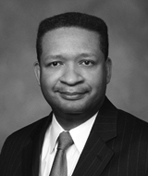 I’ve changed my mind on voter ID laws — I think Alabama did the right thing in passing one — and I wish I had gotten it right when I was in political office.
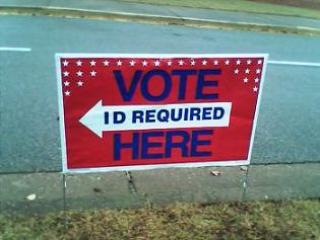 Voting the names of the dead, and the nonexistent, and the too-mentally-impaired to function, cancels out the votes of citizens who are exercising their rights — that’s suppression by any light. If you doubt it exists, I don’t; I’ve heard the peddlers of these ballots brag about it, I’ve been asked to provide the funds for it, and I am confident it has changed at least a few close local election results.