By Jonathan Miller, on Fri Apr 15, 2011 at 2:15 PM ET
In early 1995, one of my best friends, David Hale (now U.S. Attorney for the Western District of Kentucky) called me to see if I would help the campaign for Secretary of State of his law school classmate, John Y. Brown, III. I was certainly aware of Brown’s dad, the former chicken magnate and Governor, but my parents had opposed Brown Jr.’s last campaign, opting instead to support some guy named Steve Beshear.
Still, I was bored working as an associate for a big Washington law firm; David made a compelling case; and John, upon meeting, seemed like a nice, well-meaning, intelligent guy.
Somehow, as the only one in the room with a modicum of campaign experience, I was enlisted, pro bono, as the campaign’s media consultant. I wrote and directed a series of ads that, while extraordinarily amateurish, apparently didn’t hurt Brown too bad — he won both the primary and general elections by wide margins.
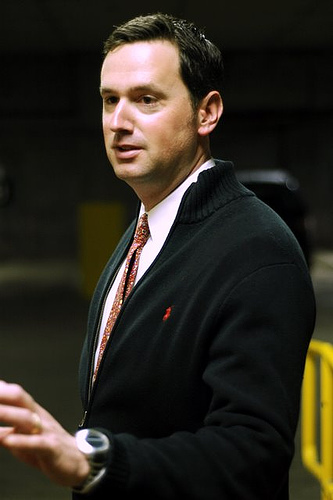
Most importantly, watch for the international television debut of my future running mate, John Y. Brown, IV, whose newfound mobility skills inspired the ad, and whose telegenic appearance cannot be underestimated for its vote-accruing effect:
Our own Contributing RP, Jeff Smith, may have never dreamed that any good would come from his required stay at a federal prison. But the unlikeliest of environments proved to be an unexpected fountain of entrepreneurial spirit.
Jeff writes about what he learned in this week’s Inc. magazine:
B.J. was one of many fellow inmates with big plans for the future. He vowed that upon his release, he’d leave the dope game and fly straight. He’d recently purchased a porn website targeted at men with a fetish for women having sex on top of or inside luxury cars, with a special focus that explained his nickname. For just $10,000, he had purchased the domain name, the site design, and all of the necessary back-end work enabling financial transactions. The only component B.J. needed to supply were the women, and due to his incarceration, he’d named his 19-year-old son “vice president for personnel and talent development” and charged him with overseeing auditions. Who says a good old-fashioned family business can’t make it anymore?
It was my first week in a federal prison, and I was beginning to see that it was far more nuanced than the hotbed of sex, drugs, and violence depicted on television documentaries. It was teeming with ambitious, street-smart men, many who appear to have been very successful drug dealers on the outside, and some of whom possess business instincts as sharp as those of the CEOs who wined and dined me six months before. Using somewhat different jargon than you might hear at Wharton, they discussed business concepts such as promotional incentives (“I don’t never charge no first-time user”), quality control and new product launches (“you try anything new, you better have some longtime crackhead test your new shit”), territorial expansion (“Once Dude on the East Side got chalked, I had my dopeboys out on his corners befo’ that motherf—er’s body was cold”), and even barriers to entry (“Any motherf—er that wanna do bidness on the West Side know me and my boys ain’t scurred to cap his ass”).
How does one recover from a passion, a deep abiding interest and engagement? From a loss, maybe—that can take some work. But I don’t ever want to recover from politics, though I won’t run again.
I may have had less trouble than some recovering from a loss, because I chose after 12 years in Congress to take a long-shot chance at a U.S. Senate seat against Sen. Susan Collins, an incumbent with an approval rating over 60 percent. Those odds, I realize even more today, don’t usually work out, and mine did not.
When my friend Bill Delahunt retired rather than run again for the Massachusetts 10th district, he had a simple explanation: “I have a two-year old granddaughter.” I get it. My wife and I have a three-year old grandson and a one-year old granddaughter—with another on the way.
That’s not much of a prescription for younger recovering politicians, but it works for some of us.
I do miss the people, my constituents in Maine, all over the state. People of all ages and backgrounds from all walks of life; the students, the retired, labor activists, businessmen and women, health care providers, the uninsured, veterans and war protesters, delegates to party conventions and, yes, even (or especially) supporters of mine at political fund-raisers.
I don’t miss the hours, though. I ran into Tom Davis, the respected Virginia Congressman, on the street in Washington in 2009, the year after we had both left Congress. He just looked at me and said, “Weekends!”
Since I work now as the CEO of the Association of American Publishers, the public policy advocacy organization for the book publishing industry, I spend half of most months in Washington. So I still see some of my friends in (and after 2010) out of Congress. Most of those that have left in the last few years have few regrets, because the atmosphere of congressional activity has become poisonous.
As a form of recovery, I am refusing to leave the arena entirely. Within days of losing my Senate race, I started writing a book which has evolved into an attempt to explain the deeper sources of the polarization that cripples our ability to make long-term strategic decisions about our most pressing public issues.
For me, the signature question of my experience was, “Do these guys believe what they are saying?” That’s what we Democrats asked each other when we heard, “Tax cuts pay for themselves,” or “We’ll be welcomed as liberators,” or “Climate science isn’t proven.” We fully understood that many of our arguments made no sense to Republicans. Why not?
I am exploring the attitudes and ideas that shape our thinking on a range of issues. In particular, I want to highlight the enduring tension in American culture and politics between individualism and community. The working title is Dangerous Convictions: Inside a Polarized Congress.
But spring is coming, the snow is melting in Maine, the birds returning and soon the fish will be moving again. I will pick up my fly rod and go off with my wife, Diana, to one of our favorite Maine sporting camps, casting for brook trout and landlocked salmon during the day and listening to the loons at night.
I will finish the book this year, and like most authors, I live in the hope that it will make a difference in how Democrats and Republicans think about each other, and, just perhaps, work together for the common good.
By Jonathan Miller, on Thu Apr 14, 2011 at 12:30 PM ET
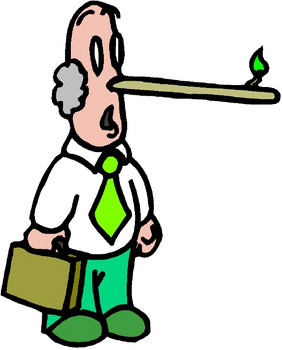
The one thing that I miss least about leaving the political arena is the lying.
If there’s one quality that unites Democrats and Republicans, politicians and the press corps; it is their mutual propensity for, and expectation of, fabrication.
Often, it’s the small lies that wise and wary observers can sniff out before they do harm: Sure I’ll raise $10,000 for your campaign. You can count on me to support your cause in the legislature. My, you look way too young to be a grandmother! Don’t worry, I’ve had a vasectomy.
Most common is “political spin” which, all too regularly, is simply a euphemism for lying: Barack Obama is a Socialist. The Republicans want to hurt poor people.
Every now and then, you encounter stone-cold, pathological liars in the business. They’re rarer than the profession’s reputation, but I’ve run into too many elected officials, reporters, and political operatives whose every utterance I’ve learned to disbelieve or suffer the consequences. And I despise it.
But should we put all of these liars into jail? Of course not.
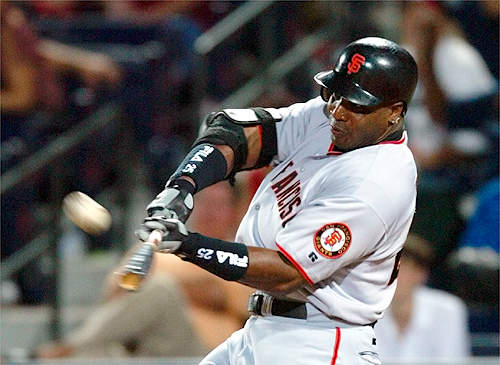
Yesterday, Barry Bonds was convicted for obstructing justice by lying to a grand jury about his personal steroid use. (Which begs the question — asked by Dashiell Bennett — how could Bonds be guilty of obstructing justice for lying when the perjury charges against him were rejected by the same jury?)
Note that Bonds was not convicted of — or even charged with — illegal use of steroids. His entire prosecution was based on his lying about his use, in an ultimately unsuccessful effort to protect his professional reputation.
Bonds is not the cleanest case because steroid use is illegal, and Bonds is such an unlikeable narcissist.
The most famous example of this controversy is even more polarizing. Like Bonds, President Bill Clinton lied to the American people and gave controversial answers to a grand jury in order to protect his public reputation. But here, the underlying misbehavior was not illegal. As Republicans like Newt Gingrich have been quick to assert, the 1998 impeachment was not about the sexual affair — which is not a crime in the District of Columbia — but rather about the President’s lying about it before a grand jury. While Clinton’s verbal parsing may have technically immunized himself against a perjury conviction, it is clear that he was impeached by the House for lying about underlying behavior that wasn’t a crime.
As a former member of the Clinton Administration, I’m biased; but I am comfortable saying that, without any partisan considerations, lying about a perfectly legal action should not be the basis of removal from office. And so did most Americans.
Let’s take an even cleaner case: that of contributing RP Jeff Smith. (Again, I admit bias: Jeff is my friend.) If you’ve read his stunningly candid story on this Web site, you know that Jeff was convicted of lying to federal investigators about whether he had knowledge of a scheme to distribute negative fliers about his campaign opponent. The underlying behavior may have violated campaign finance rules, but surely did not merit a jail sentence. And I argue, neither should his lying about it.
Did Jeff deserve to be punished? Absolutely. Stripped of his public office? Perhaps. But sentenced to serve a one-year term in a jail filled with violent offenders? I believe the punishment overwhelmingly exceeded the crime.
Of course, I am not arguing in any way that perjury and/or obstruction of justice should be considered misdemeanors or civil violations in every instance. Of course, lying to an authority about illegal activity, particularly of a violent nature, must be punished severely.
Nor am I arguing that there should be no punishment whatsoever in these circumstances. Lying to an authority is wrong; and the offender must be held accountable for his or her actions.
But someone who lies about a non-violent, non-criminal activity, in order to protect his reputation and family — a very natural, human instinct — should not be treated akin to a violent criminal.
I will soon be interviewing Jeff for RPTV to discuss this issue. But I’d like to know your opinion first: Does lying to a grand jury or an investigator about a legal activity merit a jail sentence? What are your suggestions for reform? Or do you like system the way it is?
Political novels are a dying breed, and the death has been a long, slow one. But into the void steps Jeff Greenfield with a smart, well conceived set of political short stories called “Then Everything Changed“. In less than 400 pages, Greenfield, one of Robert Kennedy’s best speechwriters and an accomplished journalist, pulls off what is arguably the best political fiction in the last generation: it will and should endure for its skill and its contribution to our imagination. The book is built on three novellas: the premise of each is that a particular historical fact happened a fraction of an inch differently, and that the political world was realigned accordingly. The first supposes that a would be assassin lurking outside John Kennedy’s Florida getaway in December 1960 carried out his plot to steer a car loaded with explosives into the President elect’s path; and that the tragedy thrusts Lyndon Johnson into power three years early, and makes LBJ the leader who faces Soviet aggression in Berlin and Cuba. If the actual fact that JFK was stalked by an potential assassin during his transition is so obscure today that some of Kennedy’s own biographers don’t know it, the second “what if” has been fodder for speculation for two generations: Greenfield’s version is that Sirhan Sirhan‘s hastily improvised shooting of RFK is thwarted and that Kennedy lives to face off against Hubert Humphrey in a thrilling Democratic convention and Richard Nixon in a close run fall campaign. His prize is a country with outsized expectations of a second Camelot, which he must navigate as he tries to pursue a tough-minded liberalism that stirs up dust from the left and right.
The final premise is not built around life and death, but around the power of words never
How would these changed events have affected Chevy Chase's career?
spoken. It imagines that Gerald Ford managed to averted a still inexplicable gaffe on foreign policy in a presidential debate with Jimmy Carter, and ended up passing Carter to win a narrow electoral college victory. (It is largely forgotten now that Carter’s win would have been reversed by a shift of less than 15,000 votes in Ohio and Mississippi). It is Ford who governs during the stagflation and drift of the late seventies, and when Ronald Reagan emerges as the nominee four years later, he bears the burden of a decade of failed Republican rule. His opponent, a charismatic one term Colorado Senator named Gary Hart, whose New Democrat aura is the right antidote to more conventional candidacies by Edward Kennedy and Reagan. Anyone engaged (or addled) enough by politics to be reading this blog could spin a nice set of counter- factuals around presidential elections. Where Greenfield surpasses the guessing game is his exceedingly deft injection of real life variables into his fiction. Greenfield’s LBJ remains determined to surpass Kennedy’s martyred luster by a prioritization of voting rights in the South; at the same time, his well documented insecurities make a catastrophic mix with Kruschev’s adventurism in the early sixties. Similarly, the same Bobby Kennedy who bravely exposed himself to a grieving black crowd in Indianapolis the night of Martin Luther King’s death is instantly familiar in the fictional account of RFK facing down a mob of student demonstrators in Chicago at a critical moment at the convention. Greenfield just as credibly suggests that a presidential campaign by Ted Kennedy would have floundered in any timeline under the weight of innuendo and doubts about his character, and that Ronald Reagan’s penchant for tactical boldness (think: the real life near selection of Ford as a running mate in 1980) might have led to a historic choice of a running mate in the fictional version of 1980.
Read the rest of… Artur Davis: “Then Everything Changed”
The race is officially on. Less than 26 years before the filing deadline, we now have two slates running for Governor in 2037. You may have caught the RP’s announcement earlier today that he was running with 17-year-old John Y. Brown, IV as his running mate. Now read contributing RP John Y. Brown, III‘s statement in response:
Although we were hoping to keep our plans under wraps until 2036, it looks like [The RP] and Johnny have smoked out Emily’s ([The RP’s] daughter Emily, that is) and my plan to launch our campaign for Gov and Lt Gov (I’m running as #2….given I’ll be 74). We, too, were confused about the election calendar and were hoping to run in 2037-so that actually works out well and, given it’s not an official election year will likely discourage other tickets from running that year. I suspected Johnny’s issue of furloughed school days will play well with the younger set….although Emily and I view it as pandering to the youth vote. We will counter that platform with something that involves deficit reduction and job creation and tie it to something that is pro-puppies (Emily thinks this is important and I suspect puppies will poll well in 2037). Game on!
Thoughts? Do you have a favorite ticket? Other ideas for candidates? Did you read Brown’s column about political addiction yesterday and are jonesing to jump in the race yourself?
Please use the comment section below to make any statements, announcements, etc.:
By John Y. Brown III, on Mon Apr 11, 2011 at 8:30 AM ET
When Jonathan Miller told me about his idea of starting a website titled The Recovering Politician, I thought it was a clever concept—-a partly tongue-in-cheek, partly insightful look at life after elective office. There is the famous last scene in the film The Candidate where Robert Redford’s character, a charismatic underdog running for the US Senate, pulls out a narrow upset against an entrenched incumbent. Just before his acceptance speech he ducks into a small room to avoid the throng of supporters cheering him on. He wants a moment alone with his campaign manager whose sole purpose in life is to win political campaigns. The Candidate, looking perplexed, looks up and solemnly asks, “What do we do now?”(Click on Redford’s mug to view the scene.)
It’s an “Aha” moment for the audience that what primarily drives some of our political candidates may not be the privilege of toiling over mundane public policy day in and day out, but rather to “win” some kind of overdramatized contest and the sense of accomplishment that comes with it. (Think of the hit TV series the Apprentice that follows job applicants for months going through a variety of ordeals until one is finally told by Donald Trump, “You’re hired.” We never find out—or care, for that matter—how the winner actually performs on the job.) Political candidates often get similar treatment from voters and the media. We treat business and politics as part sport and part theater.
But The Recovering Politician asks a slightly different and more personally poignant question: When one’s political yearnings have been squelched, dashed, sated, or otherwise drummed out of him or her, doesn’t every ex-politician go into that same small room ––this time alone—and ask, “Now what do I do?” The answer, of course, is yes —and the choices ex-politicos make to create meaning in their lives post-politics is more interesting and hopeful than one might think. The Recovering Politician blog explores this area in hopes of humoring and humanizing the reader—and the subjects.
My name is Lisa Borders, and I’m a Recovering Politician. I prefer the term public servant, because for me, it’s really all about serving the public, not politics, but I’ll leave that discussion to another post.
I’ve been out of office (clean?) since January, 2010, and as of this April 8, 2011, post that’s 15 months, 3 days and 10 hours and 15 minutes of sobriety. While serving as City Council President, or vice mayor, I lost a 2009 bid for Atlanta Mayor. The loss was painful, but by the time my opponent and successor was sworn in, I had journeyed through anguish, astonishment, anger and acceptance at such a pace, I’d left Atlanta’s politicos in their own state of shock. I’d endorsed one of my competitors, made high profile appearances on his behalf and even agreed to co-chair his transition team. I attribute this rapid recovery to my commitment to community vs. clinging to campaign catastrophe. I trust this commitment will sustain my recovery into a long future of incontrovertible impact.
By way of explanation, I would tell you that my addiction to public service, or politics, runs in my family. Although my mother and grandfather both made unsuccessful political bids, both (as extraordinary community activist citizens) made major contributions to desegregation in the City of Atlanta. Their service results included open housing as well as integration of buses, lunch counters and public safety forces. My father was a physician and, although he never sought public office, he made a difference by empowering people to take charge of their health through political activism.
This collective familial body of work focused on creating opportunity and developing capability among the city’s disadvantaged. I can proudly say my fore-parents opened many doors and left wide paths decorated with astounding, against-all-odds, or dare I say it, almost INTOXICATING accomplishments. With such powerful examples, how could I not “be seduced by the siren of public service”?
As a teenager, I made my own mark by integrating one of Atlanta’s most preeminent and pristine independent schools, convincing my European classmates that I wasn’t so different from them after all. As a Duke undergrad, I surprised my genetics professor by dispelling his “research-based” belief that blacks and women were GENETICALLY inferior by earning unprecedented A-grade-level work. These experiences demonstrate my preferred revolutionary role as one of inside team player vs. outside agitator.
So you could say by birth, breeding and branding, I defined myself very early as an imbedded change agent, not so much by talk, but by action. I sought office, in part, to satisfy an unfulfilled multi-generational pursuit, but also to take on yet another level of “Inside Woman’s Work.”
Mahatma Ghandi
I stand before you now as an ex-politician, who sees more clearly the battles to be waged and won. I’ve been to the dark side and returned with a greater appreciation for submerging ego, even a very public, high-profile one, to get thejob done. I know now that this work is more about the mission in my soul than a title behind my name or a label on my forehead. I realize now that I don’t necessarily have to be a player on the field to impact the outcome in the arena. I can’t promise I won’t ever run for public office again, but I can say that, as Gandhi advises, I’m fully committed to being the change I want to see in my world, whether politically titled/labeled or not. How about you?
By Jason Atkinson, on Wed Apr 6, 2011 at 8:30 AM ET
I was born in the Amazon and raised by a pack of wolves until the age of twelve, when some missionaries in dug-out canoes came to spread the gospel, then found me and took me back to their home in Oregon to raise me properly.
Jonathan Miller, my lifelong friend from our Rodel Fellow days, and expert forger of Al Gore’s signature, asked me to contribute a biographical sketch. I, however, really do not like discussing myself and I chose to use the more interesting Discovery Channel version of a first sentence.
I have never considered myself much of a politician either; I am more like an idealist with twinges of Robin Hood and Teddy Roosevelt pumping through my veins…so much for humility.
I have served in the Oregon Legislature since 1999. My first campaign became a forecast for my political life: lobbyists and “insiders” were against me and contributed $40k to my first opponent. My wife gave me $100 bucks and I outworked the guy. Many campaigns later, sometimes winning both the Republican and Democratic primaries, I am still the same man the “insiders” hold in suspect.
I teach a college seminar on Oregon politics and servant leadership. The class starts with the showing of three speeches: Robert Kennedy’s brilliant speech in Indiana when M.L.K. was assassinated; Representative Barbara Jordan’s speech at Watergate, “we are here to uphold the Constitution, the Constitution that at one time did not uphold me;” and Ronald Reagan’s first inaugural “City on a Hill.” Then I ask the students if they will see that sort of behavior while watching the Oregon Senate. That question is followed by the question that is the final exam: Do you believe 10% of the Oregon Senate holds the other 90% together? If they answer yes, then I ask them to put the names down. Since 2003, most of the answers have been yes, and most of the names are the same. The Senators named are rarely the grand-standers, the partisans or the blowhards. I think this premise holds true in every Legislature, every Congress all the way to the first five Continental Congresses in U.S. history.
If I have an epithet in politics, I hope it would be I was one of the 10%. That is my goal, but looking at my press lately, I am being taught what a rotten person I am. When Jonathan’s and my classmate; Gabby Giffords, was shot; I made a speech about civility and it was not taken well. Bloggers lit me up, talk-radio jumped in and other Senators saw a weakness so they piled on. In the hyper-partisan era we now live in, I am sad to report my experience has not closed the gap between issues or personalities. Thinking of becoming a recovering politician, I told a friend I was not afraid of the heat in kitchen, but after standing in it so long I have asked myself, is it worth it? Going back to that idealism line, I have to answer yes.
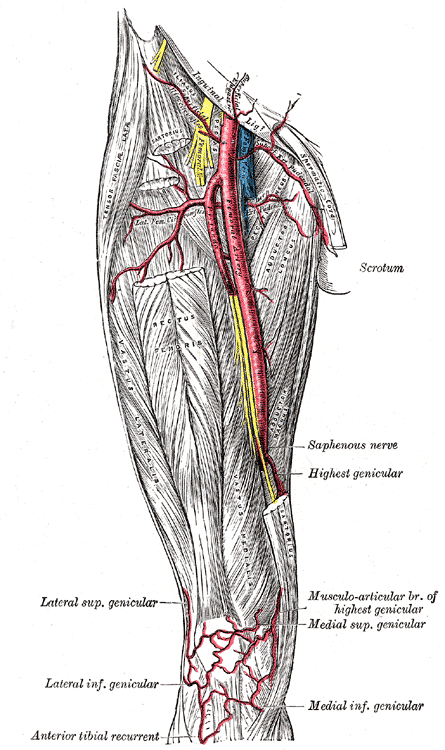
The femoral artery
In 2006 I ran for Governor, did not win, started working in Northern Iraq with the Kurds, came home, and was shot in my garage. Unlike the Amazon bit, this is all true. A .38 bullet – hidden inside a bag – was dropped in my shop and the derringer went off, destroying my femur and cutting my femoral artery. My wife heard the noise, came out to find her husband bleeding to death on the floor, tied a tourniquet with a rubber inner tube and has enjoyed Christmas and her birthday even more ever since. I am told I was about 90 seconds away from bleeding out, my leg was to be amputated and I was never to walk again. All three did not happen thanks to God’s healing hand and my headstrong ability to fight through the pain of rehab.
My life changed in that instant, but politics was already speculating I was dead, that I could not win statewide anyway, and that somehow I had shot myself. That last bit was the hardest to hear, as I never saw the gun and had no knowledge of it near me. About a year later, I was speech-making to a crowd of about 1,000 citizens on the steps of the Capitol, when someone who said to all I shot myself introduced me, which got a lot of laughs. I handled it ok, but my wife let the introducer know in no uncertain terms how far out-of-line he was.
It has been a tough three years: my wife had and beat cancer, our 8-year-old son had and beat cancer, and my party beats on me for not “being good enough.” There is no complaining as I have more pain killers than the lot of bad apples, but it does bring an old American conundrum into focus: How do you vote if your conscience and your district/state/party are at polar opposites?
I struggle with politics. I love service but am burned out on the pettiness. I hope the body politic is not run by those who can raise the most money to personally destroy the competition, but right now that is where the pendulum points.
A van down by the river...
Back to the Amazon with more truths: I earned my MBA after being run over by a car while on my bicycle. I sat on the pavement and thought “I have accomplished everything I set out to do in professional alpine skiing and racing bikes around the world, I think it’s time for grad school.” It was, and I married Stephanie half way through school. I live between Salem/Portland (Oregon’s political and business hubs) and our farm in Southern Oregon, except during steelhead season when I live in a van by the river. Anyway, I fly fish two-handed with religious conviction, struggle to get two more books published and enjoy foreign diplomatic work more than anything I have ever done.
And, just for the record, if you ever need Al Gore to sign something, I know how to get that done.
By Jonathan Miller, on Tue Apr 5, 2011 at 11:00 AM ET
We’ve been receiving some incredible feedback about the stunningly candid article posted yesterday by former Missouri State Senator — and current recovering politician — Jeff Smith. If you haven’t had a chance to read it, click here.
You will be hearing a lot more from Jeff as he contributes regularly to the site — writing about his past, his ideas for reform, and his musings on any number of issues. Stay tuned in the weeks ahead.
In the meantime, if you are interested in learning more about Jeff and his story, go to his RP profile page (which also can be found on the blue menu at the top of this site under “Contributing RPs”); check out this article published recently in The New Republic; or watch his video interview with Dylan Ratigan, by clicking here, or on the picture below: