By Jason Atkinson, on Mon May 2, 2011 at 2:15 PM ET
Today is reopening a wound for many yet we as Americans know this is healing. Today will be history tomorrow. Ten years later, we can start to walk away.
I find it difficult to be happy today, however, my thoughts are heavy with the families who lost loved ones at the hand of this wicked man. He embodied pure evil.
Late last night our forces embodied pure courage. We Americans are proud of justice and our collective resilience. Like the unity that swept the county right after 9-11, today we stand united again as Americans.
By Jonathan Miller, on Fri Apr 29, 2011 at 12:30 PM ET
Those readers familiar with national politics might remember “Walkin’ Lawton” Chiles, the Florida legend who walked from the western most point of the Florida panhandle all the way to Key West during his 1970 bid for the U.S. Senate. The walk became his signature action, so he incorporated it through his many future statewide campaigns.
In 2010, our own contributing RP Loranne Ausley took the gimmick another “step,” and ventured on a bike trek from Tallahasse to West Palm Beach to convince her opponent to finally engage in a civil debate. (Read about what Loranne is up to in her inaugural post.) Here is a report of her efforts:
By Loranne Ausley, on Wed Apr 27, 2011 at 8:30 AM ET
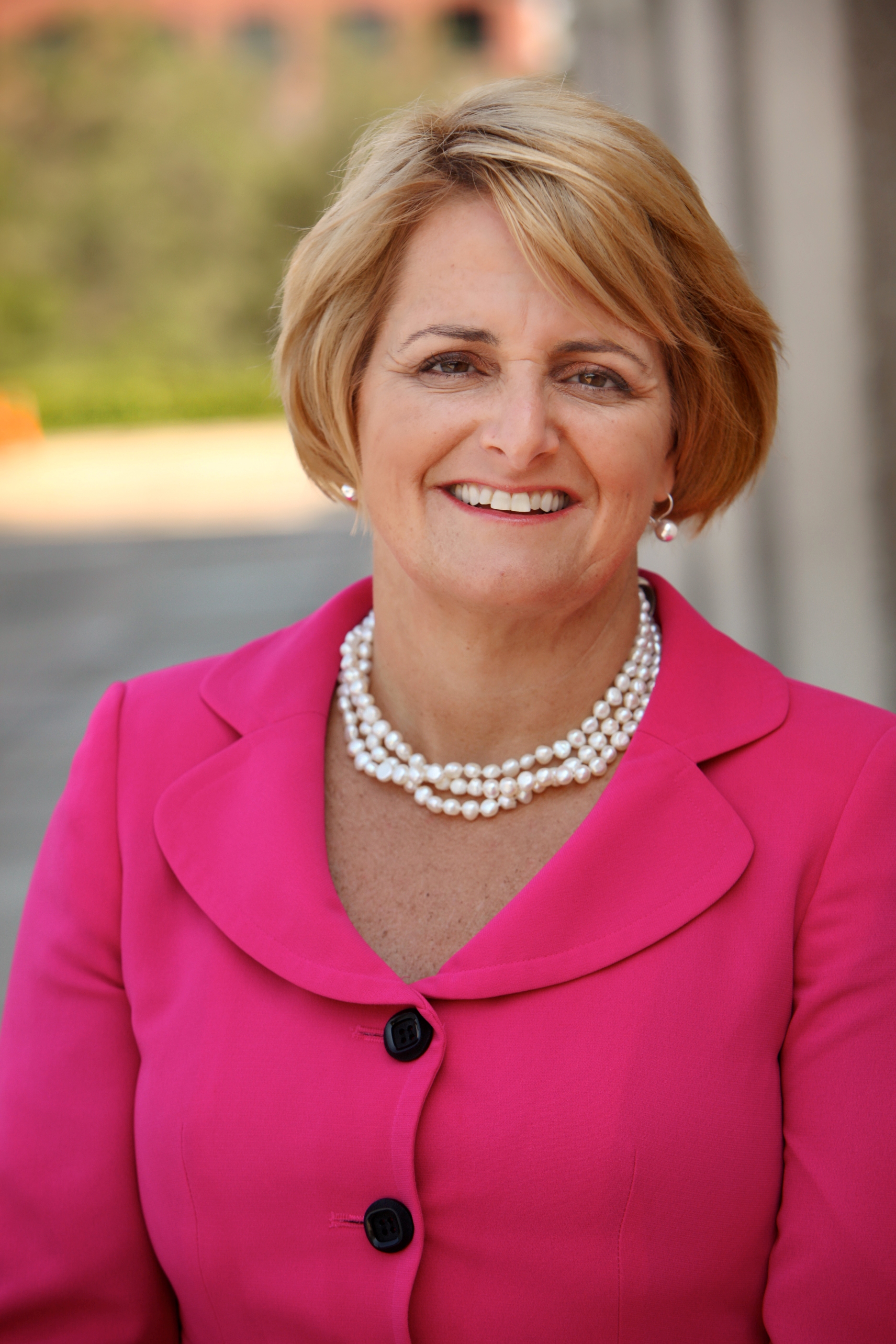
My name is Loranne Ausley and I am a recovering politician. At least that’s what they tell me… I am not sure I have actually recovered yet, but you can decide.
Let me start out by saying that I never have liked to be called a “politician.” I have always preferred the term “public servant.” Whatever you want to call it the truth is that I come by it honestly. As a 6th generation Floridian, I was at least the 4th generation to serve our state in some capacity. After 8 years in the Florida House of Representatives, term limits sent me on my way, but I wasn’t ready to throw in the towel quite yet. Even after a tough statewide campaign in 2010, I’m still not sure I am ready to throw it in. In all honesty, I am truly struggling with how to “create meaning in my post political life.” I am hoping that this exercise will help.
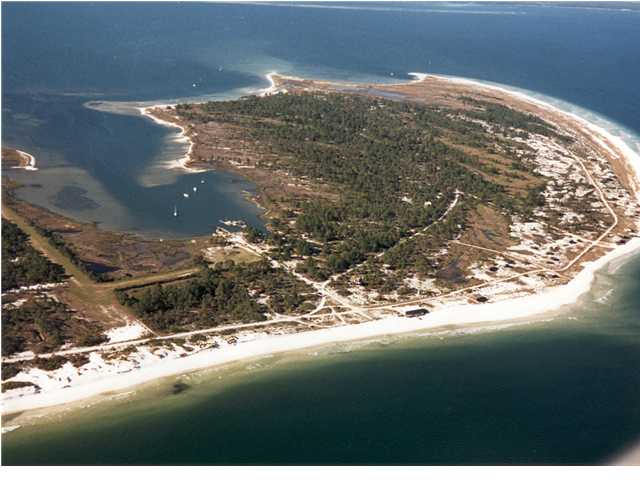
Dog Island, Florida
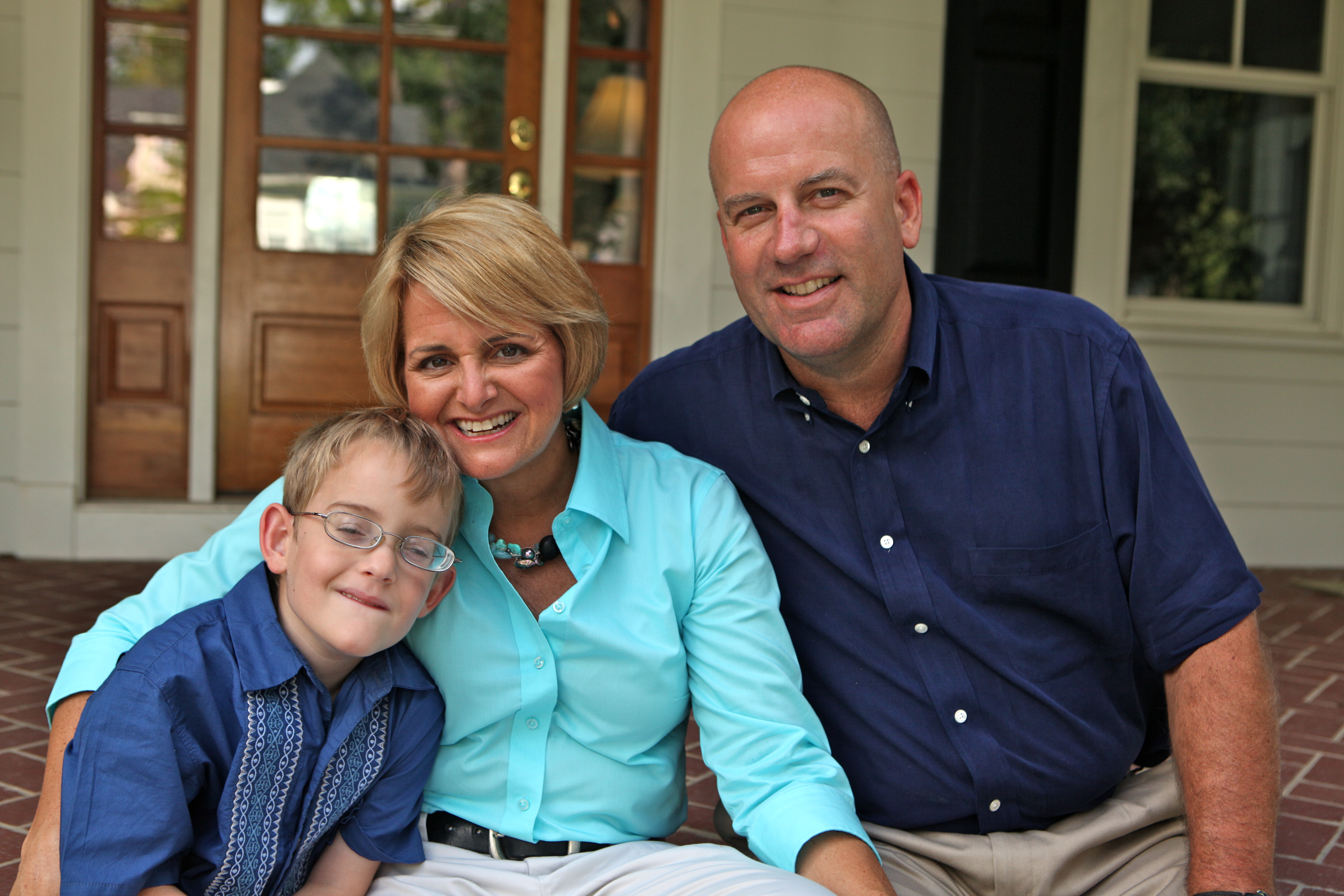
So I started out by reading Tom Allen’s post about his “Blissful Recovery” and found myself thinking… that should be me. Consider the following: I am writing this from one of the most beautiful places in the world, Dog Island Florida where I am celebrating 11 years of marriage to a wonderful, smart and supportive husband who I love very much. We have a happy healthy 8 year old son who is an all around great kid and amazing superstar drummer even though he was never expected to make it out of the hospital after his premature birth at 22 weeks weighing just over a pound. I had the privilege of serving 8 great years in the legislature, took a gamble and ran statewide. Anyone watching will tell you it was a smart, scrappy campaign, but it was 2010…I was a Democrat… in Florida. We lost, but ran a good campaign, maintained civility in the process, raised over $ 2 million and got almost 2 million votes… no regrets.
Anyone who is looking at my life from outside would say that my life is blissful, or that I am pretty ungrateful if I claim otherwise. By all accounts, I am living the life… I am a “stay-at-home mom” which means I finally have time to do all those things I have put off.
Here I sit on a remote barrier island on a gorgeous day surrounded by the people that I love… WHY AM I NOT BLISSFUL?!?
For starters, it is past the halfway point of the legislative session and I am watching from afar as all of the things I care about are dismantled. I run into public employees and police officers at the grocery store who are terrified about changes in their pensions. I run into children’s advocates at church who are dismayed about savage cuts to children’s services, and every day at my son’s elementary school I am stopped in the halls by a teacher or a parent with grave concerns about what is really happening and how it is going to affect our kids.
I found some solace in Lisa Borders’ post and tried to take to heart her realization that we don’t have to be players on the field to impact the outcomes. As much as we laugh about the lack of normalcy amongst “our types” and our addiction to crowds and the sound of our own voices and the applause that follows, in all seriousness we entered this arena because we care about our communities, our states and our nation, and we are committed to be the dynamic force of change that we want to see. Let’s face it – we all believe that it is our responsibility to leave this place better than we found it and ultimately that is why we are here… The other stuff is the icing on top.
So maybe this is why I can’t quite yet describe my recovery as blissful… I haven’t yet figured out how to make an impact from this side of the fence.
So I hope that Tom Allen is right that while some of us may be recovering from our losses, that none of us are recovering from politics/public service. And I hope that someone out there can help me make the transition… stay tuned!
The recent attention to local and national politicians’ racial gaffes reminds me of my own.
As readers may be aware, politicians have lately dredged up one of the ugliest aspects of our nation’s history: slavery and the subsequent century of brutality and discrimination. Haley Barbour has often tripped himself up, beginning with his 1982 watermelon comment. More recently he’s praised the ignominious Citizens Councils and declined to condemn a proposal to venerate Confederate war hero and founding KKK Grand Wizard Nathan Bedford Forrest with an honorary license plate.
Former Virginia Sen. George Allen of “macaca” fame had another recent gaffe, where he twice (erroneously) assumed that a tall black reporter was an athlete. Even the ever-poised Alex Trebek may have slipped up.
Closer to home in St. Louis were the comments of State Sen. Maria Chappelle-Nadal, who compared the black state legislators opposing her on a bill – that is to say, all of them – to “house slaves.”
***
I spent years walking a racial tightrope in city politics. I represented a district that was roughly 55% black, 6% Asian, 5% Bosnian, and 4% Latino. Since it was also estimated to be 15% gay, the percentage of straight white males like me was likely in the single digits.
Not that I minded. I actually found it exhilarating. At first.
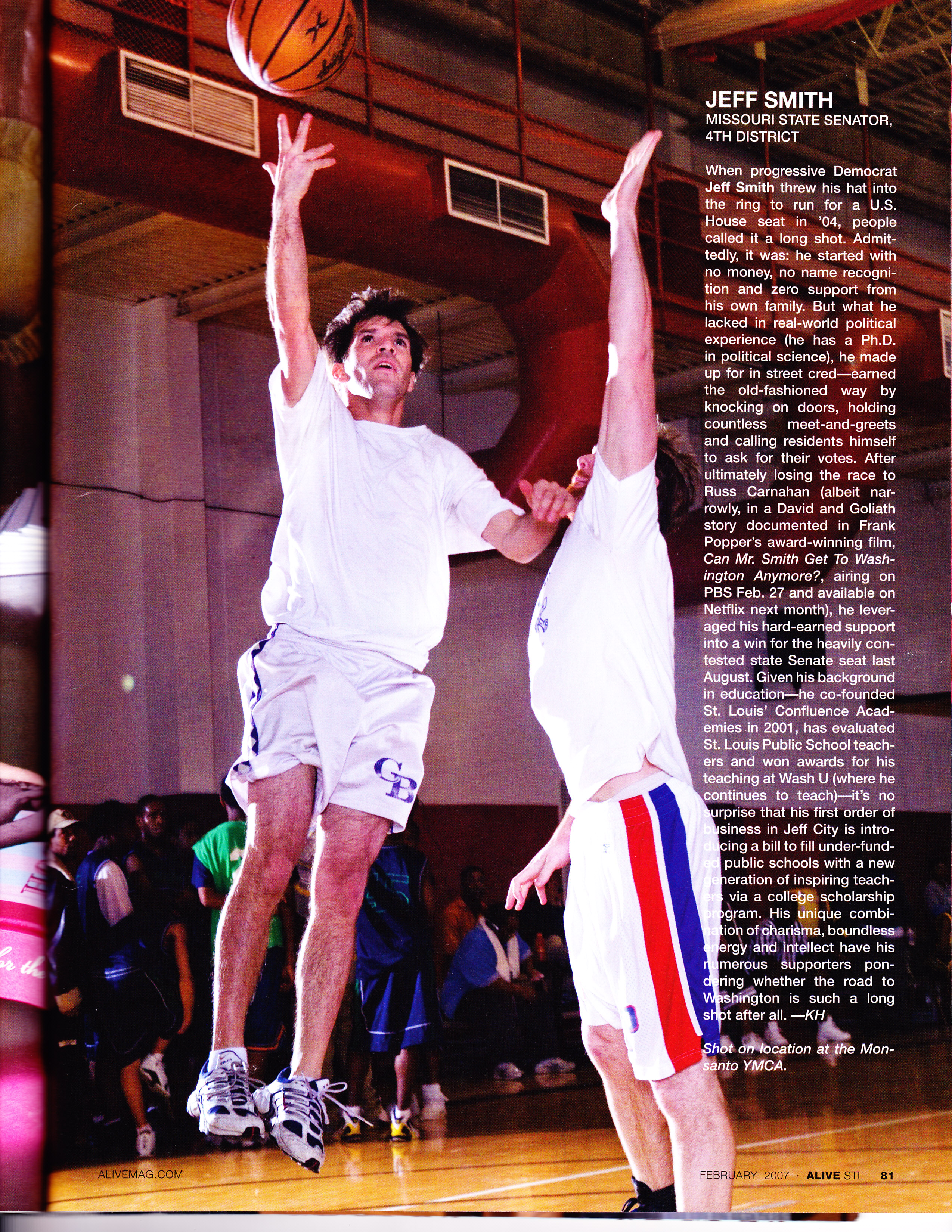
See, I’d grown up in a mostly white, middle-class suburb, but about 10% of my graduating class was comprised of black kids bused from the city as part of a school desegregation program. By my senior year, they comprised most of the basketball team, and as point guard, it was my job to lead the team.
My co-captain once told me that when he came out to our school freshman year, he was three years behind us academically. That pissed me off. It also made me want to learn more about the history behind the inequity. So at UNC-Chapel Hill, I majored in African-American Studies.
Conservatives like to invoke the guilty white liberal. I wasn’t guilty as much as obsessed. I wanted to immerse myself in the city’s black community and help black kids get to college.
So I came home from UNC and worked in the city public schools. Frustrated at the system’s dysfunction, I co-founded a charter school whose enrollment was 99% black. I served on the boards of non-profits focused on racial justice and black uplift. I coached basketball for a decade at a boys club where the only white people I saw were the occasional white refs. I taught ACT prep courses for black high school players in danger of becoming Prop 48 casualties. And when I played, it was with strangers in one of the small parks that dotted the corners of the city’s North Side, where the competition was fierce.
The point is, when I jumped in the race for Missouri’s 4th Senatorial District, I felt at least as comfortable around black people as I did around white people.
By Eva Moskowitz, on Mon Apr 25, 2011 at 8:30 AM ET
Contributing RP Eva Moskowitz, a former New York City Councilperson, has been an outspoken advocate for charter schools since her time in public office. Now the founder and chief executive of the Success Charter Network, a collection of seven charter schools in Harlem and the Bronx, she is speaking out on what she has learned from her work. Today, she argues, contrary to conventional wisdom, that class size is not the critical factor upon which to build education policy.
Here’s an excerpt — the link to the entire op-ed piece (originally published in the Manchester Union-Leader) can be found below it:
THAT CLASS size should be small is revered like an article of faith in this country. Its adherents include parents, education groups, politicians and, of course, the unions whose ranks it swells. In many states it is even required by law, which has lead to millions of dollars in fines against schools in Florida and a lawsuit against New York City by its teachers union.
Yet small class size is neither a guarantor nor a prerequisite of educational excellence.
The worst public elementary school in Manhattan, 16 percent of whose students read at grade level, has an average class size of 21; PS 130, one of the city’s best, has an average class size of 30. Small class size is one factor in academic success. The question, then, is whether the educational benefits of class-size reduction justify the costs.
Some proponents contend that because research shows reducing class size is beneficial, spending on this should be prioritized over anything that is unsupported by research. That’s a neat rhetorical trick but unsound logic. The absence of research on, say, teacher salaries doesn’t prove that we should pay the minimum wage to teachers to dramatically reduce class size. Research should guide spending decisions only if it measures the benefits per dollar of spending on all alternatives.
As we begin to celebrate a series of 150th anniversaries of the Civil War and its aftermath, we flash back just four years to a Presidents’ Day commemoration on the floor of the Oregon State Senate.
There, our very own Contributing RP Jason Atkinson does his best — and funniest — Abe Lincoln imitation, in a debate with a scary looking “George Washington.”
If you can suffer through the poor video quality, it is worth the punch line to Jason’s masterful oration. Enjoy:
By Jason Atkinson, on Fri Apr 22, 2011 at 12:45 PM ET
Homer Simpson has three phrases that work in every political situation:
“Cover me.”
”You’re right that is a good idea”; and
“It was like that when I got here.”
Brilliant! Gone are the quotes of Washington, Jefferson, and Lincoln, and stage right steps America’s three-fingered yellow skinned, balding “herald to the masses,” keeper of pop-language. Roll over Danny Webster.
Cover me!
A great phrase used liberally in the western United States in close association with “Hey, hold my beer; I want to try something.” It is not as used too much today across party lines and is more used safely inside the bounds of a politician’s registration; however in days past, I would find rural and urban legislators from different parities “covering” each other just to insure the process keep moving.
“Cover me” can be viewed as a phrase over cards in the smoky back room, but I think cover me is more of loyalty in friendship over partisan. “Cover me” — used between politicians, mostly for the good.
“You’re right, that is a good idea”
This is perhaps the ultimate way to defuse hostility. Since politics is the anvil and our words are the hammer, this Homerism works in nearly all situations. I’ve been teaching my eight-year-old son how to be a conversationalist, which I believe begins with being a good listener. While no one would claim Homer in the same breath as Mark Twain or Shelby Foote, the phrase does work if we first listen.
“It was like that when I got here.“
Lastly comes the great one. The phrase used by politicos ranging from Obama to freshly elected city counselors. The universal deflection in which a politician keeps their status, deflects criticism, and champions all reform: “It was like that when I got here.” It worked as children standing in a messy room; it worked in junior high when the bunsen burner caught fire; it performed brilliantly on Saturday morning chores with younger siblings; and does it ever work in politics! It’s pass-the-buck-plus.
After I thought about it a while, I can’t use it without laughing, blowing my already tissue-thin cover, but for our RP readers, lovers words, students of political survivors, listen for it in our public discourse and smile yourself.
By Kathleen Kennedy Townsend, on Wed Apr 20, 2011 at 8:30 AM ET
I want to thank Jonathan Miller for giving me the chance…as a recovering politician…to contemplate this week on the relation between faith and politics.
After my eight years as Lt. Governor of Maryland, I wrote “Failing America’s Faithful: How Today’s Churches are Mixing God with Politics and Losing Their Way.” I thought that many churches that had once served as a counterweight to a nation overly obsessed with money were no longer were fulfilling this critical function.
Religious communities were strong and vocal during the Civil Rights era, and in the protests against the Vietnam war, following a strong tradition which began in the First and Second Great Awakenings, during which ministers preached to thousands (and this was the time before microphones!!) demanding justice.
The Abolitionist movement and the Suffragette movement both grew out of the Second Great Awakening. The late 19th century was the time of the Social Gospel activists, who asked “What would Jesus do?” as a way to urge the end of child labor, and to promote safe working conditions, a strong union movement and fairness for prisoners. FDR compared the New Deal to the “Sermon on the Mount” enacted into law. In the thirties and forties, Jesuits ran over 300 labor organizing schools.
This Holy Week — Passover, Good Friday and Easter — is the perfect time to reflect on our lives. What have we done? What should we be doing? Questions of justice and fairness permeate our conversations.
As an added bonus, this spiritual moment coincides with the fierce debates about the budget. We can and should engage in examination of conscience and examination of country. My fear is that the religious communities will not play the vigorous role in this debate as they have in our past.
Unfortunately today, may churches seem to have shrunk God, so that rather than a Deity who cares for the whole nation, this God is concerned with only “me”. They ask: “What is my relationship to God?” not “What is my duty to be concerned with all God’s children?” God seems to be created in the image of the believer, not a large God who is concerned with everyone.
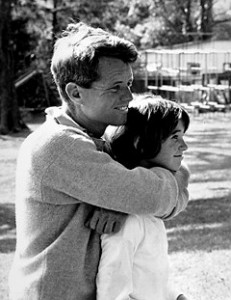
Kathleen and her dad. Click on the picture to watch a video on RFK's South Africa trip.
When my father, Robert Kennedy, returned from South Africa, he wrote an article for Look magazine entitled, “Suppose God is Black?” He knew that God cared about justice for all, not just the few. He knew that Christ had said it was easier for a camel to get through the eye of the needle than for a rich man to enter heaven.
Today, America seems to celebrate the rich and famous. We tax work at higher levels that we tax wealth. There are some wonderful leaders such as Jim Wallis of Sojourners and groups that are concerned with the Common Good, with the proper relation between faith and politics.
I hope that we use this time to use our religious teachings to inform questions of public policy. And, of course, I am interested in any response to these ideas.
By Jonathan Miller, on Tue Apr 19, 2011 at 9:15 AM ET
Pardon the interruption for some HUGE RP NEWS:
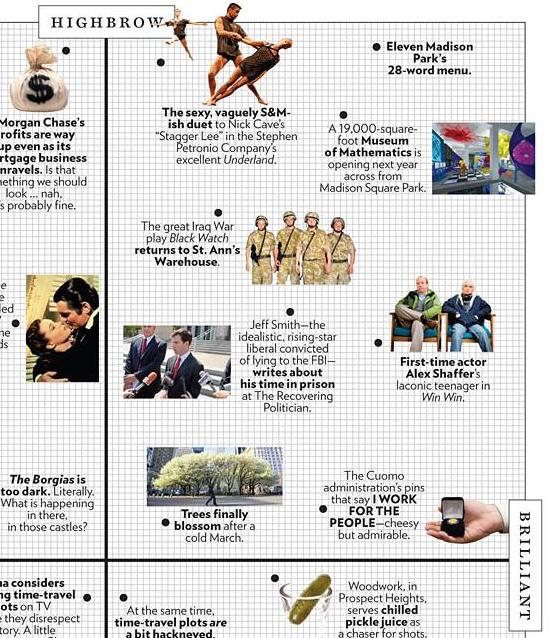
Contributing RP Jeff Smith, his stunning inaugural piece on his journey from politics to prison, and The Recovering Politician Web site, were highlighted this week by New York magazine’s The Approval Matrix, a leading national arbiter of the pop culture zeitgeist. (And now a TV show on Bravo.)
Best yet — Smith’s piece received the top rating: The Approval Matrix deemed it “Highbrow” (vs. “Lowbrow”) and “Brilliant” (vs. “Despicable”).
A pretty incredible development for a contributing recovering politician just beginning his second act and a Web site in only its third week.
Here is the screenshot of the top right corner of the matrix — click on it to read the entire page at the New York web site:
By Jonathan Miller, on Tue Apr 19, 2011 at 8:30 AM ET
By popular demand, today’s guest on RPTV’s Fifteen Minutes of Fame is contributing RP and former Missouri State Senator Jeff Smith. Jeff’s inaugural post for The Recovering Politician has electrified the blogosphere; already more than 10,000 people have read Jeff’s stunningly candid retelling of his post-political experiences in a federal prison.
In this morning’s interview, Jeff addresses many of the questions that our readers have posed since his article’s posting on April 4. If you are new to this site, be sure to read the following articles BEFORE you watch the interview: