By John Y. Brown III, on Mon Oct 29, 2012 at 12:00 PM ET
Another day traveling by air.
Another day with mild to modest frustration with a major airline.
The major airlines seem more and more to remind me of a old school ma’arm, just waiting to slap you on the wrist for something inconsequential.
Mostly because they enjoy doing it…
And another day, thankfully, salvaged by Southwest.
The new cool substitute teacher that all the students love. And all the school marmy teachers hate. ; )
=========
In SouCal airports you see a lot of people who look like celebrities, carry themselves like a celebrity , and who want to be confused for a celebrity–but who are not a celebrity.
I think it’s fun.
The fun part for me is staring at them awestruck and looking like, carrying myself like and wanting to be confused for one of their fans.
=======
It smells good in California.
Even in the airport.
Clean.
It’s like people here shower two or three times a day.
Or use some sort of New Age magnetic device that repels dirt and dust and prevents perspiration.
It’s not quite human.
Like a fresh fruity well-toned Droid who just finished another colon cleanse.
I somehow worry that people I say hi too will suspect I don’t smell like one of them and know I’m not from here.
The low level humming from my iPhone from the Black Crowes isn’t helping any either
==========
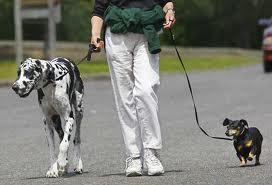
It’s a dog’s life —not!
Remember the bleak saying about every down-and-outer getting their moment, “Every dog has it’s day”? I doubt that gets used in SoCal.
As I pulled out of the airport into San Diego last night the one thing I noticed over….and over…. and, yes, over again…was the privileged life that dogs lead out here.
At least one in three people I saw out last night in a suburb near downtown San Diego were walking their well-groomed, poised and, frankly, self-confident dog(s). Not in a cutesy or ostentatious way, like Paris Hilton carrying a tiny lap dog in her purse as a sort of panting accoutrement. Rather it was a normal person finally acting like the “dog’s best friend” we’ve always promised to be but—as any dog you know will tell you—have not lived up to.
And that attention and connection with their human shows, too—shows in the way SoCal dogs carry themselves and interact with other dogs—and even humans. They have a carriage about them which says, “Welcome to my town. Notice my owner. Pretty cool guy, huh?” It’s like the dogs are as self-conscious of who is walking them as their owners are about impressing others with their choice and type and breed of dog.
It’s darn near like the dogs out her are treated as a separate but co-equal species to humans. When you see a person and their dog on a chain walking, it’s not like back home. It’s like a couple out to get ice cream. Sure, the human appears to have control of the leash, but I suspect if you look closely it’s some sort of mutual canine-human leash that lets the two co-equal species stay together but without holding hands, or paws.
Oh, and dogs aren’t left outside here when their human pet goes into a store. No hitching post for these darlings. The dog walks in with every right to be there as anybody else. And seems a little impatient because there isn’t a larger canine section.
And as much as I hate to admit it, these dogs can be intimidating to people visiting from out of town. A strong-and-silent type pit bull was in Rite Aid last night with a cute young couple for a walk. The dog was well-manicured and obviously a female because it had a little bow in the corner of its well-coiffed mane. She began sniffing me—not like other dogs…but slyly as if by accident— and I instantly felt self-conscious when the dog looked up at me with these soft but probing and judgmental eyes. Although my new domesticated pit bull acquaintance didn’t say these exact words out loud, she was clearly thinking “You’re not from around here, are you? What….what kind of –whatever it is that you are….are you? And don’t even think about cutting in front of us in line. I’ll bite you and humiliate you in front of everyone. I’m still a dog, you know. Are we clear?”
I nodded affirmatively to the dog. I recovered my bearings long enough to realize something wasn’t quite right and mumbled, “Nice bow.”
The dog’s head whipped around as if to say, “What was that?!” “What?” I said. “I didn’t say anything.” The human owners looked oddly at me.
I offered, “Sorry. I wasn’t talking to you.”
It was the first time in a very long time that I felt like Junior from Hee-Haw stammering for something to say and knowing it would not be something appropriate or helpful. So I just kept quiet. And let this dog have its day. Like it does everyday in SoCal.
Read the rest of… John Y’s Musings from the Middle: Travels to SoCal
By Artur Davis, on Mon Oct 29, 2012 at 10:00 AM ET
If it turns out the life of Barack Obama’s presidency is measured in months, left-leaning analysts will agonize over what went so wrong. Their explanations will range from confusion over how a stunningly gifted orator never mastered the greatest national pulpit, to consternation about the intransigence of Republicans and the eruption of the Tea Party, to sober hand-wringing about the intractable nature of 21st Century democracy.
But the mourning will not match the genuine misery and perplexity many Americans feel regarding the state of the nation. For all the explanations of how Obama has fallen short of his promise, the simplest one is in the discontent of those 23 million plus individuals who are under or unemployed, some for such long stretches that they have fallen through the cracks of the government’s official statistics. These men and women are the source of a national fury over why things are the way they are, and they and the Americans who know them have proved resistant to deflecting responsibility or changing the subject.
To be sure, as his defenders never cease to point out, Obama was greeted with the debris of a national calamity. The country seemed to be teetering on the edge of depression for stretches in late 2008 and early 2009, a casualty of a Washington environment that privileged and made unaccountable the giant government sponsored housing enterprises and a reckless Wall Street culture that took the risk out of lending for the mortgagor. But rather than tackle the crisis with single-mindedness, Obama veered off in too many scattered directions: a stimulus whose legacy is a slew of poor returns on investments in alternative energy and uncompleted construction projects, a partisan healthcare law that drained off a year of the administration’s efforts, a massive overhaul of the carbon producing economy that was too unwieldy for even many Democrats to embrace, a financial industry bill that has not stopped excessive leveraging in the capital markets. The portfolio is one that Obama and his allies have strained to explain, much less justify.
Read the rest of… Artur Davis: A Closing Argument for Mitt Romney
By John Y. Brown III, on Fri Oct 26, 2012 at 12:00 PM ET
Warning! I now know what Hell looks like—and I am never carrying a rolled mat. It could be a sign of my future.
I recently walked in on a hot yoga class breaking up. I didn’t know what it was at the time and my mind went into overdrive, trying to figure out what these people were doing. They were stripped down as far as they could be in public, sweat was excreting from ever pore in their body, they looked pained and exhausted and dispirited and some even were moaning with exhaustion. They appeared to be part of a group exercise that morning in Hades rolling the Sisyphus stone together up a hill.
I figured they were on some sort of smoke break from Hell. Except none were smoking….and actually looked pretty healthy.
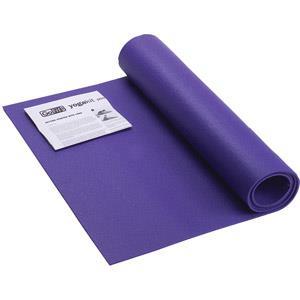
But they all carried these eerie looking rolled devices (see below). It looked like a rolled mat but apparently is for self-flagellation and required packing for the Underworld. Do not be caught carrying one of these in public! And avoid others who do!
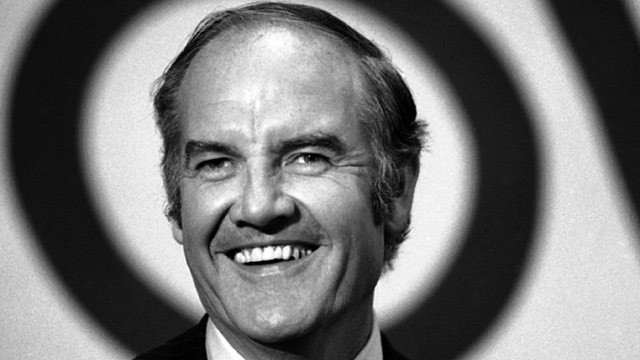
The eulogies for George McGovern, who just died at 90, have taken a predictable form: plaudits from the left for his inspirational effect on a class of aspiring liberal politicos combined with an acknowledgment that he was a singularly ineffective, disastrous candidate whom the same left never needed or cared to rehabilitate. To be sure, the evidence of McGovern’s incompetence and irrelevance is a narrative that Democratic analysts have had their own reasons to spin over the last two generations. It can’t possibly be, so the conventional wisdom goes, that a 49 state loser who spectacularly blundered the selection of a running mate and who is still synonymous with epic loss, was much more than an incidental character in a decade of unusual turbulence. And if McGovern’s legacy is just ineptitude, it is easier to dismiss him as a blip, an anomaly, in the liberal tradition.
But the theory of McGovern as a woeful bumbler has always shortchanged two features of the South Dakotan: the first is the novelty of the liberalism that McGovern helped foist on the Democratic Party in the early seventies, and the second is its durability in a party that putatively disowned him while absorbing most of his ideological sensibilities.
To grasp the novelty, it’s worth noting what post-war liberalism was prior to McGovern’s insurgency: a populist sounding, rhetorically lofty politics that had a transactional, anything but radical reality at its core. Adlai Stevenson was more of a trimmer on school desegregation than Eisenhower era Republicans. John Kennedy and Lyndon Johnson pursued conventionally growth oriented economic policies with tax cuts and balanced or near balanced budgets at the centerpiece. The Great Society’s vaunted anti-poverty initiatives were invariably complements to urban political machinery, as Geoffrey Kabaservice documents in his work on the erosion of moderate Republicans, “Rule and Ruin”. Hubert Humphrey disavowed interpretations of the Civil Rights Act of 1964 that endorsed mandatory hiring goals for minorities. And on foreign policy, the liberal vision was enamored enough of American power that Robert Kennedy’s announcement of his presidential candidacy styled the campaign as a contest to claim the “moral leadership of the planet”, even while pledging to wind down the conflict in Vietnam.
By John Y. Brown III, on Thu Oct 25, 2012 at 12:00 PM ET
The Pinterest Principle.
Want to have many interests?
Wade into the pool. And keep going.
My daughter persuaded me to join Pinterest tonight so I did. It’s a website where you select things you like —a sort of personality and style social medium.
At first because it was awkward and new, I was extremely selective and hardly “liked” anything.
But once I waded in and got comfortable with Pinterest, I started liking everything.
In fact, there was little I didn’t like!
Lesson?
Hobbies and interests aren’t a function of our curiosity or tastes or temperament. They are essentially a matter of getting comfortable in our environment.
Once that is accomplished the world becomes a friendlier place with much about it to like.
By Jason Atkinson, on Wed Oct 24, 2012 at 1:30 PM ET
We did it. You did it.
Last night our indiegogo site closed and we raised $35,000.
Thank you- Thank you everyone- This project has 89 supporters from across the globe who want to see this happen. – From my close friends the Browns being first to two generations of river guides – the Borg family – being last. Thank you.
Every nickel you helped us raise in the last month gave the project credibility.
Now what? Spread the good word and help us find investor partners in philanthropy, institutional investors, business partners and our friends in the tribal community.
By John Y. Brown III, on Wed Oct 24, 2012 at 12:00 PM ET
Sometimes on a late work night when I stop off at Thornton’s to reward myself with something utterly non-nutritious, I sit in my car wolfing at down and watch the nice clerk inside and ask myself, “If someone robbed Thornton’s now while I was watching, would I try to help stop the robbery?
So far that question has remained a hypothetical one. And so far, I have answered “yes.”
I would come to the rescue and save the day in every hypothetical instance I have imagined—dashing out of my gray Honda Accord that went unnoticed because the robbers saw 16 others just like it driving there.
I rush inside, slide across the floor to avoid bullets (really just for effect since there are never any bullets), grab a pot of scalding hot coffee, and throw it on the would be assailants just like the scene in Fast Times at Ridgemont High.
I then call the cops, do a couple of quick live interview,s and the clerk tosses me an extra Krispy Kreme doughnut “on the house” as I turn an wave a cavalier goodbye.
It’s exhausting.
Even though it’s all hypothetical.
But heck, because the heroics are so impressive in my hypothetical, I think I am probably excused for having to do anything now in reality if a real robbery ever does take place. You know?
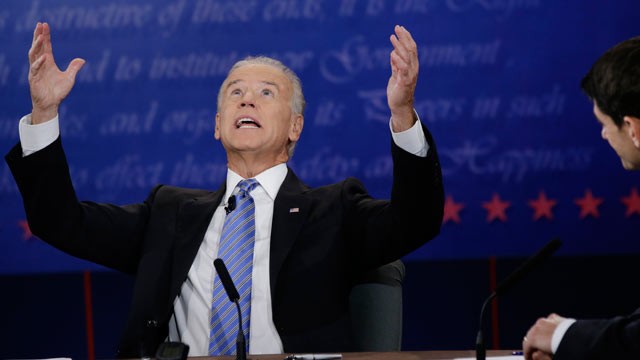
Joe Biden’s alternately snarling, eye-rolling, interrupting, grinning, occasionally weird performance seems to have traded off two conflicting outcomes: temporarily motivating Democrats who were unsettled by Barack Obama’s passivity in the first debate while repelling independents who got a florid reminder of just what it is they find distasteful about political combat.
But Biden unleashed revealed something about what has happened to the liberal political mood in this season. Beneath the back and forth over the quality of Obama’s economic stewardship, and the predictable jabs at the wealth and tax records of the first nominee since 1940 who has substantial private sector experience, there has been another context to this campaign, that is both retrograde and novel at the same time: namely, the left’s strategy of attack by caricature and ridicule, and the implicit worldview that conservatism is an oddball blend of plutocracy, racial resentment, sexual backwardness, and selfishness.
The backward leaning part of the theme is the resemblance to Franklin Roosevelt’s and Harry Truman’s exuberant Republican bashing, at least in the brutal depiction of the GOP agenda. But FDR’s tongue-lashing had a notable high-mindedness: the broadside in his 1936 acceptance speech about mastering the forces of greed in a second term was exquisite rhetorical theater of a kind Barack Obama as president has utterly failed to master. Moreover, the New Deal’s anti-Republican barbs were accompanied by a raft of prospective domestic legislation.
The core of the modern liberal sneer strategy, and Biden made it fairer than ever to describe it that way, is much more novel, not terribly high-flown, and not at all forward-looking. The technique unfurls itself daily behind the desks in MSNBC’s studio, where all but a select few anchors (Joe Scarborough, Chuck Todd) moderate rolling denunciations of all things Republican, without much pretense at balance, in the august editorial pages of the New York Times, which has traded in its vanishing profits as the paper of record for the mantle of intellectual enforcer of the left, and in a coherent, organized blogosphere which ritualistically strikes at every conservative pretense imaginable. Missing is any sustained rationale for what an Obama second term might look like, beyond the standard fare hike in upper income tax rates and a generalized commitment to more “investments” in conventional Democratic objectives.
The novelty is in the reversal of a generation of Democratic attempts to soften Republican/conservative opposition through persuasion. During the Clinton era, Democrats regularly sought to co-opt Republicans by shifting right on welfare and budgets, and moved back and forth between partisanship and outreach. Nor is there much trace of the feints liberals made a decade ago toward evangelicals, much less Obama’s 2004/2008 emphasis on reducing partisanship.
Spared the tactical imperative of persuading even mainstream conservatives, or crafting a legislative portfolio that could overcome gridlock, liberalism circa 2012 is largely a negative project aimed at dismissing the Right’s substantive and intellectual credibility. Nancy Pelosi’s eye-rolling at doubts about the constitutionality of the healthcare law, the establishment media’s persistent denunciations of the Tea Party as Neanderthal relics of George Wallace, the African American media’s trope that conservatism is racial backlash are all of a piece with Biden’s tactic of describing conservative economic policies as discredited claptrap.
We’ve all heard about the KLOUT hype-mania with employers asking job applicants about their KLOUT scores and using it to decide who gets hired….but this is going too far.
Depression symptoms include:
Feelings of sadness or unhappiness
Irritability or frustration, even over small matters
Loss of interest or pleasure in normal activities
Reduced sex drive
Insomnia or excessive sleeping
Changes in appetite
Feelings of worthlessness or guilt,
Trouble thinking, concentrating, making decisions and remembering things
A lowered KLOUT score
For some people, depression symptoms are so severe that it’s obvious something isn’t right. Other people feel generally miserable or unhappy without really knowing why.
But a drop in one’s KLOUT score of 3 or more points within a few weeks is usually an unambiguous sign of major depression—or at least should be!
By John Y. Brown III, on Mon Oct 22, 2012 at 12:00 PM ET
Great debate moments.
It is the season of debates, it seems.
Which got me wondering: What is the greatest closing argument I’ve ever seen in a debate? How about you?
The answer that kept coming up for me was a debate I watched in college several years after it took place. William F Buckley, Jr. debated a California governor who later became our president.
And won.
The issue was one I cared little about: The Panama Canal Treaty.
But there was a modern eloquence–and elegance, passion, wit, and substantive command of the issue at hand that impressed me more than any other debater in any other debate I had seen before or since.
Here is the clip. Agree or disagree, you have to admit, you are watching a master debater at the top of his game:


 Another day traveling by air.
 It’s a dog’s life —not!