By Nick Paleologos, on Fri Nov 2, 2012 at 10:00 AM ET
Everybody says the country is polarized. Really? It seems that everybody pretty much agrees on the following:
DEFENSE SPENDING:
1) Our troops should be the best trained and best equipped in the world.
2) The various branches of our military should not be competing against each other for resources but preparing instead to fight increasingly sophisticated threats to our national security.
3) Our allies should be paying their fair share of the cost of defending freedom around the world.
DOMESTIC SPENDING:
1) Social Security is good. But Warren Buffet should have to pay the same percentage of his total income into Social Security as the rest of us. And if the retirement age also has to go up a year or two in order to make the system solvent over time, we’re fine with that.
2) Medicare and Medicaid are also good. But each needs to be run better—and by that we mean cheaper. As far as national health care is concerned, let’s stop fooling around. Requiring businesses to pay for health care is ridiculous. It’s a huge drag on their ability to grow and to create new jobs. Basic health care (just like education) should be the birthright of every US citizen. Smart and healthy citizens make for a stronger and more competitive country. Fear of destitution from illness, on the other hand, makes us less entrepreneurial and less productive. The best thing we can do for this economy is to take the cost of health care off the backs of our job creators, and instead have everybody chip in.
3) Education? Don’t get me started. Every kid in America—regardless of income—goes to school. And that’s a good thing. So why stop at high school? If you’re smart enough to cut it, the country needs you to go to college. Period. But let’s face it. Colleges have been jacking up tuitions on the back of government guaranteed student loans for way too long. No college—public or private—should be eligible for any taxpayer funds of any kind (direct or indirect) unless they can prove they have a needs blind admission policy. That is, the kids they accept are allowed to attend—even if their parents can’t afford the full freight. And when colleges complain, the answer is simple. You’re supposed to be smart. Figure it out!
PUBLIC TELEVISION:
1) We get a much better bang for the buck from Big Bird, than from Big Oil.
Read the rest of… Nick Paleologos: A Closing Argument for Obama — Tough Choices? Gimme a Break!
By John Y. Brown III, on Thu Nov 1, 2012 at 12:00 PM ET
A couple months ago I took my awesomely cool and stupendously hip daughter on a father – daughter weekend.
She had a choice of a modestly priced event in a reasonably nearby city.
Her choice? Lollapalooza in Chicago How could I say no? I mean, Anthony Kiedis and I are practically soul-mates. We are both about 50 years old, both like the RHCP , think Flea is cool and many, many other similarities too.
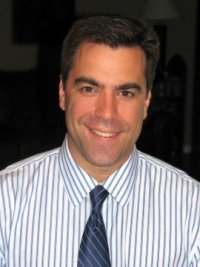
There were no other father – daughter couples we could ask to take a good picture of us. So this is as good as I could get.
Was it fun?
It was a disastrous blast.
Maggie is always game and willing to find the possibilities amidst the most unusual circumstances—like hanging with pop at an outdoor rock concert trying to replicate Woodstock with thousands of muddy, sloshed 17-24 year olds. And a 14 and 49 year old.
Oh, I got to see Anthony Kiedas, albeit from several hundred feet away.
I don’t think he saw me, but knowing my soul-mate was alive and well and jammin’ with Flea, made me smile. ; )
By Nick Paleologos, on Thu Nov 1, 2012 at 9:15 AM ET
We are very excited to introduce our newest contributing RP, Nick Paleologos. Nick was a Member of the Massachusetts House of Representatives for 16 years, and has since become a Tony and Emmy award winning theatre and film producer. We hope you enjoy his first piece, and many more in the weeks to come.
When I was a kid, I was blissfully unaware of the bone-crushing depression my dad lived through. He grew up on the hardscrabble streets of Lowell, Massachusetts—the son of Greek immigrant parents who were living in a cold-water flat known then (and now) as “The Acre.”
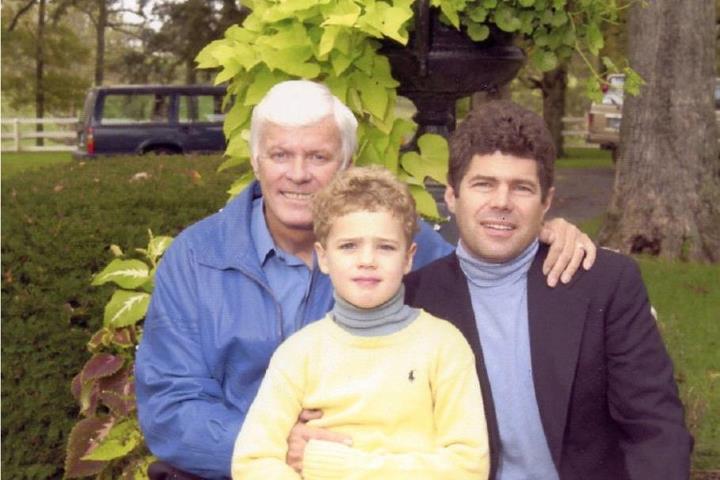
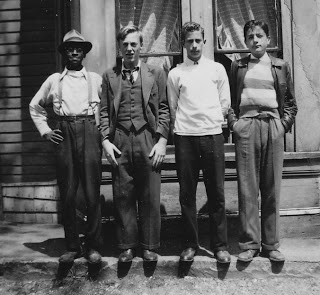
My dad (at far right in photo) was nine years old when Franklin Roosevelt beat Herbert Hoover for president in 1932. Hoover was a handsome guy who made a ton of money in the mining industry. By 1914, Hoover was so wealthy he was actually quoted as saying “If a man has not made a million dollars by the time he is forty, he is not worth much.”
The country clearly agreed. Between 1921 and 1929 (the first year of Hoover’s presidency) the top income tax rate for worthy millionaires like himself was slashed from 73% to 24%. Result? The Great Depression. By the time Roosevelt took over from Hoover, unemployment was at 25%, two million Americans were flat-out homeless, and all the banks in 32 of the 48 states (including the NY Federal Reserve) had slammed the doors shut on their depositors.
On Saturday afternoon March 4, 1933 Roosevelt gave his first inaugural address. Everybody in America (including my dad) was huddled around the radio waiting to hear what the new president had to say:
“This is the time to speak the truth, the whole truth, frankly and boldly…This great Nation… will revive and will prosper. So…let me assert my firm belief that the only thing we have to fear is fear itself—nameless, unreasoning, unjustified terror which paralyzes needed efforts to convert retreat into advance.”
You’re right. I am afraid.
“Values have shrunken to fantastic levels; our ability to pay has fallen; government of all kinds is faced by serious curtailment of income; the savings of many years in thousands of families are gone. More important, a host of unemployed citizens face the grim problem of existence, and an equally great number toil with little return. Only a foolish optimist can deny the dark realities of the moment.”
How did this happen?
“Primarily this is because the rulers of the exchange of mankind’s goods have failed, through their own stubbornness and their own incompetence…Practices of the unscrupulous money changers stand indicted in the court of public opinion, rejected by the hearts and minds of men.”
What can we do?
“…there must be a strict supervision of all banking and credits and investments; there must be an end to speculation with other people’s money, and there must be provision for an adequate but sound currency. Through this program of action we address ourselves to putting our own national house in order and making income balance outgo.”
Does that mean we all might have to pay a little more?
“If I read the temper of our people correctly, we now realize—as we have never realized before—our interdependence on each other; that we can not merely take but we must give as well; that if we are to go forward, we must move as a trained and loyal army willing to sacrifice for the good of a common discipline, because without such discipline no progress is made, no leadership becomes effective. We are, I know, ready and willing to submit our lives and property to such discipline, because it makes possible a leadership which aims at a larger good.”
That’s what Franklin Delano Roosevelt told my father and millions of others in 1933. Within a hundred days of that speech, the Civilian Conservation Corps (CCC) was formed. For the next decade, millions of unemployed young Americans found jobs in national forests and state parks all over America. My dad went to Vermont. It was dependable, physical labor from which the country greatly benefited. For his part, dad earned $30 a month, of which $25 was required to be sent back home to his family.
So when FDR sounded the call to arms in December of 1941, my father was only too happy to return the favor. He signed up to fight for his country in the Pacific. At the end of World War II, when dad stepped off his PT Boat—proud, penniless, and newly unemployed—the president wanted him to go to college. Even though dad could not afford to, FDR believed that going to college was so important for America’s future that he insisted upon the country paying for dad’s education.
Under the GI Bill, dad went to college and became a lawyer. In addition, eight million other veterans went to college, or to vocational training schools, or received low cost mortgages and loans to start businesses. And what a difference they made.
NBC’s Tom Brokaw dubbed them the “Greatest Generation.” But they were really Roosevelt’s Kids. Because the country FDR gave them was built upon his conviction that freedom from fear of destitution was crucial to unleashing America’s limitless potential–a belief that largely prevailed…until 1980.
That was the year that another affable, popular president was elected. In Ronald Reagan’s first inaugural address he took the country in a profoundly different direction.
“In this present crisis” Reagan famously declared, “government is not the solution to our problem; government is the problem.”
In the three plus decades since that assertion (except for a brief interlude in the 90’s) America returned with a vengeance to the philosophy that characterized the Roaring Twenties: tax cuts for the wealthy, Wall Street run amok, and banks acting more like casinos than caretakers—with the same catastrophic result.
Baby boomers–who grew up in Roosevelt’s America where the cumulative income growth of the bottom 90% outpaced the top 1% by more than four to one—have only recently realized that during the past three decades in Reagan’s America (our working lifetime) the American economy has gone ass over tea kettle in the opposite direction. The top 1% outpaced the bottom 90% by a staggering 25 to 1.
In other words, during the Roosevelt decades (1945 to 1980) as the country got richer, the biggest winner was a rapidly growing middle class. During the Reagan decades (1980 till now) practically all of the wealth created in America ended up in the hands of the top 1%. But don’t take my word for it. Nobel Prize winning economist Paul Krugman stated flatly, “There’s no measure I can think of by which the U.S. economy has done better since 1980 than it did over an equivalent time span before 1980.”
So when the Great Recession ravaged our country between 2008 and 2010 (according to the Federal Reserve) what little wealth left for the middle class during the Reagan decades (mostly home equity) was all but wiped out.
Read the rest of… Nick Paleologos: “The only thing we have to fear…”
By Michael Steele, on Wed Oct 31, 2012 at 3:00 PM ET
Contributing RP Michael Steele, Former Democratic Senator from Arkansas Blanche Lincoln and USA Today’s Susan Page talk about where President Barack Obama and Mitt Romney are Tuesday and how Hurricane Sandy could impact the last week before the election:
By John Y. Brown III, on Wed Oct 31, 2012 at 12:00 PM ET
I was once a millionaire.
Not for long. But for about a year. And I only recently found out about it. Even though it happened some 40 years ago, I find myself reflecting a lot recently on that year—“My Big Year.” And asking myself, what went wrong and what can I learn from it?
In 1971 my father sold his controlling interest in Kentucky Fried Chicken. He made a good deal of money and, as the story goes,
created a $1M trust for each of his three children, my two sisters (Sissy and Sandy) and me.
Which was a surprise hearing about all these years later since my father reminded us regularly growing up that he didn’t believe in giving his children money because it would take away their motivation. But this one time, he apparently did. (In my teens I once suggested he test his theory by doing a pilot project with me as the one child who gets money–and my two sisters as the control groups— and see how I do. “If I fail,” I reasoned, “you can continue with your current policy and be reassured by recent supporting data that you are doing the right thing.” But all I got was a laugh.)
Anyway, I was 8 years old at the time and totally oblivious to the fact that I was a millionaire. At least I was “on paper,” as a lot of millionaires seem to be fond of saying. I’m not sure what that means but I like the sound of it and so I’m repeating it here.
Read the rest of… John Y’s Musings from the Middle: I Once Was a Millionaire
Closing arguments for President Barack Obama and Governor Mitt Romney should contrast their respective records and declared agendas. But that’s not enough. Each candidate lives and breathes in a political party ecosystem with a dominant worldview and armies of enforcers to keep office-holders, even presidents, from straying too far from received doctrine.
Let’s start with the President’s record. He was sworn in facing the worst economic conditions in 80 years, and with only three Republican votes enacted an economic stimulus agenda that saved or created 1.4 to 3.3 million jobs. The stimulus worked. He saved General Motors and Chrysler from collapse, signed Wall Street reform legislation and, to top it off, drove through Congress the most important health care reform since the 1960s. He brought our troops back from Iraq as promised. Obama rang up historic accomplishments in the teeth of fierce Republican opposition even to proposals (like Obamacare) with a strong Heritage Foundation roots.
In a second term President Obama is committed to further spending restraint and entitlement reform as long as the deficit-expanding Bush tax cuts are, for the super-wealthy, repealed. He’ll make immigration reform and strengthening America’s education system important priorities.
Mitt Romney’s rhetoric reflects the right-wing fear of “dependency” if Americans choose to tackle our pressing public challenges through government action. Since the goal is for government to spend and do less, it’s no wonder that he promises big tax cuts for everyone and “big change” without explaining what he means. But we should look beyond the rhetoric.
The ideas, bundled into worldviews, which define the parties today will shape the administration of the winner on November 6th.
For most congressional Republicans today and their active supporters, government routinely infringes upon personal liberty, undermines self-reliance and is generally inefficient and incompetent. Since government is the problem, taxes should be cut, regulations reduced and—somehow—all be well in time. How that will happen is a matter of faith, not evidence. Republicans would roll back health care coverage for more than 30 million Americans who will finally obtain it through “Obamacare.” They deny the overwhelming scientific consensus about the threat of climate change. The economic plan consists of vague “free market” generalities.
People who don’t believe in government don’t run it well. That’s one lesson from the George W. Bush administration. That’s why, given the enormous challenges of making the federal government work well, it should be left in the hands of those who are willing to try.
Read the rest of… Tom Allen: A Closing Argument for Obama
By John Y. Brown III, on Tue Oct 30, 2012 at 12:00 PM ET
“When I was a child….I spake as a child….but when I became an adult, I still wanted to sound younger than I really am.”
Really.
There probably should be a rule that people over, say, age 34 shouldn’t be allowed to use hip lingo. Because it never sounds as good as hoped when a midster (or beyond) tries using new jargon. And often goes far worse than was foreseen as possible.
For example, the other night while in California, a hypothetical person (we’ll say “a friend”) was overheard trying to use the terminology “Hooked up” while talking to several younger colleagues.
“So, a couple years later they hooked up again in New York. Not, like, the modern “hooking up” but, you know, the more….the older…I mean more traditional meaning of hooking up. I mean. They didn’t …I’m not saying they, like, you….ha…um….you know. I don’t mean intimately. It’s possible, isn’t it, to hook up and not be about sex, right?”
Colleague: “It can.”
Hypothetical person (friend): “OK. That’s the kind of hooking up I was trying to infer..I mean imply. So, anyway….the more traditional meaning of hooking up. I tell you what….Let me start over. Do you know what “meet up” means?”
Colleague: “Yes.”
Hypothetical person (friend): “OK, They met up in New York….Just forget my whole experiment with trying to fit “hooked up” into my story. It was a bad idea.”
Insurance Executive: We don’t like Obamacare. Before Obama, our control over the health industry gave us great license to do everything we wanted to do in order to make big bucks. A person on one of our polices who gets really sick and expensive to cover? Throw them off. A child with a pre-existing condition who will cost more to insure over a lifetime? Deny her coverage. Can’t afford coverage? Sucks to be you.
We also became very adept at spending more on ourselves and our middle-men than spending on healthcare. Obama now isn’t letting us do that. We actually have to send rebates to the people we insure if we spend more on ourselves than on their health! And his purchasing cooperatives will make us compete with private insurers in cities and in some cases, entire states, in areas where we once had absolute monopolies, which will make us lower prices to be competitive. Yeah, we price out about 50 million people, but that’s free enterprise! Vote Romney!
Plutocrat: Obama will appoint Supreme Court Justices that will most certainly overturn Citizens United. My ability to anonymously fund Super PAC’s with unlimited dollars is my right because the Supreme Court says spending and speech are one in the same. Indeed, rich people are now much freer than everyday people. Let’s keep it that way. I spent $20 million helping Romney via my Super PAC; but that’s a drop in the bucket compared to tax cuts I will receive if Romney prevails. And some of my wealth will even trickle down to the lowly 47%, so everybody wins! Vote Romney!
Read the rest of… Greg Harris: Closing Argument for Mitt Romney — Views from his Base


 If you have ever heard this memorable refrain sung before, I am sorry for you….