By Michael Steele, on Thu Nov 29, 2012 at 10:00 AM ET
I was asked recently what lesson should the GOP have learned from the results of the 2012 presidential election. That’s easy: You can’t please everyone, but you sure can tick them all off at the same time!
Voters were not in the mood for petty political bickering or platitudes about “hope.” And they certainly weren’t in the mood for a conversation about “vaginal probes” or contraception. In fact, as the campaign dragged on they grew increasingly more skeptical of so called “political solutions” and even more negative about the direction the country was taking despite slight upticks in GDP and decreases in the unemployment rate. The most disturbing fact: more Americans now think their children will be worse off than they are.
These factors, among others, were intricate parts of a national debate that did not happen. Keep in mind, the stakes were already high due to the unceasing drag on the economy, the end of the Bush tax cuts, increasing tax rates vs. cutting tax loopholes. Consequently, the election results serve as an important lesson for both parties: for Democrats it’s time to stop blaming Bush and lead; and for Republicans it’s time for a reality check.
As I noted throughout the campaign, an overwhelming majority of voters sought answers and progress on the challenges we face, but Republicans found themselves preoccupied with amassing goo-gobs of cash instead and missed an important opportunity to use that cash to build on the successes of 2010 by communicating a message that was not bound by party lines. (To paraphrase my MSNBC colleague Chuck Todd after the election: “Republicans spent most of their time talking to themselves.”)
Consequently, voters were otherwise offered unprincipled drivel about nothing of much importance — that is, when we weren’t alienating African-Americans, Hispanics and anyone else who happened to get in the way of our talking to ourselves.
In my travels on behalf of federal, state and local candidates 2010, I saw a new generation of Republican leaders emerge who were serious about fiscal stewardship and who respected the opinions of those with whom they may not always agree. For example, then-candidates like New Mexico Gov. Susana Martinez and Congressman Tim Scott of South Carolina; or Govs. Chris Christie of New Jersey and Bob McDonnell of Virginia reflected the communities they came from and spoke with clarity on the issues that mattered in the everyday lives of individuals and families.
They knew and expressed with authenticity that there is no magic formula, secret potion or handshake that will make the GOP more attractive to voters. It would require work. Honest, hard, often frustrating but always important work! And they were ready to do the hard work required of true leaders and they won — from New Mexico to South Carolina; New Jersey to Virginia — with a message that never compromised our principles but did demonstrate the true breath of the GOP’s tent and our commitment to strong families, a strong economy and a safe and secure community in which to live.
The Republican leadership forgot that and got spanked.
While the postmortems continue, the Grand Old Party must once again become the Party of Lincoln — The Grand Opportunity Party. The top-down puppet management of the Republican National Committee must recognize our strength does not rest in their special interests but rather in the interests of our grassroots; that it’s finally time to give way to those “Hip Hop” Republicans I talked about in 2009. And no, I’m not talking about (as I wasn’t then) dressing Sen. Mitch McConnell in some bling and a Pelle Pelle Throwback leather jacket. Rather, I’m talking about creating a state of mind within the GOP more reflective of America’s exciting and vibrant culture, as diverse as it is bold.
Read the rest of… Michael Steele: Opportunity Lost?
It is a measure of Chris Christie’s aura that serious people think his effusive praise of Barack Obama in the hours after Hurricane Sandy might have reelected the president. The likelier truth is that there are precious few undecided voters in Ohio and Virginia who know the name of the New Jersey governor, much less value his imprimatur as the tipping point in their electoral decision-making process. But Christie’s force of personality is one of the few authentic magnetic fields in politics that don’t bear the name Clinton or Obama, which guarantees disproportionate, even illogical, levels of attention when he makes moves.
That bravura suggests why Christie remains such an intriguing path for Republicans contemplating 2016. To be sure, there are mounting doubts about whether he is the one. The narrative that Christie is not a team player is gaining traction with Republican activists, who were confounded by the sound-bites of a Republican hero lavishing praise on the arch-enemy. The professional operative class that assesses political personalities for signs of trouble links his post-Sandy comments with a keynote address that seemed oblivious to the party talking points in Tampa, and they see a worrisome absence of discipline. The ones with a bent for pop psychology see brittleness masked as self-regard, and suggest that Christie must have been partly motivated by a fear of how difficult his reelection might be in a state Obama dominated, or even a burning fuse based on not being given a right of first refusal on the vice presidential nomination.
But the critiques on Christie are a reflection of the odd waters of modern politics. If Christie’s press conference seemed too much, it is largely because such post-disaster events are so typically sanitized with platitudes: In other words, public figures shrinking under the glare and resorting to a contrived, bland insincerity. The consensus that Christie underperformed in Tampa stems from a mindset that success on such stages is measured either by a cascade of glossy but insubstantial poetry or at the other end of the scale, a hard-edged partisanship. Surely, a politico with Christie’s game shouldn’t have spent his moment describing the minutiae of gubernatorial leadership; surely, if he outlined the national threat, it should have been in the form of a prolonged lease on the White House by the other party not in the possibility that both parties might be overwhelmed by the demands of the historic moment.
Read the rest of… Artur Davis: Why Chris Christie Won’t Fade
By John Y. Brown III, on Wed Nov 28, 2012 at 12:00 PM ET
The name we dare not speak….because we no longer care.
A few weeks ago, I was in a conversation about who is the greatest running back in NFL history. Names like Gayle Sayers, Walter Payton, and Earl Campbell came to mind as I tried to force away the inevitable name I didn’t want to mention.
And didn’t.
And was glad because the conversation then turned to sports heroes.
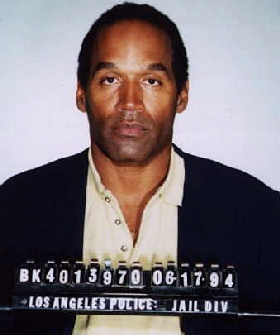
40 years ago this NFL season, on the last game of the season, a running back named OJ Simpson did the unthinkable. He rushed for over 2000 yards in one season–200 yards in the 14th and final game. I remember watching the entire game at age 9 entranced…watching football history being made. I have never considered any running back to be OJ Simpson’s equal since.
I’ll say it. OJ Simpson was my sports hero then.
He was in 1973–and perhaps still is today–the greatest ever to play the running back position.
But football is just a game. Games are important…I suppose we are all playing a game of some sort or another. Some construct of competition to make us and our world a little better…or maybe just to provide a reprieve, or form of entertainment, to others.
But in life, OJ, I believe, did something even more unthinkable. And sealed his fate and place in history. Not as one of the greatest athletes of our time but one of our most infamous criminals.
When I was 31 I watched the Bronco chase with even greater intensity than the famous 1973 Bills-Jets game. Few individuals who walk among us have risen higher or fallen farther than OJ Simpson. I don’t hate him. I don’t pity him. I don’t miss the old OJ. I’m not disappointed. I’m not even numb to Simpson and his life and legacy. I am oddly indifferent. Probably more as a defense mechanism because someone I admired so much for excellence in one area of his life disappointed so grievously in a much more important area of his life. And I’ll never be able to understand why. And now no longer even care that I won’t.
OJ has has traveled the bizarre trajectory of being the most celebrated athlete to the most hated alleged criminal to the most unspeakable public personality– to perhaps the most famous irrelevant person of our era (a poetically fitting punishment). And no one even knows how to talk about that.
And maybe there’s nothing else to say. But I thought I’d try. It’s glorious in many ways to go from mere mortal to famous society icon. OJ, for a brief time, was like a mythical god among us. It’s hard being famous, too, of course. But not as hard as going from famous icon back to mere mortal. That is a treacherous path, it seems.
Maybe the ultimate story of OJ Simpson isn’t that he failed to reach his potential greatness as an athlete. But rather that he failed so horribly at finding his way back to himself when it was his turn to leave the stage and return to being just an ordinary human being. In his case that treacherous journey appears to literally have killed a lovely young lady and destroyed her family. And figuratively killed OJ Simpson, both as an icon and human being.
By John Y. Brown III, on Tue Nov 27, 2012 at 12:00 PM ET
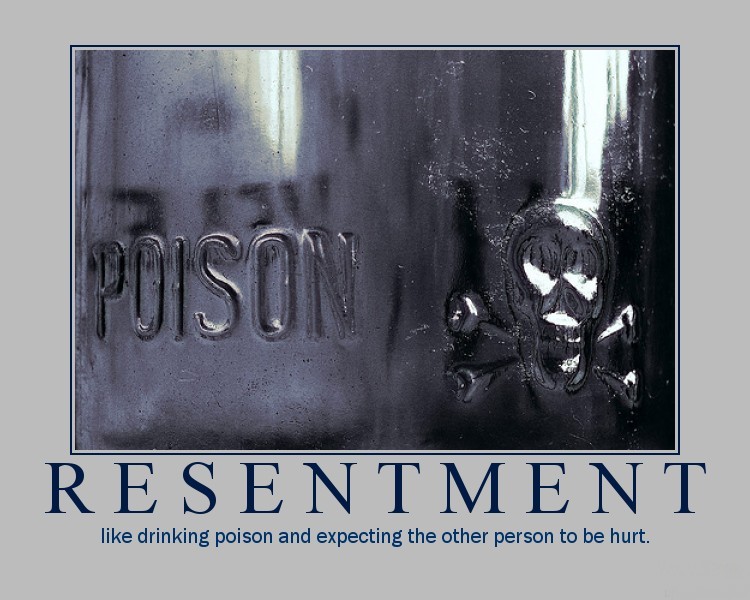
This absurdity of holding on to petty resentments.
True story.
Last night–and I don’t remember the details—but I had a dream in which a tall gentlemen I seemed to respect but didn’t know well and who was wearing a yellow-ish jacket passed me by on the street and intentionally brushed up against me in that way that seemed to say he was upset with me or sending me a message of disrespect.
That’s all I remember from the dream. The rest of whatever happened has been forgotten–which I think was mostly pleasant.
But twice today I’ve thought about the brush off passerby.
And I’ve decided the next time I have this dream and he shows up–assuming I can remember to do it—I am going to go out of my way to walk past him and brush up lightly against him (not in an offensive way that is trying to start a fight but rather just to let him know that what happened last night in my dream gets acknowledged, was not OK with me, and send the message that I hope it doesn’t happen again.)
On the other hand, I could just forgive him or assume it was an accident. In my dream. And let it go.
I want to let it go but this slight seems different and worth holding on to a little longer. Because, you know, it’s the principle of the thing. Right?
Newt says that he is not ruling out another presidential run.
Smart move. By dangling the prospect of a 2016 candidacy, Newt can charge higher fees as an…historian. [Naples News] (This link is not an Onion article.)
By John Y. Brown III, on Mon Nov 26, 2012 at 12:00 PM ET
“You can’t manage whay you can’t measure.”
Wrapping up our 6th annual father – daughter weekend with my 14 year old daughter, Maggie.
All 6 have been excellent but some feel a little better than the others —but we have never had a concrete, objective way to measure the success of our annual weekends.
Until now.
Late this afternoon I got a call from my credit card company for an “Alert for potential fraudulent activity with my credit card.”
They needed me to confirm three unusual purchases this weekend that deviated from my usual habits—-all involving female clothing purchases.
I finally explained “I am with my 14 year old daughter this weekend.”
Even that gentleman on the other end of the phone from what seemed like a call center in India understood. “Thank you, Mr Brown” he laughed. “I understand now!”
By Artur Davis, on Mon Nov 26, 2012 at 10:00 AM ET
I read Karen Cox’s provocative essay about what it takes to revive southern Democrats, (“A New Southern Strategy”), with a view that was doubtful from the start. There was the skepticism from having heard the logic before: it is a perennial preoccupation of southern progressives to envision an latent regional majority based on suburbanized whites, minorities, and educated professionals, although to date, Virginia and North Carolina are the sole places where the coalition seems to materialize and even then, only intermittently. Cox also does not acknowledge, much less grapple with, the fact that the South’s most rapid economic modernization has happened at the same pace and time as its decisive tilt toward Republicans, in direct contradiction of the progressive expectation.
Then are the persistent factual blunders, from her conclusion that the Republican edge in the South is driven by outsized rural populations, when it is in actuality the suburbs outside the metropolitan cities that account for the consistent GOP advantage, to her glossing over the fact that southern big cities have tilted Democratic not so much out of their cosmopolitanism, or their burgeoning market in downtown lofts, but because their minority populations have steadily expanded (a misinterpretation Alec MacGillis takes her to task for in The New Republic).
More problematic than Cox’s treatment of data, though, is her threshold assumption that a more liberal South is an automatically enlightened place and that a more conservative South is a primitive dead zone that disdains modernity and ratifies the Old Confederacy’s historic pathologies. It’s the left’s stereotypical dichotomy of political polarization—but it is also a worldview that papers over the peculiar and more ideologically ambiguous disputes that dominate southern state capitals.
To be sure, there are conventional partisan battles in the South that mimic fights in Washington: whether to accept federal dollars to expand Medicaid, whether to set up the state exchanges created in the new healthcare law, and the aggressiveness of local immigration laws. But there is a much larger raft of region-specific policy dilemmas that thankfully don’t have a strong national analogue: they range from pervasive public corruption, to the explosion of a low wage casino culture in minority counties, to notoriously underfunded state universities, to tax structures that reverse federal policy by soaking low wage workers and families.
The fact is that those perennial challenges have been managed less by conservative Republicans, and more by Southern Democrats, who until the last few election cycles, still dominated state legislatures and held their share of governorships—trends with which many national observers are unfamiliar, as they erroneously assume that the deep red presidential voting patterns in the South have been as strong at the state level. Cox, a University of North Carolina historian, obviously knows better and must be aware of (1) the inconvenient truth that Democrats have had considerable governing responsibility during the South’s recent history and (2) the decidedly un-progressive ways Southern Democrats have used their powers.
At least one assumes she is. Does Cox actually understand that in Alabama, Democrats have only sporadically embraced reforming a state constitution that perpetuates one of the most sharply regressive tax structures in the nation, or that the state’s Democratic Party is funded primarily by a gambling lobby that enriches itself on the backs of the low wage poor? Would it be bothersome to Cox that the same gambling interests lavished huge campaign sums on an initiative to monopolize the state’s casinos in the hands of a couple of magnates, inside a few counties that are almost entirely black and impoverished? What about the effort the state Democratic Party spent trying to block an ethics package aimed at reducing lobbyist influence in state politics, the kind of good government crusade progressives salivate about at the national level?
To a depressing degree, the same elements that have warped Alabama’s Democratic Party into a weirdly retrograde force, at least on local issues, are equally present with their regional co-partisans—they include a faux populist aversion to elite supported reforms, an obsession with racial patronage politics, and a persistent trouble with raising money that leads to a few convenient if corrupting alliances.
Read the rest of… Artur Davis: Toward a More Liberal South?
By Krystal Ball, on Thu Nov 22, 2012 at 3:00 PM ET
Contributing RP Krystal Ball, her MSNBC “The Cycle” co-host SE Cupp, and special guest Joy Reid spoke about what they are most looking forward to over this turkey day holiday:
By John Y. Brown III, on Thu Nov 22, 2012 at 12:00 PM ET
The holidays are here.
Starbucks has changed its decor and colors and will be setting the tone for all all retailers during the holiday season.
Tomorrow I’ll be there early to see if they will be offering a Thanksgiving special: Turkey Flavored Latte with a gravy drizzle and cinnamon sprinkles.
Then I’m going to Heine Bros for my Thursday cup of coffee. ; )
=====
Thank goodness.
A little perspective is always helpful when seeking to muster much needed –and much warranted —gratitude. For official national holidays involving giving thanks or just any old day for expressing a blessed sentiment.
And if you can put it to music, even better. Especially if it’s Steely Dan.
No matter what our complaints are about the world today–and tomorrow, Black Friday 2012—it is important to remember this.Black Friday 2012 for our country will be a very different experience for us than the original–and infamous– Black Fridays.


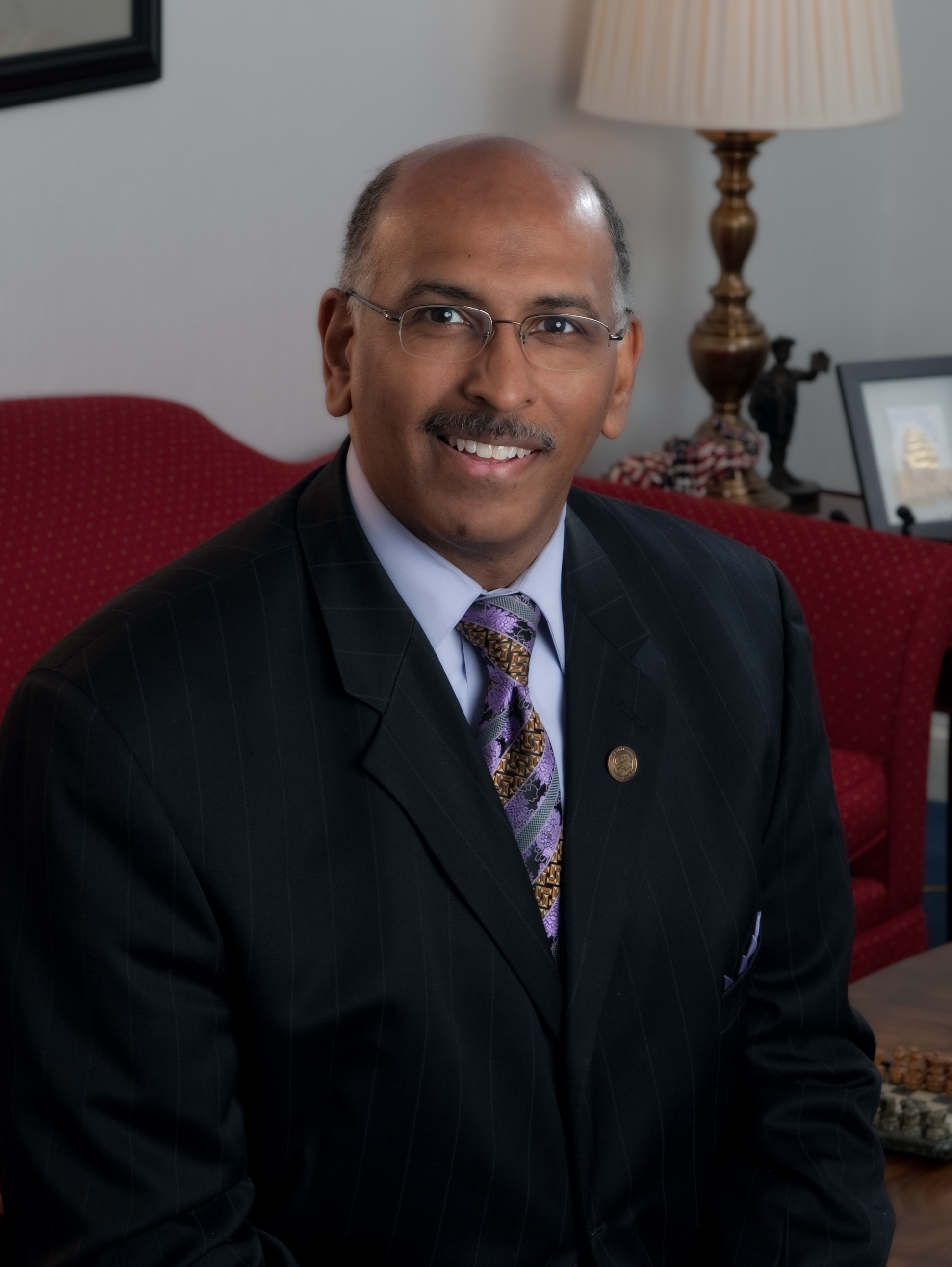 In my travels on behalf of federal, state and local candidates 2010, I saw a new generation of Republican leaders emerge who were serious about fiscal stewardship and who respected the opinions of those with whom they may not always agree. For example, then-candidates like New Mexico Gov. Susana Martinez and Congressman Tim Scott of South Carolina; or Govs. Chris Christie of New Jersey and Bob McDonnell of Virginia reflected the communities they came from and spoke with clarity on the issues that mattered in the everyday lives of individuals and families.