By John Y. Brown III, on Wed Nov 21, 2012 at 12:00 PM ET
Thought for the day.
Squeeze something of value out of everything you do today.
When scrounging, gratitude for a seemingly small thing is a good fall back. Sometimes those “small things” are really pretty big things.
For example, yesterday I was stuck somewhere and Sponge Bob Square Pants was on TV in the background. I watched several minutes to see what useful life “take away” was coming my way.
Sure, I love Sponge Bob Square Pants as much as the next gu,y but yesterday’s episode Bob was off his usual charming and clever game.
And then it happened.
The next scene prominently features a character names Squidward. And I had my “take away.” And didn’t even have to squeeze hard.
I am so grateful my parents did not name my Squidward. Even with a cool middle name, having the first name Squidward would have provided challenges and obstacles in my youth I may not have been able to successfully surmount. Even though I am a human being and not an animated cartoon character.
And you can see the toll it’s taken on Squidward himself by looking at his drawn face and vapid eyes.
Yes, mom and dad, thank you. And is so often the case, the “small gratitude” turned into a large gratitude.
And then someone changed the channel to Fox News. And I became grateful my name wasn’t Shep.
Are you beginning to see how this Thought for the Day works?
By Loranne Ausley, on Wed Nov 21, 2012 at 10:00 AM ET
In the past few weeks we have heard a lot of discussion about the demographic shifts that played so prominently in this election. While it has prompted some discussion (The New Republic), Sunday’s article in the New York Times may have said it best:
“If the Democrats are going to be a true majority party, they will need to build a coalition in all 50 states. So rather than see the South as a lost cause (pun intended), the Democratic Party and liberals north and west of us should put a lid on their regional biases and encourage the change that is possible here.”
We all know that change is possible here which is why we have joined together to create The Southern Project.
Many of you joined our official launch in Charlotte, or have had the opportunity to participate in subsequent conversations in Washington, DC or in Boca Raton before the final presidential debate. We are working on a state by state plan which will include significant post election analysis to help drive pre-legislative session agenda research in key southern states, starting in Virginia, and continuing our work in Florida and North Carolina. We will be in touch with you as this research and analysis becomes available, and as we look for ways to make sure this research is actionable across the south.
I’m truly honored by the group of people who have joined us in building this project and look forward to our work together.
By John Y. Brown III, on Tue Nov 20, 2012 at 12:00 PM ET
What the band U2 means to you at 50.
A portrait of human philosophical maturation and wisdom.
In my late 20s and early 30s, I listened over and over to “I Still Haven’t Found What I’m Looking For” I wasn’t sure what the song was about. It had a great sound and the lyrics sounded very deep.
So I listened to the song frequently because it made me feel smart and depressed about the right philosophical questions in life. (Always better than being depressed about the wrong philosophical questions in life).
At 50, it’s still a great song. And I enjoy listening to it.
But I have an entirely different perspective on it when I just heard it again tonight for the fist time in a while.
I thought to myself, “I found what I was looking for but can’t remember why I started looking for it in the first place and now don’t know what to do with it now that I’ve found it.”
Followed by, “Dang it! Where did I put it? Now I can’t find it again. Oh well. Who cares. Maybe a bird will eat it.”
There are no ties weaker than the ones that bind politicians. So, no major surprise that surrogates who were just trumpeting Mitt Romney’s election as essential to the country’s future and celebrating his record as ideally suited to cracking open the partisan gridlock are doing their share of distancing from the defeated candidate. They have a lot to distance from: ranging from internal polling that was so off base it wasted the ticket’s precious time with last-minute campaigning in states they did not come close to winning, to Romney’s characterization of the Democratic base as tools whose affection was bought off by “gifts”.
But a cautionary note: Romney’s frustrations are the musing of a candidate legitimately perplexed by the Democrats’ ability to hold together a base that should have been frayed by the economic deterioration of the last four years. And if Republicans are being brutal but right about the politics of dismissing Romney, they are wrong if they ignore the question he was stabbing at: exactly how does a political majority keep intact when so many of its underlying policies aren’t exactly working in the interests of the coalition inside that majority? And if a flailing economy was not enough to weaken that base, what does that mean for the future given the unmistakable shifts in the national demographic?
Case in point: the African American solidarity behind Barack Obama in the face of severe black unemployment and poverty, and at the same time that Obama has aligned himself with a gay rights movement that is disdained by a consistent 30 to 40 percent of the black voter community. Another example is the 70 plus percent support Obama amassed from a Latino community that barely yielded him 50 percent approval ratings for much of 2011 and that was openly critical of his failure to push, much less pull off, comprehensive immigration reform. And for good measure throw in Obama’s sixty percent with voters 18-29 and more improbably, his ability to sustain their participation at 2008 levels despite months of polling evidence that the poor job market for young adults would diminish their enthusiasm.
Arguably, (and amusingly given the backlash from inside the party) Romney’s observations were only a clumsily put version of what numerous Republican commentators have said in a more sanitized way—that Democrats have nursed an entitlement culture that promises an engaged, assertive government to a variety of groups who are facing the imperfections of the free market. (Conservatives who argue that a softening of the GOP’s hard-line on immigration will be outweighed by Democratic pledges of more government benefits for Hispanics are channeling Romney). There is something to this assessment in its most reductionist form: between a health care law that has, for all its other imperfections, insured more young adults and low income minorities, to an executive order that eases off on the deportation of young undocumented immigrants, to a student loan reform that has cut the borrowing obligations of recent college undergraduates, the Obama administration has built a portfolio that delivered results for elements of its base that might have drifted.
Dismissing that record as a bounty of gifts was both impolitic and naive. There is nothing untoward or unpredictable in electoral groups siding with a party that has pursued initiatives friendly to their interests. But even the glossier version of Romney’ remarks, the pundit classes’ abstracting of initiatives that are base-friendly as an entitlement culture, is off-key because it underestimates exactly what else Democrats have managed to do. The more accurate assessment is that Democrats have stitched together a coalition that is linked less by dependency on government than by a shared perception of Republican and conservative insularity.
Republicans who marvel at the loyalty of the 08 Obama coalition fail to appreciate that the coalition was and remains socially aspirational rather than economic. Its foundation is a yearning for a culture that is stripped of its ethnic and social boundaries and hierarchies, an embrace of diversity as a strength rather than a source of disarray, and a suspicion that conservative individualism is both un-cool and at odds with the wired, interconnected reality of the 21st century. It should have been no surprise that the black/Latino/youth base responded so powerfully to Democratic insinuations that Obama’s defeat would mean a retreat from a modernist notion of American identity, and that consolidating that identity proved more compelling than jobless numbers (especially when Obama’s argument that Republican intransigence was more at fault than his own policies took hold).
To be sure, the Obama campaign did not trust its appeal entirely to inspiration. There was a healthy dose of fear-mongering: witness the demonization of voter ID laws, which Democratic operatives relentlessly painted as a scheme to suppress minority and youth turnout, as well as the allegations from Obama allies that ordinary Republican partisanship was deep seated revanchism and white backlash.
That Republicans minimized this demonization while it was in progress meant that it was rarely answered. GOP strategists comforted themselves with assumptions that liberals were practicing an identity politics that would backfire, or that cold economic realities would thwart the Democrats’ tactics, or at least constrain their turnout. Instead, the best evidence is that Democrats pulled off the feat of turning Republican orthodoxy into a cultural identity in its own right, one that was white, traditional and unattractively reactionary. The result was a galvanized Obama base that shattered Republican voter models.
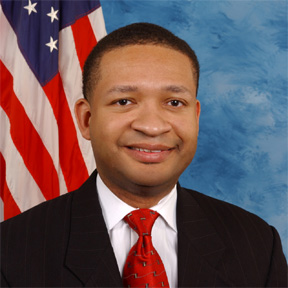
Read the rest of… Artur Davis: The Real Reason Democrats Held Their Base
By John Y. Brown III, on Mon Nov 19, 2012 at 12:00 PM ET
Genealogy and cultural symbolism.
I have never been very good at quickly following family relationships on large family trees. I get parents and children and even grandparents and first cousins. But after that, it starts to get confusing. …
Which got me wondering about metaphorical family trees.
I’ve been reading a lot recently about the show Modern Family is emblematic of America—and the American family—today. I love the show and don’t argue much with the contention.
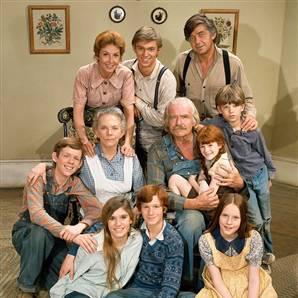
Likewise, when I was a boy I liked The Waltons. They were described back then as emblematic of America –and the American family.
But that was 40 years ago. Which leads to my next question:
Is Cam John Boy’s son or nephew? And which one of the Waltons gets blamed for Phil Dunphy?
The Republican self-assessments, and the hardly disinterested kibbitzing from liberal pundits, are as scattered as would be expected in the wake of last week’s defeat. Some of the ideas have the virtue that they at least were not implicated in a 2012 strategy that failed. But in world where all rationalizations are not created equally, it’s worth dwelling on some of the more problematic pieces of advice floating around the atmosphere.
Hold firm on immigration.
Laura Ingraham, Ross Douthat and others have sounded the alarm that a Republican embrace of immigration reform, which they label presumptively as amnesty, will fail because Democrats will simply raise the bidding by promising Hispanics ever more government benefits and largess. They are right that immigration is no panacea. For one thing, any immigration reform remotely palatable to conservatives will not treat all undocumented immigrants alike, and the GOP’s likely preference for privileging families and long time residents will be challenged by Democrats who favor a dusted off version of the abandoned 2006 McCain Kennedy bill, which drew no such distinctions. An Obama Administration that clung to the position that virtually any state based immigration standards were illegal is extremely unlikely to accommodate the inevitable conservative preference for an approach more respectful of federalism. In other words, Republicans entering the immigration fight will not be greeted with an olive branch.
But a softening of the Republican hard-line on immigration is frankly not about co-opting the left. It is, instead, recalibrating the GOP line so it is not so easily cast as a reflexive backlash at a surge in the Hispanic population. The orthodoxy in the Republican primaries and in the Fox universe was even in its best light, contradictory of conservative impulses: for example, an avowedly pro-family party was averse to making the consolidation of families a linchpin of immigration policy and a party that is determined to tie welfare benefits to responsible behavior seemed uninterested in a Dream Act aimed at promoting college attendance and enrollment in the military. An immigration view that seemed suspiciously adrift from the usual conservative values couldn’t help but be seen as a code for a much worse instinct.
Of all of the left’s cultural bogeymen this past cycle—voter ID laws, Republican resistance to gay rights, and the anti-immigrant mantra—none affected a larger swath of swing voters than the immigrant bashing charge. A Hispanic electorate that barely gave Barack Obama 50 percent approval ratings for much of 2011 crested at 70 plus percent support for the president on Election Day. The size of the Hispanic deficit doomed Romney in Nevada and Colorado, and Democrats are right that a repeat in 2016 could arguably put Arizona and Texas in jeopardy.
Join Obama’s grand compromise.
There is much truth to the notion that Obama effectively framed this election as a choice between a middle class champion and a millionaire coddling plutocrat. To be sure, the Republican Party needs to shed its royalist economic image. While that likely does not mean embracing a breakup of big banks or the decentralization of the capital markets structure (Craig Shirley’s ideas in the Washington Post) it would make ample sense for Republicans to adopt the kind of smart, market oriented ideas Douthat and Reihan Salam have extolled for awhile, and as Governor Bobby Jindal proffered this week, to make that kind of conservative innovation a leading edge of the party’s rhetoric.
But morphing into a more middle-class friendly party does not inevitably mean yielding on the cornerstones of the current economic debate, by acquiescing on Obama’s proposed tax hikes on the wealthy or retreating from a spending cut focused approach to downsizing the deficit. In fact, the compromise that a rising number of top rank CEOs are urging, letting go the Bush tax rates for earners above $500,000 in exchange for a phased in reduction of the corporate rate, is a classic example of a pragmatic seeming position that is actually quite deferential to the Republican donor base. The party’s donors and lobbyists would invariably trade a marginal rate boost that their accountants could trim away to holding the status quo on reams of corporate deductions.
Hence, the weakness of cosmetic positions that are badly flawed in practice, but accomplish some strategic repositioning. It is actually to Mitt Romney’s credit that he rejected a quick-fix middle income tax cut during the primaries, and unlikely that a Romney embrace of the Simpson Bowles Commission would have done anything other than saddle him with rolling back the popular mortgage deduction. The impact of the Ryan Plan remains debatable, but given that seniors gave Obama a negligible edge on Medicare, one smaller than the Democratic edge on the subject in the last two presidential cycles, it is also a stretch to say that the shrewdest future course is silence on entitlements.
Count on an increase in the GOP’s African American vote.
Perhaps in the interest of holding ground on immigration and ceding an outsized Hispanic vote in perpetuity, there is an emerging school of thought that the easier route might be to target a notably higher African American vote than Romney’s 7 percent, which itself was an over-performance from summer polls showing virtually no black votes for Romney( not to pick on Douthat again, but there are strong traces of this analysis in his last column and it is an emerging favorite of African American Republican bloggers).
The math seems unassailable. Running up the black vote to low double digits would do wonders to Republican numerical calculations for future races (or perhaps it would compensate for the unwisely understated assumptions this cycle about black turnout). The challenge for Republicans is that no nominee has reached those levels of blacks support since 1972 and only George W. Bush in 2000 has crossed the ten percent line, and then only barely.
There are usually two dubious assumptions at the base of an African American strategy for Republicans. The first, that the near monolithic black vote is a function of a superior outreach machinery by Democrats, and that Republicans could lessen the gap with a more assertive deployment of advertising or social media. Second, the idea that there is a suppressed black conservative vote that could be activated by more artful use of themes like opposition to same sex marriage.
Both theories downplay the extent to which the black advantage for Democrats is a reflection of one community’s entrenched skepticism of the Republican label as well as its considered judgment that active Democratic style government intervention is in its best interest. That mindset is only hardened by the near universal belief in black circles that Obama has faced uniquely vigorous opposition from Republicans for racially tinged reasons.
A Republican candidate who came to verbal blows with the Tea Party and the GOP’s southern wing and who was an avowed moderate would have a head start on gaining ground with blacks; so for that matter would a socially conservative Democrat who criticized, say, gay influence in the Democratic Party have a running start at securing more white Southern evangelical support. Neither variant has a remote shot of emerging in the current left-right duopoly of American politics. Absent the wildly improbable, or the inclusion on a Republican ticket of Condi Rice, there is no empirical reason to think that in the short term, Republican percentages in the black electorate would rise more than a point or so to average post Nixon levels. (In fact, a smaller black turnout post Obama would wipe out the gain from returning to Bush 2000 support levels).
These aren’t disastrous ideas—don’t over-assume the benefits of a turnabout on immigration; lose the image of being the party of No; and rediscover the tradition of Lincoln—but they miss in different ways what, in the context of race, conservatism has done to itself and in the context of economics, the nature of the cards we are dealt. This road back is a long one.
Q: I’m a first-time candidate. After guiding me to victory in my primary, one of my chief strategists asked me to hire his ne’er-do-well son. The son was a campaign volunteer and got along well with everyone, but I turned down the request. I didn’t want to start out my career like that. Did I make the right call, or did I make an enemy for life?
—A Political Neophyte, Kansas City, Mo.
Both.
Q: Does direct mail still work? Is it a good use of money relative to other forms of communication, like TV, radio or knocking doors?
—Initials withheld, New York City
Increasingly, no. There are some places it still works, though. Rural Missouri and St. Louis’ southern suburbs, for instance, are home to large concentrations of seniors, some of whom rarely leave the house, aren’t online except to use email, and for whom snail mail is a highlight of the day. Parts of the outer boroughs in particular also have high concentrations of elderly residents.
Of course, in rural Missouri, television buys are cheap. And moving images (TV ads) are generally more effective/persuasive than mail. So TV is preferable to mail there. But in a legislative race in the outer boroughs, New York City media market TV buys aren’t feasible, so mail is a decent option.
Radio is often a good option for negative ads, since listeners tend to forget the source of the attack and thus don’t hold the attacks against the candidates making them to the same degree they would with a television spot, for instance. But again, this is prohibitively expensive for legislative and City Council candidates in the New York City market. Upstate, it is much more feasible.
Of course, having someone actually talk to voters is always preferable to mail, radio or TV. But some areas are remote and/or difficult to canvass because of the distance between homes. And even in areas that can be canvassed effectively, some campaigns lack volunteers. They may employ paid canvassers as a substitute, but that can be dicey: Those jobs typically pay approximately $10 an hour or even less, and sometimes paid canvassers have more legs than teeth.
My chief opponent in a congressional primary used an oxymoronically named D.C. firm called Grassroots Solutions that hires paid canvassers. They were so stupid that they picked the only day of the entire election cycle when you know who is actually going to vote—Election Day—and spent the morning waving signs outside my office instead of at poll sites talking to voters. So be cautious about hiring anyone who claims they’ll help create “organic” grassroots support.
In sum, yours is a question with which every campaign must grapple. Except in anomalous areas like senior-heavy sections of the outer boroughs, money that once went toward mail will largely be steered toward online advertising in the future. In addition to the Internet’s status as a place where people spend more time than the 15 seconds it takes them to go from the mailbox to the trash can, the Web provides ad buyers information about the number of people who actually see and click on an ad, which mail is unable to do. In a metrics-obsessed Moneyball world, tools that enable campaigns to gather information while assessing the effectiveness of their messaging are increasingly essential.
Read the rest of… Jeff Smith: Do As I Say — A Political Advice Column
By Nick Paleologos, on Thu Nov 15, 2012 at 1:30 PM ET
Between 1979 and 2008 (basically the Reagan-Bush years), 36% of all gains in household income went to America’s richest 1%. As we moved through those three decades, this obscene disparity actually got worse. By the time George W. Bush was halfway through his second term, the richest 1% of Americans were sucking up a staggering 53% of all income gains in our country. Today, the richest one out of every 10,000 households in America grabs a larger share of our national income than at any other time since we started keeping records–in 1913!
As if that wasn’t bad enough, a self-promoting doofus named Grover Norquist has actually convinced enough craven politicians that the wealthiest one percent are also entitled to pay a much lower tax rate on their much higher income than the rest of America’s working stiffs. And the guy he keeps pointing to in order to justify this absolute insanity is Ronald Reagan.
OK, I didn’t vote for The Gipper. And it is true that Reagan believed in lower tax rates for everybody. But he also believed that taxes should be fair. And that whatever the top tax rate (in his time, 28%)–millionaires should pay it.
Since the end of the Reagan years, the top tax rate for bus drivers climbed to 35% while the top rate for millionaires dropped to 15%.
Reagan thought that was ridiculous—and said so at the time.
Last week–by a 3 million vote margin–America agreed with Reagan (and incidently, Obama). It’s time to get this deficit under control. And the first step is to tax wealth at the same rate as work. We will never start growing the middle class again in this country until the rich (and their political apologists) stop insisting that the highest earners should have the lowest tax rates.
Memo to what’s left of the Tea Party: Even Ronald Reagan thought that was stupid.


 Sure, I love Sponge Bob Square Pants as much as the next gu,y but yesterday’s episode Bob was off his usual charming and clever game.