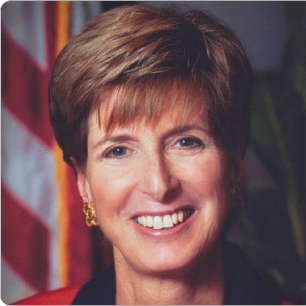
Last January was the 50th anniversary of my uncle John Kennedy’s inauguration and the swearing in of my father as attorney general. I had known it would be an emotional week, full of pride in what they had accomplished and sadness at the terrible loss. I went to events at the Capitol and the Kennedy Center, and I also was asked to represent my family with a talk at the Justice Department, where I had served. The week brought back the excitement of that time, the bold initiatives, the fights over civil rights, the launching of the Peace Corps.
Despite the numerous citings of my uncle’s inaugural challenge, I almost never hear anything like that call to sacrifice for the good of our country from our leaders today.
The reality of the week turned even more difficult when my uncle Sargent Shriver died, as did my father’s long-time secretary, Angie Novello. The evening wake at Holy Trinity and the funeral were filled with great stories of Sarge’s enthusiasm and his determination to make the Peace Corps work. Angie, too, was honored for her steadiness and devotion.
I was filled with conflicting feelings as a slew of relatives, cousins, and their children continually met up at one memorial after another. I listened and laughed, but then I cried. The gaping holes in history and our hearts couldn’t be filled simply with memorials and great stories.
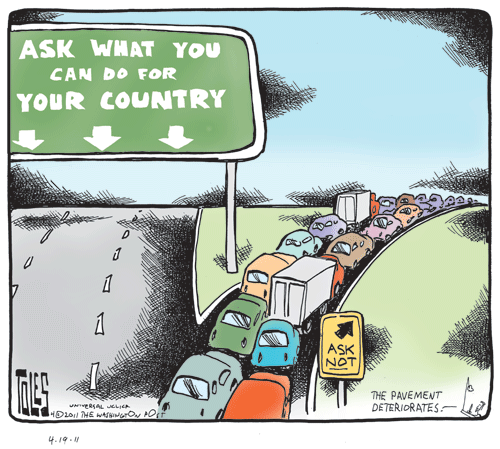
Months later, I can still feel the outpouring of affection for my family and a sense of the adventure of public service. Mostly, though, I’m puzzled by the disjunction between 1961 and now. Despite the numerous citings of my uncle’s inaugural challenge, I almost never hear anything like that call to sacrifice for the good of our country from our leaders today. Maybe they imagine that the only response would be the frantically jammed exit ramp in Tom Toles’ cartoon.
Read the rest of… Kathleen Kennedy Townsend: Ask What You Can Do for Your Country? If Only!
By Michael Steele, on Tue Jul 12, 2011 at 8:30 AM ET
Although I grew up in Washington D.C., to me Capitol Hill was a very distant place. I felt that I was living in the real world; while Capitol Hill was in some parallel universe. I just didn’t understand how people up there thought. And I have to tell you the truth, as I watch our elected leadership deal with the very serious issues facing our nation’s fiscal health, I still don’t.
Take perhaps the most basic question of all when it comes to tax and budget policy—do deficits matter? That question has generated a lot of debate in Washington in recent weeks. I am mystified it has to be asked.
I am aware of the academic debate concerning the interplay between deficits and interest rates. I also acknowledge the points often made by The Wall Street Journal’s editorial pages about the empirical evidence casting doubt about the absolute linkage between the two, for example.
I first learned the value of a dollar not from The Wall Street Journal, but from a sharecropper’s daughter who had little choice but to drop out of school to work the tobacco and cotton fields of South Carolina. She later went out into the world fighting to provide for a family with only a 5th grade education. She worked for 45 years in a Laundromat, and the most she ever made in her life was about $3.80/hour.
Through the remarkable example of her life and her will, my mother taught me about fiscal discipline, the value of a dollar, budgeting; and most importantly, how thoughtful investment, when coupled with hard work, can provide empowerment and opportunity. So, as someone who has struggled to run a small business, and who had to balance budgets and manage that most precious of resource—taxpayer dollars—as a statewide elected official in a state where budgets must, by law, be balanced—deficits do matter.
Deficits mean that our kids have to pay the bills we run up, and that, until those debts are paid off, we have to borrow the money to fund the shortfall from creditors around the world, to whom we are increasingly beholden. Can you say “China”?
So as our nation convulses from one more report of rising unemployment (now 9.2 percent), and more and more of our citizens doubt the sincerity, let alone the ability of elected officials to actually get something done, what must the White House, the GOP led Congress and Democrats in the Senate do to show they get it and are serious about restoring strength to our economy? (1) Respect where the money comes from in the first place—you and me; (2) Make the tough choices—now, not down the road; and (3) stop playing political games to block needed reforms.
Read the rest of… Michael Steele: The Old Rules No Longer Apply
Historic moments define presidencies. For President Obama, that moment came in the form of a nation teetering on the brink of depression.
The President responded to the crisis by (while still Senator) supporting TARP and then, as President, spearheading a massive stimulus package.
This stimulus was very much unlike the federal “New Deal” spending that occurred under FDR during the depression, which included a primary focus on creating as many jobs as possible. Indeed, there are still many monuments to the WPA and related programs standing today (most notably, Hoover Dam, a primary energy source for the Southwest United States).
When you look at a breakdown on how American Recovery Act federal stimulus dollars were spent, you find that a big portion went to tax cuts, while the rest was spread scattershot over many programs. Much of these funds came in the form of aid to States, which supported essential programs (like Medicaid), but only long enough for States to put off most painful budget cuts until this year.
Today we struggle with a 9.2% unemployment rate, and a continuation of tax policies that redistribute wealth to the very top. Last December, President Obama arrived at a “compromise” with congressional Republicans to extend the Bush tax code designed to accelerate redistribution of wealth to those who are already very wealthy. Indeed, Reaganomics followed by W’-nomics have had their intended effect: over the past quarter century four-fifths of income gains have gone to the top 1% of individuals, while middle class wages haven’t kept up with inflation. Contrary to GOP rhetoric, trickle-down economics has defied gravity.
Many progressives, me included, were hoping last December the President would take the fight to an opposition that would allow all tax cuts expire in the name of keeping income tax breaks for the wealthiest 2% of Americans. Had no compromise been reached, we would’ve returned to President Clinton’s more progressive tax code, which may well have proven a best case scenario with the added benefit of eradicating much of our deficit problem. But Obama didn’t take this approach. Rather, the debate was between keeping 98% of Bush’s tax code versus keeping 100% of Bush’s tax code. Hence, the GOP would’ve “lost” this showdown last December by only getting 98% of what they wanted versus 100%. Seems to me, they would’ve won either way. They got their 100% regardless.
Read the rest of… Greg Harris: Obama’s Defining Moment
Alabama’s new immigration law is about to become a flashpoint in the culture wars.
It is the first hard push to the right by a moderate Republican Governor who is an ally of the state’s powerful, and liberal, teachers’ union and who has soft-pedaled his opposition to what his party calls “Obamacare.” I think, taken in its totality, it is a push too far, and the Obama Justice Department should challenge its worst features as fiercely as it has attacked Arizona’s controversial 2010 restrictions.
I don’t criticize the provisions that make businesses confirm the legal status of their employees through E-Verify, or the stiff sanctions the law imposes on companies who knowingly hire illegal immigrants: those policies add teeth to current laws that are reasonable but often under-enforced.
There is also a sound underlying rationale: employers who hire undocumented workers are not motivated by a rush of generosity, but usually by a desire to undercut wages and to pad their payrolls with vulnerable, cheap laborers who can’t sue and who fear deportation too much to complain about lax safety standards.
Read the rest of… Artur Davis: Alabama’s Ugly New Immigration Law
No Labels is a new grassroots movement of Democrats, Republicans, and Independents who are united in the belief that we do not have to give up our labels, merely put them aside to do what’s best for America. No Labels Radio will offer a weekly dose of news and interviews with the policymakers who are working to find bipartisan answers to the otherwise intractable problems our country faces.
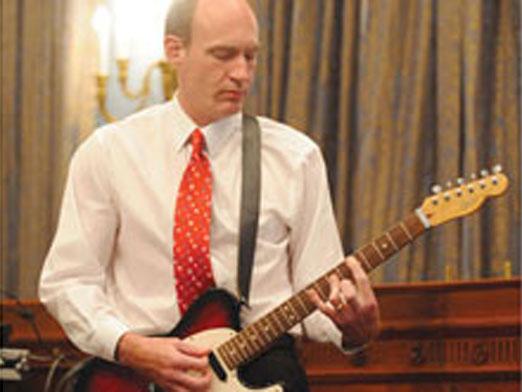
Last Friday, in my role as a contributor to Politico’s “Arena”, I responded to a question about the presidential candidacy of guitar-playing, wise-cracking Michigan Congressman Thaddeus McCotter. Was there room for him in the Republican field?
Sure, I replied. He can join Newt Gingrich in filling the comic relief void. He starts out, I noted dryly, with national name ID approximating that of my dad.
Several people told me they found my remarks amusing. But as I had the chance to reflect over the weekend, I realized that – with all due respect to Mark Halperin – I was being a dick.
I disagree with most of what Thaddeus McCotter – who calls himself a true constitutional conservative – espouses, but people shouldn’t mock passionate, sincere candidates just because they are longshots. And of all people, I definitely shouldn’t mock them.
***
When I decided to run for Congress in 2004, I was a nobody: a 29 year-old adjunct lecturing at a local university while trying to complete my Ph.D. I had no money, no political base and no name; my staff was a ragtag crew of students. The leading candidate was Russ Carnahan, scion of Missouri’s most powerful political dynasty: the “Kennedys of Missouri.” Russ’s dad was a two-term Governor and his mom a U.S. Senator; my dad had been a golf coach, a sportswriter, a pool hustler, and adverstising copywriter, and my mom counseled children with special needs. Ten candidates filed; Carnahan led the field by 40 points.
I set two benchmarks for myself, one concrete, the other less so. The real benchmark was that I vowed to raise $100K in my first quarter, somehow.
The second benchmark was somewhat less scientific. One evening after teaching, I went across the street from campus and canvassed a neighborhood to see if people would take me seriously as a congressional candidate, or if they thought I looked too young (I was a boyish 29, 5’6” and 120 pounds soaking wet). I knocked on about 40 doors.
The first door was answered by a thirty-something woman who immediately after my introduction asked me point-blank if I was pro-choice. “Absolutely,” I said. She said she’d vote for me as long as I didn’t waver on that issue. I thought to myself, OK, there’s one vote, at least I won’t get shut out.
A few doors later an older man asked me if I supported stem-cell research. “Absolutely,” I said, and he said he was a genomic researcher and would back me as long as I supported the right to unfettered scientific research. Two for two. I can do this.
A few minutes later, a middle-aged woman opened her door, and I introduced myself. “Hi, my name’s Jeff Smith, and I’m planning to run for Congress next year, but just wanted to come by today and see if you have any questions for me.”
She looked at me quizzically. “Where are you coming from?”
“Uh, well, from campus, actually.”
“Oh, yes, you must want to see Janie. Hold on one second.” She called up the stairs, “Janie, come on downstairs, there’s a young man here who wants to talk to you, he’s running for Student Congress.”
“Tell him I’m busy, Mom,” came the disembodied voice of a college girl.
I was too embarrassed to explain myself. I said goodbye, walked back to campus, and started thinking of how I could raise $100K in 3 months, which I did, barely.
***
No, I'm Thaddeus!
Thaddeus McCotter knows exactly what I realized back in 2003: Primaries are about finding niches. And the terrain he encounters is not unlike the one I faced nearly a decade ago: a crowded field, but one in which he can identify possible niches to fill.
I knew there would be at least seven candidates (ultimately there were ten), and with each candidate to enter, the race became that much more attractive to more candidates, given the declining percentage needed to win. I spent weeks looking at numbers, analyzing different combinations, figuring out if there was enough space for me to fill. I estimated that with seven candidates, one could win with just 28-29% of the vote, and that the entrance of another candidate or two could reduce that number to 23-24%. For me, every decline in this number made the race more appealing, because the fewer votes needed to win, the more important each vote became. And the increased importance of each vote magnified the influence of a grassroots campaign relative to a money-and-media-driven campaign.
By John Y. Brown III, on Tue Jul 5, 2011 at 12:30 PM ET
Two years ago I took the family to Los Angeles, CA for the first time—and for my second time in 25 years (since my sophomore year at USC).
We arrived at night and the family was hungry. I promised a nice dinner –but first we had to go by my favorite old haunt, Tommy’s Burger. I promised “Not to ruin my dinner” and to just buy a burger “to look at” (for old time’s sake) and maybe to “take just one bite.”
Oh….the stories we tell ourselves.
My family knew exactly what would happen…and each gave their version of the play-by-play the next day. At Fatburger! (My second favorite haunt):
UPDATE: A few of you have been having trouble accessing the video above. Here is another link.
By Kathleen Kennedy Townsend, on Tue Jul 5, 2011 at 8:30 AM ET
I recently attended an event for a group called Catholic Democrats in Indianapolis and then visited Thomas Merton’s monastery in Kentucky. In just a few days, I moved from the excitement of current politics to the more tranquil world of contemplation and theology. This inspiring week reminded me that Catholicism is not a narrow-minded religion but a universal church encompassing many ways to reach God.
The event I attended in Indianapolis was a joint fundraiser for Catholic Democrats and the Democratic candidate for mayor, Melina Kennedy (no relation). Now 16,000 strong, Catholic Democrats was founded by Patrick Whelan, a rheumatologist at Massachusetts General Hospital. Like me, he felt that Catholics who were focused on a single issue—abortion—were eroding the Church’s tradition of working for the common good.
For the past 20 years or so, it seemed that the Church hierarchy was in cahoots with the Republican party, insisting that good Catholics vote Republican. In 2004, some bishops came out and said it would be sinful to vote for John Kerry, given his pro-choice views. When I campaigned in Iowa during the 2008 presidential primaries, high school students told me that they felt they’d have to go to confession after voting for a pro-choice Democrat.
This inspiring week reminded me that Catholicism is not a narrow-minded religion but a universal church encompassing many ways to reach God.
Since then, a number of groups have begun to protest the hijacking of Catholic teachings by the conservative right. In May, when John Boehner gave the graduation address at Catholic University, more than 75 prominent Catholic academics sent him a letter that said, “From the apostles to the present, the Magisterium of the Church has insisted that those in power are morally obliged to preference the needs of the poor.” They added, “Your record in support of legislation to address the desperate needs of the poor is among the worst in Congress.”
Read the rest of… Kathleen Kennedy Townsend: America’s Progressive Catholics
In his latest entry for Politico’s Arena, contributing RP Jeff Smith answers the question as to whether President Obama’s support among the Jewish community is slipping:
It will probably depend on the alternative.
If, say, Huntsman is nominated and runs on a secular domestic platform that includes a strong pro-Israel plank, he could garner 35 percent or more of the Jewish vote.
If, on the other hand, Republicans choose a bombastic conservative like Rick Perry – someone with a history of appointing creationist state school board candidates and pushing other reactionary social causes – then Republican Jewish support will remain around 20 percent. A far-right evangelical Christian like Perry with a social agenda that is anathema to Jews will only attract those Jews who are already part of the Republican base.
On a side note, the choice of Debbie Wasserman-Schultz as DNC chair should help prevent some defections.
As part of his role as a member of Politico’s Arena, contributing RP Jeff Smith was asked whether or not Presidential contender Michele Bachmann could survive a series of gaffes over the past year, including stating that the Revolutionary War began in Concord, N.H. rather than Concord, Mass.
Here’s Jeff’s response:
I don’t think gaffes like this are a big problem for a candidate like Bachmann as she seeks the nomination.
The Republican Party has long appealed to the anti-intellectual strain of the electorate, starting with Nixon and his lambasting of academics (a concerted attempt to bring in the Wallace vote), continuing through Reagan and Bush 43, and culminating in Palin know-nothingism. If anything, these mistakes are often “owned” and used as a self-effacing badge of honor (see “misunderestimate,” “refudiate,” and “I can see Russia from my house”), against media and academic elites who actually care about electing leaders with a mastery of basic grammar and American history.
Of course, gaffes like this, and her out of the mainstream views, will ensure that she will never be president.


 When I saw this terrific cartoon by Tom Toles in the Washington Post (see below) a couple of weeks ago, it struck a raw nerve, not just because I live with the second worst traffic jams in the country but also because the “Ask not” quote has been fresh in my mind.