By Jeff Smith, on Fri Jul 22, 2011 at 10:00 AM ET 
The Missouri Senate – not the U.S. Senate – former U.S. Senator Jim Talent once told me, is the greatest deliberative body in the country today. Because any senator has the right to speak for as long as he chooses on any matter, each senator, even a freshman in the minority, can wield power if he plays the game well.
But I didn’t understand how to wield power when I got there. I would soon learn, though, from veterans like Senators Victor Callahan and Jason Crowell, and House Speaker Rod Jetton.
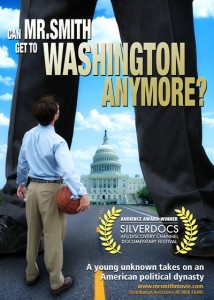 When I came to the Senate, I aspired to be the young, liberal wunderkind that many journalists and activists had anointed me. In taking the unprecedented step of blocking a gubernatorial appointment before being sworn in, I sought to carve out an image for myself as a strong progressive, unafraid to stand up to the state’s most powerful Republican, Governor Matt Blunt. However, as I soon realized, the very image that helped me in my district was crippling me in the Senate. When I came to the Senate, I aspired to be the young, liberal wunderkind that many journalists and activists had anointed me. In taking the unprecedented step of blocking a gubernatorial appointment before being sworn in, I sought to carve out an image for myself as a strong progressive, unafraid to stand up to the state’s most powerful Republican, Governor Matt Blunt. However, as I soon realized, the very image that helped me in my district was crippling me in the Senate.
My colleagues defeated nearly every proposal I offered during my first session, often with undisguised delight. I suffered so many defeats my first year – on amendments to restore funding cut from children’s health care, to enact an earned income tax credit for the working poor, to reveal an abstinence-only sex ed bill – that none really stood out.
All that stood out was a feeling of losing.
I hated losing, because I was very competitive. But I also saw the poverty and violence up close night in, night out, at neighborhood meetings and anti-gang marches, and that increased my sense of urgency.
I’d been in a hurry my whole life. But never did I feel such a sense of urgency as I did near the end of my first legislative session when I realized that as one of 34 senators able to change the state’s direction, I’d accomplished next to nothing. It was time to learn how to win.
******
To win – and to do so consistently – I knew that you needed to be either feared or loved. Respect wasn’t enough.
Term limits meant that no one was around long enough to be truly loved, and only a few were feared. I knew I wasn’t. For starters, I was too nice and I didn’t like pissing people off. Those who were feared didn’t care who they pissed off.
Second, I lacked institutional knowledge, both on policy or procedure. Without deep understanding of an issue and a firm grasp of Senate rules, it was hard to be feared on the Senate floor, where the action went down. Also, we (Democrats) were outnumbered 23-11, which didn’t help inspire fear. But after observing how Senator Crowell used the filibuster to great effect, I vowed that I would influence a policy debate in the same way sometime soon – and ironically, I got my first chance on one of Crowell’s own bills.
Crowell was best friends with House Speaker Rod Jetton, and was the Senate handler for the sole bill Jetton filed in 2007 – a bill to eliminate state taxation on all Social Security benefits reached the Senate. There was no coordinated Democratic strategy for dealing with the bill, so I asked the Minority Leader where she was on the bill, which was the centerpiece of the House Republicans’ agenda for the session. “Whose bill is it?” she sniffed.
“It’s Speaker Jetton’s.”
“Then Ah’m aginzit.”
Read the rest of…
Jeff Smith: Rod Jetton & Our Unlikely Friendship
By Rod Jetton, on Fri Jul 22, 2011 at 8:30 AM ET  As I am new to RP you may be wondering what to expect from my posts. Will they be rightwing rants, or milquetoast musings? Will they be politically correct or in your face opinions? The best way I know how to answer that, is to tell you my story. As I am new to RP you may be wondering what to expect from my posts. Will they be rightwing rants, or milquetoast musings? Will they be politically correct or in your face opinions? The best way I know how to answer that, is to tell you my story.
I’ll start with me on the flower covered dais in a packed, standing room only Missouri House chamber, my right hand raised, repeating my oath of office. My wife is holding our Bible, and my loving family is sitting in the house well watching their dad, son and brother being sworn in as the second youngest Speaker in Missouri state history.
Many wondered how a country boy from Marble Hill, Missouri could go from the lowest ranking member in the minority party to Speaker of the House in just four years. Some said it was my work ethic; some said it was my political skills; and others said it was my friendly likable style; but no one really seemed to know the real reason.
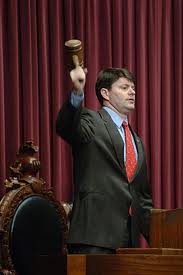 While I’m sure hard work, skills and smiles helped, being in the right place at the right time and term limits created an opportunity! My House seat opened up only because of term limits, and we had a chance to win the majority only because so many Democrats were term-limited. All of the senior Republicans had left which gave a friendly, hardworking guy who knew how to raise money and help candidates win campaigns, an excellent opportunity to be the Speaker in just two terms. While I’m sure hard work, skills and smiles helped, being in the right place at the right time and term limits created an opportunity! My House seat opened up only because of term limits, and we had a chance to win the majority only because so many Democrats were term-limited. All of the senior Republicans had left which gave a friendly, hardworking guy who knew how to raise money and help candidates win campaigns, an excellent opportunity to be the Speaker in just two terms.
Life is always throwing opportunities your way, and it’s up to you to take advantage of them. I freely admit the four years it took to win my first House campaign, help spearhead the legislative redistricting process for my party, recruit candidates, win the majority and position myself to be unopposed for Speaker, were four of the busiest years of my life. I have never consistently worked that hard at anything in my life and I thought I understood hard work.
 Running track and setting school records required working out twice each day to get in the 100 miles a week it took to win races. When I joined the Marine Corps I learned a new level of hard work. They gave me 90 pounds of gear and ordered me to march through the hills, with no rest or sleep, through all kinds of weather for days on end. Starting a small real estate business and making it profitable, required early mornings and stressful nights day in and day out. Running track and setting school records required working out twice each day to get in the 100 miles a week it took to win races. When I joined the Marine Corps I learned a new level of hard work. They gave me 90 pounds of gear and ordered me to march through the hills, with no rest or sleep, through all kinds of weather for days on end. Starting a small real estate business and making it profitable, required early mornings and stressful nights day in and day out.
But all those experiences were just preparing me for what it took physically, emotionally and mentally to recruit candidates, win the majority, unify caucus members, advance an agenda, get good press, and stay in touch with donors all while trying to be a good father, loving husband, and solid community leader back home and in the district.
Don’t get me wrong, I am not complaining. The crazy thing is, I LOVED IT! I was having a blast, everything was going my way, everyone loved me, respected me, and wanted to know what I thought about matters great and small. The other positive aspect of all my success was the policy changes I was able to implement. Expending political capital and pushing hard for the policies I believed in was never a question for me. I studied the rules, reached across the aisle to make friends and understood how to use my political clout to get things done.
In the House it takes a united team to change things. Developing an agenda, unifying our caucus behind it and leading them in the public debate was a very worthwhile experience that required using the carrot and the stick. I rewarded both Democrat and Republican friends alike. I helped them with their priorities and gained their support on our agenda. I also sometimes punished my opponents.
Read the rest of…
Rod Jetton: Success, Scandal & Change-The Fight to Be King of the Mountain
By Jeff Smith, on Thu Jul 21, 2011 at 2:30 PM ET  If I were John Boehner,I’d hire a food taster. If I were John Boehner,I’d hire a food taster.
Sadly, with Boehner impotent in the face of the tea party-dominated caucus, there are now two camps of leading Washington Republicans. One camp – the cold-eyed power-seekers represented by Cantor in the House and McConnell in the Senate – wants the country to default because it will destabilize the markets, hurt the economy, and thus hurt Obama’s chances of re-election. That’s sad.
The other camp – the Norquist-led “starve the beast” types – wants the country to default because it will prevent the country from borrowing for any purpose, and begin accomplishing their overarching goal of totally discrediting government. That’s nuts.
Where is today’s Bob Dole, the heartland conservative respected by both sides and willing to stand up to his party’s right wing in the name of statesmanship? His name is Rob Portman, and he’s AWOL.
By Artur Davis, on Thu Jul 21, 2011 at 8:30 AM ET  The 2012 election will be breathtakingly expensive. President Obama has plausibly set his sights on raising a billion dollars, and the eventual Republican nominee will not be impoverished, given the antipathy toward Obama’s policies in some of the richest precincts in America. The 2012 election will be breathtakingly expensive. President Obama has plausibly set his sights on raising a billion dollars, and the eventual Republican nominee will not be impoverished, given the antipathy toward Obama’s policies in some of the richest precincts in America.
The flood of money will disturb advocates of campaign finance reform. But the Supreme Court’s recent ruling in Arizona Free Enterprise Club v. Bennett suggests that there is little even a reform-minded Congress or state legislature could do to stem the tide. Bennett involved a First Amendment challenge to Arizona’s system of public financing for state candidates: under the law, candidates are permitted to opt in or out of a pool that provides public funds for candidates who accept spending limits. For publicly funded candidates who find themselves facing certain expenditure levels by their privately financed opponents, or groups who back them, Arizona’s law furnished extra matching funds. Its principle is that speech by deep pocketed candidates should not be limited but that the public has a major stake in leveling the playing field.
 Chief Justice Roberts’ majority opinion reminds that the Court has long considered campaign spending to be protected speech. Roberts reasoned that the Arizona law in effect “burdens” privately financed candidates by putting a de facto penalty on their speech. According to the Chief Justice, this burden does not just level the field, it has the effect of actually “reducing” the speech of the deep pockets. Chief Justice Roberts’ majority opinion reminds that the Court has long considered campaign spending to be protected speech. Roberts reasoned that the Arizona law in effect “burdens” privately financed candidates by putting a de facto penalty on their speech. According to the Chief Justice, this burden does not just level the field, it has the effect of actually “reducing” the speech of the deep pockets.
The newest member of the Court, Elena Kagan, was almost caustic in her dissent. Justice Kagan’s point was that Arizona hardly restricts the speech of big spending candidates; what it does instead is to thwart their ability to dominate the field. Challenging the majority’s viewpoint that Arizona can’t impose its own view of fairness over the speech rights of certain candidates, Kagan recites the familiar rationale that too much private money in politics is corrupting and governments have a compelling interest in countering that influence.
Read the rest of…
Artur Davis: The Breathtakingly Expensive 2012 Election
By Kathleen Kennedy Townsend, on Tue Jul 19, 2011 at 8:30 AM ET  A few weeks ago, I was reading Walt Whitman, enthralled by the energy and rhythm of his poetry. It’s easy to see why he was embroiled in fights with 19th-century censors. “I will go to the bank by the wood and become undisguised and naked,” he wrote, “I am mad for it to be in contact with me.” In Song of Myself, he praises “a well-made man,” saying, “dress does not hide him;/The strong, sweet, supple quality he has strikes through the cotton and flannel;/To see him pass conveys as much as the best poem, perhaps more;/You linger to see his back, and the back of his neck and shoulder-side.” A few weeks ago, I was reading Walt Whitman, enthralled by the energy and rhythm of his poetry. It’s easy to see why he was embroiled in fights with 19th-century censors. “I will go to the bank by the wood and become undisguised and naked,” he wrote, “I am mad for it to be in contact with me.” In Song of Myself, he praises “a well-made man,” saying, “dress does not hide him;/The strong, sweet, supple quality he has strikes through the cotton and flannel;/To see him pass conveys as much as the best poem, perhaps more;/You linger to see his back, and the back of his neck and shoulder-side.”
And these are some of the milder passages. These probably aren’t the ones that got him fired from his job at the Department of the Interior and charged with “that horrible sin not to be mentioned among Christians.”
What’s most shocking about his writing today is not that he loves men or describes “the body electric.” What’s stunning is his democratic sensibility.
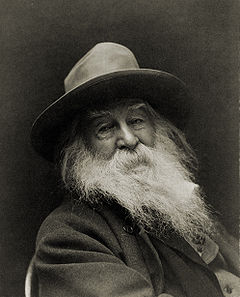 What a long way we’ve come. Whitman, who lived in Brooklyn for 28 years, would be astounded that New York has actually legalized same-sex marriage. He would have been equally amazed by a recent article in the New York Times about an effort to recruit more gays and lesbians into politics. And I’m sure his eyes would have widened a few weeks ago when the Federal Reserve Bank of Richmond ran a rainbow flag up its flagpole at the request of a group of gay and lesbian employees in honor of gay pride month. What a long way we’ve come. Whitman, who lived in Brooklyn for 28 years, would be astounded that New York has actually legalized same-sex marriage. He would have been equally amazed by a recent article in the New York Times about an effort to recruit more gays and lesbians into politics. And I’m sure his eyes would have widened a few weeks ago when the Federal Reserve Bank of Richmond ran a rainbow flag up its flagpole at the request of a group of gay and lesbian employees in honor of gay pride month.
These events–especially the New York decision–are victories in the fight for gay and lesbian equality. New York has joined a handful of other states where people who love each other can make a legal commitment in a public ceremony and announce to the world at large: We are men and women with hopes and dreams. The promise of freedom, equality, and happiness in the Declaration of Independence applies to us, just as it applies to you.
Read the rest of…
Kathleen Kennedy Townsend: Walt Whitman and the Soul of Democracy
By Artur Davis, on Fri Jul 15, 2011 at 2:15 PM ET House Democrats are demoralized by the end game on the debt ceiling, and they have reason to complain that their votes are being taken for granted. But on the substance, their hard line on health benefits is riddled with contradictions: maintaining the status quo on Medicare preserves a benefit/contribution structure that is hardly progressive and that privileges upper income individuals arguably as much as the Bush tax cuts that the same Democrats want to repeal. At the same time, the Democratic Caucus has largely been silent on the expiration of federal Medicaid stimulus spending, and the state downsizing of Medicaid programs, two events that are compromising the availability of health care for low income patients.
Political games aside, means-testing elements of Medicare makes it a fairer, more progressive program. It also does not neutralize the issue for 2012: to the contrary, Democrats can argue that their adjustments to the program are a more responsible approach than the Ryan plan, which hands over Medicare to the private insurance market and risks substantial premium hikes for middle and low income seniors. Finally, controlling Medicare costs frees up resources to shore up Medicaid, which is in dire straits and ought to be a more compelling liberal priority.
(Cross-posted, with permission of the author, from Politico’s Arena)
By RP Staff, on Thu Jul 14, 2011 at 2:00 PM ET RIGHT NOW — until 3:00 PM EDT, the RP, along with contributing recovering politician Lisa Borders, is co-hosting No Labels Radio.
No Labels is a new grassroots movement of Democrats, Republicans, and Independents who are united in the belief that we do not have to give up our labels, merely put them aside to do what’s best for America. No Labels Radio will offer a weekly dose of news and interviews with the policymakers who are working to find bipartisan answers to the otherwise intractable problems our country faces.
Follow this link to tune in RIGHT NOW.
By RP Staff, on Thu Jul 14, 2011 at 12:30 PM ET It turns out that the RP has a perfect face for radio. He’s back at hosting No Labels radio today, with fellow contributing recovering politician Lisa Borders.
No Labels is a new grassroots movement of Democrats, Republicans, and Independents who are united in the belief that we do not have to give up our labels, merely put them aside to do what’s best for America. No Labels Radio will offer a weekly dose of news and interviews with the policymakers who are working to find bipartisan answers to the otherwise intractable problems our country faces.
Follow this link to tune in at 2:00 PM EDT.
By Jeff Smith, on Wed Jul 13, 2011 at 2:15 PM ET 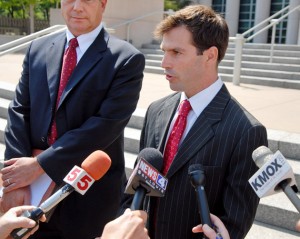 [Presidential candidate Mitt Romney’s fundraising underperformance] means a few things. [Presidential candidate Mitt Romney’s fundraising underperformance] means a few things.
1) A lot of donors who supported Romney last time are jumping ship or dodging him.
2) As the heir to “establishment” frontrunner status, Romney should’ve been able to cultivate most of the 2008 McCain donors. That hasn’t happened.
3) Given how much Perry raised within Texas alone for a gubernatorial race, and given the oil industry’s success amid the national recession, there will be ample money for him to compete on a national stage.
4) The sheer number of people who continue to give money to Ron Paul, when they presumably have children who ask for toys, puppies, and other things, is mind-boggling.
(Cross-posted, with permission from the author, with Politico’s Arena)
By Artur Davis, on Wed Jul 13, 2011 at 8:30 AM ET 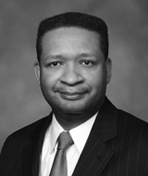 President Obama has resorted to extreme measures to forge a compromise with congressional Republicans to raise the debt ceiling and avoid a national default. He has signaled a willingness to slash federal expenditures by an unfathomable 4 trillion dollars over a decade, and he is hinting that the pillars of Social Security , Medicare, and Medicaid will not be exempt. President Obama has resorted to extreme measures to forge a compromise with congressional Republicans to raise the debt ceiling and avoid a national default. He has signaled a willingness to slash federal expenditures by an unfathomable 4 trillion dollars over a decade, and he is hinting that the pillars of Social Security , Medicare, and Medicaid will not be exempt.
A Democratic Governor in Minnesota has taken a sharply different route, opting to shut his state’s government down unless Republicans consent to a temporary surcharge on millionaires. Meanwhile, In New York, the iconic liberal empire, a Democratic Governor has jettisoned ten thousand teachers and state employees to save money and has slashed spending for child welfare and education; at the same time, he declared tax increases off limits and fought his party’s efforts to impose New York’s own millionaire’s tax.
Welcome to the muddled place that is Democratic ideology in 2011. Under the pressures of an economy that just barely dodged a depression, and swollen entitlement obligations at both the federal and state level, chief executives who are certified progressives are living in desperate times. They are responding in dramatically contrasting ways that are partly tactical, but ultimately reveal much about the coming fissures in the Democratic Party circa 2013-2016.
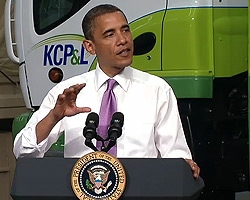 The President at Smith Electric Vehicles At that point, Barack Obama will be one or the other: the second Democrat in a generation who saved his presidency partly by discarding liberal priorities and emphasizing a hawkish profile on deficit reduction, or a discredited figure who squandered an electric personal mandate and failed to fight hard enough for his principles. Under either scenario, a trainload of agenda items, from immigration reform to stronger collective bargaining rights and stricter regulation of carbon emissions, will have been buried.
Read the rest of…
Artur Davis: What is Next for the Democrats?
|
|


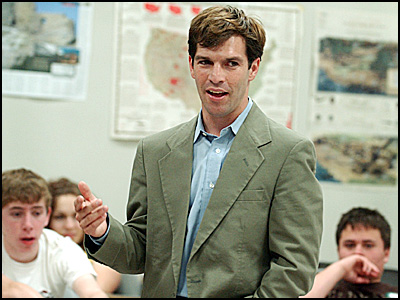
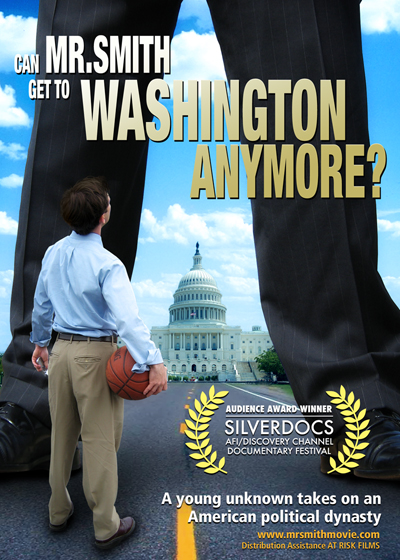 When I came to the Senate, I aspired to be the young, liberal wunderkind that many journalists and activists had anointed me. In taking the unprecedented step of blocking a gubernatorial appointment before being sworn in, I sought to carve out an image for myself as a strong progressive, unafraid to stand up to the state’s most powerful Republican, Governor Matt Blunt. However, as I soon realized, the very image that helped me in my district was crippling me in the Senate.