By Kathleen Kennedy Townsend, on Tue Jun 28, 2011 at 8:30 AM ET
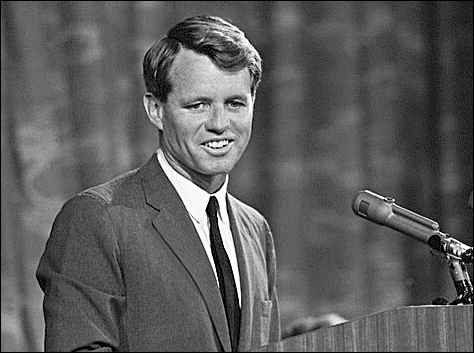
Last week, I wrote about my father, Robert Kennedy, and his critique of Gross Domestic Product (GDP) as the measure of national well-being. He said, “It measures everything except that which makes life worthwhile. And it can tell us everything about America except why we are proud that we are Americans.”
Had my father lived, we might have started work a lot sooner on truer ways to measure the state of the nation. Sadly, that did not happen. His critique of the GDP was forgotten. Instead, other values came to govern American life.
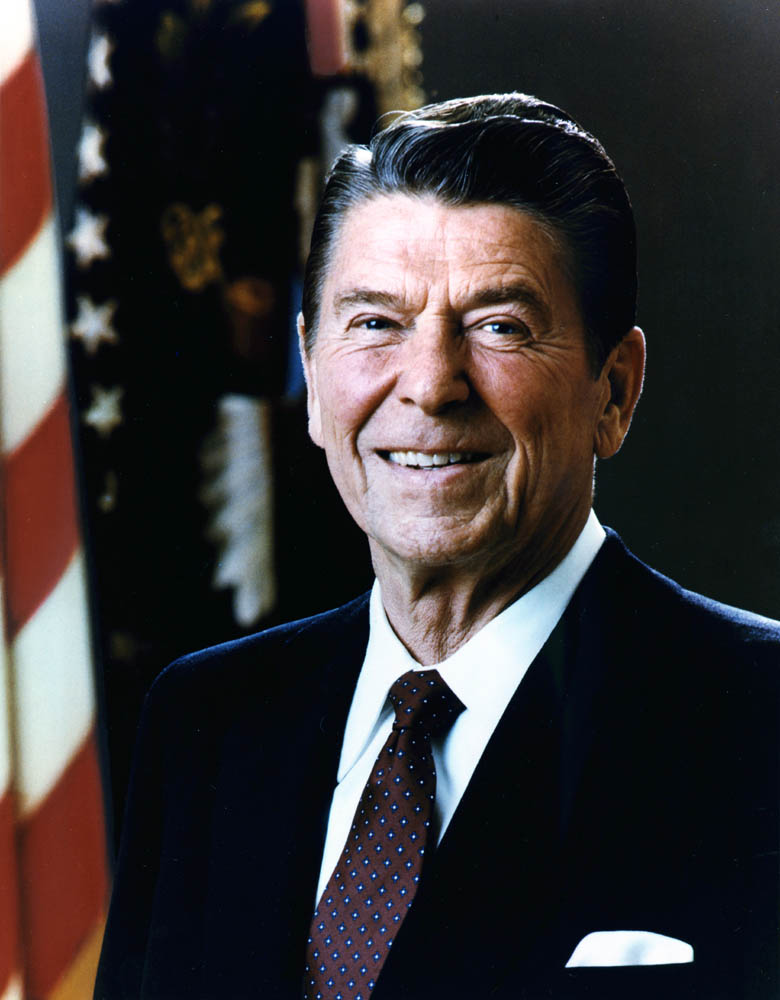
In 1968, David Frost asked both Ronald Reagan and my father to speak on the purpose of life. Ronald Reagan answered:
 Well, of course, the biologist I suppose would say that like all breeds of animals, the basic instinct is to reproduce our kind, but I believe it’s inherent in the concept that created our country–and in the Judeo-Christian religion–that man is for individual fulfillment; for our religion is based on the idea not of any mass movement but of individual salvation. Each man must find his own salvation; I would think that our national purpose in this country–and we have lost sight of it too much in the last three decades–is to be free–to the limit possible with law and order, every man to be what God intended him to be. Well, of course, the biologist I suppose would say that like all breeds of animals, the basic instinct is to reproduce our kind, but I believe it’s inherent in the concept that created our country–and in the Judeo-Christian religion–that man is for individual fulfillment; for our religion is based on the idea not of any mass movement but of individual salvation. Each man must find his own salvation; I would think that our national purpose in this country–and we have lost sight of it too much in the last three decades–is to be free–to the limit possible with law and order, every man to be what God intended him to be.
My father said:
 I think you have to break it down to people who have some advantages, and those who are just trying to survive and have their family survive. If you have enough to eat, for instance, I think basically it’s to make a contribution to those who are less well off. ‘I complained because I had no shoes until I met a man who had no feet.’ You can always find someone that has a more difficult time than you do, has suffered more, and has faced some more difficult time one way or the other. If you’ve made some contribution to someone else, to improve their life, and make their life a bit more livable, a little bit more happy, I think that’s what you should be doing. I think you have to break it down to people who have some advantages, and those who are just trying to survive and have their family survive. If you have enough to eat, for instance, I think basically it’s to make a contribution to those who are less well off. ‘I complained because I had no shoes until I met a man who had no feet.’ You can always find someone that has a more difficult time than you do, has suffered more, and has faced some more difficult time one way or the other. If you’ve made some contribution to someone else, to improve their life, and make their life a bit more livable, a little bit more happy, I think that’s what you should be doing.
Ronald Reagan’s views came to dominate the political landscape. Later, when he was asked what he meant by freedom, he described driving up the Pacific Coast Highway in a convertible with the wind blowing through his hair. Here was a man truly doing his own thing, alone.
George Washington and Thomas Jefferson had nice houses. They could have enjoyed contented private lives. But it was not just about their property.
What Ronald Reagan is remembered for does not reflect what he actually did. Of course, he believed in public engagement. He was a six-term president of the Screen Actors guild, calling union membership a “fundamental human right.” He was governor of California and president of the United States. He spoke eloquently about America as a “shining city on a hill.”
Read the rest of…
Kathleen Kennedy Townsend: The Pursuit of Happiness: What the Founders Meant—And Didn’t
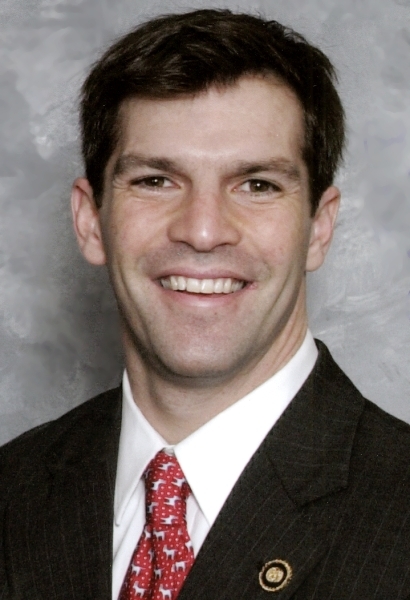
By Greg Harris, on Mon Jun 27, 2011 at 8:30 AM ET 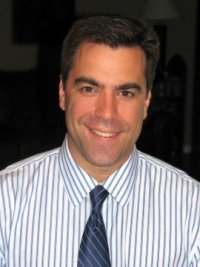 I didn’t expect at age 39 to already be writing about my political career in past tense. I didn’t expect at age 39 to already be writing about my political career in past tense.
I grew up with a love of politics, and tended to worship political heroes over, say, sports or movie stars. My earliest political memory is of Jimmy Carter’s 1980 defeat to Ronald Reagan. I didn’t understand how such a good, decent and honest man could possibly lose, and wrote him a letter conveying my anguish. The President and Mrs. Carter responded with a nice letter and a booklet about his presidency.
My first volunteer experience came with Adlai Stevenson III’s run for Governor in 1982. The Stevenson’s were from my hometown of Bloomington, IL—the same town where Abe Lincoln often practiced law just down the road from his hometown of Springfield. His father was so honest that he didn’t intervene when the local paper, which his family owned, actually endorsed Eisenhower when he challenged him for president.
The 1982 Governor’s race was a nail biter, with Stevenson losing by the narrowest of margin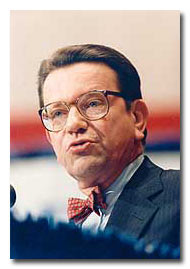 . The contest was rife with accusations of vote fraud committed by his incumbent opponent. For the second time in two years, my man lost. I certainly experience a lot of political disappointment by age 11! . The contest was rife with accusations of vote fraud committed by his incumbent opponent. For the second time in two years, my man lost. I certainly experience a lot of political disappointment by age 11!
My knight in shiny armor came in the likeness of a man who donned thick horned-rimmed glasses, big ears and a bowtie. Paul Simon was kind of a paradoxical figure, his nerdy likeness met by a commanding baritone voice; a leading thinker in the Senate who was also a college drop out. I read several books he authored, and probably attended a half dozen of his frequent town meetings conducted throughout the state. Senator Simon showed me that the “good guys” can prevail in the end. Moreover, he was a liberal Democrat who won a good deal of Republican votes, indicating to me that folks are capable of voting for someone they disagree with if they trust his integrity and motives.
Read the rest of…
Greg Harris: Standing My Ground
By Jeff Smith, on Fri Jun 24, 2011 at 8:30 AM ET 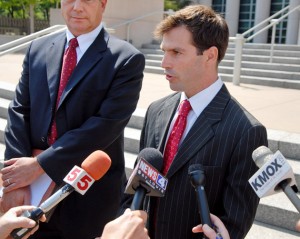
In his piece published yesterday in Politico’s Arena, Jeff Smith joins the RP in urging the President to endorse gay marriage now. Here is Jeff’s response to the Arena question: “Is Obama being pushed into gay marriage support?”
I don’t know what he’ll do. I do know that it’s better to lead than to follow. I also know that future public opinion on this issue is easier to predict than that on any other major policy issue.
That’s because of the stark generational split: polls consistently show overwhelming majorities of people under 40 supporting gay marriage, and overwhelming majorities of those over 65 opposing it – just as polls during the mid-1960s showed on interracial marriage (before the Supreme Court banned state anti-miscegenation laws in Loving v. Virginia).
As generational replacement occurs, clear majorities of the electorate will support gay marriage, and it will require little courage to support it. Now is the time for the president to ensure that he is on the right side of history.
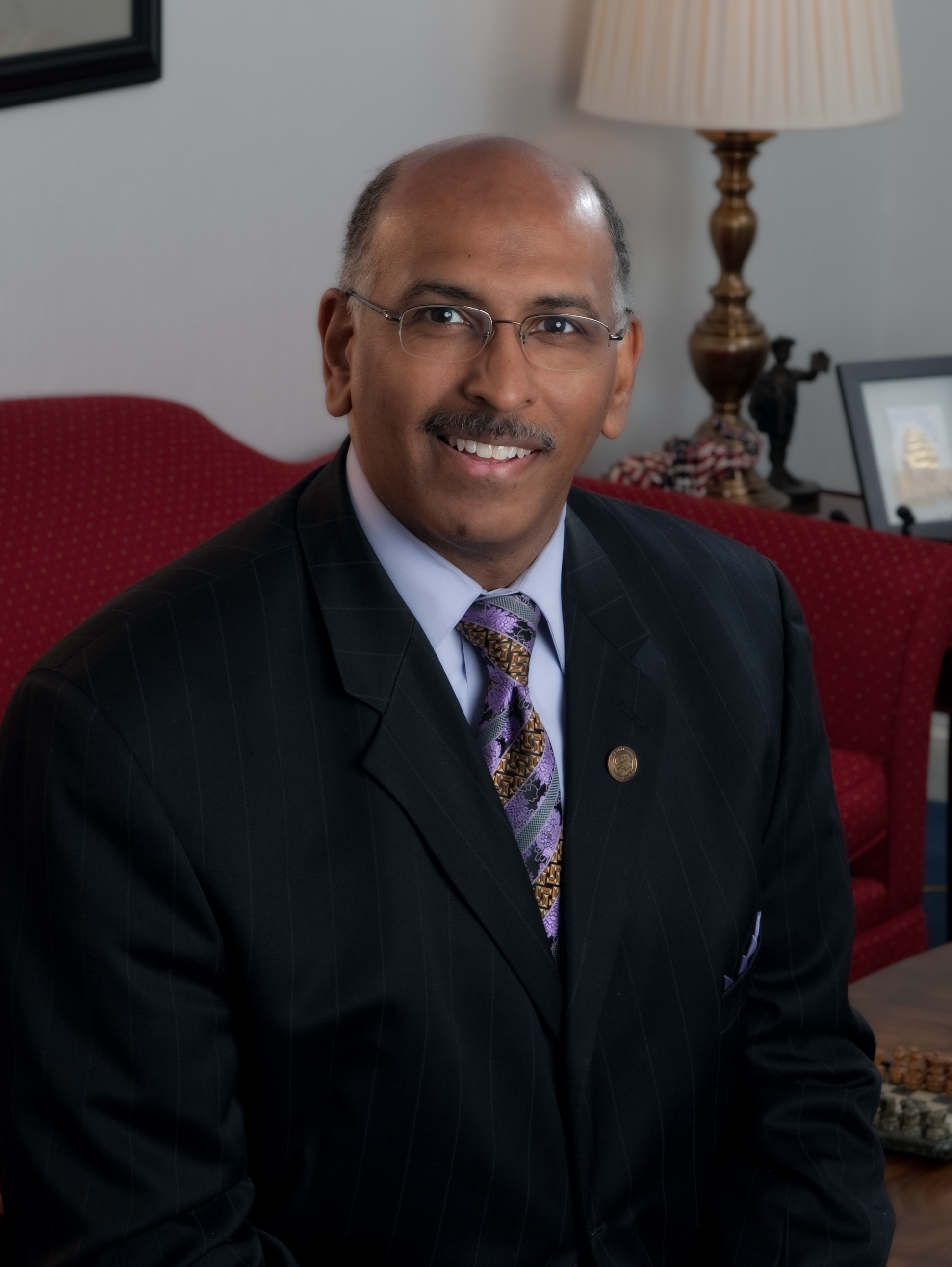
By Michael Steele, on Thu Jun 23, 2011 at 8:30 AM ET 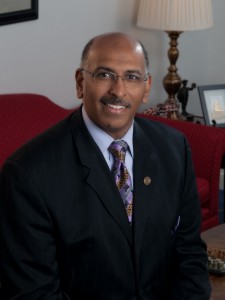 Summertime, and the living won’t be easy. From electricity to groceries to clothing, the cost of everything you need, and of most things you want, has increased. But there are few places where Americans have felt the sting of higher prices more profoundly than at the gas pump. And you don’t have to own a car to feel it; just get on a plane, take the train — heck, catch a cab. Summertime, and the living won’t be easy. From electricity to groceries to clothing, the cost of everything you need, and of most things you want, has increased. But there are few places where Americans have felt the sting of higher prices more profoundly than at the gas pump. And you don’t have to own a car to feel it; just get on a plane, take the train — heck, catch a cab.
As we begin to pack up the family car for that long-awaited summer vacation at Grandma’s house, a gallon of gasoline averages $3.80, $1.07 more than this time last year. Maybe you can just email Grandma a photo of the kids instead.
Or better yet, maybe President Barack Obama could address workers at a research facility funded by a $528.7 million stimulus-act grant to develop a new alternative mode of energy-efficient transportation: airborne porcine units (also known as “flying pigs”). Although the facility won’t have produced a commercially viable prototype, Obama could go on to express confidence that, with additional government investment (aka “spending”), the needed technology breakthroughs would be achieved. I can hear him now: “When pigs fly, my energy policies will be vindicated, and the taxpayer dollars we have committed to this effort will greatly lessen our dependence on foreign oil.”
Fantasy? Of course, but then again, taxpayers are on the hook for a $528.7 million loan to a company seeking to make plug-in electric cars that the Obama administration announced with great fanfare in 2009. The result? That company recently breathlessly announced that it plans to sell a car for the bargain price of $96,850 that charges in “as little as six hours” and has — wait for it — a 50-mile range before a backup gasoline engine kicks in.
Read the rest of…
Michael Steele: Obama’s Energy Policy vs. Reality
By Jeff Smith, on Wed Jun 22, 2011 at 8:31 AM ET There are two things Huntsman probably needs in order to claim the nomination:
1) Perry or another formidable candidate from the party’s right wing to get in.
Romney has the money and national infrastructure to go the distance, and if there is only one candidate emerging from the right – Bachmann, Cain, Palin, whoever – that’s good for Romney, as it will frighten mainstream Republicans into coalescing around him. So, Huntsman needs at least two strong candidates from the party’s right wing, and Perry’s potential entrance can muddle things enough on the right that so that establishment types will be OK with two strong candidates from the “moderate” wing.
2) Since Romney also has personal money in addition to having spent five years criss-crossing the country meeting bundlers, Huntsman needs to figure out a way to tap his vast family fortune.
I’m not sure about this, but I saw an estimate of Huntsman’s personal fortune at $15M. That’s about enough for New Hampshire – not for the nomination. His father is apparently a billionaire, according to estimates, but he needs to figure out the logistics of making that money available for campaign use. Does that mean his father gifts him $100M and then pays gift taxes on it? Maybe. Does it mean his father does a giant IE? Who knows. The optics aren’t good with either option. I suspect they’ve thought through this, but the logistics of it, and the subsequent perception, could have outsized influence on the way his candidacy is perceived – especially in a post-Bunny-money era.
Cross posted, with permission of the author, from Politico’s Arena
By Jeff Smith, on Tue Jun 21, 2011 at 2:15 PM ET  As Joe Biden famously said during the 2008 primaries, each sentence in Rudy’s stump speech consisted of a noun, a verb, and 9/11. As Joe Biden famously said during the 2008 primaries, each sentence in Rudy’s stump speech consisted of a noun, a verb, and 9/11.
So if Republicans want to spend next fall talking about the shining moment of the Obama presidency (the successful Seal raid), Rudy would be the perfect nominee.
No, I don’t think he could win New Hampshire. But even if he did, remember that New Hampshire – won by Buchanan in ’96 and McCain in ’00 – has been far from dispositive. South Carolina has been the key to the nomination. And as ’02 SC Senate candidate Alex Sanders said when Rudy came down to stump for Lindsay Graham that year (paraphrasing here), “He’s for gay rights. He’s pro-abortion. He wants to ban handguns. He cheated on his wife, got kicked out of his house, and moved in with two gay guys and a Shih Tzu. Is that South Carolina values?”
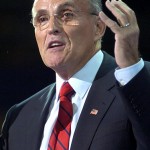 If Rudy runs and somehow makes it out of New Hampshire, I wouldn’t be surprised to hear Sanders’ observation invoked by Rudy’s primary opponents or their operatives. If Rudy runs and somehow makes it out of New Hampshire, I wouldn’t be surprised to hear Sanders’ observation invoked by Rudy’s primary opponents or their operatives.
All of that said, perhaps a candidacy could bump his speaking fees back up to where they were post-9/11.
Cross-posted, with permission of the author, from Politico’s Arena.
By Kathleen Kennedy Townsend, on Mon Jun 20, 2011 at 12:00 PM ET I recently spoke in Pesaro, Italy at a conference on new ways of measuring the well-being of nations and communities. For the past half-century, the yardstick for measuring national progress has traditionally been GDP. But in the last few years, a growing number of economists, concerned citizens, and even heads of state have been asking whether there is more to happiness than a big pile of dollar signs.
Politicians, at times, see what should be done, but can’t quite persuade citizens to act–as when Franklin Roosevelt, despite the terrible threat Hitler presented, couldn’t convince Americans they should fight. Right now we’re on the cusp of taking seriously an insight about GDP that my father, Robert Kennedy, originally had more than 40 years ago.
For those who haven’t been reading speeches from 1968, let me remind you what my father said a few days after he announced his candidacy for the presidency. Speaking to students at the University of Kansas, he said:
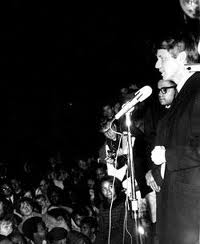 Click here to watch RFK's Eulogy for King, April 4, 1968 Too much and for too long, we seem to have surrendered personal excellence and community values in the mere accumulation of material things. Our gross national product, if we judge the United States of America by that, counts air pollution and cigarette advertising and ambulances to clear our highways of carnage. It counts special locks for our doors and the jails for people who break them. It counts the destruction of the redwood and the loss of our natural wonder in chaotic sprawl. It counts napalm and counts nuclear warheads and armored cars for police to fight the riots in our cities. It counts Whitman’s rifle and Speck’s knife and the television programs which glorify violence in order to sell toys to our children.
Yet the gross national product does not allow for the health of our children, the quality of their education, or the joy of their play. It does not include the beauty of our poetry or the strength of our marriages, the intelligence of our public debate or the integrity of our public officials. It measures neither our wit nor our courage; neither our wisdom nor our learning; neither our compassion nor our devotion to our country; it measures everything, in short, except that which makes life worthwhile. And it can tell us everything about America except why we are proud that we are Americans.
For years, my father’s words were viewed not as a practical challenge to the use of GDP but as an affirmation that a nation, like individuals, needs a purpose that is not merely material but spiritual. His policy insight didn’t catch on. With little dissent, we’ve continued to measure the success of a nation by a single number, its GDP.
Read the rest of…
Kathleen Kennedy Townsend: What Makes Life Worthwhile? GDP Won’t Tell You
By Loranne Ausley, on Sun Jun 19, 2011 at 1:15 PM ET
My dad, DuBose “Duby” Ausley, taught me everything I know about public service – he taught us, by example, the importance of serving your community, your family and your God with enthusiasm and integrity.
Although he has never held political office, he has been a quiet and effective leader his entire life. He was a Captain in the US Army, appointed by Presidents and Governors to serve in very important capacities, has had successful simultaneous careers in law and banking, and is still practicing law today.
Most recently, he served as one of the most important members of my team in our campaign for statewide office. While our efforts were not successful, it was a precious gift for a 47 year old daughter to be able to spend quality time working side by side with her 74 year old dad – still leading by example.
Thanks and Happy Father’s Day Dad!!!
By Greg Harris, on Sun Jun 19, 2011 at 11:30 AM ET 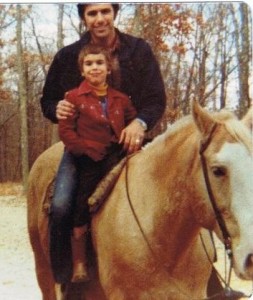 I idolized my father growing up. I used to take friends up to his study to show them pictures from his old almanacs of his playing days in high school and college sports and brag about his athleticism. I bragged about him a lot as a kid, and still try to emulate him as an adult. I idolized my father growing up. I used to take friends up to his study to show them pictures from his old almanacs of his playing days in high school and college sports and brag about his athleticism. I bragged about him a lot as a kid, and still try to emulate him as an adult.
My dad took his profession very seriously, and it was really mom who played the more “hands-on” role growing up. Dad’s paternal example, my grandfather, was a tough Texas railroad man who was often on the road. In that generation, parents didn’t exactly “play” with their kids. My dad carried that tradition (albeit to a lesser extent). Indeed, I remember many days he’d come home from work for dinner, only to return to work after dinner.
But this was hardly a Harry Chapinesque “Cats in the Cradle” scenario—indeed, I always felt my dad was there for me and enjoyed me as a son. As busy as he was, I also never took for granted our bonding times—going to the local college’s basketball games (for which we had season tickets), the occasional Cubs game, the 20 hour drives to Texas to visit our kin, and the boxing. He taught me “the science of boxing,” and in my pre-teens we’d have periodic boxing matches in our family room when he’d don the gloves he brought me, sit at the end of the couch and let me come at him full speed while he’d lob soft “punches” in return. When I bobbed, weaved and got in a good punch, he’d fall backwards and feign like I knocked him out.
Strangely enough, my father became a far more hands-on parent in my adulthood. When I first ran for political office in 2002, my dad would literally commute from my South-of-Chicago hometown to Cincinnati every week to help with my congressional campaign. I was an unknown non-profit director at the time running against a very powerful incumbent. I got my butt kicked, but the consolation prize was the incredible “everyday” time I had with my father driving to church festivals and other campaign events. Many in Cincinnati’s political circles came to know my dad as a fixture on the campaign trail. Indeed in 2004, when I ran for congress a second time, my dad repeated the same ritual . . . commuting several hours each week to help out. By then, most politicos knew him, and it was more like a homecoming. That was a fun, spirited campaign in an intense presidential election year. But I was still very much the underdog, and when you are an underdog you often find yourself working like mad to win a race that no one thinks you can win, and often are met with ridicule by patronizing reporters and dismissive campaign donors that seem to take you less seriously for even trying. In those trying circumstances, having love and unconditional support in your corner is a God-send.
It was a bit off seeing a father who I looked up to my entire life undertake the role of a humble campaign worker . . . helping me with candidate surveys, marching in parades, handing out collateral at festivals . . . event after event. I remember vividly the day we were sitting side by side at computers in the campaign office when he suddenly announced “Paul Wellstone died in a plane crash.” (I am a graduate of Camp Wellstone, the late senator’s campaign organizing school.) I never got to win an election and taste victory with my father, which is one of my deep regrets, although I know he is no less proud of me.
I now have two sons, and so grateful they have the chance to interact with and get to know my father. He’s their “poppa.” He taught my 8-year old son Nathan last summer how to throw a spiral, and starred on stage for a community production of a Christmas Carol, which was my son’s first play.
I was blessed with two exceptional parents, but today is the day I pay tribute to my father. I firmly believe that every day I go about my work with conviction and integrity and stay true to my values is a day I’m befitting of his example. Next month I will turn 40, and very much hope that when my young sons are my age, they look back at me with a similar reverence for their old man.
My parents are the reason I have the courage to do what’s right, and have made this recovering politician feel like a winner even in defeat.
By Jonathan Miller, on Fri Jun 17, 2011 at 12:30 PM ET So, I get my big break on radio, and my celebrity guest doesn’t show up.
I won’t pull a Letterman, because John McCain had a good excuse — he had an unexpected vote — and he promises to join us in a few weeks.
But we still had a great show, featuring economist Robert Shapiro and Jennifer Duffy of The Cook Report. Rob delivers one of the most cogent and simple explanations of the impact of a national credit default — it is worth the whole show.
And if you listen until the end, you will witness my coughing attack. Live radio, eh?
No Labels is a new grassroots movement of Democrats, Republicans, and Independents who are united in the belief that we do not have to give up our labels, merely put them aside to do what’s best for America. No Labels Radio will offer a weekly dose of news and interviews with the policymakers who are working to find bipartisan answers to the otherwise intractable problems our country faces.
Enjoy yesterday’s broadcast:
|
|