By Jeff Smith, on Fri Jun 17, 2011 at 9:15 AM ET  No, Anthony Weiner’s resignation wasn’t inevitable. No, Anthony Weiner’s resignation wasn’t inevitable.
A majority of general election voters polled in his district didn’t want him to resign, and so he probably could’ve survived the primary, unless further damaging revelations came to light.
Was it “fair” that party leaders pushed him to resign? Depends what the definition of “fair” is. First, Weiner’s trailblazing hurt him. Cheating? So passe. Cheating with best friend’s wife (as an evangelical Christian pol)? Cheating with hookers (as an evangelical Christian pol)? Foot tapping in airport restrooms? Dirty IMs with 16 year-old House pages? It all feels so ’00s.
But DM-ing crotch-shots! Now there’s something new! Appalling!
The fact is that Anthony Weiner wasn’t pushed out so much for the sexts. Barney Frank used a male prostitute who then ran an escort service out of Frank’s apartment. Frank survived because his colleagues respected his intellect, work ethic, and legislative prowess.
And of course, most Democrats staunchly defended President Clinton during impeachment because of his policy and political brilliance, the depth of his relationships, and consistently strong job approval ratings with the public.
Weiner, however, was the prototypical show horse — first in line and quick with a quip when there was a camera around, but essentially absent from the legislative process. Many of his colleagues found him insufferable. More than anything, I think that explains his lack of defenders in recent days — a lack of support that led to his resignation.
Crossposted from Politico’s Arena
By RP Staff, on Thu Jun 16, 2011 at 2:00 PM ET RIGHT NOW contributing RP Lisa Borders and the RP are co-hosting the weekly episode of No Labels Radio.
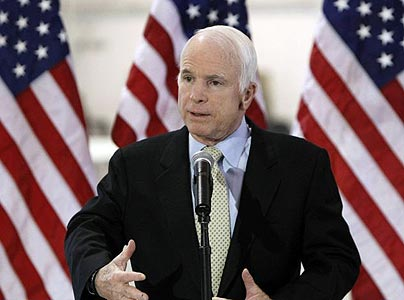
Their primary guest is U.S. Senator John McCain (R-AZ), who will discuss the work being done to forge a bipartisan solution to the nation’s fiscal problems.
Click here to tune into the broadcast.
No Labels is a new grassroots movement of Democrats, Republicans, and Independents who are united in the belief that we do not have to give up our labels, merely put them aside to do what’s best for America. No Labels Radio will offer a weekly dose of news and interviews with the policymakers who are working to find bipartisan answers to the otherwise intractable problems our country faces.
By Jonathan Miller, on Thu Jun 16, 2011 at 12:00 PM ET Today at 2 PM EDT, contributing RP Lisa Borders and I are co-hosting the weekly episode of No Labels Radio.
No Labels is a new grassroots movement of Democrats, Republicans, and Independents who are united in the belief that we do not have to give up our labels, merely put them aside to do what’s best for America. No Labels Radio will offer a weekly dose of news and interviews with the policymakers who are working to find bipartisan answers to the otherwise intractable problems our country faces.
Our primary guest is U.S. Senator John McCain (R-AZ), who will discuss the work being done to forge a bipartisan solution to the nation’s fiscal problems.
Click here to find out more about today’s broadcast.
OK, RP Nation.
Here’s your last chance to suggest a question for one of the most prominent politicians of the past decade.
Make your suggestions in the comments section below. And then tune in at 2 PM EDT to see if I used it.
Thanks for your help!
By Jonathan Miller, on Wed Jun 15, 2011 at 5:00 PM ET Tomorrow at 2 PM EDT, contributing RP Lisa Borders and I are co-hosting the weekly episode of No Labels Radio.
No Labels is a new grassroots movement of Democrats, Republicans, and Independents who are united in the belief that we do not have to give up our labels, merely put them aside to do what’s best for America. No Labels Radio will offer a weekly dose of news and interviews with the policymakers who are working to find bipartisan answers to the otherwise intractable problems our country faces.
Our primary guest is U.S. Senator John McCain (R-AZ), who will discuss the work being done to forge a bipartisan solution to the nation’s fiscal problems.
Click here to find out more about tomorrow’s broadcast.
Here’s your big chance, RP Nation.
Here’s your chance to suggest a question for one of the most prominent politicians of the past decade.
Want me to ask him about the budget debate? The 2008 election? His service in Vietnam? His choice of Sarah Palin? His appearances on Saturday Night Live?
Make your suggestions in the comments section below. And then tune in tomorrow to see if I used it.
Thanks for your help!
By Jeff Smith, on Tue Jun 14, 2011 at 2:15 PM ET  North Carolina isn’t a must-win for Obama; it was icing on the cake last time. But I do think he’ll win there. Like Colorado but unlike Ohio, North Carolina is a swing state that is moving steadily in Democrats’ direction because of long-term demographic trends, primarily the continued influx of tech workers and other highly educated voters into the Research Triangle. North Carolina isn’t a must-win for Obama; it was icing on the cake last time. But I do think he’ll win there. Like Colorado but unlike Ohio, North Carolina is a swing state that is moving steadily in Democrats’ direction because of long-term demographic trends, primarily the continued influx of tech workers and other highly educated voters into the Research Triangle.
The state’s growth is centered in the progressive middle third of the state, as opposed to the more conservative East and the Appalachian West, a region where Obama has struggled to connect.
The resilience of Obama’s numbers in North Carolina — contrasted with his relative weakness in some Rust Belt swing states — suggests that he will win there. But it’s a stretch to call it a must-win state, as there are many ways to get to 270 without it. Remember, Clinton got 379 Electoral College votes in ’96 and never even made an effort in North Carolina. Few states go from uncompetitive to must-win status for a party in the span of four elections.
Cross-posted from Politico’s “Arena”
By Kathleen Kennedy Townsend, on Tue Jun 14, 2011 at 12:00 PM ET  I’ve been mulling over a column by David Brooks on “The Politics of Solipsism” for the past couple of weeks. What he wrote is nervy to say the least. He argues that America has lost the republican virtues on which it was founded, namely, the curbing of self-centeredness in the interest of the public good. I too am a fan of Cicero, but Brooks fails in one of the primary republican virtues by not forthrightly acknowledging that Republicans, the adherents of Ayn Rand, are the ones who have most blatantly deserted these same virtues. Self interest has center stage on their platform. I’ve been mulling over a column by David Brooks on “The Politics of Solipsism” for the past couple of weeks. What he wrote is nervy to say the least. He argues that America has lost the republican virtues on which it was founded, namely, the curbing of self-centeredness in the interest of the public good. I too am a fan of Cicero, but Brooks fails in one of the primary republican virtues by not forthrightly acknowledging that Republicans, the adherents of Ayn Rand, are the ones who have most blatantly deserted these same virtues. Self interest has center stage on their platform.
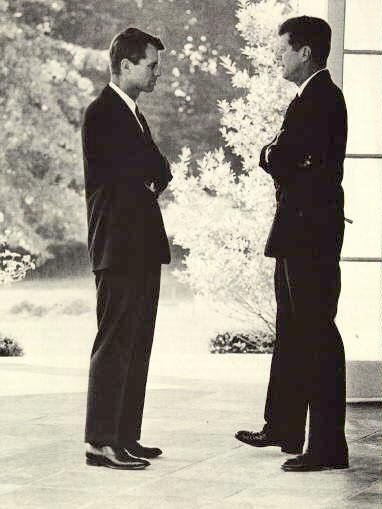
Brooks praises Truman and Eisenhower, but he fails to mention that it was President Kennedy who repeatedly challenged Americans and asked them to sacrifice. He urged us to go to the moon because it was tough, not because it was easy. And when my father, Robert Kennedy, was running for president and medical students asked him who would pay for more health care for the poor, he quickly answered, “You will.”
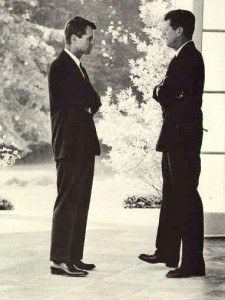 Contrary to the Republican philosophy, summed up by Ronald Reagan, that government is the problem, John and Robert Kennedy considered politics an honorable profession and affirmed that government was the place where we “make our most solemn common decisions.” Contrary to the Republican philosophy, summed up by Ronald Reagan, that government is the problem, John and Robert Kennedy considered politics an honorable profession and affirmed that government was the place where we “make our most solemn common decisions.”
Both my uncle and my father knew that America is at its best when its citizens are willing to give up something for others. That was the spirit in which they committed themselves to public service. Ultimately they both gave their lives in the service of their country.
Like my father and my uncle, I believe that serving the public good is the essential republican virtue. In fact I led the effort to make Maryland the first and still only state in the country where community service is a condition of high school graduation. I did this because I believe that virtue comes from habits developed, not sermons given. Aristotle said, “we become house builders by building houses, we become harp players by playing the harp, we grow to be just by doing just actions.”
Republican governors are making their mark attacking public servants. They’re laying off citizens who exemplify republican virtues like teaching in inner city schools, fighting drug cartels, and rushing into burning buildings. Why? So that those who make outrageous salaries can pay lower taxes.
Brooks says that Republicans want growth, but I see no evidence that they want growth for anyone but the most well off. Where is the commitment to education, to infrastructure, to science?
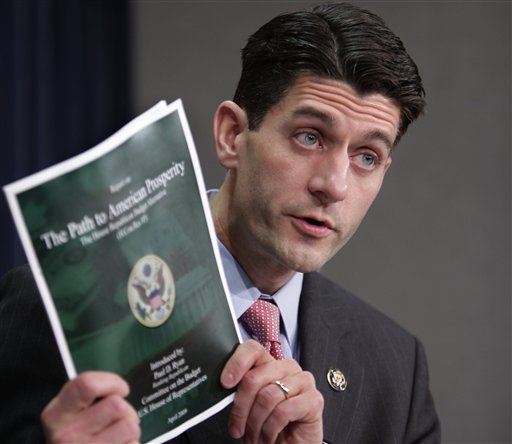
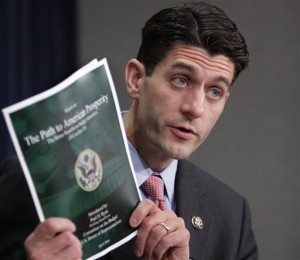 Rep. Paul Ryan Brooks commends Paul Ryan for sending the message that “politics can no longer be about satisfying voters’ immediate needs.” And yet Ryan would give the rich even more of a tax break at a time when our taxes are the lowest in three decades.
George Washington, whom Brooks also praises, would be surprised that the rich are being asked to shoulder less of a burden. He supported excise taxes that would fall disproportionately on the wealthy. When he went to war, he brought his wife, Martha, to share the hard, cold winter of Valley Forge along with him.
The wealthy have a special responsibility. From those who have been given much, much will be asked. In a true republic, people of wealth and privilege are first in line to serve in government, go to war, contribute to the honor and glory of their country. They set the nation’s values. If what they value is money, money, money, then the country will follow.
After 9/11, George Bush asked us to shop. At just the moment when he could have called us to a cause greater than ourselves, he (apparently on the advice of Karl Rove) urged us to step up for new TVs and designer bags rather than for the public good.
So if Brooks really wants to put an end to the politics of solipsism, he must take on the Republican party itself, which has done so little to cultivate the virtues of service, sacrifice, and commitment to country.
Please don’t lecture us about solipsism and republican virtues when it’s Republicans who are the ones who have made such a virtue of self interest.
Cross-posted from Atlantic.com
By Stephanie Doctrow, RP Staff, on Mon Jun 13, 2011 at 8:30 AM ET Words are a very powerful thing, especially in politics. The choice of sympathetic versus tough language alone can make the difference in how a political situation is perceived, especially in a situation as contentious as that in Palestine. Our very own contributing RP, Artur Davis, wrote an op-ed on the power of words for the Montgomery Advertiser:
Words matter in politics to the point that they often have equal weight with ideas.
That is why Republicans religiously describe the 2010 health care reform as “Obamacare.” It is why much of the Latino community cringes at the term “illegal aliens” and why Newt Gingrich almost self-immolated his campaign when he described a Republican Medicare proposal as “right-wing social engineering.”
It should be no surprise then, that President Obama’s recent endorsement of an Israeli-Palestinian border drawn along the “1967 lines” has proved so contentious. It is possible to blunt the literal value of the words with diplomatic minutiae: the White House was swift to italicize the portion of Obama’s speech that referred to additional “swaps” of land on both sides of the 1967 lines as necessary additional elements of a permanent accord.
Read the rest of Artur’s op-ed here.
By Kathleen Kennedy Townsend, on Fri Jun 10, 2011 at 8:30 AM ET I recently visited Madison where I spoke to Wisconsin Women in Government, a group founded 24 years ago to support women who choose a career in public service. I welcomed the chance to talk about the ways women discover their power, a subject near to my heart and experience. Even though I’d grown up in a very political family, I’d never imagined as a young girl that I’d become a lawyer or run for political office. That’s what guys did. But eventually the women’s movement empowered me to develop talents I didn’t know I had and inspired me to encourage other women to do the same.
When I was in college, I saw women rally, conduct sit-ins and teach-ins, and march in the streets. In large groups and small meetings, women told their stories, demanded their rights, and passionately argued that they were equal to men. Women friends became class speakers, were hired to teach in law school, and won lawsuits. Heartened by their words and actions, I went to law school myself and founded a group called Women in Politics.
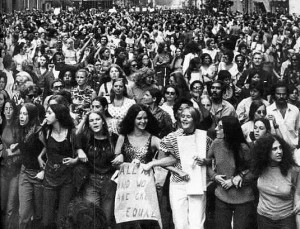 I couldn’t have accomplished these things without the support of other women who were also becoming empowered. Led by trailblazers like Betty Friedan and Gloria Steinem, we gradually came to see ourselves differently and stopped believing what the world kept telling us–that we didn’t have it in us to make it a man’s world. We changed ourselves and we changed society. Friendship and solidarity made these transformations possible. I couldn’t have accomplished these things without the support of other women who were also becoming empowered. Led by trailblazers like Betty Friedan and Gloria Steinem, we gradually came to see ourselves differently and stopped believing what the world kept telling us–that we didn’t have it in us to make it a man’s world. We changed ourselves and we changed society. Friendship and solidarity made these transformations possible.
It wasn’t easy. I didn’t have a single woman professor in college. After law school, I applied for a job at Legal Services, and since I had two children, asked if I could work part time. The director said no. He wanted Legal Services to stick to the same standards as large law firms. They didn’t have part-time lawyers, and neither would he. A few years later, he was elected to Congress and joined a family-friendly caucus. He had changed, like many others.
Read the rest of…
Kathleen Kennedy Townsend: Empowering Public Employees: Lessons From the Women’s Movement
By Jeff Smith, on Thu Jun 9, 2011 at 12:30 PM ET Contributing RP Jeff Smith answers the Politico Arena query as to whether House Minority Leader Nancy Pelosi continues to be an effective foil for Republican candidates:
The trend’s spread to my neck of the woods, too: Missouri Republican Ed Martin kicked off his congressional campaign yesterday by tying prospective opponent Rep. Russ Carnahan to Pelosi as well (even though it was Steny Hoyer – not Pelosi – here campaigning for Carnahan the day before). This strategy appeared to be effective for Martin last cycle; he held Carnahan under 49 percent in a 59 percent Democratic Performance Index district.
Unfortunately, Pelosi’s numbers last fall were worse than Richard Nixon’s were during impeachment. Democrats can lament that and condemn Republicans for using sexist imagery and rhetoric to caricature her, but her cake is baked. (Wait, was that sexist?)
Since this appears to be a coordinated national message with money behind it, one can only assume that NRCC polling suggests that Pelosi remains a drag on Democratic congressional candidates in swing districts. It may not make sense given the House Dems’ relative impotence in the face of a Paul Ryan-driven agenda which is in itself quite unpopular, but I’m afraid these attacks still resonate.
By Jonathan Miller, on Thu Jun 9, 2011 at 8:30 AM ET This week, The Recovering Politician published three pieces in which contributing RPs Jeff Smith, Artur Davis, and I weighed in on the John Edwards investigation and trial. If you missed them, here they are:
Jonathan Miller: I Was Never a John Edwards Fan, But I’m Rooting for Him Now
Artur Davis: Former Federal Prosecutor Terms Edwards Investigation “Misguided”
Jeff Smith: Your Tax Dollars at Work, Prosecuting (and Potentially Incarcerating) John Edwards
These articles certainly touched a nerve. I received several dozen emails from our readers, each giving their own take on the controversy.
Below I run a sample of the readers’ letters. Since I did not ask explicitly for permission, I am not using the authors’ names. However, if I used your email, and you would like to be identified, please let me know.
And of course, as always, we encourage you to comment below.
Is what John Edwards's campaign did against the law?  That's the
question, right?  It's not about the character of John Edwards, or at
least shound't be.  And as for the poor first-time candidate worried
about taking it on the chin because he copped a few free haircuts or
some used clothes, wouldn't he want to know one way or the other
whether it's okay before he takes a gift?  The commentary I have seen,
like that cited on your blog, doesn't say one way or the other whether
what happened here is or isn't (or should or shouldn't be) against the
law, but rather (i) leave the poor guy alone and (ii) what's the big
deal?  History is full of powerful people who left the stage in shame
and then still had to suffer being investigated, sued, and/or
prosecuted.  It's a risk that goes with being a public person with
something to hide.  In Edwards' case, these were large donations (not
free haircuts), and if whether they should have been disclosed because
they served a political purpose is an open question, then let's get
the answer.  Doing so would hopefully shed some light on what is
obviously a murky area, and may help deter some future shenanigans.
Someone will always be ready to push the envelope.  If the edge is not
well defined, or worse, the signal is sent that we won't pursue cases
of apparent wrongdoing that are near the edge, we open the door to
even worse behaviour in the future.
John Edwards’ approval ratings are between 2 % and 3%. I hope he will never be considered for public office again. I think he is lower than dirt for his arrogant, narcissistic, dishonest acts against his dead wife and his children. His character is too low for him to be considered for any responsible government job. If he has broken laws in his covering up his out-of-wedlock child and lover, I would not shed a tear if he went to jail or was forced to do public service for indigent wives whose husbands have left them for the healthy, years younger model. I sent money to this man’s campaign, and it was NOT sent to support a mistress and baby outside of marriage! Poverty for John Edwards seems to me the best punishment.
Numerically, the Republicans seem to be cranking out more reprobates, liars, adulterers, thieves, and liars, but Democrats had better police their own if they want to count themselves as those taking the “high ground.”
Read the rest of…
The Edwards Affair — Our Readers Weigh In
|
|


 No, Anthony Weiner’s resignation wasn’t inevitable.