By Jeff Smith, on Tue Jan 17, 2012 at 12:30 PM ET  Jeff Smith: Rebuttal #4 Jeff Smith: Rebuttal #4
[The RP’s Provocation; Jason Atkinson’s Rebuttal #1; The RP’s First Defense: Jason Atkinson’s First Response; Artur Davis’ Rebuttal #2; The RP’s Second Defense; Artur Davis’ First Response; Ron Granieri’s Rebuttal #3]
I think drug legalization is a little like campaign finance reform, or Lay’s potato chips: You can’t do it halfway (or, you can’t eat just one).
That’s why I think Jonathan’s wrong. We shouldn’t legalize marijuana. We should decriminalize all drugs. Prohibition has accomplished a few things. It has driven up the price of drugs dramatically given the risks that market players take every day. It has increased the potency of drugs and made them more dangerous than they would be if legal and regulated; every year thousands die from taking drugs that are laced with toxic substances. It has helped lead to the imprisonment of a generation of mostly minority young males, many of whom have substantial talents and aptitude for capitalism (and took advantage of their skills in the only thriving industry in their neighborhoods). And of course, because of the outsized profits available to those willing to risk their liberty and indeed, their life, prohibition helped give rise to an epidemic of violence that plagued inner cities for decades and has to a lesser extent hit rural America via meth.
Read the rest of…
The RPs Debate Marijuana Legalization: Jeff Smith Rebuts
By Artur Davis, on Tue Jan 17, 2012 at 11:30 AM ET 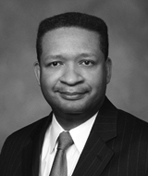 Artur Davis‘ First Response Artur Davis‘ First Response
[The RP’s Provocation; Jason Atkinson’s Rebuttal #1; The RP’s First Defense: Jason Atkinson’s First Response; Artur Davis’ Rebuttal #2; The RP’s Second Defense]
I think that Jonathan’s argument regarding medical marijuana–versus social use of marijuana– is a tougher one to resolve, but I’m still inclined toward the view that legalizing marijuana for medicinal purposes is easy to do in theory, hard to do in fact. Jason Atkinson is dead-on, in my view, about the abuses and subterfuges that will spring up if the door to legalization is opened at all. As for Jonathan’s observations regarding the resources spent on minor drug prosecutions, it’s a quite serious point. I would repeat my earlier sentiments that marijuana prosecutions remain an area of disparity and uneven unforcement. I would even go so far as to endorse the experiment in some jurisdictions of considering drug possession cases in special drug courts, where the focus is treatment and avoiding recidivism rather than incarceration.
By Artur Davis, on Tue Jan 17, 2012 at 10:30 AM ET Artur Davis: Rebuttal #2
[The RP’s Provocation; Jason Atkinson’s Rebuttal #1; The RP’s First Defense: Jason Atkinson’s First Response]
The arguments for legalizing marijuana turn on the idea that the risks are limited, or on a libertarian notion that individuals should have the license to weigh the risk for themselves.
I’ve yet to hear a case that an explosion of social marijuana use will improve public health, strengthen families or communities, or add to the public good in any measurable way. I’m dubious about ending a whole class of criminal laws with nothing positive to show for it.
There is certainly room to evaluate the defects in how marijuana laws are enforced; many judges and state level defense lawyers are convinced that minorities are more likely to face felony charges for marijuana related crimes, and that the system is replete with inconsistencies in how marijuana offenders are treated, for reasons rooted in class, race, geography, etc. That conversation ought to happen, but there is ample room to reform the disparities without throwing up our hands altogether.
Read the rest of…
The RPs Debate Legalizing Marijuana: Artur Davis Rebuts
By Jason Atkinson, on Tue Jan 17, 2012 at 10:00 AM ET  Jason Atkinson’s First Response Jason Atkinson’s First Response
[The RP’s Provocation; Jason Atkinson’s Rebuttal #1; The RP’s First Defense]
Alright, pour me a white russian and level with me Dude or your Dudeness, or uh, Duder, or El Duderino for whomever is not into the whole brevity thing.
The issue is should citizens smoke pot? The answer is no. It’s bad for you. So are alcohol, potato chips and too much tv, but what we are talking about is a drug for pain relief. Should pain drugs be made? Yes, and I’m open to the herb being part of that mix if treated like a drug.
The criminal element will not evaporate because it’s legal. Perfectly healthy people will not stop trying to get it because its legal.
 Many states are trying to stop kids from using Meth. One of the main ingredients of Meth is cold medication. Making that medication hard to get, drastically put a dent into meth production, increasing the street cost, and frankly making it too expensive to be a recreational drug. On the west coast, the cartels are now making and transporting Meth ( see my early post). Crime is crime. If it’s legal for the hurting, the healthy will be jones’n for it.
By Jason Atkinson, on Tue Jan 17, 2012 at 9:00 AM ET Jason Atkinson: Rebuttal #1
[Read The RP’s Provocation]
Pot is already legal, or at least hard to enforce beyond medical cardholders, in Oregon. I used to joke in my state camouflaged PVC pipe was sold in local hardware stores. (For those of you who don’t watch “Moonshiners” camo PVC is harder to see from the air.) Sadly though, when the voter’s legalized marijuana has almost become more than jokes.
Massive greenhouses have popped up across the landscape like a teenagers first outbreak of acne. What is not seen everyday is the hundreds of plants being grown with a single marijuana medical card or the thousands of plants being grown illegally by the cartels in the forests.
I understand the arguments from pain-management and from the economics of cutting the profit motive out, however those positions are too narrow for the reality of the modern herb industry:
- Marijuana is a gateway drug. Ask anyone in recovery.
- People on drugs, legal or illegal, should not be driving. From the highway to a forklift: Society pays the price.
- Medical cards are easier to get than fake ids. The ease of getting medical cards is the biggest problem and the hardest to get under control.
- People with grow cards can grow anywhere.
- Mexican drug cartels are using the illegal system to grow and distribute. (Do you think the cartel’s care about your Grandma’s glaucoma? Me neither.)
My local Sherriff does not have jurisdiction, or the manpower to even cruse the legal grow sites, let alone the illegal ones seen from air. Moreover, local law enforcement has no idea when they check on a complaint if they are walking into drug-induced hostility. DEA is trying to crack down, however every instance of a pot bust is with someone who has a card. Citizens call me daily complaining about the rental house in their neighborhood being used as a grow site and distribution.
Every one of these issues we’ve tried to change the law, but to not avail. The pot lobby is strong, well funded, and makes an emotional case for chronic pain. If it were only limited to chronic pain, needing a doctors prescription and manufactured like the drug that it is.
Look man, the Dude Abided- without a card. Lenny Kravitz confessed to Piers Morgan last month he walked around in “wall of fuzz” before he took action to get off the stuff. True the cat is out of the bag. Governments on the left coast need to step in.
However, I am hard pressed to call it a moral choice when the societal consequences are so overwhelming. This debate is akin to state’s getting into, then addicted to gambling. When morality comes crashing in that gambling hurts the poor, government’s answer is “gambling addiction help awareness TV commercials” paid for by lottery revenues.
By John Y. Brown III, on Mon Jan 16, 2012 at 2:00 PM ET Martin Luther King, Jr in his own words.
Historic words that changed a nation and defined an movement one afternoon not too many years ago. Words were MLK Jr’s weaponry.
He proved that the pen can indeed sometimes be mightier than the sword (or gun, or burning cross or fire hose, as the case may be). But only if the words are borne of conviction, selected masterfully, and used in the service of a calling.
Which brings me to my oddest but personally important lessons from MLK Jr.
Years ago when I was in college I read somewhere that MLK Jr used to be caught reading the dictionary. He loved words…and saw early on the power and force verbal persuasion can have on a nation.
It encouraged me to “read” my dictionary. My old college Merriam-Webster dictionary, by the time I finished college, was the one book in my library that left no doubt that the owner had gotten his money’s worth.
Read the rest of…
John Y’s Musings from the Middle: What King Taught Me About Words
By Michael Steele, on Mon Jan 16, 2012 at 1:30 PM ET 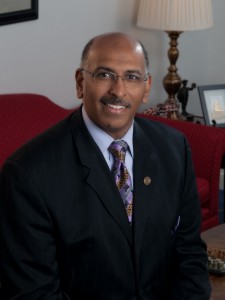 The importance of Dr. King’s contributions cannot be over-stated or diminished by the lapse of time. His fight for the freedom, equality, and dignity of all races and peoples remains as important today as it was on April 4, 1968, the day he was killed. The importance of Dr. King’s contributions cannot be over-stated or diminished by the lapse of time. His fight for the freedom, equality, and dignity of all races and peoples remains as important today as it was on April 4, 1968, the day he was killed.
So, as we reflect on this man of history, I hope we appreciate Dr. King’s courage, vision, strength, humanity, but most importantly, his perseverance.
Dr. King’s perseverance transformed him; it made him not just a legendary leader, it signals to us in these times the challenge remains to “take up the cause of freedom”.
Perseverance enabled Dr. King not only to achieve success, but to achieve his dream; a that dream that draws us even today; a dream that embodied the civil rights movement but importantly, a dream that created a legacy for future generations;
Dr. King’s efforts helped close a chapter in America’s history, a chapter which chronicled the burden of slavery and institutionalized discrimination. A chapter which imprinted segregated public accommodations and schools on the very soul of African American life.
A chapter in which the foundation of America—freedom and equality—was rocked by water hoses, police dogs and racism.
However, Dr. King also knew that this movement towards civil rights would open a new chapter for America—a chapter we are still writing today; a chapter steeped in hope, opportunity and true equality.
But, for many this new chapter, which reflects America’s journey from slavery to emancipation; from Jim Crow to affirmative action also, belies an accomplished agenda.
The illiterate, the suffering, the addicted, the homeless—they demand more from our generation than nice words or one more government program.
What they demand, and what you and I must provide is an opportunity to heal and to teach, to turn dreams into reality and hope into action for the kid growing up on the streets instead of in a home; for the family struggling to make ends meet; for the teacher mired in paperwork while her students are mired in a failing school.
Thurgood Marshall once said, that “none of us has gotten where we are solely by pulling ourselves up from our bootstraps. We got here because somebody bent down and helped us.”
Read the rest of…
Michael Steele: Dr. King’s Perseverance
By John Y. Brown III, on Mon Jan 16, 2012 at 12:30 PM ET  What has been our greatest act honoring MLK? What has been our greatest act honoring MLK?
A fair question to ask ourselves today.
In 1984, I had the privilege of studying abroad with a group of 500 other students. We spent 4 days and 3 nights in Capetown, South Africa. Nelson Mandela, an anti-Apartheid activist, was in prison and we were taught that he’d surely die there.
Apartheid policy, South Africa’s legal segregation, ensured that the 20% of the population that was white would keep the 80% that were non-white in subjugation.
But that didn’t happen. Apartheid was on a collision course with history. Nelson Mandela not only left prison but in 1994 was elected the first black president of South Africa.
But in 1984 things were very different. Of the 500 students in the program only 4 visited a “Township,” an impoverished urban area where non-white workers were housed.
I was one of them….and encouraged the other three to join me in a taxi ride through a nearby Township. I wasn’t being a martyr. I was mostly curious. My heart went out to the non-whites in South Africa who weren’t allowed to walk on city streets after midnight.
I had given half my cheeseburger the night before to a black man who asked for it–but wasn’t allowed in the diner at that time of night. I felt like I’d traveled back in time 20 years….but wanted mostly to understand.
The cab driver drove us through the Township offering commentary about how the men were bused in from hours away and would stay for several weeks at a time. The scraps from cows (tongue, nose, unwanted parts) were sold on the streets as flies were swatted away unsuccessfully.
I brought a book by MLK with me that day–a collection of his thoughts and quotes. I’m not sure why. Before leaving the Township, I asked the cab driver to slow down. Several men looked inside the cab curious about the 4 young white boys inside. I rolled down the window and handed one the MLK book on civil disobedience and waved good-bye.
The cab driver warned me that was dangerous to do and I shouldn’t have done that. He was an Africaaner. A race with slightly more rights than blacks but still significantly inferior rights to whites.
I doubt the book ever got read becoming a source of inspiration. Who knows? But I’m proud of my act….not really a brave act but a small but caring act showing I was engaged…..and in response to a system we all knew was untenable.
I was not rebelling or meddling where I shouldn’t. I was trying in some very small and almost insignificant way to help —that was personal to me. Of course, the book I gave didn’t matter in the scheme of things….but mattered to me. It was something I could do at that moment. And I did it. And 27 years later, it stands out to me as the personal act that most honored MLK. A great man we honor today.
By Jeff Smith, on Fri Jan 13, 2012 at 8:30 AM ET Given the tenuousness of Democratic control of the U.S. Senate, I imagine more than a few people in Washington are hoping former Sen. Bob Kerrey will run for the seat vacated by retiring Democratic Sen. Ben Nelson. As both local andnational sources are reporting, Kerrey is seriously exploring the bid – and Republicans are taking his possible entrance just as seriously. Operatives of both parties seem to agree that he may be the only Democrat who could hold the seat. I hope that he makes the race. But I don’t think he will.
First, some politicos call Kerrey a serial floater. They refer to his frequent Hamlet routine, in which he contemplates but ultimately declines to run for various offices: in 2000 for president, in 2005 for New York City mayor, and in2008 for the last open U.S. Senate seat in Nebraska.
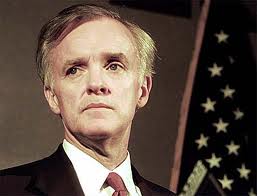 Second, after a decade in the private sector, I doubt Kerrey is excited by the prospect of a year of retail campaigning. He was famously aloof in his 1992 presidential campaign, which reinforced the regrettable nickname “Cosmic Bob.” As a former aide to ex-presidential candidate Sen. Bill Bradley, D-N.J., I traveled with Kerrey briefly in western Iowa in late 1999 as he helped campaign for Bradley before the caucuses. During a break between events, an advance man suggested that Kerrey shake hands in a small-town square; Kerrey suggested bowling instead. While I appreciated his quirky charisma, obvious intelligence, and willingness to speak hard truths, I found him miscast for the practice of politics. Accounts of his time in the Senate suggest a similar distaste for schmoozing. Second, after a decade in the private sector, I doubt Kerrey is excited by the prospect of a year of retail campaigning. He was famously aloof in his 1992 presidential campaign, which reinforced the regrettable nickname “Cosmic Bob.” As a former aide to ex-presidential candidate Sen. Bill Bradley, D-N.J., I traveled with Kerrey briefly in western Iowa in late 1999 as he helped campaign for Bradley before the caucuses. During a break between events, an advance man suggested that Kerrey shake hands in a small-town square; Kerrey suggested bowling instead. While I appreciated his quirky charisma, obvious intelligence, and willingness to speak hard truths, I found him miscast for the practice of politics. Accounts of his time in the Senate suggest a similar distaste for schmoozing.
Third, he could lose. Nebraska has reddened quite a bit since his last race in 1994. Back then, Nebraska had a Democratic governor and two Democratic U.S. senators; now, Nelson is the last elected Democratic statewide officeholder (and likely would’ve lost in ’12, which was why he bowed out). And surely, his having spent his last decade heading one of the nation’s most liberal universities — located in the lefty bastion of Greenwich Village — would take a little explaining to culturally conservative Nebraska voters. Attempting a comeback in such a risky race, after an unblemished career record of wins, may seem unappealing.
Read the rest of…
Jeff Smith: Democrats Can’t Count on Kerry
By John Y. Brown III, on Thu Jan 12, 2012 at 12:00 PM ET Earlier today I had an incident stuck on multiple automated call loops trying to get a simple question answered.
I know how it is and that these services help reduce time spent by employees dealing with routine questions but…… I had a simple but non-routine question and spent, on and off, 2 hours trying to get through. I finally did but the person kept referring to me as Mrs Brown until I corrected him–using my Barry White voice. But that’s another story.
So, as always, I tried to come up with a better way, a better mousetrap, a “big idea” to fix this commonplace problem.
But I couldn’t come up with anything beyond, well, hire live people to talk to live customers. That just doesn’t seem practical. And it’s so 1970s.
So, I griped a bit and then came up with what at the moment seemed an innovative and workable new approach that would decrease the “aggravation factor” for customers calling.
What was it?
Read the rest of…
John Y.’s Musings from the Middle: Automated Call Loops
|
|