By John Y. Brown III, on Fri Aug 31, 2012 at 12:00 PM ET
Friday morning –stylin’ like a guy.
In Starbucks this morning I noticed a guy I hadn’t seen before.
Nattily dressed like he was ready to pop off a cover of GQ magazine, but looking stressed and impatient pacing as he waited for his coffee. I could smell his cologne from the condiment bar and thought to myself “He reminds me of a temperamental European sports car.”
And when I walked outside, guess who I see standing (posing, really) next to his European sports car? Yep!
So I wonder to myself, “Do guys as they get older start to look like their cars?” Maybe so. His sports jacket matched the exterior of his car and his pants matched the interior. His hair even seemed styled to coordinate perfectly with his sleek and sporty car.
I wondered how he managed to stand next to his car as he groomed himself in the bathroom mirror this morning.
I was about to chuckle out loud as I hit the unlock button on my own car. And realized that I looked just like my grey Honda Accord –with matching grey interior.
By John Y. Brown III, on Thu Aug 30, 2012 at 12:00 PM ET
The problem with third base births and CCR
I have loved the song (and video) Fortunate Son for some time. I first saw it as a rendition by Eddie Vedder of Pearl Jam (see below) and put it in my iTunes collection. Recently I discovered the original was done by CCR (Creedence Clearwater Revival) and that the song was actually a lament of how most young Americans during the Vietnam War didn’t have the advantages of some privileged sons (“I ain’t no senator’s son” is one lyric line) to avoid serving in the war. In other words, the song was not about being a Fortunate Son of our great country, as I first imagined, and sang along without really understanding the words.
And that made me feel like maybe I don’t deserve to enjoy this song since I am someone who would be considered by CCR and Eddie Vedder, a “fortunate son” in a negative or unfair sense.
I’m not a “senator’s son.” But I am the grandson of a US senate candidate who lost that race 5 times, and the son of a father who was a governor and briefly a US senate candidate before dropping out of the race. And I’ll be the first to tell you, yes, there are tremendous and very unfair advantages to being a privileged son.
I have never tried to pretend otherwise. A few years ago I spoke to a group of entrepreneurs at Louisville’s Venture Club and was asked about these advantages. I responded, “Yes, I was born on third base (referencing Anne Richard’s political zinger aimed at George Bush Sr a few years back that he was “Born on third base and thought he hit a triple”). But that I was well aware that I didn’t hit a triple. In fact, I added, “I’m still not quite sure how I got on third base. I just know I have no recollection of ever being at bat.
Secretly, I suspect I was hit by the pitcher—maybe on purpose—and it was pitch was so hard they let me take three bases instead of just one. But that’s probably not the truth and just a story I tell myself so I feel like I earned third base on some level in some technical way. But I know deep down it was mostly a privilege thing. But there I was on third base.
“But I felt guilty about it,” I told the audience. So “I stole second base. And then I stole first base. So I could get back to where everyone else has to start on base.” I continued, “That relieved some of my guilt but I’m not sure it was the best play. At any rate, right now I think I may have found a way to get back to second base…and for the remainder of my life, I’m going to be trying to just get back to third base again—which is where I started. So, please don’t be mad at me for any advantages I had—and I had a lot—because, at this point any way, I’m just hoping to ‘break even’ in life by getting back to where I started from.”
That whole part of the speech was largely improvised but I liked the analogy and am sticking with it—and it summarizes pretty well the way I feel about all that. I hate it when people who have had great advantages in life try to make it sound like they pulled themselves up by their bootstraps and are self-made men or women.
I recall Al Gore starting his presidential campaign in 1992 with a story about how he grew up in Carthage, TN and chopped wood or some such story. Yuck! And, of course, there really are no self-made men or women. But some are less self-made than others. I put myself in that category.
I am grateful for the advantages I have had. As I said at another time to someone who brought up this topic, “I have had doors opened to me others don’t. But what I do and what happens after I step through that door is on me and up to me. But getting that first foot in the door matters a lot and is a big life advantage.”
The key in life, I guess, is to take whatever advantages we are given and try to make the most of them— do something useful for others with them (as well as useful to ourselves and our families). To whom much is given, much is expected, and all that. But at the end of the day , when we are quiet and alone, only we know in our hearts if we are living up to ourselves and our potential. And we never stop trying to….and, of course, seem always to feel we are falling a little short. But we do keep trying. And that is the main thing –and probably our saving grace.
But back to the song Fortunate Son. I have tried to make peace with all this privileged son business. As for any help with not serving in the military, that was never the case for me. I recall a few days before my 18th birthday being in a hotel room with my father and telling him I was going to register to vote in a few weeks and there was talk at that time about reinstating the draft (as there often was from time to time back then). I was afraid and asked my father what I should do if the draft was reinstated and I got drafted.
He responded, “Well, you have to go. That’s all.”
I responded, “But what if I die? Are you saying you want me to go to war and die?”
“Of course not, but you have to go in the military if drafted?”
“Were you drafted?” I asked.
“No, but I served in the reserves.”
I told my father I had a friend who told me about consciencious objectors but my father, in his inimitable over-simplified but correct and persuasive way, said, “You don’t want to do that. You couldn’t live with yourself afterwards. You just go if you are drafted. That’s all. Just one of those things you have to do. And it probably won’t happen anyway.”
So, there you have it. I was ready and willing to serve if called on. But, like the band members of CCR and Eddie Vedder, I did not volunteer. What does that mean now? It means if I met the members of CCR today and they called me a “fortunate son,” I’d tell them to “Suck it,” and add I work 14+ hours a day, was willing to serve in the military if called to duty and am proud of the life I have built for myself and my family and grateful for privileges I had and hope I have used them well—and am proud of my country and support our military.
But if I met Eddie Vedder that same day and he called me a “fortunate son,” I would probably be more apologetic and say something like, “You know, Eddie, you are right. I have had a lot of privileges I don’t deserve and do feel guilt about them. It is unfair. And it stinks for others not as fortunate.” I would not tell Eddie Vedder to suck anything. I like him more than CCR.
And that sums up about how I feel about it all. Sometimes with some people on some days, I am at peace with it. Other days with other people under other circumstances, I feel that piercing shot of guilt—the same one I felt when I heard Anne Richards that same night tell George Bush Sr he was born with a silver foot in his mouth. I laughed at first. But a few minutes later realized she was also talking about people like me. And stopped laughing as hard…. and hoped nobody noticed.
And I still love the song Fortunate Son (both versions—CCR’s and Eddie Vedder’s), whatever it means. And don’t apologize for that. It’s a good song. And I’m proud to post it. As a Fortunate Son myself.
By John Y. Brown III, on Wed Aug 29, 2012 at 12:00 PM ET
Pancakes and patience.
Back from last family dinner before our son was college bound.
We shared –despite protestations–an assortment of random funny stories of when Johnny was younger. One of mine was when he was about 4 years old and we were sitting at an IHOP and our order was taking a very long time. It was Johnny’s first trip to IHOP and he was hungry for pancakes and wanted to try all the different syrups.
After he asked again how long it would be until the waitress brought our pancakes, I responded: “Johnny, this is a good opportunity for us to learn patience.”
Johnny’s head whipped around angrily and glaring at me he said in a frustrated voice, “I don’t want to ever learn patience!! Patience is bad!!”
I leaned back in my chair and said, “Yeah, I know what you mean. I”d rather have the pancakes that learn patience too.”
I’m not sure either of us has learned a lot about patience since then either. But we at least considered it briefly 14 years ago.
By John Y. Brown III, on Wed Aug 29, 2012 at 8:30 AM ET
The RP and John Y. Brown, III
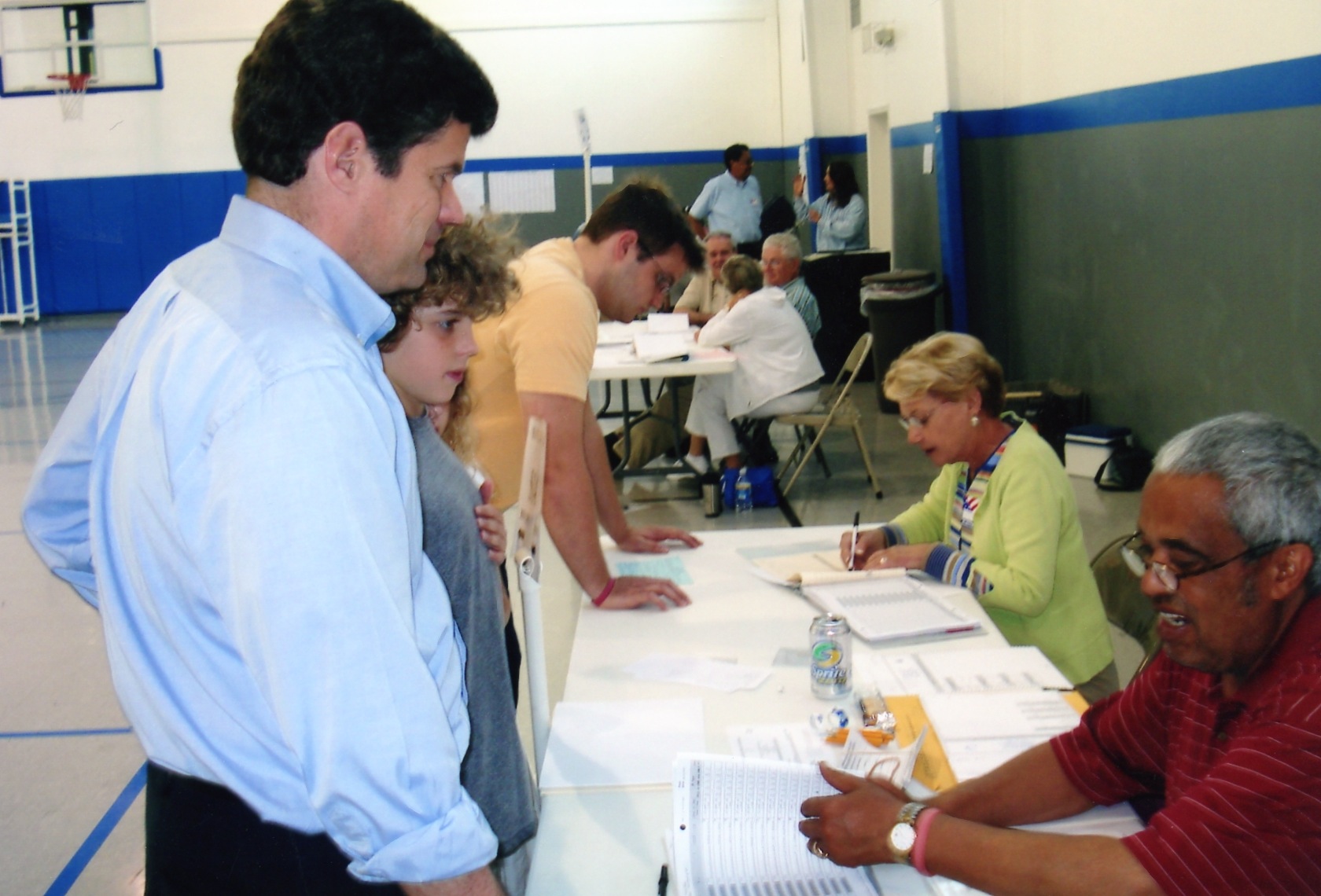
— friends for nearly two decades — have a lot in common. A youthful political addiction, a more mature wisdom of the folly of politics, much, much better halves who’ve helped then grow up, truly demented senses of humor (albeit, John Y. is more demented and more humorous). Now they find themselves coping at the exact same time with one of the most difficult rituals of middle age: sending their first borns off to college a few hours from home. They both were pretty apprehensive as the magic date approached, and pretty blue once it passed.
Today, they share their reflections with the RP Nation. Enjoy:
===
JOHN Y:
The importance of ice cream and fathers. And kids.
Our son moves out tomorrow to go to college. As I drove home late from work my mind was reeling—reeling about the immediate future (getting ready for tomorrow’s big event), about the present (the final night at home before our son moves out and moves on) and, of course, about the past (memories which now seem eerily ancient of a boy who is no longer a boy anymore).
My best memory for both my children is what we came to call “ice cream night.” For nearly 9 years –every Monday night—I would pick up my two kids while mom had the night to herself. When we started Johnny was 6 and Maggie 2. It became a weekly tradition with dad. We had a routine and we stuck to it almost without fail. We’d get ice cream (usually at Graeters) and then go to Barnes & Noble bookstore for an hour or so where we’d look at books and magazines, get something to drink like hot chocolate and make up some activity. Sometimes we’d play slow motion hide-and-seek so we wouldn’t be noticed by the bookstore employees. Sometimes the kids would make up a play for me in the children’s book area. Sometimes I’d read something to one or both of them. Later we’d listen to music or just sit in the cafe and talk. But we were there every Monday night. Until we weren’t.
It’s hard to persuade a 15 year old to do much of anything especially hang out with Dad on Monday nights. But I remember a few years earlier asking my family if they would be on board with me running for Lt Governor with then House Speaker Jody Richards. They were. The only hesitation was my son asking if that meant we’d no longer get to do ice cream on Monday nights. I told him softly and candidly “It might.” He looked down at the ground for several seconds but knew something bigger was at stake and then said, “That’s OK.”
I’ll never forget that and tried to keep our Monday nights going through the campaign. And did a better job than I expected. Even the state Democratic Party chairman knew Monday nights were a special–sacred, really–time for me and my children and would ask frequently during the campaign if I had taken care of business the previous Monday night. I was able to say I had more often than not.
I am grateful for those 9 years. More now than ever.
Tonight as I drove home from work I was approaching Graeter’s ice cream and decided to call to see if they were still open. They were. And so was the Barnes and Noble bookstore across the street. Both stayed open until 10pm. I called my wife and she got both kids to meet me for ice cream again and even joined us herself this time. We were buoyant at the funny irony of it all. We ordered our ice cream and sat and laughed about how we can’t go back in time. Perhaps most can’t. But tonight I was able to–at least briefly.
I hurried everyone out of Graeter’s to go by Barnes and Noble one last time “for old time sake,” I said. The kids agreed. We walked through the doors and were greeted by staff offering to help us and reminding us they were going to close in 3 minutes. I recognized one of them from our earlier days. We walked up together to the magazine section and lingered for a minute or two chuckling awkwardly with one another. And then we were told the store was closing. The kids left and my son drove my daughter home. I stayed inside a few minutes longer to do a quick once around to see if everything was as I remembered it. It was. And then I unlocked the already locked entrance door and let myself out. And drove home alone.
=====
THE RP
Commemorating the 10th anniversary of my father’s passing the same week I dropped off my oldest daughter Emily for her freshman year at college brought forth a rush of conflicting thoughts and emotions.
One of my most cherished possessions is a letter penned to me by my father on my first day of college. He didn’t actually give it to me until decades later, for later-to-be-obvious reasons — both my mom and he were putting up a brave face to help compensate for the natural homesickness I would be feeling on my first days from the roost.
It is intensely personal, so despite the public life I’ve chosen for myself, most of my dad’s words will remain in the exclusive possession of his intended audience.
But I feel compelled to share his closing paragraph with my friends, because my father — whose poetic stylings far exceed anything I’ve written — so incredibly encapsulates my inner conflict in the days following my own first born’s first day of college. And for those of you who’ve gone through this rite of passage, perhaps you can identify with my dad’s words as well:
Please remember that we love you without reservation, and are here when you need us. We wish that you never have pain, but know you will, and hope that you can use our feelings for you to get past your own hurts and failures. You sure have helped us with ours.
While Lisa and I have tried hard, especially over the past few years, to prepare our daughter for independent life, there’s only so much that any two of us can do. It’s impossible to reconcile the desire to fully and completely protect your child from the harms of the world with the understanding that at some point, they need the freedom to make their own mistakes, seize their own triumphs.
And that’s the heart of my struggle. I’m so damn proud of what an extraordinary young woman my daughter has become, and so excited to see how she will continue to grow and flourish, given her newfound independence and the opportunity to study, learn, and make new relationships on a remarkable college campus. But she will always be the little girl I held in my arms; she will always be the fragile flower that I would sacrifice my life to protect.
Letting go is the most difficult thing I have ever done. But I know it is also the most important.
= = = = =
Read the rest of… John Y and The RP: Sending our First Borns to College
By John Y. Brown III, on Tue Aug 28, 2012 at 12:00 PM ET
Life lessons. Remedial version.
This morning I was going through my routine at Starbucks:
1) Walk in;
2) say hello to the Barista;
3) order coffee and something to eat;
4) go to condiment bar to pour out 1/8th of my coffee to make room for the cream and sugar;
5) and walk back to car.
As a rule I try to keep all my daily processes to 5 steps or under to minimize chances of leaving out some critical step.
And that has worked well.
Until this morning.
I got to my car and realized I had failed to put in the cream and sugar. The lady in front of me had to re-scan her credit card while I was in mid-order. I made some joke to her about it and we both laughed. But that caused me to lose my mental place in my process chain. I confused step 4 for step 3.
At first I wasn’t sure what to do so I simply said an expletive to myself. After a few seconds it became clear that more needed to be done.
Then a flash a genius.
Obviously, it was too embarrassing to go back into the Starbucks. And as a rule (a second one), I hate to look foolish in front of Baristas or strangers with credit card problems.
So I drove across the street to Speedway and stealthily got a cup and put cream and Splenda in and tossed in a stirrer. I slinked back to my car as the cashier watched to see if I had stolen something. I held up my Starbucks coffee cup as I poured in the cream and Splenda and he finally looked away.
It tasted terrible.
And I learned yet again the important life lesson that it is better to “look foolish (at Starbucks) and be happy” than to “try to look cool but actually look really foolish (at Speedway) and be unhappy.”
By John Y. Brown III, on Mon Aug 27, 2012 at 12:00 PM ET
Can you say this about your wireless carrier?
I figure that I spend at least 100 minutes a month “pretending” to be talking on my cell phone.
I’m not really talking to anyone but only pretending to in order to slip out of a crowded event or avoid talking to someone when I just don’t feel like talking.
And hoping that my phone doesn’t ring while pretending to be talking to a dead line.
And my wireless carrier doesn’t charge me a penny for this 100 hour monthly usage.
In the early 1990s, Democrats dominated both houses of the Missouri Legislature. State Senator Danny Stapleswas a typical member of the majority party: an old-school pro-gun, pro-life Democrat from southeast Missouri who operated a resort on the Jack’s Fork River. He hailed from Eminence (pop. 600) and explained his aggressive political style thusly: “Ya don’t get nuthin from the Sears catalog ‘less ya ask for it.”
But in 1992, Missouri voters passed a law limiting legislators to eight years in each chamber. Current legislators weren’t grandfathered, and so incumbents’ days were numbered.
Rodney Jetton didn’t vote on the term limits law. In 1992, he was a 24-year-old Marine stationed in the Middle East. The son of a Baptist preacher in rural Marble Hill (pop. 1,502), he hoped to seek office upon returning stateside. In 2000 — the year that the full impact of term limits kicked in — the ambitious young firebrand won a seat in the House. More than half the representatives elected that year were freshmen, and most were Republicans. After nearly 50 years in the wilderness, Republicans had a shot to regain the majority.
Jetton wasn’t your typical freshman. He boarded the bus for the ritual freshman state tour with a 100-page document in his hand that he immediately presented to Minority Leader Catherine Hanaway. It was a plan to retake the majority. He forecast which districts were winnable and which weren’t. He broke down how much money it would take to win them. And he offered a roadmap for how to do it: emphasize guns and abortion to woo socially conservative Democrats like those who had long supported Sen. Staples, and use tort reform to dry up corporate contributions to Democrats (and eventually, to drain the coffers of trial attorneys). Hanaway, no dummy, recognized native political talent when she saw it. She put Jetton in charge of candidate recruitment and training.
Jetton recognized something very important: The old-line Democrats like Staples were respected in their communities. These were communities in Northeast and Southeast Missouri full of people like Staples: farmers and small businessmen, laborers and tradesmen, mostly descended from the hardscrabble Virginians who had trekked across the hills long ago. They were Democrats because that’s what you were if you lived in Virginia before the Civil War. These yellow-dog Democrats coalesced with Democrats from St. Louis and Kansas City to provide durable statewide majorities for most of the 20th century, with Republican strength concentrated in the Bible Belt counties in Southwest Missouri.
The more retrograde the political debate, the more progressives left or never came in the first place. And the more progressives left or stayed away, the more conservative the electorate became, and the more reactionary the debate.
But by 2000, times were changing. As many scholars and journalists have chronicled, the national Democratic Party had, since the mid-1960s, increasingly lost touch with the old-line Democrats, who continued supporting local Democrats but had long since stopped backing them at the national level. Jetton intuitively understood that the way to these men’s political hearts was through their gun racks. And he knew that the way to their wives’ hearts’ was through the local preacher — that’s where the life issue came in. He established a clear partisan cleavage on cultural issues that, until then, had existed only in federal and statewide elections. In just two years, he went from minority-party backbencher to speaker pro tem.
In order to solidify this new cleavage, Jetton needed interest groups like the NRA, Missouri Right to Life (MRL), and the Missouri Family Network. They helped, but their support did not come cheap. The NRA, for instance, first demanded passage of concealed-carry legislation. But that proved insufficient, and the group ultimately spearheaded passage of a so-called “castle law” that even allows drivers to shoot (and kill) anyone who reaches into their vehicle.
MRL wanted to ban the procedure conservatives call partial-birth abortion. Then they wanted parental consent, and worked to make it so cumbersome for abortion clinics to operate that nearly every one in the state had to close. Missouri soon had some of the strictest abortion laws in the nation. Still not satisfied, MRL sought to criminalize scientific research on stem cells.
No hot-button cultural issue escaped attention. Laws prohibiting gay marriage were now deemed insufficient, so Republicans demanded a redundant constitutional amendment (which garnered 72 percent of the vote). It wasn’t enough to crack down on undocumented immigrants in the workplace. Republicans demanded a constitutional amendment making English the state’s official language, though there was no evidence anyone had ever conducted state business in any other language (until, of course, the day I filibustered that proposed amendment in French).
Read the rest of… Jeff Smith: What’s the Matter with Missouri?
April Ryan, of the Roland Martin Podcast, talks with contributing RP Artur Davis, former Democrat and Obama supporter who is now a Republican and is backing Mitt Romney supporter in the 2012 presidential election.
Davis details his upcoming address at the Republican National Convention in Tampa, FL as well as his disappointment with the last four years. Plus, Davis discusses if Republicans will address important issues that impact the African-American community.
By John Y. Brown III, on Fri Aug 24, 2012 at 12:00 PM ET
What do you believe is the most significant exchange in a TV political debate show over the last 25 years?
As for me, there are a whole lot of answers that come to mind. Serious–in fact, grave–points being made by serous leaders. Important policy being heatedly debated by brilliant minds, new ideas breaking through and the like.
But I would select a very different moment that called out the most popular debate show of this period for what it –and copycat shows like it —really are: much more tv theater playing for ratings than genuine debate seeking out the truth. And the guest did so in a very human and effective way.
I spent a good chunk of my young life voraciously absorbing these tv political debate battles. But eventually I began to tire of them and feel a similar disappointment to when my grandmother explained to me at age 7 that tv wrestling wasn’t all real. I didn’t feel deceived. But did feel disappointed that I was manipulated and didn’t know it.
Give me Firing Line with William F Buckley, Jr. Give me Charlie Rose. Give me Dick Cavett. Give me—a conversation with a friend or family member over coffee that isn’t measured in decibels but is instead an honest exploring of an idea without fear of it leading to a conclusion that is inconsistent with the political narrative I embrace. Give me a conversation in which I learn something new rather than reinforce a comfortable but mundane position I don’t even fully embrace if I were honest with myself.
Give me, in short, an honest moment. Like the video clip below.
And please don’t let Jon Stewart’s politics cause you to miss the non-partisan point he makes. Yes, he does revert to some low brow tactics, but he brilliantly and successfully makes as important a point as any that face our citizenry today, in my view.
We are a divided nation today in part for substantive political policy ideas we disagree on– but also, I believe, in part because we all mimic what we see and have adopted the belief that to engage in political dialogue means we musta eviscerate our “opponents” arguments at all costs–including personal insults and clever debating tactics in order to “win” at any cost. But I can’t help believe that we are all really losing something more valuable as we engage in this corrosive pastime.
This is my choice for most important tv political debate moment in the past 25 years:


 Friday morning –stylin’ like a guy.


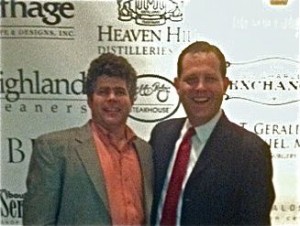 The RP and John Y. Brown, III