He’s staying in the race for three reasons: 1) to get himself – and son Rand – decent speaking slots in Tampa, and 2) to keep building a fundraising list that he can bequeath to Rand; and 3) to build field lists in all 50 states that Rand can use in a 2016 or 2020 presidential run.
I bet no first time national candidate in history will start out with as many yard-sign locations than Rand – not even rock-star candidates like HRC and Obama in 2008.
Given the above, it’s kind of sad to watch all these middle and working-class small donors get fleeced, but hey, like Paul says, it’s a free country! (Just not quite free enough for his taste.)
By Jonathan Miller, on Tue Mar 20, 2012 at 4:00 PM ET
In his column this week for The Huffington Post, the RP tackles an issue that’s familiar to the RP Nation: the legalization of hemp.
But he pairs his advocacy with a challenge to you, the reader: Please get involved in this policy debate.
Especially if you live in Kentucky.
Tomorrow afternoon and evening, please come to the Red Mile in Lexington to join the RP and a bi-partisan group of state officials and local business leaders who understand that legalizing hemp will be a no-risk boon to our state’s and our nation’s economy.
You can also get more involved by becoming a political science major and getting an elected official position to push these efforts forward!
Click on the graphic to the left for details.
And check out the RP’s article below:
Last week, I received a very warm reception from my hometown’s Tea Party organization.
And yet, I repeat (for my friends that may have fainted upon reading the first sentence of this essay), I was warmly welcomed and even embraced by our local lovers of liberty.
I wish I could credit my soaring oratory or my youthful charisma, but I simply can’t deny that I’m a better recovering politician than an active one.
The truth is that I spoke on a topic that knows no ideology, an issue that has broad bi-partisan support, and yet one that has met stiff political resistence from the powers that be:
The legalization of industrial hemp.
The subject of hemp, while discussed and debated for decades, unfortunately has been mostly seen as a cause célèbre of the political margins, either the “hippie” Far Left or the libertarian Far Right. But my recent experience with the issue reveals that public support for industrial hemp legalization—particularly within the agricultural community — is reaching a tipping point.
And it’s time for the business community to shoulder-pad-up and push legalized industrial hemp across the goal line.
By John Y. Brown III, on Thu Mar 15, 2012 at 12:00 PM ET
Hope your conscience is greater than your cleverness.
When I was about eight or nine years old I tried tricking my mom into giving me money I could spend at Thornbury’s Toys.
I told her I was curious about how checks worked and wondered if she could teach me. My mom was impressed with my curiosity and desire to learn and that I took the initiative to ask. She happily pulled out her check book and started going over each line and how it needed to be filled in.
“So, for example, let’s say it is going to be for $10. Where would you write that?” I asked.
My mom showed me where on the check that went and wrote in the amount in numbers and then in her beautiful cursive longhand.
Next I pointed to “Pay to the order of” line and suggested, “Let’s say it’s for, I dunno, like, Thornbury’s Toys. Is that where you’d write out ‘Thornbury’s Toys’?”
“Yes! Exactly!” My mom replied, excited to see I was really paying attention and understanding this lesson….and gladly filled out that line “Thornbury’s Toys.”
I asked her to please finish filling it out and asked if I could keep the check to study and memorize. She proudly signed her name, wrote “Toys’ in the “For” line and handed over my homework assignment for me to “study,” as I requested.
Well, you see where this is going. I proudly took the check and went back to my bedroom to try to now figure out how I could get a ride to Thornbury’s—and not from my mom.
But something awful and unexpected happened. Guilt slowly crept in. A loyalty to my mother and to honesty began to displace the excitement I was feeling about the possibility of buying a new toy. And the sense of cleverness started to feel heavy and burdensome like something I should be more ashamed about than proud of.
In fact, the feelings were so horrible, without understanding what was happening to me, I immediately tore the check into tiny little pieces and threw the pieces away behind my clothes drawer–where no one would find it.
Several years later when we moved to a new house—and the clothes drawer was being moved–I was standing there to pick up those little shreds of paper, which signified the still alive little shreds of guilt. I hadn’t forgotten them…or the lesson I had learned.
By Krystal Ball, on Tue Mar 13, 2012 at 8:30 AM ET
Mitt Romney has both a southern problem and a southern opportunity.
Mitt enjoys “sport.” He’s not an ardent NASCAR fan but he does have friends who are team owners.
He’s “always been a rodent and rabbit hunter. Small varmints, if you will.”
If this sounds like a guy poised to win over the hearts and minds of southern conservatives, then your only experience south of the Mason-Dixon likely involved a trip to visit relatives in Boca Raton.
Alabama and Mississippi are coming up on the primary calendar, and they are likely to prove quite challenging for Romney, who has yet to prove that he can win anywhere in the South.
With heartland states on the calendar as well, the March lineup is a tough one for former Governor Romney. This challenge is also an opportunity, though.
It gives Romney a chance to prove once and for all that he can win over demographic groups that he’s fallen flat with thus far.
As a daughter of the South who was born and raised in King George, Va., I can tell you that Mitt Romney’s southern problem is severe but surmountable. There is no question that, to the extent the South shares a cultural, religious, and personality aesthetic, Mitt Romney is the antithesis of this aesthetic.
Read the rest of… Krystal Ball: Romney’s Southern Problem and Opportunity
Yesterday, the RP appeared on “The Craig Fahle Show” on WDET in Detroit, to discuss “No Budget, No Pay,” the important new legislation supported by No Labels that would withdraw the pay of Congress if they fail to pass a budget on time.
It appears as though they should consult with someone who has an online accounting degree because it looks as though they can’t do it on their own!
By Jonathan Miller, on Tue Feb 21, 2012 at 12:30 PM ET
As the world awaits the March 6 release of Bruce Springsteen’s latest album, “Wrecking Ball,” another sing has hit the Internet: “Shackled and Drawn.” Listen below, and understand why this appears to be one of the Boss’ most politically charged albums:
This morning at 8:50 AM ET/7:50AM CT on KMOX radio in St. Louis, the RP will be discussing “No Budget, No Pay,” the important new legislation supported by No Labels that would withdraw the pay of Congress if they fail to pass a budget on time.
I begin by offering a full-throated “amen” to Ron Granieri’s remarks regarding Jerry Ford’s presidency. While many Republicans seem to view Reagan as the progenitor of today’s Republican Party, Ford may be the reason why the Republican Party still existed in 1980.
Despite its brevity, Ford’s tenure offers more than its share of food for thought regarding the character of effective presidential leadership. As Ron points out, Ford indeed represented the quintessential “manager;” a moderate who was ultimately guided by what he perceived as the demands of the time. Far from the accommodationist caricature painted by his critics on the right, Ford did not hesitate to strike out on his own when necessary. While the Nixon pardon offers the ultimate measure of this characteristic (the fact that he received the 2001 John F. Kennedy Profile in Courage Award demonstrates long-overdue liberal respect for this decision), Ford’s economic record also demonstrated a unique mix of toughness and pragmatism.
Taking office in the midst of the Arab oil shocks of 1973-74, Ford identified inflation as the chief focus of his economic policy. Widely-derided at the time – and largely forgotten since – Ford’s “Whip Inflation Now” moniker reflected Ford’s deeply ingrained sense that inflation constituted the chief threat to long-term economic growth. Initially proposing a mixture of tax increases and budget cuts, Ford later embraced a program of modest tax cuts paired with spending restraint (the latter generating a series of vetoes which strained his relationship with the large Democrat majorities in Congress). These policies worked: inflation in 1976 was 5.75%, as compared to 11.03% in 1974. GDP grew at a rate of 5.4% in 1976 (after contracting -0.6% and 0.2% in 1974 and 1975, respectively), while unemployment fell from a high of 9% in May 1975 to 7.8% in December 1976. The subsequent unraveling of the economy began with Jimmy Carter’s early 1977 “stimulus package” that failed to recognize the brisk growth Ford had bequeathed to him. Matters grew worse, of course, with the second series of oil shocks in 1979.
By John Y. Brown III, on Mon Feb 13, 2012 at 4:30 PM ET
My all-time favorite job interview story.
About a decade ago I heard this story from a colleague in NJ, a manager I admired greatly. He was speaking about how he hired people and used this story as a reference to make his point.
A large corporation was hiring for an executive management position and had narrowed the field to two. The executive team would now take each finalist to dinner at a nice restaurant to get “a feel” for the person and if they fit in with the company’s culture.
The first dinner was with a male, we’ll call him Candidate Jones.
Dinner with the execs could not have gone smoother….Jones was warm, witty, engaging and smart. When he ordered he felt he ordered appropriately, had impeccable manners and fit in seamlessly with the other execs. As Jones himself put it to a friend afterward, “I knocked it out of the park!” Adding “The job is mine.”
Except Jones didn’t get the job.
Why? The executive team explained that although Jones ingratiated himself to them, they noticed that when it came to the coat check lady, the waitress, waiter and bus boy, he was condescending —even rude.
The exec team explained, “We are hiring a manager for people under him or her and not someone who will be engaging with us all day each day. We just don’t feel you are a good fit for that position.”
And that, as they say, was that.
Does this really matter? I can attest that since hearing that story I watch closely how each person I deal with treats the wait staff when at a restaurant. It’s a powerfully effective gauge.
So, want to move up in the world? Treat the waitress and busboy with the same respect you are showing your boss (or future boss), and you just may receive the respect from your boss that you are seeking.


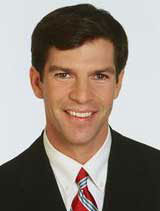 He’s staying in the race for three reasons: 1) to get himself – and son Rand – decent speaking slots in Tampa, and 2) to keep building a fundraising list that he can bequeath to Rand; and 3) to build field lists in all 50 states that Rand can use in a 2016 or 2020 presidential run.