By John Y. Brown III, on Mon Apr 30, 2012 at 10:00 AM ET 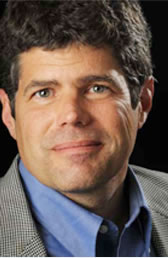 About a year ago I met an unforgettable fella, Saul Kaplan, from Rhode Island who visited KY to help us explore ways to help Louisville and Lexington realize their entrepreneurial potential. About a year ago I met an unforgettable fella, Saul Kaplan, from Rhode Island who visited KY to help us explore ways to help Louisville and Lexington realize their entrepreneurial potential.
He spoke in a bracing and engaging way about making cultural changes to communities that lead to an organic improvement in leadership and to an accelerated entrepreneurial culture–both in the private and public sectors.
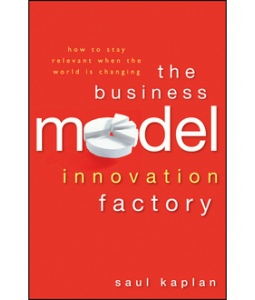 Click here to review I just got word earlier today that the hyper-energetic Kaplan has completed a new book titled, “The Business Model Innovation Factory.”
It will help us reingeneer business strategically to stay ahead of the trends and challenges.
I plan to buy today and hunker down for a day or two (or three) to pore over myself!
By Michael Steele, on Thu Apr 26, 2012 at 8:30 AM ET 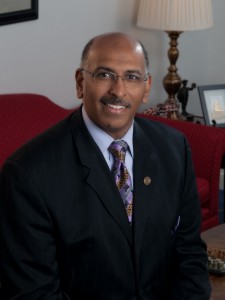 After 10 days of discussing women and the role of women in the home, the workplace or just about any other space you could think of, a number of friends began to boast (or lament) about the presidential election turning on “social issues.” After 10 days of discussing women and the role of women in the home, the workplace or just about any other space you could think of, a number of friends began to boast (or lament) about the presidential election turning on “social issues.”
No doubt such issues are important and will be as much a part of our national debate as health care or the War on Terror. But there is one issue, perhaps not as politically hot as contraceptives but just as potentially life changing: $5 trillion! That’s a number that doesn’t roll trippingly off the tongue too often, but that’s how much the federal debt has increased since January 2009.
To be certain there have been a lot of fingers in that pot to make it grow to be as big as it is.
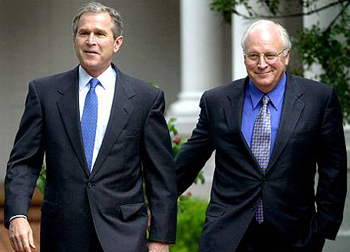
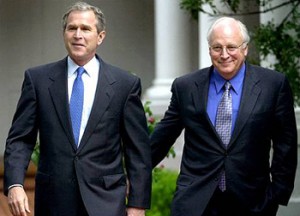 During the course of the Bush administration Republicans found their mojo for Big Government Republicanism. For example, in 2003, President George W. Bush announced his administration would spend “up to $400 billion” over 10 years to add prescription drug coverage to Medicare. During the course of the Bush administration Republicans found their mojo for Big Government Republicanism. For example, in 2003, President George W. Bush announced his administration would spend “up to $400 billion” over 10 years to add prescription drug coverage to Medicare.
Problem was by 2008, that Medicare drug entitlement program was projected to cost $783 billion over the next 10 years. And then there was the $700 billion Troubled Asset Relief Program (“TARP”) from which funds were used to bail out the banks and General Motors. As Rep. Tom Price (R-Georgia)noted at the time, “It is now clear that the creation of TARP was a rueful mistake which has failed to provide urgent market stability, yet has put our country perilously in debt for the foreseeable future.”
Read the rest of…
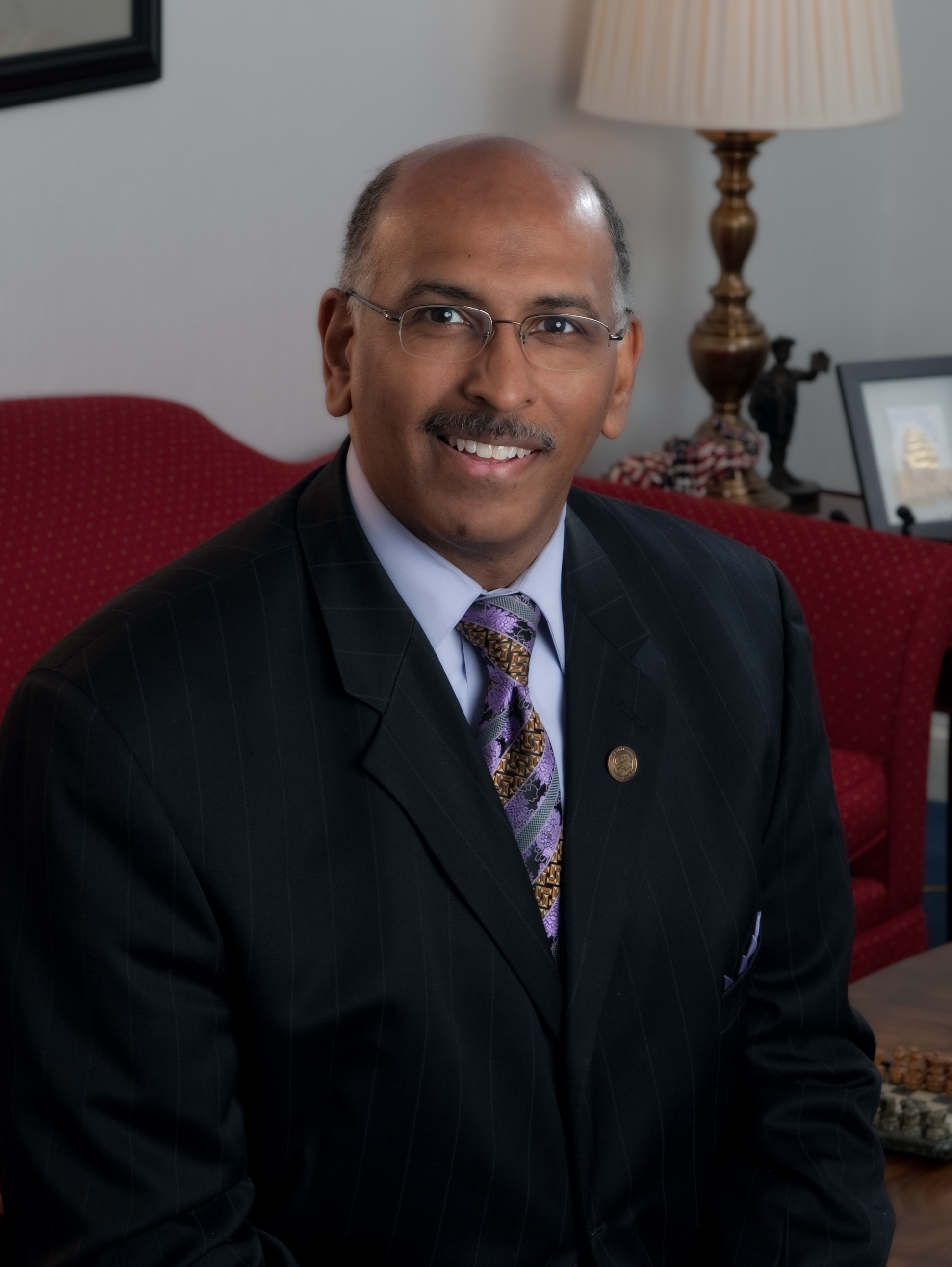
Michael Steele: 1 is Not the Loneliest Number; 5 Trillion is
By Krystal Ball, on Wed Apr 18, 2012 at 8:30 AM ET 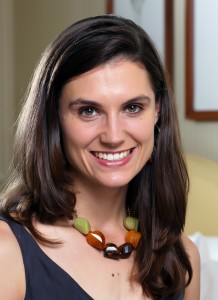 There is a caterpillar native to the Americas from the Silkworm moth genus Lonomia. There is a caterpillar native to the Americas from the Silkworm moth genus Lonomia.
The caterpillar doesn’t look dangerous, but if you attempt to harm it, it secretes a venomous anticoagulant that causes renal failure, hemorrhaging, and death. Perhaps this is what Reince Priebus meant by the GOP “War on Women” being like a “War on Caterpillars.”
Although any given incremental erosion of women’s reproductive rights from a GOP sponsored bill at the state level seems harmless enough to the future of the GOP, taken in the aggregate they are likely to cause the party severe electoral distress.
Caterpillars aside, the GOP “War on Women” is real and it has real-world consequences for the millions of women whose lives can and will be impacted by legislation that erodes more than a century’s worth of progress on women’s reproductive rights.
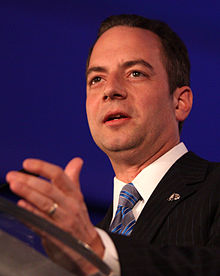 There were over 1100 antichoice provisions introduced in 2011 and 900 antichoice provisions introduced so far in 2012. Legislators in 13 states have introduced 22 bills seeking to mandate that a woman obtain an ultrasound procedure before having an abortion. There were over 1100 antichoice provisions introduced in 2011 and 900 antichoice provisions introduced so far in 2012. Legislators in 13 states have introduced 22 bills seeking to mandate that a woman obtain an ultrasound procedure before having an abortion.
Of these, seven states are pursuing the state-rape vaginal probe variety. In addition, legislators in 13 states have sponsored right-wing “Personhood” type bills, too extreme even for the electorate of Mississippi, that could make both abortion and reproductive choices highly restricted.
Lest we think that the rhetoric around these bills might contain the damage to the GOP’s standing amongst women, please note how Georgia state legislator Rep. Terry England compares women to cows and pigs on his farm in support of bill forcing women to carry even inviable fetuses to term and Pennsylvania Gov. Tom Corbett justifies forced ultrasound bill by telling women to “just close your eyes.”
Read the rest of…
Krystal Ball: The GOP War on Women is Real
By John Y. Brown III, on Mon Apr 16, 2012 at 8:30 AM ET  Tax Day and silver linings. Tax Day and silver linings.
When I found out about tax extensions I had the same ecstatic feeling as when I was a college freshman and found out I could withdraw from a class I was struggling in.
Sure it just puts off the inevitable –and with a penalty.
But much like dropping a college class, it sure can do wonders for my attitude today.
By Krystal Ball, on Fri Apr 13, 2012 at 1:30 PM ET When Republicans took over state legislatures and the US Congress in 2010, we were promised a war on unemployment. Instead we’ve gotten a war on the environment, women, minorities, unions and everything else that moves, organizes and votes Democratic.
What the heck happened? While a lot of attention has rightly been focused on Super PACs, there’s another type of organization that has had an even more dramatic and troubling impact on our democracy. Secretive, tax-exempt 501©(3)s have been gaming our system, enabling corporations and private foundations to buy our democracy at wholesale. They have orchestrated a broad sweep of extreme legislation across the country while using a tax-exempt status to hide their funders and sustain their existence through favorable IRS treatment. Two organizations in particular, the American Legislative Exchange Council (ALEC) and Americans United for Life (AUL) have led the charge in what has been described as “ghostwriting the law”but which in fact goes far beyond that.
 The idealized “Schoolhouse Rock” version of our democratic process works something like this: Constituents concerned about a problem in the community contact their representative in the legislature, who recognizes the issue and decides to respond. The legislator works together with a skilled staff to draft legislation. The legislation is honed in committees where other members bring the perspective of their districts. The idealized “Schoolhouse Rock” version of our democratic process works something like this: Constituents concerned about a problem in the community contact their representative in the legislature, who recognizes the issue and decides to respond. The legislator works together with a skilled staff to draft legislation. The legislation is honed in committees where other members bring the perspective of their districts.
Finally, the entire body votes for the bill and it either succeeds or fails on its merits. We all know that this ideal has long been perverted by lobbyists and large donors who hold undue sway in our democracy. Less visible but even more pernicious is the impact of organizations like ALECand AUL who turn legislating into a wholesale, Costco-style activity.
Read the rest of…
Krystal Ball: ALEC and AUL: Buying our democracy at wholesale
By Jeff Smith, on Fri Apr 6, 2012 at 3:00 PM ET The first Recovering Pol to fall off wagon turns in nice first quarter fundraising report:
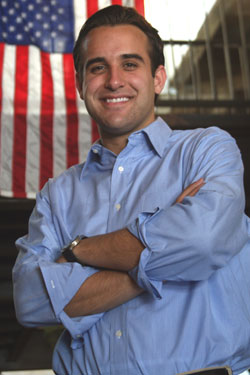
Andrei Cherny tops $400K in 7 weeks in Arizona Congressional bid. [The Hill]
By Jason Grill, on Thu Apr 5, 2012 at 3:00 PM ET 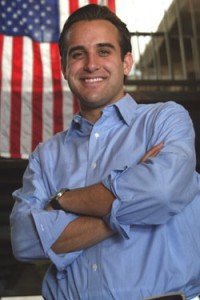 For as long as I can remember in politics, Democrats have always taken it on the chin from Republicans about not being pro-business or not being concerned about small business issues. For as long as I can remember in politics, Democrats have always taken it on the chin from Republicans about not being pro-business or not being concerned about small business issues.
An event this week in Washington D.C. proved otherwise. I had the opportunity to join a delegation of about 25 business leaders (Republicans, Democrats, and Independents) from my hometown of Kansas City, Mo. This group consisted of CEO’s, small business leaders, entrepreneurs, and elected officials. It had the clientele of a Chamber of Commerce event. The only thing was we were at the White House meeting with senior officials from the administration to share business ideas, work together on solving problems, and identify ways that the federal government could help or get out of the way to make Kansas City, Mo. grow and thrive.
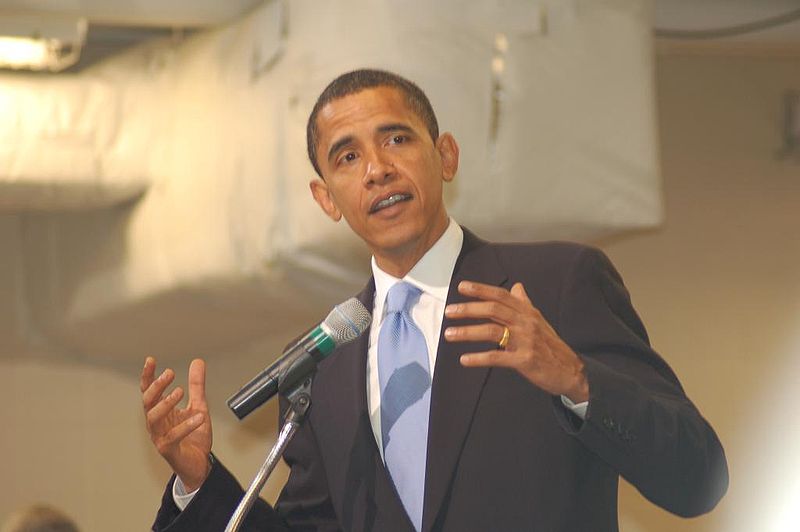
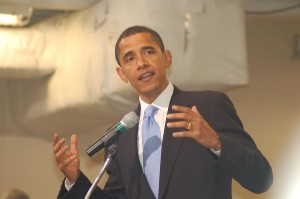 Interactive dialogue between the group and the chief economist for the U.S. Department of Commerce, deputy secretary of education, President Obama’s top advisors, and the assistant secretary for administration at the Department of Health and Human Services all took place in D.C. Shocking right? Not really, but that is what many political pundits and opposition to the president would like you to believe. Interactive dialogue between the group and the chief economist for the U.S. Department of Commerce, deputy secretary of education, President Obama’s top advisors, and the assistant secretary for administration at the Department of Health and Human Services all took place in D.C. Shocking right? Not really, but that is what many political pundits and opposition to the president would like you to believe.
The fact that the White House and the administration is reaching out and bringing individuals into the policy making process is positive. Being part of the process and reaching out to the business community, whether large or small, should stand above the political rhetoric filling up our heads these days. All of the relative and salient points made at this meeting will go into a report for President Obama.
Read the rest of…
Jason Grill: Democrats and Small Business
By Jonathan Miller, on Thu Mar 29, 2012 at 3:00 PM ET I’m awfully proud to read this story about my former colleagues:
From The New Republic:
EXCLUSIVE: Are State Treasurers Preparing a Novel Attack on Mega-Rich Campaign Donors?
Thanks to Citizens Unitedand other recent rulings, the nation’s ultra-wealthy have a lot more latitude than they did a few years ago when it comes to pouring money into the political system. And, according to the latest campaign filings, they aren’t skimping. During February, Ken Griffin, founder of the hedge fund Citadel, and Henry Kravis, co-founder of private equity giant KKR, each gave $100,000 to the super PAC supporting Mitt Romney, while American Crossroads, the group co-founded by Karl Rove, received $500,000 from the financial services firm S.W. Childs Management Corp.
But these are just the contributions that get disclosed. Groups such as Crossroads do not need to reveal who donates to their 501(c)(4) arms, which are supposed to focus their advocacy on “issues,” not elections. (In practice, of course, they often blur that distinction to the point of meaninglessness. Crossroads’s 501(c)(4) arm, for instance, has spent hundreds of thousands of dollars on two ads attacking Barack Obama over the Solyndra fiasco.) Because the donations are anonymous, no one knows how much money is flowing from Wall Street billionaires to these entities. But everyone assumes—and it’s a pretty safe guess—that it’s a lot.
Now, under the radar, a fledgling effort to force these donors out into the open is underway. And it’s being led by a rather unlikely group of crusaders: a handful of the nation’s state treasurers.
In most states, the duties of the treasurer include a role in the oversight of pension funds for state employees. These funds invest much of their money with the country’s biggest hedge funds and private equity firms. In fact, about 30 percent of the money invested with private equity is from public pensions. And so, it has occurred to some state treasurers that they might use these funds as leverage. The idea would be to say to firms: If you want to keep managing our billions, then we want you to be more transparent in your political giving. (While the stated intent is not to limit giving, presumably some money managers would be less inclined to write big checks if disclosure were required.) “They’re sending a message,” says Shelley Alpern of Trillium Asset Management, a “socially responsible” investment fund that pushes for transparency in political giving. “The pension funds have multiple billions of dollars to choose how they want to invest, and they can probably find hedge fund managers who aren’t involved in the political process the same way some of their current money managers are.”
So far, the loosely coordinated group of states considering this approach, according to several people familiar with the effort, includes California, Illinois, Massachusetts, North Carolina, and Rhode Island. Discussions appear to be most advanced in California, where the state’s two public pension funds have $53 billion invested with private equity and $5 billion with hedge funds. The tactic was a topic of discussion at a recent meeting of California pension officials in Los Angeles, and state staffers are now studying options for its implementation. “I support it,” California Treasurer Bill Lockyer, a Democrat, told me. “I’m among those concerned about the escalation of megabucks, private megabucks, in presidential and other campaigns. It’s alarming to see what’s happening.”
Click here to read the rest of the article in The New Republic.
By RP Nation, on Tue Mar 27, 2012 at 12:30 PM ET  I want to personally thank Senator Joey Pendleton and Ag Commissioner Comer for continuing to fight the good fight in the attempt to legalize this amazing crop. We are picking up speed thanks to you guys taking the discussion to Frankfort on behalf of the 77% of Kentuckians who want to see this crop legalized. And thank you to all the volunteers and pioneers who have been the backbone of this political movement! Without you guys, this seminar would have never happened! I want to personally thank Senator Joey Pendleton and Ag Commissioner Comer for continuing to fight the good fight in the attempt to legalize this amazing crop. We are picking up speed thanks to you guys taking the discussion to Frankfort on behalf of the 77% of Kentuckians who want to see this crop legalized. And thank you to all the volunteers and pioneers who have been the backbone of this political movement! Without you guys, this seminar would have never happened!
The seminar was amazing; it was the most gorgeous venue, and perfect setting, at the Red Mile Horsetrack on the outskirts of downtown Lexington. It was a beautiful day, borderline hot, and the atmosphere was electric. Guests of the seminar started rolling in just before 5 P.M. and continued to swarm the place until we had a crowd of at least 50 people. There were drinks served by the finest bar manager in Lexington, who is a farmer himself (and now thinking about hemp.) And when you stepped into the Round Barn, you felt like you went back in time about 100 years. There were antique carriages and a gorgeous three-story chandelier hanging over a hemp brake designed by Thomas Jefferson himself. It was the perfect setting to talk about a plant that’s just as much a part of Kentucky’s history as horses and horse racing.
 Former Treasurer Miller, the wide-eyed liberal Among our guests were several very key individuals in the hemp movement. Jonathan Miller, former KY State Treasurer and webmaster at therecoveringpolitician.com has been a vocal supporter of industrial hemp, and has even written an article for the Huffington Post supporting the cause. He did a wonderful job of being the emcee, as several other key individuals surprised us by showing up. Jonathan rolled with the change in plans, allowing us to seamlessly introduce several other speakers. State Senator Robin Webb, who signed on as a co sponsor to HB 100 back in 1998, came in and gave an impromptu speech, as did State Senator Damon Thayer, who is still on the fence about hemp, but is making great strides as he learns more about the crop.
By Rod Jetton, on Mon Mar 26, 2012 at 3:30 PM ET 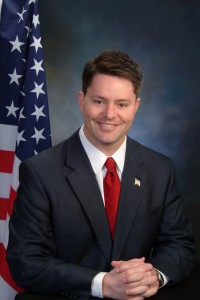
Rod Jetton’s Response
[Click here to follow the full debate thread]
It’s been a busy weekend and I have enjoyed reading the comments but Grill [sic] is 100% right.
It’s Rubio for all the reasons Jason outlined.
He may refuse it, but I doubt it. Romney and “country” need, and he will accept.
If gas prices stay high, Obama will be in trouble. As I have mentioned in earlier posts, gas prices are the one issue that touches all demographics.
 They also blame the Guy in charge. They also blame the Guy in charge.
In 2006 it was Bush but today its Obama.
|
The Recovering Politician Bookstore
|