By Jason Grill, on Wed May 30, 2012 at 10:00 AM ET  Politics and sports are two things that incite strong emotions in nearly every individual in this country, but they should very rarely converge. Last week the Senate Judiciary Committee announced there would be an upcoming hearing about bounties in professional football and other major sports as a result of recent allegations that the New Orleans Saints employed a system in which players would receive extra cash for hits that hurt high-profile opponents. Politics and sports are two things that incite strong emotions in nearly every individual in this country, but they should very rarely converge. Last week the Senate Judiciary Committee announced there would be an upcoming hearing about bounties in professional football and other major sports as a result of recent allegations that the New Orleans Saints employed a system in which players would receive extra cash for hits that hurt high-profile opponents.
Are they serious? Well, yes they are. Sen. Dick Durbin (D-IL) wants to examine whether a federal law should make bounty systems a crime. This week reports have surfaced that the IRS is now poking around and monitoring the situation about the payments that were made to players. The dominos are beginning to fall and political grandstanding has already begun. I am not a pollster, but if I had to guess I would assume more Americans are concerned with their pocket books and the economy right now than on professional sports bounty programs. Shockingly, I know I am going out on a limb here. Seriously though, Congress should only involve itself in sports-related matters on very rare occasions. One of those is sports gambling.
 The Final Four [took place] in New Orleans with four historically good programs. More than six million people filled out NCAA tournament brackets on ESPN.com alone. Last month the Super Bowl game garnered the prize as the highest-rated television show in United States history with an estimated 111 million people watching. The Final Four [took place] in New Orleans with four historically good programs. More than six million people filled out NCAA tournament brackets on ESPN.com alone. Last month the Super Bowl game garnered the prize as the highest-rated television show in United States history with an estimated 111 million people watching.
Reports have shown that nearly half of all American adults make some sort of wager on the Super Bowl. The time has come for Congress to open its eyes when it comes to sports gambling.
Read the rest of…
Jason Grill: Come on, Congress — Sports Gambling, Not Bounties
By Artur Davis, on Thu May 24, 2012 at 8:30 AM ET  A decade ago, the Hispanic political community and the gay rights lobby were in a substantially similar position: both with agendas that were largely under radar, far enough off the grid that their cause was neither a rallying point for friends nor a wedge issue for their adversaries. The demands of both groups were mostly inconsequential in a national election. A decade ago, the Hispanic political community and the gay rights lobby were in a substantially similar position: both with agendas that were largely under radar, far enough off the grid that their cause was neither a rallying point for friends nor a wedge issue for their adversaries. The demands of both groups were mostly inconsequential in a national election.
Adjust the dial to 2012 and both gay rights and immigration have turned into cultural flashpoints. But the fortunes of the respective constituencies have taken sharply divergent paths. By any measure, gay rights advocates are on the rise. A once far-fetched goal of theirs, repealing “Don’t Ask Don’t Tell”, survived congressional gridlock to become one of the Obama administration’s signature achievements; an even more implausible seeming cause, full-fledged marital status for same-sex couples, has just won the endorsement of the President of the United States and has become a major policy commitment of that president’s party.
 In contrast, Hispanic interest groups are in the midst of a bad run. They are winless at the congressional level in the preceding decade—losing badly in their campaign to open up citizenship opportunities for much of the illegal immigrant population, and failing in a more incremental bid to legalize young undocumented adults who join the military or complete college. During Barack Obama’s term, they have actually lost ground. Alabama and Arizona have passed sharply restrictive laws aimed at making their states all but unlivable for illegal immigrants. The Democratic Party that generally wins Latino votes has been an ambivalent ally, with two major elements of their base, labor unions and African Americans, skeptical of any broad liberalization of immigration laws. In contrast, Hispanic interest groups are in the midst of a bad run. They are winless at the congressional level in the preceding decade—losing badly in their campaign to open up citizenship opportunities for much of the illegal immigrant population, and failing in a more incremental bid to legalize young undocumented adults who join the military or complete college. During Barack Obama’s term, they have actually lost ground. Alabama and Arizona have passed sharply restrictive laws aimed at making their states all but unlivable for illegal immigrants. The Democratic Party that generally wins Latino votes has been an ambivalent ally, with two major elements of their base, labor unions and African Americans, skeptical of any broad liberalization of immigration laws.
Read the rest of…
Artur Davis: Hispanic Losses, Gay Victories
By Jordan Stivers, on Tue May 22, 2012 at 8:30 AM ET  Last month, we introduced a new feature at The Recovering Politician: the Gen Y “He Said; She Said” debates. Last month, we introduced a new feature at The Recovering Politician: the Gen Y “He Said; She Said” debates.
“He” is Zac Byer, a longtime staff contributor at the RP, an outspoken Republican, and currently works for one of the leading minds behind GOP national strategy, Dr. Frank Luntz. “She” is Jordan Stivers, a passionate Democrat who currently serves on the communications committee of the newly formed Young Democrats of America Faith and Values Initiative. As you might be able from the picture at left, “He” and “She” are dating. Or talking to each other. Or in a relationship. Or whatever Gen Y calls these types of relationships.
Anyway, enjoy their debate about Hope and Change:
JORDAN: This week, I read an article by the senior editor of The Atlantic in which he explains why he thinks Obama is losing, though the election is six months away. He says it’s not because voters don’t like Obama, or don’t think he is qualified, but because he has “simply failed to bring the change he promised.” I’ve heard this argument quite a few times, mostly from Republicans, who, as soon as President Obama was elected made it their main objective to create as many obstacles to bipartisan success as possible. My Senator, Mitch McConnell of Kentucky, is one of these. He openly stated that he planned to do everything in his power to make President Obama a one-term President. What a winning attitude.
 I was an enthusiastic supporter of President Obama in 2008 in part because of the bipartisan environment he wanted to create, but also because I trusted his instinct to lead us in a direction that would make the United States more of a place of opportunity for young people like me, and for the many people that were used to finding themselves without any power in the political process. I believe that in that second objective, he has delivered the change he promised. Through health care reform, the JOBS Act, the repeal of Don’t Ask Don’t Tell, and now his open support of marriage equality, he has brought more positive change to this country than President Bush did in his two terms.
Of course I wish that Congress could actually function and compromise the way the founders intended, but why their dysfunction is being laid entirely on President Obama’s shoulders I don’t understand. The people who should be held responsible are Speaker John Boehner, Mitch McConnell, and Harry Reid. The politicians and pundits who are complaining that not enough change has happened are the same people who were actively trying to prevent change from happening, for purely political reasons. Any sucess for Obama meant a loss for them. What they did not consider is what would be a success for Americans as a whole. Instead of mocking the words “hope” and “change,” Republicans should realize that those words mean a lot to people. The only way things can change for the better and people who are downtrodden by the economy can have hope again, is for Republicans and Democrats to work together.
ZAC: Working in language and message consulting, I agree that words “mean a lot to people.” And clearly, in 2008, “hope” and “change” carried a particular significance surpassing any presidential campaign mantra. But here’s the issue — words can only take us so far. There must be actions to bolster the message, otherwise the latter only amounts to hollow rhetoric.
The JOBS Act was a rare symbol of bipartisan cooperation…but it started as a House Republican priority that Senate Democrats and the President realized they couldn’t say no to without falling on the sword.
To say Obama has delivered the change he promised through his health care reform is tantamount to a baseball owner saying the new pitcher he signed has changed the franchise before he has even thrown his first pitch. Nancy Pelosi herself said it’ll be a matter of time before anyone truly understands the consequences of the legislation, and I don’t expect the Supreme Court to go quietly into the night.
And I applaud Obama for finally putting principle before politics and admitting that he supports same-sex marriage. An evolutions? Good grief! If I was a Democrat who cared strongly about that issue, I’d be downright angry that the only reason why Obama made his declaration of support two weeks ago was because Biden did what he’s been doing for over thirty years. Real courage would have been an announcement in support of same-sex marriage in 2008, no matter the electoral consequences. Be that as it may, I don’t expect his announcement to change much at all, as this will remain a states’ issue (as even Obama desires it to be).
Ultimately, we head into November 2012 staring down $5 trillion more in debt, unemployment stuck above 8%, and a failed $800 billion stimulus.
I’ll be the first to admit that the cooperation from the congressional Republicans has been minimal at best. But, when you look back at Obama’s first two years in office, what’s your assessment? He worked with Democrat majorities in both the House and the Senate, and rode a wave of public support into the White House. Are you truly satisfied with how he and his counterparts prioritized — Cash for Clunkers, health care, and Solyndra instead of legislation aimed at relieving the burdens on small business owners and job creators, or incentivizing businesses to keep jobs in America, or tackling entitlement reform?
Read the rest of…
Gen Y “He Said; She Said” on Hope and Change
By Jimmy Dahroug, on Mon May 21, 2012 at 8:30 AM ET  New York will soon become the first state in the nation to require pro bono service with Chief Judge Jonathan Lippman’s recent decision to mandate fifty hours of pro bono work as part of admission to the bar. This is a step in the right direction that can significantly enhance the legal profession. New York will soon become the first state in the nation to require pro bono service with Chief Judge Jonathan Lippman’s recent decision to mandate fifty hours of pro bono work as part of admission to the bar. This is a step in the right direction that can significantly enhance the legal profession.
This new initiative will provide much needed legal assistance for people who cannot afford attorneys. The Legal Aid Society, the nation’s largest provider of free legal services, turns away eight of every nine people seeking help with civil legal matters. Since the recession began in 2008, requests for legal assistance have increased tremendously, especially in the areas of healthcare, work-related problems, and foreclosures. As Judge Lippman pointed out, approximately 10,000 prospective prospective lawyers pass the New York Bar Exam each year. This will result in 500,000 hours of pro bono legal service.
 The pro bono requirement will also benefit the attorney and all future clients because it will provide much needed practical experience in legal education. Professionals ranging from surgeons to construction workers receive significant practical training, but as Stanford Law School Dean Larry Kramer explained, “Law is the only profession that gives people licenses to perform services for others that doesn’t require serious, supervised clinical education.” Indeed, top law schools including Stanford have come to recognize the need for experiential training to better prepare attorneys beyond the theory of the classroom. A pro bono requirement helps fill this critical need for practical training. The pro bono requirement will also benefit the attorney and all future clients because it will provide much needed practical experience in legal education. Professionals ranging from surgeons to construction workers receive significant practical training, but as Stanford Law School Dean Larry Kramer explained, “Law is the only profession that gives people licenses to perform services for others that doesn’t require serious, supervised clinical education.” Indeed, top law schools including Stanford have come to recognize the need for experiential training to better prepare attorneys beyond the theory of the classroom. A pro bono requirement helps fill this critical need for practical training.
Read the rest of…
Jimmy Dahroug: NY State’s Pro Bono Requirement is Step in Right Direction
By Krystal Ball, on Fri May 18, 2012 at 1:30 PM ET  Angie’s List recently made news and not in a good way. Angie’s List recently made news and not in a good way.
The popular business referral service has apparently decided to risk the reputation of their own business by supporting Rush Limbaugh’s hate radio.
I can only presume that they are hoping to take advantage of Limbaugh’s last distress-sale advertising rates in order to create buzz following their recent Initial Public Offering. In doing so, they have traded dollars and cents for any sense of common decency. Their ad dollars are supporting a man who has called women sluts, prostitutes, and lard-asses.
While Angie’s decision to associate with Rush Limbaugh is revealing in and of itself, a closer inspection of the company reveals that their association with Rush should not be all that surprising. Angie’s List, it seems, has a problem with women too.
 Angie’s List was co-founded by Angie (Angela Bowman Hicks) and William Oesterle in 1995. The two came together in order to create a reliable source of business referrals and Angie’s List was born. Though Angie is the public face of the eponymous organization, Bill Oesterle is actually the CEO. Oesterle’s career did not start in business however. It started in Republican politics. (Hat tip to @catsrimportant!) Angie’s List was co-founded by Angie (Angela Bowman Hicks) and William Oesterle in 1995. The two came together in order to create a reliable source of business referrals and Angie’s List was born. Though Angie is the public face of the eponymous organization, Bill Oesterle is actually the CEO. Oesterle’s career did not start in business however. It started in Republican politics. (Hat tip to @catsrimportant!)
After graduating from Purdue University, Oesterle took a low-level position with Republican Governor Robert Orr of Indiana. Oesterle apparently rose through the ranks quickly and in 1988 moved from Governor Orr’s staff to the conservative Hudson Institute where he served as Director of Corporate Affairs.
Read the rest of…
Krystal Ball: Angie’s List Has a Problem with Women
By RP Nation, on Thu May 17, 2012 at 8:30 AM ET  I was flying high! I was flying high!
20 years as a senior-level executive with three Fortune 500 companies, a high-level governmental official, a political player rubbing elbows with governors, members of congress and even private visits with the President.
However, after 20 years of climbing the corporate ladder, extensive travel and a cell phone permanently in my ear, I started to feel that while I had achieved some level of “success,” I was lacking “significance.”
While playing corporate musical chairs, the music suddenly stopped one Friday afternoon and I found myself without a chair in that ivory tower I had grown so comfortable in occupying. But it was a 300 year old story that would not only be redemptive; it would provide the purpose I had been seeking and the means to help others in similar situations find their purpose.
Ironically, I had delivered thousands of speeches over the years about the power of purpose. Included in those speeches was a simple yet powerful story of a bystander observing two people laying bricks. The first person when asked what he was doing responded, “I’m laying bricks.” The second responded, “I’m building a cathedral.” Naturally, the “cathedral builder” had resonated more with me than the “bricklayer,” but after 20 years of playing the corporate game, pushing my way to the front of the room, I was starting to feel more like that “bricklayer.” And unfortunately, I wasn’t alone.
 Click to order Greg's book Numerous studies report that less than half of employees are actually satisfied with their jobs and feel a sense of purpose. Other surveys suggest that a high number of employees would leave their companies today if the economy were better. And with one in ten Americans currently unemployed, six of those ten unemployed say the next job they get will most likely not provide purpose; instead, they expect to have to settle for something less.
A women and workplace survey from “More Magazine” revealed that 43% of the women surveyed say they are less ambitious now than they were a decade ago. And only a quarter of the 500 women ages 35 to 60 say they’re working toward their next promotion. Three out of the four of women in the survey, 73%, say they would not apply for their boss’ job, reporting the stress, office politics and lack of purpose make the leap simply not worth it. In fact, two of three women said they would accept considerably less money for more free time and more flexibility. The bottom line is, there’s never been a time when Americans, male and female, young and old, public and private sector, need a sense of purpose.
Read the rest of…
Greg Coker: The Recovering Bricklayer
By RP Staff, on Wed May 16, 2012 at 2:00 PM ET  Yesterday, the RP was back on Wall Street Journal Radio’s “The Daily Wrap with Michael Castner” to discuss John Boehner’s recent threat to tie any debt ceiling modifications to spending cuts. Yesterday, the RP was back on Wall Street Journal Radio’s “The Daily Wrap with Michael Castner” to discuss John Boehner’s recent threat to tie any debt ceiling modifications to spending cuts.
Click here to listen in.
By John Y. Brown III, on Thu May 10, 2012 at 12:00 PM ET  I know some people swear by the value of “Product Replacement Plans.” (PRPs) I know some people swear by the value of “Product Replacement Plans.” (PRPs)
You know those 15-20% of the sale price insurance policies that if the product breaks shortly after you buy i you get it replaced easily?
I don’t care for them, personally.
They suggest to me either that somebody is layering in another layer profit margin (since products sold new are supposed to work) or are we are making products so poorly that customers need to buy insurance against the product breaking in the first few months. Neither seems an appealing conclusion.
Do other countries push PRPs like we in the US?
It seems more a sign of clever sales gimmickry, in my view. But subconsciously sends the message that “We don’t make things well.”
Imagine if McDonald’s tried to sell us a PRP at 20% of each meal to protect against food poisoning? And people bought it!
Or the next time I bought a watch paying an extra 15% for PRP against the watch not telling time?
I just left office supply shop and was asked about a PRP for a technology item. I asked, “Why? Is something wrong with it? Should I expect it to break in a few months?”
The salesperson laughed and so did I….but I was sort of serious, too.
Although I didn’t say anything more I wanted to add “If you don’t have more confidence than that in this product, I don’t want to buy it. Is there another product that works well enough that it doesn’t need insurance against breaking right away?”
Maybe I will add that the next time. Or tell them I’ll come back when they are selling products that won’t break so easily.
By John Y. Brown III, on Tue May 8, 2012 at 12:00 PM ET
Sometimes there’s no substitute for the hackneyed phrase, “Only in America”
Tough economic times have led to long discussions with friends and colleagues about how best we to cope as they navigate a painfully tight job market.
My favorite resolution came from a fella I didn’t know well but was related to a dear friend. This person had gone through some tough times personally and vocationally recently and deserved a break. Although I couldn’t help him, he helped me by giving me inspiration and teaching me a thing or two about persistence, self-confidence and, most of all, good old American pluck!
After losing his job and enduring a messy divorce he tried and failed starting his own business. After that he went through seemingly endless rounds of interviews in multiple industries and repeatedly came up empty handed. But then he had a brilliant idea.
He became a life coach.
And for all I know, is doing well.
By Jimmy Dahroug, on Thu May 3, 2012 at 8:30 AM ET Despite the recent GOP filibuster to block passage of the Buffett Rule in the Senate, the Whitehouse and the Democratic Party have vowed to continue the debate. While the proposal’s popularity does benefit President Obama in his bid for reelection, the Buffett Rule has merit because it is about fundamental fairness for taxpayers.
The Buffett Rule originated from Warren Buffett’s example of how the second richest man in the United States pays a lower tax rate than his secretary. Warren Buffett does not pay the bulk of his annual income in actual income taxes. Buffett only pays an effective income tax rate of about 15 percent because he is compensated in stocks from his company. Under the current system, an estimated 55,000 millionaires use this loophole in the United States to pay a lower tax rate than millions of middle class workers.
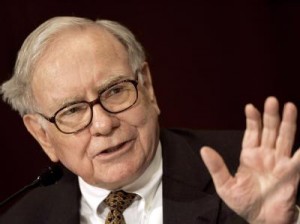 The proposed legislation stipulates that a taxpayer who earns at least one million dollars pay at least a 30 percent tax rate. Under the current system at least a quarter of all millionaires pay a lower tax rate than millions of middle class workers. The proposed legislation stipulates that a taxpayer who earns at least one million dollars pay at least a 30 percent tax rate. Under the current system at least a quarter of all millionaires pay a lower tax rate than millions of middle class workers.
It is important to point out that the legislation does not raise the capital gains tax rate itself. The Buffett rule targets the loophole where individuals essentially make their annual income from capital gains, and in turn benefit from the lower rate of 15 percent. They include individuals who purposely choose to take compensation as stocks rather than salaried income, so that they will pay a lower tax rate than the rest of the people in their income tax bracket.
Read the rest of…
Jimmy Dahroug: The Case for the Buffet Rule
|
The Recovering Politician Bookstore
|


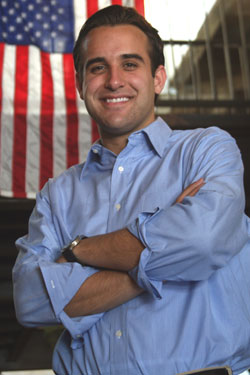 Politics and sports are two things that incite strong emotions in nearly every individual in this country, but they should very rarely converge. Last week the Senate Judiciary Committee announced there would be an upcoming hearing about bounties in professional football and other major sports as a result of recent allegations that the New Orleans Saints employed a system in which players would receive extra cash for hits that hurt high-profile opponents.
 The Final Four [took place] in New Orleans with four historically good programs. More than six million people filled out NCAA tournament brackets on ESPN.com alone. Last month the Super Bowl game garnered the prize as the highest-rated television show in United States history with an estimated 111 million people watching.