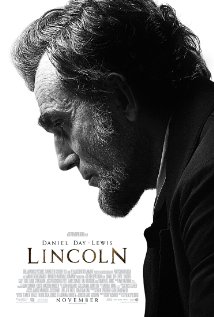
With the recent release of the blockbuster, critically-acclaimed Lincoln, The Recovering Politician has asked Lincoln scholar, Matthew Pinsker — a professor at Dickinson College in Pennsylvania — to share some historical insights about our 16th President. Click here and here and here for his prior 3 pieces.
Here is the latest of his columns:
Here is a quick breakdown of the initial reaction from historians to Spielberg’s movie:
The leading academic critics so far have been Eric Foner from Columbia and Kate Masur from Northwestern. Foner, a Pulitzer Prize-winner and one of the most respected historians in the field, claims the movie “grossly exaggerates” its main point about the stark choices confronting the president at the end of the war over abolition or peace (Letter to the Editor, New York Times, November 26, 2012). Masur also accuses the film of oversimplifying the role of blacks in abolition and dismisses the effort as “an opportunity squandered” (Op-Ed, New York Times,November 12, 2012).
Harold Holzer, co-chair of the Abraham Lincoln Bicentennial Foundation and author of more than 40 books, served as a consultant to the film and praises it but also observes that there is “no shortage of small historical bloopers in the movie” in a lively piece for The Daily Beast (November 22, 2012).
Professor Matthew Pinsker
Other historian / fact-checkers have been more kind. Allen Guelzo, Gettysburg College, also writing for The Daily Beast has some plot criticism, but argues that, “The pains that have been taken in the name of historical authenticity in this movie are worth hailing just on their own terms” (November 27, 2012). David Stewart, independent historical author, writing for History News Network, describes Spielberg’s work as “reasonably solid history” and tells readers of HNN, “go see it with a clear conscience” (November 20, 2012). Lincoln Biographer Ronald White also admired the film, though he noted a few mistakes and pointed out in an interview with NPR, “Is every word true? No.” (November 23, 2012).
Historical author / blogger Kevin Levin finds the whole process of historical nitpicking and response to be more than a little aggravating. Writing for The Atlantic, he complains, “Historians Need To Give Steven Spielberg A Break” (November 26, 2012). I agreed with Levin in some ways, but for the opposite reason. I argued for Quora (and Huffington Post) that people should simply stop worrying about whether any movie which necessarily invents dialogue, characters and scenes should ever be considered as “historically accurate.” It’s a work of art –historical fiction—which we need to judge by other standards (November 27, 2012). That’s also the point, Spielberg himself made at the Dedication Day ceremonies at Gettysburg (November 19, 2012) when he called his effort a “dream” and made a careful distinction between his historically inspired movie and actual works of history.
“Yes, how did we get here? It behooves us to remember that others had to come before us slowly, slowly, slowly, each one living her life within the parameters of her era, painfully inching forward. “
I love the contribution of women in the arts! I watched an interview of Kerry Washington and Shanda Rhimes with Oprah yesterday, and I was inspired. What phenomenal women.
Kerry Washington is the first black woman to star in her own television drama in 40 years; only one other woman held this T.V-first before her. It was the 70’s in a show called, Get Christie Love!, starring Teresa Graves. This is surprising but as I think about all the shows I have loved, not one has featured an African American woman in a leading role.
In her ABC drama, Scandal, Kerry is a kick-ass “fixer”: part lawyer, part P.R expert, part White House crisis manager, and part clean-up-the-dead-bodies-mess go-to-person.
It turns out that art imitates life here fantastically! Finally, a black woman playing the dynamic role typically represented by men in our culture; but it’s Judy Smith, the real life former White House staffer on whom this character is based that makes this depiction special. Now in private practice, Smith is a crisis manager handling high profile cases that never seem to end. (see JudySmith.com and the recent Petraus case among many. She rocks.)
Struggling toward freedom in the movie Djengo Unchained, in theatres just this week, Kerry Washington takes women back a 150 years as she plays a supporting role as an American slave. While we might be used to the fact that actors have depicted the era of slavery for decades on the screen, what we tend to forget I think, is that African Americans were considered by constitutional standards at that time, to be just 3/5’s human.
Kerry Washington
This is a hard pill to swallow. And so, this historical truth juxtasposed with the accomplishments of North American women today, like Judy Smith, is astounding.
I was moved during Washington’s interview when she said that the character she plays in Scandal: respected, empowered, intuitive, brilliant, stands on the shoulders of the profoundly oppressed women who came before.
Yes, how did we get here? It behooves us to remember that others had to come before us slowly, slowly, slowly, each one living her life within the parameters of her era, painfully inching forward.
I think about this a lot, but I also forget this truth when I get wrapped up in all my first-world problems that seem so profound in the moment.
And of course I gain perspective as I think about what it means for my daughters to grow up with first-world problems. Compared to what our foremothers endured, and in the general context of how far women have come, I thank God for these first-world problems!
Finally, an additional snippet of conversation from this interview that resonates in my heart is about abundance. Oprah asked Kerry what it means to her to be one of the first to represent black women on network television in this way especially when so many others vied for the coveted role. Her answer: “If I succeed, I create the opportunity for more people to succeed. I am honored to rise to this challenge.” Her competitors’ responded, “Do us proud.”
I am white, educated, middle-aged, and this forward motion, shoulder-standing celebration represents me too—represents all of us.
Thank you grandmothers, great-grandmothers, great-great-great grandmothers, we are all honored and blessed that you have cleared a path for us.
With the recent release of the blockbuster, critically-acclaimed Lincoln, The Recovering Politician has asked Lincoln scholar, Matthew Pinsker — a professor at Dickinson College in Pennsylvania — to share some historical insights about our 16th President. Click here and here for his prior 2 pieces.
Here is the latest of his columns:
This question is easy to answer as far as the movie is concerned, but much more complicated to explain in real life. The movie needs a plot device that raises dramatic tension, and so the audience is encouraged to believe through a series of scenes that passage of the Thirteenth Amendment by the House before the war’s end is absolutely essential –both to ending the conflict and for securing the final destruction of slavery. The implication builds in scene after scene that it was truly now or never for abolition by the end of January 1865.
But in reality, there is no indication that President Lincoln actually considered quick passage of the abolition amendment to be so crucial. His message to Congress in December 1864 strikes a much different tone. He wrote that “the next Congress will pass the measure if this does not” and so suggested that since there was “only a question of time as to when the proposed amendment will go to the States” why “may we not agree that the sooner the better?” The confidence of that taunt (“the sooner the better”) was no accident. The National Union (Republican) Party had won a sweeping victory in the 1864 elections on a platform that explicitly called for a constitutional amendment abolishing slavery. The next Congress (39th) was going to have an anti-slavery super-majority in both houses. Lincoln considered the 1864 elections to have offered an overwhelming mandate. Many northern Democrats were demoralized and there was open talk in places like Tammany Hall (the New York City Democratic Party) about the need to distance themselves from slavery. And by every reckoning, the Confederacy was on the verge of total military and political collapse.
Professor Matthew Pinsker
This is not to argue that Lincoln was somehow reluctant about securing the amendment or not anxious at all about ending the war. But if Congress didn’t act on slavery at the beginning of January, it was going to do so either by special session in March or during the next regular session in December. Of course, it’s always possible that Lincoln feared any delays might jeopardize the balky Unionist/Republican coalition (represented in the film by the differences between Thaddeus Stevens / Tommy Lee Jones and his radical faction and old Francis P. Blair, Sr. / Hal Holbrook and his clique of conservatives).
Yet, practically every sign of the times suggested otherwise. For example, the movie makes much out of Lincoln’s fears regarding the Supreme Court and what they might do to his Emancipation Proclamation, but that was a concern much more relevant circa 1862 than early 1865 when leading abolitionist Salmon P. Chase was being confirmed as the new Chief Justice of the United States (replacing arch Lincoln enemy Roger Brooke Taney). I don’t think Chase’s name was even mentioned in the movie. Also left unmentioned was the fact that the Unionists / Republicans had actually packed the Supreme Court after 1863 –adding a tenth justice that helped their majority. Anti-slavery forces controlled the Supreme Court by the war’s end.
Read the rest of… Matthew Pinsker: Why Did Lincoln Rush the 13th Amendment?
Steven Spielberg delayed the release of his movie on Abraham Lincoln to avoid the charge of hagiography, not of the sixteenth president, but of Barack Obama. It was Spielberg’s intuition that there were enough aspects of the film that were susceptible to being twisted to partisan ends—from its similarity to the Democrats’ narrative of a progressive president fighting off a revanchist congressional opposition, to the Obama Administration’s early infatuation with Doris Kearns Goodwin’s Team of Rivals, which is credited as the primary source for the picture, to the linkage between the first American president to align himself with racial equality and the first president whose bloodlines crystallize that equality—to keep its premiere out of the election season.
So, “Lincoln” avoided becoming a bumper sticker in the final days of the last election. It has not managed to side-step a whole slew of efforts by commentators to make it an instructive template for political leadership: David Thomson’s assessment in the New Republic that the guiding principle of the film is the need for leaders “who can stoop to getting the job done” is mimicked by David Brooks’ assertion that the film elevates politics by showing the noble purposes to which ordinary political maneuvering can be deployed. Ross Douthat captures the argument that ”Lincoln” is a tribute to the revolutionary ends that can be achieved when moderates and ideologues align and temper each other.
I will venture a theory that while not one of these observations is wrong on the merits, that they all suffer from reading “Lincoln” through a certain wishful lens: in this light, Spielberg’s version (and Tony Kushner’s screenplay) of Abraham Lincoln is a model of what Barack Obama might develop into if he added more grit to the polish and the cool; or more broadly, this fictional president is an imagining of what any successful chief executive in the future might look like—savvy enough to coopt the hard-liners, tactical enough to accomplish heroic ends through hard-nosed means. In other words, these pundits see a high-minded primer on how a capable president might win friends and influence people: a home-spun, American Machiavelli.
But reading “Lincoln” as an instruction manual ignores the degree to which this film is almost subversively hostile to two of the favorite values of contemporary politics: authenticity and transparency. The blunt truth of this portrait of Lincoln’s presidency is a democratic reality that if it materialized tomorrow, we would find depressing and hardly idealistic. It is a closed universe of insiders who operated free of consistent public scrutiny, or ethics regulations, or even a softer code that words and deeds should be tightly connected to be credible. There is a void of disclosure and standards that is not remotely capable of being replicated today, and that we wouldn’t want to conjure up if we could. The point is not to treat Lincoln is anything other than great, but that his greatness operated in a zone not remotely like our own.
It is not just that Lincoln is “wily and devious”, in Thomson’s description in TNR, or that he takes “morally hazardous action”, in Brooks’ rendition, it is that the times he lived in extracted no particular price for such shiftiness. So, Lincoln saves the 13th Amendment at a critical stage by deploying a word game to fend off the news that a set of Confederate negotiators are offering a peace deal that might end the war without emancipation. The negotiators are not in Washington, Lincoln allows, despite rumors to the contrary and aren’t set to be there: the more complete truth is that they are holed up on the Virginia coastline, waiting for a presidential visit. The deceit is not a small one, and the movie to its credit captures both its importance and dishonesty: by bending the actual time line just a bit to make Lincoln’s dodging the decisive blow to enshrine freedom in the Constitution, Spielberg and Kushner are taking aim at our squeamishness over candor.
And it is not just the white lie over a southern peace offering. Another central point in the picture is the urgency of separating constitutional emancipation from a broader campaign to extend larger citizenship rights on blacks. In Spielberg’s mostly accurate telling, Lincoln’s rival for control of the House Republican caucus, Thaddeus Stevens (Tommy Lee Jones), equivocates at a key moment in the debate on the full implications of the amendment, and the film is complimentary of Stevens’ waffling, which is the exact rhetorical approach Lincoln himself brandished as a senate and presidential candidate and as the author of the Emancipation Proclamation. That it proved to be the shrewdest course in Lincoln’s day is hard to argue; what is impossible to argue is how aggressively such an evasion would be exploited in our climate (and how zealously we would argue for the dissembling to be unmasked if we were on the losing side).
Read the rest of… Artur Davis: Lincoln’s Lost World
By John Y. Brown III, on Thu Dec 13, 2012 at 12:00 PM ET
Should it be called the new “Liger smartphone”?
I was excited about seeing the new Galaxy Note II –until I saw it, that is.
The new Samsung Galaxy Note II has the tag line: Is it a phone? Or is it a tablet?
They don’t elaborate, but could promote it adding:
Are you one of those people who is always saying, “I love my cell phone but sure do wish it were much bigger so it would be impossible to hold with one hand and comfortably carry with me.”
Or maybe you are one of those types who are fond of saying, “I love my iPad or PC tablet, but doggone it I sure do wish it was smaller so I’d have to squint to read the screen.”
Well….with the Samsung Galaxy Note II, you can finally have both!!!
That’s right, the Worst of BOTH worlds!!
Made my think of a scene from Napoleon Dynamite.
Liger: Part male lion and part tigress.
But nothing particularly special except they hadn’t been cross bread before and probably shouldn’t have been in the first place.
By Ronald J. Granieri, on Mon Dec 10, 2012 at 1:30 PM ET
He Sees You When You’re Sleeping…
So the RP called me Saturday morning with a question.
This one was about last week’s Office episode where Dwight Shrute relates the story of Belsnickle, the pre-Christmas visitor of German and Pennsylvania Dutch folklore.
Swathed in furs, this surly figure shows up at the door with a switch in hand, to swat bad children, scaring them straight so that they will behave in time for Santa to bring them presents.
Is that for real? He asked.
Oh yes, I responded (and of course checked Wikipedia afterward to be sure).
That of course led to the obvious follow-up question: WTF?
The short answer is, because German folklore is crazy. Read the original Hausmärchen from the Brothers Grimm if you want further proof.
The longer answer is because parents back in the day realized you needed something stronger than “now, now, Santa’s watching!” when they want to get the little one to behave in the run-up to the holidays. And part of me thinks those parents from days of yore had something.
Belsnickle is delightfully direct. No false threats or mind games.
Modern parenting has gone too far away from that in the world of holiday planning, preferring subtlety to an unsettling degree. The most modern surveillance state version of this is the Elf on the Shelf, who appears in a different spot in the house every morning, constantly watching children and reporting back to the North Pole
Somehow people think this idea of Santa’s CIA is cute and not creepy. What’s next, reindeer-driven drones? If so, we can even re-write famous carols, viz.:
He sees you when you’re sleeping… his drones fly overhead
They record every move you make, now does that fill you with dread?
Or
Here comes Santa Claus, Here Comes Santa Claus
From Langley, VA
He’s got a lot of clandestine intel
And could put you away!
Somehow, a fur-clad hobo with a switch doesn’t seem so odd or scary after all.
By Jonathan Miller, on Mon Dec 10, 2012 at 9:15 AM ET
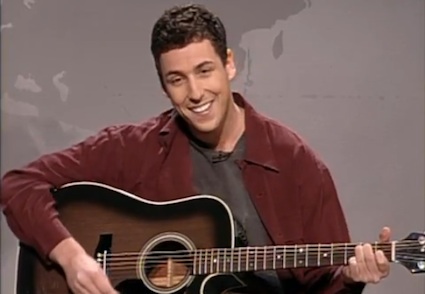
As Jews around the county join with their families to celebrate the Festival of Lights, I wrote an essay for The Times of Israel celebrating the song that made Chanukah cool, and saved American Jewry (sort of…). Here’s an excerpt:
It was easy to understand why so many U.S. Jews – particularly our youngest – took refuge by fading into the multi-colored fabric of secularized Christianity that enveloped American culture. With Gentile discrimination so diffuse and subtle, the only remaining strident enemy in the 3,000-year battle for Jewish survival was, in fact, ourselves.
But then the 1990s brought forth a modern-day Judah Maccabee: Adam Sandler.
OK, I exaggerate just a little.
What the ’90s did bring was an army of modern Maccabees, in the form of prominent, familiar, likable Jews thrust into the pop media spotlight: Jews that were both clearly identifiable and proud of being both American and Jewish.
This helped produce a sea change in Christian Americans’ acceptance of their Jewish neighbors. In the vast center of the country where few Jews lived, ignorance previously had bred distrust and suspicion. Now, through the magic of television – and shows such as Northern Exposure,Beverly Hills 90210, Friends, and most prominently, Seinfeld – Jewish comedians, actors, and characters entered the living rooms of middle America. Rural citizens who’d never met a Jew before now “knew” dozens, and understood that “they were just like us” – maybe a bit wackier.
Just as significant was the impact on Jewish Americans. We could now hold our heads up a bit higher, feel a little more comfortable to publicly pronounce our faith. We were now the tellers of Jewish jokes, alternatively wry and self-deprecating, instead of divisive and mean-spirited.
It was a phenomenon that Jonathan Alter – in his famous 2000Newsweek cover piece heralding Joe Lieberman’s history-making Vice-Presidential candidacy – labeled the “Seinfeldizing of America.”
And at its epicenter in 1994 was a hastily produced, three-and-a-half minute musical segment on Saturday Night Live’s “Weekend Update.”
By John Y. Brown III, on Wed Dec 5, 2012 at 12:00 PM ET
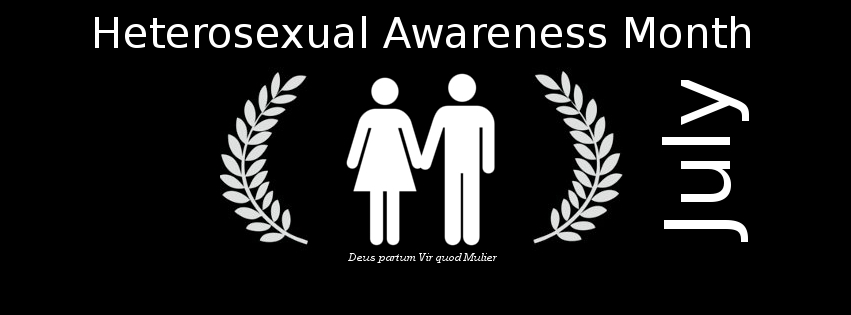
“Oh my gosh. That is such a heterosexual thing to say.”
No one has said that to me yet. But I think one day it will be commonplace phrase in our culture if we heteros don’t get it together. And quickly.
I just walked out of a coffee shop where four well groomed, physically fit , articulate and nice looking men were sitting having a serious and substantive discussion. And I was envious. I thought to myself, “Part of me is jealous and wishes I was one of them.” Not a practicing gay, of course…but just gay in the other ways that my sexual orientation seem to be falling so far behind.
Oh, you are probably thinking to yourself “John is stereotyping gays by ‘assuming’ this group of men are gay because of the way they look and talk.” No. Not really. Think about it for a minute. When was the last time you saw four well-groomed, physically fit, articulate, nice looking heterosexual men having a substantive conversation about anything?
Oh sure, we heteros were represented at the coffee shop, too, alright. Don’t worry about that. Two of us were spread out at a table bitching about politics and why they couldn’t catch a break, in work or in romance. I couldn’t hear specifics because I was only in line for a few minutes. But it appeared they had a lot of misfortunes to cover today because it looked like they had been there most of the morning. And had enjoyed breakfast and a follow up snack. Put it this way, if the average male waistline is 34- 36, my two hetero colleagues were doing their job of balancing out the 4 other men’s trim waistline in the coffee shop (with a little help from me, size 38).
I was so embarrassed I almost wanted to say, “Hey guys. At least fix your hair and speak in complete sentences. You’re giving us heterosexuals a bad name.” But, of course, I didn’t. My hair was unkempt too. And I was eating a cake pop with my coffee.
As I walked out I remembered kids when I was younger saying things like, “That’s such a ‘gay’ thing to say” and meaning it as a put down. Heck, I am sure I said it myself. But today, if someone said to me, “That is so gay of you, John.” Well, I think it would be about the nicest thing anybody said to me all day.
And I wouldn’t even correct the person offering the compliment by telling them I was really heterosexual. I would just let them think I would not be out of place in a group like the one I saw today at the coffee shop –and most everywhere else for that matter.
And that’s when I worried about the next step after that. When someone accuses me of sounding hetero for the first time, and meaning it as a put down making the point that I am overweight, lazy and unimaginative or have no taste in clothes or don’t understand movies. As in, “That is such a heterosexual thing to say.” It could happen. And these days, when we heteros can’t seem to stay fit, keep married, stop complaining or come up with anything interesting to say outside of rattling off some sports scores, asking if there will be a Porkies III, and deciding when the next game of fantasy baseball will be, well, them are darn near fighting words, if you ask me.
And the worst part is, we heteros aren’t even very tough any more. I’m afraid we’d lack the energy to even fight back or have the cleverness to come up with an adequate “retort.”
The more I thought about it the more I thought of this video clip, imagining what our retort to the hetero put down might look like.
Then again, uhhhh, well, that’s just my opinion, man.
As the new Steven Spielberg movie has reignited our national passion for our 16th President, The Recovering Politician today begins featuring a series of posts from one of the nation’s leading experts on the topic: Dr. Matthew Pinsker, a Lincoln scholar, Civil War historian and college professor based at Dickinson College in Carlisle, PA (and of course, longtime Friend of RP). For the last five years, Pinsker has personally trained more than 2,500 K-12 educators on Civil War and American history topics, and he has also been directing the House Divided Project, a digital effort designed to help classroom teachers use the latest technologies to promote deeper study of the American Civil War during its 150th anniversary.
Here is his first column, cross-posted with Quora.com, with permission of the author:
It’s a mistake to worry about whether “Lincoln” the movie is historically accurate.
It’s historically inspired and inspiring but by definition any work of art that blends fiction (such as invented dialogue) with fact should never be considered “accurate.”
Spielberg himself acknowledges all this when he describes his movie as a “dream” and as a work of “historical fiction” (see his Dedication Day speech, November 19, 2012 at Gettysburg for a good example).
That doesn’t mean that the movie has no use in the history classroom or for the lifelong history student. “Lincoln” the movie creates an unforgettable historical mood or experience that almost no actual history of the period can match. It truly feels like “writing history with lightning” (Woodrow Wilson on another powerful movie, “Birth of a Nation”).
But accurate history sticks to the evidence and Spielberg and scriptwriter Tony Kushner don’t. When they want to convey the complicated dynamic of the Lincoln household, they take that responsibility seriously and consult several leading historical studies to create a layered account but at the end of the day they simply invent the most compelling scenes such as a bitter bedroom argument between First Husband and wife or a stunning scene where Abraham Lincoln slaps his oldest son (which, by the way, would NEVER have happened).
They also condense, conflate and simplify the politics behind the passage of the Thirteenth Amendment, which is the focal point of the movie. Just compare the Spielberg/Kushner interpretation to the best academic account of the subject (“Final Freedom” (2001) by Michael Vorenberg) and you realize how many corners the movie has to cut and nuances it has to ignore.
Professor Matthew Pinsker
Watching the movie, for example, it’s easy to forget that Lincoln was pushing for approval from a lame duck Congress where his numbers were worse than they would be in the newly elected Congress.
Why would he do that?
The movie also struggles to portray the details of the lobbying effort (relying heavily on invention, imagination and more than a little corny comic relief). Yet this movie probably does better on this difficult subject than any other American film.
So, accurate? No. But excellent anyway? Absolutely. In other words, don’t go to this movie (or any historical movie) to learn the facts. Go to imagine the experience and to enjoy the illusion that a great filmmaker can create.
By Jonathan Miller, on Thu Nov 22, 2012 at 10:00 AM ET
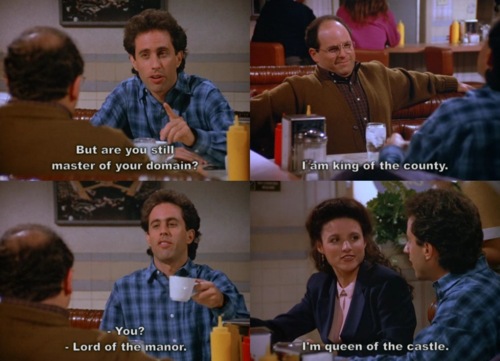
Today’s Thanksgiving celebration is especially meaningful to Seinfeld fan-boys like me.
For today also marks the 20th anniversary of the most brilliantly funny 22 minutes television has ever seen — the uber-classic episode entitled “The Contest.”
“The Contest” is about…well Seinfeld never uses the word either. So if you are too young to remember, or too sheltered to have seen it, or you can’t wait to laugh again, enjoy the first few minutes of comedic history:





 It turns out that art imitates life here fantastically!
 And of course I gain perspective as I think about what it means for my daughters to grow up with first-world problems. Compared to what our foremothers endured, and in the general context of how far women have come, I thank God for these first-world problems!
 But reading “Lincoln” as an instruction manual ignores the degree to which this film is almost subversively hostile to two of the favorite values of contemporary politics: authenticity and transparency. The blunt truth of this portrait of Lincoln’s presidency is a democratic reality that if it materialized tomorrow, we would find depressing and hardly idealistic. It is a closed universe of insiders who operated free of consistent public scrutiny, or ethics regulations, or even a softer code that words and deeds should be tightly connected to be credible. There is a void of disclosure and standards that is not remotely capable of being replicated today, and that we wouldn’t want to conjure up if we could. The point is not to treat Lincoln is anything other than great, but that his greatness operated in a zone not remotely like our own.