By RP Staff, on Fri Apr 22, 2011 at 10:00 AM ET
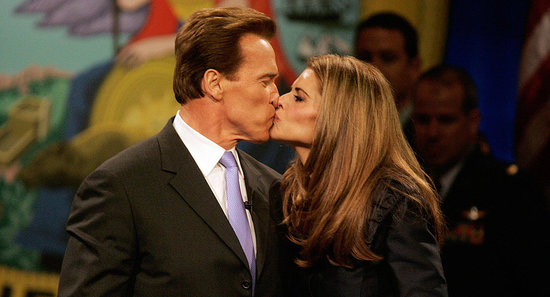
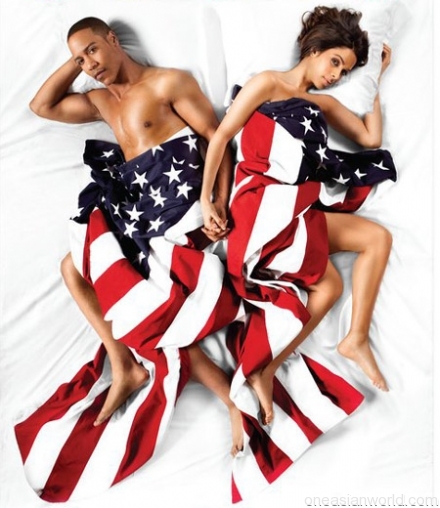
The RP recently looked at changes in American attitudes towards interracial and intercultural marriages and asked, “Will the idea of gay marriage being illegal in most parts of the U.S. seem absolutely unbelievable in 50 years? Yes.” According to this poll, a majority of Americans think it’s unbelievable now. [CNN]
In fact, one church in Louisville, Kentucky, has taken the matter into their own hands, refusing to sign heterosexual marriage licenses until “same-sex couples are afforded equal marriage rights.” As a Louisvillian and a neighbor of the Douglas Boulevard Christian Church, your correspondent says, “bravo.” [ThinkProgress]
Gay marriage, of course, also means gay divorce. With another royal wedding coming up, the RP advises against anyone performing their nuptials at Westminster Abbey. The odds are clearly against you. [Robot Celeb]
And in the end, love is real, real is love—no matter who you love and who loves you. Celebrate it. [Love]
By RP Staff, on Fri Apr 15, 2011 at 10:00 AM ET
When Barrack Obama’s parents wed in 1961, interracial marriage was illegal in more than a dozen states. Now, nearly 15% of marriages are “mixed unions.” Will the idea of gay marriage being illegal in most parts of the U.S. seem absolutely unbelievable in 50 years? Yes. Is it unbelievable today? Let us know your thoughts. [Marrying Out]
And speaking of the Mad Men days of familial attitudes and beliefs, new research shows that even some of today’s beliefs about family, marriage, divorce and children may be as misinformed as Don Draper is about what women really want (and the long term effects of heavy smoking and copious amounts of alcohol). [Pew Research Center]
In the Will the Stupid Royal Wedding Between Two Extraordinarily Propitious and Ridiculously Polite Society People EVER Be Over (And Why Do So Many Care) Department, everybody’s trying to make a buck (er, quid) off these two: [Telegraph]
A number of interesting personal essays about the nature of love and domesticity in the 21st Century: [Salon]
There are great movies about love, and then there are whacked-out great movies about love. One of our favorite scenes from one of our favorites. [Sexy Tango]
By Lisa Miller, on Thu Apr 14, 2011 at 8:45 AM ET What I know for sure — now in my mid forties — is that my life doesn’t have to be an uphill climb.
I also know that my happiness — the enduring sort — is right here, all the time, just waiting for me to have it completely; and that it’s all about today, right now.
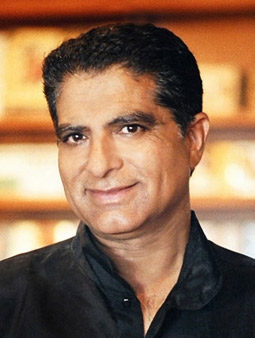
A mentor of mine named David, at the Chopra Center for Wellbeing in Carlsbad posted this on his Facebook page last week, and pretty much sums it up:
Accept this moment exactly as it is because every moment leading up to this very moment is exactly as it is. This can be a toughie but whether you like it or not, the past is carved in stone…however, this moment—this precious moment right now has infinite possibilities. What do you want to choose—the past or the now?
Because we live in a culture fed by the notion that we have to work, work, work, for what we “deserve,” we find ourselves conditioned to believe that we don’t deserve anything without the intellectual sweat, sweat, sweat and tears.
I have to include a quote from the Dahli Lama. When asked what surprised him most about humanity, he answered:
Man. Because he sacrifices his health in order to make money. Then he sacrifices his money in order to recuperate his health. And then he is so anxious about the future that he does not enjoy the present; the result being that he does not enjoy the present or the future; he lives as if he is never going to die; and then dies having never really lived.
It seems this notion of work has spilled over into our beliefs about happiness as well. But the truth is that this Western-culture approach is incomplete, isn’t it? It doesn’t acknowledge the truth that there is a deeper, more pervasive aspect of the human experience that is fed by the powerful natural inclination toward happiness.
When we are happy with our undertakings, they are a lot less like work and a lot more like fulfillment. We’ve all heard the adage, “Love your work and you’ll never work a day in your life.” And, as I think about this I can’t help but ask the question of how. Dr. Chopra puts it best in one of his recent new books, The Ultimate Happiness Prescription:
 The purpose of life is the expansion of happiness. Happiness is the goal of every other goal. Most people are under the impression that happiness comes from becoming successful, accumulating wealth, being healthy, and having good relationships. There is certainly enormous social pressure to believe that these accomplishments are the same as achieving happiness. However, this is a mistake. Success, wealth, good health, and nurturing relationships are by-products of happiness, not the cause. The purpose of life is the expansion of happiness. Happiness is the goal of every other goal. Most people are under the impression that happiness comes from becoming successful, accumulating wealth, being healthy, and having good relationships. There is certainly enormous social pressure to believe that these accomplishments are the same as achieving happiness. However, this is a mistake. Success, wealth, good health, and nurturing relationships are by-products of happiness, not the cause.
Not the cause!
I’ve actually found this to be true: The more time I spend engaged in creative, fulfilling tasks, the more I seem to attract into my life opportunities that keep allowing me to feel creative and fulfilled.
Teaching is a good example of this. I love teaching and have a life long history of it in various ways: from teaching my 5 year old sister to read when I was just 9, to my Sunday School duties with the kindergarten class at 14, to arts camp directorships, to creating mom/daughter workshops as an adult.
The more I’ve engaged in teacher training opportunities just because they feel great, the more opportunities have landed in my lap that feel great. I’m now teaching yoga and mediation to adults and kids; and I’ve gotta say, I didn’t plan it, but it keeps me yoga-ing and meditating myself, which brings the by-product of happiness in general. Ask my family.
And frankly, the better I feel about the bits of time here and there (I’ve been mothering daughters for 17 years; and have been married to a recovering politician for five more than that) that are creative and fun, the more everything else feels fine, including cleaning out the garage and cooking dinner.
Louise Hay puts it beautifuly in You Can Heal Your Life:
 Click on the book cover to sample. The Universe totally supports us in every thought we choose to think and believe. Put another way, our subconscious mind accepts whatever we choose to believe and so what I believe about myself and my lifew becomes true for me. What you choose to think about yourself and about life becomes true for you. And we have unlimited choices about what we can think.
Doesn’t it make sense then to think about enduring happiness?
And like my favorite medicine woman and teacher, Rosalyn Bruyere always says:
“Releasing negative feelings never works, you have to flush them out with good ones.”
Try it! What makes your heart sing? What do you yearn to do, play with, seek? When you think about waking up in the morning, which activities would make you excited to get up and go? In which experiences do you lose track of time?
The answers are the seeds of enduring happiness, and they are as natural to us as breathing, so why not, eh?
It wasn’t too long ago that I was working really hard for happiness–it was an uphill climb and I could never fully appreciate the view along the way. Funny, I’m kinda craving a little mountaineering now if you must know. The real thing. But how’s this for life; I’m planning to climb a a few mountains because it seems like fun (a nice one, with a hiking trail!), and because the air will smell great, and because I’ll enjoy it.
How are you enjoying the mountain, the air, the view, your life? Share your answers here so that others can be inspired.
Namaste and chocolate to yuh.
By Jonathan Miller, on Wed Apr 13, 2011 at 12:00 PM ET I’m a passionate professional golf fan…about 4-5 weekends a year. I half-pay attention to the ups and downs of the PGA schedule during the season when SportsCenter’s on, but I’m glued to the screen only those Saturdays and Sundays when a “Major Tournament” is being played — the Masters, U.S. Open, British Open, and the PGA champtionship — or every other year when the Ryder Cup stirs up my latent gingoism.
C'mon...You cried too, didn't you? For the past decade, I’ve been a proud, card-carrying member of Team Lefty. Phil “Lefty” Mickelson was known for many years as The Best Golfer in the World Never to Win a Major; and then having shooed the Majors’ Monkey off his back at the 2004 Masters, transformed into The Best Golfer in the World Not Named Tiger Woods. As the son of a cancer victim, my heart broke in 2009 when his mother and his wife, Amy, were diagnosed with breast cancer, and I literally cried when he grabbed Amy for a long embrace after capturing the 2010 Masters.
And what a contrast it was to Lefty’s nemesis, who was going through…OK, if I need to explain Tiger Woods’ annus horribilis to you, then you need to watch television at least once in a while.
But as the 2011 season started to get into gear, I found myself rooting for Tiger, and yes, feeling sorry for a guy whose net worth exceeds many developing nations, and whose reputation for legendary narcissism preceded the recent scandal by many years.
Last Sunday, when he put together an incredible string of birdies during the first nine holes of the Masters’ final round, I was yelling at the screen doing my part to help urge his ball to fall into the hole. And I was disappointed when ultimately he fell just a few strokes short of the championship.
I guess I’m victim of the human instinct to root for the underdog. But, just as this web site’s focus is on the second acts of recovering politicians, I think the love of a good redemption story is built into our DNA.
I’m interested in hearing from you — Tiger fans and Tiger haters: What did Sunday’s round mean to you? Can someone redeem himself through athletic accomplishment? Or does Tiger even need redemption: Is it our business in the first place to judge Tiger for his actions?
What say you? Please comment below:
By Jonathan Miller, on Tue Apr 12, 2011 at 8:30 AM ET Of course, politicians are not the only victims of sensationalist journalism — entertainment celebrities have it far, far worse.
Take Ashley Judd’s new book. (Seriously: Take it — there’s a link to buy below.)
If you’d believe the breathless coverage, the memoir is just another celebrity tell-all, a lead-in to a sobbing appearance on Oprah’s coach.
In fact, All That is Bitter and Sweet is an important book: a sobering diary of Judd’s humanitarian work in some of the very poorest areas of the globe. It is far more Three Cups of Tea than anything resembling Mommy Dearest.
In this exclusive RPTV podcast interview, Judd discusses her journeys, advises all of us on how to get involved in supporting her critical causes, and, of course, discusses Kentucky basketball.
You can download the RPTV podcast by clicking here, or on Ashley’s picture above.
I encourage you to buy Ashley’s book, and check out the important charitable organizations that she discusses in the interview. Links to all can be found below:
  
By RP Staff, on Fri Apr 8, 2011 at 10:00 AM ET
Ever thought about how love actually works? And, yes, if politics is the “art of compromise,” then it’s definitely involved. Or is that marriage. Take a look at the basic, underlying foundations for human love. Interesting, huh? [HowStuffWorks]
Did you know? For the first time in American history, rural Americans are just as likely to be divorced as city dwellers. What’s next, broadband? [New York Times]
And speaking of marriage and divorce, in case you were planning on attending, here’s the schedule for this month’s Royal British Wedding. And in case you bemoan the miserable state of the American media and the “news stories” they spend time on, here’s one more example for you to use in your arguments: [Royal Wedding Schedule Explained]
The greatest political love story ever produced on film? Nothing comes close, hands down. Disagree? Prove it to the RP and our loyal readers! [Love, Politics and War]
By Jonathan Miller, on Thu Apr 7, 2011 at 8:30 AM ET As Charlie Sheen might have said, “music is the gin and tonic of the soul.”
Of course, there’s no denying the redemptive impact of song. Whether to soothe, pacify, or even offer catharsis, we’ve all turned to music during times of recovery — from an illness, a professional setback, or, quite often, a breakup.
Last week, I ended an 11 1/2 year relationship…with state government. Neil Sedaka was accurate when he crooned that “Breaking Up is Hard to Do,” but the dissolution of any relationship is much too complex to be captured by 60s-era bubblegum pop.
For my own personal recovery process, I have loaded my trusty iPad with some of my favorite healing music. And in the spirit of Nick Hornby’s “High Fidelity” (read the book; it’s much better than the movie), I share below My Top Five Breakup Songs: (Click on the album covers to sample and/or download to your MP3 player)
#5: "Rolling in the Deep" by Adele
5. Adele, “Rolling in the Deep” My daughters introduced me to the sulky smooth, blues-laden stylings of the unbelievably young (she just turned 22?!?) Adele. Her newest masterpiece drew my attention to an early stage of my recovery from politics: denial, tinged with exasperated anger: “We could have had it all/Rolling in the deep/You had my heart inside of your hands/And you played it to the beat.” Dreams of higher office squelched by the vagaries of politics — it certainly bears some resemblance to the unexpected implosion of a relationship with that “perfect” soulmate. “We could have had it all,” voters! But alas…
#4: "I Can't Make You Love Me" by Bonnie Raitt
4. Bonnie Raitt, “I Can’t Make You Love Me”
While Raitt had already secured her place in rock history by helping to discover Bruce Springsteen, this classic resolutely establishes her as the bard of melancholy self-pity. With a haunting melody and a voice that aches with trenchant agony, Raitt sets the perfect mood for an evening of painful introspection: “Turn down the lights/Turn down the bed/Turn down these voices inside my head.” Instead of those blaring, patriotic anthems that accompany a losing candidate’s walk to the concession podium, this ballad should be required listening for Election Night audiences: I worked my heart out to win your support, then you broke it into pieces. Dear voters, why can’t I make you love me?
 #3: "You Oughta Know" by Alanis Morissette
3. Alanis Morissette, “You Oughta Know”
Of course, self-pity soon can metastasize into vengeful anger, and there’s no better theme song for the dumped than Morissette’s breakout hit, the song that established a whole new genre of “tough chick rock” (See Pink, Avil Lavigne, etc.) Alanis’ scorned lover caustically captures the false promises of lust disguised as love–or in the case of a recovering politician, the fickleness of the body politic: “And every time you speak her name/Does she know how you told me you’d hold me/Until you died, till you died?/But you’re still alive.” (And isn’t it ironic that in each primary that I’ve lost, the voters chose “an older version of me”? Hmmmmm…)
 #2: "Romeo and Juliet" by Dire Straits 2. “Romeo and Juliet” by Dire Straits: A truly transcendent song, on one of rock’s most underappreciated albums. With a nod to both Shakespeare and Leonard Bernstein’s stage and screen adaptation, Mark Knopfler sets the romantic legend in the late 70s and reveals the core of its message; one that can reassure a jilted lover (or politician) that the failure wasn’t your fault — as fate or the Good Lord would have it, it just wasn’t your time: “There’s a place for us/You know the movie song/When you gonna realize, it was just that the time was wrong?” Hey, there’s more fish in the sea/elections to win! (Oh, and Taylor Swift: I love your music, but when you were on the road with your English tutor, did y’all skip the last act of Shakespeare’s play? Romeo and Juliet didn’t exactly have a happy ending.)
 #1: "I Will Survive" by Gloria Gaynor 1. Gloria Gaynor, “I Will Survive” OK, disco haters; go ahead and scoff. But Gaynor’s anthem for the final stage of breakup recovery — acceptance and transcendence — is the ideal background music for a recovering politician who’s realized that there’s more to life than temporal adulation and ephemeral power. And when that political fever threatens to re-infect you, Miss Gloria reminds you to reject the sweet succor of narcissism, empowering you with her personal mantra: “And you see me/somebody new/I’m not that chained up little person still in love with you/And so you felt like dropping in and just expect me to be free/Now I’m saving all my loving for someone who’se loving me…”
OK, that’s five for fighting about.
What am I missing? What have I misunderstood? How will my life go on?
(Speaking of…For goodness’ sake, NO CELINE DION!!)
Please leave below your comments, critiques, and most importantly, lists of your top five breakup songs:
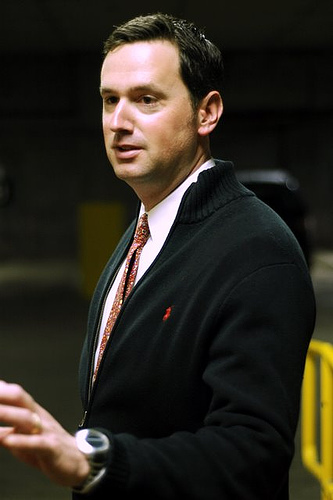
By Jason Atkinson, on Wed Apr 6, 2011 at 8:30 AM ET  I was born in the Amazon and raised by a pack of wolves until the age of twelve, when some missionaries in dug-out canoes came to spread the gospel, then found me and took me back to their home in Oregon to raise me properly. I was born in the Amazon and raised by a pack of wolves until the age of twelve, when some missionaries in dug-out canoes came to spread the gospel, then found me and took me back to their home in Oregon to raise me properly.
Jonathan Miller, my lifelong friend from our Rodel Fellow days, and expert forger of Al Gore’s signature, asked me to contribute a biographical sketch. I, however, really do not like discussing myself and I chose to use the more interesting Discovery Channel version of a first sentence.
I have never considered myself much of a politician either; I am more like an idealist with twinges of Robin Hood and Teddy Roosevelt pumping through my veins…so much for humility.
I have served in the Oregon Legislature since 1999. My first campaign became a forecast for my political life: lobbyists and “insiders” were against me and contributed $40k to my first opponent. My wife gave me $100 bucks and I outworked the guy. Many campaigns later, sometimes winning both the Republican and Democratic primaries, I am still the same man the “insiders” hold in suspect.
I teach a college seminar on Oregon politics and servant leadership. The class starts with the showing of three speeches: Robert Kennedy’s brilliant speech in Indiana when M.L.K. was assassinated; Representative Barbara Jordan’s speech at Watergate, “we are here to uphold the Constitution, the Constitution that at one time did not uphold me;” and Ronald Reagan’s first inaugural “City on a Hill.” Then I ask the students if they will see that sort of behavior while watching the Oregon Senate. That question is followed by the question that is the final exam: Do you believe 10% of the Oregon Senate holds the other 90% together? If they answer yes, then I ask them to put the names down. Since 2003, most of the answers have been yes, and most of the names are the same. The Senators named are rarely the grand-standers, the partisans or the blowhards. I think this premise holds true in every Legislature, every Congress all the way to the first five Continental Congresses in U.S. history.
If I have an epithet in politics, I hope it would be I was one of the 10%. That is my goal, but looking at my press lately, I am being taught what a rotten person I am. When Jonathan’s and my classmate; Gabby Giffords, was shot; I made a speech about civility and it was not taken well. Bloggers lit me up, talk-radio jumped in and other Senators saw a weakness so they piled on. In the hyper-partisan era we now live in, I am sad to report my experience has not closed the gap between issues or personalities. Thinking of becoming a recovering politician, I told a friend I was not afraid of the heat in kitchen, but after standing in it so long I have asked myself, is it worth it? Going back to that idealism line, I have to answer yes.
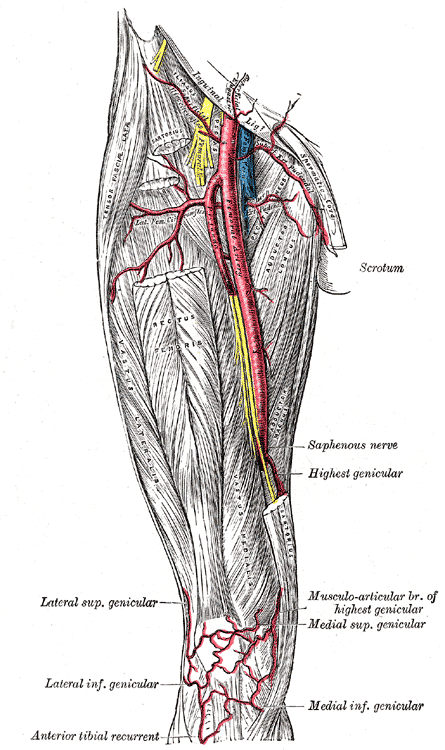
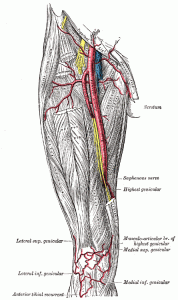 The femoral artery In 2006 I ran for Governor, did not win, started working in Northern Iraq with the Kurds, came home, and was shot in my garage. Unlike the Amazon bit, this is all true. A .38 bullet – hidden inside a bag – was dropped in my shop and the derringer went off, destroying my femur and cutting my femoral artery. My wife heard the noise, came out to find her husband bleeding to death on the floor, tied a tourniquet with a rubber inner tube and has enjoyed Christmas and her birthday even more ever since. I am told I was about 90 seconds away from bleeding out, my leg was to be amputated and I was never to walk again. All three did not happen thanks to God’s healing hand and my headstrong ability to fight through the pain of rehab.
My life changed in that instant, but politics was already speculating I was dead, that I could not win statewide anyway, and that somehow I had shot myself. That last bit was the hardest to hear, as I never saw the gun and had no knowledge of it near me. About a year later, I was speech-making to a crowd of about 1,000 citizens on the steps of the Capitol, when someone who said to all I shot myself introduced me, which got a lot of laughs. I handled it ok, but my wife let the introducer know in no uncertain terms how far out-of-line he was.
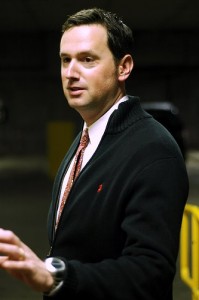 It has been a tough three years: my wife had and beat cancer, our 8-year-old son had and beat cancer, and my party beats on me for not “being good enough.” There is no complaining as I have more pain killers than the lot of bad apples, but it does bring an old American conundrum into focus: How do you vote if your conscience and your district/state/party are at polar opposites? It has been a tough three years: my wife had and beat cancer, our 8-year-old son had and beat cancer, and my party beats on me for not “being good enough.” There is no complaining as I have more pain killers than the lot of bad apples, but it does bring an old American conundrum into focus: How do you vote if your conscience and your district/state/party are at polar opposites?
I struggle with politics. I love service but am burned out on the pettiness. I hope the body politic is not run by those who can raise the most money to personally destroy the competition, but right now that is where the pendulum points.
 A van down by the river... Back to the Amazon with more truths: I earned my MBA after being run over by a car while on my bicycle. I sat on the pavement and thought “I have accomplished everything I set out to do in professional alpine skiing and racing bikes around the world, I think it’s time for grad school.” It was, and I married Stephanie half way through school. I live between Salem/Portland (Oregon’s political and business hubs) and our farm in Southern Oregon, except during steelhead season when I live in a van by the river. Anyway, I fly fish two-handed with religious conviction, struggle to get two more books published and enjoy foreign diplomatic work more than anything I have ever done.
And, just for the record, if you ever need Al Gore to sign something, I know how to get that done.
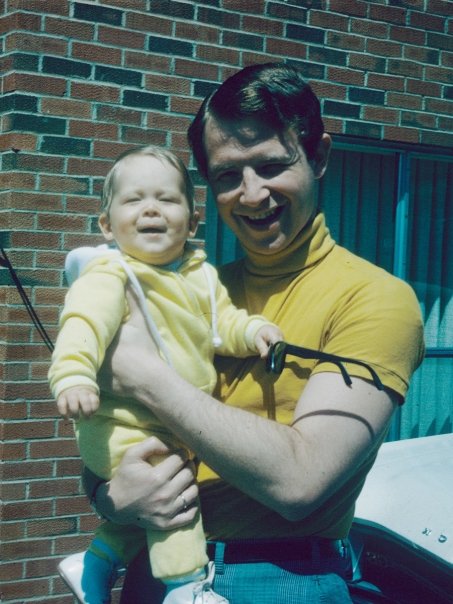
By Jonathan Miller, on Mon Apr 4, 2011 at 12:00 PM ET 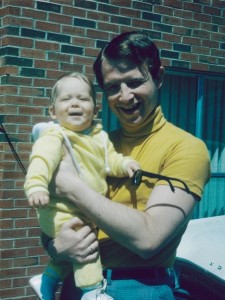 My dad and I circa 1968 Today — as on every April 4 — as the nation commemorates the anniversary of one of the worst days in our history; as some of us celebrate the anniversary of the greatest speech of the 20th Century; my mind is on my father. And my memory focuses on a winter day in the mid 1970s, sitting shotgun in his tiny, tinny, navy blue Pinto.
I can still remember my father’s smile that day.
He didn’t smile that often. His usual expression was somber, serious—squinting toward some imperceptible horizon. He was famously perpetually lost in thought: an all-consuming inner debate, an hourly wrestling match between intellect and emotion. When he did occasion a smile, it was almost always of the taut, pursed “Nice to see you” variety.
But on occasion, his lips would part wide, his green eyes would dance in an energetic mix of chutzpah and child-like glee. Usually, it was because of something my sister or I had said or done.
But this day, this was a smile of self-contented pride. Through the smoky haze of my breath floating in the cold, dense air, I could see my father beaming from the driver’s seat, pointing at the AM radio, whispering words of deep satisfaction with a slow and steady nod of his head and that unfamiliar wide-open smile: “That’s my line…Yep, I wrote that one too…They’re using all my best ones.”
He preempted my typically hyper-curious question-and-answer session with a way-out-of-character boast: The new mayor had asked him—my dad!—to help pen his first, inaugural address. And my hero had drafted all of the lines that the radio was replaying.
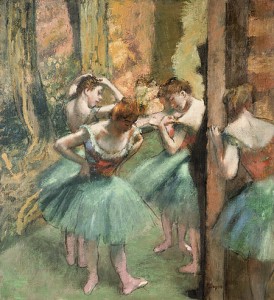 This was about the time when our father-son chats had drifted from the Reds and the Wildcats to politics and doing what was right. My dad was never going to run for office. Perhaps he knew that a liberal Jew couldn’t get elected dogcatcher in 1970s Kentucky. But I think it was more because he was less interested in the performance of politics than in its preparation. Just as Degas focused on his dancers before and after they went on stage—the stretching, the yawning, the meditation—my father loved to study, and better yet, help prepare, the ingredients of a masterful political oration: A fistful of prose; a pinch of poetry; a smidgen of hyperbole; a dollop of humor; a dash of grace. When properly mixed, such words could propel a campaign, lance an enemy, or best yet, inspire a public to wrest itself from apathetic lethargy and change the world. This was about the time when our father-son chats had drifted from the Reds and the Wildcats to politics and doing what was right. My dad was never going to run for office. Perhaps he knew that a liberal Jew couldn’t get elected dogcatcher in 1970s Kentucky. But I think it was more because he was less interested in the performance of politics than in its preparation. Just as Degas focused on his dancers before and after they went on stage—the stretching, the yawning, the meditation—my father loved to study, and better yet, help prepare, the ingredients of a masterful political oration: A fistful of prose; a pinch of poetry; a smidgen of hyperbole; a dollop of humor; a dash of grace. When properly mixed, such words could propel a campaign, lance an enemy, or best yet, inspire a public to wrest itself from apathetic lethargy and change the world.
Now, for the first time, I realized that my father was in the middle of the action. And I was so damn proud.
– – –
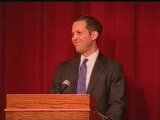 Click above to watch my eulogy for my father My dad’s passion for words struck me most clearly when I prepared his eulogy. For the past two years of his illness, I’d finally become acquainted with the real Robert Miller, stripped down of the mythology, taken off my childhood pedestal. And I was able to love the real human being more genuinely than ever before. The eulogy would be my final payment in return for his decades of one-sided devotion: Using the craft he had lovingly and laboriously helped me develop, I would weave prose and poetry, the Bible and Shakespeare, anecdotes and memories, to honor my fallen hero. In his final weeks of consciousness, he turned down my offer to share the speech with him. I will never know whether that was due to his refusal to acknowledge the inevitable, or his final act of passing the torch: The student was now the author.
While the final draft reflected many varied influences, ranging from the Rabbis to the Boss (Springsteen), the words were my own. Except for one passage in which I quoted my father’s favorite memorial tribute: read by Senator Edward Kennedy at his brother, Robert’s funeral:
My brother need not be idealized, or enlarged in death beyond what he was in life, to be remembered simply as a good and decent man, who saw wrong and tried to right it, saw suffering and tried to heal it, saw war and tried to stop it.
Read the rest of…
The RP: My Dad, RFK & the Greatest Speech of the Past Century
By RP Staff, on Fri Apr 1, 2011 at 10:00 AM ET How many political careers might this app have saved? We’ll never know, but it might save your love life—and maybe even your career! [Last Night Never Happened]
No examination of the politics of love would be complete without a glimpse into the lives of three enigmatic lovers and the worlds they ruled: [The Guardian]
An overabundance of patriotic devotion or just fulfilling a heartfelt desire? You decide! [Politics Daily]
It turns out love really can charge your nanowires: [The Daily Mail]
Poignant story of the power of friendship, even on Capitol Hill: Reps. Gabby Giffords and Debbie Wasserman-Schulz: [Politics Daily]
Classic Seinfeld: George Tries to Say [“I Love You”]
|
The Recovering Politician Bookstore
|