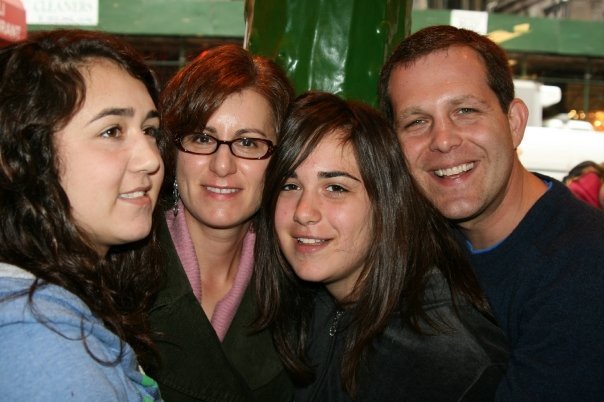
Below is a picture of The RP with his gorgeous posse (Mrs. RP and the RP-ettes). For a hint about the location, take a careful look at what is protruding in the back center of the photo.
The first person to guess the correct location in the comments section below this piece wins. (Close friends and family are disqualified — but they already have a signed copy of the book anyway.)
By Steven Schulman, on Thu Apr 21, 2011 at 8:30 AM ET
I have the greatest job in the world — or so I am told nearly every week or so, typically by a law student, but sometimes by colleagues and adversaries. No, I am not the shortstop for the Boston Red Sox (Jed Lowrie is doing just fine, thank you very much).
I am a partner at Akin Gump Strauss Hauer & Feld, an international law firm with more than 800 attorneys around the world. And not just *any* partner, but the Pro Bono Partner, leading a firm-wide practice group in which more than 550 of my colleagues work every year, collectively devoting nearly 60,000 hours annually to a wide variety of indigent clients and public interest causes. I work very hard, but I rarely bill an hour.
How did I get this gig? Well, like many such stories, this one starts with a large Nigerian coming to my office one spring afternoon.
On that day more than 13 years ago, I was a litigation associate at an even larger international law firm, Latham & Watkins. My practice consisted primarily of advising large corporations facing all manner of antitrust issues, from mergers and acquisitions being challenged by the Department of Justice to competitors suing over allegedly wrongful conduct. To put it bluntly, my practice was as relevant to a Nigerian man as the Washington Nationals are to the National League pennant race.
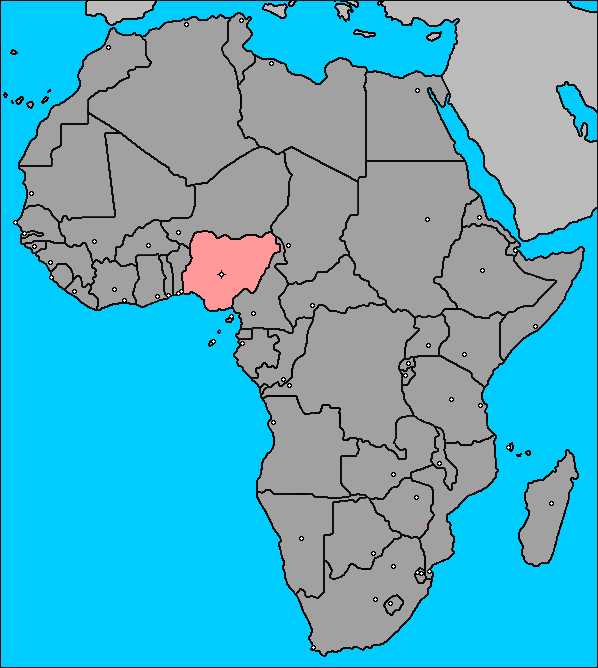
Placing Nigeria on a map...
But there he was, because I had raised my hand at a litigation group lunch when someone asked for help in this Nigerian’s immigration court case. Once we settled into a conference room, Tolu introduced himself and then his quite large family — both physically and numerically. My charge: get them asylum. Second place: deportation back to Nigeria, likely to return to the prison where he had been detained and tortured for his pro-democracy activism. I had never set foot in an immigration court, not could I confidently place Nigeria on a map. But I did have enough legal training to figure it all out, and enough pressure, given the stakes, to motivate me to work as hard as I would for any paying client.
Obviously, we won, or else I would still be worrying about how to get approval for the merger of the largest and second-largest widget makers in the North American market.
Winning Tolu’s case set me on an unusual path, one that eventually led me to focus on pro bono practice half-time (at Latham) and then full-time (when I joined Akin Gump in 2006).
It consequently led Jonathan to place on me the moniker of “recovering antitrust lawyer.” I resisted this label at first – after all, I did not surrender my law firm credentials or lifestyle, and count among my partners some fine antitrust lawyers. I am still very much part of the law firm world. Then again, the recovering politicians who contribute to this site are in similar positions – at once quite engaged in politics, even if no
longer serving in office.
Tolu and family
Like these RPs, I don’t reject my former practice. Rather, I embrace the law firm model and ethos, but work to improve our firm by pushing it to meet the lofty ideals of our profession. Representing Tolu, and subsequently other refugees from all over the world, inspired me not just to do this work myself, but to enlist others to use theirtalents to serve the less fortunate among us. I continue to be inspired by my colleagues, who selflessly give their time to advise the KIPP charter schools or fight for Social Security benefits for disabled clients.
My fellow Akin Gump attorneys show every day that the billable hour isn’t the only law firm value, as much as the profession has been driven to act more like a bottom-line business.
——
And now a tribute from another refugee advocate:
By Jonathan Miller, on Wed Apr 20, 2011 at 12:30 PM ET
NATO’s operations in Libya have created a very odd moment in international affairs. The decision to commit US and NATO forces to help the embattled rebels by imposing a no fly zone happened so fast there was barely any time for an actual debate. The momentum for swift action, however, has dissipated now that the decision has been made, leaving us with a stalemate on the ground and with lingering concerns that, almost in a fit of insensibility, the US and its allies have begun an adventure without any clear idea of how or when it will end.
The political contortions surrounding the decision to act will keep historians and political scientists busy for years. It offered, for example, the confusing spectacle of the Secretary of Defense going into detail about what a bad idea a no fly zone was only a few days before the decision to go ahead. The President made the decision while traveling in Latin America, and only spoke to the American people in detail several days after the air war began. The political class was similarly confused.
“]
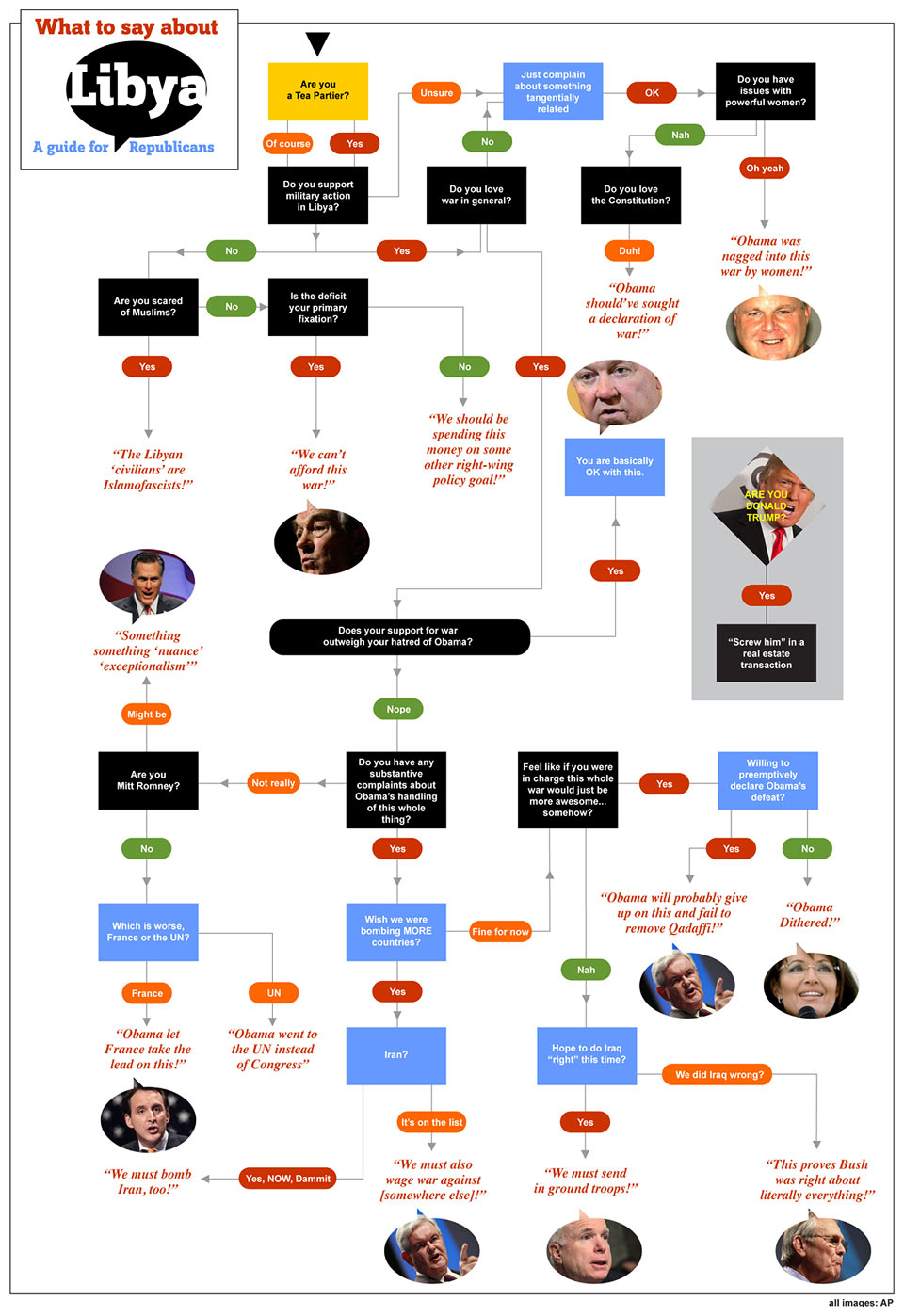
Click on the chart above to see how Alex Pareene of Salon wonderfully skewered the GOP position.
Only relatively marginalized groups on Right and Left offered clear objections—Glenn Beck seeing in the Arab Spring a global conspiracy of liberals and Islamists to establish a Caliphate; Dennis Kucinich wanting to impeach the President for going to war—but the political establishment acquiesced quickly to the arguments for action. Congressional Democrats, many of whom had been vocal critics of military actions elsewhere, closed ranks around the President. Congressional Republicans were caught flat-footed, and after a period of confusion settled on a strategy of criticizing the manner in which the decision was made rather than the decision itself.
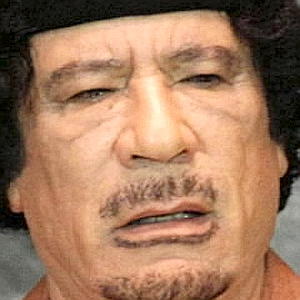
The international reactions have been no less confused. Europeans, concerned about the unrest in a country so close to their shores and which provided so much of Europe’s oil, were among the first calling for action, seconded (incongruously enough) by the Arab League. Calls for a no fly zone grew as it appeared that TheBrotherLeaderWhoseNameWesternMedia-HasNotBeenAbleToTransliterateEffectivelySince1969 was preparing to massacre the rebels in the besieged towns and cities of Eastern Libya. With President Obama arguing that the US could not go it alone, and our most important European allies expressing a willingness to shoulder a large share of the burden, the UN Security Council supported the idea, and voila! A triumph of multilateralism.
Yes, the Security Council managed to avoid a Russian or Chinese veto, but the best those two international free riders could offer was to abstain. Neither China nor Russia has made any constructive contribution to settling the problems, and no one expects them to either, which is incongruous but habitual for two states who enjoy complaining about American unilateralism. To make matters worse, the Germans, in the person of Foreign Minister Guido Westerwelle, who had spoken so loudly in the run-up to the vote about the need to avoid a humanitarian catastrophe, joined China and Russia in the abstention. Westerwelle and his boss, Chancellor Angel Merkel, had their eyes on upcoming state elections and decided not to rile the German public by committing the Germans to military action—thus choosing to be preemptively irresponsible rather than provide ammunition for their even more internationally irresponsible domestic rivals. Westerwelle then doubled down on the pusillanimity by announcing that the German abstention did not mean the Germans would not support allied actions in general, as if fecklessness and opportunism are somehow more appealing when one makes no effort to hide them. In the end, the German government was rightfully pummeled from all sides, continues to earn the scorn of media critics (such as Roger Cohen in the NY Times), has alienated its allies, and lost the big state election in Baden-Württemberg anyway.
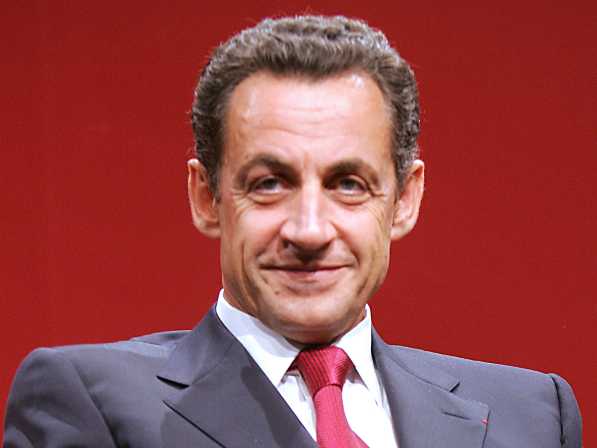
France's Sarkozy
Meanwhile, France, with Britain close behind, has taken a leading role in the Libya action (and, partially in response to critics who said the West did not care about non-oil-producing lands, Ivory Coast as well). Recent French actions would overturn all the American canards about French weakness and cowardice so popular in the debate over Iraq, if the people who traffic in such canards actually allowed themselves to be swayed by actual facts. One should of course not over-praise French willingness to act, since it reflects domestic politics as much as the German decision. President Nicolas Sarkozy has calculated that these actions will help burnish his image as a leader as he attempts to rev up his re-election campaign. Whether it will do that remains to be seen. In this case, however, the French government has both made a clear decision and has backed it up with actions.
Read the rest of… Ronald J. Granieri: Form, Function & Fantasy in Foreign Policy
What I know for sure — now in my mid forties — is that my life doesn’t have to be an uphill climb.
I also know that my happiness — the enduring sort — is right here, all the time, just waiting for me to have it completely; and that it’s all about today, right now.
A mentor of mine named David, at the Chopra Center for Wellbeing in Carlsbad posted this on his Facebook page last week, and pretty much sums it up:
Accept this moment exactly as it is because every moment leading up to this very moment is exactly as it is. This can be a toughie but whether you like it or not, the past is carved in stone…however, this moment—this precious moment right now has infinite possibilities. What do you want to choose—the past or the now?
Because we live in a culture fed by the notion that we have to work, work, work, for what we “deserve,” we find ourselves conditioned to believe that we don’t deserve anything without the intellectual sweat, sweat, sweat and tears.
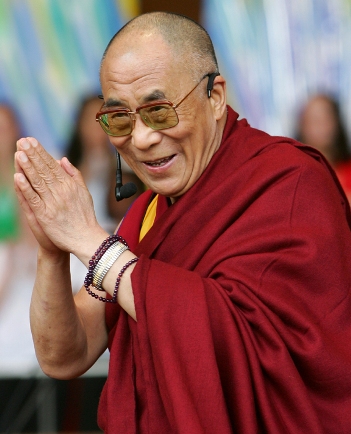
I have to include a quote from the Dahli Lama. When asked what surprised him most about humanity, he answered:
Man. Because he sacrifices his health in order to make money. Then he sacrifices his money in order to recuperate his health. And then he is so anxious about the future that he does not enjoy the present; the result being that he does not enjoy the present or the future; he lives as if he is never going to die; and then dies having never really lived.
It seems this notion of work has spilled over into our beliefs about happiness as well. But the truth is that this Western-culture approach is incomplete, isn’t it? It doesn’t acknowledge the truth that there is a deeper, more pervasive aspect of the human experience that is fed by the powerful natural inclination toward happiness.
When we are happy with our undertakings, they are a lot less like work and a lot more like fulfillment. We’ve all heard the adage, “Love your work and you’ll never work a day in your life.” And, as I think about this I can’t help but ask the question of how. Dr. Chopra puts it best in one of his recent new books, The Ultimate Happiness Prescription:
The purpose of life is the expansion of happiness. Happiness is the goal of every other goal. Most people are under the impression that happiness comes from becoming successful, accumulating wealth, being healthy, and having good relationships. There is certainly enormous social pressure to believe that these accomplishments are the same as achieving happiness. However, this is a mistake. Success, wealth, good health, and nurturing relationships are by-products of happiness, not the cause.
Not the cause!
I’ve actually found this to be true: The more time I spend engaged in creative, fulfilling tasks, the more I seem to attract into my life opportunities that keep allowing me to feel creative and fulfilled.
Teaching is a good example of this. I love teaching and have a life long history of it in various ways: from teaching my 5 year old sister to read when I was just 9, to my Sunday School duties with the kindergarten class at 14, to arts camp directorships, to creating mom/daughter workshops as an adult.
The more I’ve engaged in teacher training opportunities just because they feel great, the more opportunities have landed in my lap that feel great. I’m now teaching yoga and mediation to adults and kids; and I’ve gotta say, I didn’t plan it, but it keeps me yoga-ing and meditating myself, which brings the by-product of happiness in general. Ask my family.
And frankly, the better I feel about the bits of time here and there (I’ve been mothering daughters for 17 years; and have been married to a recovering politician for five more than that) that are creative and fun, the more everything else feels fine, including cleaning out the garage and cooking dinner.
Louise Hay puts it beautifuly in You Can Heal Your Life:
Click on the book cover to sample.
The Universe totally supports us in every thought we choose to think and believe. Put another way, our subconscious mind accepts whatever we choose to believe and so what I believe about myself and my lifew becomes true for me. What you choose to think about yourself and about life becomes true for you. And we have unlimited choices about what we can think.
Doesn’t it make sense then to think about enduring happiness?
And like my favorite medicine woman and teacher, Rosalyn Bruyere always says:
“Releasing negative feelings never works, you have to flush them out with good ones.”
Try it! What makes your heart sing? What do you yearn to do, play with, seek? When you think about waking up in the morning, which activities would make you excited to get up and go? In which experiences do you lose track of time?
The answers are the seeds of enduring happiness, and they are as natural to us as breathing, so why not, eh?
It wasn’t too long ago that I was working really hard for happiness–it was an uphill climb and I could never fully appreciate the view along the way. Funny, I’m kinda craving a little mountaineering now if you must know. The real thing. But how’s this for life; I’m planning to climb a a few mountains because it seems like fun (a nice one, with a hiking trail!), and because the air will smell great, and because I’ll enjoy it.
How are you enjoying the mountain, the air, the view, your life? Share your answers here so that others can be inspired.
By Jonathan Miller, on Thu Apr 7, 2011 at 1:30 PM ET
One of the paradoxes of modern life is that although we are trained to link success to our ability to reach people directly and personally, often success actually depends on the reactions of strangers whom we will never meet. Politicians live this paradox daily, as they combine the rituals of pressing the flesh with the realization of its limits. There are simply too many voters and, in our fragmented media landscape, too many potential bloggers and commentators to make a personal connection with all of them. More than one young political aspirant has begun a career with the promise that he or she will knock on every door in the district, or shake every possible hand. In the end, it is necessary, for the sake of both sanity and bodily health, to accept that universal personal contact is unattainable, and depend on the kindness of strangers, or at least the limitations of their unkindness.
Academics and politicians share this paradoxical dependence on both personal contact and anonymity. In my career I have done my share of personal networking with colleagues and superiors, as well as spending hours with students—in the classroom, in office hours, and in the spaces in between—developing contacts and a personal reputation to help carve out a place in the academic world. Letters of recommendation and student evaluations, the product of such personal contact, play a significant role on the road to success. But a great deal of decisive power still lies in the hands of strangers—be they anonymous peer reviewers at journals and publishing houses, selection committees from fellowship granting foundations, or university tenure and promotion committees. Indeed, in academic life, the anonymity of those bodies is one of the few things still considered sacred. Certainly, one may be able to guess which expert in one’s field is most likely to be asked to evaluate a manuscript, or to write the external letters universities request in their tenure processes, and one may hear unofficially which senior members of the faculty happen to sit on the crucial committees. Nevertheless, it is forbidden (by custom and in some cases by rule) either to ask specifically who is making the decisions or even to see the full record of their deliberations.
Thoughtful readers can think of many reasons why this makes sense. Anonymity encourages frankness, objectivity, and the critical distance necessary to make intellectual evaluations. Indeed, anonymity is in many ways preferable to the opposite, which would have decisions made by friends and connections, which would freeze out those who are not already members of the club.
But anonymity has its decidedly chilly side as well. Strangers can be objective, but they can also view the cases before them not just on their merits but based on pre-existing assumptions, pigeonholing candidates or their works in ways that make decisions easier, but which may also miss the nuances of individual personality.
I am not a completely neutral analyst on this point. My experience with academic life, and especially the tenure process, has shown me the good and bad sides of the system. I freely admit that what success I have enjoyed thus far in my career owes a significant debt to the kindness of strangers on both sides of the Atlantic. I have also experienced the cold sting of anonymous rejection, sometimes simultaneously. It is therefore possible, for example, that one group of highly educated individuals can look at a file and vote unanimously in favor of a candidate while another group of highly educated individuals at the same institution can read the same file and reach precisely the opposite conclusion. In my case, between 2009 and 2010 my department twice voted overwhelmingly in favor of my tenure case, the university personnel committee voted no both times, and the Provost rejected my application.
Read the rest of… Ronald J. Granieri: The (Un)kindness of Strangers