By David Snyder, on Fri Jul 29, 2011 at 2:00 PM ET  While our government struggles to get its financial house in order, perhaps there is a lesson for all of us from what is happening in Washington. While our government struggles to get its financial house in order, perhaps there is a lesson for all of us from what is happening in Washington.
I do not think any of us really ever want to reach the point where we say, “How did it get this way? How did it get this bad?” So what to do – just a few simple steps to make sure your financial house is in order:
1. Risk Management
(A) Long Term Disability Coverage (Income Replacement insurance) – Whether you are single, married, divorced – it does not matter – just make sure you have adequate Long Term Disability coverage in place. In the event a disability stops you from working due to an illness or injury, you need to maximize your income. A disability could cause not only loss of income, but also loss of health insurance, loss of retirement benefits, increase health costs, etc. And the typical group plan only covers a portion of your income and that benefit is typically going to be taxable income to you. You need to have supplemental coverage from a highly rated company.
(B) Life Insurance – this discussion may depend on your family situation. But even if you are single, but plan to have a family, getting coverage while you are young and healthy may be an advantage. Too many times, a person waits and then later has a medical issue that either prevents them from getting coverage or makes it more expensive. With a family, life insurance is a must. A great rule of thumb here is that for every $1,000 of after tax monthly income you want to provide to a surviving spouse, you need $250,000 of death benefit in place. And when factoring in inflation, this sum will typically last the survivor about 20 years. So calculate the after tax monthly needs for your family and make sure you have adequate life insurance in place.
Lastly, don’t discount the value of a non-working spouse. Imagine the expenses if a stay at home Mom or Dad were not around. Non-working spouses need coverage too. A rule of thumb here – $250,000 of coverage on the non working spouse for each child.
(C) Cash – build up a reserve of about 3 months income and keep it in readily accessible cash. Use a money market or similar account that is safe and secure.
 2. Wealth Accumulation 2. Wealth Accumulation
Once Risk Management issues are resolve, the next step in planning for your financial house is wealth accumulation:
(A) Retirement Planning – Utilize your company 401(k) plans or pensions. If there is a matching contribution on behalf of your company, then at least contribute enough to maximize the company match. If there is a Roth option, use it. Conventional wisdom tells us that tax rates have nowhere to go but UP. If you believe this, then the old paradigm of straight tax deferral must be changed. You need to move as much as possible from Tax Deferred vehicles into Tax Free vehicles. Roth 401(k)’s provide this regardless of income level. Roth IRA’s do as well. For those that make too much to contribute on their own to Roth IRA’s (single – $122,000 of Adjusted Gross Income, and Married filing jointly – $179,000 of Adjusted Gross Income), the tax laws currently allow a non-deductible contribution to a traditional IRA and then the ability to convert it into a Roth IRA (regardless of your income level).
Read the rest of…
David Snyder: While the U.S. Can’t Get its Financial House in Order, You Can
By Will Allison, on Wed Jul 27, 2011 at 12:00 PM ET  Like I said, this deal ain’t happenin’. Like I said, this deal ain’t happenin’.
People keep telling me that a deal on raising the debt ceiling will definitely happen. It must happen. Both sides agree it must happen. The fate of the global economy depends on no less. They’re back at the negotiation table. Sure, Speaker Boehner walked out on Friday, but he was back in the White House on Saturday. Some kind of product must emerge from these negotiations.
A few days ago, as I was walking down the street in Lower Manhattan, I saw a man reach into a garbage can, fish out an open can of soda, and chug whatever was left in it. It was a hot day, but Jesus Christ.
At this point, any product that would emerge from negotiations between the President and the Tea Party would be as valuable as that can of soda.
Those who believe otherwise must also believe that the behavior of the House Republican majority—intransigent to the point of nihilism–will radically change in the next week. That’s right: we have one week left until default. One week left before the crash.
Here is an example of the behavior of the new House Republican Majority. Allen West is a freshman GOP Congressman from Florida, a star of the 2010 Tea Party wave. He is an Iraq War veteran, discharged from the service after torturing an Iraqi police officer. Most people would try to put that kind of shameful incident behind them. West returned home and campaigned on it. Successfully.
A couple of weeks ago, Congressman West shot off an email to Democratic Congresswoman Debbie Wasserman Schultz, whose congressional district adjoins his. In the email, he wrote, “You are the most vile, unprofessional, and despicable member of the U.S. House of Representatives. If you have something to say to me, stop being a coward and say it to my face, otherwise, shut the heck up. Focus on your own congressional district!” Not done, he followed that up with “You have proven repeatedly that you are not a Lady, therefore, shall not be afforded due respect from me!” Then he copied most of Congress on the email, just to let everyone else know how hurt his feelings were.
What did Debbie Wasserman Schultz do to poor Mr. West to provoke such a tirade? Steal his daughter’s Justin Bieber tickets? Drown his cat? Assert the supremacy of Mellencamp over Springsteen?
 (Pictured above: a former Lieutenant Colonel’s worst nightmare.) Even worse. This “lady” had the nerve to actually describe Allen West’s plans for Medicare recipients, via the debt ceiling negotiations: “The gentleman from Florida. who represents thousands of Medicare beneficiaries, as do I, is supportive of this plan that would increase costs for Medicare beneficiaries, unbelievable from a Member from South Florida”.
That’s it. That’s what set him off. In West’s defense, perhaps he felt physically threatened by Wasserman Schultz. After all, she does look awfully intimidating.
These are the kinds of people President Obama is trying to negotiate a debt ceiling increase out of. Crazy people. Not to say they aren’t serious people. No, these people take themselves very, very seriously. As to their role as stewards of our nation’s well-being? Taken about as seriously as a box of Lucky Charms.
Read the rest of…
Will Allison: Unloading Their Guns
By Ronald J. Granieri, on Wed Jul 20, 2011 at 8:30 AM ET 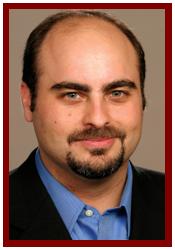 Last April, the organizers of the annual “College-palooza” at the University of Pennsylvania invited me to participate in their series of “one minute lectures,” where professors had one minute to crystallize their approach to their subjects. I figured that it would be a challenge to say anything coherent in only a minute, but at the same time found the experience to be quite stimulating as I tried to make a point that I often hint at in my undergraduate lectures. Last April, the organizers of the annual “College-palooza” at the University of Pennsylvania invited me to participate in their series of “one minute lectures,” where professors had one minute to crystallize their approach to their subjects. I figured that it would be a challenge to say anything coherent in only a minute, but at the same time found the experience to be quite stimulating as I tried to make a point that I often hint at in my undergraduate lectures.
This is the complete text:
“I am often asked: What does History teach us?
History doesn’t teach us anything. Historians do. History is not some independent abstraction; it is the attempt by human beings to make sense of the past.
 Viewing history with the ironic distance of the hip moviegoer breeds a dangerous sense of superiority over historical actors, and the equally dangerous assumption that simply identifying past mistakes will grant mastery over the present and guarantee future success. Remembering the human dimension can help us avoid those dangers. Viewing history with the ironic distance of the hip moviegoer breeds a dangerous sense of superiority over historical actors, and the equally dangerous assumption that simply identifying past mistakes will grant mastery over the present and guarantee future success. Remembering the human dimension can help us avoid those dangers.
Historical actors are human beings, not necessarily any smarter or dumber than we are. Their weaknesses are ours: the limitations of individual perception and the inability to see the future.
Read the rest of…
Ronald J. Granieri: History, Mastery, Utility: Or, the Public Responsibility of Historians
By David Snyder, on Fri Jul 15, 2011 at 8:30 AM ET This story begins with a gift to my kids in December 2009: Rock Band – The Beatles.
At the time, my kids were 7 and 9, with very little “music of their own”. Music is different today, with IPods, ITunes and such. Back then, we bought albums and then cassette tapes. Today, you just go online and download. There was a glory, a joy, a feeling from looking at the album cover, from reading the lyrics, from playing the whole side over and over again, from hearing needle as it hit the vinyl.
Now, although my stereo equipment is set up in our house, the kids never use it. They would rather listen on the iPod with headphones, not, in my opinion, the way the music was meant to be heard.
One of my earliest memories is singing “Let It Be” with my Dad and older brother – we recorded it on an old hand held cassette recorder from the early 70’s. And thus my appreciation of The Beatles began. So when we knew we wanted Rock Band, the obvious choice was The Beatles version. With that, a new generation of Beatles lovers was born in our family. The kids had certainly heard some of the songs, but with Rock Band – a new world was opened up to them, to really hear the music of the greatest band ever. Yeah, I know – some will say Rolling Stones, The Who, U2, etc, but there really is no contest.
 Just listening to the music that The Beatles recorded over a 10 year period is the transition from 50’s and 60’s rock and roll to modern rock. It is hard to believe the same band recorded “Love Me Do” and then later on, “Why Don’t We Do It In The Road” (or anything else from the “White Album” for that matter). To think that one band went through that much transition in such a short period of time is nothing short of incredible. And not just the music, but the recording of the music. Remember, Sgt. Pepper’s was recorded on a 4 track machine, and yet the way The Beatles layered music, and used the stereo settings, was truly groundbreaking and awesome. And to think that their music has endured for more than 40 years tells the real story. And I believe it is our job as music lovers to pass along our love for such great music. And this is what gets me back to my story. Just listening to the music that The Beatles recorded over a 10 year period is the transition from 50’s and 60’s rock and roll to modern rock. It is hard to believe the same band recorded “Love Me Do” and then later on, “Why Don’t We Do It In The Road” (or anything else from the “White Album” for that matter). To think that one band went through that much transition in such a short period of time is nothing short of incredible. And not just the music, but the recording of the music. Remember, Sgt. Pepper’s was recorded on a 4 track machine, and yet the way The Beatles layered music, and used the stereo settings, was truly groundbreaking and awesome. And to think that their music has endured for more than 40 years tells the real story. And I believe it is our job as music lovers to pass along our love for such great music. And this is what gets me back to my story.
Read the rest of…
David Snyder: The Beatles & The Power of Music
By Steven Schulman, on Thu Jul 14, 2011 at 12:00 PM ET 
One of the best aspects of my wonderful job is that I get to touch so many different areas. In the morning I am a human rights lawyer, advising refugees; by mid-day I am a civil rights litigator; in the early afternoon, I discuss micro-finance with my transactional partners; later I go to Capitol Hill to lobby for improving our immigration courts; and in the evening – at least on this evening – I work on education reform.
 I had the pleasure tonight to host a panel of educators prior to a screening of the documentary “Waiting for Superman,” which addresses the failings of the U.S. public education system. In Akin Gump’s New York office we had Richard Barth, CEO of KIPP; Jason Levy, Principal of NY CIS 339 in the Bronx; and Rafiq Kalam Id-Din III, a former law firm associate and the founder of Teaching Firms of America-Professional Preparatory Charter School in Brooklyn. Our panelists were open and honest, and led a spirited debate about the film, the state of the public school system, and the opportunities to fix it. I won’t repeat what was said, in part because I didn’t ask the panelists for permission to quote them on the record, and in part because there is already plenty written that summarizes the debate well (including here, here, and here), but mostly because seeing this film made me think about our country more broadly. I had the pleasure tonight to host a panel of educators prior to a screening of the documentary “Waiting for Superman,” which addresses the failings of the U.S. public education system. In Akin Gump’s New York office we had Richard Barth, CEO of KIPP; Jason Levy, Principal of NY CIS 339 in the Bronx; and Rafiq Kalam Id-Din III, a former law firm associate and the founder of Teaching Firms of America-Professional Preparatory Charter School in Brooklyn. Our panelists were open and honest, and led a spirited debate about the film, the state of the public school system, and the opportunities to fix it. I won’t repeat what was said, in part because I didn’t ask the panelists for permission to quote them on the record, and in part because there is already plenty written that summarizes the debate well (including here, here, and here), but mostly because seeing this film made me think about our country more broadly.
Read the rest of…
Steven Schulman: Waiting on Super Action
By Lisa Miller, on Tue Jul 12, 2011 at 1:30 PM ET (Pardon the interruption from the healthy civil dialogue, but we need to pause to acknowledge our sponsors. Actually, while Mrs. RP isn’t paying ad revenue, she’s owed a bundle for all the time the RP spends on the weekends getting this site organized. Besides, what she has to offer is pretty cool…)
By Will Allison, on Mon Jul 11, 2011 at 12:00 PM ET On August 2, the United States of America is set to default on its debt obligations. I am not an economist, and would not deign to pretend that I understand the economic repercussions of such a move. However, I do have another important credential, and that is called a “survival instinct.” This instinct is stronger than I remembered.
I know this, because I am now up at 3am, scared right out my damn sleep from the horror movie that would be defaulting on our nation’s debt. I have read too many of these Freddy Krueger-themed articles not to believe it. Phrases like “global financial meltdown”, “financial apocalypse”, “the American economy dragging the global economy down the drain”, and “millions of unemployed joined by millions more” own me now, people. This is a cry for help.
 The raising of the debt ceiling, typically a pro forma vote Congress takes every year to meet our rising spending obligations, has met a wall this summer with a newly emboldened, GOP-controlled House. This House is heavily influenced if not directed by the Tea Party, willing to risk default to deal with what it feels is our top fiscal priority: spending cuts. In response, the Democrats, true to their nature, have already offered massive concessions on spending, in return for some kind—any kind—of tax increase on the very wealthy. The GOP has replied with “no”. Despite their deficit-obsessed rhetoric, they are not interested in increasing revenues to lower the deficit. They only want spending cuts, and apparently are willing to allow our economy to collapse if they don’t get exactly that, only that, and on a massive scale. The raising of the debt ceiling, typically a pro forma vote Congress takes every year to meet our rising spending obligations, has met a wall this summer with a newly emboldened, GOP-controlled House. This House is heavily influenced if not directed by the Tea Party, willing to risk default to deal with what it feels is our top fiscal priority: spending cuts. In response, the Democrats, true to their nature, have already offered massive concessions on spending, in return for some kind—any kind—of tax increase on the very wealthy. The GOP has replied with “no”. Despite their deficit-obsessed rhetoric, they are not interested in increasing revenues to lower the deficit. They only want spending cuts, and apparently are willing to allow our economy to collapse if they don’t get exactly that, only that, and on a massive scale.
And so it goes. The Republican Party’s “top negotiator” on the debt ceiling, House Majority Leader Eric Cantor, has already walked out of the talks. Democrats, in return, have begun to urge the President to invoke a little-known clause in the 14th Amendment to the Constitution that may legally require our nation not to default on its debt. The President could simply say he’s not legally allowed to permit our nation to default, and instruct the Treasury to continue to pay the bills. The GOP’s response is to threaten impeachment if the president goes that route, claiming he will have superseded Congress’ power of the purse. I am going insane trying to keep up with this stuff, people.
Read the rest of…
Will Allison: Watching the Ceiling Cave In
By Will Allison, on Wed Jul 6, 2011 at 10:30 AM ET Hello there! My name is Will Allison, and Jonathan has quite generously offered to let me blog at RP. I thought I’d use my inaugural piece to fill readers in on who I am, and where I am coming from.
You might be wondering…who? Well, first and foremost, I am a proud native son of Louisville, KY. I grew up in the Highlands, in a family that passionately mixed politics with the arts. My father was a civil rights attorney, my mother an actress and acting teacher. If we weren’t at Actor’s Theatre, we were at a rally at Memorial Hall. One of my earliest memories is watching my mother perform in a one-woman show, portraying the South African anti-apartheid activist Ruth First. I guess you could say that experience was emblematic of my parents’ activism, and the values they taught their children.
Both of my sisters entered the arts, so as I became a teenager, I tried to take a different path, focusing on writing rather than politics or the theatre. However, I was quickly drawn back to the stage, attending the Youth Performing Arts School and falling in love all over again with Euripides and Stephen Sondheim alike. Assured I would become the next Ralph Fiennes, I journeyed far after high school from Louisville to Boston to continue my acting training. I had some great moments with Pinter, Brecht, Kaufman, Shakespeare and others. Assured I would become the next Philip Seymour Hoffman, I journeyed (not so) far after college from Boston to New York, to take the world by storm.
Well, that didn’t pan out so much. So, I turned back to the other family business.
 Jane Hoffman In the spring of 2002, I joined Democrat Jane Hoffman’s campaign for Lieutenant Governor of NY State as a junior staffer. It’s worth pointing out that joining any Democrat’s campaign for anything in the spring of 2002 was a risky proposition at best. The city was still reeling from the terrorist attacks of September 11, 2001. George W. Bush had poll numbers in the stratosphere. Locally, Republican Rudy Giuliani had gone from disgraced philanderer and failed Senate candidate to “America’s Mayor”. And Gov. George Pataki was cruising to re-election for a third term with more money than any opponent could compete with. All three men were wielding 9/11 as a deadly political weapon, and doing it brilliantly (if cynically).
But Jane was a compelling presence on the stump, a dedicated Consumer Affairs Commissioner, and a highly telegenic figure. As the summer campaign wore on, we felt we had at least an outsider’s shot of upsetting the establishment candidates in the race. That feeling ended the day Jane announced she had become very ill with a rare eye disease, and the campaign would have to end. A campaign without a victory is by its very nature a sad place to be, but I can’t recall a sadder way to end a campaign than that.
Read the rest of…
Will Allison: Let’s Begin the Conversation
By Ronald J. Granieri, on Thu Jun 30, 2011 at 8:30 AM ET The news of late has been full of images of growing chaos in the “cradle of democracy.” This week in Athens, crowds of angry stone-throwing citizens chanting, “Traitors, traitors!” have confronted police in riot gear, who have responded with tear gas, while public employee unions announced a 48-hour general strike in advance of a crucial parliamentary vote. The protesters directed their rage both at the government and at international financial agencies, especially the European Union [EU], which have demanded a series of austerity measures in response to Greece’s debt crisis.
Meanwhile, outside pressure on the Greeks has grown, with foreign observers declaring there is “no plan B” if this combination of austerity and bailout fails, markets swinging wildly on alternate waves of hope and fear, and many commentators concerned that even these programs will not be enough. As I write this article, the Greek parliament narrowly approved its austerity plan in the face of the public’s wrath, averting the possibility of national default, at least for now.
No one disputes that Greece has, after years of generous public spending and indifferent-to-incompetent tax collection, run up such enormous debts that investors no longer believe in the Greek state’s ability to pay them. This is nothing new in the history of the world economy, or even in the history of Greece.
 What gives this Greek tragedy its greater significance is Greece’s participation in the European common currency, the Euro. As a Euro member, the Greeks are not completely masters of their own fate, unless they choose to leave the common currency, which could touch off an even bigger crisis of continental if not global proportions. Greece and its partners in the Eurozone are locked in a fateful embrace. The other Euro members, who last year already committed 110 billion Euros to prop up the Greek economy, are committed to bailing out the Greeks even more, while the Greek public faces a long period of austerity, which will force them to accept significant cuts in a generous welfare state. The Greeks have not taken this very well, to put it mildly. At the same time, the richer EU states, especially Germany, that will be expected to fund the Greek bailout (and potential bailouts for Portugal, Ireland, Spain, and someday perhaps Italy—collectively and colloquially the PIIGS) are facing a restive electorate that does not understand why they may have to pay higher taxes to fund bailouts for their profligate cousins. What gives this Greek tragedy its greater significance is Greece’s participation in the European common currency, the Euro. As a Euro member, the Greeks are not completely masters of their own fate, unless they choose to leave the common currency, which could touch off an even bigger crisis of continental if not global proportions. Greece and its partners in the Eurozone are locked in a fateful embrace. The other Euro members, who last year already committed 110 billion Euros to prop up the Greek economy, are committed to bailing out the Greeks even more, while the Greek public faces a long period of austerity, which will force them to accept significant cuts in a generous welfare state. The Greeks have not taken this very well, to put it mildly. At the same time, the richer EU states, especially Germany, that will be expected to fund the Greek bailout (and potential bailouts for Portugal, Ireland, Spain, and someday perhaps Italy—collectively and colloquially the PIIGS) are facing a restive electorate that does not understand why they may have to pay higher taxes to fund bailouts for their profligate cousins.
Read the rest of…
Ronald J. Granieri: Greek Myths; Greek Lessons
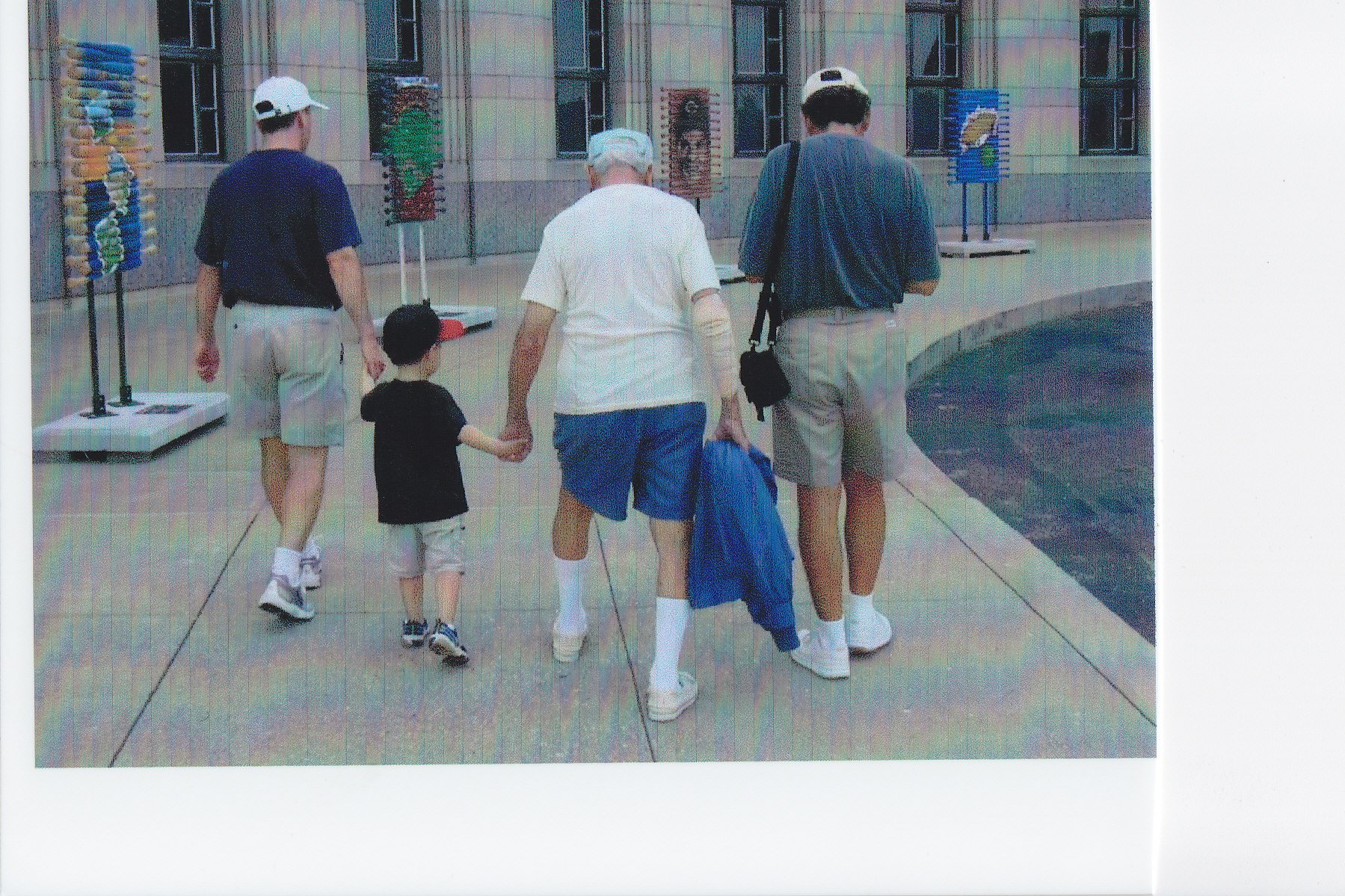
By David Snyder, on Sun Jun 19, 2011 at 3:00 PM ET Four generations of Snyder men; the author at far left, his father at far right My Dad, now there’s a tough one. Not that it’s tough to talk about my Dad, but rather the man himself. The kind of Dad who could give you that look when you were a kid, the one that needed no words to get across what he meant – the same look I think I now give my kids, intentionally or unaware. I have found as I’ve gotten older that, although my appearance has clearly swayed toward my Mom’s side, my personality and character have come from my Dad. I notice more and more as each year passes by. I even followed in his footsteps professionally, although my career has changed, while his has remained the same.
My Dad was born in small town Ohio to a lifelong worker at Anchor Hocking in Lancaster. And if I think my Dad is tough – he’s got nothing on my Grandfather, who was so tough, he lived until he was 101 years old. It seems that the women in our lives have the tendency to soften their men. My Grandmother was a wonderful woman and she did the best she could. My Mom, herself a wonderful woman, has clearly had an impact on my Dad (one for which her children are grateful), and I most definitely see that my wife has done the same for me. That toughness, the stubbornness, the steely exterior seems to ease with each generation. Our wives may disagree, but I think it is true.
My Dad found his way to Ohio State, where he met my Mom, and then to law school at the University of Cincinnati. Graduated in 1964 and has been practicing law ever since. Still today, he makes his way to the office a few times a week, although he’d rather be spending time with his grandchildren, which he does whenever he can. His legal career has been marked by two stages. First, as a founding member of a small law firm for 20 years and for the past 26 years, with a successful solo practice, working as an old school General Practitioner (and there aren’t many of them left around). You name it, if it’s not Criminal or Divorce, and he can help you out. His law practice is marked by his integrity, his honesty, his hard work and his willingness to do what needs to get done (never doing it half-assed, as we heard growing up as kids in my family). I never heard anyone ever talk badly or critically about my Dad’s law practice. He just did good solid work, the kind his clients needed.
I never realized until my adult life, how hard my Dad worked. When you grow up not wanting for anything, you don’t always see the hard work, but looking at where my parents are today, I know what it must have took to get there. That has always amazed me, because he went about his job without much fanfare. Just a humble practice in support of his family. And it wasn’t just work – my Dad spent many hours, weeks, doing service outside of his career. Just to mention a few, years and years on our Temple Board of Trustees, including a term as President of the congregation, President of the Cincinnati Reform Jewish High School – a joint project by the 4 Reform Jewish congregations in Cincinnati – one of the first of its kind in the country back when it started in the early 1980’s, and free legal services for local law enforcement. And through all of this, he set a model for how to blend career, family and service together, one that I try to emulate as best I can.
Now I said my Dad was tough, but that’s just on the outside – really deep down he has compassion and kindness and this incredible desire to provide for his family. Whenever there was a need growing up or even as adults, Dad is there to help (and my brothers would most certainly agree). And having grandchildren has really softened him up. There is nothing he would rather do today than spend time with his 6 grandchildren. If they want it, he provides. And I mean it – from riding roller coasters to various sports venues, to simple babysitting – he does it all. Really no different than when I was a kid growing up, but now I can see it through a parent’s eyes and truly appreciate it.
Of course, no praise of my Dad can be made without mention of my Mom. As I mentioned, the women in the lives of Snyder men must have some magical power to deal with the tough, stubborn side that we all exhibit. Not an easy task, one at which my Mom has excelled. She definitely has earned some of the credit for what is written above.
So on this Father’s day, I can offer this simple tribute, to a man who has never sought the limelight, never asked for praise, and never required anything in return. We can all use a little of that humility, that example of a how to do a hard day’s work, that deep sense of pride in family. My Dad, now there’s a tough one – but I know otherwise.
To my Dad, Richard Snyder – go out to the links and shoot your age! Happy Father’s Day – I love you.
|
|


 While our government struggles to get its financial house in order, perhaps there is a lesson for all of us from what is happening in Washington.
 2. Wealth Accumulation