By Erica and Matt Chua, on Mon Apr 8, 2013 at 10:00 AM ET
The End Times are all the rage, ignoring the Mayan distraction, it’s still apocalypse now for many fundamentalists. A quick search of google reveals that “end times” has 2.6 billion results, compare this to a paltry 1.4 billion results for “God” himself and it’s clear that it’s a question on many minds. While the end of days can be debated until that very last day, what would it be like to know for certain that you’re living in the Book of Revelation? For Ephesus and Pergamon in Turkey, being part of Revelations isn’t up for debate, they are actually in the Book of Revelation.
.
.
If the end of days is more figurative than literal, merely representing the end of all that we accept as permanent, Ephesus today could be exactly what John the Baptist envisioned for the end of the world. Standing as one of the world’s great cities for 2500 years, today it lies in ruin. The collapse of such a city could have been nothing short of the end of the world for those that see the civilization they live in as timeless.
Read the rest of… Erica & Matt Chua: Witnessing the End of the World
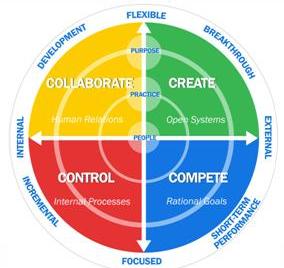
I highly recommend mapping your organization or community genome. Understanding the basic genetic code or wiring of any organization is key to understanding what drives the behavior of both internal and external stakeholders. Intimate knowledge of the genome’s chromosomal makeup is a prerequisite for alignment and making meaningful progress. It explains why employees, customers, and collaborators are attracted to an organization or why they aren’t. Passion for an organization, community, or movement is coded at the genetic level. If you want to transform an organization or a system, forget process reengineering and think genetic reengineering. If you want to launch a movement make your genome transparent and accessible to anyone with a similar genetic make-up.
I offer up the BIF genome as an example and with the hope you will improve it. The Business Innovation Factory (BIF) is catalyzing a movement to transform the next decade. This is no time to think small! Together with a growing community of passionate innovators we are re-imagining the future of education, health care, energy, and entrepreneurship. We have identified and mapped 11 chromosomes that comprise the genome of the BIF innovation community and transformation movement. Do they resonate with you? Do you share a similar genetic make-up? If yes, do we have a movement for you!
BIF Innovation Community Genome
1) Off the whiteboard and into the real world. Experiment all the time.
Work fast, make mistakes, push into territories of the unknown.Taking risks is an essential part of innovation. Exceed your own expectations.
2) Business model innovation is itself a creative act.
Design better ways to create, deliver, and capture value. Tweaking won’t work. Transformation is about new business models and systems.
3) Stories can change the world.
Storytelling is magic. Share compelling stories to create stronger emotional connections and purposeful networks.
Read the rest of… Saul Kaplan: Genome of an Innovation Movement
Do you have Excess Fabric Gut? What about Bacon Neck? I was fitting a client recently for dress shirts and suits, and I noticed extra undershirt fabric around his middle that was interfering with the flattering fit of his clothing. Underwear lays the foundation for your appearance, so getting your undershirts right is key to a sharp, fitted look.
Image via Tommy John
Read the rest of… Julie Rath: Product Review — Tommy John Undershirt
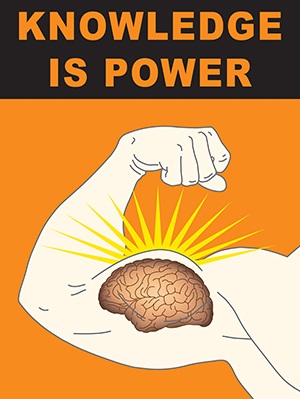
Sir Francis Bacon (ironically enough) once said, “Knowledge is power.” I firmly stand behind this statement, particularly since we, as trainers, are in an ever changing industry. As trainers, it is our duty to keep up on the newest trends and the latest research to better serve our clients and supply them with exemplary results. But does the learning stop there? Should we just read exercise science journals and acquire high level specializations and certifications? We would be best served to answer that question with a resounding ‘No.’ There is more information out there that is applicable to our journey as health professionals. Personal training encompasses so much that books from all different industries can apply to our jobs. Here a four of my favorites:
Motivational Interviewing by Miller and Rollnick
Motivational interviewing is a technique used by clinicians to overcome the ambivalence that keeps many people from making desired changes in their lives. Personal trainers can find this technique particularly useful in the first client interview and when clients are not getting the desired results, for one reason or another. Adding this to your repertoire adds another level of professionalism and expertise to make you a high class trainer.
Working with Emotional Intelligence by Goleman
Similar to motivational interviewing, emotional intelligence expands on psychological importance of being able to read emotions in clients and in our selves. Understanding our client’s emotions, day to day, is an important skill to realize and utilize because of the dynamic that most clients bring us every day. This book does a great job of explaining the concept and also how to implement it into everyday life.
Relationships 101 by Maxwell
John Maxwell is my favorite writer, regardless of industry classification. In this book, he details how to create long lasting relationships with people. Of any skill, relationship building is the most important. Personal training is relationships; how fast and how many we make determines our success or failure as a personal trainer.
21 Irrefutable Laws of Leadership by Maxwell As an educator, I would always tell my trainers that personal training is about leadership and most importantly about influence (John Maxwell’s definition of leadership). This book has shaped me as a professional, more so than any other. The lessons, or laws, Maxwell presents can be applicable in any client-to-trainer relationship. This book is a must-have for any fitness professional.
I have found that readings from other industries or specialties have made me a better fitness professional. Knowledge truly is power and what we do with that power is even more important.
I’ve been lulled to sleep for two nights by the constant thrum of the sea meeting shoreline outside my cabana. This morning when my daughter Abby awoke after 11 hours of sleep, she said, “How is it only 6:30am?”
Welcome to vacation where time expands!
I think that “vacation” is misunderstood. There is typically no more obvious time in life when we are more present, aware, and happy. It’s here, away from the rigors of usual demands (and ironically the reliable comforts of home) that we come home to ourselves–act in accordance with the natural rhythm of our internal needs and desires.
Vacation implies that everything is left behind: work, school, bills, responsibilities, relationships, routine. But, is all that stuff really the everything of our lives, or is it just the stuff we’re in the habit of thinking of as everything?
Abby is nearly 17, a junior in high school and feeling the pressure of looming AP finals, end of year exams, and ACT testing (dinosaurs, the ACT is the new SAT). So stressed and controlled by these things, she believed she didn’t have “enough time” for spring break this year.
So one of us kept a clear head and here we are. We’re just over two days into our beachside vacation and she has easily retained more study knowledge than she usually manages (painfully) in three days. And, she’s most definitely taking breaks to sun herself, swim, shop, swing in the hammock, walk along the beach, eat, read fiction, and nap.
This excursion to Mexico with said previously stressed teenager was actually a little experiment in faith, for me. I knew in my heart that if she could study at home, she could do so here while drinking from a coconut and looking at the water each time she lifts her head. I wanted her to experience this combination of daily integrated, rest/play/work, because this stress-less integration is what I want for her for the rest of her life.
Read the rest of… Lisa Miller: It Turns out that Vacation is not Just a State in Mexico
There are occasional moments when I feel so confused by an aspect of our culture, it’s like being an anthropologist studying an obscure tribe, or Jane Goodall observing chimps. Usually those moments have to do with my teenagers – a joke they think is hysterical which goes completely over my head, or my 16-year-old trying to explain what makes a video go viral. (He discovered Gangnam Style before it had a million hits, which gives him some authority as being ahead of the pop culture curve.) When one of my videos topped 8,000 hits, his reaction was, “Well, mom, that’s viral for old people.”
But my most recent “I feel like Jane Goodall” moment was in a supermarket check-out line, behind someone who definitely had more than 15 items; to keep from glaring at her, I started reading the magazine and tabloid covers. I pride myself on being fairly well-informed about both politics and entertainment, so it was rather dismaying to realize I hadn’t heard of a single name in those headlines. Every single one of them was from some reality TV show, although I couldn’t tell you which ones were from The Bachelor, which from Survivor, etc. I felt like Gloria Swanson in Sunset Boulevard, bemoaning the end of true celebrity as a result of some artistic accomplishment. (“I’m still big, it’s the reality shows that have gotten bigger . . . “)
I used to say I wanted the kind of fame that was celebrated by those American Express ads, where talented-but-not-totally-famous people would say, “You know my name, but you probably wouldn’t recognize me.” You know, I’d be acknowledged for my artistry but not hounded or bothered in private. But apparently that type of fame has been eradicated by a stream of Snookis and octomoms, and the worse the behavior, the bigger the celebrity. So this week’s song is a musical musing on life, fame, and what makes someone truly noteworthy.
By Nancy Slotnick, on Tue Apr 2, 2013 at 8:30 AM ET
I’m going to make it official: communication is no longer linear. What do I mean by that? Linear communication is the tennis volley. You write a letter to a friend or lover. (Snail mail, anyone? I don’t think so.) You wait for a response. You email someone. They reply to your email. Your text bubbles are evenly matched and go back and forth in a relatively equal fashion.
What’s non-linear communication? Posting Happy Birthday on your friend’s Facebook wall and never expecting a reply. Texting someone multiple times because they never reply to your texts. (Not recommended in a dating context.) Needing to email someone a few times before they notice. Tweeting.
We have come to expect one directional communication. Is this human connection? Yes, it’s a form of it. Is it a good way to promote a cause, share breaking news or start a revolution? Totally. Is it a good way to make you feel totally popular on your birthday? Absolutely. Does it help you stay in touch with acquaintances and stay on their radar screen for party invites and the like? Yes! Is it healthy in the realm of dating and romantic relationships? Hell no. There’s the rub.
I am considered to be a dating expert (Well, Oprah called me one so that makes it so.) Yet I don’t have many hardfast rules in my arsenal. I’m not a Rules Girl in that way. But I have always had one rule in dating that is extremely useful:
“Don’t make two moves in a row.”
Useful until now, that is. The reason why it works is because you get to find out if the person is truly interested or not. The convention wisdom is that if they are interested, they will reply back. You can avoid a lot of wasted time this way. Rather than continually reaching out to someone who says they’re busy when what they are really trying to say is: “Not interested,” you just wait to see if they reply. Radio silence gives you your answer.
But these days it is pretty impossible to tell if someone just didn’t get the message. How many times do you get a little Facebook chat push notification on your phone and then it marks it as read before you even open it? And how many friends do you have that either never reply on Facebook, or only reply on Facebook, or will reply to a text but don’t read your email or vice versa? And then if you ever attempt to date someone 10 years your junior or your senior, you completely can’t synch up your communication methods?
In the words of Charlie Brown, “Argh!!” And speaking of Charlie Brown, it often feels like the people on the other end of all of my communication media are just like those grown-ups on the Peanuts: “wah-wah-wahwah-waaah!” I want to crawl under a rock. But that doesn’t play well in dating either. So what to do?
Always stay confident and think positive about the other person, whilst trying to keep the conversation as linear as possible. Notice what’s you and what’s them. (In other words- “Are your text bubbles HUGE and they reply: “K.”? But never never make assumptions about why the person isn’t responding in the way you’d like. You can have hunches, and certainly don’t hold off all your other plans while waiting for a reply, but don’t give in to getting paranoid.
I had some business dealings recently with a company that I found online. They make patches that iron onto uniforms and T-shirts. I couldn’t find a phone number on the website so I emailed them to ask if we could talk by phone for them to answer some questions for me. It seemed so much easier for me to deal with it by phone. But the very nice guy on the other end of email kept answering each question I had quite promptly. He never answered my question about speaking by phone. I resisted the urge to be annoyed with the fact that I couldn’t talk to him by phone and we got the deal done.
Read the rest of… Nancy Slotnick: Are you there, Buddy? It’s me, Margaret.
By Erica and Matt Chua, on Mon Apr 1, 2013 at 10:00 AM ET
Going from the Middle East to Latin America was a breath of fresh air. While the sites and experiences of the UAE, Oman, Jordan, Israel, Egypt and Turkey were wonderful, the constraints of daily life wore on us. Here’s what it felt like to escape the Middle East.
HE SAID…
The Middle East is different. While China may be different because of people’s actions, or India different due to hygiene, or Brazil different due to liveliness, it’s hard to put a finger on what exactly is different in the Middle East. It’s not so much an attribute, but a feeling. Being in the Middle East feels different.
No matter where I went I couldn’t get over one thing: half of the population is imprisoned in their clothing. While some places were “more liberal”, almost everywhere we went women had to wear a burqa and head covering. Claim all the “cultural differences”, “religious” and “historical” reasons you want, but to me it is wrong. While the burqa’s fashion disaster itself is reprehensible, what it represents is worse: that women are second-class, they cannot make their own choices. Imprisonment in clothing and culture is the only way I can truly explain it.
Argentina is the polar opposite. Women and men alike are free to choose what to cover and what to leave exposed. Women are allowed to act independently, travel freely, choose their education, and responsible for the consequences of their own actions. While the Middle East is about limits, Latin America is about a life without limits. The attitudes, personalities and styles of Argentina were a much needed break from the Middle East.
All day, everyday, I’d rather be in Latin America, full of it’s infidels and fun than the Middle East.
Read the rest of… Erica & Matt Chua: Escaping the Middle East
I feel silly writing about Spring as I sit at my desk with the heat on blast, but I’m the positive type, and I know that in a few short weeks Spring will be here. In fact, I’ve already been shopping for warm weather clothes for my clients. Now is the perfect time for that, just as stores are loading up with their best selections. With that in mind, below are 6 garments to get you through the coming months in stellar style.
Lightweight jacket (bonus if it’s suede or leather)
Don’t underestimate the power of a perfectly-fitting leather jacket. Click for my guide on how to accomplish this. It’s the perfect reminder that Spring is just around the corner.
Oh you thought I meant steroids? No, juicing is not about adding extra hormones in your body, this is about increasing your energy levels, improving your immune system and being healthy. OK. Lets start over. Recently, I decided to start adding juicing into my regular diet. I had heard the benefits of juicing but wasn’t clear on ALL the benefits it had and what it could do to my body. So, me being me, I decided to throw caution to the wind and try it. The first juice I had tasted like roadkill. No seriously it tasted that bad but again, me being me, I was able to force it down. Over the next few weeks I tried several different types of juices and found some miraculous things. My energy levels were boosted, my workouts were better and I felt healthier (a relative term but I acutally feel this way).
Not only do I feel better but the taste of organic kale, beets and other vegetables has improved dramatically. So you may be asking why would you start doing that? Or how can you stand to drink that stuff? And probably you are asking what are the benefits? Well, I want to cover all of these topics. Lets start with what juicing actually is.
Juicing is typically done through a juicer, whereas combinations of different fruits and vegetables (preferably organic) are put into a machine that mixes it together and creates a “juice.” What is lost through the juicing process is the fiber. Most juicing purists argue leaving the fiber out of the juice allows the body to absorb the nutrients faster, I tend to believe this as well because fiber naturally slows down digestion. It does take a lot of vegetables/fruits in order to get a sizable amount of juice (this is why I buy the juice instead of doing it myself). Locally, I have bought juice from the Lexington Juicery and also found a brand of juice at Whole Foods called Suja that acutally has an expiration date longer than juice made at the juicery. This is helpful to me so I do not have to go to the juice store everyday.
OK JB. What are the health benefits?
Well there are many. Here are a few:
1. Digestion- very little energy is needed to digest fresh fruits and vegetables. Thus, juicing increases the effectiveness of our digestion system. This is important when considering how long it takes to digest a pound of lean beef.