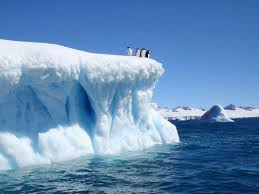
By Erica and Matt Chua, on Tue Jan 7, 2014 at 8:30 AM ET Antarctica, the White Continent is like nowhere else. Normally witnessed through a TV screen, in person it dazzles more than can be believed…until seen with one own’s eyes. From crossing the infamous Drake Passage to sighting the vast white plains to exploring the rugged coasts, everyday in Antarctica is unforgettable.
Visiting Antarctica is generally done by ship leaving from Ushuaia, Argentina. Trips range from 10-20 days, departing in December-March, following standard routes (Classic Antarctic Peninsula, South Georgia and Falklands, Antarctic Circle, Shackleton).
There are roughly 5 companies that run 12 ships regularly during the season, many of which are indistinguishable. National Geographic is renowned for their superb guides and steep prices. G Adventures serves younger backpackers. Oceanwide Expeditions, which we went with, offers unique outdoors experiences and the best blend of expedition and luxury.
All companies offer last-minute discounts if you have a flexible schedule, but expect to pay $5000-10,000 per person depending on the voyage you choose. Everyone we met that went, on every company, said that it was worth every dollar.
……………………………………
DON’T MISS: Camping on Antarctica. Companies provide gear to keep you warm through the night on the ice…a night you’ll never forget. MUST SEE: Everything. Spend as much time in the observation deck to spot whales, dolphins and incredible landscapes.
……………………………………
TRIP PLANNING: It takes at least 14 days to visit Antarctica from North America, Europe or Australia as getting to Ushuaia requires at least one full day from major airports. The cruises themselves last 10-20 days depending on journey, but the longer the better. Choose a ship with less than 120 passengers so that everyone can do each landing, larger ships must land in shifts according to current regulations. GETTING AROUND: While much time is spent on the ship, the highlights are from the Zodiacs, the rafts that take small groups up close to wildlife, icebergs and to Antarctica itself.
……………………………………
COST PER DAY: $500-1500 per person, per day, depending on berth. A double cabin lists for about $900 per person, per day, but last-minute deals (one month in advance) sold double cabins for as low as $500 per day. KEY MONEY-SAVING TIP: Book directly from the cruise company, not through a travel agent. Travel agents commissions will be tacked onto your price and run anywhere from $800 to 20% of your cost. If you learn what deals are being offered by agents contact the cruise company directly and they will often give you a lower price.
……………………………………
YOU NEED TO KNOW: Seasickness will probably happen on the Drake Crossing…but that’s part of the journey. IF WE KNEW WHAT WE KNOW NOW: We would have booked one year in advance. The prices one year out rival last minute deals, but ensure you can go when you want. HELPFUL LINKS TO LEARN MORE: Oceanwide Expeditions, list of last-minute Antarctica Travel agents (contact for information, but book directly with the company)
……………………………………
WE WERE THERE FOR: 10 days Classic Antarctic Peninsula OUR HIGHLIGHT: Camping on Antarctica. We really wanted to do the Plancius Basecamp, but it was booked. WE REGRET MISSING: South Georgia Island, the “Galapagos of the Atlantic”.
By Saul Kaplan, on Mon Jan 6, 2014 at 8:30 AM ET It is too easy and wrong to think that innovators are egocentric, always admiring themselves and their accomplishments in the mirror. They are confident but not self absorbed and impervious to outside input. If anything innovators are vulnerable, self aware, and open to diverse and critical input to improve their ideas and concepts. The view they see while looking into a mirror is more like the wavy one in the circus fun house that reflects a distorted view. A view that always causes a gasp and accentuates flaws that need serious work and improvement. Innovators know they must improve in order to find better ways to deliver value and solve real world problems.
Innovators spend very little time looking in the rear view mirror. They tend to be forward thinking and looking. It is important to learn from the past but innovators are never bogged down in it or constrained by the way things have always worked. Innovators tend to be market makers rather than share takers. Understanding how a market has worked in the past is helpful but innovators like to tinker across markets to envision and create an entirely new market model or system.
Looking in the rear view mirror magnifies the view from behind making objects seem closer than they really are. This distorted view puts too much emphasis on the past and is troubling to an innovator trying to create the future. While situational awareness is important innovation is about creating new and better ways to deliver value. It is about moving forward and away from intransigent models and systems that only appear larger in the rear view mirror than they really are. Fixating on the past looming large in the mirror is not helpful other than to motivate the innovator to enable change faster.
The side view mirror offers a different but equally distorting view. You know the mirror that has etched on it the words ” objects in mirror are closer than they appear”. Its convex shape is designed to provide a wide-angle view. Innovators love wide-angle lenses that provide a larger perspective and world-view. But the side view mirror makes images appear further away than they really are. If anything innovators are guilty of the opposite. Seeing innovation so clearly that they see it happening sooner than it is likely to.
 Innovators are optimistic by nature and in my experience not the best at predicting market timing. They are great at seeing opportunities and passionately working toward making them a reality but tend to think they will come to fruition sooner than they actually do. How many innovators drove by a Blockbuster video store shaking their head saying all of this video content will be distributed digitally making the bricks and mortar stores obsolete. They were right of course it is just taking longer to happen. That is usually the case with innovation. Innovators think their innovations are closer than they appear in the side view mirror. Innovators are optimistic by nature and in my experience not the best at predicting market timing. They are great at seeing opportunities and passionately working toward making them a reality but tend to think they will come to fruition sooner than they actually do. How many innovators drove by a Blockbuster video store shaking their head saying all of this video content will be distributed digitally making the bricks and mortar stores obsolete. They were right of course it is just taking longer to happen. That is usually the case with innovation. Innovators think their innovations are closer than they appear in the side view mirror.
OK, enough with the mirrors. Innovators, mirrors, and admiring the past are not compatible. Let’s look forward. Innovators are trying to create the future and agree with Gibson when he said the future is already here it is just unevenly distributed. Standing in the future and building a path to it is the innovator’s opportunity. Eyes forward, let’s create the future together.
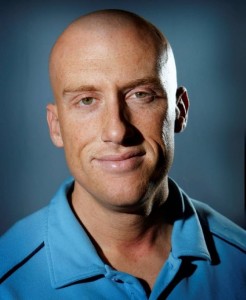
By Jonathan Miller, on Fri Jan 3, 2014 at 3:00 PM ET I am proud to announce the latest entry in the growing library of The Recovering Politician Books: Josh Bowen’s “Twelve Steps to Fitness Freedom.” A longtime Friend of RP and contributor to The Recovering Politician, Josh was recently named by Life Fitness one of the top ten personal trainers to watch in the world.
While I have the opportunity to work out with him twice a week, you can now glean all of his wisdom in less than 200 pages. If you are like me and have made a New Year’s resolution to get it better shape, there is no better way to fulfill it than to follow Josh’s advice.
Here is an excerpt from my Foreword.
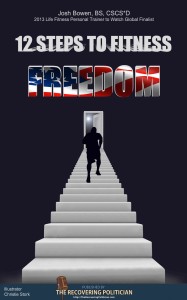 Click here to review and purchase I can imagine one of your first questions when reviewing this book jacket was: “What in the %$#&*$ is a ‘recovering politician’ doing publishing a book about fitness and physical well-being?”
Well, from a thematic standpoint, Josh Bowen’s ‘Twelve Steps To Fitness Freedom’ fits well into the mission of our Web site, TheRecoveringPolitician.com: As our former politician contributors proceed on their own post-politics second acts, we aim to empower all of our readers to launch their own second acts, with the whole toolkit of good health, high quality of life, and overall happiness. It’s no wonder, then, that Josh Bowen’s Thursday columns at our Web site are among the most viewed by our readership.
But from a more prosaic perspective, this particular recovering politician would have never made it into his second act if it were not for Josh Bowen. When we first met about a decade ago, I had an upper back pain problem that nothing could resolve – I tried massage, reiki, energy healing, chiropractic treatment, acupuncture, you name it. So when I walked in my local gym and met a buff, tattooed physical trainer, you can imagine that I was initially skeptical. But after several months of strength training, Josh’s instruction was invaluable, and I have never since suffered that pain.
Fast-forward several years, and this middle-aged mess developed a new lower back disc issue. But of course that wasn’t all; my 40s had been plagued with all of the typical issues of my age group: low energy, less stamina, and that infamous flat tire of belly fat. A decade wiser, Josh prescribed a holistic program for me, including diet, supplements, and of course, his carefully monitored strength-training program.
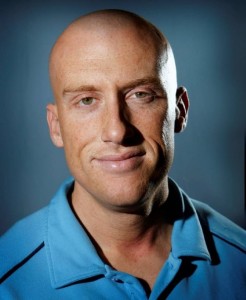 Through his wealth of experiences travelling the country training physical trainers, and his voracious reading of all of the latest scientific and physiological studies, Josh Bowen is as good as it gets in helping his clients reach their fitness, health and wellness goals. I know I couldn’t have done it without him, and I expect that you will find invaluable advice in the pages that follow. Through his wealth of experiences travelling the country training physical trainers, and his voracious reading of all of the latest scientific and physiological studies, Josh Bowen is as good as it gets in helping his clients reach their fitness, health and wellness goals. I know I couldn’t have done it without him, and I expect that you will find invaluable advice in the pages that follow.
Josh Bowen’s careful instruction and deep personal concern for his clients has worked for me. And I bet this book will work for you as well. So that’s why this recovering politician has published this important book. Proudly. Enjoy.
By Julie Rath, on Fri Jan 3, 2014 at 8:30 AM ET
Many of my recent conversations with guys about menswear have turned to what to wear on your feet in sloppy winter weather. If you have nice shoes but are worried the slush/salt/rogue gifts from the neighborhood dogs lurking in the snow are going to ruin your gear, consider a pair of overshoes. Companies like Sierra Trading Post and Neos make boots that go over any kind of footwear you’re wearing without having to pull and stretch on rubber like those creepy galoshes from back in the day. They’re waterproof, warm and have high traction on the soles so you stay upright at all times. My favorites are the Explorers

and Uptowners

from Neos and the New England All-Season Overboots from Sierra Trading Post.

If you’re looking for something a little more streamlined, check out the Men’s Executive Overshoe from Tingley.

They aren’t insulated, but they’ll keep you dry and standing on your feet instead of your bottom. You gotta love the names companies give for men’s shoes…”Uptowner” and “Executive” — how subtle!
And if you’re just looking for rainwear that’s not obnoxiously ugly, I am very into Tretorn’s rain boots. I like both the green for a downtown look and the charcoal for something more conservative, or “uptown,” if you will.

By Josh Bowen, on Thu Jan 2, 2014 at 8:30 AM ET  Story time. Story time.
When I was an exercise science student at the University of Kentucky, I had to take swimming in order to graduate. Why? Who knows but also would think it would be difficult. I’m not an avid swimmer, I do better under the water than on top but I absolutely hate cold water. I freeze easy and it’s hard for me to move any part of my body. The very thought of cold water makes me cringe but I needed this class to graduate and I was taking it in January no less. The first day of class the teacher throws us in the water to see where our “skills” were. Back stroke, front stroke, butterfly all your favorite Olympic disciples were graded. She would decide if we needed to be in the class or would need to drop it. I couldn’t of done worse. I damn near drowned in the water and ran out of gas easy because it was so cold. Did I mention I don’t do cold? Anyway, the next class the teacher pulled me aside and asked me to drop the class. Appalled, I asked why and she replied “you don’t have the skills to pass my class.” I told her I wouldn’t be dropping her class and I would show up an hour early everyday to practice. Her reply, “good luck.” Seriously, who makes swimming hard?
So everyday I showed up to the UK aquatics center an hour before class to practice my strokes. I braved the cold weather and cold pool, to get use to it so I could show this teacher she was wrong. I was consistent and with my consistency, I saw progress. Real progress. So good I amazed this teacher and I got an A in the class. Now, everyone should get an A in swimming, that’s not impressive, the point is I was consistent and I got better. Much better. We have to apply this principle to fitness. You can’t expect great results with minimal effort. The infomercials lie to you. Using a Shake Weight is not going to help you lose 15lbs, it’s just that simple. But also with that, you can’t expect significant results if you are not consistent in two areas:
1. Your workouts
2. Your diet
 So here are two strategies to help with consistency as we make this fitness journey together: So here are two strategies to help with consistency as we make this fitness journey together:
1. Commit less- This may sound weird but as I’ve said before we often commit too much too soon that it becomes sensory overload and we quit. It becomes too much to maintain. Had I told the teacher I would be in the pool five days a week, there would be no way for me to keep that pace consistent (nor would I want too). Commit to what you think you can do. This works for your nutrition as well. Commit to eating one vegetable at dinner, 3 nights per week. Any one can do this. This creates momentum. There is great value in little, everyday successes. Foundation is always something to build off of.
2. Commit more- Contrary to the above, some people may be able to commit to more because they are ready for more. If this is you make consistency a commitment, a marriage. Start what you finish and don’t let off the gas pedal.
In order to see progress we NEED consistency. It is vital to anything we want to accomplish.
By Lauren Mayer, on Wed Jan 1, 2014 at 8:30 AM ET Yes, once again it’s time for end-of-the-year rituals. Maybe you come up with the type of resolutions that help gyms make a fortune from people who join and never show up. Or perhaps you scour critics’ lists of ’10 Best’ or ’10 Worst’ lists of the year’s movies, t.v. shows, political scandals, etc. Some families have charming New Year’s traditions. When I was a kid, we would eat chocolate fondue, drink Andre Cold Duck (hey, I was 8, I thought it was classy) and watch old Abbott & Costello movies (on a projector my mom borrowed from the school where she taught – this was way before DVDs and videos, although despite my own kids’ rude comments about how old I am, it was WAY after one-room schoolhouses). When my own kids were little, I would let them watch the televised countdown from Times Square (of course, when they were younger, I was able to convince them that midnight in New York was the same in California, thus enabling me to get them to bed at 9 p.m.) (Which was not intended to get back at them for the ‘mom, you’re old’ teasing . . . but I digress.)
My earliest comedy-song-writing influence was Tom Lehrer’s great album, “That Was The Year That Was” (hold on, you’ll see how it relates). I wanted to reference that album in relation to this week’s song, but in researching which year he’d meant (which turns out to be mostly 1964, although the album was released in 1965), I learned that he had been the resident songwriter for performers on the US version of a British weekly TV program, “That Was The Week That Was,” and the record featured Lehrer finally performing those songs himself. So weekly comedy songs are part of a long tradition!
Anyway, as inspired by Mr. Lehrer, here’s a musical recap of the year’s highs and lows, or as some might say, “from the sublime to the ridiculous.” Happy New Year!
By Liz Roach, on Tue Dec 31, 2013 at 10:00 AM ET  What is it about Champagne that so aptly embodies New Year’s Eve? Is it the effervescence, the silky luxury of a liquid that personifies decadence? What is it about Champagne that so aptly embodies New Year’s Eve? Is it the effervescence, the silky luxury of a liquid that personifies decadence?
Is it the exoticism of a wine that most reserve for special occasions?
As surely as sequins and “Auld Lang Syne,” you will see gallons of the beverage imbibed on this night.
Perhaps it’s because New Year’s provides one last chance to indulge in a spell of revelry before settling into the quiet sobriety of winter resolutions.
Whether you’re hosting a New Year’s dinner party or just want a toast-worthy drink to pour before hitting the bars, it’s a good opportunity to brush up on your bubbly knowledge.
Of course, legitimate “Champagne” only originates in the region of France by the same name. All other bubblies are actually sparkling wines, and there are many interesting choices. California makes some excellent versions, as do Washington state and Virginia.
 For inexpensive but lively European sparklers, try a Spanish Cava or a German Sekt. The Italians offer an array of fabulous sparkling wines, from the dry Prosecco to the sweeter Asti. There are also fizzy Shirazes, Rosés, and Lambruscos, all of which set a festive tone for merrymaking. For inexpensive but lively European sparklers, try a Spanish Cava or a German Sekt. The Italians offer an array of fabulous sparkling wines, from the dry Prosecco to the sweeter Asti. There are also fizzy Shirazes, Rosés, and Lambruscos, all of which set a festive tone for merrymaking.
Sparkling wines are famous for their versatility with food pairings. A dry type complements everything from foie gras to spicy curry to apple pie. It’s also wonderful on its own. Save the sweeter kinds for before or after dinner, as they can overwhelm the palate and diminish the taste of many dishes.
As you’re perusing the Champagne aisle of your local wine shop, keep in mind the dryness vocabulary. From driest to sweetest, the range is Extra Brut, Brut, Extra Sec, Demi-Sec and Doux.
Ready to rollick? Here are a few picks to kick-off this boisterous night.
For a semi-sweet Italian sparkler, try: Martini & Rossi Asti.
For a fruity, Californian sparkling wine, try: Schramsberg 2009 Brut Rosé
For less than $10, this dry Cava is an absolute steal: Jaume Serra Cristalino Brut.
For classic French Champagne from a storied brand, go for: Taittinger Brut Reserve NV.
Cheers to a fantastic year and to many new memories in the making!
By Erica and Matt Chua, on Tue Dec 31, 2013 at 8:30 AM ET “Going where no man has gone before” is every adventure traveler’s dream. Sadly though it isn’t possible. Unless you explore the deep seas, there are very few places a person can go and be the first. We travelers like to imagine ourselves discovering something new, doing something that has not been done before, but the reality is that we’re just going where others have stood before. While the places we go may impress our geography challenged friends or our ninety-year old Great Aunts, there are no roads not traveled. It’s awesome to be among the few to have visited North Korea and Antarctica, but as Shania Twain would say, “it don’t impress me much”. The most impressive places are those where you share experiences, make friends, which, consequently, draw many other tourists. The Salar de Uyuni, a must-see on the South American Gringo Trail is one of those over-touristed, wonderful, experiences.

Situated on Bolivia’s border with Chile, the Salar de Uyuni is a well traveled 3-day tour that typically starts in one country and ends in another. It is a common destination shared by South American backpackers as “everyone” does it. Why does everyone go here? Crazy photos created by the reflecting salt flats and the dry atmosphere. The curiosity that the Salar de Uyuni is the world’s largest salt flat doesn’t draw tourists…it’s the cool photos.

Americans have to pay a “reciprocity fee”, which can be done at the end of the tour. Until then we were the responsibility of the tour company, which found it easiest to put us all in one Landcruiser. Two Brits decided to come along with us, because, well, let’s be honest: Americans are pretty awesome.
Read the rest of…
Erica and Matt Chua: The Gringo Trail — South America
By Saul Kaplan, on Mon Dec 30, 2013 at 8:30 AM ET Maybe we need to bang together the heads of mad scientists and mad designers.
If we are waiting for randomized double blind studies to tell us how to address the big social system challenges of our time including health care, education, and energy we will be waiting a very long time. That is not how we will transform these systems. It will take passionate exploration, which is more iterative than traditional scientific methodology. It will take design thinking and process combined with powerful storytelling to create novel networked systems to deliver the value we need and expect in the 21st century. We need to try more stuff.
Last week I spoke at the Business of Aging: Ontario Innovation Summit in Toronto. It was a great event attended by many innovators from across the public and private sector. Attendees all shared a passion for focusing innovation on the opportunity emerging as the silver tsunami of an aging global population rapidly approaches. I shared my point of view on the need to do R&D for new business models and systems and our work at BIF in the Elder Experience Lab. As I always do, I blathered on about design and storytelling tools as the key enablers to system change, in this case developing age friendly environments and communities.
The reaction was largely positive but during a panel discussion I was reminded that many are still stuck on a perceived conflict between design thinking and analytical thinking, between design process and scientific method. They are not mutually exclusive. We need to apply our opposable minds to borrow from both approaches to design new systems while measuring what works and is most likely to scale.
 I was asked by summit organizers what I thought would be the most important innovation to enable an age friendly society by 2020. I replied: I was asked by summit organizers what I thought would be the most important innovation to enable an age friendly society by 2020. I replied:
Perhaps the most important innovation for an age-friendly society by 2020 does not require inventing anything new at all. Maybe it just requires all of us to reexamine our assumptions about the elder experience and ways to enhance it. Innovation is a better way to deliver value, in this case, designing environments and systems that enable elders to age in their own homes and communities with dignity. The innovation may be nothing fancier than bringing the voice of the elder directly in to the conversation and designing a better experience recombining existing capabilities and assets in new ways to serve the needs of society’s elders.
Most of today’s innovation conversation is through the lens of the institutions that comprise the current elder care system. The elder’s voice is missing. Tweaking the current system will not work. Adding technology to the current system will not work either. We need to design new system approaches to enhance the elder experience and to prepare for the imminent silver tsunami of baby boomers that will bring a completely new set of expectations and desires to the age-friendly conversation.
It is not technology that is getting in our way. We have more technology available to us then we know how to absorb. It is humans and the institutions we work in that are both stubbornly resistant to change. Rather than applying technology in a sustaining way to try and improve the current institutionally based elder care system we need to experiment with technology as a disrupter to enable new system approaches that enable elders to age in place. We need system level innovation designed around the elder to create environments and care models that enable a more age-friendly society.
It is odd for me to represent design thinking and process in the debate when my training is as a scientist and MBA. The reason I hang around so many smart designers is that I don’t think the old tricks alone will enable the system change we need. We need to borrow from both approaches to pave a new way. It is messy but necessary. Lets bring together the mad scientists and mad designers and see what happens.
By Julie Rath, on Fri Dec 27, 2013 at 8:30 AM ET Few things are worse than getting caught in the rain in your dress clothes. Especially if you’re on the way to work, and you know you’re going to spend much of the day in wet clothes until your outfit dries. My suggestion: check the weather before you get dressed, and make sure your wardrobe includes rainy weather gear. Below is my list of must-haves for soggy days:
 Raincoat – I spend a lot of time in peoples’ closets, and I’ve seen some pretty awful windbreakers masquerading as rain gear. Bad weather is no excuse to look drab and unstylish. Pull it together with a sharp raincoat. Two great options are a classic trench, or a more modern mac (above left and right). If you wear suits or sportcoats everyday, buy in a size that will fit over them. Raincoat – I spend a lot of time in peoples’ closets, and I’ve seen some pretty awful windbreakers masquerading as rain gear. Bad weather is no excuse to look drab and unstylish. Pull it together with a sharp raincoat. Two great options are a classic trench, or a more modern mac (above left and right). If you wear suits or sportcoats everyday, buy in a size that will fit over them.
__________________________________________________________________
High Quality Umbrella – Don’t be that guy whose umbrella turns inside out and flies across the street poking someone’s eye out. Cheap umbrellas break easily, leading to wasted time and money (not to mention adding to pollution in landfills). Why not spare yourself the headache by investing in a high quality umbrella? Blunt and Davek are two of the toughest umbrellas out there, and they come in various sizes. Just make sure you don’t leave it behind in a taxi.
Read the rest of…
Julie Rath: How to Look Good in the Rain
|
|