If you spend enough time in a gym, you can hear the most creative questions and mis-truths in any field, anywhere. Any personal trainer that has spent their career in a gym setting, can recite the most compelling stories of clients/members and their beliefs of what is fact. I figure I could write a best seller, just by the sheer volume of misinformation about exercise and nutrition that is conveyed through media outlets and misinformed “experts.” This is not the gym goers fault, rather this is my problem and a problem I tend to overcome through education and factual information. “OK JB what is your point?” My point is there is a lot of information out there I would consider a myth. For example, that is possible to spot reduce. Not possible, next question! Another example, I can eat what I want and still have the body of my dreams. Kinda, sorta possible but depends on genetics and other hormonal factors but for most people, not possible. “Alright enough already, what is THE myth?” The king of exercise myths, the grand puba of misinformation…Lifting weights will make a woman bulky! That’s right, after doing this as long as I have; people, in particular women still believe strength training will make them look like a bodybuilder. Ain’t going to happen!
Now, I am not naïve to think women are not strength training in record numbers. Years ago, most women would join a gym and only perform cardiovascular exercises such as biking or running on a treadmill. Although great for the heart, this alone does not create the lean, sculpted bodies women are wanting and displaying today. It was always thought that women should not lift weights because it would make them bulky and look like a man. The traditional routines would consist of high repetitions, usually 3 or 4 sets with 30-60 second rest periods. Cardio usually would precede strength training. Group fitness classes such as Body Pump or “15 minute abs” would have mostly female attendance. In some clubs you would have “Women’s Only,” areas, full of selectorized equipment and cardio.
Women are displaying incredible results from strength training but the myth still exists. Keeping all things equal, let’s tackle the reason’s ALL women should strength train.
The Differences between Men and Women- YES! I know the DIFFERENCE but I’m not referring to our outer differences, I’m talking about what happens inside the body. As far as muscle goes; a bicep is a bicep and a glute is a glute, whether its on a man or on a female, anatomically they function the exact same. What are different are the hormonal levels that allow our biceps, glutes and all 600 some skeletal muscles to grow. You guessed it, testosterone. Loved by men, feared by women. That’s ok because men produce anywhere from 10-50 times more testosterone than women. YAHTZEE! Men can build bigger muscles than women (in most cases J). Now, does that mean women cannot build muscle, NO! It just means women cannot produce enough testosterone possible to build muscles the size of most males. Debunking the myth has begun!
Strength- Hence the name “strength” training. Picking up heavy things will make you stronger. What does that mean for most women and men for that matter, everyday activities can become easier. Picking up that 20 lb box and placing it on a shelf 2 feet above your head all of a sudden becomes easy. Pulling dog food out of your SUV and throwing it over your shoulder to take in the house suddenly becomes a breeze. Strength training makes you stronger, period. We all could use more strength, everyone, including you!
Body Fat- Most people reading this want to lose weight. Well actually you want to lose bodyfat. You are on a quest for a better physique, more toned arms, a tighter stomach and athletic legs. You cannot achieve that with cardio alone. You need something that packs a punch, something that creates results and gives you the body you have always wanted, you need STRENGTH training. Look at any professional woman’s body, such as Serena Williams or Jennie Finch. They strength train. They build muscle and thus reduce the amount of body fat on their body. In fact you burn calories, post workout, for up to 24-48 hours following a vigorus strength training day. You know how much post workout calorie burn you get from 30 minutes on the elliptical….ZERO! You want to keep your weight off without all the yo-yoing, start strength training.
Strong Bones- Best way to strengthen your bones? Drink milk! WRONG! Strength train. Women are far more susceptible to osteoporosis than men. Strength training will strengthen your bones, increase bone mineral density and delay any and all effects of osteoporosis. Research has found that weight training can increase spinal bone mineral density by 15 percent in six months. Have I sold you yet?
Disease Prevention- For cardiovascular health, strength training lowers ones LDL cholesterol preventing arteries from clogging up. Also, lowers resting blood pressure and helps the body to metabolize sugars better, warding off the signs of diabetes.
Self Esteem- The greatest benefit of strength training for a woman is the benefit of self gratification. The increased feel good hormone serotonin will allow you to feel better about yourself and have a sense of accomplishment. At the end of the day, this is what is about anyway, improving our bodies and minds but also improving how we feel about ourselves.
By Michael Steele, on Wed Feb 6, 2013 at 3:00 PM ET
From MSNBC:
“We will respond to the threat of climate change, knowing that failure to do so would betray our children and future generations,” President Obama said in his inaugural address Monday. The address devoted more sentences to the environment more than any other specific subject. “Some may still deny the overwhelming judgment of science, but none can avoid the devastating impact of raging fires, and crippling drought, and more powerful storms.”
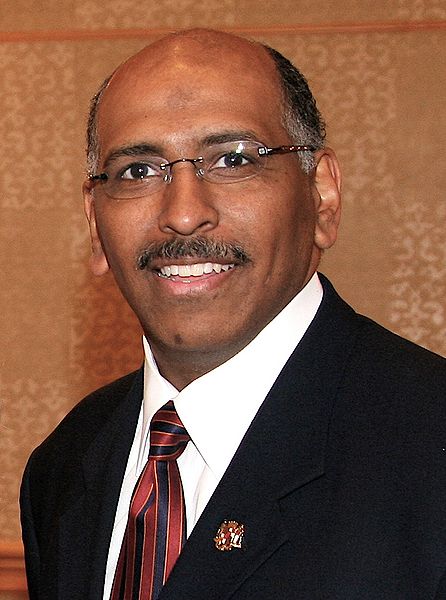
In that, former Republican National Committee chair Michael Steele said the president indicated that climate change would be a crucial part of his second term legacy.
“When I heard that line, what struck me is this is the Obamacare of the second administration” Steele said. “Climate change is going to be the sleeping dog issue that he is going to fashion and put into play, maybe a total package or piecemeal, but I think that’s going to be part of the second term legacy.”
Many assume that social issues would take a central stage in the second term, as Obama came out in favor of gay equality, against guns, and in favor of sweeping immigration reform. While those may also play a role in second-term agenda, Steele believes it’ll be climate change that has the greatest effect.
“It’s not going to be so much the social stuff that a lot of people, certainly in the conservative movement concern themselves with, it’s going to be the bigger idea that falls into that broader vision,” Steele said. “He reformed 1/6 of the nation’s economy with healthcare. Now he’s going to go to the next level with global change in the environment.”
By John Y. Brown III, on Wed Feb 6, 2013 at 12:00 PM ET
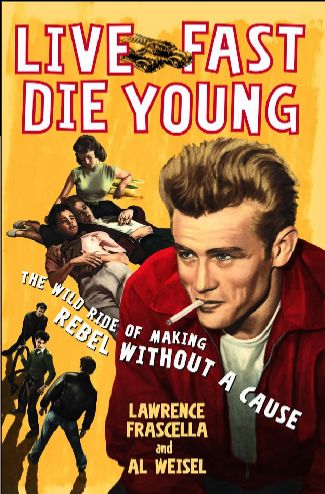
“Live Fast. Die Young. Don’t take helpful parking advice.”
(Rebel without a cause….Just rebelling for rebellion’s sake.)
Ah, c’mon. Sure you do. Most of us have a deep down core spark of defiance in us that makes no sense. It’s part of what makes us cherish independence as Americans. We are a nation of immigrants whose ancestors were willing to sail across oceans to to come to America to be free and we take our freedoms seriously.
We are a nation of independent minded risk takers and entrepreneurs who want to be allowed to do our own thing and subscribe to Ben Franklin’s motto, “Don’t tread on me.”
But sometimes can take them too seriously—and even turn into a silly defiance that is taken to an absurd and pointless extreme. And that is not a helpful or enviable trait to have.
What does that look like? I’m afraid I may have inadvertently found out myself yesterday while joking with a friend. Because joking, you know, isn’t always 100% joking. It’s usually at least 10% true, which is what makes the absurd distortion funny. There is a grain of truth to it.
And sometimes it’s 15% true. Or even 50%.
Yesterday I was running late to meet a friend who was working with a new firm and he wanted me to meet with the firm and see if there were any opportunities to work together on something in the future.
To help me not waste more time since I was having trouble finding the location, I got a call when I was two minutes away helpfully explaining to me to “Park in the back. We are in the back so don’t park in the front.”
I arrived and, as you can imagine where this is going, I was seized with the same urge in me that causes me to “walk on the grass” and “touch wet paint” when I see signs telling me not to. Part curiosity, I tell myself, but certainly part rebel. And so I parked in the front. I tried going in several doors but none—surprise, surprise!—led to my friend’s firm. I called him and asked again for directions to the office explaining in golf language, “I’m on the green but don’t want to four putt.”
I walked all the way around the building, found the office and had a nice meeting. When I left my friend walked me to my car….And I kept walking and walked through the grass and mud as we had to walk around the hill on the side of the building to get back to my car which I parked in the “front” instead of the back as I was helpfully advised.
My friend started laughing and asked, “Did you really still park in the front? Even after I told you it was a pain to walk up here to the backside of the building?” It was a rhetorical question but I took the bait and thought I would have some fun trying to explain my inexplicable decision.
I went on a faux rant saying, “Look man, yeah, you told me where to park. But I’m 49 years old. Don’t you think I know how to park at my age? What are trying to say to me by talking to me that way? Do you think I’m an idiot or something? And, yeah, I interpreted the advice as you trying to control me. I don’t like being held down like that and controlled. I was sending a message by parking in the front against your advice. C’mon man, I’m not your monkey. I don’t roll that way. I park on my terms where I want to park for my own reasons and you need to get OK with that. Don’t be cramping my style by trying to micromanage everything about my life, like where I park.”
We were both laughing at the absurd childish rant I was pretending to have…and said goodbye. And as I drove off, I realized that about 50% of what I said (as a joke)—deep, deep down in my murky inchoate psyche—was had a trace (or more than a trace) of truth to it. Wow! And completely ridiculous. But there it is. And something I need to consciously battle against in areas of my life that are more consequential than deciding where to park.
So, my commitment to myself. Next time someone offers me helpful parking instructions, I am going to take them up on it. Maybe not ever detail but as a general matter if I am told to park in the back, I will at least park in the back or on the side of the road and not in the front. And tell myself that it doesn’t make me a “sell out….to ‘the man'” if I do that.
It will just make me 5 minutes earlier and keep me from getting mud on my shoes.
“There’s nothing “wrong” with needing more sleep, or letting ideas rest this season—it’s only natural. It’s permission to revel in the easier pace. Go on, revel!”
A psychologist in town asked me to help her plan a healthy body image workshop for girls and their mothers. So we met today at her home office on her horse farm, which if you ask me is a pretty great place to hold a meeting.
In addition to the many reasons I enjoyed this meeting, I benefited deeply from the beauty of Kentucky nature that surrounds her little farm. Even in the middle of winter, the natural flow of the life-cycle is easy to feel there. I’m talking about the hibernating trees, the water eroded spots in the grass, the dormant gardens, and the thick soft coats that the horses grow. I felt the beauty in these predictable, natural aspects of nature despite having become an outspoken professional whiner about the winter season in recent years.
I’m writing about this because going with the flow of the four seasons—understanding that we humans are designed to take cues from the symbolic and environmental qualities of each season in particular—can be a powerful and nourishing way to maintain emotional and physical health throughout the entire year.
This truth is evident from many of the wisdom traditions around the world. In particular, Native American tradition teaches that winter is THE time to slow down, sleep a little more, sit with projects. In Ayurvedic medicine from India, the circadian rhythm is an internal 24 hour clock that measures the slower and heightened energy hours of each day, even.
But I read an FB post this week that said, “I have so much energy when the moon is full, I’ll know I’ve arrived when I can maintain that zing during the rest of the month.”
The truth is that living in rhythm with nature means that there are times in the day, the month, and the year that are naturally slower and less energetic. We need them because we are not machines—we are supposed to notice when personal energy feels slower, lazier, less exhuberent. And then we’re supposed to go with it—lean into it, ENJOY it. It’s each body’s internal system of need that determines health, not external, intellectual rules. What makes sense for one body, may not, for another.
Read the rest of… Lisa Miller: Winter’s Rhythm is Right On, Right On, RIGHT ON, Baby
Being from the San Francisco area, I was one of many locals horrified by Chris Culliver’s homophobic remarks last week (about how he’d never play with a gay team-mate – “We dont got no gay people on the team. You know, they gotta get up out of here if they do. Can’t be with that sweet stuff”) And being the daughter of a former English teacher, I was one of many writers almost as equally horrified by his mangling of the language.
But the reaction he prompted was incredibly reassuring. Of course the 49ers organization condemned his remarks – they know their market! – but plenty of other NFL players chimed in, offering their support for gay rights and marriage equality. Seemingly overnight, becauase of one fairly idiotic remark, the homophobia that has long been ingrained in sports culture seems to be dissolving.
Frankly, I never understood sports homophobia – events involving large numbers of incredibly buff young men running around a court or field, jumping, chasing, and tackling each other, is about as homo-erotic as anything not x-rated. And while I don’t expect most teams to dump end-zone prayers for group performances of YMCA, it sure does seem like the overall climate has changed. Sure, a few neanderthals are sputtering about the horrors (“what’s next, people marrying their horses?”), but it’s hard to dispute the fact that public opinion is shifting. Who knows whether it’s because of Will & Grace, or because Idaho and New England haven’t suddenly gone beserk (no pet marriages yet!), but I for one am thrilled. (I am a card-carrying Jewish mother, so naturally I’m still hoping that one of my sons turns out gay, so he’ll never replace me with another woman and I’ll have a shopping pal.)
So here’s a new ‘fight song,’ in honor of the welcome changes within the sports community:
By John Y. Brown III, on Tue Feb 5, 2013 at 12:00 PM ET
Why it is important to pay attention to detail –and spelling. And album covers.
Because the song doesn’t remain the same. Or even similar.
I was 17 and on a date with my high school buddy Maronda Buchta (now McKinney) and we were going to a rock concert –Rush.
We met early and had lots of time to kill and had listened to the latest Rush album enough times we already knew more about Tom Sawyer than we’d ever imagined.
So I suggested we swing by a record store off Shelbyville road and pick up the album by “That Neil guy” and added “You know. Who sings Cinnamon Girl. From the movie Rust Never Sleeps.”
Maronda was easy going and agreed. So I walked into the record store and asked for the two best cassettes they could recommend by the big rock star “Neil ….Neil something…”
The sales clerk and manager scurried to the back and grabbed two cassette tapes which didn’t seem quiet right when I glanced at them. but I didn’t want to debate and just said I’ll take them both and spent my last few dollars and was out the door.
We pulled out of the parking lot and headed to Freedom Hall. I had already furiously opened the cassettes outside the store and threw away the box and receipt.
And as we began cruising downtown I asked Maronda to put in the “Neil guy …the, uh, ummm, Neil. What did the sales clerk say his last name was? Oh yeah. Neil Diamond!”
Maronda looked deeply wounded and concerned for me. And speaking in what seemed like painfully slow motion, she explained”Neil Diamond doesn’t sing Cinnamon Girl.” And then started laughing hysterically at me, which people were wont to do then (and now).
Neil D had looked hip enough on the album cover to sing a few Neil Young songs —but Neil never sought that role and was never comfortable in it.
And after scouring both cassettes unsuccessfully for the the song Cinnamon Girl, I gave up and slipped in the cassette .
Has anyone ever chosen to listen to Song Sung Blue to pump yourself up before a concert? I have and it didn’t work well. I like Neil Diamond just fine but not before Rush concert. After all, Neil Young and Neil Diamond are as different as Cinnamon Girl and Cinnamon Butter.
And to this day, 32 years later, I still check 2 or 3 times when selecting to buy or listen to music by Neil Young.
===
Steely Dan versus Nicki Minaj —and my curmudgeonly moment.
My favorite band is Steely Dan. And that makes me lucky. Steely Dan emerged during my generation and creates gorgeous music with clever lyrics that have substance and meaning. But mostly they create extraordinary music that sweeps you away in the magical way that only great music can do.
So who is unlucky with music? At the risk of sounding old and crusty, I think today’s younger generation are being shortchanged. Too much of the music is mere shock and gimmickry. It reminds me of a stand-up comedian who has material that isn’t funny and elicits laughs by using over-the-top crude language. The weaker the material, the cruder the language becomes–until you eventually have merely a string of expletives that are barely held together by the semblance of a humorous story.
An unfortunate amount of the most popular music today seems to be similarly crafted. Instead of going for the cheap laugh, they go for the cheap lyric (that’s really not even a lyric at all). It’s musical but not really music. It’s edgy but too often empty—void of meaning. It’s catchy but not clever. It’s crude rather than creative. Today’s music doesn’t flow smoothly and transport us to a better place but rather stuns us with sounds that seem more like bullets that never hit their target yet were fired in anger.
I know I am vastly over-generalizing. But that’s something older people get to do. Young people have hip lingo. Older people get to rif generally without being a slave to the detail expected of younger writers and thinkers. No doubt about it, there is great music being created by the younger generation. But there’s too much what I’ll call Nicki Minaj “Did it on ’em” tirades that I dare call music.
Steely Dan and the music of my earlier generation is created by bands who love music and were drawn to music for what it could do to make life not only more bearable but more enjoyable. Today’s bands often seem like an unrepentant “Id”, as Freud called it, creating techno sounds reflecting uncoordinated instincts shouted in frustration—music that aims more at venting than creating. Its highest form of meaning may well be cathartic—leaving behind lyrics it’s hard to imagine will be appreciated 20 years from now.
Which brings me back to my point about sounding old and crusty. But remember, music teaches us that things aren’t always what they sound like. Maybe I’m not old and crusty then– but a little saddened that today’s musicians don’t ask more of themselves. And disappointed to see the magic that music can be to each generation diminished just a little and it’s raw and natural power ignored in favor of something different and, I contend, cheaper.
One of the many Steely Dan songs I never tire of is FM. A song about the shift from AM radio in the 1970s with the refrain “No static at all”, which symbolized the move to FM. And yet much of the music offered up today seems to celebrate static and, in terms of its persona, seems better suited for AM. Another is Caves of Altimira. I heard the song for the first time while in college and was drawn in by its irresistibly compelling sound. And after a while came to appreciate the lyrics and learned what they meant.
It was through a Steely Dan song that I learned about the famous cave in Spain with vivid and colorful cave paintings featuring drawings and paintings of wild mammals and Paleolithic humans. All set to a mellifluous saxophone solo that allowed me to escape into my curiosity and connected me with my past.
When’s the last time you can say something like that about a recent pop song?
Last night, Kentucky Educational Television’s Kentucky Tonight program, hosted by Bill Goodman, featured a deeply substantive, and occasionally emotional, debate about the future of industrial hemp in the Bluegrass State. The combatants included The RP (Jonathan Miller), Kentucky Agriculture Commissioner James Comer, Kentucky State Police Commissioner Rodney Brewer, and Dan Smoot, vice president of Operation UNITE.
Mentioned in the debate were the following studies and legislative proposals.
By Jonathan Miller, on Mon Feb 4, 2013 at 7:30 PM ET
As The RP (Jonathan Miller) and Kentucky Agriculture Commissioner James Comer debate industrial hemp legalization with state law enforcement officials on Kentucky Tonight, join in the online debate on Twitter.
Your tweets will be posted LIVE below, and whenever possible, the panelists will respond to them, either on air, or afterwards online.
Some Guidelines:
Use the hashtag #KYTonight somewhere within your tweet, and it will be posted LIVE below
Refer to Jonathan Miller as @RecoveringPol, Commissioner Comer as @KYComer, and host Bill Goodman as @BillKET
Click the following links to read the reports referenced in the debate:
KET’s Kentucky Tonight program with host Bill Goodman will discuss industrial hemp this evening at 8:00 PM ET.
Scheduled guests are:
– Kentucky Agriculture Commissioner James Comer
– Kentucky State Police Commissioner Rodney Brewer
– Former Kentucky State Treasurer Jonathan Miller, founder of The Recovering Politician
– Dan Smoot, vice president of Operation UNITE
The program is live on KET and at www.ket.org/live at 8:00 pm ET.
Viewers with questions and comments may send e-mail to kytonight@ket.org or use the message form at www.ket.org/kytonight. All messages should include first and last name and town or county. The phone number for viewer calls during the program is 1-800-494-7605.
You can come back to this site at 8:00 PM and join a LIVE Twitter debate — all of your tweets that use #KYTonight will be published LIVE at The Recovering Politician.
Kentucky Tonight programs are archived online, made available via podcast, and rebroadcast on KET, KET KY, and radio. Archived programs, information about podcasts, and broadcast schedules are available at www.ket.org/kytonight.
For your reading prior to or after the show, click here for a 1998 report produced by the University of Kentucky on the “Economic Impact of Industrial Hemp in Kentucky.” As you read the report, keep in mind that farmers and scientists have developed dozens of new applications for the crop since the report was prepared 15 years ago. The key findings in the report include:
A market for industrial hemp exists in a number of specialty or niche markets in the United States, including specialty papers, animal bedding and foods and oils made from hemp.
Additional markets could emerge for industrial hemp in the areas of automobile parts, replacements for fiberglass, upholstery, and carpets. Using current yields, prices, and production technology from other areas that have grown hemp, Kentucky farmers could earn a profit of approximately $320 per acre of hemp planted for straw production only or straw and grain production, $220 for grain production only, and $600 for raising certified seed for planting by other industrial hemp growers. In the long run, it is estimated that Kentucky farmers could earn roughly $120 per acre when growing industrial hemp for straw alone or straw and grain, and $340 an acre from growing certified hemp seed.
Industrial hemp, when grown in rotation, may reduce weeds and raise yields for crops grown in following years. Several agronomic studies have found that industrial hemp was more effective than other crops at reducing selected weeds. One study found that industrial hemp raised yields by improving soil ventilation and water balance.
The economic impact if Kentucky again becomes the main source for certified industrial hemp seed in the United States is estimated at 69 full-time equivalent jobs and $1,300,000 in worker earnings. The total economic impact in Kentucky, assuming one industrial hemp processing facility locating in Kentucky and selling certified seed to other growers, would be 303 full-time equivalent jobs and $6,700,000 in worker earnings. If two processing facilities were established in Kentucky, industrial hemp would have an economic impact of 537 fulltime equivalent jobs and $12,100,000 in worker earnings. If one processing facility and one industrial hemp paper-pulp plant were established in Kentucky, industrial hemp would have an economic impact of 771 full-time equivalent jobs and $17,600,000 in worker earnings.
If just a fraction of the agricultural counties in Kentucky went into the industrial hemp business, thousands of jobs and sizable earnings would be created. If just one-fourth of Kentucky’s 90 agricultural counties went into industrial hemp business, approximately 17,348 jobs would be created and $396 million in worker earnings generated yearly.
These economic impact estimates reflect possible outcomes for Kentucky given a national industrial hemp industry that is focused in specialty niche activities that have been demonstrated to work in Europe. It is important to remember, however, that technologies are under development that may allow industrial hemp products to compete in bulk commodity markets. The economic impacts that would occur if these technologies were found to be commercially feasible would be substantially greater than those identified in this report.


 The Differences between Men and Women- YES! I know the DIFFERENCE but I’m not referring to our outer differences, I’m talking about what happens inside the body. As far as muscle goes; a bicep is a bicep and a glute is a glute, whether its on a man or on a female, anatomically they function the exact same. What are different are the hormonal levels that allow our biceps, glutes and all 600 some skeletal muscles to grow. You guessed it, testosterone. Loved by men, feared by women. That’s ok because men produce anywhere from 10-50 times more testosterone than women. YAHTZEE! Men can build bigger muscles than women (in most cases J). Now, does that mean women cannot build muscle, NO! It just means women cannot produce enough testosterone possible to build muscles the size of most males. Debunking the myth has begun!