Please sign the petition below to remove the statue of Jefferson Davis currently in Kentucky’s Capitol Rotunda, and replace it with a tribute to Muhammad Ali, “the Louisville Lip” and “the Greatest of All Time.”
I just heard from the Ali family: It is the Champ’s belief that Islam prohibits three-dimensional representations of living Muslims. Accordingly, I have adjusted the petition to call for a two-dimensional representation of Ali (a portrait, picture or mural) in lieu of a statue.
UPDATE (Tuesday, December 2, 2014)
In this interview with WHAS-TV’s Joe Arnold, Governor Steve Beshear endorses the idea of honoring Muhammad Ali in the State Capitol (although he disagrees with removing Davis). Arnold explores the idea further on his weekly show, “The Powers that Be.”
Click here to check out WDRB-TV’s Lawrence Smith’s coverage of the story.
And here’s my op-ed in Ali’s hometown paper, the Louisville Courier-Journal.
UPDATE (Saturday, June 4, 2016)
In the wake of the 2015 Charlestown tragedy, in which a Confederate flag-waving murderer united the nation against racism, all of the most powerful Kentucky policymakers — U.S. Senator Mitch McConnell, Governor Matt Bevin, Senate President Robert Stivers and House Speaker Greg Stumbo — called for the removal of the Davis statue from the Rotunda. Today, as we commemorate last night’s passing of Muhammad Ali, there is no better moment to replace the symbol of Kentucky’s worst era with a tribute to The Greatest of All Time.
UPDATE (Wednesday, June 8, 2016):
Great piece by Lawrence Smith of WDRB-TV in Louisville on the petition drive to replace Jefferson Davis’ statue in the Capitol Rotunda with a tribute to Muhammad Ali.
UPDATE (Thursday, June 9, 2016):
Excellent piece on the petition drive by Jack Brammer that was featured on the front page of the Lexington Herald-Leader.
Highlight of the article:
Miller said he has received a few “angry comments” on his call to honor Ali.
“One of them encouraged me to kill myself,” he said. “You can quote me that I have decided not to take their advice.”
UPDATE (Friday, June 10, 2016)
The petition drives continues to show the Big Mo(hammed): check out these stories from WKYU-FM public radio in Bowling Green and WKYT-TV, Channel 27 in Lexington:
UPDATE (Saturday, June 11, 2016):
Still not convinced? Check out this excerpt from today’s New York Times:
As I have watched and listened to the seemingly endless remembrances of the Kennedy Assassination during the 50th anniversary, I feel compelled to add my two cents.
I was barely two years-old the day JFK died, so I recall nothing first-hand of that day, but like most people, I have been immersed in the events and aftermath of that day for my entire life. In my teens I became very interested in the events of that day, primarily through books and some TV shows. For many years, I was an advocate of the conspiracy/multiple gunman theories. I have since revised my opinions and believe that Oswald acted alone. I say this not to open any debate, just to let you know I have evolved as I grow older.
Aside from the nuts and bolts of those events, I feel the need to examine JFK’s death in a larger context. Those four days in 1963 began a seismic shift in our national awareness, and as has been said so many times, began the loss of innocence in our small part of the world. We all began to understand life was not like “Leave It To Beaver”, or “Father Knows Best”. TV in particular began to change and evolve. JFK’s killing was essentially the beginning of TV as our mutual national campfire. Just like earlier times when we gathered round those real fiires to trade nes and stories, Television served the same purpose. We gathered round it’s warm glow to find out what was happening and important in our world.
Sadly, TV news may have actually peaked on that November day when Kennedy was shot. It’s very possible Walter Cronkite, and Bill Ryan (NBC), were the best breaking news reporters ever on that day. They wrote the book as they were reporting the events and were incredibly good considering the limitations of the early TV technology.
But in a larger sense, it’s my feeling that the assassination began the feel and mindset that defined the decade of the 1960’s. For me, the 60’s aren’t just a typical ten-year decade. It’s a mindset, and sea-change in attitudes and feelings in this country. I would submit the sisties begin with JFK’s killing, and ends with Nixon’s resignation. That time period features the Johnson Administration, Vietnam at it’s peak, Racial strife and reform, more killings with King, and Robert Kennedy, Nixon’s election, and downfall, along with countless other events like Kent State that shook our countryand world to its foundation.
So while recalling the death of JFK this week, let’s also remember the events that it foreshadowed and helped to occur.
By John Y. Brown III, on Fri Nov 22, 2013 at 12:00 PM ET
Wisdom….
Insanity, they say, is repeating the same thing that has failed over and over again and expecting a different result.
But hold on a minute. Isn’t it also insane to try to act sanely over and over again if you find that sanity seems always to leave you mildly depressed, bored and asking yourself, “Is this really all there is?
I mean, c’mon. And maybe the next time you try the failed thing over again, you might get lucky and there really is, finally, a different result and then you look like some kind of genius. And become rich and famous, albeit insane. But that still is probably better than not repeating the failed thing and only seeming “sane.” Anybody can do that for goodness sakes. Live a little!
===
My definition of sanity is having just the right about of insanity. And no more. But no less either.
===
“When you repeat the same thing that has failed over and over again and expect different results, that is called insanity””But when you repeat the same cliches that have failed to change behavior in others over and over again and expect different results (and the cliche is the definition of insanity above), you may well be clinically certifiable.” Something to think about….
(I have a feeling this is going to be a fun little series)
===
My addendum to “Do it Anyway”If you embrace the weakest parts of yourself, your conscience will continue to make belittling self-talk comments to you about being “a loser.”Do it anyway.
Just to piss-off your conscience.
===
“Sanity” may not be repeating the same thing over and over and expecting the same results.
But it is almost that boring.
===
“Insanity is repeating the same thing that has failed over and over again and expecting different results.””Masochism is repeating the same thing that has failed over and over again and NOT expecting different results. But doing it anyway because you get a “charge” out of it.”
“Insanity is when you repeat the same thing over and over again….until people stop noticing and assume you are talking to yourself in a repetitive way.”
Or something like that….
===
If you are insane and it is because of some reason other than repeating the same futile behavior and expecting different results, you have got a real problem on your hands.”
I didn’t feel it was appropriate to text you this late, but there are a few things that need to be addressed. I just walked in my bathroom and my rug was soaking wet. I looked underneath the sink to assess the situation and I found everything soaked – including my entire storage of toilet paper. This has happened once before, but I figured it was just due to perpetual maintenance and I didn’t want to make a stir.
I have tried to be very patient with the process, considering it is extremely confusing, involves many people, crosses International waters being that the homeowner lives in Europe, and I get no communication from you other than text message as you do not answer the phone. I sent you an email a while back expressing my frustration with a few situations. You replied asking me to fix the screen door and gave no response or feedback regarding my questions that begged resolution.
I have asked, for more than a year, for the electric to be looked at and repaired. I said nothing when a storm came through. Although connected to a surge protector and powered off, my three-month old TV was destroyed. I said nothing because regardless of every protective measure, “acts of God” happen which absolve you from having to lift your pretty little finger. Had I not bought 3 brand new heaters that – without spiritual forces – also met their maker while plugged into the death traps that are my outlets, I would have likely deduced those “acts” and the destruction of my TV were solely caused by God. I don’t believe God would smite me by killing my heat and my access to Netflix. I’m sure He has better things to do. However, it begs question and further evaluation, as it is a well-known and proven theory that twice is a coincidence and three times is a conspiracy. Four times? Leave Him out of it. Fix the electric.
I took my own initiative to replace the TV without complaint or raising issue, as I have been guilty in the past of causing aggravation myself. There have been many “acts of God” that have forced me to reevaluate my scenarios and look internally for resolution…and I have learned to live very comfortably without Netflix and am humbled, daily, by how fortunate I am. Yet I would be remiss if during this reflection, I didn’t worry about you. It must have been extremely taxing to have someone besides yourself call me to ask that I take my trash to the dumpster and train my dog not to poo in someone else’s yard. And fix a screen door so people in your industry don’t cringe when they are attempting to making a profit by selling the unit beside me. How awful that eye sore must be, and how difficult that must have been to deal with. Again – my apologies.
Nevertheless, I have mentioned and asked repeatedlyfrom the commencement of my lease (when I used the microwave while preheating my oven and the power went off in 3 rooms), and again repeatedly after I renewed for a second year, for the electric to not just be looked at, but be fixed. Instead, we have gone in circles and I have been told, repeatedly, that “someone will be sent to handle it and they will contact you for your schedule”. You must not cook. I’m sure that is another a task you find difficult, and compensate with passive aggressive work-arounds like boxing up a five-star meal and paying for it with the money you got from your divorce. I’m sure he didn’t marry you for your epicurean skills. Odds are towards the end, the oven wasn’t the only thing lacking heat. I’ll put my money on that winning hand for sure.
I have asked repeatedly for the shower door to be removed. Maybe you are starting to sense a pattern here. This is only after the situation escalated and it was installed without proper judgement – only because there was little to no communication on the subject of the flooring due to your assumed anthropophobia…look it up if it doesn’t automatically register. If that is the case, you are obviously in the wrong line of work. Predicated only by these assumptions and an utter lack of patience at this point, forgive me in advance for my candidness, but again – text messaging does not satisfy the ability to conduct a true assessment of the needs and priorities of the homeowner and myself – nor is it an excuse to regurgitate when I have asked to speak to you over the phone and you are showing a house.
I ask this with sincerity and genuine concern: Are you are scared of people?
“I hate shopping, except for the part where I am back in my apartment with new clothes.”
Does that sound like you? A prospective client once emailed that line to me. It made me laugh, but I get it. Shopping can be tiring, stressful and frustrating. Planning an effective shopping trip takes strategic thought. While it should be easy, often things get in the way. But, take it from me, shopping can be a smooth and seamless process. Below are 9 of my best tools and tricks for a well-executed shopping trip.
Here’s a dressing room snap from yesterday as I was getting things ready for a client.
1) Find a good salesperson. Some of my best relationships have resulted from following my intuition in a store and simply walking up to someone, introducing myself, and explaining what I was looking to accomplish. A good salesperson will make shopping hassle-free – without an overbearing salespitch (more on this in #6). They’ll also give you advance info on when the sales are and in many cases ‘pre-sell’ items to you – which means you get dibs on things before they go on sale to the general public.
Read the rest of… Julie Rath: Secrets from a Shopping Pro
Few things are worse than getting caught in the rain in your dress clothes. Especially if you’re on the way to work, and you know you’re going to spend much of the day in wet clothes until your outfit dries. My suggestion: check the weather before you get dressed, and make sure your wardrobe includes rainy weather gear. Below is my list of must-haves for soggy days:
Raincoat – I spend a lot of time in peoples’ closets, and I’ve seen some pretty awful windbreakers masquerading as rain gear. Bad weather is no excuse to look drab and unstylish. Pull it together with a sharp raincoat. Two great options are a classic trench, or a more modern mac (above left and right). If you wear suits or sportcoats everyday, buy in a size that will fit over them.
High Quality Umbrella – Don’t be that guy whose umbrella turns inside out and flies across the street poking someone’s eye out. Cheap umbrellas break easily, leading to wasted time and money (not to mention adding to pollution in landfills). Why not spare yourself the headache by investing in a high quality umbrella? Blunt and Davek are two of the toughest umbrellas out there, and they come in various sizes. Just make sure you don’t leave it behind in a taxi.
Overshoes – There’s a whole new generation of good-looking overshoes that are nothing like your father’s black rubber rain shoes. If you have nice shoes, it makes sense to protect them. I’m a big fan of Swims which come in a variety of colors including navy and olive green (which are nice if you only want to get one pair; if not, black goes over black shoes and brown over brown).
One of the most important components of being well-dressed and having a well-rounded wardrobe is dressing appropriately in all situations, including bad weather. Fortunately, dressing to dominate the rain only requires three items. Does your wardrobe include these three things?
By John Y. Brown III, on Thu Nov 21, 2013 at 3:00 PM ET
My health care rant, albeit a restrained rant with a reasonable solution offered. (It’s different from what you might think. Really.)
Something is just wrong when the level of customer service a person gets at a car dealership trumps –in fact dwarfs—the level of customer service that same person can expect when seeking medical services at a hospital.
I am not trying to debate health care policy or criticize ACA/Obamacare. I am trying to discuss something simple, relevant and useful that is really apolitical and patient-centric.
Recently I have spent time in the only place I approach with more trepidation than going to a hospital—car dealerships. And with the intention of buying a new car. All things being equal I would have preferred to check into a medical facility to have routine blood work done.
But here’s what I experienced to my surprise and despite my reservations about car dealerships. At the car dealerships I was treated with some the most extraordinary “customer service” I have ever encountered in any professional transaction in my life. The employees at the car dealership anticipated my ever question, concern and desire—or was at least tried to. And then respond to it. If I had to rank them for “customer service’ I’d give them a solid and well earned “A” grade.
By contrast, my experience recently with “customer service” at hospitals and related medical facilities has been just the opposite. Don’t get me wrong. The hospitals eventually got the job done, as they almost always too. And in their defense they are under extraordinary stress and are over-extended and customer service has been more of a luxury or afterthought in their business. But does it have to really be that way?
Oh sure, there are the incentive arguments about the hospitals’ customer really being insurance companies and so on and so on and the impact of various healthcare policies further distancing the patient vs healthcare provider relationship. But who said customer service can’t extend to the person being interacted with as well as the effective payor? No one I know of.
Besides, I have always thought of healthcare as different from other businesses and industries. There is a slightly different mission in the healthcare profession (or should be) than just making money. People’s health is at stake. A higher calling is assumed that would suggest customer service wouldn’t be limited in the same narrow, linear way that would be expected in, say, a transaction at a shoe store or fast food restaurant. In other words, more than just a direct interest in the immediate paying customer.
When we discuss, debate and argue over health care policy we always seem to focus on issues like access, choice, who pays, what will be covered, what policy, what system, how much research, what technology, and the like. As we should, I emphatically add! But can’t we also add excellent customer service to the long list of expectations we have from healthcare providers?
A client’s (or patient’s) personal needs, wants, concerns and fears may not be as urgent or as weighty as the issues that surround all other services being delivered in the healthcare industry. And many, I will concede, do an admirable job with customer service already. But I doubt that most hospitals do as effective a job at customer service as the local car dealership just down the road. Or the nearest family restaurant. And that is disappointing. And I would contend that closing the customer service gap in healthcare facilities and expecting customer service that is almost attentive and patient/customer-focused as when we get our oil changed isn’t an unreasonable request. It is not about politics or policy. It is just a simple request for better service. Please.
And whoever realizes this in the healthcare industry and acts on it first and forthrightly will likely dominate the industry in the coming years regardless of who the most direct payor is. It’s just good business for the bottom line, too.
And because in the end, it is–as it should be– about the patient, not the insurer. And it is that person not their payor who is the real and most important customer.
By Michael Steele, on Thu Nov 21, 2013 at 1:30 PM ET
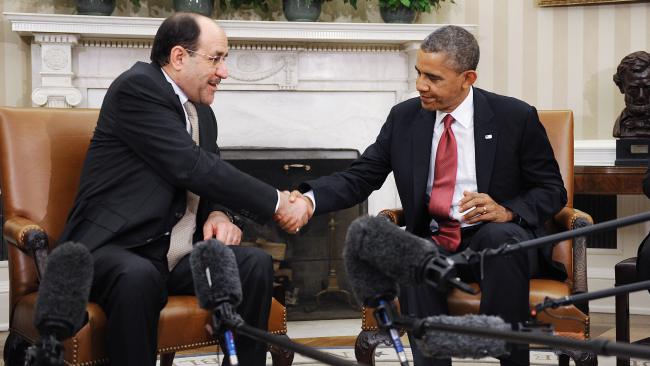
Iraqi Prime Minister Nouri al-Maliki met with President Barack Obamain Washington on November 1st, and leading up to his visit, White House press Secretary Jay Carney put his best diplomatic smiley-face on it by noting “the visit will highlight the importance of the U.S.-Iraq relationship under the U.S.-Iraq Strategic Framework Agreement (SFA),” and that Obama “looks forward to discussing with Prime Minister Maliki efforts to enhance cooperation in the fields covered under the SFA, and to coordinating on a range of regional issues.”
Of course, after the two-hour meeting, President Obama remarked, “The United States wants to be a strong and effective partner with Iraq.” No doubt. Maliki came seeking more weapons and the president sought a “strong and effective partner.” While this face-to-face meeting may have served to raise Maliki’s diplomatic profile, in the eyes of many it diminished the profile of the United States and its professed commitment to justice, human rights, and international law. The president should have refused this meeting.
No one should doubt, least of all Prime Minister Maliki, that he owes his position to the United States, which sacrificed its blood and spent billions of its treasure to pave his way to power. But Maliki’s failure to be a true partner with the U.S. and his cozy relationship with Iranian President Hassan Rouhani, as well as his recent actions, have created more problems than solutions for the United States.
On September 1, 2103, at the apparent request of the Iranian Mullahs and on the orders of Nouri al-Maliki, Iraqi security forces attacked and killed 52 Iranian refugees (and kidnapped seven, including six women) at Camp Ashraf in eastern Iraq.
Camp Ashraf was settled more than 25 years ago by 3,400 members and sympathizers of the principal Iranian opposition known as the People’s Mojahedin Organization of Iran (PMOI/MEK). The U.S. military disarmed Ashraf City in 2003, and in 2009 turned over control of the camp to the Maliki government in Baghdad. At that time, the United States assured residents of Ashraf City that the Iraqi government would treat them humanely in accordance with international law. As refugees, members of the opposition and their families are protected persons according to the Fourth Geneva Convention, and should not be subject to harassment, much less kidnapping and murder by the military forces of Iraq.
Last year, some 3,000 residents of Camp Ashraf were forcibly transferred to Camp Liberty, near Baghdad. 52 of those remaining at Camp Ashraf would meet a different fate.
In the attack, most of the murder victims were handcuffed, identified, and then executed with a bullet to the head, according to a statement by the UN Assistance Mission in Iraq. Some were slaughtered in Ashraf clinic where they had been taken for medical treatment. All of these individuals had signed an agreement in cooperation with the United States, which had guaranteed their safety and protection until their final relocation. The U.S. failed to keep its word.
While the United States, the UN, the European Parliament, and Amnesty International all condemned the massacre and kidnapping, world leaders have been hesitant to affix responsibility, particularly in the face of reports of “coordination” between the Maliki and the office of Iranian Supreme Leader Ali Khameini.
As Congressman Dana Rohrabacher (R-CA), Chairman of the House Foreign Affairs Subcommittee on Europe, Eurasia and Emerging Threats noted in a statement, “The Iraqi military is murdering unarmed refugees, and there is every reason to believe Prime Minister Maliki, at the behest of the Iranian Mullahs, ordered these criminal acts. Come what may, Maliki will be held responsible for this reprehensible slaughter of civilians in his own country.” Likewise, Senator Robert Menendez (D-NJ), Chairman of the Senate Foreign Relations Committee made clear “I hold the Iraqi government directly responsible to protect the community, to investigate this matter thoroughly, and to prosecute the perpetrators of this heinous act.”
Which makes Maliki’s visit to the White House that much more problematic.
For Maliki, the man whose cooperation with the Iranian clerics was crucial to carrying out this atrocity, to enjoy the prestige of a personal meeting with President Obama is totally unacceptable. For many Americans, let alone Iranians, Maliki has clearly betrayed the trust that the United States displayed in him; and has undermined the very safety and security the United States had promised to those refugees.
No political consideration or calculus to compel Maliki to release the hostages is immoral, misguided, or unacceptable. The lack of meaningful action by the U.S. in support of the hostages and the failure to hold accountable those who slaughtered 52 men and women is inexcusable.
Maliki’s visit presented the perfect occasion for President Obama to honor the commitment made to protect the refugees now at Camp Liberty; a commitment that can only be ensured by moving the refugees out of harm’s way and returning them to their homes.
Moreover, the visit afforded the president the opportunity to make it clear to Maliki that there will be no more U.S. aid, no more arms sales and no further political support unless the 7 refugees taken hostage at Camp Ashraf are released and full protection is provided for the 3000 refugees at Camp Liberty. At least that’s what a “strong and effective partner” would have done last Friday.
By John Y. Brown III, on Thu Nov 21, 2013 at 12:00 PM ET
It’s 6:57 AM on Mullholand Drive in the East End of Louisville.
I have over slept. Again. And this blonde dame keeps waking me up and telling me she’s made me a cup of Joe and that I am late and she’s not waking me up again.
She’s a looker alright. Nice voice. But with a motherly sort of tone. And makes a mean cup of Joe.
Yeah, that’s right. She’ s not just another long-legged blonde dame trying to make it through another overcast windy day in this two bit city. She’s got normal length legs. Not long ones. But as for the rest of the description, it’s dead on. And this wasn’t going to be just another ordinary day.
I had a dentist appointment because I hadn’t had a teeth cleaning in 8 months and was getting an oil change for the first time in 7000 miles.
Yeah, I live on life’s edge not by choice. But because it’s the only way this kid has ever known how to live.
Oh yeah, and that normal length legged blonde beauty I was telling you about? That’s my wife. That’s right. And that’s Mrs Brown to you, pal.
And she was serious about not waking me up again and now was getting really irritated with my little game of narrating this Wendesday morning like I was a narrator in a 1950s Film Noir movie.
She’d had enough. See? See? And, frankly, so had I.
Lists are fun, everyone likes lists. On this snowy day, I give you my top 12 best fitness motivation movies of all time, a snippet of my forthcoming book, “The 12 Steps to Fitness Freedom” available in January. These are the types of movies that could motivate anyone to get off their butt and start moving. The most heart pounding, testosterone driven movies of all time. If motivation is your problem, watch one of these classics and two hours later you will be hitting the gym ready to take on the world.
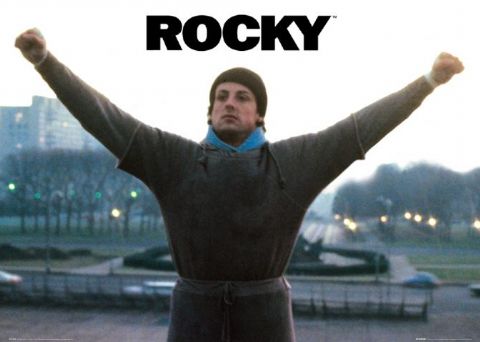
1. Rocky
The ultimate underdog story staring Sylvester Stallone, will for sure get you motivated to do a few push-ups.
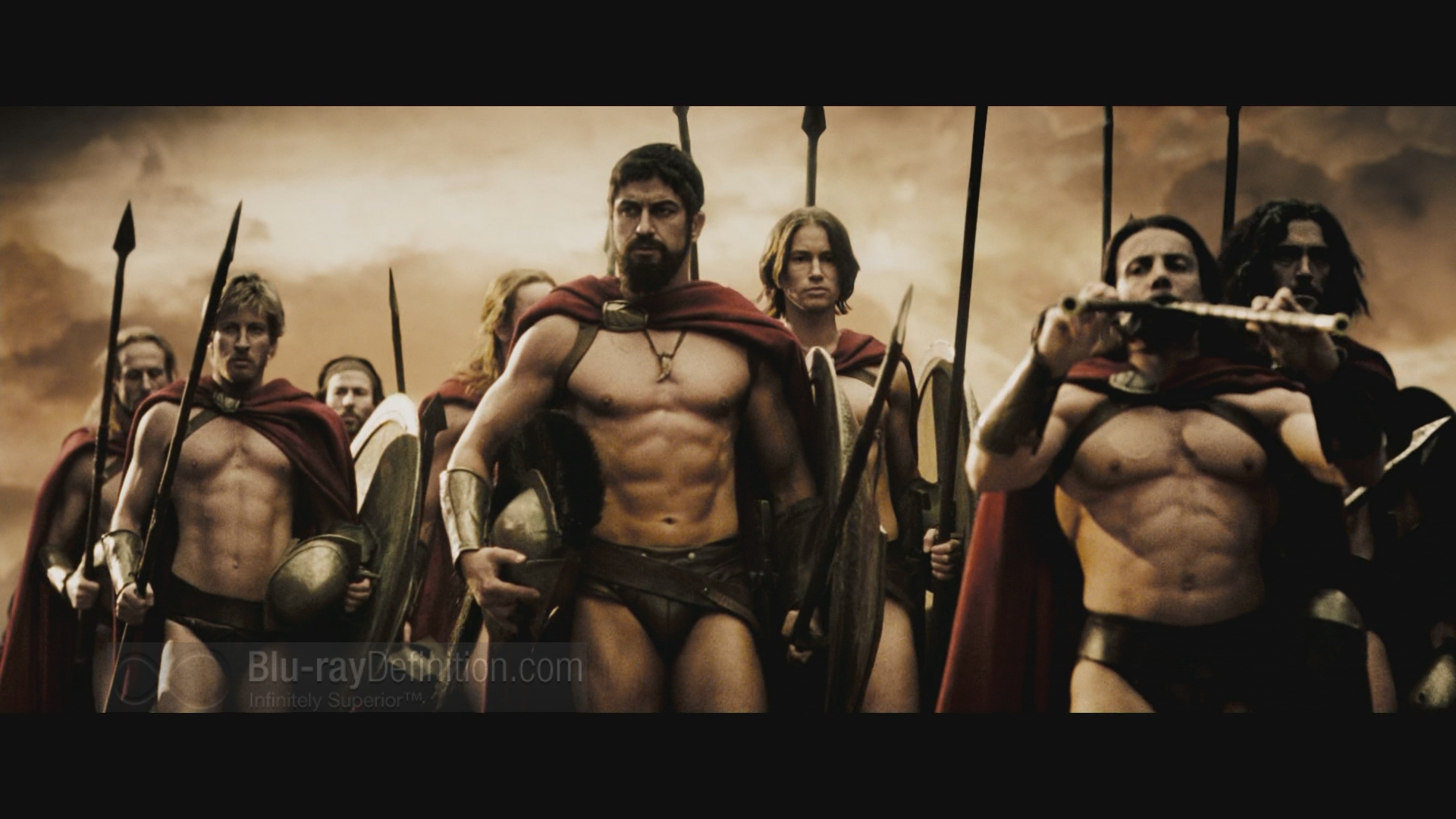
2. 300
The ultimate battle movie complete with every actor that has a six pack.
Read the rest of… Josh Bowen: 12 Best Fitness Movies


 Blog this!