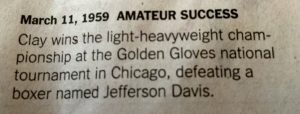
Please sign the petition below to remove the statue of Jefferson Davis currently in Kentucky’s Capitol Rotunda, and replace it with a tribute to Muhammad Ali, “the Louisville Lip” and “the Greatest of All Time.”
I just heard from the Ali family: It is the Champ’s belief that Islam prohibits three-dimensional representations of living Muslims. Accordingly, I have adjusted the petition to call for a two-dimensional representation of Ali (a portrait, picture or mural) in lieu of a statue.
UPDATE (Tuesday, December 2, 2014)
In this interview with WHAS-TV’s Joe Arnold, Governor Steve Beshear endorses the idea of honoring Muhammad Ali in the State Capitol (although he disagrees with removing Davis). Arnold explores the idea further on his weekly show, “The Powers that Be.”
Click here to check out WDRB-TV’s Lawrence Smith’s coverage of the story.
And here’s my op-ed in Ali’s hometown paper, the Louisville Courier-Journal.
UPDATE (Saturday, June 4, 2016)
In the wake of the 2015 Charlestown tragedy, in which a Confederate flag-waving murderer united the nation against racism, all of the most powerful Kentucky policymakers — U.S. Senator Mitch McConnell, Governor Matt Bevin, Senate President Robert Stivers and House Speaker Greg Stumbo — called for the removal of the Davis statue from the Rotunda. Today, as we commemorate last night’s passing of Muhammad Ali, there is no better moment to replace the symbol of Kentucky’s worst era with a tribute to The Greatest of All Time.
UPDATE (Wednesday, June 8, 2016):
Great piece by Lawrence Smith of WDRB-TV in Louisville on the petition drive to replace Jefferson Davis’ statue in the Capitol Rotunda with a tribute to Muhammad Ali.
UPDATE (Thursday, June 9, 2016):
Excellent piece on the petition drive by Jack Brammer that was featured on the front page of the Lexington Herald-Leader.
Highlight of the article:
Miller said he has received a few “angry comments” on his call to honor Ali.
“One of them encouraged me to kill myself,” he said. “You can quote me that I have decided not to take their advice.”
UPDATE (Friday, June 10, 2016)
The petition drives continues to show the Big Mo(hammed): check out these stories from WKYU-FM public radio in Bowling Green and WKYT-TV, Channel 27 in Lexington:
UPDATE (Saturday, June 11, 2016):
Still not convinced? Check out this excerpt from today’s New York Times:
In this incredibly polarized political climate, it’s always refreshing to find areas of bipartisan agreement. And a recent poll about congressional favorability ratings showed that liberals, conservatives, Republicans, Democrats, men, women, older & younger voters are all unified in their disapproval of Congress. Nobody, apparently, thinks Congress is doing its job, and this sure seems like a great place to start working together to find solutions, since we’re all agreed about the problem. Maybe this will help us dig our way out of the sequester mess, before Congress loses any more favorability (by some polls they’re already down to single digits).
I will leave the specifics of those solutions to trained political scientists and commentators, but meanwhile I was struck by one aspect of the poll. This time, instead of just tracking percentage approval rates, some brilliant pollster decided to put things in context by asking respondents to compare Congress with a fairly wide, weird assortment of things, so people were asked whether they viewed Congress or traffic jams more favorably, that type of thing. And as many articles have referenced, Congress is less popular than a ton of fairly awful things, ranging from colonoscopies to Donald Trump – a list which was just begging to be turned into a song!
The RP and Kentucky Democratic consultant Dale Emmons debate the potential Ashley Judd U.S. Senate candidacy, as well as discuss other political news of the day:
By John Y. Brown III, on Tue Mar 5, 2013 at 12:00 PM ET
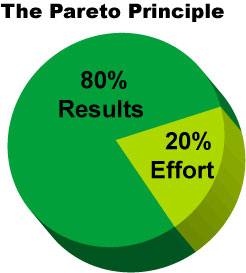
I first learned about the 80-20 rule while in business school and it is an ingenious formula that apples not just in the workplace but in every area of life —including marriage
With most couples I know each spouse –almost like a rule of nature –believes he or she is to blame for about 20% of the recurring marital disagreements –while their spouse is respon…sible for the other 80%. And vice versa.
Psychologists and marriage experts tell us the key is sharing that burden equally between the spouses. But such advice flies in the face of science and the 80-20 rule .
My bold innovative idea to solve this age old imbalance is to include a third partner in every marriage. Not a third party that is actively involved at any level of the day-to-day marriage (from finance to romance) but rather an extra person to lay blame on when the primary couple needs to displace blame.
Just do the math. If each primary spouse is willing to accept 20% of the blame , then having a third person available in the marriage for the remaining 60% is the perfect solution! And during periods of above-average disagreements, the third party has another 40% to be absorbed if necessary.
This allows us to use mathematical and scientific principles to our advantage to manage around the 80-20 rule in both work and play –and even within the sanctity of marriage.
By Ronald J. Granieri, on Tue Mar 5, 2013 at 10:00 AM ET
“The Republican Party has just about written off those women who work for wages in the marketplace. We are losing them in droves. You can’t write them off and the blacks off and the Hispanics off and the Jews off and assume that you’re going to build a party on white Anglo-Saxon males over forty. There aren’t enough of those left.”
Ripped from the headlines? Hardly. That quote is from Bob Packwood on 1 March 1982, quoted in Laurence Barrett, Gambling with History: Reagan in the White House (New York: Penguin, 1984).Four observations, and some tentative conclusion:
1. Plus ça change…
2. Those comments came during a recession, leading up to mid-term elections in which Reagan and the GOP took a shellacking of their own.
3. That shellacking, of course, was followed two years later by Reagan’s re-election in one of the biggest landslides in US electoral history.
4. Bob Packwood was so concerned about losing contact with women who worked for wages that he sought such contact aggressively throughout his Senate career.[Washington Post]
Tentative Conclusion: The GOP’s demographic problems have much deeper roots than 2012, though they have been obscured by the occasional electoral success. That can’t go on forever.
Oh, and it is possible to be on the progressive side in social issues and still be a creep.
By Nancy Slotnick, on Tue Mar 5, 2013 at 8:30 AM ET
Today I ordered my new drink at my new favorite coffee bar- Irving Farm. I keep wanting to call it Irving Farms, but that’s not the name. I discovered a few weeks ago that my drink is called a cortado. Thank G-d. I could never decide if I should order a wet macchiato or a dry cappuccino and I felt really stupid either way. Remember the old comic strip Family Circus? (I am dating myself now, and not in a good way.) There was one where the family was at a restaurant and the little girl asked her parents: “I want to get a burger and fries, but do I have to order the Little Miss Muffet?” That’s how I feel about contrived names.
Now when I order my coffee, I sound like a coffee snob. But that is appropriate, since I used to own a coffee bar. I usually get a wink from the barista and some beautiful latte art on my drink, as a nod to the coffee culture that we share. Or I just get a blank stare and an improvised macchiato (when I go to Indie in Lincoln Center.) Either way, there’s some comfort in finally discovering what I have been seeking.
On the opening day of my coffee bar, (that incidentally had a dating service for our customers,) May 29, 1996, it got a mention in Florence Fabricant’s column in the New York Times. She said that it takes a gutsy person to name a place Drip. That gutsy person was me!
The other day when I showed my business plan to a potential investor, who is also a creative type, he said: “The name is not very original, but I like the concept.” Actually, he wrote that in an email that was meant for his business partner and not for me to see. But in the flurry of the magic of Forwarding email trails, I got to find out what he really thinks. And I was totally proud. One of the problems with the name Drip was that people couldn’t figure out what the hell it was or what it meant. Doctors thought it was some twisted intravenous reference. It didn’t meet the Katie Couric 30-second test, but we were on the Today Show multiple times nonetheless.
So this time around I am trying to give my brand a name that explains what it is. There is so much marketing hype in today’s media world and so many ridiculously huge brands to compete with, that I try to keep it simple.
There’s just one thing. Matchmaker Café is an online dating site that sets up real dates in the real world through a real human. But we don’t have our own real café. Call me Miss Nomer. At least for now. But I have come to realize that the “Café” part of “Matchmaker Café” is actually my value added. In ’96 there was no online dating. There was no social media. There was just old-fashioned Café. And that worked.
So I am taking my show on the road. Looking for whatever homes will have my little café kiosk of love. Cafés, bars, retail stores, wineries, public plazas, Whole Foods? Just like Lucy from the Peanuts, I will be setting up shop to give out advice and to foster human connection in a new world where technology can be isolating.
I’m putting the Café back in Matchmaker Café. What’s the main reason? I’m lonely! I have a wonderful husband and son, and I spread love one client at a time right now. But I miss the serendipity of being “out there” where anything can happen. And I want to spread that magic to you.
So watch for me. Follow @MatchmakerCafe on Twitter and Like me on Facebook, and you will find out where I will be next. I could be coming to a neighborhood near you. If I do it right then a Café by any other name will smell as sweet. I hope as sweet as the Rice Krispy treats that we used to sell at Drip!
The Supreme Court may be on the verge of striking down Section 5 of the Voting Rights Act, which mandates federal approval, or “pre-clearance”, of any changes to election procedures in states under the Act’s jurisdiction (mostly Southern, but some scattered northern jurisdictions, primarily in New York). It could be a mixed triumph for conservatives—a blow against a regionally discriminatory rule of law that limits Virginia and South Carolina from passing statutes that are perfectly legal in Kansas and Indiana—but a victory that will only fuel the impression that the political right is bent on suppressing minority voters.
Conservative legal activists would have been better advised to concentrate on doing away with or revamping the other elements of the Act that actually do much more damage to the proposition of a color-blind politics. Ending Section 5 would be explosive, and still won’t alter the Act’s evolution from an instrument of black voter participation in the South to a prescription for rigged districts that look exactly like spoils and quotas.
The VRA is a textbook of generally worded terms that subsequent courts and career bureaucrats have reshaped. It’s entirely appropriate command that covered states refrain from passing election laws that discriminate against their minority citizens has been swollen into a requirement that minorities be aggregated into legislative and congressional districts that are overwhelmingly dominated by their race. Even a slight rollback of the percentages, say, from 65 percent to 58 percent is prohibited on the theory that such a contraction “dilutes” the minority vote.
The effect is that in the Deep South, black voters influence politics solely inside their centers of gerrymandered influence: the numbers that remain elsewhere are not substantial enough to create authentic swing districts where Republicans might have to seek black support to win. In the same vein, the nature of nearly seventy percent black districts is that their elected officials are just as un-tethered from the need to build coalitions with conservative white voters.
Not surprisingly, black Democrats and southern Republicans have not complained. The South that results is the single most racially polarized electorate in the country and its African American politicians are hemmed into a race-conscious liberalism that marginalizes them statewide. In addition, more conservative black Democrats and Black Republicans are rendered unelectable in minority districts that leave no room for a non-liberal brand of candidate.
Conservatives ought to recoil from an anti-discrimination principle shifting into a mini political apartheid. Rather than condone a de facto spoils system, they should be trying to undo an arrangement that is more bent on electing a certain kind of black politician than on empowering blacks to engage the democratic process.
This article originally appeared on ricochet.com on February 27, 2013.
By John Y. Brown III, on Mon Mar 4, 2013 at 12:00 PM ET
So, is it better to grow up or stay a boy (or girl) forever?
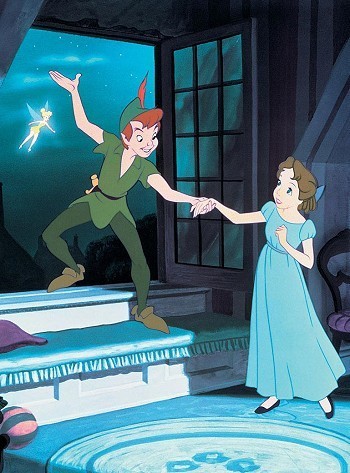
Watching my daughter this weekend in the play Peter Pan made me a proud dad (so score one–a very big one–for growing up).
But focusing on the merits of the characters, Wendy vs Peter Pan, had me leaning ever-so-slightly in favor of Peter at the end of the play.
I mean, let’s look at their legacies. Wendy had a nice run for several decades when the play was first published and performed. She’s viewed today as a “good girl” and “model daughter.” More Jan than Marcia in Brady Bunch terms. But has she ever had a book written about her neurosis titled “The Wendy Syndrome”?
Nope.
Do we know who played Wendy opposite who played Peter Pan?
Nah. We just know Sandy Duncan played Peter.
And what about having your own line of peanut butter?
Ever heard of Wendy’s peanut butter?
No. Never happened.
And don’t try slipping in Hamburgers. Different Wendy. Different family. I saw her father in the play this weekend and he looks nothing like Dave Thomas.
So, on balance, would the world be better off if Wendy caved and never grew up?
Who’s to say? We would at least probably have another pop-psychology book and additional brand of peanut butter. But as the Wendys of the world would quickly –and correctly–point out, we have plenty of pop-psych books and peanut butter as it is and don’t need more. And note that Wendy grew up to have a nice family in a middle upper class neighborhood.
That’s all true of course. But the Peter Pans of the world would quickly note, Peter has an entourage of lost boys –just like the awesome HBO series! And, of course, Peter is always the last one to bow and gets the most applause –after flying in for his final bow as he drops fairy dust on the audience who is cheering him on.
And you got to admit –even if you are a Wendy—that may not be very mature, but it is pretty cool.
By Erica and Matt Chua, on Mon Mar 4, 2013 at 10:00 AM ET
Istanbul is a unique city where East meets West, Europe is connected to Asia by a bridge and the Middle East is just a short boat ride away. Nowhere is the cultural convergence of Turkey more evident than in their diverse and vibrant markets. The Grand Bazaar in the center of the old city and the spice market on the banks of the Bosphorous offer a glimpse into the past and the opportunity to travel without leaving the country.
Grand Bazaar
Construction of the Grand Bazaar started in 1455 and continued to grow as it first housed the textile trade, then included space for the slave trade within the area. As more shop owners set up their businesses an entire quarter dedicated to commerce was born. In the seventeenth century the area became the hub of Mediterranean trade, further proof of the power of the Ottoman Empire. It seems as if the history is still present within the vaulted chambers of the historic market, the diversity of vendors is incredible and the whole area has a wonderful old world charm.
Tea cups and tea sets for sale in the Grand Bazaar
Read the rest of… Erica and Matt Chua: Istanbul Markets
By Garrett Renfro, RP Staff, on Fri Mar 1, 2013 at 1:30 PM ET
The Politics of Sequestration
It is now March 1 and no deal to avert the $85 Billion across the board spending cuts has yet been passed by Congress. There were two last gasp efforts on the part of the Senate to pass a bill last night, however both the Republican and Democratic sponsored measures went down in defeat. Jonathan Weisman explains how both bills were essentially doomed from the start, perhaps even designed to fail. [NYT]
As the sequester draws nearer, lawmakers are further away, not only from striking a deal but from The Capitol itself. Many members of the House of Representatives and the Senate have already left town for the weekend and many have resigned themselves to leaving the sequester cuts in place for months to come. House Republicans are reportedly looking toward the next deadline (March 27) and drafting legislation which would avoid a government shutdown. Such legislation would likely keep the sequester cuts in place through September of this year. [WP]
This morning, the Congressional leadership arrived at The White House to meet with President Obama and try to cut through the gridlock before the cuts officially begin later tonight. The meeting is currently in a standoff, with both sides admitting that little progress has been made. Senate Minority Leader Mitch McConnell (R-KY) has stated that if there is any deal to be reached, it will absolutely not include tax increases. [Politico]



 Blog this!