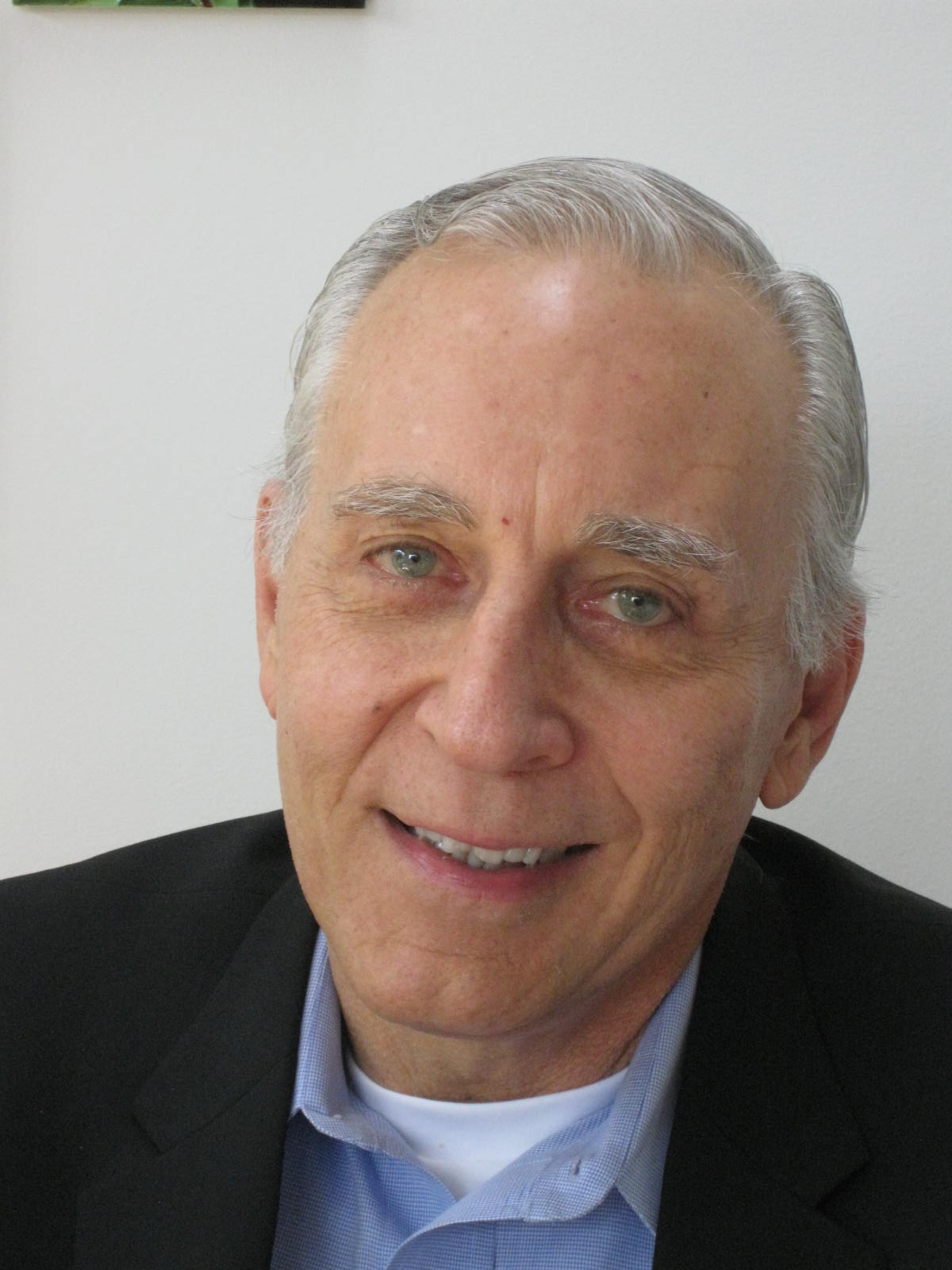
By Ronald J. Granieri, on Mon Jul 16, 2012 at 8:30 AM ET “It must be great being a college professor. You get summers off!”
 All professors have probably heard this sentiment, in one form or another. It is usually accompanied by a sigh, the commenter wishing that she had such a cushy life. Though as many times as I have heard it, I know that it is not necessarily intended as a slight or a criticism. Most often, it is expressed as a good-natured if ignorant observation about the unusual perks of a somewhat exotic job, rather like when people tell flight attendants, “Wow, you get to fly all over the place for free!” All professors have probably heard this sentiment, in one form or another. It is usually accompanied by a sigh, the commenter wishing that she had such a cushy life. Though as many times as I have heard it, I know that it is not necessarily intended as a slight or a criticism. Most often, it is expressed as a good-natured if ignorant observation about the unusual perks of a somewhat exotic job, rather like when people tell flight attendants, “Wow, you get to fly all over the place for free!”
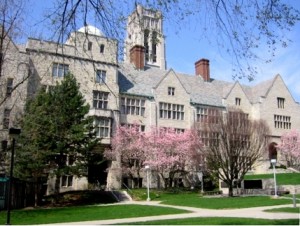
What makes academic life seem so exotic is that being a professor is more like practicing a medieval craft than pursuing a modern profession. As befits a world of robes, elaborate ceremonies, and gothic quadrangles, universities maintain a system of unique rewards and demands that harkens back to pre-modern times.
Practically, this means that the work habits of academics are hard to reconcile with the patterns of most normal professions. Academics are supposed to do two things—produce knowledge and share that knowledge with the larger community. They are also, according to tradition, supposed to govern and police themselves. Although that does not mean what it used to, when universities had special laws and even their own jails (some of which are preserved as tourist sites in European university towns such as Heidelberg in Germany) it still means that universities pride themselves on being governed by their own—deans, directors, chairs, and presidents drawn from the faculty.[1]
In present parlance, that means university faculty members are evaluated according to the classic trilogy of research, teaching, and service to the academic community.[2]
Here we get at the root of the contrast between what people think professors do and what they actually do. For the things that are most visible to the outside world—teaching in the classroom, meeting with students in office hours, grading assignments—is also only a part of what academics are expected to do. When junior faculty sigh and say they “really need to find time to do my own work,” they are rarely referring to teaching. Indeed, even the most dedicated teacher who devotes time to developing and preparing new courses is going to need a lot of time alone to gather and develop new knowledge. That means everything from reading and reviewing the newest literature in their field to working on their own projects. None of these tasks lend themselves to punching a clock. Academics are paid to think and read and write, which means a lot of their time is unstructured, and they have freedom to organize it according to their own priorities. That is the positive view. The less positive view is to note that unstructured work means that it is never really over. There is always more to read, and those books and articles don’t write themselves.
 So academics have to deal with less immediate but more constant pressures than people in other professions, all the year round. That is not a complaint, since I am sure that a lot of people in other types of jobs wish the pressures they felt were less tangible, but it is something to think about before claiming that because professors only teach a few classes a semester, or do not teach in the summer, they have a lot of “free time.” So academics have to deal with less immediate but more constant pressures than people in other professions, all the year round. That is not a complaint, since I am sure that a lot of people in other types of jobs wish the pressures they felt were less tangible, but it is something to think about before claiming that because professors only teach a few classes a semester, or do not teach in the summer, they have a lot of “free time.”
If those outside academe have a hard time understanding what goes on there, that is also because the practical details of academic life can vary greatly depending on both the type of university or college and the field in which an academic operates (and of course upon whether one is on the tenure track). Schools can range from teaching-heavy colleges (which would include both small private institutions and satellite campuses of state universities, as well as community colleges) where the average professor is expected to offer four or five courses a semester (and do all of her own grading) to the elite research universities where the load is usually two courses a semester—perhaps less, if the faculty member has special administrative responsibilities such as chairing a department or directing an institute—and where most of the grading is done by graduate students, as part of their apprenticeship before beginning their own academic careers.[3]
Teaching and research exist in tight, inverse proportions: the lower the teaching load, the higher the research expectations.[4] What those research expectations may be depends on the field. In the natural sciences, successful academics are expected to manage a laboratory and conduct a range of experiments. That means hiring and supervising a small army of student assistants, and applying for and managing the large outside grants necessary to fund the operations. Natural scientists also publish several research reports and articles a year. Most of those publications will be multi-authored, which (to put it most charitably) allows scientists to leverage their work into more publications than they could have produced on their own. Humanities and social science professors publish fewer and longer pieces—journal articles and books, usually single-authored—and are less dependent on labs and grants, except when they need to travel to archives.
Critics ranging from undergraduates unable to get an appointment to complain about midterm grades to Wall Street Journal op-ed writers have attacked the attention faculty pay to what can appear to be unnecessarily esoteric research.[5] Imust admit to having mixed emotions about these criticisms. There is nothing wrong with demanding that faculty remember their responsibility to share their knowledge with non-specialists, and I am a firm believer in the importance of teaching. What such critics tend to miss, however, is the responsibility of professors not only to repeat old knowledge but to create new knowledge as well. At their best, such criticisms can serve to puncture the pomposity of over-specialized academics. At their worst, they sink to the level of the know-nothings who want to eliminate the library budget because no one has read all the books that are already in it.
Read the rest of…
Ronald J. Granieri: A Glimpse Behind the Ivy Curtain
By Zac Byer, on Fri Jun 29, 2012 at 8:30 AM ET  Good morning and welcome to a special edition of Prix Fixe Politics! At 11:30 PM Wednesday night, I hailed a cab to the second most important address in all of America – One First Street NE, Washington, DC. I arrived at the Supreme Court, not realizing how tense and dramatic the next twelve hours would get. I want you to relive Thursday with me – I hope it gives you a different perspective on this historic moment. With that, here is today’s special SCOTUS menu… Good morning and welcome to a special edition of Prix Fixe Politics! At 11:30 PM Wednesday night, I hailed a cab to the second most important address in all of America – One First Street NE, Washington, DC. I arrived at the Supreme Court, not realizing how tense and dramatic the next twelve hours would get. I want you to relive Thursday with me – I hope it gives you a different perspective on this historic moment. With that, here is today’s special SCOTUS menu…
Appetizer: It was actually around 2:00 PM Wednesday that I first stopped by the Court to see if the mayhem had begun. No protestors, no supporters, no media in sight…and there were only 3 people in line at that point. It was less electric than an LA Clippers game in the 90’s and 00’s. The third woman in line was kind enough to inform me that the Court reserves about 60 spots for the general public on oral argument and opinion days. While she wouldn’t hold a place for me, she gave me her phone number and suggested I call her later in the evening to gauge the crowd. Sure enough, when I called her at 11:30 PM, she let me know the line had grown to roughly 40. So, in khakis and a button-down, with only a half-full bottle of water, I took a cab to the Court and got in line. If you didn’t recognize the building behind us, you could easily have mistaken the group for college freshmen on move-in day. The average age was 25 or 26 at most. They brought foam egg crates and yoga mats to sleep on, blankets and sleeping bags to sleep under. Some wore sandals and shorts, others wore suits and suspenders. Justice truly knows no dress code. There were over-eager undergraduates and case-citing law students, with some Masters in Public Health candidates sprinkled in. And even though all sides of the aisle were represented and the Capitol Building shone illuminated across the street, there wasn’t one political argument all night.
Main Course: By the time 5:00 AM rolled around, I learned that a lone Crystal Geyser water bottle does not make for a good pillow. People were stirring and the media circus was arriving. While the mood was still surprisingly relaxed at that time, 8:00 AM was another story. The Court security lined us up single-file and handed out a numbered gold card to each person. I got #36, and could breathe a quick sigh of relief that I’d make it into the courtroom. The guards moved us along 10 at a time, left, right, left, right. Walking up the first few stairs and heading to the side of the Court, I got a different feeling than I do when I enter the Capitol or White House. For me, at least, I didn’t feel the same sense of patriotism, but more of a feeling of permeating purpose. Finally moving toward and into the Court reminded me how monumental a moment this could be in the course of defining the parameters of American government, determining the next President, and shaping the political conversation for years to come. And when you pass CNN’s Jeffrey Toobin in the hall of the Supreme Court, you know there’s no better place to be if law and policy is your bag.
As we lined up once again and prepare to head upstairs, a rosy Michelle Bachmann appeared out of nowhere to join the front of the line. She hadn’t looked that cheerful since she won the Ames straw poll last August. Eventually, after we make our way upstairs and check cell-phones and bags in a locker room, I am led to a seat directly behind Bachmann. She’s not the only congressional Republican on hand: Reps. Tom Price and Catch McMorris-Rogers are a few rows ahead. Senators Hatch and Barrasso found good seats in the middle, too. Paul Clement, attorney for the National Federation of Independent Businesses, was already seated in the back section when Donald Verrilli and others from the Solicitor General’s Office arrived to take their seats only a few rows from the bench.
Read the rest of…
Zac Byer: EXCLUSIVE Report from Inside the Supreme Court on Obamacare Decision Day
By Zac Byer, on Thu Jun 28, 2012 at 9:00 AM ET  No full meal yet, but wanted to send regards from the line in front of the Supreme Court. No full meal yet, but wanted to send regards from the line in front of the Supreme Court.
I’m #42 in line to get in and hear the opinions read in the morning — as you know, the healthcare decisions are expected.
First 60 are reserved for public…so I lucked out.
But, I am so ill-prepared. One water bottle, and the same button down and khakis I wore since Tuesday morning and through a red-eye flight. Everyone has sleeping bags and pillows, foam egg crates and blankets. And 95% of us are under 25 years old!
By Ron Kahlow, on Tue Jun 26, 2012 at 1:30 PM ET  State primaries are in a truly very sad state. Voters don’t understand the importance of primaries. Voter turnout in every State primary has always been horrible. Primaries defeat the principle of representative democracy. Primaries give incumbents a big advantage over challengers. Next Tuesday, New York, Colorado, Oklahoma and Utah have primaries. And, the beat goes on. State primaries are in a truly very sad state. Voters don’t understand the importance of primaries. Voter turnout in every State primary has always been horrible. Primaries defeat the principle of representative democracy. Primaries give incumbents a big advantage over challengers. Next Tuesday, New York, Colorado, Oklahoma and Utah have primaries. And, the beat goes on.
One reason for poor turnout is that voters are often ignorant of the importance of primaries. For any office that is safe for a particular party, whoever wins the primary office contest has, in effect, already won the office. The office contest in the November general election is virtually meaningless. In the District of Columbia, almost all of the elected officials are Democrats. The primary election literally determines the DC government. The November DC election is a waste of time and money. Unfortunately many voters are unaware of this, and, by not showing up for the primary, they simply have no say in the selection of the candidate(s) who will represent them.
A second reason for poor turnout is that voters don’t understand primaries and are intimidated by them. Each State can hold a primary election in numerous ways. And, each State has its own rules in the actual execution of its primary. For voters, this makes for a confusing mess. They don’t know what party primary they can vote in. They don’t know how many different ballots there will be. They don’t know what party ballot(s) they can request. They don’t know what will be on the ballot(s). They don’t know what party identification they need. They simply don’t know what is going to happen when they show up at the polls. Worst of all, they can’t even get answers to these questions in advance on the State’s election website. I challenge you to try!
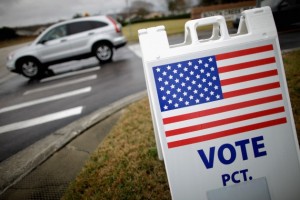 In the case of next Tuesday, New York and Oklahoma will conduct ‘closed’ primaries. Voters may vote only if they are registered member of that party. Independent and non-partisan voters cannot participate. Colorado, however, will conduct a ‘semi-closed’ primary. Registered party members and unaffiliated voters can vote only in a party’s primary. Independents choose a party. But, Utah takes the prize. It will hold a ‘closed’ primary for registered Republicans but will hold ‘open’ primaries for Democrats and Constitution party members. Is it any wonder that voters are turned off by the whole business? In the case of next Tuesday, New York and Oklahoma will conduct ‘closed’ primaries. Voters may vote only if they are registered member of that party. Independent and non-partisan voters cannot participate. Colorado, however, will conduct a ‘semi-closed’ primary. Registered party members and unaffiliated voters can vote only in a party’s primary. Independents choose a party. But, Utah takes the prize. It will hold a ‘closed’ primary for registered Republicans but will hold ‘open’ primaries for Democrats and Constitution party members. Is it any wonder that voters are turned off by the whole business?
Read the rest of…
Ron Kahlow: The Sad State of State Primaries
By Zac Byer, on Mon Jun 25, 2012 at 1:30 PM ET [Click here for a link to the entire RP Debate on Roger Clemens]
A few random musings first…
–Original RP: Saying Ryan Braun is your favorite Jewish ballplayer is like saying Tiger is your favorite black golfer! Unless you’re talking historically, and then I’ll send you a few clips of Sandy Koufax from 1963…and ’65…and ’66.
-I’m ready for Artur to write a book titled Let Me Tell You Something Profound About Nearly Everything. Forget your next campaign — I want to catch a game with you
-2013 RP Fantasy League anyone?
I’ve been a baseball fan for as long as I can remember. Growing up in a family that shared LA Dodger season tickets helped that cause. And I think because of my connection with the Dodgers, I’m largely a baseball purist. We’ve got the only symmetrical ballpark in the National League. Our beloved stadium just turned a cool 50 years old (some of the Dodger Dogs taste like they’re pushing 50, too). And there’s no smoother voice in baseball – heck, sports – than Vin Scully.
I guess as a Dodger fan it’s natural to be anti-PED and anti-steroid. Barry Bonds crushed us for years and Braun made out like a bandit when he won Matt Kemp’s MVP award last year. It’s probably why Griffey Jr. is my favorite player I grew up watching. Yet now, as I think back to all the games I’ve been to, a few moments stand out (there haven’t been many great Dodger moments since ’88):
-Watching Mark McGwire hit balls OUT of Dodger Stadium during batting practice. I don’t mean out of the stadium, into the bleachers. I mean OUT of the stadium, into the parking lot. Big Mac did it once during a game – the only two others to ever do it over the last 50 years have been Willie Stargell and Mike Piazza.
-Watching Barry Bonds absolutely mash. Each of his home runs against the Dodgers sucked a little more life out of me. And yet I always felt like watching Bonds would be the closest thing I’d ever get to watching Babe.
-Watching Eric Gagne make some of the best hitters look like career AA bullpen catchers. He’d run in from Left Field to “Welcome to the Jungle,” and just like our Gagne shirts said, we knew it was “Game Over.
-Watching Clemens deal. I’ve never been so entranced watching a starting pitcher. It’s one thing to sit on the edge of your seat in Loge 131 Row K and secretly hope to see Bonds go yard. It’s another to sit there crossing your fingers for Rocket to hit 97 on the gun and pitch one more inning. I remember that he didn’t throw for too long, but it was 6 or 7 of the most calculatingly brilliant innings I’ve seen a pitcher toss.
I don’t have to tell you what all of these guys have in common. Does it disappoint me? Without question. Has baseball ever been as exciting as it was from the mid-90s to the Mitchell Report? No way. Look what’s happening now. Football is now America’s Game. Kids are growing up playing lacrosse instead of playing catch. And the dollars and cents of baseball continue to get hammered, as season ticket bases erode and people stay home to watch games on their plasma TVs.
So put Clemens in the Hall so I can tell my kids about the game I saw him pitch. And I’ll tell them about steroids, I’ll tell them about how exciting baseball was back then and how devastating some of the claims were. And then we’ll go out and play catch and everything will be fine.”
By Steven Schulman, on Mon Jun 25, 2012 at 8:30 AM ET As an irregular feature, Mondays at The Recovering Politician are sometimes reserved for great debates among the contributing RPs and Friends of RP. Click here for a link to the prior debates.
Today, the following question is posed: Should superstar pitcher Roger Clemens, recently acquitted of lying about using performance enhancing steroids, be admitted to Major League Baseball’s Hall of Fame?
Steven Schulman, this site’s resident baseball expert — and the second best owner in his fantasy baseball league — leads off:
 First, a few disclaimers: Roger Clemens was for many years my favorite baseball player. Until he signed with the Yankees. Then he was dead to me. Ok, that’s behind us. The question is whether the acquittal of Clemens on the charges of lying to Congress and obstruction of justice make him more or less likely to be inducted into the Baseball Hall of Fame, and, in any case, whether he should be elected notwithstanding the charges (both legal and moral) against him.
The realist point of view is that the writers who are empowered to elect players to the Hall of Fame are highly unlikely to be persuaded by the verdict in a criminal proceeding. The prosecution’s burden in a criminal court is to prove the facts “beyond a reasonable doubt.” For Hall of Fame voters, the burden appears to be “well, I personally think so, for whatever reason.” For their own reasons – either moral objections or simple embarrassment that they themselves failed to uncover (or to reveal their own knowledge of) steroid use – writers are objecting to anyone from the 1990s into this century who even has a hint of steroid use.
Jeff Bagwell – who ranks among the best first basement ever (in the major leagues, not just my Rotisserie baseball team) – has failed in two tries to be elected to the Hall of Fame, simply because his body type and the era in which he played raise suspicions of steroid use. Accordingly, Clemens’s acquittal will hardly move the needle for the knights of the keyboard who guard the gates to Cooperstown.
Read the rest of…
The RPs Debate Roger Clemens: Steve Schulman Leads Off
By Ron Kahlow, on Thu Jun 21, 2012 at 3:00 PM ET Who says primaries are not important? Tell that to the candidates and incumbents vying for New York’s US House seats. The 2010 census reduced the number of US House seats for New York from 29 to 27. The redistricting of these newly-redrawn districts means a new shuffling of the cards for the candidates and incumbents vying for these reduced number of US House races.
In the 2010 primary, only 18% of voters turned out for the New York Primary. The turnout this year could be even worse because, in January, a Federal judge moved up the primary from Sept. 11 to June 26. New York voters became accustomed to having a primary after Labor Day. The change in date can only further hurt turnout. So, possibly fewer voters will determine who might be elected to Congress.
Currently three-quarters (21 of the 29) of New York’s U.S. House seats are currently held by Democrats and only one-quarter (8 of the 29) by Republicans. Of the 27 newly-created districts, there are 10 traditionally held Democratic seats (Districts 5, 6, 7, 8, 9, 13, 16, 18, 19, 23) being hotly contested. Many contests have between 3 to 5 candidates seeking a place on the November ballot. The Republicans will only have 5 contests on the primary ballot and they are a lot simpler with only 2 candidates in each contest. Three Republican US House district races are selecting a candidate who will attempt to unseat an incumbent Democrat. Two races are selecting a Republican for a traditionally-held Republican district. They also have three candidates hoping to unseat Democratic incumbent senator Kirsten Gillibrand.
Probably the most interesting contests in the New York Primary is New York’s 13th Congressional District, where Democrat Charles Rangel, who was the incumbent from the pre-redistricted 15th District now has to win the primary in the new 13th District. The old 15th District was basically the Harlem neighborhood. The new 13th District, which is still centered in Harlem, is no longer primarily African-American and has changed dramatically. The District has ballooned to cover all of Upper Manhattan, and extends into the Bronx. The old 15th District was close to 80% African-American, while the new 13th is only about 36% African-American and has a majority-Hispanic voting-age population.
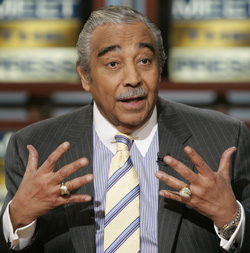 U.S. Representative Rangel has been in the U.S. House since 1971 (i.e., for 41 years) and is age 81. In 1971, he defeated Adam Clayton Powell Jr. by a razor-thin 300-vote margin but has won handily every election since, garnering over 95% of the vote in most elections. He is the third most senior member of the House and Chairman emeritus of the powerful Ways and Means Committee. That seniority has allowed him to deliver millions of dollars to Harlem. But, he now faces four challengers in the upcoming primary election. Whoever wins this primary contest probably will be elected to Congress in this Democratic District. U.S. Representative Rangel has been in the U.S. House since 1971 (i.e., for 41 years) and is age 81. In 1971, he defeated Adam Clayton Powell Jr. by a razor-thin 300-vote margin but has won handily every election since, garnering over 95% of the vote in most elections. He is the third most senior member of the House and Chairman emeritus of the powerful Ways and Means Committee. That seniority has allowed him to deliver millions of dollars to Harlem. But, he now faces four challengers in the upcoming primary election. Whoever wins this primary contest probably will be elected to Congress in this Democratic District.
In the new 13th District, Rangel is facing one of the toughest campaigns of his political life. He faces four very strong candidates.
Probably Rangel’s biggest threat comes from Adriano Espaillat. Espaillat is a Dominican-American and the only elected official among Rangel’s four challengers. He probably will obtain the majority Latino/Hispanic vote in the District. El Diario, the oldest Spanish language newspaper in New York, and is one of the most read publications in the 13th Congressional District, has endorsed and praised Espaillat’s work on behalf of poor and middle-class New Yorkers and said he would be a strong voice on immigration, healthcare, and other critical issues. Also, helping Espaillat is former candidate Vince Morgan. He withdrew from this race and endorsed Espaillat on April 10th.
But, Joyce Johnson also poses a significant challenge. Johnson ran against Rangel and came in third to Rangel and Adam Clayton Powell IV in the 2010 primary. At that time, The New York Times editorial board endorsed her over Rangel. She is a long-time activist, a former local Democratic district leader, and has spent many years in New York City government. She’s smart and is a graduate of Howard University with a degree in microbiology.
Another worthy opponent is Craig Schley. Schley is a highly-motivated 48 year old NYU Dean’s List Scholar and Harlem activist who built his reputation by opposing the 125th Street rezoning in 2008. This is his third time challenging Rangel. His campaign theme is to oppose the status quo. It may be dangerous to under-estimate an African American Bobby Kennedy type candidate.
Read the rest of…
Ron Kahlow: Charlie Rangel, Redistricting, and the New York Closed Primary
By Zac Byer, on Mon Jun 4, 2012 at 11:00 AM ET
Good morning, and welcome to another edition of Prix Fixe Politics! Apologies for my absence, but May was a long month of work outside the political realm. I can’t say that disappointed me, but you can only stay away for so long (I’m on my way to catch a flight to Wisconsin for tomorrow’s gubernatorial maelstrom). On the eve of the second most important election of 2012, here’s today’s menu… Appetizer: We are less than 100 days away from the Republican and Democratic conventions in Tampa and Charlotte, respectively. They are the Super Bowl, March Mardness, and World Series of politics, but they only happen every four years. So, maybe they’re more like the Olympics or the World Cup, but with fewer viewers and many more out-of-shape people. A source tells me that the Democrats are six weeks behind the Republicans in their operations and development. With the first week of September only three months away, that can’t be sitting well with Obama’s Chicago outfit.
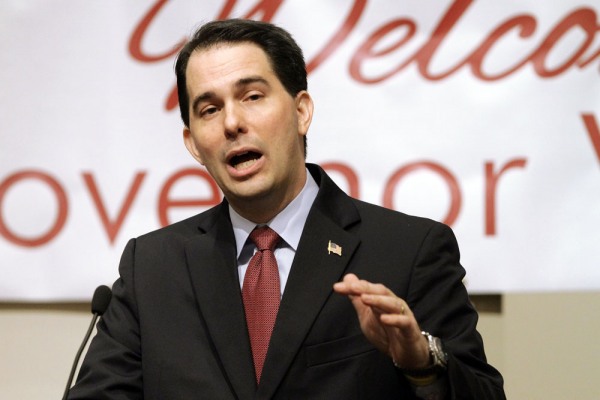
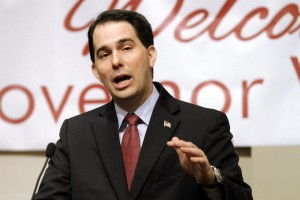 Main Course: Main Course: Tomorrow in Wisconsin, voters will go to the polls to participate in only the third recall election of any U.S. governor (if you’re from California, you may remember fondly when you could have voted for Gary Coleman to replace Gov. Gray Davis in 2003 – a bright spot in my home state’s storied history). Last year, WI Gov. Scott Walker sparked a firestorm when he eliminated most collective bargaining rights for public-sector unions. Since then, pro-labor forces mobbed the state capital in Madison, Democratic state legislators fled to Illinois to avoid a budget vote, and the candidates and independent groups spent over $63 million drumming up support. What happens if Tom Barrett, the Democratic nominee and Milwaukee Mayor, defeats Walker? Foremost, the labor unions’ financial efforts will be vindicated. The unions will gain significant fundraising momentum in important rust belt states such as Ohio and Michigan, making it even harder for Romney to move these must-win states into his column. And if Gov. Walker holds on? You can look for him in a prime speaking spot at the Republican National Convention in August. But more importantly, I expect other Republican Governors and state legislatures to toy with similar proposals. They may not have the courage to act before November, but they’ll float the idea, bring Walker to speak in their state (think Pennsylvania and Ohio), and use it as leverage over the labor/Democratic thorns in their sides. Who’s going to win? At this point, anybody in Wisconsin who plans to vote has made up his or her mind. It’s cliche, but it’s true: it will come down to voter turnout. And the unions are pretty good about loading Democratic voters into vans heading for the polls. Still, I think Walker keeps his job by 4-6 points.
Read the rest of…
Zac Byer: Prix Fixe Politics
By Jordan Stivers, on Tue May 22, 2012 at 8:30 AM ET 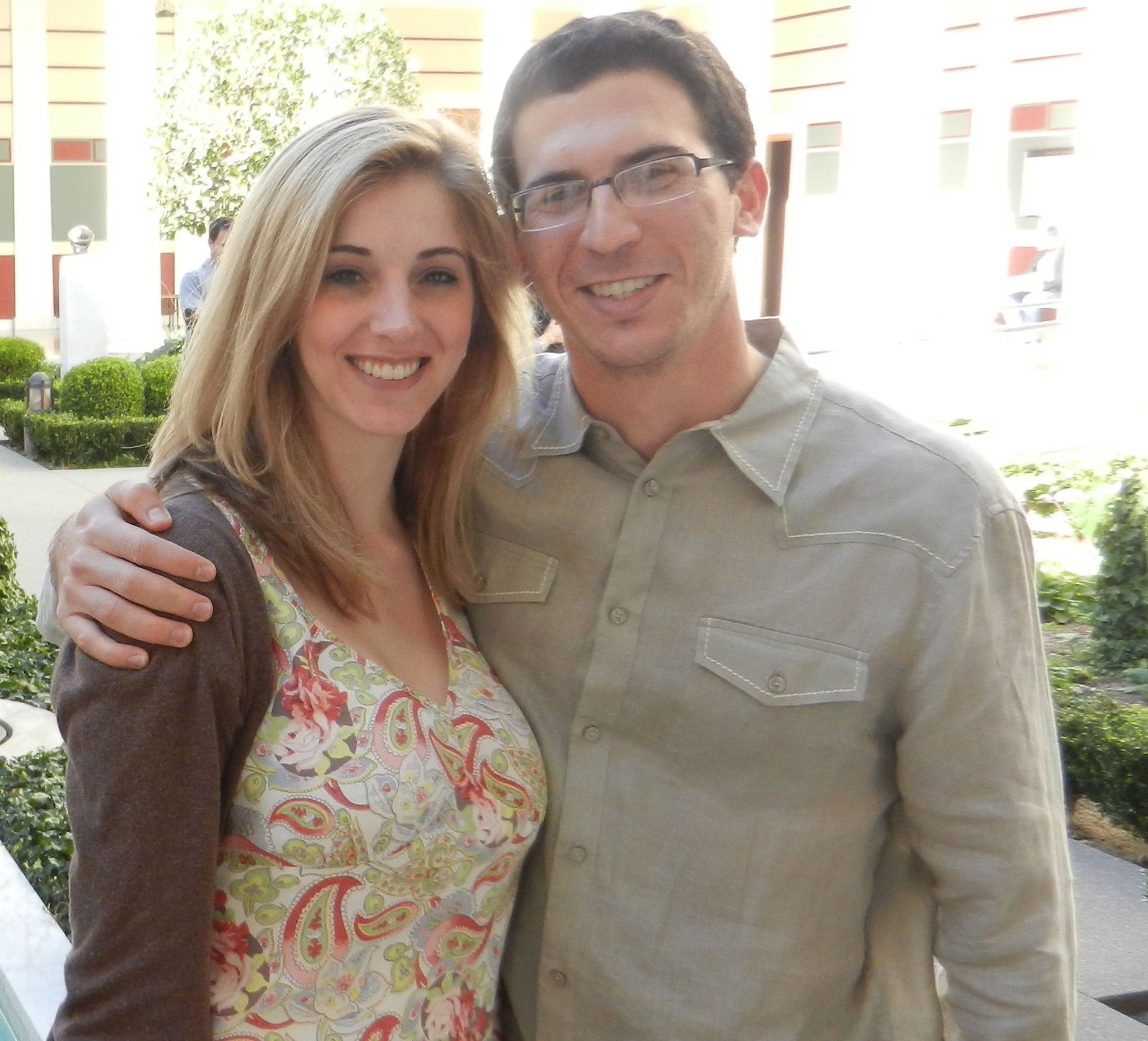 Last month, we introduced a new feature at The Recovering Politician: the Gen Y “He Said; She Said” debates. Last month, we introduced a new feature at The Recovering Politician: the Gen Y “He Said; She Said” debates.
“He” is Zac Byer, a longtime staff contributor at the RP, an outspoken Republican, and currently works for one of the leading minds behind GOP national strategy, Dr. Frank Luntz. “She” is Jordan Stivers, a passionate Democrat who currently serves on the communications committee of the newly formed Young Democrats of America Faith and Values Initiative. As you might be able from the picture at left, “He” and “She” are dating. Or talking to each other. Or in a relationship. Or whatever Gen Y calls these types of relationships.
Anyway, enjoy their debate about Hope and Change:
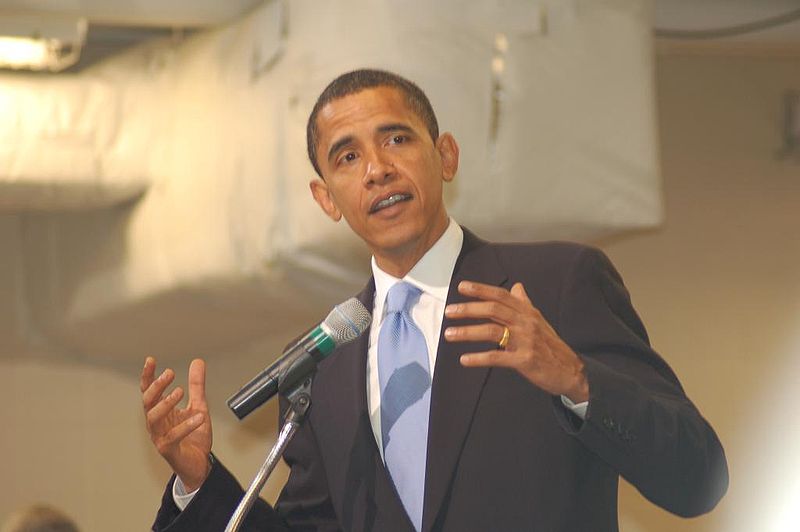
JORDAN: This week, I read an article by the senior editor of The Atlantic in which he explains why he thinks Obama is losing, though the election is six months away. He says it’s not because voters don’t like Obama, or don’t think he is qualified, but because he has “simply failed to bring the change he promised.” I’ve heard this argument quite a few times, mostly from Republicans, who, as soon as President Obama was elected made it their main objective to create as many obstacles to bipartisan success as possible. My Senator, Mitch McConnell of Kentucky, is one of these. He openly stated that he planned to do everything in his power to make President Obama a one-term President. What a winning attitude.
 I was an enthusiastic supporter of President Obama in 2008 in part because of the bipartisan environment he wanted to create, but also because I trusted his instinct to lead us in a direction that would make the United States more of a place of opportunity for young people like me, and for the many people that were used to finding themselves without any power in the political process. I believe that in that second objective, he has delivered the change he promised. Through health care reform, the JOBS Act, the repeal of Don’t Ask Don’t Tell, and now his open support of marriage equality, he has brought more positive change to this country than President Bush did in his two terms.
Of course I wish that Congress could actually function and compromise the way the founders intended, but why their dysfunction is being laid entirely on President Obama’s shoulders I don’t understand. The people who should be held responsible are Speaker John Boehner, Mitch McConnell, and Harry Reid. The politicians and pundits who are complaining that not enough change has happened are the same people who were actively trying to prevent change from happening, for purely political reasons. Any sucess for Obama meant a loss for them. What they did not consider is what would be a success for Americans as a whole. Instead of mocking the words “hope” and “change,” Republicans should realize that those words mean a lot to people. The only way things can change for the better and people who are downtrodden by the economy can have hope again, is for Republicans and Democrats to work together.
ZAC: Working in language and message consulting, I agree that words “mean a lot to people.” And clearly, in 2008, “hope” and “change” carried a particular significance surpassing any presidential campaign mantra. But here’s the issue — words can only take us so far. There must be actions to bolster the message, otherwise the latter only amounts to hollow rhetoric.
The JOBS Act was a rare symbol of bipartisan cooperation…but it started as a House Republican priority that Senate Democrats and the President realized they couldn’t say no to without falling on the sword.
To say Obama has delivered the change he promised through his health care reform is tantamount to a baseball owner saying the new pitcher he signed has changed the franchise before he has even thrown his first pitch. Nancy Pelosi herself said it’ll be a matter of time before anyone truly understands the consequences of the legislation, and I don’t expect the Supreme Court to go quietly into the night.
And I applaud Obama for finally putting principle before politics and admitting that he supports same-sex marriage. An evolutions? Good grief! If I was a Democrat who cared strongly about that issue, I’d be downright angry that the only reason why Obama made his declaration of support two weeks ago was because Biden did what he’s been doing for over thirty years. Real courage would have been an announcement in support of same-sex marriage in 2008, no matter the electoral consequences. Be that as it may, I don’t expect his announcement to change much at all, as this will remain a states’ issue (as even Obama desires it to be).
Ultimately, we head into November 2012 staring down $5 trillion more in debt, unemployment stuck above 8%, and a failed $800 billion stimulus.
I’ll be the first to admit that the cooperation from the congressional Republicans has been minimal at best. But, when you look back at Obama’s first two years in office, what’s your assessment? He worked with Democrat majorities in both the House and the Senate, and rode a wave of public support into the White House. Are you truly satisfied with how he and his counterparts prioritized — Cash for Clunkers, health care, and Solyndra instead of legislation aimed at relieving the burdens on small business owners and job creators, or incentivizing businesses to keep jobs in America, or tackling entitlement reform?
Read the rest of…
Gen Y “He Said; She Said” on Hope and Change
By RP Staff, on Mon May 21, 2012 at 11:00 AM ET Last night, at the annual GOP Lincoln Day statewide dinner, Agriculture Commissioner James Comer — a rising star himself — welcomed Brown to the party from the dais, sparking a long and warm ovation.
And Sunday morning, Johnny appeared in the pages of the Courier Journal (Louisville) with the King himself — the longtime leader of Kentucky Republicans, U.S. Senator Mitch McConnell.
Johnny’s father — and forgive us, we have already forgotten his name — was said to be kvelling, although he wasn’t sure what the Yiddish term meant.
|
|


 So academics have to deal with less immediate but more constant pressures than people in other professions, all the year round. That is not a complaint, since I am sure that a lot of people in other types of jobs wish the pressures they felt were less tangible, but it is something to think about before claiming that because professors only teach a few classes a semester, or do not teach in the summer, they have a lot of “free time.”