I am 27 years old. I can sugar-coat things by saying I am single, free-spirited, and full of optimism when really I live under the security blanket of those words. So let me be clear: I am alone. I am, at times, spirit-free. I am unemployed and more than I’d like to admit, feel the glass is half empty. Being honest and showing vulnerability is not to win some sort of Purple Heart, literary or otherwise. It is, justly and in fact, the truth.
I don’t want to earn or gain sympathy. Exercising my right to free speech and type will always bring the bearers of bleeding heart and bleating doubt. So it is essential that I assert through this brief dissertation that I have said and done these things by choice.
I have made many decisions that have led me to this fork in the road. I have no blame to point towards myself or others. I have no regrets either. Instead, I have nothing but time to learn. Quaint as my living quarters may be, the vast and unknown are things I am facing…as I should in my twenties. I have no doubt the evidence of struggle and the peace I find with this time in my life will line my pockets one day. I am, of course, the quintessential millennial with high hopes and dreams. The only question now is how.
It would be nice to contemplate my navel with this time away from the working world. I did for a couple of weeks after the hangover wore off from the perpetual hamster-spinning and mind cluster crap I became accustomed to in my previous position. Now, I only wish for an opportunity that would make the wheels in my brain turn, a new thought, a new idea, a break from the monotony, a way out…a paying job. At this point, it doesn’t have to be the job. Just A job.
There are moments in my wallows of self-pity that I do find comfort and the ability to think positively.
I find being unattached at this juncture a blessing. I hear stories of those who have lost jobs and are working hard to provide for their families and I find my scenario as a single female and tiny dog in tow much less harrowing. He eats out of one bowl, poops outside, requires less attention and is always happy when I come home. Also he sleeps. A lot. It is my disturbed sleep schedule that puts a wrench in his day.
As free-spirited as I used to be as a younger tot (yes, Baby Boomers, there is a complete shift in mentality from the ages of 22-27…just go with it), I have become indebted and feel power from the responsibilities that keep me yearning for more. To meet a cute boy and hop on a tour bus at 27? Well, that’s stupid, painfully unaware, and desperate. I lived those days. I loved those days. Although I have time to spend on whatever my heart desires, my spirit leads me towards watching Tom Brokaw, not Tom Petty. The days of free falling are over. I loved them, I thank them for being in my life, and I don’t miss them. I like the news now.
I have learned by age and experience that it is also okay to not trust everyone, everything, and every situation. Sometimes it is okay to be a little weary. The glass may be half-empty at times because I realize there is a glass half-full waiting for me somewhere else. I would not trade the wisdom and the newfound ability to trust my gut for anything in the world. It has given me the most mature outlook on the world I have possessed thus far in my life – one that keeps me from diving in head first. I have learned to be patient and cautious enough to check the temperature of the water. I also avoid hot tubs. Another habit rid from the early twenties. I hear those things have lots of germs. Gross.
So I show this vulnerability. Why?
Didn’t you know? It’s the age of the Internet. People love to scan through this stuff and make judgments either in favor or in contempt. Or to give some other opinion that makes voicing it on the Internet a special experience for those deprived of human contact and self confidence. I am, at times, lacking in both as well. Why take to the vast and unknown and divulge my inner feelings? Again, Baby Boomers – it’s just what we do. Go with it.
I do know that I am not the only one. And I, along with many of my millennial brothers and sisters out there struggling to figure it all out, will have lined pockets one day after contemplating our belly buttons, watching educational programs, searching our souls, calming our too-free of spirits (sometimes), buckling down, earning – and loving – the next move in our journeys. Interesting enough – it won’t take Journey or Tom Petty, but we Don’t Stop Believing. We are resilient little twerps, aren’t we?
Career, life, and love are like really great bourbon. They’re fun when they’re young, but there is something sweet and powerful when they get a little age on ‘em.
Oh, and they’re more of a commodity – because they’ve grown to become something very special. The days of boxed wine and cheap seats are over for this gal. At least that’s the metaphor. I will be drinking boxed wine and looking on from the nosebleeds until I find a job to soothe the pockets…and then line them. Love? I assume that may be next.
Life? Well, that’s what I’ve had all along. I won’t be waiting for wrinkles to become special. This is one thing I’m confident of; a sweet gift I do have in my half-empty pocket that’s sure to surprise – Tom Brokaw and all.
By Jonathan Miller, on Fri Nov 30, 2012 at 9:15 AM ET
The RP sent the following op-ed to hundreds of college newspapers on behalf of No Labels.
You may have more in common with your member of Congress than you think, especially around this time of year.
Students and lawmakers alike want to finish up the year and head home for the holidays.
But there’s a final exam standing between Congress and Christmas — and America’s citizens are ready to give the body an “F” if it doesn’t pass. That exam is coming in the form of the “fiscal cliff” — the combination of arbitrary, automatic, across-the-board spending cuts and tax increases coming at the end of the year that could cripple the economy.
It all started last year when Congress picked 12 of its members to try to find a deal to secure America’s long-term financial future. Consumer confidence had dropped dramatically and a credit ratings agency dropped our country’s rating. It seemed the only thing that could make members of both parties work across the aisle was an alternative so terrible that it would be untenable to both parties.
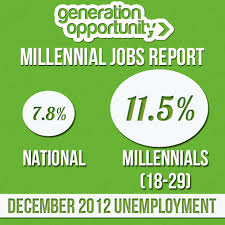
That alternative is coming closer and closer to reality — and unfortunately, it is your generation that will have to pay the highest price. The Congressional Budget Office has predicted that if we do not avoid the fiscal cliff, the $7 trillion combination of spending cuts and tax increases could send the economy hurtling back into recession for years to come. Unemployment, especially among young people, will rise even further. Education will suffer among the harshest spending cuts, losing about $4.8 billion in funding.
Our leaders have had more than three years to address these issues — imagine if you had that long to prepare for a test. Yet rather than hunkering down in the library, or in their case the Capitol Building, to solve this crisis, leaders of each side aren’t even meeting right now to talk about what’s going on. How is this going to solve anything? We need real solutions. These solutions begin with both parties understanding that they need to work together to stave off this crisis.
No Labels — a growing grassroots movement of more than 600,000 Republicans, Democrats and independents — is working to facilitate just this kind of cooperation. Since last year, we’ve been advocating for leaders in all negotiations to put everything on the table and ensure all interested parties are at the table. You can be a part of this movement and sign on at NoLabels.org These solutions can also help fix the underlying problem: the way Washington does business. We need to find real and permanent ways for our leaders to come together to govern for the future. Because our nation’s financial situation is not the only problem America faces. We need our leaders to come together and find solutions in immigration, energy and infrastructure policy.
As Washington’s current stalemate has shown, we can’t afford to wait for Congress to find bold, pragmatic across-the-aisle solutions. Changing Washington won’t happen quickly. But even you would have a hard time cramming three years worth of work into one night. What we can do now is commit ourselves, and hold our elected officials accountable, to the idea that progress is only made when our common national interest is the priority. And that is what No Labels is all about.
Our Gen Y closing argument debate cannot be complete without hearing from the generation’s unofficial spokeswoman, actor/writer/director Lena Dunham. Here’s her controversial Obama endorsement, “First Time.”
Our resident Gen Y “He Said; She Said” team — Jordan Stivers and Zac Byer (who also happen to be dating) offer their closing arguments for the presidential candidates. Click here to read Jordan’s piece. And Gen Y’s unofficial Hollywood spokeswoman, actor, writer and director Lena Dunham, weighs in here.
Here’s Zac:
Can America really afford to continue down the path we are on?
Can we afford to continue with the same policies that have left 23 million Americans unemployed? That have resulted in the smallest labor force in over thirty years? That have ballooned our national debt over $16 trillion – $5 trillion of which has been added in the last four years alone?
Forget about whether or not you’re satisfied with those numbers – I can’t believe you are. So, the better question is whether you accept those numbers? I sure hope you don’t.
We must bring real accountability to Washington. Politicians don’t deserve free passes, especially when they pile even more debt on an already burdened public. The cost of living is too high, and our national morale is too low. Short-sighted, quick-fix economic policies and Washington solutions do not have to become the new normal. Neither does the excuse-me-blame-him strategy. We shouldn’t – and we won’t – accept that.
That’s why we shouldn’t accept four more years of poor prioritization, insincere excuses, and half-baked leadership. It’s why we shouldn’t accept four more years of Barack Obama.
***
I won’t argue that the economy was in a good place on January 20, 2009. The Bush Administration gave us a lot to pay for: two wars, a new prescription drug subsidy, TARP, lower tax rates. While his conservatism may have been compassionate, it certainly wasn’t cash-conscious.
And President Obama means well. While I didn’t vote for him four years ago, I wanted him to succeed as much as his most loyal supporter. When we wake up in the morning and go to sleep at night, we are still Americans…and we are all in this together.
But in the last four years, Obama’s hope has changed to disappointment.
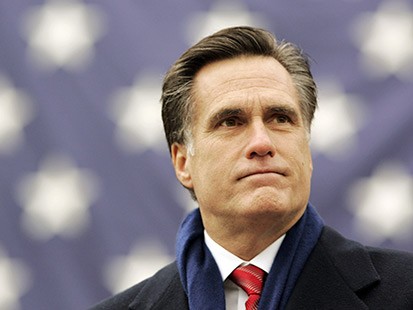
Take the 2012 fiscal year. The government taxed us to the tune of $2.5 trillion to operate the country. Whether you think the 16th Amendment is the best or worst component of the Constitution, I hope you’ll agree that $2.5 trillion is a lot of money. And yet, $2.5 trillion wasn’t enough for Obama’s government. They spent $3.5 trillion – 44% more than they brought in! Not only is that unsustainable, but in Mitt Romney’s words, that’s immoral.
Americans all across the country work hard to stick to a budget. We live within our means, and we don’t spend more than we can afford. If we can do it, why can’t Washington? Why shouldn’t Washington?
***
Read the rest of… Zac Byer: Gen Y He Said — Closing Argument for Mitt Romney
By Jordan Stivers, on Tue Oct 30, 2012 at 9:00 AM ET
Many virtual trees have fallen in examining Gen Y’s involvement in Campaign 2012. Seen as an excited, game-changing voting bloc in 2008 for Barack Obama, much has changed during the job-challenged recovery of the past few years.
Our resident Gen Y “He Said; She Said” team — Jordan Stivers and Zac Byer (who also happen to be dating) weighs in. Click here to read Zac’s piece. And Gen Y’s unofficial Hollywood spokeswoman, actor, writer and director Lena Dunham, weighs in here.
In 2008, I was a junior at the University of Kentucky and it was my first time voting in a presidential election. I found it so exciting that my first ballot ever cast was for Barack Obama, a candidate so different from any I had ever seen or heard about, not only in terms of race or background, but in what he stood for – equality, opportunity, and working together. As I walked around my fairly conservative campus the day after the election, wearing my Obama 08’ shirt and getting dirty looks from other students, I felt so proud that our country had come together and decided to go in a new direction.
I admit that a lot has changed since 2008, not only in my life, but in the country and in President Obama’s White House as well. I’ve graduated from college, worked for two years, and started law school. I’ve become an adult and realized that the state of the economy affects me and that it is vitally important for our national wellbeing. The country has come down from the high it was on after the 2008 election, and because of the difficult recovery from the even more difficult financial situation Obama inherited, many have become disillusioned with the President. But I don’t think this is a result of failed leadership of the President, but a result of our having impossibly high expectations of Obama, and a lack of understanding of the depth of the problems he has had to solve.
I’ve been hearing a lot of Republicans, and Mitt Romney himself, talking smugly about how young people are not as excited about Obama this time around, as if they’re saying, “I told you so, now you know better than to have any optimism about government and the good things it can achieve.” This is so cynical. The mood is different this time, but that’s natural. The President has had the hard job of actually governing for the past four years, and some of the sexiness has worn off. But this doesn’t mean that young people do not believe that President Obama is still the candidate with our best interests in mind. Because of the President’s policies, I’ve been able to stay on my parents’ health insurance through my transition from school to work, then back to law school. He’s supported many of my friends and colleagues who are gay by declaring that they should have the same rights as everyone else. He has kept student loan rates down so that we can pursue higher education. He’s allowed those of us who have grown up in the U.S. but are still not considered citizens to make it official. And let’s not forget how strongly he has represented the U.S. in foreign policy by killing Osama Bin Laden.
Read the rest of… Jordan Stivers: Gen Y She Said — Closing Argument for Obama
By John Y. Brown III, on Thu Aug 9, 2012 at 12:00 PM ET
Dear Olympics,
A modest proposal.
In the future, if you want to pull in a bigger and broader audience and gin up some fun and dazzling sports competition, please have fewer athletic events that seem selected by a prep school athletic director and more sporting events drawn from popular street ball pick up games.
By Jimmy Dahroug, on Mon Jun 11, 2012 at 8:30 AM ET
You’ll have the rest of your life to be conventional graduates. Now is the time to chase your dreams, while you’re still young enough to start over if you fall.
“This is maybe your one shot when you come outta here, so don’t blow it by jumping at money, by doing the things that everybody thinks you should do because it seems successful, figure out where your heart is and try to go with that.”
Michael Lewis, author of Moneyball and The Blind Side, offered this advice to college graduates on Meet the Press when discussing guidance he has offered at commencement addresses. It may be the best advice for any college graduates that I have ever heard. Platitudes about “going for it” are easy to dismiss unless you consider that time is running out quicker than you realize. The first year or so after college may be your last, best shot to take risks to pursue to the job you love.
For most of you, this is the rare few years before family needs and the responsibilities of a stable career consume your daily lives. If there ever was a time to risk pursuing a dream career instead of taking the comfortable path, that time is now.
Earlier this year I was privileged to attend an event where Marty Rouse, National Field Director for the Human Rights Campaign, was honored for his significant work in helping pass marriage equality in New York State. With a career of stories to tell an audience hanging on his every word, Marty chose to share that pivotal choice he made shortly after college to leave a comfortable job and devote his life to the work he loved.
Shortly after college, Marty was moving up the ladder at a promising job in New York City. One day his boss pulled him aside and told Marty that while he was great at the day job, it was clear that Marty’s passion was in his work as an LGBT rights advocate. He advised Marty to quit and at least try to make a living doing the work he loved because in ten years Marty would likely be in his boss’s shoes: too comfortable and too risk-averse to leave that job to do what he loved.
Read the rest of… Jimmy Dahroug: Class of 2012 –This May Be Your Last Best Chance
Good morning, and welcome to another edition of Prix Fixe Politics! Apologies for my absence, but May was a long month of work outside the political realm. I can’t say that disappointed me, but you can only stay away for so long (I’m on my way to catch a flight to Wisconsin for tomorrow’s gubernatorial maelstrom). On the eve of the second most important election of 2012, here’s today’s menu…
Appetizer: We are less than 100 days away from the Republican and Democratic conventions in Tampa and Charlotte, respectively. They are the Super Bowl, March Mardness, and World Series of politics, but they only happen every four years. So, maybe they’re more like the Olympics or the World Cup, but with fewer viewers and many more out-of-shape people. A source tells me that the Democrats are six weeks behind the Republicans in their operations and development. With the first week of September only three months away, that can’t be sitting well with Obama’s Chicago outfit.
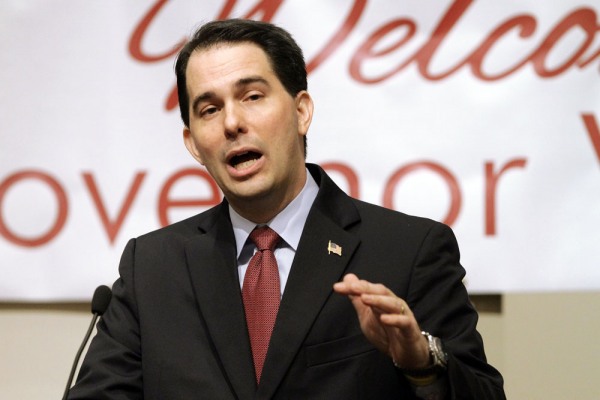
Main Course: Tomorrow in Wisconsin, voters will go to the polls to participate in only the third recall election of any U.S. governor (if you’re from California, you may remember fondly when you could have voted for Gary Coleman to replace Gov. Gray Davis in 2003 – a bright spot in my home state’s storied history). Last year, WI Gov. Scott Walker sparked a firestorm when he eliminated most collective bargaining rights for public-sector unions. Since then, pro-labor forces mobbed the state capital in Madison, Democratic state legislators fled to Illinois to avoid a budget vote, and the candidates and independent groups spent over $63 million drumming up support. What happens if Tom Barrett, the Democratic nominee and Milwaukee Mayor, defeats Walker? Foremost, the labor unions’ financial efforts will be vindicated. The unions will gain significant fundraising momentum in important rust belt states such as Ohio and Michigan, making it even harder for Romney to move these must-win states into his column. And if Gov. Walker holds on? You can look for him in a prime speaking spot at the Republican National Convention in August. But more importantly, I expect other Republican Governors and state legislatures to toy with similar proposals. They may not have the courage to act before November, but they’ll float the idea, bring Walker to speak in their state (think Pennsylvania and Ohio), and use it as leverage over the labor/Democratic thorns in their sides. Who’s going to win? At this point, anybody in Wisconsin who plans to vote has made up his or her mind. It’s cliche, but it’s true: it will come down to voter turnout. And the unions are pretty good about loading Democratic voters into vans heading for the polls. Still, I think Walker keeps his job by 4-6 points.
By Jonathan Miller, on Tue May 29, 2012 at 1:30 PM ET
We love to highlight, at The Recovering Politician, the works and thoughts of our next generation of leaders, the Milleneal Generation.
Marina Keegan was certainly in that category. Just last week, she graduated from Yale University, with a job at the prestigious New Yorker waiting. Tragically, she was killed on Saturday in a car accident.
Here’s an except from her final article, “The Opposite of Loneliness”:
We don’t have a word for the opposite of loneliness, but if we did, I could say that’s what I want in life. What I’m grateful and thankful to have found at Yale, and what I’m scared of losing when we wake up tomorrow and leave this place.
It’s not quite love and it’s not quite community; it’s just this feeling that there are people, an abundance of people, who are in this together. Who are on your team. When the check is paid and you stay at the table. When it’s four a.m. and no one goes to bed. That night with the guitar. That night we can’t remember. That time we did, we went, we saw, we laughed, we felt. The hats.
Yale is full of tiny circles we pull around ourselves. A cappella groups, sports teams, houses, societies, clubs. These tiny groups that make us feel loved and safe and part of something even on our loneliest nights when we stumble home to our computers — partner-less, tired, awake. We won’t have those next year. We won’t live on the same block as all our friends. We won’t have a bunch of group-texts.
This scares me. More than finding the right job or city or spouse – I’m scared of losing this web we’re in. This elusive, indefinable, opposite of loneliness. This feeling I feel right now.
But let us get one thing straight: the best years of our lives are not behind us. They’re part of us and they are set for repetition as we grow up and move to New York and away from New York and wish we did or didn’t live in New York. I plan on having parties when I’m 30. I plan on having fun when I’m old. Any notion of THE BEST years comes from clichéd “should haves…” “if I’d…” “wish I’d…”
By Jonathan Miller, on Tue May 15, 2012 at 5:00 PM ET
Thanks for joining us for what I believe was a very enlightening, and sometimes even entertaining debate on the relevance of Mitt Romney’s alleged bullying of a fellow prep school attendee nearly 50 years ago.
Some concluding observations:
I thought the colloquy between Jeff Smith and Artur Davis on marriage equality and gay rights was fascinating. While I agree with Jeff, I was impressed with Artur’s reasoning. Usually, the anti-equality side relies strictly on Bible verses or evades the fundamental issues. I’m pleased in how Artur enriches the civil dialogue even though I disagree with his conclusions.
While this site is primarily focused on the views of recovering politicians, I am really glad to involve the perspective of others as well. David Host and Ron Granieri both offered some very interesting takes from their perches in the private sector and academia, and I was especially pleased to hear the perspective of Gen Y’ers Robert Kahne, Zac Byer, and Jordan Stivers who aren’t too removed from their teen years. Gay marriage, rights, and bullying are issues that polarize us generationally, but it is the Y’ers views that will be around for a lot longer.
I deeply apologize about including Steven Schulman‘s lame insights in an otherwise fascinating debate. You have to understand, his mom sends me a batch of her incredible, world-famous brownies every time I publish one of Steve’s pieces.


 I find being unattached at this juncture a blessing. I hear stories of those who have lost jobs and are working hard to provide for their families and I find my scenario as a single female and tiny dog in tow much less harrowing. He eats out of one bowl, poops outside, requires less attention and is always happy when I come home. Also he sleeps. A lot. It is my disturbed sleep schedule that puts a wrench in his day.