By Jordan Stivers, on Tue May 15, 2012 at 4:00 PM ET  [Click here to follow the entire RP Debate] [Click here to follow the entire RP Debate]
I do agree with many of you that this apparently isolated incident from many years ago should not by itself raise concerns about Mitt Romney’s ability to be a good President.
For me, there are several other legitimate reasons to believe that he is not the right person to lead this country, but this isn’t one of them.
I do, however, think that this was a missed opportunity for Mitt Romney to reveal his humanity, and his ability to admit mistakes and learn from them.
He should have acknowledged the incident, and then shifted the focus by talking about how he realized that he was wrong, and reiterate his respect for all people, etc.
Instead, in typical Romney fashion, he acted like he had no recollection of the event (which isn’t very believable.) He ended up acting flustered, like he does when he is asked an uncomfortable question about his record.
Whether he is or is not an honest and decent person I am sure I will never really know. As voters, all we have to go on is what we observe as the candidates undergo the often brutal scrutiny that comes with running for President. We need to know if the leader of the free world can be honest and reflective, and if they can handle criticism, even if it is unfair or irrelevant.
In summary, it is not the bullying as a teenager that concerns me, it is the response as an adult who is running for the highest office in the land that does.
By Steven Schulman, on Tue May 15, 2012 at 3:30 PM ET  [Click here to follow the entire RP Debate] [Click here to follow the entire RP Debate]
How about this thought experiment:
What if the victim had been a girl, and he had ripped off her bra because she dressed like a beatnik? No groping, nothing sexual, just mean.
If that is different, why?
Also, the analogies to using alcohol and marijuana ring quite hollow. Those are personal experiments, not harassment of others.
This conduct is surely not disqualifying by any stretch – I don’t think anyone is saying that it is. But the contrary position — that it deserves no attention at all — is not realistic. This is one of the things that goes into the basket of judging character, and Romney’s recent behavior, his marriage, etc., that voters can and should look at to get a picture of the man who wants to be our president.
By Zac Byer, on Tue May 15, 2012 at 2:00 PM ET  [Click here to follow the entire RP Debate] [Click here to follow the entire RP Debate]
I find this incident so insignificant to why – or why not – Mitt Romney should be our next president that I’ve been searching for some larger social significance.
A few years removed from college, I think back to all the pictures some of my friends and I didn’t take for fear of where and when they might resurface. It wasn’t worth putting ourselves in particular situations, we figured, no matter how typical they may be for twenty-somethings in college.
And though we were probably right, I found these experiences frustratingly calculated. Think about all that you have learned about yourself because of the variety of your experiences. Shameful or satisfying, angering or alleviating, it’s safe to say they were all educating in one way or another.
Do I wish Romney hadn’t mistreated that kid 50 years ago? Of course. And I’m sure Mitt wishes otherwise, too.
But until a slew of stories arise that reveal Romney was a pathological bully, I’m looking at this as a moment from which Romney learned right from wrong. He made a mistake – we all do – and he learned from it. Frankly, I’d be much more disappointed in him if I found out Romney stood on the sidelines while his friends picked on a classmate simply because Mitt was afraid it would come back to haunt his future political career.
Experience life and make some mistakes – it’ll be clear enough to your potential investors or voters whether or not you learned from them.
By Lisa Miller, on Tue May 15, 2012 at 9:45 AM ET  [Click here to follow the entire RP Debate] [Click here to follow the entire RP Debate]
While it’s true that Science reassures us that the human brain (and some decision making) isn’t mature until age 25, we’re not talking about the average citizen here. We’re discussing the past hate crime behavior of a person running for president of the United Sates of America.
The character of such a person can not, should not, be questionable. Character is developed over time, and, we’re discussing a hate crime.
For me, this is not about a lack of understanding/forgiveness for mistakes (Goodness knows I believe wholly and holy, that mistake making is essential for the growth of the human soul), but this is about choosing from a pool of leaders who have demonstrated, over a lifetime, qualities of honor and strong internal moral compass. We are not running low on a supply of those.
Should he be forgiven? If he is truly repentant from the heart and soul, yes! Should we consider instead OTHER candidates who don’t have hate crime backgrounds (for current and future races), yes! Should our standards and expectations come from a realm of excellence, yes!
One who runs and takes on office at this level should feel that personal honor is everything. And we should expect this. Who we are personally is who we are publicly, and vise versa.
Looking at the big picture here is key. Is this someone who demonstrates a genuine embracing of diversity?
We can elect leaders for whom this isn’t questionable. Our standards will set the standard.
By Ronald J. Granieri, on Tue May 15, 2012 at 9:15 AM ET [Click here to follow the entire RP Debate]
My first impulse when I heard this story was, I admit, “Wow, what a spectacular piece off oppo research. Now Mitt Romney can be pigeonholed by people who were never going to vote for him anyway as both a gay-basher and the guy who strapped his dog to the roof of his car.”
[Recent self-serving protestations by the WaPo ombudsman aside, no one can deny that there were reasons why playing up particular aspects of this story made sense in the midst of our current debate.]
My second impulse, which I shared in a personal message to the RP, was “Having known some rich privileged [jerks] in high school I am not surprised to hear that rich, privileged Mitt Romney was a [jerk] in high school.”
Neither of those impulses, however, completely expresses my mature thoughts on the matter. Which gets back to the RP’s original point (and Steve’s) that there is a big difference between the impulsive acts of idiot teenagers and the (hopefully) mature positions of thoughtful adults.
Upon mature reflection, the story of Mitt Romney’s actions makes me feel a combination of anger, disgust, and sadness.
I attended an elite boys’ high school myself, though it was not a boarding school like Cranbrook, and I graduated high school exactly twenty years after Willard did. Things had changed somewhat in the intervening decades, and have changed even more since then. So the experiences are not identical, but they do rhyme: I saw and experienced the kind of casual sneering cruelty that adolescent boys can mete out to each other in a culture of macho preening and rigid social hierarchy. A few times I was on the direct receiving end of it, though most of the time I was a bystander.
Thankfully I never witnessed or experienced the kind of physical attack described in the recent newspaper accounts. Nevertheless, certain memories still bother me 25+ years later, and it is also true that I can never look at some of my former classmates (especially those now more active in public life) without at least some bitterness. If any of them were to be on a ballot, I would have a hard time voting for them. So I can understand that some of Romney’s classmates continue to have ambivalent feelings about him so many years after Cranbrook.
Does that mean that one’s behavior in high school reveals permanent and enduring elements of one’s character and should completely shape our view of the adult? God, I hope not. If we can credit other people with “evolving,” then we should all be able to accept that people can overcome the callow idiocy of youth and become more well-rounded and empathetic human beings.
But because we accept that people can learn from their youth and grow beyond it, we should expect, even demand, that when a public figure is confronted with questionable deeds and words from his/her past, that public figure will own the past and explain how it fits into the present. Complaining about the story’s publication is pointless at best, and pretending that the past does not matter is even worse. If Mitt Romney wants to run for president, and to make use of his personal history in his campaign, then he has to accept that the darker shades of his personal history will be discussed as well. The challenge for him, and for those who would defend him, is not to get lost in semi-denials and hemi-demi-apologies, but to own his past actions and explain how if at all they contribute to making him the man he is today.
Just as the history of nations includes both light and dark chapters, both of which need to be analyzed and understood honestly and completely, an honest assessment of a personal history should not try to evade unpleasant topics. It is Romney’s responsibility to address the past, and the responsibility of the rest of us to listen to his story and decide how to evaluate both the boy he was and the man he is. Forgetting is never the proper approach. Honest, even painful, remembrance of the past is the only way to build a better future.
By Steven Schulman, on Tue May 15, 2012 at 9:00 AM ET [Click here to follow the entire RP Debate]
Well, I know *I* never would write and produce a song like that about Jimmy (much less memorize the lyrics and continue to sing it 25 years later). But we have all done things we regret as teens, particularly in groups.
So, given the commonality of this experience, why is it relevant to the presidential race?
The reaction to it by Romney is what is most relevant, and can give us some clues about how he views “the other.”
Ironically, for a person from an insular and sometimes persecuted minority, he does not seem to have much empathy for the “other” — particularly gay men and women. The last GOP administration suffered greatly from this kind of lack of empathy, and led us into some horrible human rights abuses against Muslims and those perceived to be different. Abu Ghraib and racial profiling at airports were only some of the more obvious symptoms, but that lack of empathy also contributed to the polarized atmosphere in Washington.
By Zac Byer, on Mon Apr 23, 2012 at 10:00 AM ET
Read about our new feature Gen Y “He Said; She Said”
Read Jordan Stivers’ “She Said”: Obama for President
Imagine you’re signing up for college classes. You find one that sounds too good to be true – something like “The History of Rock and Roll.” The professor sends you the syllabus in advance, and it’s everything you wanted. With excitement you show up on the first day of class ready to, well, rock.
The first class is great, but as the weeks go on, you’re thrown for a loop. First, your professor ditches Elvis and the Rolling Stones for Mozart and Bach. “It’s not my fault,” he says with his hands thrown up. “The department made me do it!” He continues to veer sharply away from the syllabus, requiring extra essays on top of the previously scheduled exams. This time he announces to the whole class: “The Dean isn’t cooperating with me!”
Finally, your professor changes the class’s meeting times only weeks before the end of the semester. Yet again he cries innocence, e-mailing all of you with this message: “I’ve been stone-walled by the registrar’s office. Don’t blame me.”
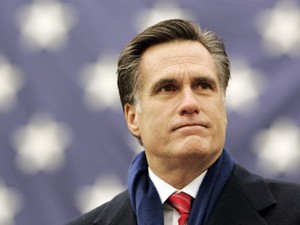 Would you sign up for another class with him? If your boss gave similar excuses for unexpected changes to your contract or workplace, would you want to continue working for him? Would you sign up for another class with him? If your boss gave similar excuses for unexpected changes to your contract or workplace, would you want to continue working for him?
This piece is supposed to be about why “my” generation should vote for Mitt Romney. I could write about Romney’s simpler, smarter tax plan. It disregards President Obama’s gimmicks like the “Buffet Rule,” and focuses on long-term solutions like a corporate tax rate that will allow American companies to compete globally and hire more workers in their twenties and thirties.
I could write about Romney’s common-sense, comprehensive debt-reduction plan. President Obama has added $6.5 trillion to the national debt in one term. The first forty-three presidents COMBINED accumulated $6.3 trillion. Romney will cap spending at 20% of the GDP, reduce the Washington waste, fraud, and abuse, and consolidate federal agencies to create a more efficient and effective government.
Read the rest of…
Zac Byer: Gen Y He Said — Romney for President
By Jordan Stivers, on Mon Apr 23, 2012 at 9:00 AM ET
Read about our new feature Gen Y “He Said; She Said”
The race to the White House is off to a fast start now that Mitt Romney is the presumptive Republican nominee. As a Kentuckian who has watched too many horse races to count, I know that consistency of performance is the most important factor in determining who will be wearing the roses at the end of the race. In the midst of an economic recovery that has no simple or easy solutions, and high stakes for the future of our Millennial Generation, we need to place our bet on President Obama to lead us through.
The result of this election will determine the direction our country will take for years to come, and as young people we will have to live with the consequences, good or bad, of the policies of the next President. I would argue that President Obama has best represented my generation’s interests on every issue since he has been in office. From making higher education more affordable to protecting the environment we live in, from championing reproductive freedom to shaping a responsible foreign policy, President Obama has proved that he is committed to protecting our future.
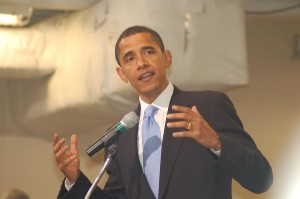 The economy is the issue that has been at the forefront of this election, as it should be. Many of us are wondering how we are going to pay off our student loans, find a good job, buy a house, and support children. While Mitt Romney seems to think that simply being a child of privilege and making a lot of money qualifies him to be President, it is President Obama who has proven that he can turn the economy back in the right direction. He understands that strengthening the middle class so that they can contribute to economic growth is the only way to truly rebuild an economy that was wrecked in the first place by Republican policies that favor the rich. The economy is the issue that has been at the forefront of this election, as it should be. Many of us are wondering how we are going to pay off our student loans, find a good job, buy a house, and support children. While Mitt Romney seems to think that simply being a child of privilege and making a lot of money qualifies him to be President, it is President Obama who has proven that he can turn the economy back in the right direction. He understands that strengthening the middle class so that they can contribute to economic growth is the only way to truly rebuild an economy that was wrecked in the first place by Republican policies that favor the rich.
Read the rest of…
Jordan Stivers — Gen Y She Said — Obama for President
By Jonathan Miller, on Mon Apr 23, 2012 at 8:30 AM ET 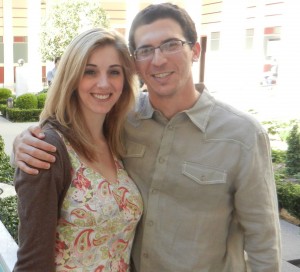 This morning we introduce a brand new feature at The Recovering Politician: the Gen Y “He Said; She Said” debates. This morning we introduce a brand new feature at The Recovering Politician: the Gen Y “He Said; She Said” debates.
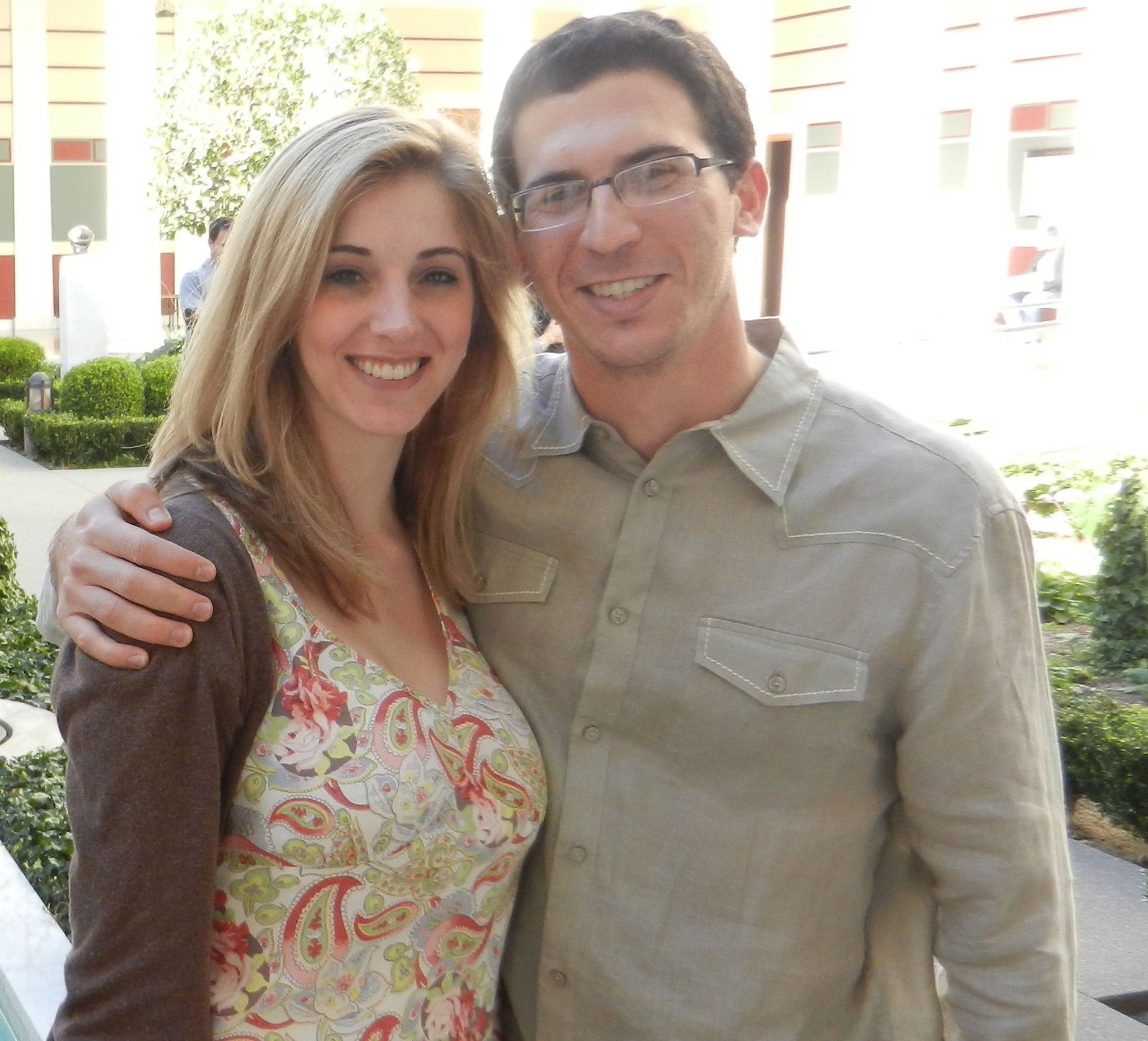
“He” is Zac Byer, a longtime staff contributor at the RP, who also happened to study at the University of Pennsylvania under the tutelage of Friend of RP (also the RP’s college roommate) Ronald Granieri. Zac is an outspoken Republican, and currently works for one of the leading minds behind GOP national strategy, Dr. Frank Luntz.
“She” is Jordan Stivers, a recent graduate of the University of Kentucky, a former volunteer for the RP, and a passionate Democrat who currently serves on the communications committee of the newly formed Young Democrats of America Faith and Values Initiative.
As you might be able to tell, “He” and “She” are dating. Or talking to each other. Or in a relationship. Or whatever Gen Y calls these types of relationships.
This morning, we will be featuring the first of their Gen Y “He Said, She Said” debates — discussing critical issues from the perspective of their generation. Today’s debate: the 2012 Presidential election. At 9:00 AM, Jordan will argue that Barack Obama’s reelection will best serve the interests of their generation. At 10:00, Zac will counter that his generation needs the change represented by Mitt Romney.
So tag along, and enjoy a younger version of Carville and Matalin. In reverse.
By Chris Schulz, RP Staff, on Fri Apr 20, 2012 at 3:00 PM ET As electric cars become more popular make sure that you consider where the electricity is coming from. In coal heavy states they are not as clean as you may think. [yahoo.com]
It is no surprise that the majority of Americans link the unusual weather this year to climate change. [nytimes.com]
New data shows that our obsession with sprawl may be over. More people are moving back into cities. [usatoday.com]
We now have an answer of which came first, the chicken or the egg? [bbc.co.uk]
|
|


 [Click here to follow the entire RP Debate]