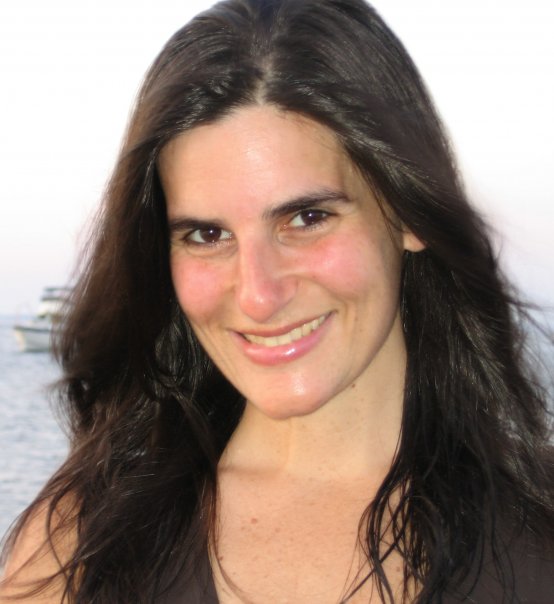
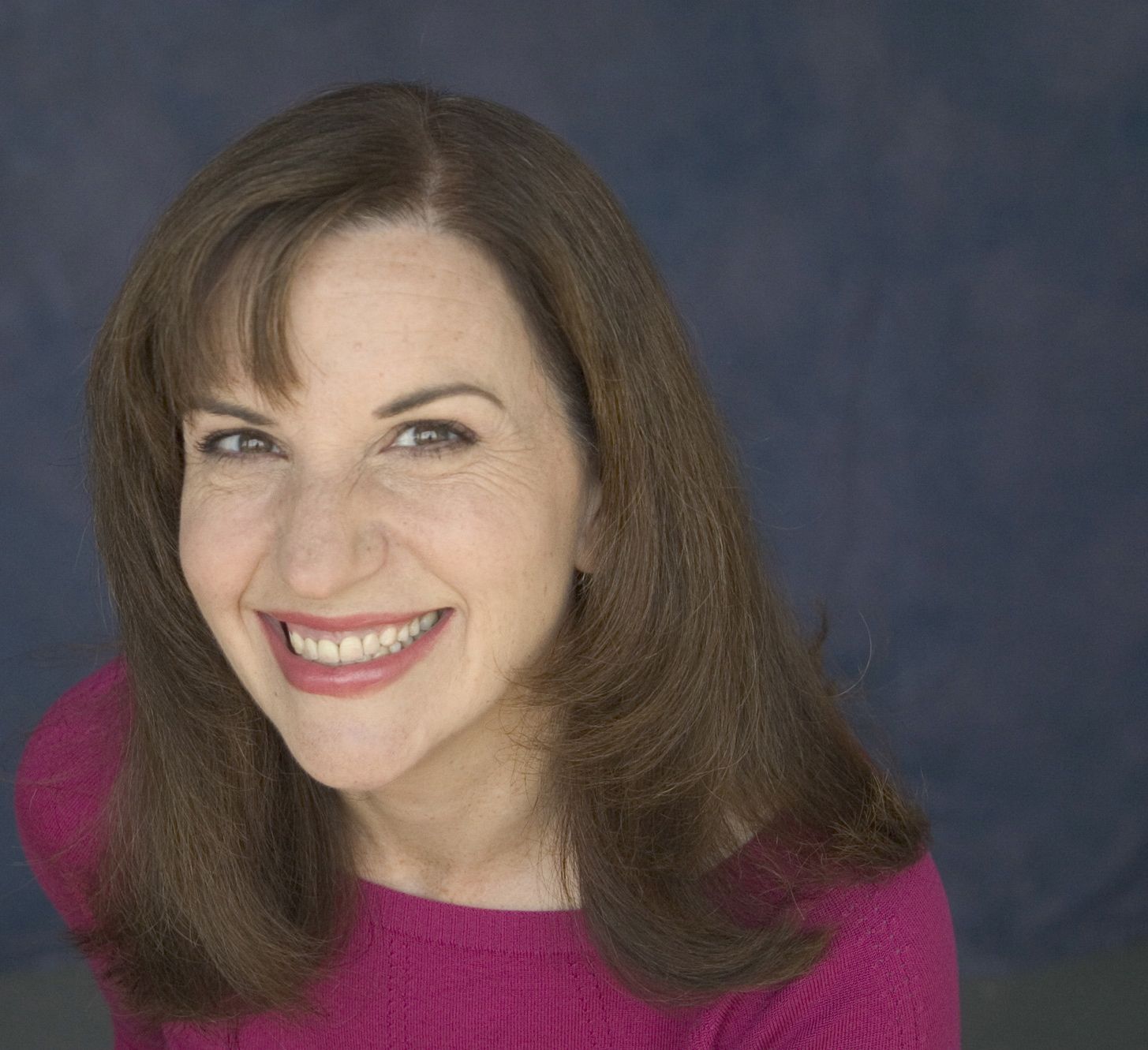
UPPER WEST SIDE — Nancy Slotnick has been setting people up in New York City for decades.
But now the longtime Upper West Side resident is bridging the gap between online dating and traditional matchmaking with a new concierge dating service called Matchmaker Cafe.
Slotnick has spent the last year building a database of single people, now 3,000 members strong, who can browse each other’s Facebook profiles before requesting a meeting that Slotnick and her team help orchestrate.
Matchmaker Cafe fights the inertia that Slotnick said usually accompanies online dating, where two people end up talking online for a while but never meet. Her service “cuts to the quick,” she said.
“People have more of a tendency to put [a meeting] off or to stand each other up without the matchmaker,” she said.
Slotnick picks what she calls “hot spots” that lend themselves to easy transitions from coffee to drinks or to a longer meal, or to meeting other singles if the date doesn’t go well. She then meets both parties at the arranged spot and introduces them. The meeting serves to reduce the anxiety and awkwardness of a blind date, she said.
“It adds the hand-holding through the process,” she said.
Matchmaker Cafe has been in beta mode since 2011, but this month Slotnick launched the paid model, in which clients pay $39.99 a month for the ability to request meetings with other members.
Women tend to be more passive on the site, creating a membership for free and then waiting for others to ask about them, Slotnick explained. However, she said that anyone serious about finding love should devote 15 hours a week to the search, which means going out to traditional dating spots like bars, but also becoming open to interactions at places like gyms, grocery stores or even the subway.
“With careers, people don’t have qualms about strategy, but with dating it’s supposed to magically happen,” she said. “You do have to have [finding love] on your radar screen as a goal.”
Behind the scenes, Slotnick makes herself available to customers with advice about how to make it work, an added service that she said distinguishes her model from existing online dating companies.
But, “I don’t believe you can outsource [the work of creating a relationship],” she said.
Slotnick spends part of her time moving around the city scouting new locations for dates. She said she hopes to eventually create partnerships with these dating hubs.
Slotnick once owned one of these hubs herself, when she started Drip Cafe on East 83rd Street and Amsterdam Avenue in 1996 as a place devoted to helping people find relationships. In the pre-internet, pre-online dating era, cafe customers could spend time flipping through binders of hand-written dating profiles, and then Slotnick would help them schedule a date at the cafe. She said that at any one time, 20 to 25 dates were happening at Drip.
During the cafe’s eight-year run, “we made hundreds of marriages,” Slotnick said.
Drip had a liquor license and offered counter service, which Slotnick believes are essential elements for creating the kind of freedom of movement that promotes interaction among guests.
Though Slotnick believes the Upper West Side went through a period when many of the neighborhood’s residents, and Drip’s customers, settled down and started having children, there has been a resurgence of singles in the area lately, she said.
“The Upper West Side is getting single again,” she said, noting the many singles moving to the Lincoln Center area.
One of her favorite places to arrange meetings is the lobby of the Empire Hotel. She said she also sees possibilities at the new restaurant The Smith in Lincoln Square.
By Lauren Mayer, on Tue Nov 27, 2012 at 1:30 PM ET
There will probably never be a shortage of inspiring antics in the political arena, between the fiscal cliff and assorted sex scandals. But for the next few weeks I’ll be tackling the subject of interfaith acceptance, inspired by our host’s No Labels approach to bipartisanship, and illustrating the challenges of being in a religious minority.
Even if you’re not Jewish (or a member of another religion that doesn’t celebrate Christmas), you may be a little bothered by the fact that we’re already surrounded by Christmas decorations, signs and music, plenty of it before Thanksgiving.
So try to put yourself in our shoes – and since it’s probably impossible to imagine being surrounded by tacky Chanukah decor, what about other times you might have felt like you were an isolated minority? Any liberals in red states, or conservatives in blue states, or vegetarians in a family of carnivores? I’ve had a few of those moments, like being the only girl on the math team in jr. high, or being the only actual female pianist in a gay bar (and constantly having to tell the guys that I wasn’t just in underdone drag). That sense of being different gets particularly strong during this time of year.
Please don’t get me wrong – I think Christmas is a beautiful holiday, and as an entertainer I’m extremely grateful for the extra work (as well as the infinitely superior music – I’d hate to do a gig playing 3 hours of Chanukah music!) But just try to remember that not everyone celebrates it, and even a totally secular ‘Merry Christmas’ still is etymologically derived from the religious basis of the holiday, so if you can occasionally wish your jewish friends “Happy Holidays” instead, they’ll appreciate it.
In this spirt of interfaith bipartisanship, I’ve enlisted some friends & relatives to create our own version of those ’80s ‘videos-for-a-cause’, “Don’t They Know (Not Everyone Does Christmas).”
Note: While I am unfortunately not able to use this space to plug my upcoming appearance on The Daily Show (since they haven’t invited me on yet), I can let readers know that the song is from my album, “Latkes Shmatkes – Comedy Songs for Chanukah and Beyond”, available at this link, and on iTunes, Amazon, CDBaby, and Picklehead Music, among others. It’s a great gift for any of your friends who are Jewish, or who will be flattered by receiving something that implies you think they have a good sense of humor!
By Nancy Slotnick, on Tue Nov 27, 2012 at 8:30 AM ET
“You never don’t know” is what my mother-in-law says when she means “You never know.” It must be said in a Polish accent with the conviction that only a Holocaust survivor could pull off while using a double negative. So by the theory of transitivity, “You never don’t know” equals “You always know.” I’m going with that theory. You always know.
If you can tap into your instincts, and distinguish them from anxiety, you always know. “Is he the One?” You know. “Should I have that opening line?” You know. “Should I write that email to reach out?” You know, but you don’t always listen to your gut. You talk yourself out of it.
Do you expect greatness to come your way or mediocrity? Or disaster? Murphy’s Law is more about Murphy than about a law of nature. I think Murphy attracted bad luck because he’s always expecting bad luck and it feeds on itself. Of course if you want to attract good luck you have to do the work. There’s plenty of good luck out there and it will come your way sooner or later. You just have to be prepared to seize your luck.
Here’s how: Let’s say you’re on a train traveling for the holidays, like I am right now. Let’s say you’re single and you secretly wish that the man of your dreams would sit next to you. You do hold out the hope for good luck. But you also dread the fat lady who talks your ear off or the crying baby that blocks the audio of Gossip Girl Season 2. Even though you’ve already seen it. You are tempted to just put your backpack up on the seat next to you, put on your headphones and go into “Do Not Disturb” mode. If you’re lucky, then the train is not sold out and you will get two seats to yourself. But is that what you really want?
Read the rest of… Nancy Slotnick: You Never Don’t Know
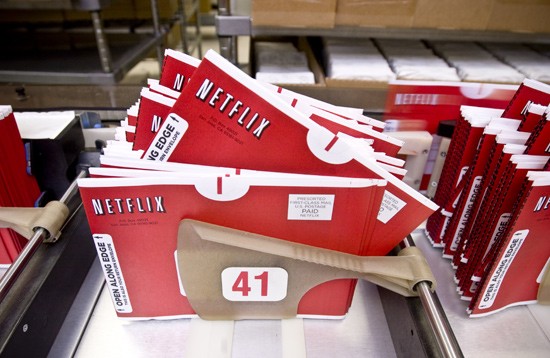
The nuclear industry measures how long a radioactive material will retain its potency by its half-life — the time it takes for the material to lose half of its radioactivity. The half-life of Uranium-235 is 700 million years, for example. During the industrial era the half-life of a business model was typically measured in generations. Once the basic rules for how a company creates, delivers, and captures value were established, they became etched in stone, fortified by functional silos and sustained by reinforcing company cultures.Those days are over. The industrial era is not coming back. The half-life of a business model is declining. Today’s leaders are either going to learn how to change their business models while pedaling the bicycle of the current one or they are going to be “netflixed.”
If netflix isn’t a verb it should be.
net-flix
1. to cause disruption or turmoil to an existing business model
2. to destroy a previously successful business model
3. to displace the way value is currently created, delivered, and captured
Blockbuster started out with a compelling business model. Its value proposition was clear, enabling consumers to watch hit movies in the comfort of their homes. Blockbuster established an extensive value delivery network with stores conveniently located on every corner. Its first store opened in 1985 and it quickly grew to have over 5,000 retail outlets and 60,000 employees. It also had a smart financing model to capture value. It rented hit movies at a price consumers found attractive relative to the price of going out to the movies. Instead of paying a large upfront fee to buy videos from the studio (up to $65 per video) Blockbusters entered into a revenue sharing model with the movie studios including little to no upfront costs per video which gave them a huge advantage fueling explosive growth. Blockbuster started out on a roll. At its peak in 2002 Blockbuster’s market cap rose to $5 billion. In 2010 in filed for bankruptcy. So what happened? Blockbuster was netflixed.
Read the rest of… Saul Kaplan: How Not To Get “Netflixed”
Are you ever stuck with what to wear on your feet when the weather turns foul?
Today the sun’s shining in NYC, but recent events prove the need for protective footwear. Below are my top 6 picks in a range of styles.
1) Grenson Spike ($485) — For the sharp-dressed man, these Grensons are an update on the traditional LL Bean duck boot (another solid option if you’re a more of a traditionalist). Don’t be afraid to rock them with a suit.
2) Blundstone 500 ($150) — These boots were originally made for ranchers in the Australian outback, so they should be able to handle a trek through midtown Manhattan. The water-resistant leather keeps you dry without sacrificing style, and the front and back pulls and elastic side panels make them easy to pull on and off.
I’ve often wondered about certain strategies gym goers employ. The one strategy that has vexed my mind is a ritual of sorts and a lot of people do it every day. You know if you do something every day and expect a different result, that makes you crazy right. It is at like the Holy Grail, the very reason people come to the gym and try to eat right, it’s the difference between a good day and a bad day, it is the end all be all. It is stepping on the scale! Don’t try to pretend you don’t do it because we all are guilty, especially in a place where there are scales and we are trying to lose weight, gain weight or stay the same. But the very fact people are control by this instrument, this measurement of body mass can be alarming and skewed. The end all be all may not be “all” its cracked up to be.
Let’s back track for a second. What are we trying to do? Most people? Answer is losing weight. Statistics show the most common goal for any gym goers is losing weight. But that should really be the goal? The answer is yes and no. If you are 50 lbs overweight and you need to lose 50 pounds then I would say losing weight would be a great goal for you. However, if you are trying to lose 10-20 pounds, does it really matter what the scale says as long as your body fat changes? Of course not! I use to tell clients all the time; if I could have you weigh the same weight you are today and look 100% different, would it matter what the scale said? 9 times out of 10, the number didn’t matter.
But the number does matter to some people and it matters a lot. The measurement of success is housed on an electronically scale that measure your body mass. Forget about how you feel or how your jeans fit, its all about that number! If this applies to you (its ok!) here’s what I’d like you to remember, the most important part of the fitness process is the feeling of pride, confidence and of well being. These we will refer to as the immeasurable, meaning you can’t stick a number to it. Stepping on a scale just gives you a number and tells you whether you are below, above or at where you want to be. Definitely a cliff hanger that sometimes can hit you between the eyes and make you want to quit. My suggestion? Don’t weigh yourself, especially if you feel you begin stressing over it. The emotional impact and feeling of defeat is not worth it. If you want to know how you are doing in your fitness program ask yourself these questions:
Do I have more energy? Do I wake up and go to bed easier? Do my clothes feel looser? Am I stressed less?
Answer yes to any or all of those and you are on the road to success. A road that is not dependent on the little number on a little scale.
Mrs. RP — the distinguished Lisa Miller — was featured in Monday’s Louisville Courier-Journal in an article about a yoga and meditation workshop she led at Louisville’s Festival of Faiths convention.
Here’s an excerpt:
A large crowd turned out Sunday for an Ayurveda yoga workshop, part of the 17th annual Festival of Faiths at the Kentucky Center for African American Heritage on Muhammad Ali Boulevard.
The workshop was led by Lisa Miller, an instructor with certifications from the Chopra Center.
Ayurveda is a health and wellness practice that considers all five senses as being necessary for good health and well-being, Miller said. The practice is a 5,000-year-old Indian system that translates from Sanskrit to “life” and “wisdom.”
The event consisted of a lecture on Ayurveda as well as instruction on meditation and breathing techniques. “If you take care of your self, mind, body and spirit, you can walk through life with balance,” Miller said.
“I’m here because I’m curious to see the differences between the yoga I’ve been doing previously,” Joy Raatz said.
I read a story this morning that was written in 2005, about a lost and traumatized baby hippo in Kenya, who “adopted” a tortoise to be his mother. An elderly male, the tortoise is said to be a century old.
“They sleep and eat together, and have become inseparable” says the director of the nature preserve.
As if that’s not moving enough, I am tearful after learning further that this baby had survived a tsunami-ravaged river that swept him into the Indian Ocean where tides eventually washed him ashore. Dehydrated but hanging on, rescuers found him on the beach (and brought him to the nature preserve).
For me, this story tugs at the strings.
And when I step back, I find it interesting that both tragedy and miracle are (now in my heart) here in this story—two seemingly opposing forces. And a third force, inspiration, is here as well.
So, is inspiration born of tragedy and miracle? Is inspiration the baby hippo of the married couple, Tragedy & Miracle Kenya?
If you are like me, your favorite stories are about true-life people overcoming adversity.
Why do those stories appeal? Because there’s something truly amazing and life affirming and heart-filling about knowing that others have faced what seemed like insurmountable obstacles, and not only survived but found deeper meaning in life.
It’s hardly ever easy to recognize the worth of something tragic while in the middle of it. No tsunami, loss, or pain feels like it’s going to lead to something positive.
Read the rest of… Lisa Miller: Unusual Inspiration
By Lauren Mayer, on Tue Nov 20, 2012 at 3:00 PM ET
General David Petraeus is just the latest in a seemingly endless stream of powerful men brought down (or at least dented a bit) by their sexual escapades. You can find articles about what motivates them, about how their power gives them an entitled sense of hubris, about the specifics of their sordid activities, and of course plenty of jokes about Appalachian Trails and sexting – but does anyone else wonder why we never read about a powerful woman brought down by scandal? (Mind you, there are plenty of married women involved in these soap operas – and don’t you love that the Petraeus saga even includes twins? – but the women are not the power players, and we wouldn’t even know their names if they hadn’t slept with someone famous and then spilled the beans.)
While the obvious answer is that there are far fewer powerful women, there are still enough that proportionally there should be at least a couple of publicly humiliating affairs. And it’s not just that highly placed women tend to be way past the ‘babe’ stage – attractiveness certainly isn’t an issue with the guys who cheat, many of whom are downright homely. So my theory is that women who have ‘made it’ had to work twice as hard as men to get to their lofty positions, and even if they felt attracted to an aide or a gushing biographer, they’re too busy, and too exhausted, to start anything.
I’m not in any kind of power job, and yet I can swear that I have never cheated on either of my husbands (I’m not a reverse Mormon, it was one spouse at a time) – but this has nothing to do with my moral purity. Like most working mothers, I barely have time to brush my hair – so when that hunky boxboy at Safeway gives me a leering eye, I’m flattered, but not tempted (it just sounds like too much additional work).
However, I did summon up enough energy to have fun with the rhyming potential of some of these scandalous characters’ names . . . . .
Is it worth daring to be great? No buzzwords, no ambiguity, just a simple question that couldn’t matter more. Business model innovation starts by realizing you are contributing to a movement that is bigger than you. It’s global, self-organizing, and transformative. Lead by letting go. The first and most important step in the business model innovation process requires a change in perspective for both you and your organization. Looking through the lens of your current business model will most likely result in incremental changes at best. Business model innovation requires a different perspective. It requires a different set of lenses to examine new opportunities. It starts by realizing transformational opportunities are bigger than you and your organization. Business model innovation must be treated like an epoch journey with all the wide-eyed enthusiasm of a young child exploring new territory for the first time.
Saul Kaplan
Business model innovation must be a strategic objective or it won’t happen. One of my biggest pet peeves is setting strategy one tactic at a time. It drives me crazy to be surrounded by people and organizations that think if they just work hard enough and do more things that a strategic direction and destination will emerge. It seems that most of the world works this way. It is terribly inefficient. How many people and organizations do you know that pedal the bicycle like crazy but never seem to arrive anywhere. They just keep pedaling harder hoping that something will eventually stick. It is exhausting watching them. Why not establish business model innovation as a strategic objective, a specific destination, and work hard on those things that help you get there. It seems so simple. Setting a strategic direction provides a way to know which tactics are aligned and contribute to reaching the destination. The destination may change along the way requiring different tactics, and that is OK, but not having a destination at all is a ticket to nowhere.
When John F. Kennedy said, “We choose to go to the moon” in 1961, Americans rallied around the destination. We believed it was possible and the goal of setting foot on the moon rallied a country to advance its global science and technology leadership. It was cool to study math and science and clear that innovation was the economic engine that would drive American prosperity. When Neil Armstrong set foot on the moon eight years later and said, “That’s one small step for [a] man, one giant leap for mankind”, we celebrated his achievement as if it was our own and knew at that moment that anything was possible. We have been trying to get that feeling back ever since. Today, we have no clear destination, in space or on earth.
Read the rest of… Saul Kaplan: The Hardest Question Any Leader Can Ask


UPPER WEST SIDE — Nancy Slotnick has been setting people up in New York City for decades.