By Lauren Mayer, on Tue Aug 6, 2013 at 1:30 PM ET I’ve always prided myself on being open-minded, on recognizing that there are two sides to every question. Being a competitive high-school debater was great training, since we had to argue, convincingly, the pro and con of each year’s topic (which may partially explain why so many debaters ended up in law school). And it’s certainly a skill one can use raising children, keeping us from instantly snapping, “Are you kidding? You can’t wear your rainboots and your SpongeBob sweatshirt to pre-school, it’s 90 degrees out,” or “I don’t want to hear what the guy on that brainscience site said about the intellectual stimulation of videogames.” (And yes, I’ve had both of those conversations and had to resist those lines!)
Even during contentious elections, I’ve tried hard to see the other side – and it helps that I have some good friends whose politics differ from mine. (Which, in case you hadn’t guess, range from really liberal to extremely liberal.) Plus my Republican friends represent a much more civil alternative to the louder advocates of their views (see Limbaugh: Rush . . . ). Of course, the way they often distinguish themselves reminds me of one of my favorite New Yorker cartoons, where a woman is telling a friend about her date: “He says he’s a fiscal conservative and a social liberal – which means he’s cheap, and he sleeps around.” But cartoons aside, I can see how they can feel liberal about issues like decriminalizing marijuana or gay marriage, and more conservative about financial matters.
However, sometimes the ‘other side’ goes so far that I simply cannot find any way to understand it, no matter how hard I try, and I can only conclude they are either heartless or insane. (Which makes me feel like Elizabeth Bennett in “Pride & Prejudice,” chiding Jane for trying to find a way to side with both Wickham and Darcy . . . but I digress) I used to think of North Carolina as an oasis of moderation in the middle of the south, a place I could actually see living (and where I could buy a house for the cost of a driveway in California). But lately it seems like many southern states have gone off the deep end in their efforts to restrict women’s reproductive choice, to suppress voting, and to shred the social safety net, and North Carolina seems to be one of the loonier ones. There are a couple of bright spots – the attorney general did point out that establishing Christianity as the state religion was a major violation of the US Constitution, and they’ve drawn so much national attention that things may change. But in the meantime I’ll take advantage of my own personal bright spot – realizing that the tune that kept running through my head was in the public domain, so I could do a guilt-free parody . . .
By RP Staff, on Tue Aug 6, 2013 at 8:30 AM ET From Glamour magazine:
 When I heard there was a pop-up cafe in NYC intended to serve up great coffee and matchmaking services, it was obviously my responsibility as your dutiful dating blogger to check it out and report back. (Lindy requested I bring back a round of blonds, as in a coffee and a man.) When I heard there was a pop-up cafe in NYC intended to serve up great coffee and matchmaking services, it was obviously my responsibility as your dutiful dating blogger to check it out and report back. (Lindy requested I bring back a round of blonds, as in a coffee and a man.)
Here’s a little background: Nancy Slotnick, the mastermind behind the pop-up, is a life coach who specializes in dating and marriage issues. Back in the late ’90s, before online dating was the Thing with a capital T it is today, she founded a dating cafe called Drip on the Upper West Side of NYC. Now, she’s launched a matchmaking site on Facebook called Matchmaker Café; hence, the pop-up shop of the same name (serving Brooklyn Roasting Company coffee, yum).
Last night I was meeting some friends in the neighborhood, so it seemed like the perfect time to drop by. Unfortunately Nancy was out of town, but the two ladies working the coffee stand were delightful to chat with and might be my new best friends. (CALL ME, YOU GUYS!) They set up a profile for me right then and there, snapping some pics on their iPad and entering my basic information. While it’s a little weird to be posing for a profile pic in the middle of a crowded beer garden (the pop-up cafe is sort of in the middle of one), it totally helps that the girls were all like, “You’re beautiful!” and encouraging and helpfully shouted out “This is for professional research, people!” when I mentioned I was kind of embarrassed to be doing this in public.
Now I’m tasked with searching through the database of profiles they’ve collected, and the team said they’d definitely want to follow up to help me set up an awesome date. The idea of the Matchmaker Café is to get people offline and onto real dates, so hopefully you’ll be hearing about that in the future. In the meantime, if you’re in NYC you should totally stop by for fun! It combined all my great loves: delicious iced coffee, potentially getting dates, and oversharing my entire life story with strangers.
Has anyone else checked this place out? Would you? It’s outside of the Andazs hotel on Wall Street, if you’re interested!
By Erica and Matt Chua, on Mon Aug 5, 2013 at 1:30 PM ET As I enjoyed the mountain views and cool breeze off the lake I had to remind myself I was in Argentina, not Switzerland. St. Bernard’s walked along the sidewalk and the A-frame chalet style buildings kept tricking me into thinking that I was in a Swiss ski village with plans to hit the slopes. The surroundings aren’t the only thing in Bariloche that reminded me of Switzerland, the abundance of chocolate shops had me convinced that somehow I had wandered into a portal that had transported me to Europe.
 You could easily be in a small Swiss ski village rather than the Lakes District of Argentina You could easily be in a small Swiss ski village rather than the Lakes District of Argentina
It seems the European immigrants that brought chocolate to Argentina were not traditionalists. The chocolate on offer at the many shops on Mitre Avenue were not of the Lindt variety, the combinations were creative and distinct. Chocolate bars included fruit, nuts, liqueurs and came in a wide array of shapes and sizes. Just window shopping and drooling over the truffles and bars was enjoyable, the beautiful packaging and delicious looking ice cream were enough to keep me occupied.

However, the real fun began when I used my broken Spanish to request a sample at the first shop I went into. When I was rewarded with a generous taste I decided that chocolate tasting was the best way I could think of to spend an afternoon. I spent hours wandering in and out of chocolate shops trying everything from chocolate fondue to chocolate ice cream. After consuming an entire meals worth of chocolate I finally chose my favorite and purchased a box to eat later when chocolate withdrawal inevitably kicked in.
Read the rest of…
Erica & Matt Chua: Bariloche Chocolate
By Saul Kaplan, on Mon Aug 5, 2013 at 8:30 AM ET Today’s concept of work, employment, and jobs are an outgrowth of an industrial era that is long gone. The industrial era is not coming back and it is time to rethink the basic concept of work. Despite what politicians say most of the jobs lost in the current downturn aren’t coming back. Work takes on new meaning in the 21st century and it is time to change our conversation. The real wake-up call of this downturn is the enormous skill’s gap between the requirements of a 21st century economy and the skills and experience of the current workforce. Waving our hands and political rhetoric will not close the gap. Our education and workforce development systems must be transformed. Now. The nature of work and the way we think about jobs must change dramatically. Labor Day seems like a good day to start.
Here are 20 random thoughts on the future of work. Add yours.
1) Work becomes more about meaning and impact than repeatable tasks.
2) 9 to 5 is so yesterday.
3) Global sourcing goes on steroids enabling third world opportunity and growth.
4) Free Agent Nation becomes a reality.
5) Projects are more important than jobs.
6) Teams assemble and reassemble based on the job to be done.
7) Changing nature of work transforms our daily commute and transportation systems.
 8) Industrial era organizations give way to purposeful networks. 8) Industrial era organizations give way to purposeful networks.
9) Everything we think and know about professions will change.
10) Education is no longer K-16 but a life long commitment.
11) Workforce and economic development are transformed and become indistinguishable.
12) Work becomes more self organized and less institutionally driven.
13) Job titles are more about what you can do than meaningless status monikers.
14) Compensation is about performance outcomes not seniority.
15) Entrepreneurship becomes democratized and the key economic driver.
16) Work and social become indistinguishable.
17) Getting better faster is imperative.
18) Art and design become integral to work and value creation.
19) Making things becomes important and interesting again.
20) Passion drives meaningful work.
By Julie Rath, on Fri Aug 2, 2013 at 8:30 AM ET Even naked isn’t naked enough in the ridiculous heat and humidity we’ve been having on the east coast. In my last article, I listed hot weather survival measures for clothing and grooming, but this time shoes are on my mind. If you’ve never switched up your footwear when the temperature rises and your dogs start barking, I urge you to consider it. You’ll look more seasonally appropriate, and your feet will thank you. Read on for Rath-approved picks in 8 categories of summer footwear.

1) Espadrilles
These stylishly nonchalant espadrilles from Castañer ($150) are an excellent alternative to flip-flops for those wanting more toe coverage.
____________________________________________________________________________________

2) Leisure Shoes
Ok, so this category is totally made-up. But the name fits these Riviera shoes ($80), doesn’t it? Don’t wear for anything other than leisure.
Read the rest of…
Julie Rath: Free Your Feet — Summer Shoes
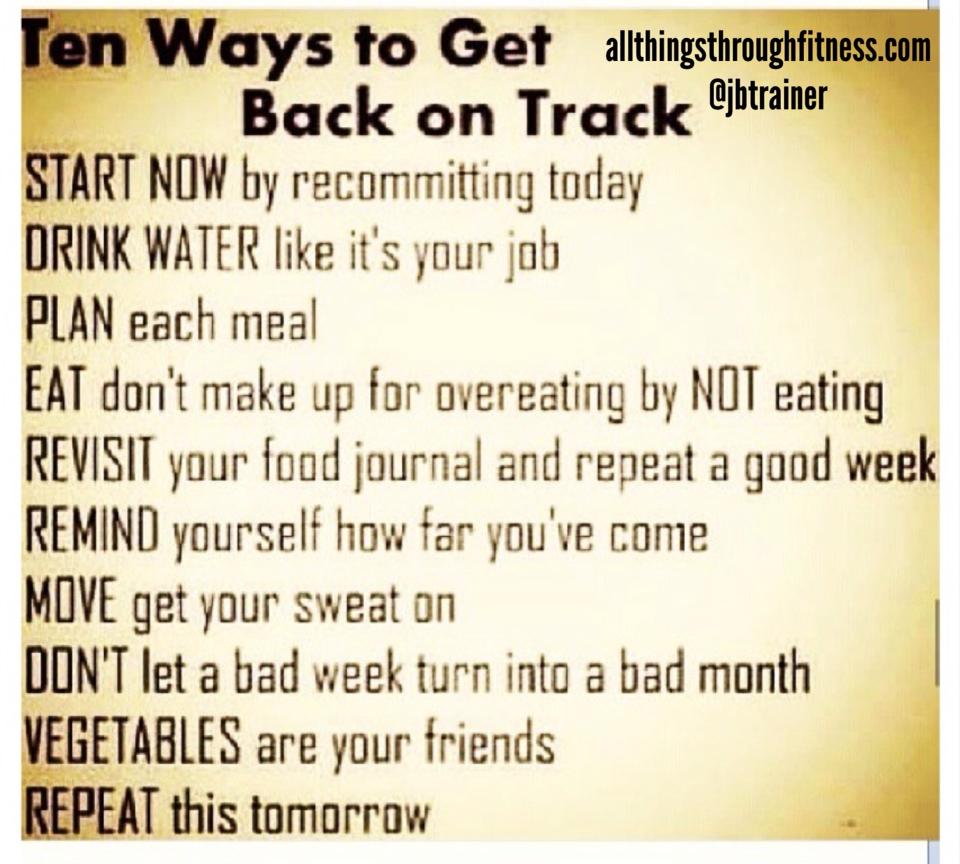
By Josh Bowen, on Thu Aug 1, 2013 at 8:30 AM ET We have all had moments where we fall down and lose focus. It happens to us all but we must have a plan to get back up. I call this preparing for chaos in my book.
Follow these steps:
By Lauren Mayer, on Tue Jul 30, 2013 at 3:00 PM ET We’ve all struggled with trying to stop behaviors we know aren’t good for us, and I imagine most of us have some embarrassing episodes in our past. So far be it from me to cast the first stone against politicians whose foibles are played out in the glare of public awareness. None of us would want to be a candidate for office, trying to defend ourselves against a surreptitious youTube video of us telling an off-color joke (or singing karaoke badly). My younger son claims he has photos of me sneaking Reese’s out of his Halloween candy several years in a row, and let’s just say I’m glad that the internet and cell phone cameras didn’t exist that time my college roommates and I went to Martha’s Vineyard.
However, the subject seems to be different when the bad behavior is sexual, and engaged in by elected leaders. (Which should give you a clue that my Martha’s Vineyard escapade was pretty benign, and didn’t actually involve anyone important or anything worth photographing . . . . ) Part of it is often the hypocrisy factor (see Gingrich, Newt). And part of it is the “you’re kidding, right?” disbelief at how stupid some people can be (see Danger, Carlos, or all the comments about how Bill Clinton could have had just about any gorgeous liberal starlet or international political figure instead of cheating on Hilary with a frumpy, not particularly brilliant intern). But the larger concern is that these are people who are telling us to trust them, with our laws& our tax money. Therefore, when they engage in clandestine activities, it isn’t just between them and their cheated-upon partner.
So when still MORE revelations came out this week about Weiner’s continued sexting after he’d insisted he had turned over a new leaf, the general reaction was “enough already, just go away.” (I don’t know about anyone else, but that famous original grainy shot of his bulging underwear continues to give me nightmares.) But he’s not alone – Bob Filner now acknowledges that as Mayor of San Diego, he engaged in a plethora of unsavory behavior, from the now infamous “Filner headlock” which he used to express sweet nothings to his employees, to groping constituents and telling his staff they’d work better if they weren’t wearing underpants. However, he keeps insisting that these acts were just evidence of a problem he has, not actual sexual harassment. (Which begs the question, what WOULD he consider sexual harassment? I guess it’s okay as long as he didn’t insist on women giving him lap dances as a condition of keeping their jobs?) And on top of everything else, both Weiner and Filner have extremely bright, attractive wives – sort of like our horror that if Halle Berry’s husband cheated on her, the rest of us are screwed. (But I digress . . . .
Honesty is a big factor, but I have to go back to the “how stupid can you be?” question. (Like how Eliot Spitzer claims to be a brilliant fiscal manager, after shelling out thousands of dollars for overpriced hookers, not to mention the weird thing he had about keeping his socks on . . .) These are people who seek public attention, so you’d think they’d be a little more careful about their public behavior. But the unsavory details continue to emerge, and the middle-school-level jokes keep popping up (the NY Daily News is having a field day with headlines about Weiner, as one might imagine from the newspaper which once announced “headless body found in topless bar,” which is the first headline I saw when I moved to New York). Even my teenage son has seen the Weiner memes, with every possible variation on ‘pulling out’ or ‘sticking out’ you could imagine.
As a feminist, a registered Democrat and a former New Yorker, of course I hope Spitzer & Weiner withdraw from the race so voters can refocus on the important issues facing the city, and as a Californian, I hope Filner resigns once he realizes that 2 weeks of rehab may not be sufficient after years of thinking the way to reach out to a constituent is to grab her buttocks. But as a comedian, these guys are the gift that keeps on giving – I thought after last week’s song, the subject would be passe, but I guess they all could still use a little musical advice to “Zip It Up!”
By Nancy Slotnick, on Tue Jul 30, 2013 at 8:30 AM ET My 8-year-old son wrote me the card pictured above: “Love is the best thing a family can share.” Somebody call Hallmark—I think they have a future employee. But it got me thinking- how do we share love with family? And that got me sad. Because sometimes we put our best foot forwards when we are in the company of strangers and we save the worst for family.
What kind of love do we share with family? Insults, criticism, unbridled emotion, long boring stories, unreasonable expectations.
When people say on the street: “Give me some love,” I don’t think that’s what they’re referring to.
So I’m going to respectfully disagree with my son. Or at least I’m going to ask him to clarify to what subset of the noun “love” he is referring. Luckily my boy is wicked smart so he will know what the heck I am asking.
 Ok, I conferred with my boy genius and he said that he was referring to “Fun with the family”, so that I will definitely support! Ok, I conferred with my boy genius and he said that he was referring to “Fun with the family”, so that I will definitely support!
How many people can say to themselves“I had too much fun this year?” I don’t even think there is such a thing. So I will show you the Shrinky Dink charm bracelet that was my gift that went along with the card.
And, with that, I am off to go have fun on my birthday, which includes not being bogged down with blogging unless it is fun. Which this was. Off to ice skating!
And to save you Recovering Politician staffers the trouble of asking me—Yes, I did get the copyright permission from my son to reprint his card. J
By Erica and Matt Chua, on Mon Jul 29, 2013 at 1:30 PM ET After 31 months of traveling the world there are still some things we missed, places we failed to see, things we would have done differently and lessons learned. As we reflect on our journey here are a few things we regret from our RTW trip.
HE SAID…
Considering all the things we’ve done it’s hard to fathom I could regret not doing something. We went all out on this trip, discovering and doing more things than I knew existed before we started. There are a few things though that I wish I had done…especially considering I will probably not be there again.
God descended from heaven and spoke to Moses in a literal burning bush. That bush still exists. Seriously. It’s located in Saint Catherine’s Monastery on the Sinai Peninsula. It’s a place that God himself has been, yet I skipped it. I was worn out of religious sites after Israel. I didn’t want to go on the tours which are packaged with a climbing a holy mountain, something of which I’ve overdosed. These reasons for skipping it seem valid, but when will I be so close again? I should have gone.

I regret not walking across these mountains.
Read the rest of…
Erica and Matt Chua: Biggest Regrets?
By Saul Kaplan, on Mon Jul 29, 2013 at 8:30 AM ET “Facts are facts, but stories are who we are, how we learn, and what it all means.” My friend Alan Webber, Co-founder of Fast Company and author of Rules of Thumb, has it exactly right. Storytelling is the most important tool for any innovator. It is the best way to create emotional connections to your ideas and innovations. Sharing stories is the way to create a network of passionate supporters that can help spread ideas and make them a reality. We remember stories. We relate to stories and they compel us to action.
Storytelling is a core value at the Business Innovation Factory (BIF). We believe that advancing our mission to enable system change in health care, education, energy, and entrepreneurship is critically dependant on our ability to create, package, and share stories from our work. Everything we do is about storytelling and our Innovation Story Studio is one of BIF’s most important capabilities. By openly sharing stories about the process and output of BIF’s work we are strengthening our community of innovators and becoming more purposeful with every new story.
It is no surprise that BIF’s upcoming annual Collaborative Innovation Summit, BIF-6 on September 15-16, is all about storytelling. I will never forget meeting with my friend and mentor Richard Saul Wurman (RSW) to get his advice prior to our first summit six years ago. As an innovation junkie it doesn’t get any better than having RSW as a mentor. He founded TED for heaven’s sake. I went to the meeting prepared with an approach that I had worked on for weeks. As an MBA, of course I had a matrix, with speakers organized by theme. RSW heard me out and could only shake his head saying, Saul you have a lot to learn about how to create an emotional connection with an audience. He patiently told me to throw away the matrix. He said it was as simple as inviting people to a dinner party. Ask speakers that you want to have dinner with to share a personal story that you are selfishly interested in and invite others to listen in. RSW has been a storyteller at every summit we have hosted and I can’t wait for his story at BIF-6.
I love RSW for that advice. That is exactly what we do. No PowerPoint presentations, no matrix, just stories. One glorious story after another in no particular order, from storytellers (not speakers) sharing personal and raw insights about what innovation means to them. After about four to five stories back to back with no boring Q&A to break the rhythm we take a long break where all of the storytellers and participants can interact, connect, and share their own innovation stories and experiences. No breakouts, flip charts, or prescriptive assignments. It is up to the 300 participants to decide what is compelling and which connections are most interesting and valuable. We trust our audience. The most interesting collaborations every year come from connecting unusual suspects that find value in the gray area between their interests and disciplines.
Every year one of my favorite things to do is connect with each of the storytellers to discuss the upcoming summit and their stories. I just completed these calls for BIF-6. Talk about a kid in a candy store. To talk with each of these innovators is inspiring and a great joy. Check out the storyteller profiles on the BIF-6 portal and you will see what I mean. These innovators are asked to give speeches all of the time. Many of them have written books and do speaking tours. They all have PowerPoint presentations in the drawer and a stock speech they can give in their sleep, which they are not allowed to use at a BIF summit. I always find our storyteller’s reactions interesting when they discuss preparations for sharing a story versus giving a speech. They all say that it is far more interesting and challenging to tell a story than to give a speech. Regardless of their fame on the speaking circuit there is always trepidation in their voices when we discuss their stories. Every storyteller over six years has said that they are excited to hear the stories from the other storytellers and will be glad when they are done sharing their own. That is why they take the gig. It is a refreshing break from the grind of the speaking circuit. Storytelling is harder but more personally rewarding.
Read the rest of…
Saul Kaplan: Stories Can Change the World
|
|