By Erica and Matt Chua, on Tue Nov 26, 2013 at 8:30 AM ET Wine regions rarely disappoint. The combination of the visual, well-tended vines climbing towards the sky, and the experiential, flavors of the wine and food, will excite the most dull among us. Almost universally wine regions are worth the trip, but being situated literally halfway around the world from most people, Argentina’s Mendoza region needed to offer something more than tours and tasting rooms. Mendoza has succeeded in creating a food and wine experience worth the trip.
Mendoza is one the world’s most improbable and unique wine regions. Naturally it is a barren, as precipitation is kept on the Chilean side by the highest part of the Andes range. It should be a productive agriculture region as little as it should be a wine destination. Therein lies why it is successful though, generations had to work to make it happen, never taking for granted natural gifts. The culture of hard work that led to the irrigation and cultivation of the land has since been put into creating an international tourist destination.

Fulfilling it’s duty as Argentina’s largest wine producer by volume, Trapiche offers the gold standard of large-winery tours similar to Mondavi in California. Informative and thorough, the tours walk visitors through the entire process, albeit closer to the process than you can get in many other places.
Read the rest of…
Erica & Matt Chua: Why Wine Taste in Mendoza
By Saul Kaplan, on Mon Nov 25, 2013 at 8:30 AM ET How many capabilities are locked away, underleveraged in organizational or industry silos? Who hasn’t suffered a severe case of innovator’s envy, coveting access to information and capabilities that seem so tantalizingly close?
Most innovation doesn’t require inventing anything new. It is often just a matter of combining and recombining capabilities across disciplines, organizations, and sectors. The problem is that those capabilities are often impossible to access. The biggest opportunities in health care, education, security, and energy lie in the gray areas between silos. We need to think and act more horizontally.
In doing so, we’ll connect unusual suspects in purposeful ways. Take spies and environmentalists. Recent news of the CIA reviving its MEDEA (Measurements of Earth Data for Environmental Analysis) program and providing access to data from national intelligence assets for environmental research really got my attention. What a great example of the power and politics of collaborative innovation.
 More Data Sharing More Data Sharing
With no security risk, disruption of agency activities, or incremental cost, the CIA has opened up a treasure trove of valuable data to scientists from academia, government, and industry for environmental research. To replicate the capture of this information would be silly and cost-prohibitive, and I was encouraged that the data were being shared to make progress on an important social issue. But then naysayers and politics entered the conversation. Instead of garnering praise for the program, as I would have expected, the CIA was criticized for mission creep.
Admittedly, news of the collaborative program came right on the heels of the U.S. terror threat on Dec. 25. Talking heads across cable news accused the CIA of negligence, arguing that sharing data with environmental scientists was a distraction from its core mission of minding the American public. But the pundits have it wrong. The CIA and all Homeland Security organizations should be doing more, not less, cross-agency collaboration and data sharing. The protection of data, capabilities, and turf has gotten us into the current mess. Perhaps if the focus had been on networking capabilities and sharing data across silos, America would be a safer country today.
In 1986, the Federal Technology Transfer Act created the CRADA (Cooperative Research & Development Agreement) process to enable public-private partnerships around promising government technologies. CRADA may just as well stand for “Can’t Really Access Developed Assets.” Government rhetoric claims to support technology transfer, but the painful bureaucratic process in place makes it nearly impossible to leverage existing government capabilities. I get a headache just thinking about how hard it is to access all the valuable information and data that have been created by government agencies and paid for by taxpayer dollars. Many of these assets could be leveraged to unleash new value and to help make progress on our big social challenges.
Combining Capabilities
Private-sector organizations are similar. We are so busy pedaling the bicycle of today’s business models that there is no capacity to explore new ones. The secret sauce of business model innovation is the ability to explore new ways to deliver customer value by combining and recombining capabilities, in and out of the organization, across silos.
One story that sticks with me is from my friend Alexander Tsiaris, founder ofAnatomical Travelogue, who has built a successful company creating human anatomy visualization tools to help us better understand health care. When Alexander was starting his digital media business he needed access to hospital MRI equipment. He was willing to pay for access to the equipment during down times to capture the scanned images he transforms into a beautiful art form and health-care education tool. The initial hospitals he asked all said the same thing: We are not in this business and can’t provide access. Alexander is persistent and ultimately found willing partners in New York City, but it wasn’t easy.
This pattern repeats itself over and over. It is not the technology that gets in the way of innovation. It is humans and the organizations we live in that are both stubbornly resistant to experimentation and change. If we want to make progress on the big issues of our time, we have to look up from our silos and become more comfortable recombining capabilities in new ways in order to connect with the unusual suspects.
By Julie Rath, on Fri Nov 22, 2013 at 8:30 AM ET “I hate shopping, except for the part where I am back in my apartment with new clothes.”
Does that sound like you? A prospective client once emailed that line to me. It made me laugh, but I get it. Shopping can be tiring, stressful and frustrating. Planning an effective shopping trip takes strategic thought. While it should be easy, often things get in the way. But, take it from me, shopping can be a smooth and seamless process. Below are 9 of my best tools and tricks for a well-executed shopping trip.
 Here’s a dressing room snap from yesterday as I was getting things ready for a client. Here’s a dressing room snap from yesterday as I was getting things ready for a client.
1) Find a good salesperson. Some of my best relationships have resulted from following my intuition in a store and simply walking up to someone, introducing myself, and explaining what I was looking to accomplish. A good salesperson will make shopping hassle-free – without an overbearing salespitch (more on this in #6). They’ll also give you advance info on when the sales are and in many cases ‘pre-sell’ items to you – which means you get dibs on things before they go on sale to the general public.
Read the rest of…
Julie Rath: Secrets from a Shopping Pro
By Julie Rath, on Fri Nov 22, 2013 at 8:30 AM ET Few things are worse than getting caught in the rain in your dress clothes. Especially if you’re on the way to work, and you know you’re going to spend much of the day in wet clothes until your outfit dries. My suggestion: check the weather before you get dressed, and make sure your wardrobe includes rainy weather gear. Below is my list of must-haves for soggy days:
 Raincoat – I spend a lot of time in peoples’ closets, and I’ve seen some pretty awful windbreakers masquerading as rain gear. Bad weather is no excuse to look drab and unstylish. Pull it together with a sharp raincoat. Two great options are a classic trench, or a more modern mac (above left and right). If you wear suits or sportcoats everyday, buy in a size that will fit over them. Raincoat – I spend a lot of time in peoples’ closets, and I’ve seen some pretty awful windbreakers masquerading as rain gear. Bad weather is no excuse to look drab and unstylish. Pull it together with a sharp raincoat. Two great options are a classic trench, or a more modern mac (above left and right). If you wear suits or sportcoats everyday, buy in a size that will fit over them.
__________________________________________________________________
High Quality Umbrella – Don’t be that guy whose umbrella turns inside out and flies across the street poking someone’s eye out. Cheap umbrellas break easily, leading to wasted time and money (not to mention adding to pollution in landfills). Why not spare yourself the headache by investing in a high quality umbrella? Blunt and Davek are two of the toughest umbrellas out there, and they come in various sizes. Just make sure you don’t leave it behind in a taxi.
__________________________________________________________________
 Overshoes – There’s a whole new generation of good-looking overshoes that are nothing like your father’s black rubber rain shoes. If you have nice shoes, it makes sense to protect them. I’m a big fan of Swims which come in a variety of colors including navy and olive green (which are nice if you only want to get one pair; if not, black goes over black shoes and brown over brown). Overshoes – There’s a whole new generation of good-looking overshoes that are nothing like your father’s black rubber rain shoes. If you have nice shoes, it makes sense to protect them. I’m a big fan of Swims which come in a variety of colors including navy and olive green (which are nice if you only want to get one pair; if not, black goes over black shoes and brown over brown).
__________________________________________________________________
One of the most important components of being well-dressed and having a well-rounded wardrobe is dressing appropriately in all situations, including bad weather. Fortunately, dressing to dominate the rain only requires three items. Does your wardrobe include these three things?
By Josh Bowen, on Thu Nov 21, 2013 at 10:00 AM ET
By Josh Bowen, on Thu Nov 21, 2013 at 8:30 AM ET Lists are fun, everyone likes lists. On this snowy day, I give you my top 12 best fitness motivation movies of all time, a snippet of my forthcoming book, “The 12 Steps to Fitness Freedom” available in January. These are the types of movies that could motivate anyone to get off their butt and start moving. The most heart pounding, testosterone driven movies of all time. If motivation is your problem, watch one of these classics and two hours later you will be hitting the gym ready to take on the world.
1. Rocky
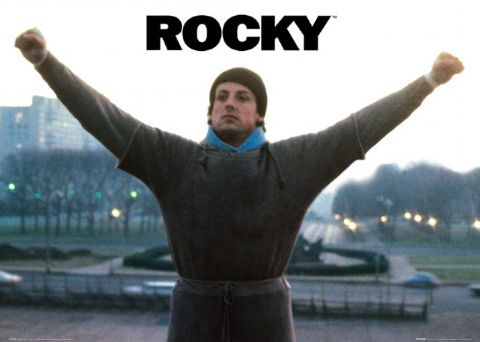
The ultimate underdog story staring Sylvester Stallone, will for sure get you motivated to do a few push-ups.
2. 300
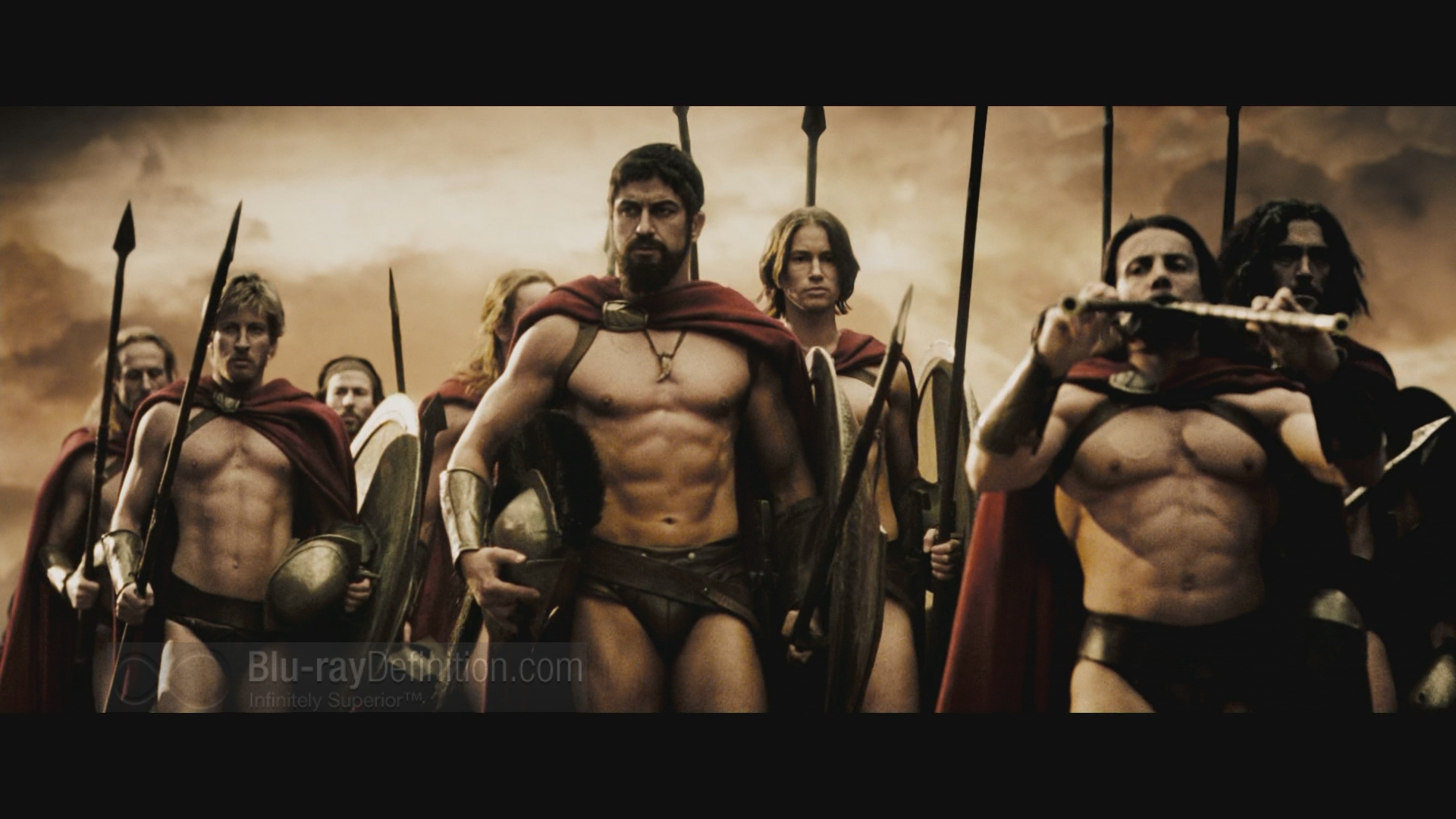
The ultimate battle movie complete with every actor that has a six pack.
Read the rest of…
Josh Bowen: 12 Best Fitness Movies
By Lauren Mayer, on Wed Nov 20, 2013 at 8:30 AM ET Don’t get me wrong, nostalgia has a big place in my life. I love elements of the past, including Victorian novels, big band music from the 1920s, and full-skirted cocktail dresses from the 1950s. But I wouldn’t want to live in any of those eras, largely for practical considerations (I was one of those annoying kids who couldn’t read The Little House books without wondering how and where they went to the bathroom, and much as I love Jane Austen-esque romance, I wouldn’t really want to live without antibiotics, electricity, or the ability of women to own and inherit property, which of course was the issue driving most of the romance anyhow).
A lot of things have improved over the years, and one advantage of getting older is that we get to see change for the better. I gaped at my mother’s stories of her college sorority (which had “girdle checks” every morning) kicking her out for dating my father (who wasn’t in an approved fraternity, on top of being Jewish), and my kids are horrified when I tell them about learning to type on a manual typewriter, or that until I was in 8th grade, girls weren’t allowed to wear pants to school.
Now my boys can look forward to telling their kids about when gay marriage wasn’t a universal right – They were born in the mid-90s, so they’ve seen the whole progression of the issue. (In fact, the first wedding my older son attended was that of my college best friend and his partner, who had a commitment ceremony when my son was 3, and I served as the ‘best man’. For a few years after that, David was puzzled when he saw an opposite-sex couple get married.)
Since my kids are 17 and 20, I hope I have to wait awhile for grandchildren (although I do expect them eventually, boys, in case you’re reading this). So in the meantime, I will rejoice as each state adopts marriage equality and come up with an appropriate song – here’s my tribute to Hawaii.
By Erica and Matt Chua, on Tue Nov 19, 2013 at 8:30 AM ET What picture comes to mind when you think of South America? Jungles? Maybe. Machu Picchu? Possibly. Beaches? Of course. Colonial architecture? Certainly. Countless tourism brochures and TV shows have etched the picture of South America’s colonial gems into minds everywhere. The reality though is different. Colonial architecture is far and few between in the modern cities of South America. From Rio to Lima, South America isn’t the centuries ago throwback that many visitors expect. Then where should time traveling wannabes go? Bolivia.

After a tumultuous start to the millennium, Bolivia has made startling progress both in embracing the new and restoring the past. It can be argued in fact, that Bolivia didn’t shake colonization until it elected its first indigenous president, Evo Morales, in 2006. That was the first time, since being colonized almost 500 years prior, that the indigenous, still a majority of the population, took control of their country. Evo, a polarizing figure, has led an effort to both to restore the historic sights and modernize the country. From my first visit 10 years ago to today, the changes to the naked eye are remarkable.
Read the rest of…
Erica & Matt Chua: South America’s Best Colonial Towns
By Saul Kaplan, on Mon Nov 18, 2013 at 8:30 AM ET My friend and Boston Globe innovation columnist, Scott Kirsner, has launched an interesting new on-line platform for corporate innovation executives. You will want to check out and subscribe to Innovation Leader where you will find lots of food for innovation thought and where this post originally appeared.
I used to think that if I just yakked long and loud enough, I could convince CEOs to embrace transformational innovation. It took me 25 years as a road warrior consultant, author, and accidental government bureaucrat to realize that proselytizing doesn’t work. If leaders don’t want to change, all the consulting jargon and fancy PowerPoints in the world won’t convince them to.
In those situations, no matter what lofty rhetoric the CEO uses in public or at company retreats about “creating an innovation culture” and encouraging everyone to think outside of the box, the best result you can hope for are incremental innovations to improve the performance of today’s business model. You never get transformational new business models — and you always get frustrated if you were hoping for bolder change. If you want transformational innovation, you have to find leaders who want transformational change and are receptive to organizing differently for tweaks than for transformation. After learning this lesson the hard way over many years, I no longer try to convince CEOs who don’t want to change, and instead try to find those CEO’s who do.
Here’s my list of 10 questions you can ask a CEO to tell if they are really serious about transformational innovation:
1) Do you agree transformational innovation goes beyond breakthrough products to include business model innovation — entirely new ways to create, deliver and capture value?
2) Will your employees tell me that failure is a career-limiting move, or that the company celebrates experimentation?
3) How much time do you spend strengthening and protecting the current business model, versus designing the next one?
4) Do you have clear and discrete objectives for both incremental and transformational innovation? Do you organize differently for each?
5) Does your organization invest in R&D for new business models as it does for new products, services, and technologies?
6) Are you prepared to have your organization disrupt itself? How do you see that playing out?
7) Do internal ideas and projects that threaten to cannibalize the current business model get squashed — or nurtured?
8) Do you have a process for allocating resources for transformational innovation projects that lies outside of the control of business units?
9) Do executives with responsibility for exploring transformational business models report to you, or to another line executive responsible for today’s business?
10) Are you willing to create a sandbox to explore transformational business models? Would you carve out a part of your current business/market to serve as an ongoing real-world innovation lab?
A few words of advice about using these questions in the real world… Tread lightly, since no CEO likes to be put on the spot and drilled with a laundry list of questions. Pick a few of the ten to put into your own words to help you discern whether the company you work for, or are thinking about working for (or with), has a leader who shares your appetite for transformational innovation. Better to know what kind of environment you’re going into in advance than to learn painful lessons later.
By Julie Rath, on Fri Nov 15, 2013 at 8:30 AM ET 
This week’s episode of The Bachelorette illustrates that there are no shortcuts to having your clothing to fit correctly.
Moments after Ames was given his walking papers, we see him approach Ashley to say goodbye, and in that instant, an ugly truth is revealed: his jacket is pinned in back (this is the third episode where I’ve noticed this). In real life, you can’t walk around with your clothes pinned, and it seems from these pictures that you can’t get away with that on reality TV either, even if you think the cameraman has your back.
Ames, I thought you were a good guy, and I was sad to see you go, but let’s get you some clothes that fit. Call me!
|
|