Contributing RP Eva Moskowitz, a former New York City Councilwoman, has announced plans to expand her nationally-recognized charter school network into Brooklyn:
Ms. Moskowitz’s push into well-heeled neighborhoods comes at a critical time for her nine-school Success Charter Network, which she launched in Harlem in 2006 and expects to grow to 40 schools across the city in the next few years. Charter school supporter Michael Bloomberg has two years left as mayor, and his successor might not be as eager to provide the city-owned space that new schools often need.
Charters have been elbowing their way into the city landscape since the 1990s by offering an education lifeline to high-poverty areas desperate for quality schools. Now, Ms. Moskowitz, whose abrasive style has made her a lightning rod for charter opponents, is pitching her schools to lawyers, doctors and other professionals.
It’s a fundamental shift for Ms. Moskowitz and the charter school movement. While she has braved five years of slings and arrows, her network’s future—and that of other charter schools—may hinge on their ability to build constituencies in affluent, influential areas.
“The political significance of this cannot be ignored,” said Steven Brill, whose book Class Warfare chronicles the school reform battles raging across the country. “Once you have charter schools flourishing in middle-class neighborhoods, they become impossible to oppose.”
Ms. Moskowitz gives an educational, rather than political, rationale. “We’ve got to have more, not fewer, alternatives to a profoundly broken education system,” she said. “The clock is ticking against our kids.”
Contributing RP, and former Virginia Congressional candidate Krystal Ball, took on hopeful GOP kingmaker Donald Trump on MSNBC yesterday. Our favorite line? “To call (Trump) a clown is unfair to clowns.”
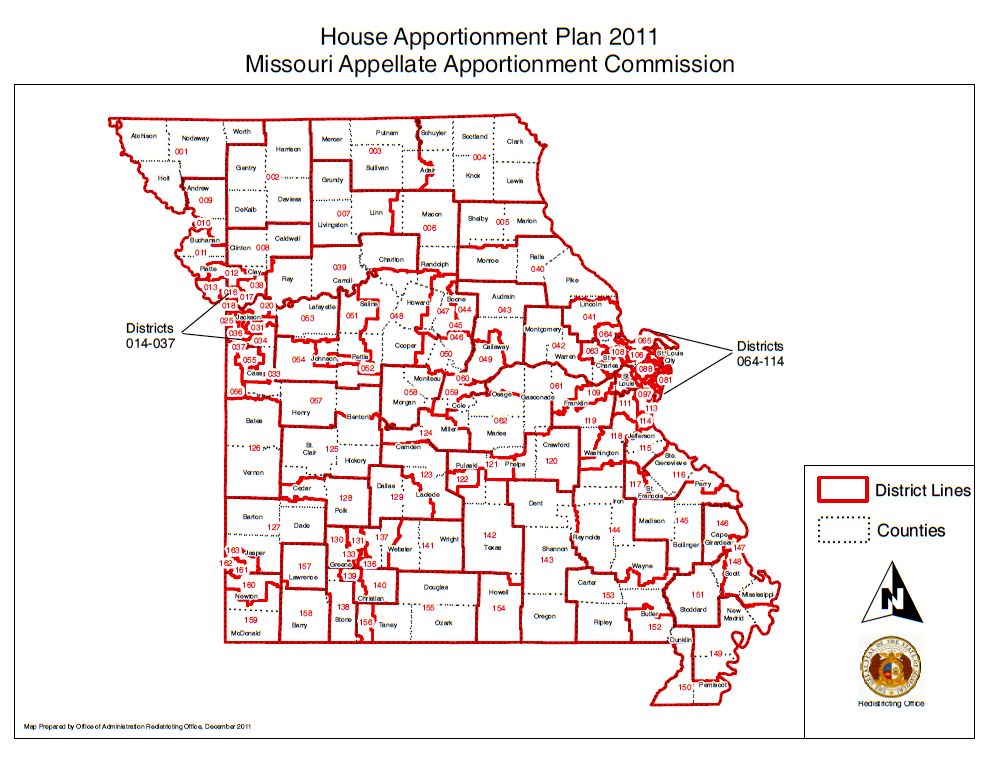
These new maps are unbelievable. I could not believe what I was seeing.
I helped draw the lines in 2000 and the judges also had to finish the process that year as well. But in 2000 the judges seemed to draw districts that kept the Republican and Democrat voting percentages close to where they had been before unless it was an open seat.
They also did not put incumbents together. I have only made a quick review of these new maps but from what I can see some of the districts have much different numbers and there was no benefit given to incumbents unless it’s a Democrat incumbent.
There also appear to be several places where incumbents are put into the same district. So far it looks like more Republicans than Democrats.
I will need to take a close look at the suburban seats to make a complete analysis, but at first glance there will be several Republican legislators not very happy with this map.
It is surprising to see judges go this political with the process and I wonder what the Republican leaders were doing to make their case. Did the judges just blow them off and only listen to Democrats? If they didn’t scream loud enough behind closed door they better start screaming now.
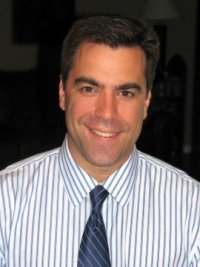
Contributing RP Greg Harris, a former Cincinnati City Councilman, has thrown his hat back into the ring, running for a spot on the Hamilton County Commission.
Democrat Greg Harris, a former Cincinnati council member who lost his seat two years ago, is running for a spot on the Hamilton County Commission.
That means GOP Commissioner Greg Hartmann will have to campaign and actually face the voters this year — something he escaped in 2008 when the leaders of both political parties made a backroom deal to give him a free pass for his first term. When Democrats complained about the 2008 deal, Republican Chairman Alex Triantafilou called them “radicals.”
But democracy has bloomed in this year of the Arab Spring. Triantafilou, Hartmann and the GOP will have to work to hold the seat. Harris, 40, holds a Ph.D. from Miami University. He is a West Sider andused his stint onCincinnati’s Council to push for reforms that included consolidation of city and county services to save money. Harris was interested in seeing if the city police department and county sheriff’s department could be combined to save tax dollars.
During a chat with The Daily Bellwether today , Harris said he was pumped for the contest and would file nominating petitions tomorrow: “This is a race I really wanted. The county is in a lot of trouble and there isn’t any evidence Greg Hartmann is getting us closer to resolving the issues.” Harris said he was particularly irked over Hartmann’s proposal to use millions of dollars from an indigent healthcare levy to pay off debts from the stadiums.
“That really put a fire in my belly,” Harris said of Hartmann’s proposal. “I don’t know how anybody can think that way, that it’s okay to raid healthcare for the poor to pay for Mike Brown’s stadium.” Harris also said there are issues about Hartmann’s attendance and work habits. “He’s originally from Texas, there’s a lot of issues about absenteeism with him, I work very hard, I really value constituent services. I don’t like the term politician. like public servant.” You can read quite a bit about Harris’ biography on this webpage left over from his Council campaign. There is morebackground info available here.
By Zack Adams, RP Staff, on Mon Dec 5, 2011 at 12:00 PM ET
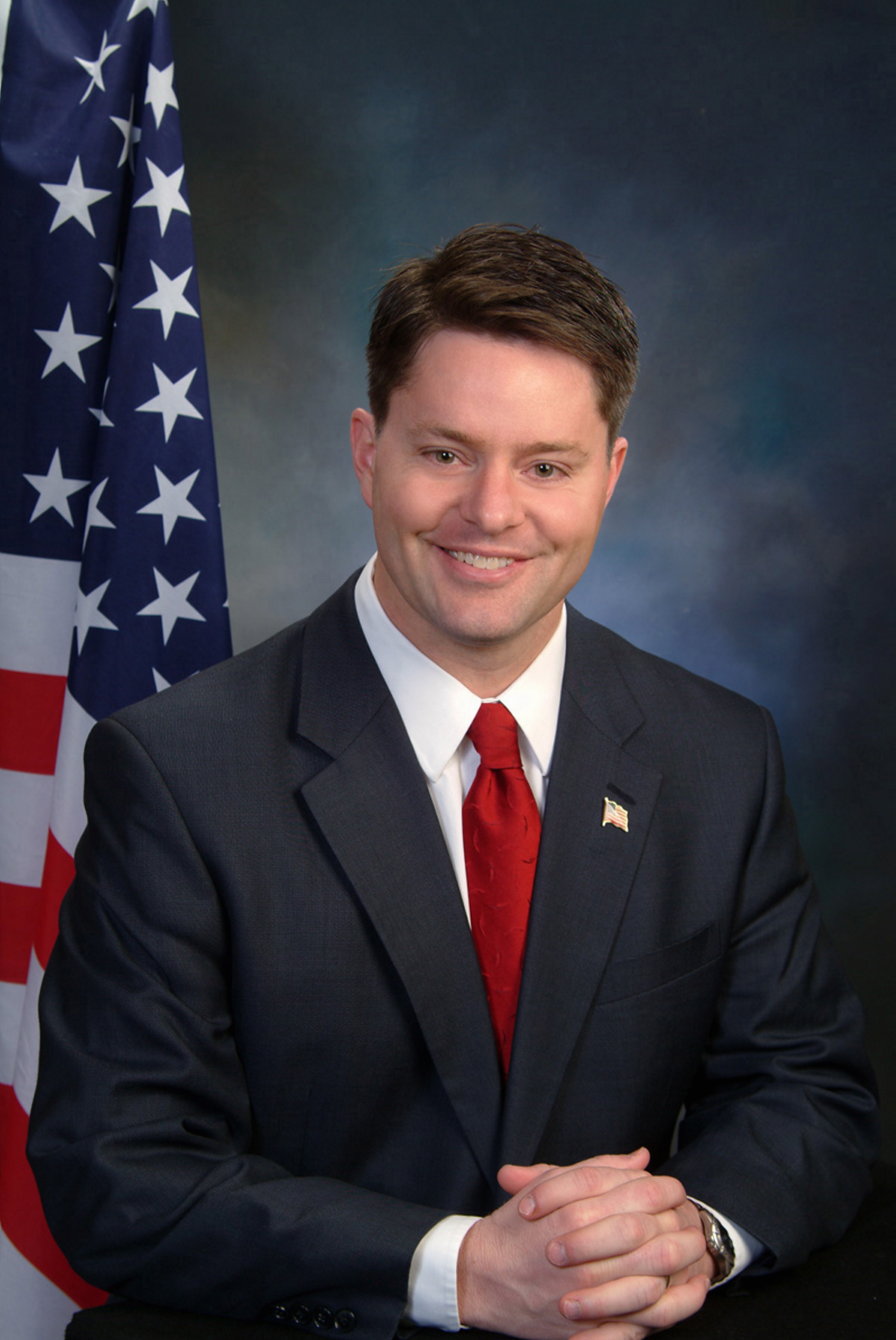
In politics as in life, money can fix all sorts of problems. And in both politics and life, Mitt Romney has taken advantage of that fact.
Money can produce lovely television ads and glossy mailers, but the beauty of presidential campaigns, as Richard Ben Cramer showed us in “What it Takes,” is that they penetrate the veneer and expose candidates for who they are, good and bad. And no amount of money can make Republican primary voters like Mitt Romney.
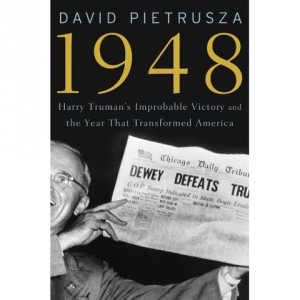
Harry Truman is the one president widely admired today who was generally reviled in his own times. There was no cult of personality around Truman while he was in the White House; to the contrary, he eventually logged the lowest approval ratings in Gallup’s history, just nudging out Richard Nixon on the eve of resignation. His legislative record was anemic. He failed to curb the anti-communist fervor known as McCarthyism, and the carnage of the Korean War is part of his resume.
The fact Truman endures is a testament to two factors: the first, his exemplary decision to assert American leadership on behalf of democratic elements under siege, from Greece to Israel, denied the Soviet Union ownership of the second half of the 20th Century. Second, he won a campaign, improbably, heroically, and defiantly in the face of outlandish odds.
Click on picture above to purchase book
That second event is the subject of David Pietrusza’s latest presidential campaign history, “1948”, a worthy successor to “1920: The Year of the Six Presidents”, a superb recounting of a largely forgotten political season, and “1960: JFK v. LBJ v. Nixon”, which manages to shed fresh details on that year’s epic. Pietrusza opts for the brisk narrative/character sketch (think “The Making of the President”, but with no pretense of grandeur), over the minute retelling of every seminal event that weighs down Edmund Morris’ series on Teddy Roosevelt or John Milton Cooper’s well regarded 2008 biography of Woodrow Wilson. It is less grand history than a jaunty, essayist’s rendition—imminently readable and revealing.
The best recalled aspect of “1948” is the seemingly helpless state Truman found himself in at the outset of the race: his Democratic Party was deeply split, with a sizable number of liberals regarding Truman as simultaneously too adventurous with his foreign policy and too feckless on the domestic side. The southern wing of the party was equally disgruntled, and a portion of it was intent on generating an electoral college deadlock that would make the preservation of segregation for another generation the ticket for a deal. The country seemed fatigued with Rooseveltian liberalism, and the Republican front-runner, New York Governor Tom Dewey, seemed inoffensive and competent enough to win easily.
Read the rest of… Artur Davis: David Pietrusza’s “1948”
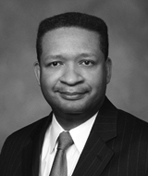
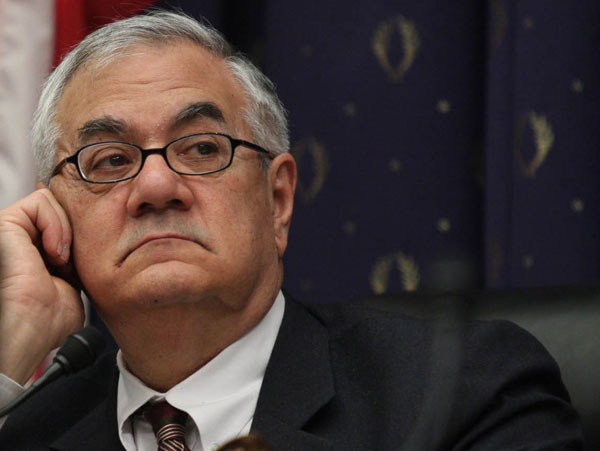
I would guess that Barney Frank’s retirement is fifty percent disgust at the rancor of modern campaigns – his 2010 win was brutal and expensive – and fifty percent a recognition that whether Barack Obama wins or loses, there is virtually no chance of a winning liberal legislative agenda in the near future.
And yes, Frank and Charlie Gonzalez are signs of a trend that will sweep in another five to ten senior Democrats in the next sixty days.
There is no serious Democrat in Washington who expects the House majority to change hands, and while they expect Obama to win, Hill Democrats are no fans of this White House. They see a second term of small bore initiatives, deficit reduction, jockeying over the successors to Obama and Pelosi, and retrenchment on healthcare and financial reform.
It’s not what they signed up for and a lot of them are heading for home, or “up or out” statewide races.
He should have played a more active last fall by working with Sens. Durbin and Coburn – both friends of his – to build some modicum of bipartisan consensus around the recommendations of the Simpson-Bowles commission that he created.
It’s not inconceivable to think that something could’ve passed during the 2010 lame duck session, when “Don’t Ask, Don’t Tell” was repealed with the support of several Republicans. By the time the supercommittee got down to work, it was probably too late; opinion had congealed on both sides.
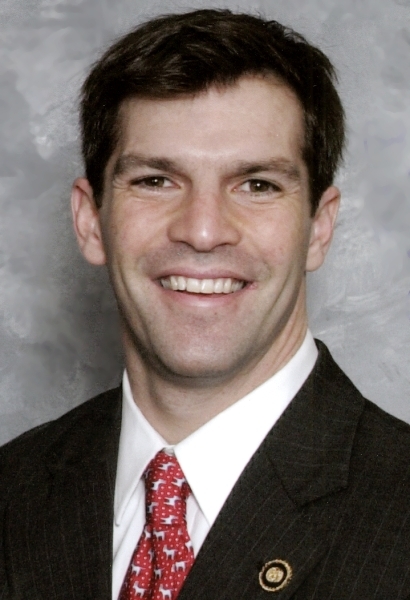
Our very own contributing RP, Oregon State Senator Jason Atkinson, was featured in yesterday’s Christian Science Monitor’s cover story, “The Myth of the Maverick.” Here’s an excerpt:
It has become a ritual of American elections for politicians to pretend as if they’re anything but politicians, and polls suggest voters like them better when they believe that. But this isn’t simply a political phenomenon. From business to medicine to technology, America loves a visionary outsider willing to follow a dream – and break a few rules, maybe even make a few sacrifices, on the way.
“There are some people who are wired differently to say, ‘Hey, I’ve got this thing in my heart, this opportunity in my profession, and I’m going to shake things up,’ ” says Jason Atkinson, an entrepreneur-turned-Republican state senator in Oregon. “That leadership style is quintessentially American”…
Though you probably haven’t heard of him, Senator Atkinson is something of a local maverick in Oregon – or at the very least not a stereotypical Republican. Earlier this year, for example, he cosponsored bills to ban plastic bags in Oregon stores. But his most personally meaningful maverick moment came last January, when his friend Gabrielle Giffords, a Democratic congresswoman from Arizona, was shot at a public meeting in Tucson.
The shooting came just months after the 2010 elections – marked nationally, as well as in Oregon, by militant rhetoric and bitter fighting, Atkinson remembers.
“We had just come off of very, very dirty campaigns, and there was a lot of really raw emotion,” he says. “You had a lot of very upset and wounded people serving in the Oregon Senate.”
The Giffords shooting resonated with Atkinson, who had himself been accidentally shot nearly three years before. Atkinson weighed whether to speak out against the extremity of political rhetoric, locally and nationally.
“Nobody wanted to say anything because everybody understands the anger” that was in the air after fierce campaigns on both sides, he says. “If you say something, you know you’re going to get beat up on talk radio, and by the critics…. But in my mind, something had to be said.”
Without consulting party leadership, Atkinson gave an impromptu, impassioned speech on the Senate floor asking for greater civility in politics. He wanted to see a conversation between politicians about ideas, rather than reducing debates, as he said in his speech, to “the idea that I am right, and you are evil.”
If his fellow politicians were listening, they missed his point. “The blowback for that decision was nothing I had ever experienced,” he says. He received hate mail and threatening telephone calls. “For weeks I had the sheriff’s office parked outside my house,” he says.
Some of that backlash, he thinks, was simply because some politicians thought they could score points by disagreeing with Atkinson. But he thinks there may also have been something else: guilt.
“The big bullies in politics don’t make up 50 percent of one side and 50 percent of the other, so why is that driving everything?” he says. “I think there was a pretty big chunk of guilt.”
Nearly one year later, though, he also thinks that speech made a difference. For starters, the sheriff’s cars are gone and people are being a lot nicer to him. “People who talk to me now want me to think they’re being civil. It’s kind of like, you don’t swear in front of the pastor,” he says with a laugh.
He’s also received dozens of invitations to speak about civility to groups across the state. He’s been sought out for conversations about meaningful bipartisanship. The local conversation, he says, has begun to change.
The RP was back at it yesterday afternoon on national television, discussing political dysfunction and promoting the work of the national movement he co-founded to promote bipartisan dialogue and action: No Labels.
This time, he was joined on a CNN live broadcast by fellow contributing RP and fellow No Labels co-founder, Lisa Borders. TV critics unanimously declared that Lisa whupped up on the RP, even though they took the same side of the debate.
Watch it for yourself and let us know what you think. And if you like what you hear about No Labels’ plans to “Make Congress Work,” click here to join No Labels:


 In politics as in life, money can fix all sorts of problems. And in both politics and life, Mitt Romney has taken advantage of that fact.