Race has played an underlying role in most national elections since former President Martin Van Buren ran on the Free-Soil ticket in 1848, splitting Democratic candidate Lewis Cass’s vote in New York State and helping facilitate the victory of pro-states rights Whig General Zachary Taylor.
The role of race receded briefly in the post-Reconstruction era, as the Democratic Party snubbed blacks and the Republicans essentially ignored them for decades, in the wake of the Compromise of 1877.
FDR had an interest in suppressing Democratic divisions on race throughout the 1930s in order to push his New Deal agenda. But race came roaring back in the 1940s, as Strom Thurmond’s Dixiecrats split from incumbent Democrat Harry Truman in 1948 to form a third (actually, fourth) party that year. Since then, racial issues have been salient in nearly every election.
In 1960, JFK’s call to Coretta Scott King helped him win approximately two-thirds of the black vote, despite that fact that there was no real difference between his position and Nixon’s on civil rights. In 1964, civil rights was perhaps the primary issue cleavage, as Goldwater was staunchly opposed to the 1964 CRA pushed by LBJ, and consequently carried only his home state + the Deep South. In 1968 and 1972, Nixon’s “Southern Strategy” was premised on the white backlash against the civil rights movement. In 1980, Reagan went to Philadelphia, Miss., where three civil rights workers were brutally murdered in 1963, to kick off his 1980 general election bid and proclaimed that “the spirit of Jefferson Davis lives in this year’s Republican Party platform.” In 1988, Wille Horton became a household name. In 1992, Clinton successfully walked the racial tightrope: he signaled that he would not be co-opted by Jesse Jackson and, by proxy, the party’s African-American base by dissing Jackson via Sister Souljah at the Rainbow Coalition convention, but reassured blacks that he would “mend, not end” affirmative action. In 2000, Bush deftly alluded to race in his bid for suburban women (and perhaps a sprinkling of blacks) by decrying the “soft bigotry of low expectations that plagued urban schools. And in 2008…well, you know.
Read the rest of… Jeff Smith: Race Has Always Been An Election Issue
By John Y. Brown III, on Tue Feb 7, 2012 at 12:00 PM ET
I love big ideas and the one I’m about to share may be the biggest idea of 2011!
What if I told you I had devised a way that would reduce personal debt by 8-9% each year (yet there would be zero loss to our quality of life or reduction in things we want to purchase)?
In addition to personal debt reduction, we could eat away at the international trade imbalance by an equivalent annual amount.
And finally, the “generalized frustration” each American feels daily would be moderately and noticeably reduced.
Would you be interested?
Of course, you would.
Here’s my idea. Ban all “up-selling”–the annoying practice of enticing Americans, a group who already can’t shop responsibly, to buy stuff we neither need nor want with money we don’t have!
The only thing we would miss is the stuff we bring home that we neither want nor need….and keep it available for those who truly need these items (yet another economic efficiency).
But–and here’s the brilliant part–only ban upselling domestically. For all international sales we will “require” companies to up-sell. This means every time we transact for a major export—e.g. sell aircraft, soybeans, semi-conductors, etc to a foreign country– we require that the US company ask if they’d like fries, an extra muffin, stamps, batteries, or to open a new bank account (in the US).
Of course, individually no single upsell will make much of a dent. But over time the US trade imbalance will be rectified, we won’t need another bailout from DC, we’ll walk around less antsy becuase we’ll feel competent to shop for ourselves, and for the first time in a long time we’ll be a model of personal fiscal restraint for the rest of the world.
So obviously a lot can happen between now and November.
War with Iran, European collapse, cat breading craze leads to chronic bread shortages, etc etc.
But first of all, what’s the fun of talking about politics if you aren’t willing to make wild predictions based on insufficient data?
Second, I thought about citing swing state data showing the President in a stronger position and talking about the many paths he has to victory but really, just consider the choice between this guy and this guy. There’s really no comparison.
A few reactions to the many good insights on this thread:
Because the participants on this thread are all people who love the lore of politics, and are embarrasingly steeped in its historical trivia, we all tend too much toward analogy: so all of us, myself included, strain to determine whether this year is 1980 (enough political instability that Reagan’s liabilities, much greater than they seem now, didn’t matter) or 1972 or 1984 (vulnerable incumbent ends up winning big because of internecine strife in the other camp, and because big events (Vietnam winds down, Nixon goes to China in 72,) (a roaring economic recovery in 84) changed the equation. I’ll venture one way, though, in which this cycle has no comparison: for the first time in memory, the country seems polarized and split so closely that for two years and seven months, an incumbent president’s approval ratings have essentially stayed static, no matter what good or bad news is cluttering his in-box.
This is my first post, and first contribution to The Recovering Politician. I believe having run for office and taking the time to step back and examine our experiences, gives us a unique and significant insight into how politics really works. Thank you for allowing me to be part of this with all of you.
On to the debate!
As a Democrat, I can’t say I would mind if a drawn-out primary helped our party in the general election. Yet objectively, I do see potential advantages for the GOP. The Obama campaign might be happy about this right now, but they would be committing political malpractice if they don’t anticipate possible advantages for the GOP, and prepare for them. So here are some points to consider:
Read the rest of… The RPs Debate the GOP Mudfest: Jimmy Dahroug Rebuts
By John Y. Brown III, on Mon Feb 6, 2012 at 12:00 PM ET
The difference between liberals and conservatives….
My son found out recently that Sony Bono was a Republican member of Congress and wanted to to know more about him and his prior career.
I’m showing him the clip at the bottom of this post which I think demonstrates beautifully the core distinction between conservatives and liberals—a national obsession that, to me, seems blown out of proportion and even arbitrary.
Basically, if you boil down all the differences between to the two political types, liberals are slightly superior in the areas of fashion sense and rhythm (see Cher).
Conservatives, by contrast, are slightly more task oriented and better at getting elected to Congress. (See Sonny).
That’s really about it.
Oh, and liberals and conservatives tend to marry each other.
And when the try, can even make a pretty catchy duet.
Listening to liberals the past few weeks is so fun.
They are all giddy with how “nasty” the Republican primary has become and have convinced themselves that the “weakened” Republican nominee won’t stand a chance against President Obama.
Krystal made these points in her post, but those predictors are not very objective. They point out that the tea party base will nominate an extremist who can’t beat Obama. They seem happy to take on Romney even though he is considered to be the moderate Republican.
This election is not like 1968, or 1972. It’s a bit like 1980 and a lot like 2008. Artur Davis pointed out reality in his post, and those facts about the key states Obama has to win are real.
I’m sure the polling and focus groups show the Bain Capital attack to be effective. That is why Newt and every Democrat talking head repeat it every chance they can. I also think it will be more effective on general election voters, but Romney has a chance to turn those attacks into a positive if he plays it right.
I think Krystal pegs the psychology of Newt perfectly when she suggests that no one in the country will be happier with a Romney loss in November, with the possible exceptions of Jeb Bush, Chris Christie, and Bob McDonnell. As the old Janis Joplin song goes, Freedom’s just another word for nothin’ left to lose. And Mitt won’t be quite so enamored of the concept of “freedom” when he sees how Newt uses his in the the next few weeks. Rather, he’ll be urging his Jewish bundlers to call Adelson and beg him to stop (assuming he hasn’t already done so.)
I also agree with her smart observation that Newt has leveled much harsher critiques of Mitt Romney’s time at Bain Capital than Democrats would be able to pull off. Even more importantly than the attack is that Romney’s takeaway from the attacks will be, I think, that his response was effective. But I don’t think it will work in a general to proclaim, “I don’t apologize for my success” without expressing some empathy for all the people who lost jobs when companies went under after Bain sucked them dry.
Regarding Artur’s analysis, I’m not sure how Democratic losses in all of the states cited signify a victory of ideology over personality. Knowing both of the candidates in Missouri last cycle, for instance, I would say just the opposite: Republican Blunt was an affable, indefatigable campaigner who disarmed urban Democrats during intimate meetings while retaining his rural conservative base. Conversely, Democrat Robin Carnahan was widely seen even by Democrats as inaccessible and icy, and even after ostentatiously moving towards the middle proved utterly incapable of connecting with center-right voters. I don’t think ’10 was an ideological election any more than ’06 or ’08 were ideological elections favoring progressives; it was merely one more lurch back by an unsettled, anxious electorate pounded by job losses and economic insecurity.
I agree with Krystal on the basics: Romney has been undercut by Gingrich’s attacks, and most of the Gingrich line of attack will resonate even better in the general. I agree that Romney’s unfavorables are disconcertingly high right now; if they continue, they would be the worst any nominee has carried into the general since 1984 (that path does not end well). I even share the premise that Obama has found a fairness based frame for this election that discomfits Republicans, and is broadly, if not deeply, popular.
There is, however, an overestimation of Obama’s reelection prospects that is taking hold in Democratic circles, and it is worth rebutting. First, at the same time consumer confidence is at its peak level in the past nine months, and the unemployment rate is at its lowest point since 09, its striking that the president’s approval ratings still appear stuck around 46-47-48 percent. Its just as revealing that at the same time Gallup recorded Obama’s best approval numbers since June, its polling gives him no better than a tie with Mitt Romney in swing states. While there is some variance, most battleground state by state polls still put Obama and Romney in a dead heat.
In other words, an incumbent who is defining the race in much the way he wants, who is receiving generally good economic news, and whose likely opponent has stumbled prominently still has over half the country expressing its disapproval and nearly as many voters inclined to reject him as to support him. That’s textbook vulnerability that in polling terms, has not gotten much better.
Read the rest of… The RPs Debate the GOP Mudfest: Artur Davis Rebuts


 Race has played an underlying role in most national elections since former President Martin Van Buren ran on the Free-Soil ticket in 1848, splitting Democratic candidate Lewis Cass’s vote in New York State and helping facilitate the victory of pro-states rights Whig General Zachary Taylor.
 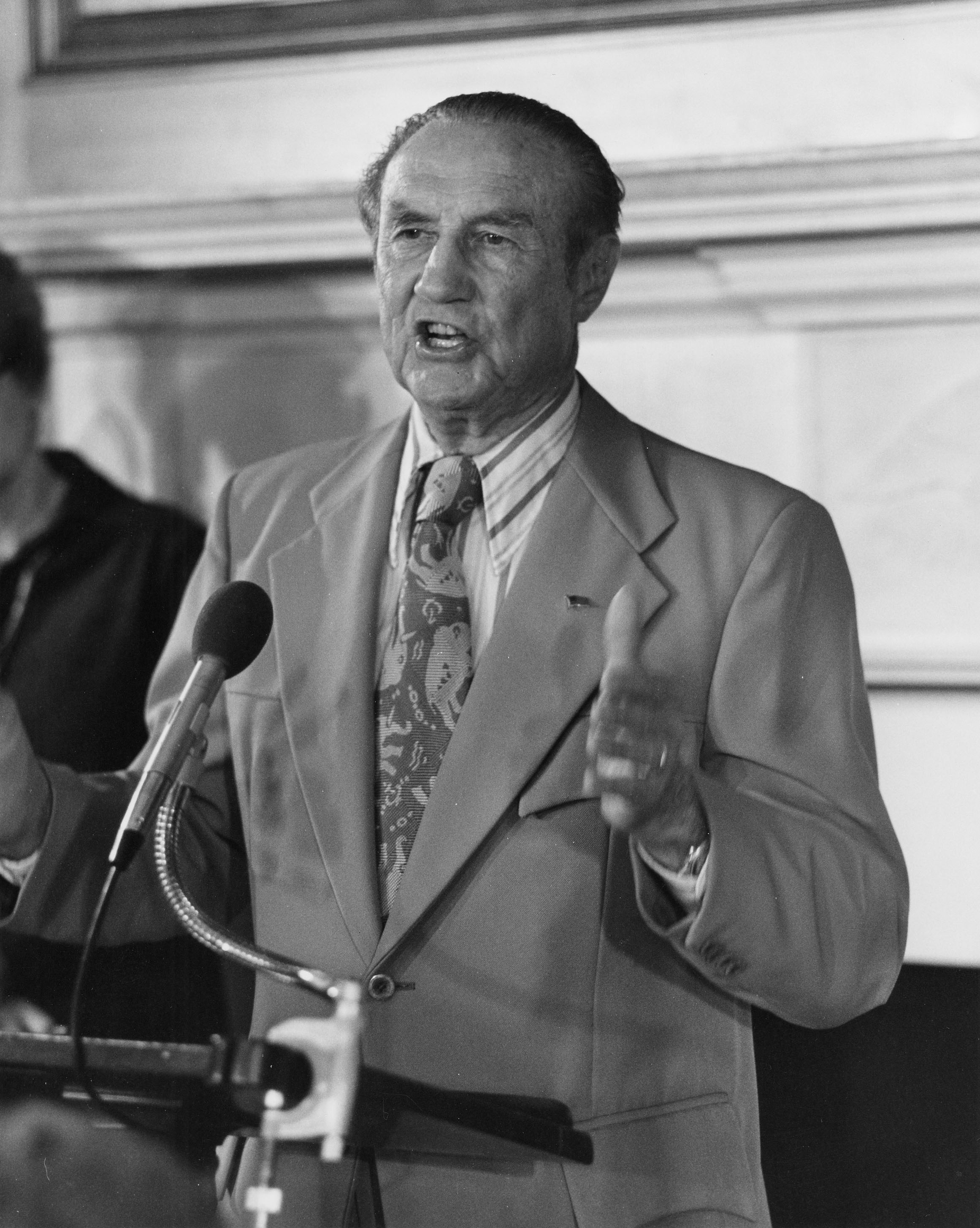 FDR had an interest in suppressing Democratic divisions on race throughout the 1930s in order to push his New Deal agenda. But race came roaring back in the 1940s, as Strom Thurmond’s Dixiecrats split from incumbent Democrat Harry Truman in 1948 to form a third (actually, fourth) party that year. Since then, racial issues have been salient in nearly every election.