By John Y. Brown III, on Tue Jul 24, 2012 at 12:00 PM ET  “I know it is going to be a good day when….(fill in the blank with what the tip odf is for you). Me?
It’s when driving to work I nail lip-synching Mos Def’s “Know That” from the album Black on Both Sides. And when I nail both Mos Def’s AND Talib Kweli’s part –like I did this morning….well, step aside son.
Anything is possible for me.
There is nothing I can’t lip-sync.
That is until I get …to the office and am waiting at the elevator. Then I start to question the correlation between my illest hip-hop impersonations and having a successful day at work. But I smile to myself because I know deep down if free styling hip-hop is required, I won’t have any trouble taking down the other 4 guys on the elevator with brief cases.
I “Know That!” It’s going to be a good day!
By Michael Steele, on Tue Jul 24, 2012 at 8:30 AM ET  News that deep-pocketed Las Vegas casino owner Sheldon Adelson gave a whopping $10 million to a pro-Mitt Romney political action committee makes it the largest advertising buy since the Republican candidate became the putative challenger to President Barack Obama. Certainly, such generosity contributed to the Romney campaign-Republican National Committee-Victory Fund troika’s massive $106 million haul last month. News that deep-pocketed Las Vegas casino owner Sheldon Adelson gave a whopping $10 million to a pro-Mitt Romney political action committee makes it the largest advertising buy since the Republican candidate became the putative challenger to President Barack Obama. Certainly, such generosity contributed to the Romney campaign-Republican National Committee-Victory Fund troika’s massive $106 million haul last month.
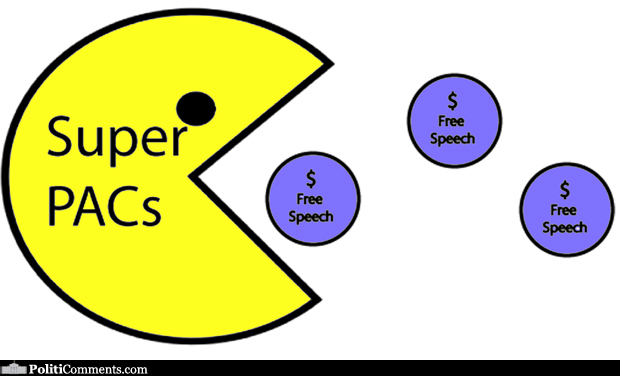
But it is the donations to the “super PACs” that have whipped Democrats into a frenzy and spurred the news media to turn their spotlight on the growing role and influence of these PACs and the individuals who fund their activities.
Such big donations lead some politicians and pundits to paint super PAC donors as nefarious agents corrupting the political process. The political left has especially been critical of the role that these organizations and their donors play since the U.S. Supreme Court handed down its decision in Citizens United v. Federal Election Commission in 2010.
Specifically, the high court ruled that “the Government may not suppress political speech based on the speaker’s corporate identity.” In other words, PACs that did not make contributions to candidates, parties or other PACs could accept unlimited contributions from individuals, unions and corporations (both for-profit and not-for-profit) for the purpose of making independent expenditures for “express advocacy or electioneering communications purposes.” Citizens United essentially ensured that corporations would have the right to free speech, just as the unions were enjoying.
The Supreme Court gave little credence to the government’s argument that the First Amendment does not cover corporations because they are not “persons.” Corporations are, after all, the court would note, just “associations of people,” and the First Amendment should protect their right to petition the government.
That being said, most donations to super PACs have come not from corporations but from the wealthy individuals who run them. According to the Center for Responsive Politics, the top 100 individual super PAC donors in 2011-12 made up just 3.7 percent of contributors but accounted for more than 80 percent of the total money raised.
 Given that labor-union political activities and money favoring Democrats had previously been dominant in federal campaigns, it is interesting to hear the screams of indignation now that Republican-leaning corporate moguls are stepping up their political and financial support. Given that labor-union political activities and money favoring Democrats had previously been dominant in federal campaigns, it is interesting to hear the screams of indignation now that Republican-leaning corporate moguls are stepping up their political and financial support.
Of course, super PACs are being criticized specifically for engaging in heavily negative campaign advertising. Yet, like them or not, such attack ads often work to drive up the negatives of opponents. Ironically, despite calls for less negative campaigning by the presidential candidates as well as their respective super PACs, research early in the 2012 campaign indicated that most voters found negative advertising informative and that candidates benefited from negative advertising sponsored by PACs.
The Citizens United case and its aftermath, however, have nothing to do with the fact that the campaign-finance-reform law passed by Congress and from which the Citizens United case was born woefully neglected to include an effective donor-reporting mechanism that could have been an adequate check on the mega-donations made to such PACs. Simply put: Congress should have written full disclosure into the law.
By January 2010, though, at least 38 states and the federal government had come around to requiring disclosure for all or some independent expenditures or election communications — stipulations intended to deter potentially corrupting donations. Yet, despite these laws, many voters go to the polls not knowing who funded those political commercials running incessantly for the past three weeks. In fact, in federal elections, PACs have the option of filing reports on a monthly or quarterly basis, which often means that funds are collected and spent long before the legal filing disclosure is required.
Read the rest of…
Michael Steele: What’s So Bad About Super PAC-Men?
By John Y. Brown III, on Mon Jul 23, 2012 at 12:00 PM ET My version of George Washington’s cherry tree (I cannot tell a lie) story.
If you live long enough in a city you find pieces of yourself –your life–that catch you off guard and bring back a flood of memories.
That happened to me tonight when I went to an to a new ATM off Frankfort Ave. As I looked up I saw a door (see picture) that I recognized. I knew instantly it was a door from a defining moment in my life, when my honesty and character was put to the test.
I was 16 years old and was out one night with my closest high school friend, who I’ll leave nameless. We were discussing sneaking into a movie. A couple left through the door attached to the theater and my friend grabbed the handle and held it open for me.
“C’mon, Johnny! C’mon!! Quick!”
I almost impulsively rushed in. But didn’t. I hesitated just long enough for guilt to seep in and catch my self up….and muster the confidence to whisper bravely “Let’s just go inside and pay.”
I know…that wasn’t as brave a declaration as I’d hoped ….but it spoke volumes about the kind of person I was. My friend didn’t have the money and said we weren’t old enough to get in anyway. He held the door open a few more seconds urging me to sneak in. But I didn’t.
And we left.
And I hadn’t seen that door to the old Crescent Art (porn) theater since that night 33 years ago. The night my character–OK, a small piece of my character–was put to the test. And I passed. By refusing to sneak into a blue movie house without paying.
What a guy, huh? Made me wonder if George Washington felt this way when he’d tell people the cherry tree story. Yeah, of course he did!
Read the rest of…
John Y’s Musings from the Middle: Being Good While Doing Bad
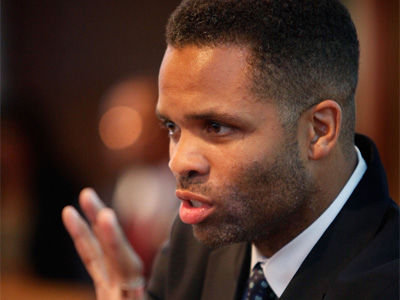
By Artur Davis, on Mon Jul 23, 2012 at 8:30 AM ET 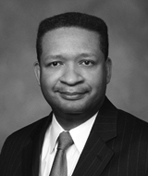 Last week, during the alternately sad, alternately voyeuristic coverage of Jesse Jackson Jr.’s troubles, I recalled a night that the Congressman himself has probably forgotten. Sometime in 1996 or 1997, Jackson made a speech at Alabama State University in my hometown, Montgomery. At least one local media outlet confused the young, newly elected representative with his father; a then defensible mistake reflecting the fact that much of America, much less Alabama, did not yet know there was a second generation Jackson rising in his own right. Last week, during the alternately sad, alternately voyeuristic coverage of Jesse Jackson Jr.’s troubles, I recalled a night that the Congressman himself has probably forgotten. Sometime in 1996 or 1997, Jackson made a speech at Alabama State University in my hometown, Montgomery. At least one local media outlet confused the young, newly elected representative with his father; a then defensible mistake reflecting the fact that much of America, much less Alabama, did not yet know there was a second generation Jackson rising in his own right.
But Montgomery’s African American professional crowd in their twenties or early thirties knew better, and they turned out to see one of their own generation’s most promising members do a star turn. The speech was good but not memorable—more polished than powerful, no preacher’s hook—but the electricity lingered. It was a lot of glamour, a lot of promise, just enough inspiration, in a community where “up and coming politician” meant at most future city councilman, at most state senator. This Jackson seemed to have the stuff to take the train much further. It would not have stunned a man or woman in that aging gymnasium to think that a future president had left a little touch of star dust behind.
I would see Jackson in action a hundred times more. He is one of a handful of House members who can give an authentic floor speech, versus droning through a turgid, staff drafted floor statement. He evolved into the orator whose possibilities were only just in view that night in Montgomery: by the time I watched him speak in Alabama in 2007 as an Obama surrogate, he had the gift nailed, and wasn’t much off Barack Obama’s rhetorical pace: it was a common refrain that day in the audience that Jesse had made the Obama case better than Obama himself had made it in Selma a few months earlier.
The legislator who developed over the last 16 or so years has his defects. Jesse Jr. never turned into a grind-it-out policy technician: his fixation on tacking onto the US Constitution every modern progressive policy plank was quixotic more than serious-minded. He frustrated the Hill crowd by neither reaching for leadership status himself nor aligning with the various power grids that attached around Nancy Pelosi or Steny Hoyer. In a world were institutional status is sought and lobbied over, Jackson’s coolness to that sort of thing could look like disengagement.
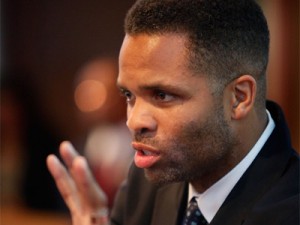 His admirers kept chafing at his reluctance to reach for higher office. The presumed target, a Senate seat in Illinois, was there for the taking in 2004 but Jackson deferred to a black state senator he barely knew who had been mashed pretty badly in a House race four years earlier. In 2007, Jackson took all the steps to challenge another legacy product, Richard Daley, for Mayor, and stepped back again. His admirers kept chafing at his reluctance to reach for higher office. The presumed target, a Senate seat in Illinois, was there for the taking in 2004 but Jackson deferred to a black state senator he barely knew who had been mashed pretty badly in a House race four years earlier. In 2007, Jackson took all the steps to challenge another legacy product, Richard Daley, for Mayor, and stepped back again.
The game of politics requires mobility, either toward internal party power or to the next office on the ladder, and a politician who aims for neither is prone to stagnate. I suspect Jesse Jr. felt that tug and it explains the frenzy around his effort to get appointed to the Senate in late 2008 (an effort that did not cross the line into illegality, based on what I have seen, and probably wouldn’t look suspect if the target of persuasion had been anybody but Rod Blagojevich.) While I certainly never heard him express the thought, it would have been inhuman if Jackson didn’t notice that the chits from giving Obama and Daley their space weren’t exactly pouring in. The Obama team, for example, appeared to view Jackson as a ship they had passed on the way, and didn’t even include him on a list of favored suitors for the seat. The Democratic seers in Illinois lapsed very quickly into chatter that Jackson was too “Chicago” to build a statewide brand, more or less their initial take on Obama in 2003.
Politics is anything but fair and I never heard Jesse complain. The maddening irony, though, was that most of the ingratitude could be seen a mile away, involved people whose mindsets he knew all too well, and still Jackson seemed unprepared. He actually seemed to prefer to bid in an insider competition, where he had never excelled, instead of trusting his skills in a fight for voters, where his gifts might have enabled him to fare so much better.
It struck me as perplexing when I heard him say he could never raise the money to run a Senate race without the virtue of an appointment, because that deference to conventional wisdom and doubt clashed so thoroughly with the many times he took on the established point of view: becoming a reform ally in Chicago, endorsing Obama for the Senate in 04 when it seemed pointless. A man with unmistakable boldness never seemed to give a second’s worth of thought to a brass-knuckled tactic like announcing he would run in the Senate primary in 2010 no matter what, to test the Democratic machine’s path of least resistance politics.
Read the rest of…
Artur Davis: Jesse’s Drama
By John Y. Brown III, on Fri Jul 20, 2012 at 12:00 PM ET Facebook advertising and paying for colonoscopies.
As I watch Facebook succumb to ad creep I am reminded of a ridiculous joke I suggested a couple of months ago to a friend as we discussed the need for, ahem!, colonoscopies and how to pay for them.
My idea was a simple, All-American pro-Capitalism approach. I thought of the most obvious solution that everyone else seemed to be missing.
Look, some people rent out their cars for ad space. We have ads in the most intimate public spaces, including restroom stalls. And don’t forget the human sandwich boards.
The solution was so simple, a child could have thought of it. Why not allow us to contract through our insurance providers to rent out our colons as advertising space?
Duh!!
When doctors are doing a scope they will see advertising campaigns specifically targeted to them. Ads for new medical equipment, new pharmaceutical medication, trips abroad, Mercedes Benzes and subscriptions to Cigar Aficionado. With the new advertising revenue derived from colon ads, we will be able for every American to be able to financially cover all the needed medical procedures involving their colon.
Health improves. Our health care system is more financially solvent. And doctors get interesting and relevant information about new marketplace opportunities while snaking through our colons looking for the presence of unusual new growths.
It’s a classic win, win, win.
And reminded me of the new spate of ads we are all subjected to now on Facebook. We are all being treated like doctors now, in an odd sort of way. I guess. There is always a silver lining if you look hard enough.
And also, if you look hard enough, there is another advertisement that just appeared. ; )
By RP Staff, on Fri Jul 20, 2012 at 8:30 AM ET So says Fishbowl DC:
Now that congressional candidate-turned political pundit Krystal Ball has a regular spot co-anchoring MSNBC’s “The Cycle,” we’ve been able to take a closer look at her. And while we may be overshooting here, we’re ready to say Ball looks very much like the beautiful Dutchess of Cambridge herself, Kate Middleton.
“Ha! Very flattering,” Middleton Ball told us. “I’ll take being compared to her any day!”
She told us we’re not the first to compare her to Middleton but that she is “more commonly” compared to a young Demi Moore. “Both are extremely flattering and a bit of a stretch,” she said.
If you’re wondering where she got the curious name, a 2011 WaPoprofile on Ball notes that her father, a physicist, wrote his doctoral dissertation on crystals.
OK, You decide. Let us know what you think in the comments section below.
By Jeff Smith, on Thu Jul 19, 2012 at 1:30 PM ET Poignant stuff. Lovely slideshow: 83 yr-old woman’s court case may be strongest argument against DOMA: [Huffington Post]
By John Y. Brown III, on Thu Jul 19, 2012 at 12:00 PM ET Are you feeling shallow today?
Did your boss seem dismissive of you?
Are you not getting the kind of respect at home you feel you deserve?
Next time you feel a personal slight, actual or anticipated, stop yourself. Straighten your back. Look the person in the eyes and repeat this quote–soberly and with conviction.
“There is no coming to consciousness without pain. People will do anything, no matter how absurd, in order to avoid facing their own soul. One does not become enlightened by imagining figures of light, but by making the darkness conscious.”
Pause. And then add,
“Oh yeah. That’s Carl Gustave Jung. Since you appear confused.”
Shuts ’em up every time. And they will not take you for being shallow or inconsequential again.
By Jeff Smith, on Wed Jul 18, 2012 at 5:00 PM ET Here’s the backstory behind the sterilization of politics, the pseudo-neutering of political journalism. [New York Times]
By John Y. Brown III, on Wed Jul 18, 2012 at 12:00 PM ET Good living tips.
Try each evening to review the day and ask yourself, “What is one thing I learned today based on first hand experience?”
Write down the answer–don’t just think about it. In fact, write down the answer in the form of a declaration or “lesson learned.”
This helps you not only remember but also has a greater impact on positively changing future behavior.
Here’s my most recent entry:
July 11th.
Today I learned that you should never select a song by Michael Jackson when playing Karaoke. And if you do, try not to do Micheal’s signature spin move. Especially on thick carpet.”
|
|