By Jason Atkinson, on Wed Oct 10, 2012 at 10:00 AM ET 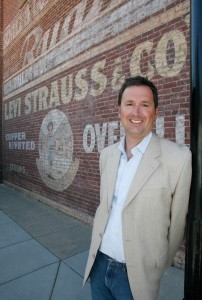 Saturday I swam with 1,000 spawning salmon and I wondered what if they might be the last? Did I do everything in my power to fix the river my grandparents told me to restore? No. I’ve tried it with politics. I’m unfulfilled seeing what is happening and knowing I have the power to change it. Saturday I swam with 1,000 spawning salmon and I wondered what if they might be the last? Did I do everything in my power to fix the river my grandparents told me to restore? No. I’ve tried it with politics. I’m unfulfilled seeing what is happening and knowing I have the power to change it.
It was too late for the Hudson River in New York. The same was almost true with the Willamette River. While today the water around Portland is better, I wouldn’t recommend swimming in it. There are only a few rivers in the world, which could tip in either direction. My son will live with the results. So will yours.
 I took this picture Saturday Why laser beam on the Klamath? Because her champions are Government reports, bad politics, old hatreds, misinformation, and election cycles in both Oregon and California. The river’s future is stagnating like the water behind its lowest dam. Green, hot, and no one wants to touch it.
I want to. We’re Americans. We fix problems. We build our country. We leave it better.
Americans knew “super-sized” fast food was bad for our health. All the Government reports said so. But it was not until a documentary called Super Size Me made the emotional connection by laser-beaming on one man who ate too much, destroying his health, did America change. Within weeks of the films release, McDonalds ended “super-sizing.”
My laser beam is focused on the Klamath because I know a spotlight will be shown on how Americans do conservation. Our emotional connection is with America (like Super Size Me), and our story is the families who depend on a restored Klamath River.
I know the people of the Klamath. I am one. I know what is at stake, the competing cultures, the way of life in Oregon and California. I also know my great-grandfather swam with thousands and thousands more fish than I did Saturday.
The Klamath matters because restoring this river and her people reflects who we all are as Americans.
Help us finish up our grassroots push. We are just $19,250 to go.
Click here, not to donate, but to leave a legacy and change conservation.
By Jeff Smith, on Wed Oct 10, 2012 at 8:30 AM ET  Q: I recently lost a primary race, largely because a bunch of elected officials I had helped for years ended up screwing me. What’s the best way to get back at them? —Name and location withheld Q: I recently lost a primary race, largely because a bunch of elected officials I had helped for years ended up screwing me. What’s the best way to get back at them? —Name and location withheld
By not spending another minute thinking about getting back at them.
One day in prison, a veteran convict pulled me aside and told me that his brother-in-law had told the feds where his (cocaine) bricks were. “Wow,” I said. “What did you do to him?”
“Thought about the motherf—– for my first three years straight,” he said. “Laid awake every night. Worst three years of my life. But then one day I let it go. Just like that. ’Cause you can’t do time like that. Your boy with the wire…you can’t even think about [the] dude. It’ll make you crazy.” It was the best advice I got in prison; after that, I rarely thought about my ex–best friend.
Your resentment is weighing you down and will reduce the odds of you succeeding in your next endeavor, which would be the best revenge.
By the way, in the future, don’t help others in the hope that they’ll reciprocate. Help people you truly want to see succeed, and then be pleasantly surprised if they reciprocate.
Q: In your last column, some would-be candidate told you he hated asking for money. Instead of providing constructive advice on how to do it, you gave him glib advice about marrying a rich person and other long-shot strategies. How about a better answer? —J.J., New York City
Asking for money can be soul-crushing. But unless we enshrine the public financing of campaigns, it will be a necessary evil. That said, here’s some practical advice about how to make it feel less seamy—and how to succeed at it:
When you first meet a prospective donor, ask for general advice. A few weeks later when an issue arises on which she has expertise, call her and ask for specific advice, but do not ask for money. Then two weeks after that, ask her if she’d be willing to serve in an advisory role on your campaign, a member of “Businesswomen for J.J.” or something. If she agrees, ask for money two weeks later.
Why will this work? First, because now she’s much more invested in you than she would have been had you asked initially. Second, it’s like dating: An attractive woman at a bar gets hit on 10 times a night. A guy can distinguish himself by approaching her without asking her out. When he leaves, she often thinks about the guy who didn’t hit on her more than about the dozen who did.
In other words, after the first few conversations, your prospective donor may be intrigued by the fact that you haven’t asked for money. It’s a fine line to walk, but you can be persistent without being desperate.
Read the rest of…
Jeff Smith: Do As I Say — A Political Advice Column
By Rod Jetton, on Tue Oct 9, 2012 at 1:30 PM ET  Biden will most likely be on the attack from the start. Biden will most likely be on the attack from the start.
I think his first attacks will sound good and score points, but his problem will be Ryan knows the facts better than Biden and his counterpunches will land and Joe won’t know what to do. That is when we will get the gaffe or crazy sound bite we are all expecting.
The only thing Biden has going for him is everyone thinks he will mess it up and the expectations for him are very low. This is Ryan’s first big debate so nobody knows what to expect from him but I bet we will get a heavy dose of gas prices, personal income and deficit talk. If Biden hits to hard it will be easy for Ryan to use some of his own comments against him.
(Cross-posted, with permission of the author, from Politico’s Arena)
By John Y. Brown III, on Tue Oct 9, 2012 at 12:00 PM ET  Disappointing iPhone discoveries. Disappointing iPhone discoveries.
I am very disappointed with the camera app I discovered last night on my iphone that also records video.
It’s a very cool app, for sure. Not being critical of the app or of how it works. In fact, it actually works extremely well–which is really the cause of my problem.
It was the disappointing quality of what I decided to record that is bothering me.
But then again I am probably being way too hard on myself.
I mean think about, how many people have ever said the words, “OMG, I just recorded myself singing and I sound much better than I even imagined I would.”
Not many. And I am in the majority.
Was hoping I sounded like an aging American version of Paul McCartney singing Blackbird. Instead it sounded more like my father’s half-hearted attempts to sing along with the hymnals at church before he’d eventually stop because he didn’t want to call attention to himself for carrying a poor melody.
Maybe Apple should include a warning saying, “Actual recordings will sound like a time your parents sang and embarrassed you and not like the singer you are impersonating.” That might help a little.
 Very disappointing discovery, and the last time I’ll be pointing that app in my direction. Very disappointing discovery, and the last time I’ll be pointing that app in my direction.
Here’s my last video recording of me ever on my iPhone. Without the audio. Because, frankly, I learned last night that I look much better singing “Blackbird” than I sound.
By RP Staff, on Tue Oct 9, 2012 at 9:15 AM ET In an aptly headlined article in The New School News, “Recovering Politician on the Political Divide,” contributing RP Jeff Smith is profiled on his heightened visibility during the media’s inquiry into controversial comments made by Smith’s former legislative colleague, Missouri U.S. Senate candidate, Todd Akin:
 Following Representative Todd Akin’s controversial statement about “legitimate rape” in August, much of the media expected the Republican senate nominee from Missouri to give up his election bid. But Jeff Smith, assistant professor of politics at the Milano School for International Affairs, Management, and Urban Policy, knew better. Having served as a Democrat in the Missouri State Senate from 2006–2009, Smith is accustomed to Republican Party dominance in his home state—and understands why Akin’s extreme views could be an electoral advantage. Following Representative Todd Akin’s controversial statement about “legitimate rape” in August, much of the media expected the Republican senate nominee from Missouri to give up his election bid. But Jeff Smith, assistant professor of politics at the Milano School for International Affairs, Management, and Urban Policy, knew better. Having served as a Democrat in the Missouri State Senate from 2006–2009, Smith is accustomed to Republican Party dominance in his home state—and understands why Akin’s extreme views could be an electoral advantage.
When teaching graduate students at The New School about the electoral and political system, Smith has more experience than time spent in the statehouse. As punishment for a minor campaign law infraction, Smith spent much of 2010 in federal prison, giving him a particularly personal understanding of the gray areas of campaign management and the legislative process. For Smith, Missouri is a perfect microcosm to discuss the widening divide between the left and the right at the national level.
“I think red states are getting redder and blue states are getting bluer,” says Smith, attributing this movement in part to increased mobility that accompanied the Interstate Highway System and inexpensive air travel. “People like to live near people who are like them,” explains Smith. “When travel is relatively affordable, conservatives can easily move from the coasts to the heartland, and liberals can move from the heartland to the coasts.”
Click here to read the full article.
By RP Staff, on Mon Oct 8, 2012 at 3:30 PM ET BuzzFeed Politics asked contributing RPs Jeff Smith and Rod Jetton –both who served with Todd Akin in the Missouri legislature whether GOP donors will ever follow their political leadership and support Akin’s bid for the U.S. Senate. Here were their responses:
Rod Jetton, a former Republican speaker of the House in Missouri who works now as a political analyst, said major donors have about a week left to reevaluate and contribute money to Akin if they want to make a difference in the race.
But, Jetton told BuzzFeed, donors will remain wary of investing in Akin who, as a candidate, has been inconsistent at best.
“I don’t know that they have the confidence that the last four weeks of the campaign will be any different from what the past six weeks have been, from a messaging standpoint,” Jetton said.
“Let’s be honest,” he added. “Whether they like Todd Akin or not — and they don’t — if it can put them to 50, it doesn’t matter: They’re going to have to spend the money. But these misstatements make them wonder if they should be spending money in one of the other contested races.”
“Your standard Romney bundler is not going to start bundling for Todd Akin,” said Jeff Smith, a professor at the New School and a former Democratic Missouri state senator. “That person would be embarrassed to bring Todd Akin to Manhattan.”
Because major Missouri donors have also stayed away, Smith told BuzzFeed, outside groups will be the ones who keep Akin afloat—or not, as the case may be.
“Obviously this is the seat of last resort, the one they don’t want to have to give to, but it keeps coming back,” Smith said. “If they can figure out any way to get the Senate back without spending money in Missouri, they’ll do it.”
Click here to read the full piece in Buzzfeed Politics.
By John Y. Brown III, on Mon Oct 8, 2012 at 12:00 PM ET Do you know your strongest demographic?
A favorite campaign story I was reminded of recently happened in 2007 when my family at our first major fundraising event in Frankfort. I was the Lt. Governor running- mate candidate with House Speaker Jody Richards. We were huddled in our van before the event with my 11 year old son, Johnny, listening intently as we went over fresh poll numbers.
I tried to include Johnny so it would make sense to him and explained that the poll was broken up into different demographic groups based on age, sex and so on.
I explained to Johnny that we did OK with 18-24 year olds; better with 30-45 year olds and even better with those 55 and over. And went though other demographic breakdowns with him as well.
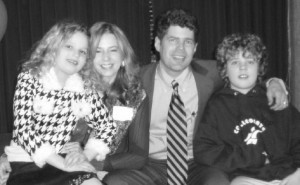 We arrived at the event and over a 100 people were present. Johnny did what any 11 year old would do first and went for the food table. We stayed until almost everyone had left and Johnny walked up to me exhausted–with the arms pulled up from his over-sized sweat jacket— but eager to report something to me. He seemed excited and told me, “Dad, I shook a lot of hands tonight.” We arrived at the event and over a 100 people were present. Johnny did what any 11 year old would do first and went for the food table. We stayed until almost everyone had left and Johnny walked up to me exhausted–with the arms pulled up from his over-sized sweat jacket— but eager to report something to me. He seemed excited and told me, “Dad, I shook a lot of hands tonight.”
I said, “Well, wonderful honey, but you didn’t have to do that. But I sure appreciate it!”
“I enjoyed it and everyone was really nice.” Johnny responded before pausing and then adding. “I think my best demographic is women over 55.”
I almost embarrassed myself I laughed so loudly….but was quick to remind Johnny, who didn’t understand what was so funny, That’s an awfully good demographic to do the best with. And that he should consider himself lucky.
By John Y. Brown III, on Fri Oct 5, 2012 at 12:00 PM ET The little recognized “divider”
In the early stages of life we find qualities serve us that seem at the time “most important” to success. The more obvious ones are intelligence, hard work, education, looks, personality, persistence, loyalty, faith, honor, savvy and the like.
All those seem to come and go after being indispensable at some point during our early life stages. But what about the key trait that distinguishes those who thrive in the middle years and those who find this period befuddling and daunting?
I think the key distinguishing trait is self-awareness—or more bluntly, self-honesty. How well are we able to candidly and painfully assess who we are and how we see the world and our place in it. Maybe this is what Socrates meant with his maxim, “Know thyself.”
I was having lunch with very bright friend 4 years ago who as a few years younger than I. He has a law degree from Harvard and was wondering how to figure out succeeding in the murky middle years. I remember saying something like, “I think it is less taxing on our minds than our souls. And open to all who are ready for the journey within where we get to meet and make peace with ourselves.” Adding, “it’s the easiest on the surface but the hardest in practice.”
And I don’t think I’ve wavered from that belief in the 4 years since then.
By Artur Davis, on Fri Oct 5, 2012 at 8:30 AM ET  If Showtime’s exemplary “Homeland” is the new pace-setter for politically themed drama, and CBS’s “Good Wife” is a successful, if less psychologically rich, portrait of a scandal surviving heroine, what to make of Starz’s largely obscure “Boss”, an ensemble drama about a fictional Chicago Mayor who is fighting off mental illness and all manner of intrigue? It is a well-acted, intricately conceived narrative that has utterly failed to break through the popular consciousness, much less the Emmy circle, and it is worth pondering why its ambitions have gone unrealized at a time when political morality plays are newly resurgent on network and cable. If Showtime’s exemplary “Homeland” is the new pace-setter for politically themed drama, and CBS’s “Good Wife” is a successful, if less psychologically rich, portrait of a scandal surviving heroine, what to make of Starz’s largely obscure “Boss”, an ensemble drama about a fictional Chicago Mayor who is fighting off mental illness and all manner of intrigue? It is a well-acted, intricately conceived narrative that has utterly failed to break through the popular consciousness, much less the Emmy circle, and it is worth pondering why its ambitions have gone unrealized at a time when political morality plays are newly resurgent on network and cable.
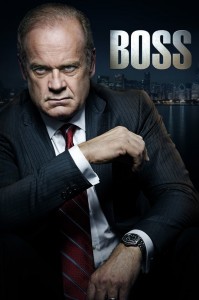 The rap on “Boss” may well be that the conceit at the heart of the show—that gaining and holding power is one sordid, muddy blend of egos and ruthlessness—is so shopworn that it manages to bore. The protagonist, the 20 years plus mayor of the Windy City, Tom Kane (Kelsey Grammer) is a brute: by the middle of the second season, we know that his power is built on a web of corrupt bargains with city developers, a sham of a marriage to the glamorous daughter of his predecessor, and a staff of devotees who protect his lies out of some alchemy of ambition and loyalty. We know he ruins and takes lives. Nothing new here: it is more or less an amped up version of every recycled stereotype about the unseemly nature of power. Nor is there any justifiable thread for Kane’s abuses beyond the old stand-by—at least the city works for its elite, and the trains run on time, and the poor and the marginal are subsidized by a mixture of patronage and spoils. It is no accident that Chicago looks in this rendition less like a modern metropolis than a hulk of decaying deals and faded urban monuments. The rap on “Boss” may well be that the conceit at the heart of the show—that gaining and holding power is one sordid, muddy blend of egos and ruthlessness—is so shopworn that it manages to bore. The protagonist, the 20 years plus mayor of the Windy City, Tom Kane (Kelsey Grammer) is a brute: by the middle of the second season, we know that his power is built on a web of corrupt bargains with city developers, a sham of a marriage to the glamorous daughter of his predecessor, and a staff of devotees who protect his lies out of some alchemy of ambition and loyalty. We know he ruins and takes lives. Nothing new here: it is more or less an amped up version of every recycled stereotype about the unseemly nature of power. Nor is there any justifiable thread for Kane’s abuses beyond the old stand-by—at least the city works for its elite, and the trains run on time, and the poor and the marginal are subsidized by a mixture of patronage and spoils. It is no accident that Chicago looks in this rendition less like a modern metropolis than a hulk of decaying deals and faded urban monuments.
Read the rest of…
Artur Davis: The Unbearable Emptiness of “Boss”
By John Y. Brown III, on Thu Oct 4, 2012 at 12:00 PM ET We’ve all heard the saying, “It’s impossible to ask a stupid question.”
As someone who has the habit of asking lots of questions, I always took comfort in this maxim. But learned about 12 years ago during a marriage counseling session, it’s not always true.
I have since become a huge fan of marriage counseling for all couples. It teaches relationship skills we all need and is no different, in my opinion, to time and money we spend keeping our bodies and minds fit. But this was during the first few weeks of counseling and my lovely wife, Rebecca, and I still assumed it we were basically having a contest to see who could “win” and that the counselor was basically our umpire and score keeper.
Rebecca had won the first few sessions on points. I’d always known that if I’d been a boxer life, I’d be better served trying to always win on points rather than going for the knockout punch—even though the impulse to go for the knockout was always hard for me to resist. This morning I was off to an excellent start—doing all the right things. Using I statements and parrying well by mirroring empathetically Rebecca’s statements. I seemed to have our counselor on my side with momentum rolling my way.
And then I decided to go for the close and seal the deal, so to speak, with a question that I thought would secure a “W” for me this session—and one that we’ll all remember. It was the boxer–not the husband—in me.
“Doctor,” I thoughtfully intoned. “I’m sure you treat a lot of unhappy couples in your practice and I think you’ve had a chance to get to know me pretty well these past few weeks. Is it fair to say that most of the wives you meet with would be very happy to have a husband like me?”
And then….then…there was that awful, horrendous feeling one gets when you suspect there’s been a crack in the universe —and everyone is staring at you like you are to blame. And deep down, you agree with them.
I never got an answer to my question. But the question did help one of us “seal the deal” that morning. And it was a question we did, in fact, all remember.
And no one—on that morning—offered me the solace “John, there is no such thing as a stupid question.”
|
|


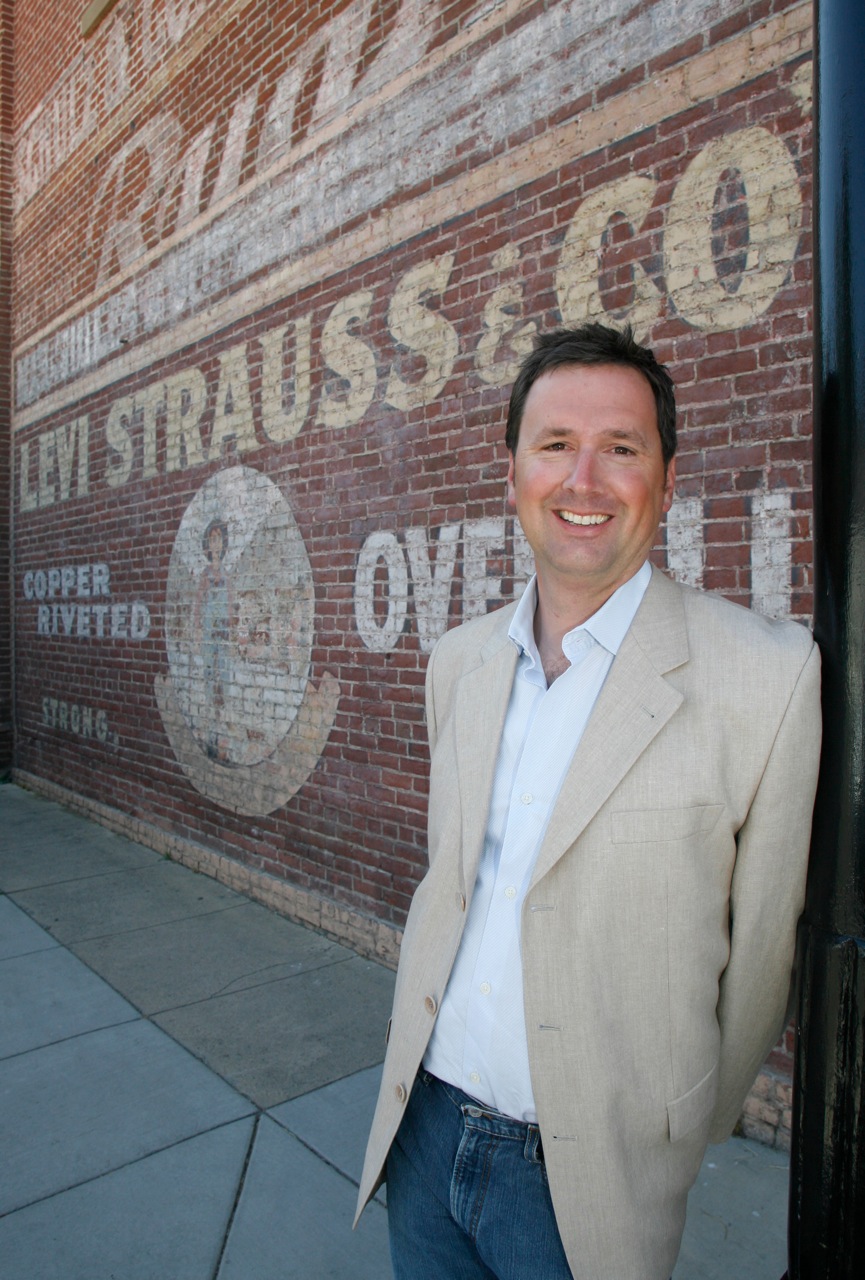 Saturday I swam with 1,000 spawning salmon and I wondered what if they might be the last? Did I do everything in my power to fix the river my grandparents told me to restore? No. I’ve tried it with politics. I’m unfulfilled seeing what is happening and knowing I have the power to change it.