By Erica and Matt Chua, on Mon Jul 22, 2013 at 1:30 PM ET Contemporary artists are professional instigators. Their art challenges the status quo and cultural assumptions. Since culture is localized to each country and region, contemporary art gives a glimpse into their daily life and struggles, things which a traveler may struggle to discover through any other means. For this reason we’ve sought out contemporary art exhibitions while traveling the world.
In seeking out exhibits I’ve been especially drawn to installations that combine art and space to create experiences. One such place that stood out from description alone was Brazil’s Inhotim which the Telegraph called a “Versailles for the 21st century”. My hopes were high as my last visit to a meglomanic funded triumph over all things normal, Tasmania’s MONA, blew me away. Since the MONA was the best museum I’ve ever visited, Inhotim had a lot to live up to. Let me show you how it did and why Inhotim is one of the world’s best contemporary art destinations.

Out-of-the-way is the only way to explain Inhotim’s location. The benefit of the rural location outside Brazil’s third largest city is a space. Instead of building a museum, the billionaire creator, Bernardo Paz, chose to build a collection of art installations surrounded by one of the world’s best botanical gardens. City locations may have made it more accessible, but being able to do away with space constraint in this location makes it special. From entrance to exit, the meticulous gardens are a joy to explore between seeing works from today’s hottest contemporary artists such as Matthew Barney and Yayoi Kusama. Without the gardens it would be just another museum, instead of an amazing, all-day, experience.
Read the rest of…
Erica & Matt Chua: Inhotim
By John Y. Brown III, on Mon Jul 22, 2013 at 12:00 PM ET Today’s affirmation.
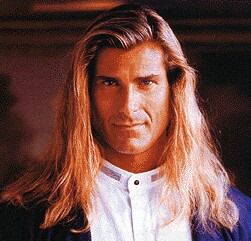
“Today I will remind myself that we all can’t look like Fabio on the outside.
But we can still feel like Fabio on the inside.

And when I imagine myself today, from the inside that is, I will imagine myself with long flowing hair, a strong Roman nose, and an undisturbed inner confidence..
People may think they are talking to John Brown but they will “feel” like they have been talking to Fabio Lanzoni, but not understand why.
It is because of today’s Fabio Affirmation.
And only I need to know that.
By John Y. Brown III, on Mon Jul 22, 2013 at 9:15 AM ET 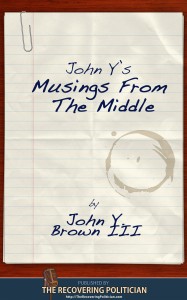 Click here to purchase Musings in paperback!!
Anyone interested in a softcover copy of my book “Musings From the Middle” ….well, you can be the very first to make a purchase.
===
From the Author
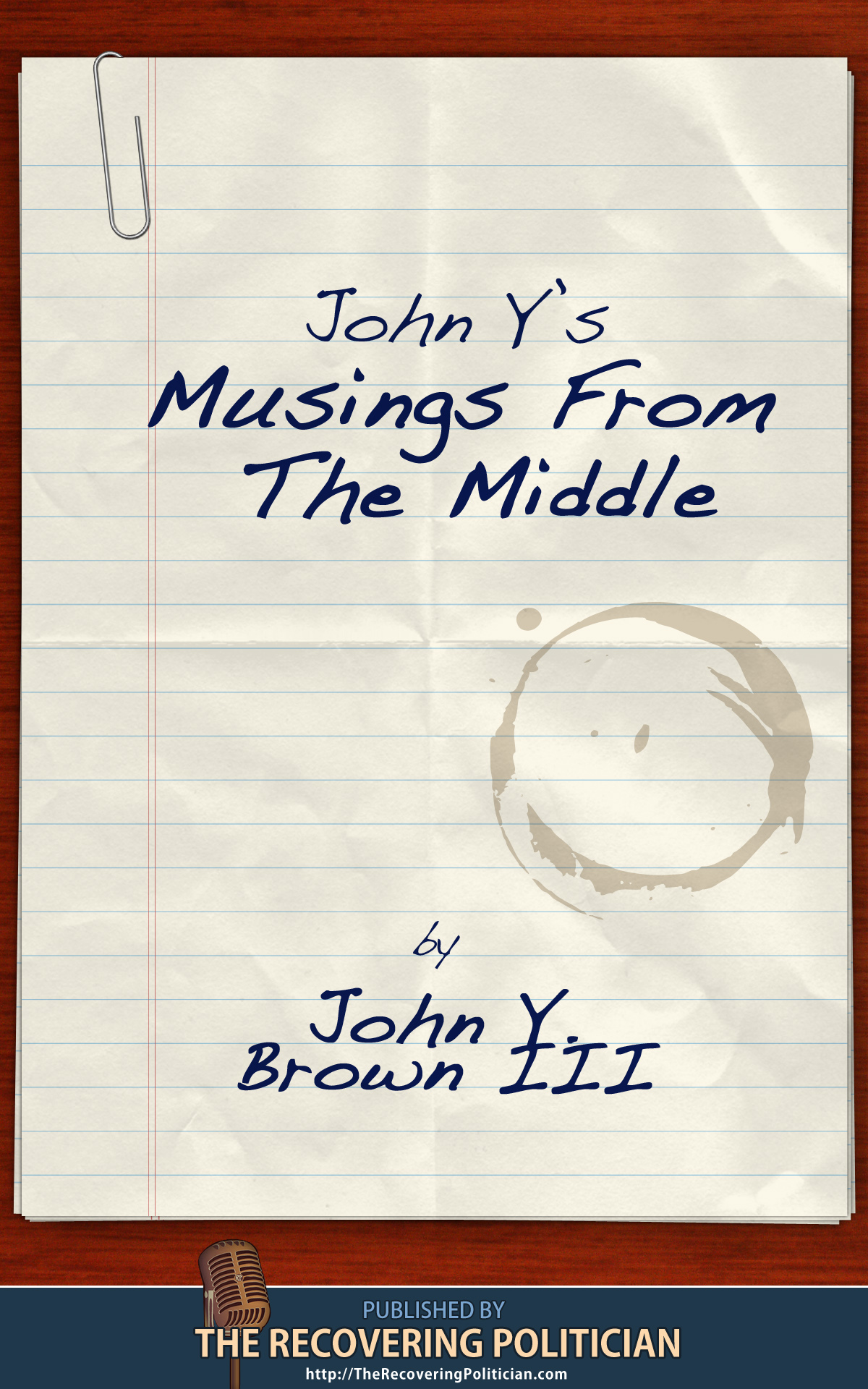
We decided…OK, I decided…that we needed (OK, I needed) to have a paperback edition. First off, I’m 50 years old and don’t really get the whole digital book thing. It’s my fault. No big deal. But figured there were others like me who didn’t feel like they were reading a book unless there were pages to turn. Second, a lot of people buy books with the intention of reading them but they eventually end up as coasters on a coffee table. That doesn’t happen with eBooks but does with paperback books. And…if you look closely there is even a stain as part of the book cover art showing a good place for a cup of coffee.
From the Inside Flap
It’s pretty much white with nothing else on it. It’s good for doodling and quick notes when you can’t find your notepad. Otherwise, not much to write about this part of the book. Some, I should disclose, found this blank page preferable to many of the pages with black type on it. If enough testimonials about the positive feedback about this blank inside flap page are reprieved, we’ll post those testimonials.
From the Back Cover
“Musings from the Middle” came about by happenstance. My good friend Jonathan Miller was launching a blog titled “The Recovering Politician” and needed regular contributors. I wrote a column for the inaugural week and then promised a follow up column every week – and then after missing my first deadline – every two weeks. After missing my new deadline several times, I confided in Jonathan that I felt like I had let him down but had too much going on to meet a regular writing deadline on serious policy matters–and I added I wasn’t in the frame of mind at this point in my life to write about political issues. I wanted a break. Jonathan graciously understood but, always the creative entrepreneur, a few days later had a new idea. “You know those random posts you put on Facebook every day?” Jonathan asked. “Yes,” I said. “What if I used them? You don’t have to write on public policy or politics and can write whatever you want about anything you want. Just keep posting on Facebook and at the end of every week I’ll pull down my favorites and post on the Recovering Politician blog the next week. I was stuck. What could I say except yes? So I said yes. And am forever grateful I did. At first we did one post a week and then three and then five. Jonathan dubbed it “Musings from the Middle.” And that was some 400 posts and 400 pages ago. So he suggested this book. Who am I to argue with this guy? Hope you have a fraction of the fun I have had in writing this!!
===
OK. I just bought one (a copy of Musings in the Middle) a few minutes ago.
And then about five minutes later bought another one!
This is great! Two sales in just 5 minutes!
At this pace….over the next two hours, I will own 24 paperback copies!! Exciting!!
===
A Tale of Two Cities by Charles Dickens is 376 pages long.
Why is that important. Because Musings from the Middle by me is 366 pages long—almost identical to Charles Dickens Tale of Two Cities.
Granted Moby Dick is 576 pages long but it’s about a whale and frankly I never got past the first few pages. Herman Mellville was really, really in to that whale story and probably made it as long as he did to impress people. And so it would be much longer than Charles Dickens books, who was kind of a competitor. (footnote–David Copperfield was actually longer than Moby Dick. Even though it wasn’t about whale stuff, it was pretty boring and probably Dickens trying to one-up Herman for making Moby Dick so much longer than his other novels).
Anyway, I say all that to make the point that Musings from the Middle (the paperback edition) has got a lot of pages in it. Just like Charles Dickens and Herman Melville’s better books that weren’t written just to show off.
So, if you are about to buy Tale of Two Cities or Moby Dick, you may want to think twice about that and consider Musings from the Middle instead. (It is shorter and easier to read. And doesn’t dwell on whales.)
===
Breaking!! “Musings from the Middle projected to hit 1 million in sales!!”
At this rate, 3 sales (admittedly I bought all three myself but my mom is “thinking about buying one as I type this,” but let’s stick with just the numbers for now), that is 6 per hour. And 144 per every 24 hours. That’s 52,560 in the first year! Unless this is a leap year and then it’s even more! And over 20 years…..it’s over 1 Million sales!!! Pretty cool, eh?
Wow!! I can’t believe I did it!!!
Always believe in yourself!!
And always use poetic license with sales projections!!
===
Here for fun…is my “Author’s update” I just gave to Amazon and will be my official plug. (This is not another plug. I swear. Not at all. Just a post about a plug. So don’t confuse them and decide to buy a book. That would not be understanding the point of this point. Buying because of the previous post is OK because that was a plug. But not ok to buy because of this one.
Also, I found out last night that to date I have earned $5.11 from all sales. I am using conservative estimates to project a “total net revenue” of about $26.74. After subtracting that from the costs of the book, about $200, that is a net profit of negative $173.26.
Not bad. Not bad at all!
From the Author
I am supposed to tell you why you should buy this book. Really, there are three reasons that come to mind. (Actually four because I thought of another one while I was writing and just stuck it in. It’s not numbered like the other three but it’s there and if you read closely enough you may be able to find it)
First off, I’m 50 years old and don’t really get the whole digital book thing. It’s my fault. No big deal. But figured there were others like me who didn’t feel like they were reading a book unless there were pages to turn. This paperback edition has pages to turn and I like that and some of you may too.
Second, a lot of people buy books with the intention of reading them but they eventually end up merely serving as coasters on a coffee table. That doesn’t happen with eBooks but does with paperback books. And…if you look closely at the cover of my book there is even a stain where a coffee cup was placed as part of the book cover art —showing a good place to put a cup of coffee when you use the book as a coaster. You don’t get that with most paperback books. But you do with mine.
Now we get to the meaty and most esoteric part of my pitch. Third, Musings from the Middle seems to have the makings of a literary classic in some ways. A Tale of Two Cities by Charles Dickens is 376 pages long. Why is that important? Because Musings from the Middle by me is 366 pages long—almost identical in length to Charles Dickens Tale of Two Cities.
Now, I’m not getting into the whole quality versus quantity argument. We’ve all got our opinions on which one is most important but for my purposes here I’m going to leave that issue off the table. Let’s just all agree that both quantity and quality are pretty important and just call it a toss up for now and leave it at that.
Now back to the subject at hand. Literary classics. Moby Dick is another literary classic–and it is 576 pages long— but almost all of it is about a whale. Seriously! I like Herman Melville’s short stories but never got very far into Moby Dick because it went on and on about mostly whale stuff. He probably made it as long as he did to try to impress people. And maybe so it would be longer than Charles Dickens books—who I think was kind of a competitor at the time with Melville. Authorwise.
Charles Dickens had written David Copperfield about the same time and it has even more pages than Moby Dick AND Musings from the Middle combined–and more boring than both, if you ask me.
Frankly, when Dickens wrote David Copperfield he was probably trying to one-up Herman Melville for making Moby Dick so much longer than Dickens other novels. I don’t know this for a fact, I just know if I had been in Melville’s shoes I would have made Moby Dick that long for that very reason—just to spite Charles Dickens and let him know what he was up against if he wanted to write on and on about not much of anything at all. I can do that about as well as anyone I ever met –write on and on and not much of anything at all, that is. I really can. I swear it. Just buy my book and see for yourself. You won’t be disappointed. I promise. Heck, I’m kinda proving that point right here and right now as part of my pitch to get you to buy the book. But hold on. Don’t stop reading. I’m not finished with my sales pitch yet.
Oh, and before we go any further I want to make sure no one is confusing the book David Copperfield with David Copperfield the magician who does magic tricks on television. They are two totally different people. The magician named David Copperfield came much later in history–by over a hundred years. And is American not British. I don’t even think the two David Copperfields are related. In fact, the newer and real David Copperfield is probably a little more interesting than the older made up one. And for all I know he may even have a thin book written about him– but if he does, I can’t really recommend it. After you’ve seen his a few tricks making something big disappear. Kind of a one trick pony, if you know what mean.
Anyway, sorry for digressing but I’m a stickler when it comes to literature and history and just calling it like I seem it. Let me sum it up this way. The point is that we’ve been talking a lot here about the pros and cons of Moby Dick, David Copperfield and Musings from the Middle (the paperback edition). All three books have things to recommend them. No doubt about it. And arguments about quality aside (which we agreed to leave out in the sixth paragraph above), we can all agree that Musings from the Middle, written in 2013, has got a lot of pages in it –so you get a lot of bang for your buck, so to speak. A lot of pages for the money –about 3 cents a page, in fact. (I did the math.) Granted, you get more to read for 3 cents a page with Moby Dick and David Copperfield, but as I have said I can’t recommend either book and I think Dickens and Melville wrote them mostly just to show off and one-up each other. And that’s not a good enough reason to buy any book in my opinion.
I wasn’t trying to one-up anyone or show off with Musings from the Middle. I take that last part back. I probably was showing off a little bit when I wrote a lot of the posts in it. I’ll admit that. But still…. if you are about to buy a Tale of Two Cities or Moby Dick, you may want to think twice about it and consider buying Musings from the Middle instead. I did and have no regrets. (Full disclosure: a got a discount on mine I couldn’t get for the other two.)
I don’t think you’ll regret it either. Even without the discount. Musings from the isn’t about whales and old Englandly stuff. It’s about everyday stuff you can relate to. Like losing your car keys and funny family stories and how to get through the day without worrying about your weight and still eat an apple fritter that morning. And how if you just look honestly at the things in life that bug and worry and embarrass you the most they actually become funny instead of something you fear. And you may even start posting about them on Facebook and make your own book. And how listening to the Grateful Dead when nothing else makes sense in the world can make things a little bit better. The world still doesn’t make sense, of course, but at least there’s a nice beat in the background. And much more. I’m not telling you the whole book here. You’ll have to just buy it and read it for yourself.
And one more thing. (Here is the fourth reason I said at the top that I thought of while I was writing and that I stuck in at the end without numbering. I decided to number it anyway so it wouldn’t drive you crazy.)
Here’s the fourth reason to buy this edition. Don’t discount the fact that you’ll meet a lot of people in this world who claim they’ve read David Copperfield and Moby Dick but really haven’t. Anybody can do that. It is a moment of truth for you. A defining moment. Are you a follower or a leader? If you buy my book instead, I’d say you were a leader. Why? If you buy my book you can be one of only several dozen people in the world who can claim to have read it even though they didn’t!! Don’t just pretend to read what everyone else does from the past. Pretend to read new and modern books that no one has ever heard of or will read. Like Musings from the Middle. Think about it that way and buying this book kinda makes sense.
I will stop now. I’m just trying to help you think through this purchase in a rational and sensible way so you are ready when you have to explain to your spouse or friend why you have a brand new paperback book you are using as a coaster for your coffee cup.
Now you have a ready answer.
By Saul Kaplan, on Mon Jul 22, 2013 at 8:30 AM ET
Need to turn around your company? Trying to start a movement? Want to change the world? Easy Peasy! Just turn it in to a game. Everywhere we turn, it seems there are experts claiming that the best path forward is to engage people with elements of competitive play. The business world in particular has gone gaga for gamification.
I thought games were mainly for kids, and the occasional ice-breaker or temporary escape from reality. Why encourage more of them? As adults, aren’t we supposed to set aside childish things and get down to work on the problems of the real world?
Truth be told, I have always loved games. Stratego was a mainstay among my school buddies. We spent hour upon hour lining up red and blue soldiers to protect our flags. My family’s Monopoly games were epic battles, beginning with the fight over game pieces. (No, I get the Scottish Terrier!) The side deals we struck and the arguments that ensued still liven up family gatherings. In college I became a professional Risk player. Tell me you didn’t learn about the challenges of fighting a multi-front war from playing Risk. Who among us hasn’t attempted to conquer the world by way of Kamchatka?
Games ruled – till it was time to make my way in the real world where they didn’t. By the time online games exploded onto the scene, I was so immersed in reality that I managed to ignore them. I’ve never created a level-80 character in World of Warcraft, won the staff of life in Spore, mastered an artichoke crop in Farmville, or knocked over any pigs with Angry Birds. But others have – hundreds of millions of them around the world. Already, 5.93 million years of total time has been spent playing World of Warcraft alone.
One response to this is to despair of all that wasted time. Imagine if only a fraction of it had been focused on improving our education, health care, energy, and economic systems. Another response, though, is to say: if you can’t beat them, why not join them?
Jane McGonigal’s Reality is Broken makes a strong case for leveraging game design and mechanics to work on the big social challenges of our time. McGonigal suggests that the four defining traits of any game – a goal, clear rules, a feedback system, and voluntary participation – can be applied to any challenge. She even says game-playing makes us better people. The book is a passionate articulation of why we should pay attention to what is going on in the world of games.
 Reading McGonigal’s arguments from my perspective in the world of work and social system change, it seems it’s the voluntary part we should focus on hardest. Organizations have a lot of experience with goal setting, rules, and incentives. What we haven’t figured out is how to align work with personal passion and commitment. The big aha from Reality is Broken is that we enjoy games and spend so much time playing them because it is our choice. We volunteer to enter their fray. Meanwhile, the problem with work is that so much of it feels involuntary. Certainly no one forced us to take a particular job, but whatever sense of excitement or mission we felt as a new recruit has been lost in the daily grind. We signed on to make a difference by capturing Kamchatka and now find ourselves peeling potatoes. Reading McGonigal’s arguments from my perspective in the world of work and social system change, it seems it’s the voluntary part we should focus on hardest. Organizations have a lot of experience with goal setting, rules, and incentives. What we haven’t figured out is how to align work with personal passion and commitment. The big aha from Reality is Broken is that we enjoy games and spend so much time playing them because it is our choice. We volunteer to enter their fray. Meanwhile, the problem with work is that so much of it feels involuntary. Certainly no one forced us to take a particular job, but whatever sense of excitement or mission we felt as a new recruit has been lost in the daily grind. We signed on to make a difference by capturing Kamchatka and now find ourselves peeling potatoes.
Applying game design in the workplace can bring back the thrill of putting points on the board, beating the odds, and accomplishing important goals. Leveraging game mechanics can unleash passion, potential, and personal commitment. Games can help transform the weak links of social media connections and conversations into purposeful networks.
But even as we increasingly recognize the potential of games to help us change the world, let’s not get carried away. Shakespeare pointed out the problem inherent in gamifying all our endeavors. “If all the year were playing holidays, to sport would be as tedious as to work.” So yes, let’s introduce an element of play to make the office more engaging – but let’s not turn Monopoly into monotony.
This post originally appeared here on the Harvard Business Review site.
By John Y. Brown III, on Fri Jul 19, 2013 at 12:00 PM ET
Got faith?
Not unless you also have doubt.
Watching Life of Pi with family.
Beautiful truth –truths–about beauty of faith.
Never fear doubt. Without doubt there can be no genuine faith or development of genuine faith.
We should hope that the God we believe in isn’t afraid of questions or doubting. That God is more powerful than that.
We should consider doubt as not only necessary for faith—but faith’s most integral partner.
Doubt is the oxygen that allows our faith to breath and to grow. And without it, causes our faith to become stagnant and die.
Here’s hoping our faith continues to grow and deepen. Fearlessly.
By Jeff Smith, on Fri Jul 19, 2013 at 10:00 AM ET  Q. I work as a body man for an elected official who recently told me that I am in his “circle of trust,” which was, he said, why he decided to place me in such a sensitive job. A few days later he directed me to call the scheduler to cancel a midday appearance, and instead had me drive him to an apartment building. He disappeared for an hour and then came back. The next week he did it again. Yesterday he asked me to do it for a third time despite the fact that he would be missing a big event we’d discussed in staff meetings. Before calling HQ, I said, “Yes, sir, but isn’t this a pretty important event?” He replied, “Last time I checked, you were my driver, not my campaign manager.” So far we’ve been able to reschedule some things, but the point is, I am feeling pretty uncomfortable, especially since he is married. What is your advice? Q. I work as a body man for an elected official who recently told me that I am in his “circle of trust,” which was, he said, why he decided to place me in such a sensitive job. A few days later he directed me to call the scheduler to cancel a midday appearance, and instead had me drive him to an apartment building. He disappeared for an hour and then came back. The next week he did it again. Yesterday he asked me to do it for a third time despite the fact that he would be missing a big event we’d discussed in staff meetings. Before calling HQ, I said, “Yes, sir, but isn’t this a pretty important event?” He replied, “Last time I checked, you were my driver, not my campaign manager.” So far we’ve been able to reschedule some things, but the point is, I am feeling pretty uncomfortable, especially since he is married. What is your advice?
—No name, no location, please
This is a tough predicament, and I’m sorry you’re dealing with it. You have three choices, as I see it.
- Explain to the campaign manager what is happening, without any editorializing or speculation. It may be that he/she is already aware of the issue, but you could probably shed some more light.
- Tell the principal you are concerned about his behavior. Don’t accuse him of infidelity, but say that people on staff are starting to ask questions about the frequent cancellations and suggest that they should stop.
- Quit.
According to Mark Halperin and John Heilemann’s Game Change, John Edwards’ body guy tried Option #2, but when that didn’t change Edwards’ behavior, went to Option #1, which resulted in something like Option #3: He was summarily fired by an angry Edwards, who accused him of tattling.
Really, the point here isn’t that he’s cheating on his wife (although that’s troubling and could hurt the campaign); the point is that he’s cheating on the campaign. What he does in his personal life is no one’s business, but wasting a staffer’s time and using campaign time to get off when he should be getting votes or money? That’s unforgivable.
My overall thought: This won’t end well. With his “last time I checked” comment, the principal indicated his probable reaction if confronted, so that approach is unlikely to work. Going to the campaign manager might change the principal’s behavior but may cost you your job—at least your job as body guy—and your chances for upward mobility in this organization. So unless you are absolutely convinced that the principal is going to change the world as a public servant and that outweighs your discomfort, I’d suggest you start looking for other gigs. If you do decide to address the issue directly with the principal before making a final decision to quit, remember that doing so could make it impossible to use him (or other staff ) as a reference.
Q. I worked for a congressman who had a rule not to eat at events so he could talk and shake hands. Not wanting to be rude, he made me grab a plate in his place. So at every event I had a plate of food that I enthusiastically praised and enjoyed. After four events per day not only was I full but I was getting incredibly fat. How did you balance your campaign and your eating habits?
—C.W., Silver Spring, Md.
I may not be the best person to ask here: When my congressional campaign ended, I weighed 107 lbs. (at 5’6’’). But yes, you gotta eat something at events, especially in ethnic communities. The symbolism is powerful. However, that doesn’t mean you have to eat an entire plate. Remember when you were 5 and you tried to spread veggies across your plate to make it look as if you ate more than you actually did? If you are adroit on the front end, you can look as if you are helping yourself to a healthy portion. And no one ever said you couldn’t discreetly deposit your plate on a table before leaving. Just don’t throw it out—someone might see that. Also, work out. Given the stress and terrible food of campaigns, campaign aides should work out daily both for your physical and mental health, even if it’s just push-ups or pull-ups at lunch.
Read the rest of…
Jeff Smith: Do As I Say — A Political Advice Column
By Julie Rath, on Fri Jul 19, 2013 at 8:30 AM ET In case you missed it, Rath & Co. was featured onThe Early Show talking Casual Friday and what people can and can’t get away with.
The video can be seen here.
Below are more thoughts on the topic:
- When Casual Friday rolls around, make sure you don’t forget that you’re still going to work, so some level of “business” needs to be involved.
- They always say to dress for the job you want, and that’s a good rule of thumb. If you’re going to the beach straight from work, you can find somewhere along the way to stop and change. Swim trunks + office does not lead to promotion!
- Guys should beware of wearing shorts to work. Everyone is fitness conscious these days — that’s great. We know you spend hours at the gym working on your quads, but you don’t need to display those gams at work! A little mystery doesn’t hurt.
- I saw a guy walking down the street recently in dress pants and carrying his dress shirt with a messenger bag slung across his shirtless torso. It looked uncomfortable and beyond strange. Instead of tearing off your clothes as soon as you hit the elevator, look for light colors and breathable fabrics like linen and lightweight cotton. I also like a blend of microfiber polyester and rayon because it wicks moisture away from the skin and doesn’t wrinkle easily in humidity.
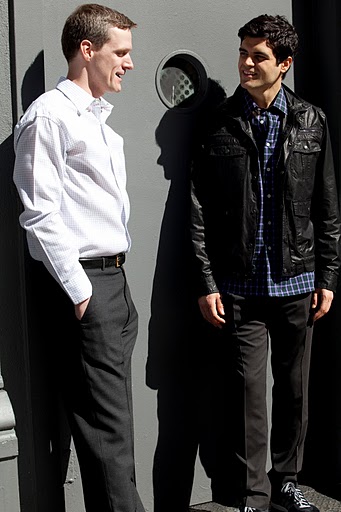
- If you work in a creative field like advertising and want to wear whatever you please so that you’re comfortable enough to channel that inspiration, be sure you’re not doing so in a way where you show too much skin. There are plenty of other ways to express creativity: bright colors, fun patterns (like the purple plaid Billy Reid shirt in image above) and unique accessories like an interesting belt from APC or a punchy tie bar from J. Press over a knit tie (see below).
 
Happy Friday!
By Jonathan Miller, on Thu Jul 18, 2013 at 2:00 PM ET  A little over three years ago, I first joined a few handfuls of leading Democrats, Republicans and Independents to launch No Labels, a grassroots organization dedicated to promoting bi-partisan problem-solving instead of the hyper-partisan paralysis that is American politics. A little over three years ago, I first joined a few handfuls of leading Democrats, Republicans and Independents to launch No Labels, a grassroots organization dedicated to promoting bi-partisan problem-solving instead of the hyper-partisan paralysis that is American politics.
I have to admit, while I was hopeful and passionate, I was still skeptical that we would be able to accomplish anything significant in the short term.
I have never been more proud to say: I was wrong.
Today, I joined with my fellow co-founders, and 81 Congressmen who have signed up to be No Labels’ problem solvers — YES THAT’S 81 DEMOCRATIC, REPUBLICAN, AND INDEPENDENT SENATORS AND MEMBERS OF CONGRESS — at a lively rally involving 1000 supporters (on a cruelly hot Washington summer day) and announcing our new substantive policy plan to “Make Government Work.”
Read about “Make Government Work” here.
If you like what you read, follow this link to contact your Congressman and Senators to urge them to support our agenda and join our problem solvers group (or thank them if they already are part of the team.)
And check out this FRONT PAGE article from today’s The New York Times:
There do appear to be new stirrings of cooperation — or at least the desire to cooperate. On Thursday, the staunchly bipartisan group No Labels and 81 House and Senate lawmakers — some of the most liberal and conservative — will roll out a slate of specific legislative proposals with broad and surprising support across the ideological spectrum.
 Odd couples like Representatives Cory Gardner, the Colorado Republican who was swept to the House in the 2010 Tea Party wave, and Peter Welch, a liberal Democrat from Vermont, will team on actual legislation, not statements of ideals, colored lapel ribbons or promises to sit together at State of the Union addresses. Odd couples like Representatives Cory Gardner, the Colorado Republican who was swept to the House in the 2010 Tea Party wave, and Peter Welch, a liberal Democrat from Vermont, will team on actual legislation, not statements of ideals, colored lapel ribbons or promises to sit together at State of the Union addresses.
Senators who embraced Tuesday’s agreement to call off filibusters of executive-branch nominees promised this week to extend the spirit of compromise to more whole-Senate gatherings, retreats, budget negotiations and other vexing legislative matters. Seven senators, four Democrats and three Republicans, unveiled legislation on Wednesday to offer legal protection to journalists ensnared in leak investigations.
“As a prosecutor, I don’t like to use the word ‘gang,’ but it’s another big ‘gang’ we have here,” said Senator Amy Klobuchar, Democrat of Minnesota.
Senator Lindsey Graham, Republican of South Carolina, said a group was forming to try to reverse the automatic across-the-board spending cuts before they do more damage next fiscal year.
But beyond those pledges of bonhomie, the institutional impediments to progress remain unchanged, especially in the Senate.
Indeed, the deal to head off the filibuster-rule change nearly derailed 24 hours after it was struck when Thomas E. Perez, President Obama’s nominee to be labor secretary, squeaked past a Senate filibuster by a single vote on Wednesday afternoon, 60 to 40.
The Republican Senators John McCain of Arizona, the architect of the filibuster deal; Lamar Alexander and
Bob Corker of Tennessee; Mark Steven Kirk of Illinois; and Lisa Murkowski of Alaska saved the nominee — and the supposedly growing spirit of bipartisanship.
“Right now the only people who are empowered are the obstructionists,” said Senator Mary L. Landrieu, Democrat of Louisiana, who in 2005 joined 13 other senators to thwart an effort to end filibusters of judicial nominees but was ready to back the move to end filibusters of executive nominations this round. “And for the rest of us, the power we should be wielding on behalf of our constituents is virtually nil,” she said. “Something has to be done.”
Since Democrats began threatening action to neuter the filibuster, critics have warned that simple majority votes in the Senate would make that chamber like the House, where the majority rules absolutely. But with a 60-vote threshold in the Senate, the minority party tends to rule absolutely on any issue lacking overwhelming bipartisan support.
That is because only the largest gang can muster 60 votes, and a premium is placed on leadership loyalty in the minority party.
In a closely drawn Senate, where neither party commands much of a majority, just two or three senators from either party can band together to stop legislation from garnering 51 votes, or to push compromise bills over the finish line.
“It doesn’t take 51 votes to get something done,” Mr. Lieberman said. “It takes two or three people to get together to form the 51.”
In the House, where loyalty to leadership has been dominant, such bipartisan gangs are almost unheard of.
That is why Thursday’s No Labels event could signify a real change.
The agenda of these “Problem Solver” lawmakers is modest: adopting two-year budgets instead of the annual and barely functioning one-year budget process; ridding the government of duplicative programs; merging the electronic health records of the Departments of Defense and Veterans Affairs; cutting federal agency travel budgets in half; and commissioning private companies to reduce federal energy costs, then paying them from the savings they extract.
But with 81 members, 73 from the House, 35 of those Republican, the group is actually reaching a critical mass if it can stay together.
“This is about finding narrow slivers where conservatives and liberals can get together,” said Representative Mick Mulvaney, a conservative Republican from South Carolina and a member of the Problem Solvers group. “You can’t run before you walk. You have to build up trust.”
Those coalitions could be a mark of the personal frustration that even members of Republican leadership say they feel.
“It’s important the American people realize not everyone is up here to score political points,” said Representative Lynn Jenkins of Kansas, a member of the Republican leadership. “We’re trying to find common ground.”
Lawmakers “are pretty depressed about it,” Mr. Welch said.
“Nothing can get done,” he went on. “You have to go to work knowing you’re not going to accomplish anything through the legislative process, and that’s a pretty tough place to be for a legislative body.”
By RP Staff, on Thu Jul 18, 2013 at 1:30 PM ET From Fox4 Kansas City:
KANSAS CITY, Mo. — Self-proclaimed ‘sockpreneurs’ from Kansas City launched a line of socks that they say look good and don’t break the bank.
Sock 101 debuted during the Kauffman Foundation’s Entrepreneurship Week. Since then, the company sent former president George H.W. Bush a pair of Texas A&M-colored socks, and he responded with a letter detailing his love for the maroon and white pair.
The socks all cost $7 and can be purchased on the Sock 101 website. Each color-combination of socks comes with its own name, including the ‘KC sock’ — a Royal blue-and-white horizontal stripe design.
Watch the newscast here.
By John Y. Brown III, on Thu Jul 18, 2013 at 12:00 PM ET I love people watching. And engaging in subtle people interaction.
On the streets of NYC, there are lots of confident accomplished people. They just look they are someone important. They know it and we do too. They may even be celebrities. Of course, only a tiny percentage can be real public celebrities, whatever that is. But we tend to look for celebrities and famous people instinctively. And many on the workaday streets of NYC are happy to invite speculation that they are, indeed, a little more special than others walking to either side of them.
Today alone walking on the streets of NYC for several hours I saw –or thought I saw– George Clooney, Jamie Foxx (twice), Kurt Vonnegut (even though he died a few years back, but not his visage in NYC), George Peppard, George Ross (the elder general counsel and senior adviser to Donald Trump on the Apprentice), Kelly Rupa (3 times) and possibly Elliot Spitzer (although I’m pretty sure he was in Albany today), and finally at least three business execs who looked like no celebrity in particular but carried themselves like they had been (or should have been) featured on this month’s cover of Fortune Magazine. Or GQ. Sometimes it’s hard to tell those two types apart.
I’ve made up a sort of game I’m enjoying playing. When I see one of the “special looking” people of the streets of NYC—-the ones with a certain sheen and air about them who look like they are ready at that moment to be snapped by paparazzi— I make eye contact with them in a knowing and ingratiating way as if to say, “Oh my gosh. I know who you are!”
People really like it. Even though they know they aren’t the real celebrity I am confusing them with, they feel, deep down, like they could be. And maybe should be. And may even suspect they have a few things on their celebrity look alike but just didn’t get the same breaks.
It’s endearing and believable for us both. And leaves us both feeling a bit better. One of us is being admired and the other is thrilled to see someone special.
But today I began throwing in a new twist.
I look them in the eye again– a bit more seriously and solemnly as if to say, “You do remember me, don’t you?”
This all happens in just a few seconds. But it’s an amazing back and forth of communication and information. All expressed in the eyes and a few subtle facial gestures.
Sometimes the person being thought a celebrity will play along as if we somehow really do know each other in some tangential way and sort of tips his or her hat as if to say, “G’day.” Others are a little confused and withdraw. Or disengage. Still others play into the whole game either knowingly or unknowingly. But are happy to be engaged –either as a game or fantasy.
This new twist adds an extra layer of positive reinforcement. Now both individuals have been suspected of being someone special and having a special sort of bond to the other. And even having had a pleasant exchange.
Which made me wonder: Is it a game I am playing? Is it a fantasy? Does it have to be either one? Maybe….and I’m being serious here….we should look at all people in this way. As special and having a connection in some way to us and having a pleasant, albeit perfunctory, exchange.
Why not?
Why not?
|
The Recovering Politician Bookstore
|