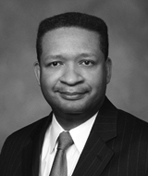
By Artur Davis, on Thu Jul 18, 2013 at 10:00 AM ET Thomas Edsall’s column on the South’s racially polarized politics is so many clichés—the notion that thinly disguised bigots are astride the region’s Republican Party, that they have meanly pushed black state legislators to the margins, that they are presiding over some modern reign of terror on the black and poor, and that the Supreme Court has just made it fundamentally worse by setting aside a major provision of the Voting Rights Act.
But he is not wrong about a premise that lurks throughout his argument: more than any place in America today, the South is a zone where ideology and party do correlate almost entirely with racial identity. Measured against the backdrop of a national electorate where Barack Obama actually exceeded four of the last five Democratic presidential performances with whites, the South’s “white equals Republican” reality is jarring. To a disconcerting degree, routine ideological debate over spending priorities, education, and voting requirements turn into a perpetual argument over whether the intent of every policy is to disadvantage minorities. It’s a stultifying kind of environment.
At the risk of repetition, I’ll mention one more time that liberal critics like Edsall miss the perverse contributions that racially gerrymandered districts have made to the marginalization of black political interests: by guaranteeing that black voters are cordoned off into their own singular political communities and have only a marginal presence elsewhere, courts have ensured that those interests will never really be elevated outside black voting precincts. And the meme that it is malicious Republicans who have driven those gerrymandering trends ignores altogether the extent to which African-American Democrats and federal courts have sanctioned, actually demanded, those district lines.
It’s also worth reiterating another observation I have made in these pages. The Democrats whose fortunes have declined so precipitously in the region since 2008 are still only recently out of power in the Deep South, at least at the legislative level, and have a mixed to poor record of alleviating a range of sins Edsall and most liberals complain about, from tax systems that over-burden the working class, to bargain basement Medicaid programs, to thin levels of social services, to weak environmental protections.
 To be sure, southern Republicans can go depressingly tone deaf in their choice of priorities, from North Carolina’s rollback of criminal procedure protections in a state where weak employment is surely something more voters are fixated on, to Alabama’s meat-ax approach to illegal immigration, to the lack of GOP support in most of these states for the kind comprehensive education reform that might boost the region’s abysmal rankings in data that measure the quality of life for children. And yes, the South certainly lacks its share of imaginative, Mitch Daniel type Republicans who see entrenched poverty as the kind of dilemma conservative ought to be engaged in addressing. To be sure, southern Republicans can go depressingly tone deaf in their choice of priorities, from North Carolina’s rollback of criminal procedure protections in a state where weak employment is surely something more voters are fixated on, to Alabama’s meat-ax approach to illegal immigration, to the lack of GOP support in most of these states for the kind comprehensive education reform that might boost the region’s abysmal rankings in data that measure the quality of life for children. And yes, the South certainly lacks its share of imaginative, Mitch Daniel type Republicans who see entrenched poverty as the kind of dilemma conservative ought to be engaged in addressing.
But to the extent that minority southerners are, in Edsall’s terms, “hindered from shaping the policies that determine social and economic mobility and the overall quality of life”, the reasons are more complex than the cause effect that Edsall suggests. The solutions have as much to do with ending a bipartisan accommodation to special interests that are averse to cutting edged innovations as they do with taking Republicans to task. Of course, had Democrats not squandered capital on expanding casinos, and soft-pedaling clear-cut evidence of corruption within their own ranks, they might well have found a high ground that stanched their bleeding with at least suburban, educated whites who might be receptive to a progressive platform. And if the all too recent Democratic rule over southern legislatures had really produced the “New South” that Edsall and others are claiming is under siege, he might have a moral point rather than a partisan political one.
By Josh Bowen, on Thu Jul 18, 2013 at 8:30 AM ET As many know, I am in the process of writing a book; titled “12 Steps to Fitness Freedom.” In the book I discuss a variety of topics but one in particular that is supremely important is goal setting. In the video below I discuss how to set goals and keep accountable to them. In my book I will be discussing, in more detail, the strategies it takes to have “fitness freedom.” Enjoy.
By Jeff Smith, on Wed Jul 17, 2013 at 3:00 PM ET Acclaimed hedge fund manager Paul Tudor Jones said women become less effective at the office once they become mothers. But with all of the distractions in life, are moms really any worse than non-mothers, men or fathers?
Originally aired on July 15, 2013
Hosted by: Abby Huntsman
Guests:
Dr. Gloria Mark (Cleveland , OH) Professor at University of California Irvine
Dr. Jeff Smith @JeffSmithMO (Glen Ridge, NJ) Professor of Politics & Advocacy at The New School
Karen Firestone @FirestoneKaren (Boston, MA) CEO of Aureus Asset Management
Kristin Iversen @kmiversen (New York, NY) Managing Editor of Brooklyn Magazine
By Jason Atkinson, on Wed Jul 17, 2013 at 1:30 PM ET
By John Y. Brown III, on Wed Jul 17, 2013 at 12:00 PM ET  When I am trying to explain something and don’t understand it well I will end my explanation with the phrases “as it were” or “if you will.”
I don’t really know what these phrases mean and they add nothing to my explanation but they are smart sounding and may trick the listener into believing I know more than I do about the topic I am explaining.
This morning is off to a slow start. I couldn’t …read a simple note without my cheaters and then waved hello and spoke to someone in line for coffee this morning who I know but can’t remember from where or what his name is.
It feels like it’s going to be one of those days I’ll be using phrases like “as it were” and “if you will” a lot, as it were….if you will.
I need all the help and tricks I can use.
By RP Staff, on Wed Jul 17, 2013 at 10:00 AM ET Today, we are introducing a new contributing RP to The Recovering Politician, former U.S. Senator Robert F. Kennedy.
OK, maybe Bobby Kennedy is not a new contributor. Although his daughter, Kathleen, occasionally writes for this site.
But we are proud to post articles that were published in the Boston Post after Kennedy’s March 1948 visit to the Middle East, with thanks to Isra.li.
Jews Have a Fine Fighting Force
Make Up for Lack of Arms with Undying Spirit,
Unparalleld Courage — Impress the World
By Robert Kennedy, June 4, 1948

The Jewish people in Palestine who believe in and have been working toward this national state have become an immensely proud and determined people. It is already a truly great modern example of the birth of a nation with the primary ingredients of dignity and self-respect.
Malca and her family to me are the personification of that determination. She is a young girl of the age of 23 and her husband and four brothers are members of the Haganah. She herself is with the intelligence corps and worked on the average of 15 hours a day, which evidently was not unusual. She had seen and felt much horror and told me the story of a case she had just handled.
A Jewish girl in her teens was picked up by some members of the Haganah on the road from Tel Aviv to Jerusalem and, as she was injured, she was taken to the Hebrew Hospital in Jerusalem. They believed that she had somehow been separated from a Jewish convoy which had just gone through and which had had a scrap with the Arabs.
She was particularly noticed because of the strange people who were her visitors and by the fact that she insisted on being moved to the English hospital. Malca was sent to question her. She was turned away gruffly by the girl after the girl admitted that she had in reality been in a British tank with a boy friend and wanted nothing to do with the Jews.
The Jewish Agency offered to send the girl out on a farm in order to let her regain her health and give her a new start, but she just demanded her release which they were forced to give her. She continued consorting with the British police despite warnings from the Stern gang.
Brother Shoots Sister
One night the Stern gang followed the tactics of the underground forces in the last war. They shaved all the hair off the girl’s head. Two days after Malca told me the story the sequel took place. The girl’s brother returned for leave from duty with the Haganah up in Galilee and, finding her in such a state, shot her.
Malca’s youngest brother is only 13, but every night he takes up his post as a sentry with the Haganah at a small place outside of Jerusalem.
His mother and father wait up every night until midnight for him and his older brother, 15, to return home. The other two brothers, both younger than Malca, give full time duty with combat troops.
An understanding of the institutions it contains, and of the persons that run these institutions, is most important if one would make up one’s mind as to the worth of this “de facto” Jewish state.
I visited and inspected a community farm through the kindness of a Jew who 40 years ago was in Boston making speeches for my grandfather, John F. Fitzgerald, when he was a candidate for congress. A third of the agricultural population live in such community farms which were set up originally to help newly-arrived refugees who had no money or prospects.
They are in reality self-sustaining States with a State and all the people in common undergo arduous toll and labor and make great sacrifices in order that their children might become heir to a home. An example of this is that when a child is one year old he is placed in a common nursery, with the result that all but the sick and infirm are able to devote their talents to the common cause. They get paid nothing for they need no money. Everything is financed by a group of elected overseers who get their money by selling what the farms produce. In our country we shrink from such tactics but in that country their very lives depend upon them.
Read the rest of…
Robert Kennedy on Israel
By Mark Nickolas, on Wed Jul 17, 2013 at 8:30 AM ET It’s been more than two years since I wrote my first piece for the RP. It was April 2011 and I had just entered the graduate Media Studies & Film program at The New School in New York City and was eager, bright-eyed, and knew little about how to make a film, yet alone feature-length documentary films. No doubt, while you can certainly become a successful filmmaker without spending $100,000+ for the formal training you can receive in graduate school, for some of us that is a worthy investment.
In May, I graduated with a newly-minted master’s degree and my filmmaking training wheels have been taken off. Now it’s time to see whether my talent can match my enormous ambitions. I’ve already completed one short film that has been receiving an unexpected amount of national attention in the past week and am already in pre-production on my first feature-length documentary that I landed last year.
So, I’m going to use this website as a personal journal of sorts as I head down this path. I’ll offer a behind-the-scenes style peek at what it means to be an emerging filmmaker in New York City and the things we must juggle, mine fields we must avoid, and obstacles we must clear in this hyper-competitive field where an early disaster can quickly dash your filmmaking hopes for good.
 I’ll admit it. This journey is very exciting but so enormously terrifying. A perfect mix, actually. I feel like I’m standing at Base Camp and looking up at Mt. Everest. But my 15+ years in politics prepared me in many ways to handle this moment. I’m certainly nowhere as intimidated by the grandeur of the stage or the media spotlight as my fellow (and much younger) classmates. I also seem to be able to get most people to answer the phone or return an email, if only because of my background and professional success in other somewhat related fields. I’ll admit it. This journey is very exciting but so enormously terrifying. A perfect mix, actually. I feel like I’m standing at Base Camp and looking up at Mt. Everest. But my 15+ years in politics prepared me in many ways to handle this moment. I’m certainly nowhere as intimidated by the grandeur of the stage or the media spotlight as my fellow (and much younger) classmates. I also seem to be able to get most people to answer the phone or return an email, if only because of my background and professional success in other somewhat related fields.
Those are important benefits, no doubt about it. But getting people to open the door is just the first of many steps. Whether I have actual talent to direct a film, am able to find enough donors to help fund the $400,000 budget — and can catch a few breaks — are the real questions.
The great news is that it seems I’ve caught a few breaks already. As has been highlighted at the RP last week, my quirky short film — My Life in the Canyon of Heroes — has shined a good amount of unexpectedly national attention on me over the past few days. After the film made the finals of Smithsonian magazine’s short film contest, it was highlighted in a story in the Atlantic. That led to emails from NPR’s Marketplace and CNBC’s Power Lunch who wanted to interview me for segments. Marketplace was taped and ran on Friday. I just confirmed with CNBC earlier today that we are taping my segment next to ‘Charging Bull’ on Thursday morning and it will run on Friday (1-2 pm ET). There may be more interviews in the coming weeks.
My Life in the Canyon of Heroes from Mark Nickolas on Vimeo.
Funny how life works. That little film was never meant to see the outside of a classroom. It began as a final project in my ‘Cinematic Place’ class last spring. I only submitted it to the Smithsonian at the suggestion of Deanna Kamiel, my professor, and had completely forgotten about it until just before it made the finals when they contacted me for some clearance and rights information. And once it made the finals, the media storm happened on its own. I didn’t reach out to anyone and was as surprised as everyone else when the national media was interested in a 6-minute film about a talking 7,000-pound bronze bull.
Yesterday, I learned that I didn’t win any of the final Smithsonian awards. But how could I be upset? Thousands of people have seen and voted and commented on my first completed short film and I have national press clips heading into fundraising for my first feature project that are priceless. The journey ahead remains terrifying, but I just got a taste of the possible. Maybe I’m now at Camp 1 instead of Base Camp. But — come on — that’s the easy part of climbing Mt. Everest. I get that.
So, I head into my first film with a nice surge of confidence to keep the fear in check. It feels good. There are going to be so many ups and downs in the coming year. Student loans payments are already on the horizon and few get rich making documentary films. But I’m a dreamer and not afraid to go for it. Maybe I’ll be one of the few that make a name for themselves in this field. Maybe I won’t. But I’ll know that I gave it my best shot.
Next week, I’ll preview my feature-length film, tentatively titled A Cloud of Suspicion. I look forward to sharing my journey with you, even when it sucks and I’m battered and bruised from the constant rejection. That’s, apparently, what I signed up for.
By Jonathan Miller, on Tue Jul 16, 2013 at 3:30 PM ET If want to know first all of the day’s developments about the hottest 2014 campaign in the country, and you haven’t yet subscribed to The RP’s KY Political Brief – prepared every weekday morning by wunderkind Bradford Queen with links to all of the day’s Kentucky political news — WHAT’S A MATTA WIT YOU?!?! Click here to subscribe FOR FREE!
You can’t turn on a news channel these days without hearing from some screaming head, yelling to us about Washington obstruction.
Whether you agree with those who argue that the Republican minority in the Senate is obstructing progress, or those who believe they are saving a broken system from doing further harm, there are 3 options for you:
1. Ditch Mitch: For those frustrated with Senator Minority Leader Mitch McConnell’s tactics and want to see his 30th year in the U.S. Senate be his last, get involved in defeating him. Click here to support Alison Lundergan Grimes’ campaign for the U.S. Senate, or click here to support the Kentucky Democratic party’s grassroots efforts.
2. Help Mitch: If your main problem is what Obama is doing to the country, one way of stopping his agenda is to support one of his main antagonists on Capitol Hill — Mitch McConnell. Click here to support McConnell’s re-election efforts.
3. Join No Labels: Whether you are Democratic, Republican, or Independent; liberal, conservative or moderate, you are likely fed up with the hyper-partisan paralysis in Washington. There’s finally an organization for us that wants our leaders to stop fighting and start fixing. Click here to join our growing army.
DO IT NOW!
By Lauren Mayer, on Tue Jul 16, 2013 at 3:00 PM ET Having taken on the challenge of writing a new political comedy song every week, as well as writing songs regularly for children’s music publishers, I am regularly confronted with the question of from whence comes the kernel of inspiration. Or in less high-falutin’ terms, “oh crap, what am I gonna write this week?” But that’s sort of the point of these regular challenges, seeing how we respond to the regularity. (Such as “Julie and Julia,” how a home-chef blogged about cooking every recipe in Julia Child’s “Mastering French Cooking,” and how it transformed her marriage and made her a media star, or those articles that pop up occasionally in women’s magazines about couples who decide to try having sex every day for a year, only none of them end up getting played by Amy Adams. But I digress . . . )
There are those who say inspiration flows from a higher power, like in the movie “Amadeus” where Salieri envies Mozart, whom he thinks is basically taking dictation from a divine source. And others say there’s no such thing as pure inspiration, it’s mostly persistence and hard work. Most famous writers will advise their audiences to write what they know, and to write regularly. (When I was in middle school, our class got to attend a lecture by Ray Bradbury, who met with us afterwards, and he detailed his writing method, he got up every day, put his rear end in his chair, and made himself write 10 pages. Sometimes the words flowed effortlessly and became the germ of a new novel, and sometimes he took several hours to write 10 pages of “I hate writing.”)
So when it comes to political comedy songs, of course I start with perusing current events, but usually I still have to do the plant-the-tush-and-force-myself. Sometimes a meme or topic is trending too strongly to ignore, like the 2012 election’s “Binders Full of Women” or the recent flap about Paula Deen (so I at least have a subject matter). But every now and then, a line or a tune will simply pop into my head – not that I claim to be Mozartian with some sort of direct line to divine inspiration, but I do sometimes wonder where that comes from. And this started when I was a kid – in 6th grade, I accompanied Amy Wood and Lori D’Itri in the school talent show, singing the recent hit song “Raindrops Keep Falling On My Head.” (Yeah, it was that long ago. Altho I skipped a grade so I was only 10. So I’m not that old.) Anyway, the sheet music listed other titles available from the publisher, including a title that cracked us all up, “I Left My Heart In San Francisco.” We thought that was really weird, and all of a sudden a tune and a lyric popped into my head:
(sung to a jaunty ragtime tune)
“I left my heart in San Francisco,
I left my lungs in Waikiki,
I left my legs in old New Mexico,
And now there’s nothing left of me!” That was the moment I decided to become a songwriter. (And someday it will make a terrific anecdote for a t.v. interview . . . )
I don’t have those moments very often, when a whole section of a song just materializes, but it’s wonderful when it happens. And this week, after reading a slew of articles about the combination of failed attempts at reasonable gun legislation, and the recent spate of state restrictions on abortion, the title and first few lines of this week’s song popped into my head. I imagine the combination of these two sensitive issues will prompt some pretty vehement responses (although so far, the angriest youTube comments I’ve gotten have also been the worst in terms of spelling and grammar, which makes them a little less ominous . . . )
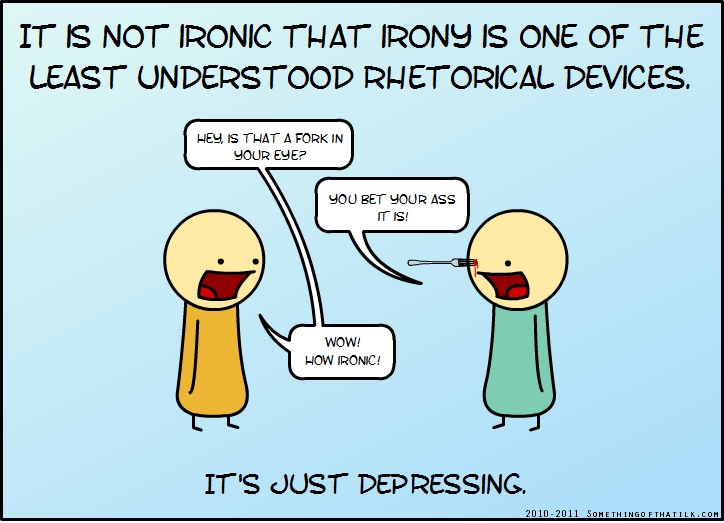
By Jonathan Miller, on Tue Jul 16, 2013 at 1:30 PM ET 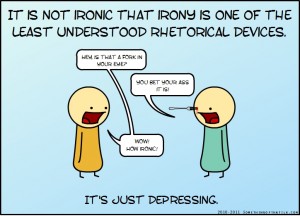 I’ve noted several times on these pages that while Alannis Morissette is one of my favorite songwriters (“You Oughtta Know” is one of the best breakup songs ever penned), her song “Ironic” is in my opinion the worst song of all time. I’ve noted several times on these pages that while Alannis Morissette is one of my favorite songwriters (“You Oughtta Know” is one of the best breakup songs ever penned), her song “Ironic” is in my opinion the worst song of all time.
Perhaps I am holding Alannis to a higher standard, but the main trouble with “Ironic” is that she doesn’t understand the definition of the word “ironic.”
Nothing that she terms “ironic” during the course of the song “Ironic” is “ironic.” Rain on your wedding day is disappointing, it sucks, but it isn’t ironic. A black fly in your chardonnay is gross, but not ironic. And so on…
Fortunately, Rachael Hurwitz has come along to correct the record.
And while the vocal quality and production value don’t match up to the original version, her grammar is excellent. And the video is pretty funny: (h/t Jill Smith Muth)
|
The Recovering Politician Bookstore
|