Political novels are a dying breed, and the death has been a long, slow one. But into the void steps Jeff Greenfield with a smart, well conceived set of political short stories called “Then Everything Changed“. In less than 400 pages, Greenfield, one of Robert Kennedy’s best speechwriters and an accomplished journalist, pulls off what is arguably the best political fiction in the last generation: it will and should endure for its skill and its contribution to our imagination. The book is built on three novellas: the premise of each is that a particular historical fact happened a fraction of an inch differently, and that the political world was realigned accordingly. The first supposes that a would be assassin lurking outside John Kennedy’s Florida getaway in December 1960 carried out his plot to steer a car loaded with explosives into the President elect’s path; and that the tragedy thrusts Lyndon Johnson into power three years early, and makes LBJ the leader who faces Soviet aggression in Berlin and Cuba. If the actual fact that JFK was stalked by an potential assassin during his transition is so obscure today that some of Kennedy’s own biographers don’t know it, the second “what if” has been fodder for speculation for two generations: Greenfield’s version is that Sirhan Sirhan‘s hastily improvised shooting of RFK is thwarted and that Kennedy lives to face off against Hubert Humphrey in a thrilling Democratic convention and Richard Nixon in a close run fall campaign. His prize is a country with outsized expectations of a second Camelot, which he must navigate as he tries to pursue a tough-minded liberalism that stirs up dust from the left and right.
The final premise is not built around life and death, but around the power of words never
How would these changed events have affected Chevy Chase's career?
spoken. It imagines that Gerald Ford managed to averted a still inexplicable gaffe on foreign policy in a presidential debate with Jimmy Carter, and ended up passing Carter to win a narrow electoral college victory. (It is largely forgotten now that Carter’s win would have been reversed by a shift of less than 15,000 votes in Ohio and Mississippi). It is Ford who governs during the stagflation and drift of the late seventies, and when Ronald Reagan emerges as the nominee four years later, he bears the burden of a decade of failed Republican rule. His opponent, a charismatic one term Colorado Senator named Gary Hart, whose New Democrat aura is the right antidote to more conventional candidacies by Edward Kennedy and Reagan. Anyone engaged (or addled) enough by politics to be reading this blog could spin a nice set of counter- factuals around presidential elections. Where Greenfield surpasses the guessing game is his exceedingly deft injection of real life variables into his fiction. Greenfield’s LBJ remains determined to surpass Kennedy’s martyred luster by a prioritization of voting rights in the South; at the same time, his well documented insecurities make a catastrophic mix with Kruschev’s adventurism in the early sixties. Similarly, the same Bobby Kennedy who bravely exposed himself to a grieving black crowd in Indianapolis the night of Martin Luther King’s death is instantly familiar in the fictional account of RFK facing down a mob of student demonstrators in Chicago at a critical moment at the convention. Greenfield just as credibly suggests that a presidential campaign by Ted Kennedy would have floundered in any timeline under the weight of innuendo and doubts about his character, and that Ronald Reagan’s penchant for tactical boldness (think: the real life near selection of Ford as a running mate in 1980) might have led to a historic choice of a running mate in the fictional version of 1980.
Read the rest of… Artur Davis: “Then Everything Changed”
The race is officially on. Less than 26 years before the filing deadline, we now have two slates running for Governor in 2037. You may have caught the RP’s announcement earlier today that he was running with 17-year-old John Y. Brown, IV as his running mate. Now read contributing RP John Y. Brown, III‘s statement in response:
Although we were hoping to keep our plans under wraps until 2036, it looks like [The RP] and Johnny have smoked out Emily’s ([The RP’s] daughter Emily, that is) and my plan to launch our campaign for Gov and Lt Gov (I’m running as #2….given I’ll be 74). We, too, were confused about the election calendar and were hoping to run in 2037-so that actually works out well and, given it’s not an official election year will likely discourage other tickets from running that year. I suspected Johnny’s issue of furloughed school days will play well with the younger set….although Emily and I view it as pandering to the youth vote. We will counter that platform with something that involves deficit reduction and job creation and tie it to something that is pro-puppies (Emily thinks this is important and I suspect puppies will poll well in 2037). Game on!
Thoughts? Do you have a favorite ticket? Other ideas for candidates? Did you read Brown’s column about political addiction yesterday and are jonesing to jump in the race yourself?
Please use the comment section below to make any statements, announcements, etc.:
By Jonathan Miller, on Tue Apr 12, 2011 at 12:30 PM ET
This past weekend, the RP showed up as a guest on “Kentucky Newsmakers,” the long running talk show hosted by living legend Bill Bryant. The RP waxed nostalgically about his career in politics and shared his vision for The Recovering Politician.
Inadvertently, he also made some news when Bryant asked him about his political future: The RP announced his bid for Governor in 2037, with running mate, John Y. Brown, IV, the 17-year-old son of contributing RP John Y. Brown, III. Watch the interview below (The RP’s stunning announcement comes about 12 minutes in):
While Bryant accurately noted in the interview that 2037 is not an election year, the RP neglected to respond that his ticket’s top policy goal is to amend the state constituion to hold a gubernatorial election in 2037.
Plank 3, devised by Lt. Governor candidate Brown, is to implement voluntary furloughs, up to 30 days, for high school students: Brown explained, “In these tough economic times, it is important for all of us to share some of the sacrifice.”
Stay tuned to RPTV for all of the latest news on the 2037 campaign…
By Jonathan Miller, on Mon Apr 11, 2011 at 9:30 AM ET
While the Internet has provided some extraordinary new vehicles for the modern campaign to share its message, a particularly abhorrent one has emerged over the past several months: The Online Petition.
In what appears to be a nakedly transparent method to collect email addresses and/or to raise small-dollar campaign contributions, our email boxes have been filled since the last election cycle with hundreds of banal, completely ineffective, poorly-considered online petitions seeking our virtual signature. I was recently solicited (by a politician/friend, mind you) to “sign” a petition in support of a college basketball team’s efforts to win a ball game. They lost, natch.
So, I am taking the next logical step, and exercising my First Amendment rights — by distributing a online petition, urging politicians to cease and desist in this odious online petition practice.
We, the undersigned, are sick and tired of politicians who send out campaign-related petitions, as a guise to raise money and/or collect email addresses from fellow travellers. We urge you to stop this abhorrent practice, which undermines the constitutionally-protected right of Americans to petition for their real grievances. Such as a better voting system on American Idol. Or to ban mom jeans. Or to allow struggling recovering politicians to build traffic for their new Web site.
By Jonathan Miller, on Fri Apr 8, 2011 at 12:30 PM ET
Four days before the 1988 presidential general election, featuring a matchup between then-Vice President George H.W. Bush and Massachusetts Governor Mike Dukakis, I was asked to appear on the cable television program that helped usher in the age of political broadcast incivility: CNN’s Crossfire. At the ripe age of 21, I was serving as Executive Director of College Democrats of America, and I was poised to debate my counterpart at College Republicans, as well as the ultra-formidable Pat Buchanan.
I really didn’t know the Duke’s policy positions that intimately — I had worked for Al Gore in the primaries — so I pulled an all-nighter reading white papers. In addition to being exhausted, I was sick to my stomach: extremely nervous because I WAS GOING ON FRICKIN’ NATIONAL TV TO DEBATE PAT BUCHANAN!!!
So, green in more ways that one, equipped with an all-purpose Watergate one-liner to parry Pat, and sporting my regrettable 80’s era hairdo (Does Justin Bieber owe me a commission?), I had my 10 minutes in the bright lights. Enjoy:
My name is Lisa Borders, and I’m a Recovering Politician. I prefer the term public servant, because for me, it’s really all about serving the public, not politics, but I’ll leave that discussion to another post.
I’ve been out of office (clean?) since January, 2010, and as of this April 8, 2011, post that’s 15 months, 3 days and 10 hours and 15 minutes of sobriety. While serving as City Council President, or vice mayor, I lost a 2009 bid for Atlanta Mayor. The loss was painful, but by the time my opponent and successor was sworn in, I had journeyed through anguish, astonishment, anger and acceptance at such a pace, I’d left Atlanta’s politicos in their own state of shock. I’d endorsed one of my competitors, made high profile appearances on his behalf and even agreed to co-chair his transition team. I attribute this rapid recovery to my commitment to community vs. clinging to campaign catastrophe. I trust this commitment will sustain my recovery into a long future of incontrovertible impact.
By way of explanation, I would tell you that my addiction to public service, or politics, runs in my family. Although my mother and grandfather both made unsuccessful political bids, both (as extraordinary community activist citizens) made major contributions to desegregation in the City of Atlanta. Their service results included open housing as well as integration of buses, lunch counters and public safety forces. My father was a physician and, although he never sought public office, he made a difference by empowering people to take charge of their health through political activism.
This collective familial body of work focused on creating opportunity and developing capability among the city’s disadvantaged. I can proudly say my fore-parents opened many doors and left wide paths decorated with astounding, against-all-odds, or dare I say it, almost INTOXICATING accomplishments. With such powerful examples, how could I not “be seduced by the siren of public service”?
As a teenager, I made my own mark by integrating one of Atlanta’s most preeminent and pristine independent schools, convincing my European classmates that I wasn’t so different from them after all. As a Duke undergrad, I surprised my genetics professor by dispelling his “research-based” belief that blacks and women were GENETICALLY inferior by earning unprecedented A-grade-level work. These experiences demonstrate my preferred revolutionary role as one of inside team player vs. outside agitator.
So you could say by birth, breeding and branding, I defined myself very early as an imbedded change agent, not so much by talk, but by action. I sought office, in part, to satisfy an unfulfilled multi-generational pursuit, but also to take on yet another level of “Inside Woman’s Work.”
Mahatma Ghandi
I stand before you now as an ex-politician, who sees more clearly the battles to be waged and won. I’ve been to the dark side and returned with a greater appreciation for submerging ego, even a very public, high-profile one, to get thejob done. I know now that this work is more about the mission in my soul than a title behind my name or a label on my forehead. I realize now that I don’t necessarily have to be a player on the field to impact the outcome in the arena. I can’t promise I won’t ever run for public office again, but I can say that, as Gandhi advises, I’m fully committed to being the change I want to see in my world, whether politically titled/labeled or not. How about you?
By Jason Atkinson, on Wed Apr 6, 2011 at 8:30 AM ET
I was born in the Amazon and raised by a pack of wolves until the age of twelve, when some missionaries in dug-out canoes came to spread the gospel, then found me and took me back to their home in Oregon to raise me properly.
Jonathan Miller, my lifelong friend from our Rodel Fellow days, and expert forger of Al Gore’s signature, asked me to contribute a biographical sketch. I, however, really do not like discussing myself and I chose to use the more interesting Discovery Channel version of a first sentence.
I have never considered myself much of a politician either; I am more like an idealist with twinges of Robin Hood and Teddy Roosevelt pumping through my veins…so much for humility.
I have served in the Oregon Legislature since 1999. My first campaign became a forecast for my political life: lobbyists and “insiders” were against me and contributed $40k to my first opponent. My wife gave me $100 bucks and I outworked the guy. Many campaigns later, sometimes winning both the Republican and Democratic primaries, I am still the same man the “insiders” hold in suspect.
I teach a college seminar on Oregon politics and servant leadership. The class starts with the showing of three speeches: Robert Kennedy’s brilliant speech in Indiana when M.L.K. was assassinated; Representative Barbara Jordan’s speech at Watergate, “we are here to uphold the Constitution, the Constitution that at one time did not uphold me;” and Ronald Reagan’s first inaugural “City on a Hill.” Then I ask the students if they will see that sort of behavior while watching the Oregon Senate. That question is followed by the question that is the final exam: Do you believe 10% of the Oregon Senate holds the other 90% together? If they answer yes, then I ask them to put the names down. Since 2003, most of the answers have been yes, and most of the names are the same. The Senators named are rarely the grand-standers, the partisans or the blowhards. I think this premise holds true in every Legislature, every Congress all the way to the first five Continental Congresses in U.S. history.
If I have an epithet in politics, I hope it would be I was one of the 10%. That is my goal, but looking at my press lately, I am being taught what a rotten person I am. When Jonathan’s and my classmate; Gabby Giffords, was shot; I made a speech about civility and it was not taken well. Bloggers lit me up, talk-radio jumped in and other Senators saw a weakness so they piled on. In the hyper-partisan era we now live in, I am sad to report my experience has not closed the gap between issues or personalities. Thinking of becoming a recovering politician, I told a friend I was not afraid of the heat in kitchen, but after standing in it so long I have asked myself, is it worth it? Going back to that idealism line, I have to answer yes.
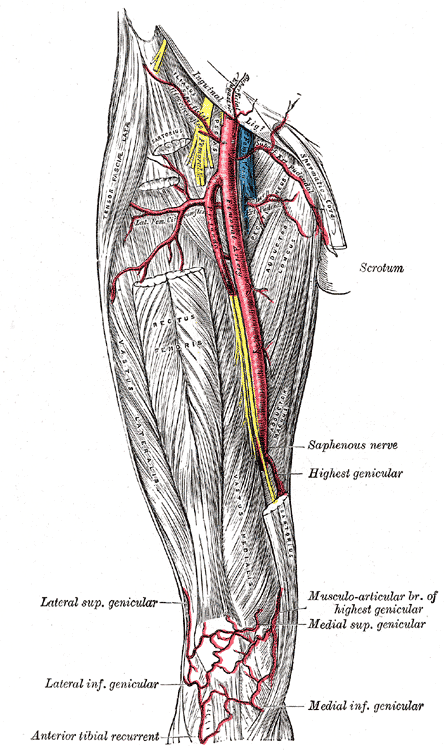
The femoral artery
In 2006 I ran for Governor, did not win, started working in Northern Iraq with the Kurds, came home, and was shot in my garage. Unlike the Amazon bit, this is all true. A .38 bullet – hidden inside a bag – was dropped in my shop and the derringer went off, destroying my femur and cutting my femoral artery. My wife heard the noise, came out to find her husband bleeding to death on the floor, tied a tourniquet with a rubber inner tube and has enjoyed Christmas and her birthday even more ever since. I am told I was about 90 seconds away from bleeding out, my leg was to be amputated and I was never to walk again. All three did not happen thanks to God’s healing hand and my headstrong ability to fight through the pain of rehab.
My life changed in that instant, but politics was already speculating I was dead, that I could not win statewide anyway, and that somehow I had shot myself. That last bit was the hardest to hear, as I never saw the gun and had no knowledge of it near me. About a year later, I was speech-making to a crowd of about 1,000 citizens on the steps of the Capitol, when someone who said to all I shot myself introduced me, which got a lot of laughs. I handled it ok, but my wife let the introducer know in no uncertain terms how far out-of-line he was.
It has been a tough three years: my wife had and beat cancer, our 8-year-old son had and beat cancer, and my party beats on me for not “being good enough.” There is no complaining as I have more pain killers than the lot of bad apples, but it does bring an old American conundrum into focus: How do you vote if your conscience and your district/state/party are at polar opposites?
I struggle with politics. I love service but am burned out on the pettiness. I hope the body politic is not run by those who can raise the most money to personally destroy the competition, but right now that is where the pendulum points.
A van down by the river...
Back to the Amazon with more truths: I earned my MBA after being run over by a car while on my bicycle. I sat on the pavement and thought “I have accomplished everything I set out to do in professional alpine skiing and racing bikes around the world, I think it’s time for grad school.” It was, and I married Stephanie half way through school. I live between Salem/Portland (Oregon’s political and business hubs) and our farm in Southern Oregon, except during steelhead season when I live in a van by the river. Anyway, I fly fish two-handed with religious conviction, struggle to get two more books published and enjoy foreign diplomatic work more than anything I have ever done.
And, just for the record, if you ever need Al Gore to sign something, I know how to get that done.
By Jonathan Miller, on Mon Apr 4, 2011 at 12:00 PM ET
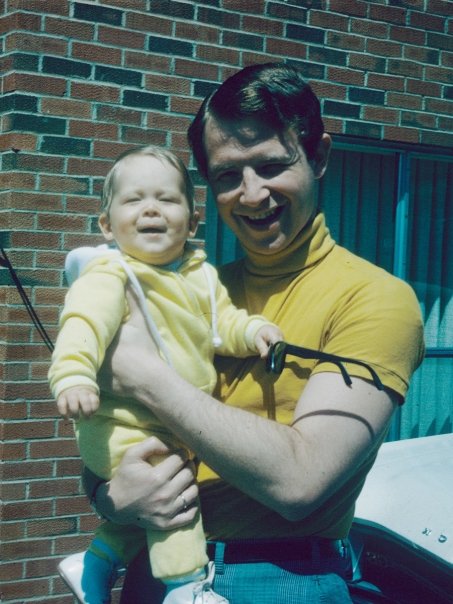
My dad and I circa 1968
Today — as on every April 4 — as the nation commemorates the anniversary of one of the worst days in our history; as some of us celebrate the anniversary of the greatest speech of the 20th Century; my mind is on my father. And my memory focuses on a winter day in the mid 1970s, sitting shotgun in his tiny, tinny, navy blue Pinto.
I can still remember my father’s smile that day.
He didn’t smile that often. His usual expression was somber, serious—squinting toward some imperceptible horizon. He was famously perpetually lost in thought: an all-consuming inner debate, an hourly wrestling match between intellect and emotion. When he did occasion a smile, it was almost always of the taut, pursed “Nice to see you” variety.
But on occasion, his lips would part wide, his green eyes would dance in an energetic mix of chutzpah and child-like glee. Usually, it was because of something my sister or I had said or done.
But this day, this was a smile of self-contented pride. Through the smoky haze of my breath floating in the cold, dense air, I could see my father beaming from the driver’s seat, pointing at the AM radio, whispering words of deep satisfaction with a slow and steady nod of his head and that unfamiliar wide-open smile: “That’s my line…Yep, I wrote that one too…They’re using all my best ones.”
He preempted my typically hyper-curious question-and-answer session with a way-out-of-character boast: The new mayor had asked him—my dad!—to help pen his first, inaugural address. And my hero had drafted all of the lines that the radio was replaying.
This was about the time when our father-son chats had drifted from the Reds and the Wildcats to politics and doing what was right. My dad was never going to run for office. Perhaps he knew that a liberal Jew couldn’t get elected dogcatcher in 1970s Kentucky. But I think it was more because he was less interested in the performance of politics than in its preparation. Just as Degas focused on his dancers before and after they went on stage—the stretching, the yawning, the meditation—my father loved to study, and better yet, help prepare, the ingredients of a masterful political oration: A fistful of prose; a pinch of poetry; a smidgen of hyperbole; a dollop of humor; a dash of grace. When properly mixed, such words could propel a campaign, lance an enemy, or best yet, inspire a public to wrest itself from apathetic lethargy and change the world.
Now, for the first time, I realized that my father was in the middle of the action. And I was so damn proud.
– – –
Click above to watch my eulogy for my father
My dad’s passion for words struck me most clearly when I prepared his eulogy. For the past two years of his illness, I’d finally become acquainted with the real Robert Miller, stripped down of the mythology, taken off my childhood pedestal. And I was able to love the real human being more genuinely than ever before. The eulogy would be my final payment in return for his decades of one-sided devotion: Using the craft he had lovingly and laboriously helped me develop, I would weave prose and poetry, the Bible and Shakespeare, anecdotes and memories, to honor my fallen hero. In his final weeks of consciousness, he turned down my offer to share the speech with him. I will never know whether that was due to his refusal to acknowledge the inevitable, or his final act of passing the torch: The student was now the author.
While the final draft reflected many varied influences, ranging from the Rabbis to the Boss (Springsteen), the words were my own. Except for one passage in which I quoted my father’s favorite memorial tribute: read by Senator Edward Kennedy at his brother, Robert’s funeral:
My brother need not be idealized, or enlarged in death beyond what he was in life, to be remembered simply as a good and decent man, who saw wrong and tried to right it, saw suffering and tried to heal it, saw war and tried to stop it.
Read the rest of… The RP: My Dad, RFK & the Greatest Speech of the Past Century
By Jonathan Miller, on Fri Apr 1, 2011 at 12:00 PM ET
An uninformed visitor to my old Kentucky home this week might conclude that they’d mistakenly walked onto the compound of a Prozac-fueled utopian cult. An odd but euphoric delirium had descended upon the hills, hollers and hamlets of the Bluegrass State. Men and women walking more upright, a bounce in their steps, a huge grin on their faces. You couldn’t meet a stranger: In grocery stores and city parks and shopping malls, neighbors who months before felt nothing in common were now greeting each other with warm words, high fives, and fist bumps. Weeks from now, we’ll return to our regional camps, our partisan corners. But for now, we’re united; the sun’s shining just a bit brighter.
The Wildcats have once again made the Final Four. March Madness matters.
Smack Laettner with your mouse click to watch the worst moment, well, in all of history
I’m often asked by my friends from urban America how a Jewish pischer like me could win statewide election in an inner notch of the Bible Belt. It’s simple: There’s only one state-sanctioned religion in the Commonwealth, and that’s Wildcat basketball. Besides, Kentucky features some of the most rabid anti-Christian hatred in the country. Anti-Christian Laettner, the aptly nicknamed Duke Blue Devil, that is.
It’s been common cause of that same coastal elite to declare the recent demise of college basketball. Just last week, the expositor of all that is right and just — the New York Times — asked “Does College Basketball Really Matter Anymore?” Much blame for the sport’s so-called march towards irrelevancy is directed at the National Basketball Association’s controversial “one and done” rule that permits pro teams to draft 19 year olds who are at least a year out of high school. Since many exceptional underclassmen leave for the NBA instead of staying all four years to graduate, the argument goes, the college talent pool is drained thin, diluting the excitement of the sport.
Dicky V just hates "one and done."
Even the over-polished-teeth-gnashers who make bank by hyping the sport have decried the rule’s impact on the game: Cue lovable loudmouth broadcaster Dick Vitale, who termed the one-and-done system — in his own inimitable style — as an “absolute joke and fraud to the term ‘student-athlete.’” Meanwhile, the rest of the chattering class’ perennial echo chamber lambasts Kentucky coach John Calipari for daring to master the rules he was given and actually recruit players with the expectation that they would leave for the pros after a year in college. As the Final Four approaches and smaller schools such as Butler and Virginia Commonwealth are adopted by the rest of the country, the Cats are branded with a scarlet “W” and charged with undermining the Athenian ideal of amateur athletics, as well as contradicting the purity of the sport, the value of higher education in general, and the American Way. Quipped Washington Post political reporter/conventional wisdom decoder Chris Cillizza on the eve of an NCAA tourney ballgame last year, tongue lodged only partly in tweet: “Is there anyone in America not rooting for Cornell over Kentucky tonight? And if so, can they rightly be called American?”
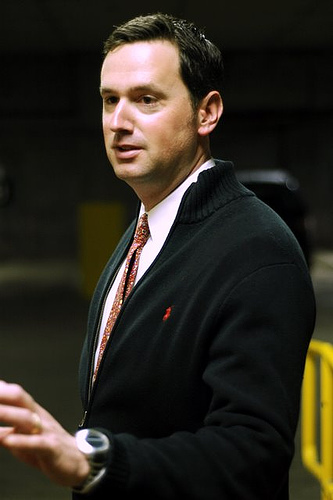
George (at left, above) is VERY young looking, for a 50-year-old
A Sarah Palin-like appeal on behalf of a New York-based Ivy League squad?! Just slightly more serious and playful is the needling I’ve endured from my decades-long “frenemy” George—an insufferable Dukie, natch. He asks how can I, a progressive, Harvard-educated, policy-wonk, invest my emotional well-being in a semi-pro team of mercenaries with a league-lagging 2.02 GPA and a pitiful 31 percent graduation rate?
The truth is that since middle school, much of my kind—the jump shot-challenged intelligentsia, that is—have scoffed at the popularity, coddling, and public financing of the jock culture. College is our sacred realm—for academics, scholarship and research, not professional sports-grooming. Like Major League Baseball, why can’t the NBA establish its own minor league system that encourages talented high school athletes to bypass college entirely? Ironically, this argument was advanced on Op-Ed pages nationwide by Richard Hain, a mathematics professor at…wait for it…Duke University.
There’s no question that colleges need to do a better job of preparing student-athletes for the postgraduate work force, particularly since the vast majority will never gasp a whiff of sports-related riches. But scrapping the current system and replacing it with a glorified intramural product would suffocate an invaluable national asset.
For while the literary and media elite have branded cerebral baseball and primal football as our national pastimes; college basketball, particularly here in the heartland, really does matter. And flaws and all, big-time, big-money college roundball is not only the people’s sport; it’s also good public policy.
Read the rest of… The RP: Why March Madness Matters
By Jonathan Miller, on Fri Apr 1, 2011 at 8:30 AM ET
Mark Twain once quipped: “Everyone talks about the weather, but no one does anything about it.”
The same can be said about the turbulent storm that’s been hailing down on our country’s discourse. Particularly after a national tragedy — Oklahoma City, 9/11, Tucson — the hyper-partisan politicos, cable TV screaming heads and ideological flamebloggers all pledge to tamp down their rhetoric as they wax poetically about civility. And then, inevitably, they return to their partisan corners, crucifying the other side over the next urgent issue.
Today, we launch The Recovering Politician to provide a civilized forum as an antidote to our nation’s toxic addiction to vitriol and demonization. Here is a place for debating and discussing the issues of the day — politics, sports, pop culture, religion, you name it — without the finger-pointing and blame-assigning that’s all too typical on the Web and among our more crass media.
Your host and frequent commentator is Jonathan Miller, the Recovering Politician. The RP is a proud progressive Kentucky Democrat, but he’s learned that we must put aside our labels on occasion to work for the common good.
The RP does not belong to a traditional 12-step program, but as a great admirer of friends who have battled real addictions, and a proud advocate of programs that empower them (see Recovery Kentucky), the RP has learned that many of the same principles espoused in recovery — candor, humility, compassion — can be a valuable tonic for our system at large and the players within.
The RP will be joined by dozens of other contributors — recovering politicians who’ll offer their own ideas about how to fix America’s most intractable problems: climate change, skyrocketing health care costs, our multi-trillion-dollar debt, crowning a college football national champion, celebrity idolatry, mom jeans, yadda, yadda, yadda. (OK, maybe not mom jeans; too polarizing…)
Like The RP, the site’s contributors are in the process of trying to prove F. Scott Fitzgerald wrong: that there are second (and third, and fourth…) acts in American lives. You’ll get the perspective of those who’ve survived the arena, and now are free to offer their critiques, unburdened by political pressures. You’ll hear from all sides of the spectrum, as well as from folks who’ve already carved their niche in the real world to share their expertise.
Every week day, the site will also feature a handful of “The RP’s Weekly Web Gems”: a set of links focused on a particular issue (i.e., the environment, health care, fashion. the NFL), culled by the RP’s crack staff, that reflect the best civil discourse on the Web.
Be forewarned: civility does NOT imply preciously-sincere, campfire-style appeals for spiritual unity. Nor does it require compromising core beliefs, watering down faith or appeasing bullies. Expect passionately-opinionated, controversial, imagination-provoking posts. Get ready for vigorous, rigorous debate. But all within the spirit of mutual respect and a determination to advance us all to workable solutions.
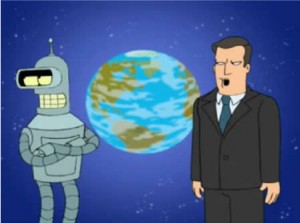
Click on Al Gore's face for an instructive video on how to affect the weather
And you’re encouraged to join the fray and make some helpful noise: Please share your comments, early and often, through your Facebook account. It’s easy.
At a minimum, please share your thoughts on the site itself through your comments. And if you like what you read, please recommend articles via the buttons at the upper right of every post and share them with your friends through the buttons at the bottom.
One last admonition: Please be patient. It may take us a few days to complete our mission to rescue the nation from its polarizing, paralyzing discord. Then, and only then, will we try to do something — finally! — about improving the weather around here…


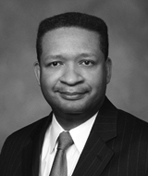 Political novels are a dying breed, and the death has been a long, slow one. But into the void steps Jeff Greenfield with a smart, well conceived set of political short stories called “Then Everything Changed“. In less than 400 pages, Greenfield, one of Robert Kennedy’s best speechwriters and an accomplished journalist, pulls off what is arguably the best political fiction in the last generation: it will and should endure for its skill and its contribution to our imagination. The book is built on three novellas: the premise of each is that a particular historical fact happened a fraction of an inch differently, and that the political world was realigned accordingly. The first supposes that a would be assassin lurking outside John Kennedy’s Florida getaway in December 1960 carried out his plot to steer a car loaded with explosives into the President elect’s path; and that the tragedy thrusts Lyndon Johnson into power three years early, and makes LBJ the leader who faces Soviet aggression in Berlin and Cuba. If the actual fact that JFK was stalked by an potential assassin during his transition is so obscure today that some of Kennedy’s own biographers don’t know it, the second “what if” has been fodder for speculation for two generations: Greenfield’s version is that Sirhan Sirhan‘s hastily improvised shooting of RFK is thwarted and that Kennedy lives to face off against Hubert Humphrey in a thrilling Democratic convention and Richard Nixon in a close run fall campaign. His prize is a country with outsized expectations of a second Camelot, which he must navigate as he tries to pursue a tough-minded liberalism that stirs up dust from the left and right.