By Jonathan Miller, on Tue May 17, 2011 at 8:30 AM ET
We’re pleased to share with you our latest installment of RPTV’s Fifteen Minutes of Fame.
Today’s guest is Mark McKinnon, a nationally-respected political consultant, with clients from both sides of the political aisle. His most famous was former President George W. Bush; McKinnon ran his campaigns at both the state and national level.
Today, in addition to his consulting business and writing for the Daily Beast, McKinnon is the co-founder of No Labels, a new grassroots organization, joining Democrats, Republicans, and Independents who are united in the belief that we do not have to give up our labels, merely put them aside to do what’s best for America.
To learn more about No Labels, or to join in their mission, please click here.
But first, enjoy Fifteen Minutes of Fame with Mark McKinnon:
Last week I wrote about congressional redistricting, and the messy inter- and intra-party hostility it engenders – and is currently sparking in my home state of Missouri.
Congressman Russ Carnahan
And as hypothesized, more hostility developed in Missouri following the Legislature’s override of Governor Nixon’s veto of the map. Because Missouri lost a seat during the apportionment process, the new map divides up Congressman Russ Carnahan’s district among four other districts, and Rep. Carnahan has been lashing out – first a few weeks ago at his fellow Missouri Democrat Rep. Lacy Clay, and then a few days ago at another Missouri Dem, Rep. Emanuel Cleaver, for going along with the decimation of his district. Of course, he is more privately seething at the four Democratic members of the state House who defected and voted for the override.
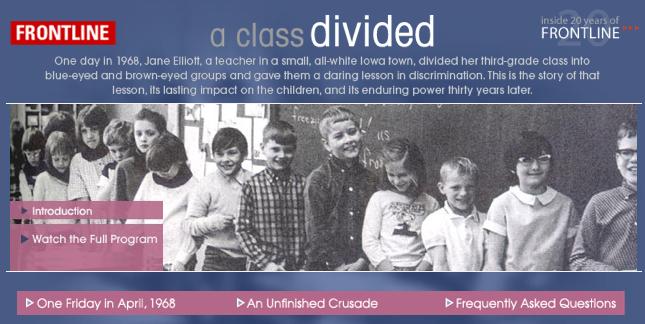
Does anyone really think Rep. Carnahan would be working to kill the map if the Republican Legislature had proposed to divide Rep. Clay’s district four ways and force him to run in an overwhelmingly white district? If you do, you’ve probably never seen Jane Elliot’s famed Brown Eyes, Blue Eyes experiment – and you don’t know much about human nature. Instincts for self-preservation are strong, power intoxicating, and race often wielded as a tool to gain and maintain it.
***
Now, surely Rep. Carnahan is angry at the Republicans for drawing these maps, but that anger is mild: he had to have expected it from them. Carnahan’s more visceral fury has been directed at his co-partisans.
Read the rest of… Jeff Smith: Dirty Tricks: On Race, Redistricting, and Stalking Horses
By Robert Butkin, on Mon May 9, 2011 at 8:30 AM ET
When asked to provide a post for a website called “The Recovering Politician,” I tried to figure out what in the blazes I’m supposed to be recovering from. In fact, in the six years since I left my position as Oklahoma State Treasurer, I have never looked back or regretted either the time I spent in elective public service or my decision to leave after a decade in office. I left when I determined that I had accomplished all that I had set out to do when I first ran for the job.
That’s not to say that there is not much still to be done with the agency, and in fact my successors have developed new initiatives that have improved the operations of the office. I had accomplished everything that I had set out to do. Despite my concern about the advisability of term limits, I do believe that all of us who are privileged to serve in elective office should be willing to limit our own terms and turn our offices over to energetic– and hopefully idealistic– successors when we have accomplished our mission. One should never be a “placeholder” when holding an office of public trust.
In many ways, I was the most unlikely of political candidates. Nobody in my family had ever run or thought of running for political office, but like many who came of age in the 1960s and the 1970s, I was convinced that elective public service was the highest calling a democracy could offer. A chance meeting with a candidate for Oklahoma Attorney General in 1986 gave me an opportunity several months later to join his staff to serve as an Assistant Attorney General, and in that capacity I had the opportunity to serve as the people’s advocate in utility rate proceedings and to represent Oklahoma in a landmark Clean Water Actcase, Arkansas v. Oklahoma, that I argued before the U.S. Supreme Court in 1991.
In 1993, I began to think seriously about a race for political office. We had had a bi-partisan tradition in the Oklahoma Treasurer’s office –a bi-partisan tradition of crumminess. Democrats and Republicans alike had been beset by scandals, investigations and indictments. Confidence in our state’s ability to manage our finances with integrity was at an all time low, and as somebody who believed in public investment, I knew that if the citizens of Oklahoma could not trust where and how their tax dollars were managed, they would not be willing to come together to invest in better schools, roads, and health care.
We won narrowly in 1994, a victory that truly would not have been possible had not dozens of volunteers, who normally pay no attention to elections for offices like state treasurer, cared enough about the need to restore integrity to the office that they joined our cause. And I would not have been successful without an outstanding staff who every single day put the interests of our state first. Many of our earlier accomplishments were far from glamorous, involving new accounting controls and speedier processes to convert cash to investable funds. But when I began giving taxpayers a running total of how much money we had saved or earned through cost saving efficiencies without a need for tax increase, they responded, and I believe our work has played a role in the willingness of Oklahomans to support new investments in education and health care over the last decade.
Read the rest of… Robert Butkin: Leaving Politics With No Regrets
Before and during my time in the state Senate, I taught political science for a decade, and no issue fascinated my students more than redistricting. Once I opened class during the week on redistricting by bringing several chairs to the front of the lecture hall, turning on Snoop Dogg’s anthem “Who Am I?”, and leading students in a game of Musical Chairs. (I picked Snoop because the mentality of politicians facing redistricting is pure gangsta: you do whatever you need to do to survive. Also, I wanted students to think that in a past life, I was pretty cool.)
Bow Wow Wow.
It was thru the prism of Musical Chairs that I explained how redistricting works in states that lose a congressional seat, as Missouri has this year. The seat that disappears under the Republican-drawn map is the seat I contested back in 2004. (In the interest of full disclosure, it is occupied by Congressman Russ Carnahan (D-MO), the man who narrowly beat me and pursued an FEC complaint about an anonymous postcard mailed at the end of the campaign, the knowledge of which I hid from the feds, ultimately leading to my prison term.)
In any case, the current situation has inspired quite a bit of internecine tension. For instance, according to Politico, after their districts were combined in a way perceived as unfavorable to him, Rep. Carnahan recently told fellow Missouri Democratic Rep. Lacy Clay to f- off. In his public response, Rep. Clay channeled former warrior-entertainers “Nature Boy” Ric Flair and Muhammad Ali. The F-bombs weren’t limited to the Democratic side: Republican leaders of the House and Senate were also at odds in their attempt to draw a map that appeased the varied interests at the table.
Read the rest of… Jeff Smith: The Recovering Redistrict-aholic
By Jonathan Miller, on Fri Apr 29, 2011 at 12:30 PM ET
Those readers familiar with national politics might remember “Walkin’ Lawton” Chiles, the Florida legend who walked from the western most point of the Florida panhandle all the way to Key West during his 1970 bid for the U.S. Senate. The walk became his signature action, so he incorporated it through his many future statewide campaigns.
In 2010, our own contributing RP Loranne Ausley took the gimmick another “step,” and ventured on a bike trek from Tallahasse to West Palm Beach to convince her opponent to finally engage in a civil debate. (Read about what Loranne is up to in her inaugural post.) Here is a report of her efforts:
The one question that recovering politicians always get is “do you miss it?”
Many elected officials have politics in their blood, and they go through a sort of withdrawal when they’re not in office.
Fortunately for my peace of mind, I don’t have it that bad, and I can honestly say that I don’t miss it.
My business partner in my public affairs firm, Julie Raque Adams, ran for state representative last year and won. I love hearing her tales of all the hijinks in Frankfort, but that’s enough for me for now.
I wouldn’t change a thing about the six years I served on Louisville’s Metro Council. I’m very proud that I had a hand in the fabulous KFC Yum! Center, the smoking ban, and the Fairness Ordinance. I am also grateful that I had the opportunity to advocate for an expansion of our library system.
But I am so happy in the private sector that it’s hard to imagine jumping back in. So count me in the ranks of a very content recovered politician.
Smoking Ban
Senate President and gubernatorial candidate David Williams deserves kudos for coming out in favor of a statewide smoking ban. That’s not an easy position for a candidate to take in a Republican primary, and I really appreciate it.
When I served on the Metro Council, we finally passed a comprehensive smoking ban in Louisville. One year, I served as the Chair of the committee studying the smoking ban, so I had the opportunity to meet with many bar and restaurant owners who were concerned about the economic impact of a ban.
One local restaurateur I met with told me at a high volume that his business would be doomed if we passed a smoking ban.
He got so hot with me at one point that he said, “If you were a man, I’d punch you in the face!”
I said, “Well, it’s a good thing I’m a girl!”
By the way, his restaurant business has expanded in the years since the smoking ban passed. Good for him.
CPAC
I am so glad that Senators Mitch McConnell and Rand Paul ignored the silly boycott of the Conservative Political Action Conference (CPAC) in Washington in February. Several conservative groups skipped the conference because a gay Republican group, GOProud, was invited to co-sponsor the event. GOProud was co-founded by my friend and former Louisvillian, Jimmy LaSalvia.
The groups that protested GOProud’s inclusion need to remember that politics is a game of addition, not subtraction.
Julie Hits Frankfort
When Senator Williams filed his papers to run for Governor, a reporter at the press conference got a good chuckle from a freshman State Representative. Right before the press conference began, the new legislator blurted out, “Oh my gosh, my dress is on backwards!” Now, in her defense, the front and the back looked exactly alike.
Of course, it was Rep. Julie Raque Adams, the only woman I know who would say that out loud instead of just thinking it.
Thanks to Courier-Journal reporter Joe Gerth for that scoop!!
The recent attention to local and national politicians’ racial gaffes reminds me of my own.
As readers may be aware, politicians have lately dredged up one of the ugliest aspects of our nation’s history: slavery and the subsequent century of brutality and discrimination. Haley Barbour has often tripped himself up, beginning with his 1982 watermelon comment. More recently he’s praised the ignominious Citizens Councils and declined to condemn a proposal to venerate Confederate war hero and founding KKK Grand Wizard Nathan Bedford Forrest with an honorary license plate.
Former Virginia Sen. George Allen of “macaca” fame had another recent gaffe, where he twice (erroneously) assumed that a tall black reporter was an athlete. Even the ever-poised Alex Trebek may have slipped up.
Closer to home in St. Louis were the comments of State Sen. Maria Chappelle-Nadal, who compared the black state legislators opposing her on a bill – that is to say, all of them – to “house slaves.”
***
I spent years walking a racial tightrope in city politics. I represented a district that was roughly 55% black, 6% Asian, 5% Bosnian, and 4% Latino. Since it was also estimated to be 15% gay, the percentage of straight white males like me was likely in the single digits.
Not that I minded. I actually found it exhilarating. At first.
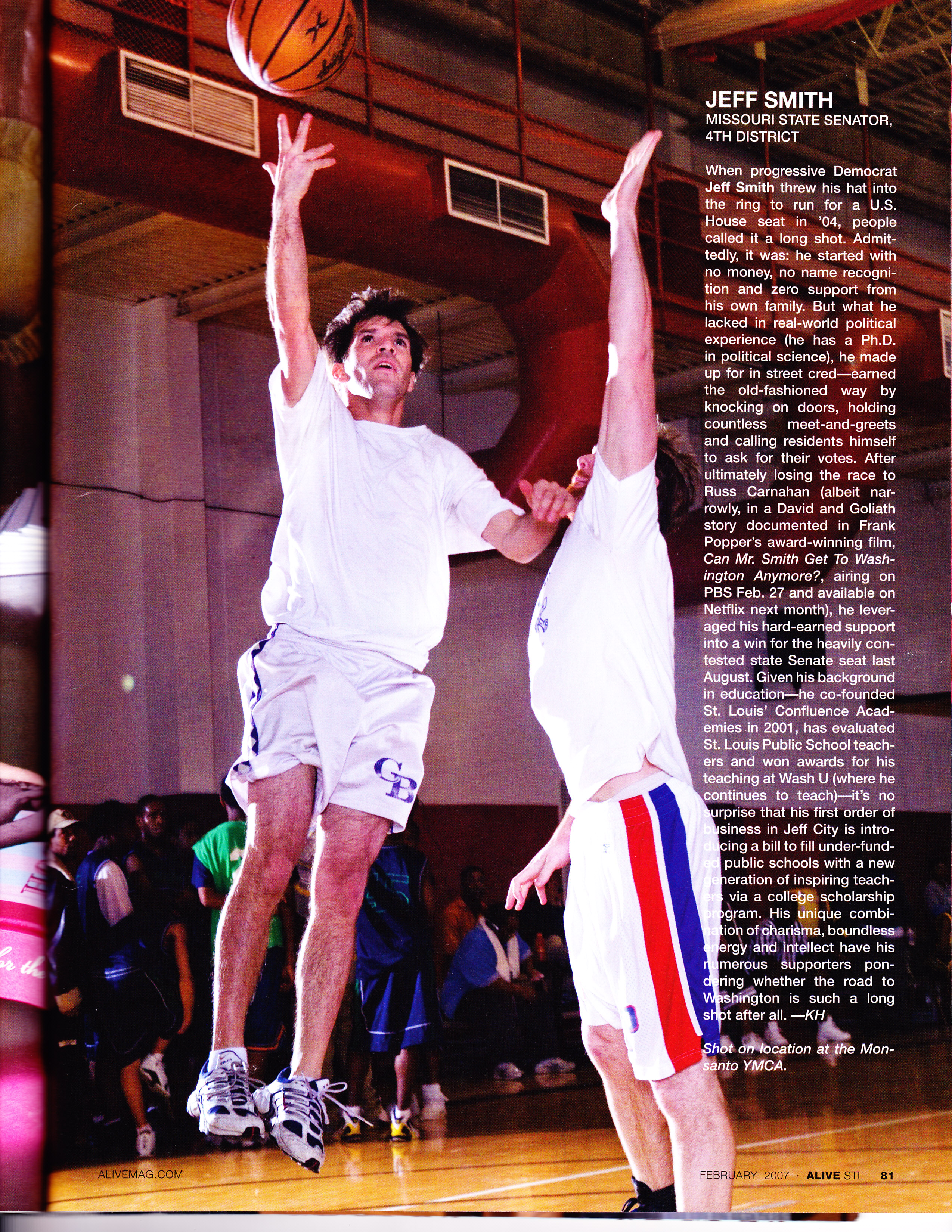
See, I’d grown up in a mostly white, middle-class suburb, but about 10% of my graduating class was comprised of black kids bused from the city as part of a school desegregation program. By my senior year, they comprised most of the basketball team, and as point guard, it was my job to lead the team.
My co-captain once told me that when he came out to our school freshman year, he was three years behind us academically. That pissed me off. It also made me want to learn more about the history behind the inequity. So at UNC-Chapel Hill, I majored in African-American Studies.
Conservatives like to invoke the guilty white liberal. I wasn’t guilty as much as obsessed. I wanted to immerse myself in the city’s black community and help black kids get to college.
So I came home from UNC and worked in the city public schools. Frustrated at the system’s dysfunction, I co-founded a charter school whose enrollment was 99% black. I served on the boards of non-profits focused on racial justice and black uplift. I coached basketball for a decade at a boys club where the only white people I saw were the occasional white refs. I taught ACT prep courses for black high school players in danger of becoming Prop 48 casualties. And when I played, it was with strangers in one of the small parks that dotted the corners of the city’s North Side, where the competition was fierce.
The point is, when I jumped in the race for Missouri’s 4th Senatorial District, I felt at least as comfortable around black people as I did around white people.
By Jason Atkinson, on Fri Apr 22, 2011 at 12:45 PM ET
Homer Simpson has three phrases that work in every political situation:
“Cover me.”
”You’re right that is a good idea”; and
“It was like that when I got here.”
Brilliant! Gone are the quotes of Washington, Jefferson, and Lincoln, and stage right steps America’s three-fingered yellow skinned, balding “herald to the masses,” keeper of pop-language. Roll over Danny Webster.
Cover me!
A great phrase used liberally in the western United States in close association with “Hey, hold my beer; I want to try something.” It is not as used too much today across party lines and is more used safely inside the bounds of a politician’s registration; however in days past, I would find rural and urban legislators from different parities “covering” each other just to insure the process keep moving.
“Cover me” can be viewed as a phrase over cards in the smoky back room, but I think cover me is more of loyalty in friendship over partisan. “Cover me” — used between politicians, mostly for the good.
“You’re right, that is a good idea”
This is perhaps the ultimate way to defuse hostility. Since politics is the anvil and our words are the hammer, this Homerism works in nearly all situations. I’ve been teaching my eight-year-old son how to be a conversationalist, which I believe begins with being a good listener. While no one would claim Homer in the same breath as Mark Twain or Shelby Foote, the phrase does work if we first listen.
“It was like that when I got here.“
Lastly comes the great one. The phrase used by politicos ranging from Obama to freshly elected city counselors. The universal deflection in which a politician keeps their status, deflects criticism, and champions all reform: “It was like that when I got here.” It worked as children standing in a messy room; it worked in junior high when the bunsen burner caught fire; it performed brilliantly on Saturday morning chores with younger siblings; and does it ever work in politics! It’s pass-the-buck-plus.
After I thought about it a while, I can’t use it without laughing, blowing my already tissue-thin cover, but for our RP readers, lovers words, students of political survivors, listen for it in our public discourse and smile yourself.
By Andrei Cherny, on Fri Apr 22, 2011 at 8:30 AM ET
Among the dozens of hats that he wears, Contributing RP Andrei Cherny edits Democracy: A Journal of Ideas. His post this month reflects on his status as a recovering politician. But even more, it makes a passionate case for progressive economics in an era that seems to be focused on selfish materialism and me-first politics
Here is an excerpt — the full link is below:
Candidates for office, it has been said, will show up for the opening of an envelope. This is especially true for those seeking an office like state treasurer. So it was that in early October of last year I found myself waiting for my turn to speak at the Yavapai County Tea Party forum. By then it was clear that as a Democrat campaigning statewide in Arizona in 2010, the effort I was engaged in could be reasonably called an “uphill climb” only if the hill in question was named Everest. Nevertheless, I was hopeful, though not blindly optimistic, that there was a path to victory—one that, at least partially, would run through convincing audiences like this one that, though a Democrat, I was the candidate who was more attuned to their concerns.
It didn’t take long for me to realize that this was one avenue that was closed off. Before it was time for my opponent and me to take the stage, I sat listening to the candidates for Congress debate. Like the audience at an old-time Saturday morning cliff-hanger, the crowd cheered the hero Republican and hissed at the villain Democrat. I turned to my campaign staffer and whispered through a tight smile, “Pull the car around when I get up there. We may have to make a run for it.”
It was the kind of gallows humor on which campaigns thrive, and despite receiving my own share of jeers while speaking, the people there were as friendly to me personally as they were completely uninterested in voting for me. But something bigger was at play that Saturday evening in Prescott than Tea Party politics and the ruminations of a doomed candidate for an obscure office.
How does one recover from a passion, a deep abiding interest and engagement? From a loss, maybe—that can take some work. But I don’t ever want to recover from politics, though I won’t run again.
I may have had less trouble than some recovering from a loss, because I chose after 12 years in Congress to take a long-shot chance at a U.S. Senate seat against Sen. Susan Collins, an incumbent with an approval rating over 60 percent. Those odds, I realize even more today, don’t usually work out, and mine did not.
When my friend Bill Delahunt retired rather than run again for the Massachusetts 10th district, he had a simple explanation: “I have a two-year old granddaughter.” I get it. My wife and I have a three-year old grandson and a one-year old granddaughter—with another on the way.
That’s not much of a prescription for younger recovering politicians, but it works for some of us.
I do miss the people, my constituents in Maine, all over the state. People of all ages and backgrounds from all walks of life; the students, the retired, labor activists, businessmen and women, health care providers, the uninsured, veterans and war protesters, delegates to party conventions and, yes, even (or especially) supporters of mine at political fund-raisers.
I don’t miss the hours, though. I ran into Tom Davis, the respected Virginia Congressman, on the street in Washington in 2009, the year after we had both left Congress. He just looked at me and said, “Weekends!”
Since I work now as the CEO of the Association of American Publishers, the public policy advocacy organization for the book publishing industry, I spend half of most months in Washington. So I still see some of my friends in (and after 2010) out of Congress. Most of those that have left in the last few years have few regrets, because the atmosphere of congressional activity has become poisonous.
As a form of recovery, I am refusing to leave the arena entirely. Within days of losing my Senate race, I started writing a book which has evolved into an attempt to explain the deeper sources of the polarization that cripples our ability to make long-term strategic decisions about our most pressing public issues.
For me, the signature question of my experience was, “Do these guys believe what they are saying?” That’s what we Democrats asked each other when we heard, “Tax cuts pay for themselves,” or “We’ll be welcomed as liberators,” or “Climate science isn’t proven.” We fully understood that many of our arguments made no sense to Republicans. Why not?
I am exploring the attitudes and ideas that shape our thinking on a range of issues. In particular, I want to highlight the enduring tension in American culture and politics between individualism and community. The working title is Dangerous Convictions: Inside a Polarized Congress.
But spring is coming, the snow is melting in Maine, the birds returning and soon the fish will be moving again. I will pick up my fly rod and go off with my wife, Diana, to one of our favorite Maine sporting camps, casting for brook trout and landlocked salmon during the day and listening to the loons at night.
I will finish the book this year, and like most authors, I live in the hope that it will make a difference in how Democrats and Republicans think about each other, and, just perhaps, work together for the common good.