By Jeff Smith, on Fri Jul 22, 2011 at 10:00 AM ET 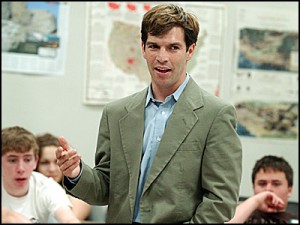
The Missouri Senate – not the U.S. Senate – former U.S. Senator Jim Talent once told me, is the greatest deliberative body in the country today. Because any senator has the right to speak for as long as he chooses on any matter, each senator, even a freshman in the minority, can wield power if he plays the game well.
But I didn’t understand how to wield power when I got there. I would soon learn, though, from veterans like Senators Victor Callahan and Jason Crowell, and House Speaker Rod Jetton.
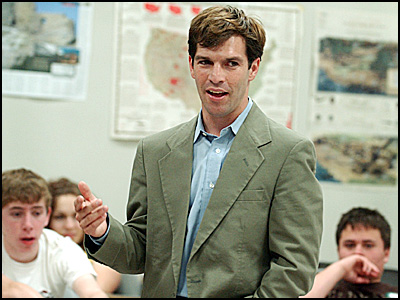
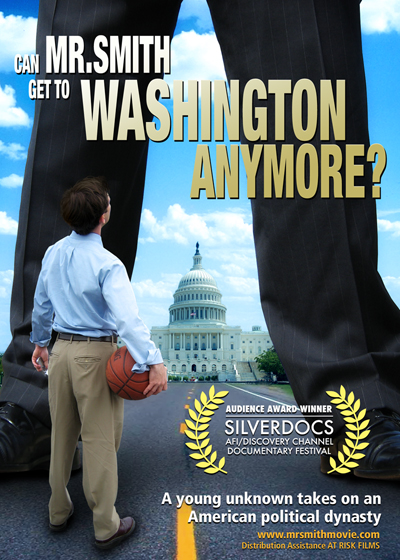
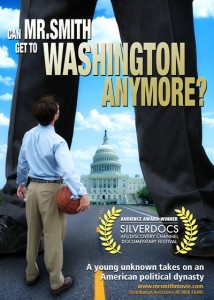 When I came to the Senate, I aspired to be the young, liberal wunderkind that many journalists and activists had anointed me. In taking the unprecedented step of blocking a gubernatorial appointment before being sworn in, I sought to carve out an image for myself as a strong progressive, unafraid to stand up to the state’s most powerful Republican, Governor Matt Blunt. However, as I soon realized, the very image that helped me in my district was crippling me in the Senate. When I came to the Senate, I aspired to be the young, liberal wunderkind that many journalists and activists had anointed me. In taking the unprecedented step of blocking a gubernatorial appointment before being sworn in, I sought to carve out an image for myself as a strong progressive, unafraid to stand up to the state’s most powerful Republican, Governor Matt Blunt. However, as I soon realized, the very image that helped me in my district was crippling me in the Senate.
My colleagues defeated nearly every proposal I offered during my first session, often with undisguised delight. I suffered so many defeats my first year – on amendments to restore funding cut from children’s health care, to enact an earned income tax credit for the working poor, to reveal an abstinence-only sex ed bill – that none really stood out.
All that stood out was a feeling of losing.
I hated losing, because I was very competitive. But I also saw the poverty and violence up close night in, night out, at neighborhood meetings and anti-gang marches, and that increased my sense of urgency.
I’d been in a hurry my whole life. But never did I feel such a sense of urgency as I did near the end of my first legislative session when I realized that as one of 34 senators able to change the state’s direction, I’d accomplished next to nothing. It was time to learn how to win.
******
To win – and to do so consistently – I knew that you needed to be either feared or loved. Respect wasn’t enough.
Term limits meant that no one was around long enough to be truly loved, and only a few were feared. I knew I wasn’t. For starters, I was too nice and I didn’t like pissing people off. Those who were feared didn’t care who they pissed off.
Second, I lacked institutional knowledge, both on policy or procedure. Without deep understanding of an issue and a firm grasp of Senate rules, it was hard to be feared on the Senate floor, where the action went down. Also, we (Democrats) were outnumbered 23-11, which didn’t help inspire fear. But after observing how Senator Crowell used the filibuster to great effect, I vowed that I would influence a policy debate in the same way sometime soon – and ironically, I got my first chance on one of Crowell’s own bills.
Crowell was best friends with House Speaker Rod Jetton, and was the Senate handler for the sole bill Jetton filed in 2007 – a bill to eliminate state taxation on all Social Security benefits reached the Senate. There was no coordinated Democratic strategy for dealing with the bill, so I asked the Minority Leader where she was on the bill, which was the centerpiece of the House Republicans’ agenda for the session. “Whose bill is it?” she sniffed.
“It’s Speaker Jetton’s.”
“Then Ah’m aginzit.”
Read the rest of…
Jeff Smith: Rod Jetton & Our Unlikely Friendship
By Jeff Smith, on Thu Jul 21, 2011 at 2:30 PM ET  If I were John Boehner,I’d hire a food taster. If I were John Boehner,I’d hire a food taster.
Sadly, with Boehner impotent in the face of the tea party-dominated caucus, there are now two camps of leading Washington Republicans. One camp – the cold-eyed power-seekers represented by Cantor in the House and McConnell in the Senate – wants the country to default because it will destabilize the markets, hurt the economy, and thus hurt Obama’s chances of re-election. That’s sad.
The other camp – the Norquist-led “starve the beast” types – wants the country to default because it will prevent the country from borrowing for any purpose, and begin accomplishing their overarching goal of totally discrediting government. That’s nuts.
Where is today’s Bob Dole, the heartland conservative respected by both sides and willing to stand up to his party’s right wing in the name of statesmanship? His name is Rob Portman, and he’s AWOL.
By RP Staff, on Thu Jul 21, 2011 at 2:00 PM ET RIGHT NOW — until 3:00 PM EDT, the RP is co-hosting No Labels Radio.
The discussion will be on the ongoing debt crisis, and his guests include some of the nation’s top political and economic experts.
No Labels is a new grassroots movement of Democrats, Republicans, and Independents who are united in the belief that we do not have to give up our labels, merely put them aside to do what’s best for America. No Labels Radio will offer a weekly dose of news and interviews with the policymakers who are working to find bipartisan answers to the otherwise intractable problems our country faces.
Follow this link to tune in RIGHT NOW.
By Jonathan Miller, on Wed Jul 20, 2011 at 2:00 PM ET The time is now. Please act today.
Our country stands less than two weeks away from the brink of an economic disaster.
For the first time in the more than 230-year history of our republic, we could potentially default on our credit obligations. Indeed, it would be the first time in global history that a country voluntarily chose to default on its credit.
What does this mean?
In the short term, we’d likely see a dramatic stock market crash, akin to the fall of 2008 when the first TARP proposal was rejected. The credit market could freeze again, making it even more difficult to borrow to buy a home or car, or to start or even run a small business.
In the long run, there’s no question that our country would have to borrow money at significantly higher rates, meaning we’d have to find many billions of more dollars of budget cuts and/or tax hikes to balance future budgets.
And this potential fiscal insanity is the result of the disease that is infecting our democracy at its core; in fact, the very reason we launched The Recovering Politician: Hyper-partisanship in American politics.
Indeed, many of the solutions that have been offered to the debt ceiling crisis have been strictly focused to meet partisan ends.
Yesterday, the House Republicans passed a “Cut, Cap and Balance” plan that cuts trillions from the budget; but, in the opinion of many (inlcuding me), strips the nation of much of the safety net that preserves our democracy. Senate Republican Leader Mitch McConnell offered a plan to raise the debt ceiling while providing political cover for fellow Republicans — which is certainly more responsible than the Tea Party/credit default approach — but both sides of the partisan divide have criticized it as too ineffectual: simply kicking the can down the road for a few more years.
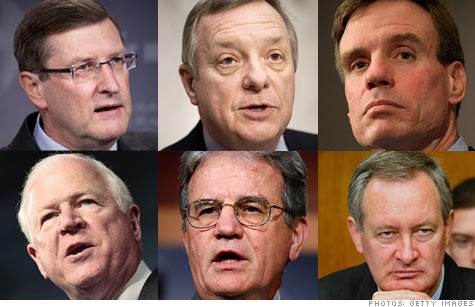
But yesterday, there was a glimmer of hope. The “Gang of Six” — three Democratic Senators and 3 GOP Senators — reconstituted after a brief “sabbatical” to offer a bi-partisan proposal that would slash $3.7 trillion from the national debt through a combination of spending cuts and tax hikes, many of which were recommended by The National Commission on Fiscal Responsibility and Reform, co-chaired by Democrat Erskine Bowles and Republican Alan Simpson.
Here is the best summary to date on the “Gang of Six” budget plan.
I’m confident — particularly as details of the Gang of Six plan begins to be defined more clearly — that everyone will find things in it that they dislike, even despise. But it is the country’s best chance both to emerge from the current debt ceiling crisis, as well as to make enormous reforms of the structural debt problems our nation is facing.
If you agree with me, the time to act is now.
The extremes and special interests wil be placing extraordinary pressure on Congressmen — as they always do — to forego bipartisan compromise. It is essential that they hear from those of us from both parties who understand that it is sometimes necessary to reach across the aisle to have our voices heard. We need to reverse the current political dynamic — so that Members of Congress are afraid of the political impact should they act solely in the interests of their party, to the exclusion of the interests of their nation.
So, the time is now to contact your Congressman — by phone, email, mail, tweet, Facebook, Google Plus, homing pigeon, smoke signal, etc., etc. Let them know that you will have their backs should they make the tough political vote to support a bipartisan compromise such as the Gang of Six’s proposal. Let them know that you want a representative who serves you, not the special interests that dominate Washington.
Click here for an easy link to join the efforts to support bi-partisan compromise on the debt ceiling crisis.
 The link above directs you to the No Labels effort to bring Americans together. The link above directs you to the No Labels effort to bring Americans together.
We are not a third party movement.
Instead, we are proud Democrats, Republicans, and Independents — liberals, progressives, centrists, and conservatives — all of whom recognize that sometimes we must put aside our labels to do what’s right for the nation that we love.
We cannot afford to remain divded as a country. As Benjamin Franklin famously said on the eve of revolution, “We will either hang together, or we will most surely hang separately.”
The time is now. Please act today.
By RP Staff, on Wed Jul 20, 2011 at 12:00 PM ET As the debt ceiling deadline approaches, a last minute reconstitution of and proposal from the Senate’s “Gang of Six” (3 Democrats and 3 Republicans) has stirred up homes of a bipartisan compromise that addresses the nation’s long-term debt problems. The RP was interviewed by Michael Castner of Wall Street Journal’s “Daily Wrap” about the ongoing negotiations. Listen in:
By RP Staff, on Thu Jul 14, 2011 at 2:00 PM ET RIGHT NOW — until 3:00 PM EDT, the RP, along with contributing recovering politician Lisa Borders, is co-hosting No Labels Radio.
No Labels is a new grassroots movement of Democrats, Republicans, and Independents who are united in the belief that we do not have to give up our labels, merely put them aside to do what’s best for America. No Labels Radio will offer a weekly dose of news and interviews with the policymakers who are working to find bipartisan answers to the otherwise intractable problems our country faces.
Follow this link to tune in RIGHT NOW.
By RP Staff, on Thu Jul 14, 2011 at 12:30 PM ET It turns out that the RP has a perfect face for radio. He’s back at hosting No Labels radio today, with fellow contributing recovering politician Lisa Borders.
No Labels is a new grassroots movement of Democrats, Republicans, and Independents who are united in the belief that we do not have to give up our labels, merely put them aside to do what’s best for America. No Labels Radio will offer a weekly dose of news and interviews with the policymakers who are working to find bipartisan answers to the otherwise intractable problems our country faces.
Follow this link to tune in at 2:00 PM EDT.
By Grant Smith, RP Staff, on Wed Jul 13, 2011 at 11:00 AM ET The Politics of Generation Y Revisited On June 15th, my esteemed colleague, Zac Byer, published a thoughtful piece on generation Y’s place in the world. Most importantly, he zeroed in on Gen Y’s strong attachment to nostalgia.
Perhaps most insightful, he theorized that this attachment to nostalgia is potentially rooted in a generational fear that what lies ahead may not be as bright as what has already passed.
At risk of sounding like a pessimist, one has to wonder, “what if the pessimists have this one right?” What if Gen Y – financially speaking – is destined to end up as a new “lost generation?”
Let’s look at what is coming down the road: student loan debt that surpasses credit card debt; risk of inflation from multiple rounds of quantitative easing; the end of Social Security and Medicare as we know it; the list goes on and on.
Like the credit card shopper who splurges at the store, only to wind up with the bill months later, Gen Y is very likely to be the generation who receives the credit card bill in the mail from a previous generation or two. Unlike the credit card shopper who at least got to enjoy their products, Gen Y may get all of the tab, but none of the goods.
Read the rest of…
Grant Smith: The Politics of Gen Y Revisited – A New Lost Generation?
By Artur Davis, on Wed Jul 13, 2011 at 8:30 AM ET  President Obama has resorted to extreme measures to forge a compromise with congressional Republicans to raise the debt ceiling and avoid a national default. He has signaled a willingness to slash federal expenditures by an unfathomable 4 trillion dollars over a decade, and he is hinting that the pillars of Social Security , Medicare, and Medicaid will not be exempt. President Obama has resorted to extreme measures to forge a compromise with congressional Republicans to raise the debt ceiling and avoid a national default. He has signaled a willingness to slash federal expenditures by an unfathomable 4 trillion dollars over a decade, and he is hinting that the pillars of Social Security , Medicare, and Medicaid will not be exempt.
A Democratic Governor in Minnesota has taken a sharply different route, opting to shut his state’s government down unless Republicans consent to a temporary surcharge on millionaires. Meanwhile, In New York, the iconic liberal empire, a Democratic Governor has jettisoned ten thousand teachers and state employees to save money and has slashed spending for child welfare and education; at the same time, he declared tax increases off limits and fought his party’s efforts to impose New York’s own millionaire’s tax.
Welcome to the muddled place that is Democratic ideology in 2011. Under the pressures of an economy that just barely dodged a depression, and swollen entitlement obligations at both the federal and state level, chief executives who are certified progressives are living in desperate times. They are responding in dramatically contrasting ways that are partly tactical, but ultimately reveal much about the coming fissures in the Democratic Party circa 2013-2016.
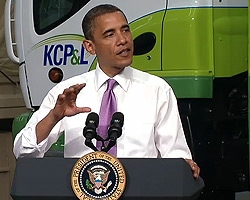 The President at Smith Electric Vehicles At that point, Barack Obama will be one or the other: the second Democrat in a generation who saved his presidency partly by discarding liberal priorities and emphasizing a hawkish profile on deficit reduction, or a discredited figure who squandered an electric personal mandate and failed to fight hard enough for his principles. Under either scenario, a trainload of agenda items, from immigration reform to stronger collective bargaining rights and stricter regulation of carbon emissions, will have been buried.
Read the rest of…
Artur Davis: What is Next for the Democrats?
By RP Staff, on Tue Jul 12, 2011 at 3:00 PM ET  Tune in, RIGHT NOW to listen to the RP talk about his piece yesterday about Henry Clay and today’s debt ceiling on the DC radio talk show, Afternoons with David Anderson. Tune in, RIGHT NOW to listen to the RP talk about his piece yesterday about Henry Clay and today’s debt ceiling on the DC radio talk show, Afternoons with David Anderson.
Here’s the link.
And please call in to share your questions: 1-888-432-7434
|
The Recovering Politician Bookstore
|


 When I came to the Senate, I aspired to be the young, liberal wunderkind that many journalists and activists had anointed me. In taking the unprecedented step of blocking a gubernatorial appointment before being sworn in, I sought to carve out an image for myself as a strong progressive, unafraid to stand up to the state’s most powerful Republican, Governor Matt Blunt. However, as I soon realized, the very image that helped me in my district was crippling me in the Senate.