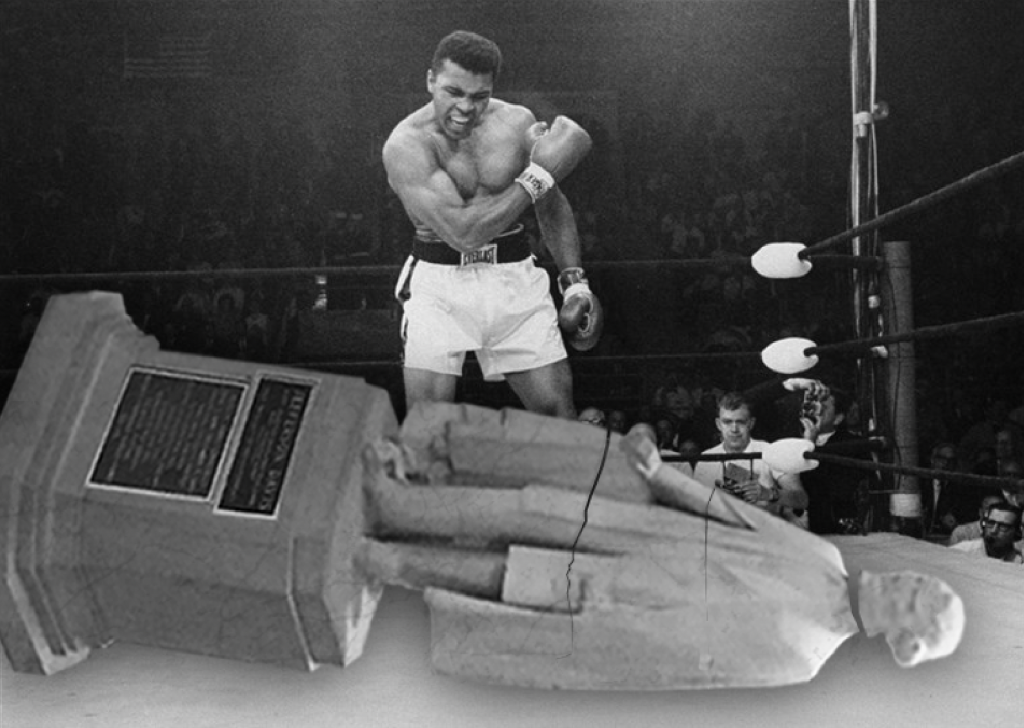
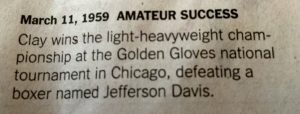
Please sign the petition below to remove the statue of Jefferson Davis currently in Kentucky’s Capitol Rotunda, and replace it with a tribute to Muhammad Ali, “the Louisville Lip” and “the Greatest of All Time.”
I just heard from the Ali family: It is the Champ’s belief that Islam prohibits three-dimensional representations of living Muslims. Accordingly, I have adjusted the petition to call for a two-dimensional representation of Ali (a portrait, picture or mural) in lieu of a statue.
UPDATE (Tuesday, December 2, 2014)
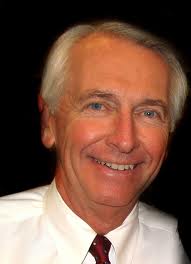
In this interview with WHAS-TV’s Joe Arnold, Governor Steve Beshear endorses the idea of honoring Muhammad Ali in the State Capitol (although he disagrees with removing Davis). Arnold explores the idea further on his weekly show, “The Powers that Be.”
Click here to check out WDRB-TV’s Lawrence Smith’s coverage of the story.
And here’s my op-ed in Ali’s hometown paper, the Louisville Courier-Journal.
UPDATE (Saturday, June 4, 2016)
In the wake of the 2015 Charlestown tragedy, in which a Confederate flag-waving murderer united the nation against racism, all of the most powerful Kentucky policymakers — U.S. Senator Mitch McConnell, Governor Matt Bevin, Senate President Robert Stivers and House Speaker Greg Stumbo — called for the removal of the Davis statue from the Rotunda. Today, as we commemorate last night’s passing of Muhammad Ali, there is no better moment to replace the symbol of Kentucky’s worst era with a tribute to The Greatest of All Time.
UPDATE (Wednesday, June 8, 2016):
Great piece by Lawrence Smith of WDRB-TV in Louisville on the petition drive to replace Jefferson Davis’ statue in the Capitol Rotunda with a tribute to Muhammad Ali.
UPDATE (Thursday, June 9, 2016):
Excellent piece on the petition drive by Jack Brammer that was featured on the front page of the Lexington Herald-Leader.
Highlight of the article:
Miller said he has received a few “angry comments” on his call to honor Ali.
“One of them encouraged me to kill myself,” he said. “You can quote me that I have decided not to take their advice.”
UPDATE (Friday, June 10, 2016)
The petition drives continues to show the Big Mo(hammed): check out these stories from WKYU-FM public radio in Bowling Green and WKYT-TV, Channel 27 in Lexington:
UPDATE (Saturday, June 11, 2016):
Still not convinced? Check out this excerpt from today’s New York Times:
That hungry whirring noise heard around offices across the U.S. is the sound of March Madness brackets being fed to paper shredders everywhere. Bracket busting is reaching historic levels in this year’s NCAA Division 1 Men’s Basketball National Championship Tournament. Since the tournament was created in 1939 this is the first time there are no number 1 or 2 seeds in the Final Four. All of the country’s top eight teams, as annointed by the experts, will watch the Final Four from home.
That’s amazing. It’s the first time in March Madness history that two teams, Butler (8) and VCU (11), seeded 8 or worse in their bracket will play each other in the Final Four. So if you shredded your bracket, you’re not alone. According to ESPN Research only two people out of the 5.9 million who filled out and submitted brackets in the ESPN Tournament Challenge have the Final Four correct. Only two. That’s .000034%.
As I shredded my bracket I couldn’t help thinking about the parallels between innovation and bracket busting.
In many ways, from the time we are born, we are seeded into brackets. Education tracks, organization charts, and industry value chains are all brackets waiting to be busted. Experts are always telling us where we fit and what our role is. We are tracked into school programs at an early age based on perceived academic ability. We are placed into boxes in organization charts based on age and tenure, constrained from contributing beyond our “seed.” We work for too many organizations that only fight for market share within well-defined and accepted industry value chains.
Not only are we seeded into brackets created by someone else, we are expected to play our defined roles. Top seeds are supposed to win. Lower seeds make a valiant effort but lose to top seeds in the end. Most of us don’t even get an invite to the “big dance.” That’s the way it’s supposed to work because the experts say so…
Innovators, in their way, are bracket busters. While incremental improvements can be accomplished by working within current brackets and seeds, the biggest opportunities to create value come from transformational change, the kind of change that requires bracket busting. Solutions for the big social system challenges we face, including education, health care, energy, and entrepreneurship, require more than incremental change. The solutions we need require transformative bracket-busting business models and systems.
We need a new education system that doesn’t seed children into tracks and is designed to provide every student with a customized pathway to success. We need a new health care system that doesn’t track citizens through institutional and insurance sick care labyrinths and is designed for patients to champion their own pathways to wellness. We need organization structures that don’t constrain talent in boxes unleashing talent networks that enable everyone to contribute up to the limits of their imaginations. We need to transform industry value chains into value networks that break down boundaries between disciplines, organizations, and sectors to deliver value in completely new ways to students, patients, citizens, and consumers. We need more bracket busters.
So don’t be discouraged by your March Madness bracket now sitting at the bottom of the paper shredder. Celebrate the fact that none of the top seeds made it to the Final Four. Don’t settle for where you and your organization are seeded by so-called experts. Don’t allow anyone to say you aren’t allowed to go to the big dance. Don’t be constrained by brackets created by someone else. Create your own dance. Be the top seed in your own bracket. Be an innovator. Be a bracket buster.
(This post originally appeared here on the Harvard Business Review site.)
By Jonathan Miller, on Fri Mar 22, 2013 at 3:30 PM ET
A few minutes ago, Kentucky Governor Steve Beshear vetoed the so-called “Religious Freedom Restoration Act,” a bill that would have resulted in serious unintended consequences, such as potentially undermining local civil rights ordinances, including those that prohibit discrimination against women, religious minorities, and the LGBT community.
(Please see the Governor’s statement below which outlines many of these consequences, and lists the broad umbrella of organizations that urged him to veto this bill.)
Six years ago, I withdrew from the 2007 Democratic gubernatorial primary to endorse Steve Beshear’s candidacy. I later had the honor to serve for three years as his Secretary of Finance and Administration. While Governor Beshear has done a very good job helping the Commonwealth weather the worst economic storms of my lifetime, I believe that this is his finest moment.
As always, but especially today, I am proud to call Steve Beshear a friend and my Governor.
Beshear’s veto faces a potential override by the Kentucky General Assembly. Much as many of you joined me in urging the Governor to veto this bill, I strongly advise you to contact your legislator over the weekend and urge him or her to refuse to override the Governor’s veto.
Monday, legislators will return to hundreds of “green slips” on their desk. Please help ensure the “Uphold Veto” pile is larger
Click here for a list of legislative email addresses and click here for legislators’ toll-free telephone numbers.
Please understand that many who voted “yes” did not comprehend the unintended consequences of the bill, and/or may have been afraid of the public backlash of voting for a bill that purports to uphold “religious freedom.” It is our responsibility as citizens to educate our elected officials in a civil and respectful way. Please join me.
====
UPDATED:
Here’s what veto opponents had to say about the Governor’s action:
“Gay rights groups in this state have now come out of the closet on their opposition to religious freedom,” said Martin Cothran, a spokesman for The Family Foundation.
===
Governor Steve Beshear’s Official Statement
FRANKFORT, Ky. (March 22, 2013) — Governor Steve Beshear vetoed House Bill 279 today, noting its well-placed intentions but possible significant unintended consequences.
“Religious freedom is a cornerstone of this great nation, and a right enshrined in both the United States Constitution and the Kentucky Constitution,” said Gov. Beshear. “I value and cherish our rights to religious freedom and I appreciate the good intentions of House Bill 279 and the members of the General Assembly who supported this bill to protect our constitutional rights to practice our religion. However, I have significant concerns that this bill will cause serious unintentional consequences that could threaten public safety, health care, and individuals’ civil rights. As written, the bill will undoubtedly lead to costly litigation. I have heard from many organizations and government entities that share those same concerns. Therefore, after giving this measure thoughtful analysis and consideration, today I vetoed the bill.”
HB279, sent to the Governor on March 11, would allow an individual to disregard any state or local law that places a substantial burden on his or her sincerely held religious belief. As written, the government would have to show by “clear and convincing evidence” that the state has a compelling interest in requiring the person to follow the established law,and that there is no less restrictive means to accomplish the government’s objective.
Federal law and HB279 are fundamentally different
Supporters have referenced the federal Religious Freedom Restoration Act (RFRA) and similar state RFRA laws as the template for this legislation. However, Gov. Beshear noted that House Bill 279 is fundamentally different than those laws – mostly because the vague language of HB279 lends itself to overly broad applications.
As written, HB279 imposes a heightened standard of “clear and convincing proof” to evaluate compliance with a law that contains an unclear definition of “burden,” which invites costly and possibly lengthy legal challenges. The bill offers no exceptions for certain state agencies or civil rights laws. There are no exceptions for the protection and safety of the general public, such as public health standards.
“Imprecise legal standards lead to unforeseen consequences,” said Gov. Beshear. “Citizens and governmental entities are entitled to a clear understanding of the boundaries of permissible conduct. This bill, as written, while well intended, is undermined by precarious legal wording,” said Gov. Beshear.
Possible Unintended Consequences
Groups as varied as the Kentucky Association of Sexual Assault Programs, Inc. to theNational Association of Social Workers-Kentucky Chapter to the Center for Accessible Living have called on the Governor to veto the bill, citing concerns including:
· Weakening of local civil rights laws;
· Impact on implementation of the new Common Core Standards in our schools;
· Negative impact to economic development efforts;
· Adverse impact on enforcement of drug laws;
· Additional financial burdens on local governments; and
· Possible withholding of needed medical care or use of religion as a justification for abuse.
State government agencies also expressed concerns to the Governor that this bill could:
· Increase litigation costs;
· Decrease federal funding; and
· Threaten public health, including refusal to provide needed medication or services.
Despite his veto, Gov. Beshear expressed a willingness to work with supporters to develop a bill that might mitigate these unintended consequences. “I urge supporters and opponents of this legislation to come together before next session and find compromise legislation that protects religious freedom, while avoiding the possible unintended consequences of House Bill 279, and I pledge to work with them to find that compromise,” he said.
The following groups and elected officials urged the Governor to veto the measure, orexpressed their concerns about the bill to the Governor:
Kentucky Association of Counties
Kentucky County Judge/Executive Association
Kentucky League of Cities
Kentucky Magistrates & Commissioners Association
Kentucky Association of Sexual Assault Programs, Inc.
Kentucky Commission on Human Rights
Kentucky Education Association
Jefferson County Teachers Association (JCTA)
Center for Accessible Living, Inc.
Hispanic-Latino Coalition
Lexington-Fayette Urban County Human Rights Commission
Louisville Metro Human Relations Commission
National Assoc. for the Advancement of Colored People (NAACP)—Louisville Branch
National Association of Social Workers-Kentucky Chapter
United Food and Commercial Workers Local 227
1st District Councilwoman Attica Scott—Louisville Metro
21st District Councilman Dan Johnson—Louisville Metro
26th District Councilman Brent Ackerson-Louisville Metro
3rd District Councilwoman Mary C. Woolridge—Louisville Metro
6th District Councilman David James—Louisville Metro
9th District Councilwoman Tina Ward‐Pugh—Louisville
AIDS Volunteers of Lexington
American Civil Liberties Union of Kentucky
Americans United for the Separation of Church and State
Bereans for Fairness
Bluegrass United Church of Christ
Catholics for Fairness
Central Presbyterian Church, Louisville
Children’s Healthcare is a Legal Duty
The Church of Christ, Union (Union Church, Berea)
Douglass Boulevard Christian Church
Episcopal Church of the Advent, Louisville
Fairness Campaign
Faith Leaders for Fairness
Franklin/Simpson Human Rights Commission
Gay and Lesbian Services Organization (GLSO)
Jewish Community Relations Council of Louisville
Journey Fellowship, Owensboro
The Harvey Milk Society of Berea College
Kentuckians For The Commonwealth (KFTC)
Kentucky Alliance Against Racist and Political Repression
Kentucky Equality Federation
Kentucky Fairness Alliance
Kentucky Feminists United
Kentucky Jobs With Justice
Kentucky Religious Coalition for Reproductive Choice
Kentucky Secular Society
Kentucky Special Parent Involvement Network (KY–‐SPIN)
Kentucky Young Democrats
Lambda Legal Defense and Education Fund
Lexington Fair Housing Council
Lexington Fairness
Louisville Atheists and Freethinkers
Louisville Metro Council President Jim King
Louisville Metro Human Relations Commission Advocacy Board
Louisville Metro Human Relations Commission Enforcement Board
Louisville Showing Up for Racial Justice (LSURJ)
Mayor Greg Fischer, Louisville Metro Government
Mayor Sherry Carran, City of Covington
Metro Louisville Women’s Political Caucus (MLWPC)
Northern Kentucky Democratic League
Parents and Friends of Lesbians and Gays (PFLAG)—Lexington Chapter
People Associating Together In Owensboro (PATIO)
Planned Parenthood Federation of America
Planned Parenthood of Kentucky
Quaker Committee for Kentucky Legislation
Richard Meadows, Fayette County Commissioner
Shevawn Akers, LFUCG Council Member
SteinGroup LLC
The Women’s Network
Unitarian Universalist Church of Lexington
Women In Transition (WIT)
Women’s Leadership Conference for Religious Freedom (WLCRF)
By Jonathan Miller, on Fri Mar 22, 2013 at 2:30 PM ET
Click here to sign up for a competition — in which you can win prizes up to $5000 for developing apps to make government work. I will be serving as one of the judges. Read more below:
With the U.S. federal government careening from one crisis to the next, citizens are increasingly frustrated with the government’s inability to get things done.
We can’t solve this problem with software alone, but we can harness technology to educate and empower both citizens and lawmakers to make government more transparent or effective. The Apps for Working Governmentchallenge seeks to highlight software applications that can help reduce partisan gridlock and increase legislative productivity at the federal, state, or local level.
Individuals, teams and organizations are encouraged to enter new or existing software solutions. These can include web, mobile or desktop apps in one of two categories:
Educational tools: Apps that visualize or analyze data to illustrate the problem of partisan gridlock, legislative productivity (or lack thereof) and/or related consequences. This category can include apps that analyze and evaluate the polarization or productivity of Congress, state legislatures, local government, or individual lawmakers.
Solutions & action tools: Apps that citizens can use to communicate with legislators or mobilize other citizens, or tools legislators can use to advance collaboration. Submitters are required to explain how the app can be used to help reduce partisan gridlock and increase legislative productivity.
Check out the Suggestions and Data pages for ideas and join the discussionby sharing relevant data, existing software solutions, and solution ideas. Submit a software app you’ve already made or create something new!
Early Submission: Submit yourapp by May 1, 2013 at 5:00pm Eastern Time to get feedback. If your app is eligible, you’ll receive tips on how you can improve it before the final deadline.
PRIZES
Best New Applications (2)
$1,000
Best Existing Applications (2)
$1,000
Popular Choice Award – New Application
$500
Popular Choice Award – Existing Application
$500
Large Organization Recognition Award
Awarded to competing organizations of 50+ employees. Non-cash, recognition only.
Co-founder & Contributor, The Monkey Cage, and Associate Professor of Political Science, George Washington University
JUDGING CRITERIA
Quality of the Idea
Includes creativity and originality
Implementation of Idea & UX
Includes how well the idea was executed by the developer as well as the overall design (graphics, typography, and visual aesthetic, etc.)
Potential Impact
Includes potential impact on partisan gridlock and legislative productivity through education and/or citizen or lawmaker action or collaboration
HOW TO ENTER
Click the “Register For This Challenge” button at the top of the page and confirm your registration. This step ensures that you’ll receive important challenge updates and also allows you to view the submission form. Before you start building your app, be sure to read the Official Rules.
Create a working software app or submit an existing one that falls into either category (educational tools or solutions & action tools). Refer to the category definitions in the “About the Challenge” section.
Complete all of the required fields in the submission form.
By Jonathan Miller, on Fri Mar 22, 2013 at 12:30 PM ET
Hating on Duke basketball dominates even when the Blue Devils are hardly the most dominant team in this year’s NCAA tournament. What gives?
Originally aired on HuffPostLive, March 22, 2013
Hosted by: Mike Sacks
Guests:
Andy Bagwell @thbthd (Cary, NC) Co-Author of ‘Duke Sucks: A Completely Evenhanded, Unbiased Investigation into the Most Evil Team on Planet Earth’
Rep. Brad Miller @RepBradMiller (Washington, DC) Retired Congressman from North Carolina
Donald Wine @blazindw (Washington, DC) Headline Monitor; Lawyer; Advisory Board Member to the WunderGlo Foundation
Ian Williams (Positano, Italy) Writer
Jonathan Miller @RecoveringPol (Lexington, KY) Former Kentucky State Treasurer
Patrick Hruby @patrick_hruby (Washington, DC) Contributor to Sportsonearth.com
By John Y. Brown III, on Fri Mar 22, 2013 at 12:00 PM ET
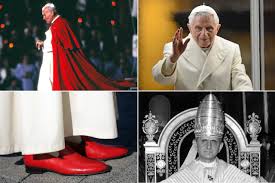
Papal Fashion
With all this new Pope buzz and the chatter about the theological and political implications, someone is finally turning to a more practical and more interesting topic.
A good friend asked me (tongue in cheek) if women become priests, do I think they would make female cardinals wear brown?
That’s a great question. Although this issue will be decided in the Vatican it has far reaching implications that could include trademark infringement accusations right here in Louisville, KY with UPS if the Catholic Church ever tries to use the tag line “Brown Deliver”
That is the only real practical risk I see. I do believe based on what little I know about the topic the Pope and Catholic Church will pull off a “Fashion Win” for the Church. Brown is a staid and dignified color –yet also really makes the Roman Collar pop in a reverent way that says “fashionably infallible”
At least that is my best off-the-cuff answer . That is also tongue-in-cheek. ; )
By Nick Paleologos, on Fri Mar 22, 2013 at 10:00 AM ET
The notion that America is sharply divided between free market capitalists and big government socialists is complete baloney. This country is lousy with consensus around an economic value system, which is deeply embedded in the DNA of most Americans and based upon generations of experience with capitalism in this country.
For the first third of the 20th century, America was the Wild West. Low taxes. No regulation. No unions. Anything goes. We called it the Roaring ’20s. The rich got filthy rich. Everybody else just got filthy. The Roaring ’20s officially ended on October 29, 1929 when the entire American economy crashed, ushering in a decade of unrelenting misery and despair featuring 25 percent unemployment, widespread bank failures, bankruptcies, foreclosures and food lines. We called that the Great Depression. The closer we looked at capitalism, the more we found it wanting. So we did what Americans always do when we see a problem. We fixed it.
In this case, the fixer-in-chief was President Franklin D. Roosevelt. The damage done to the country during the Depression convinced him that unregulated capitalism always favors the rich at the expense of everyone else. So to save capitalism from itself, FDR introduced what turned out to be the crucial missing ingredient: compassion.
Roosevelt understood that compassion did not grow naturally in the harsh climate of an unfettered free market. He knew instinctively that fairness — essential to any functioning democracy — was an alien concept to pure capitalism. So FDR gave us a new, improved version. Call it compassionate capitalism. No senior citizen ends up destitute (Social Security). Banks and Wall Street don’t get to gamble with peoples’ savings (FDIC and SEC). Anybody who serves their country goes to college (GI Bill). Everybody who wants to work gets a job that the country needs to have done (CCC and WPA).
Far from hobbling private sector growth, these programs actually fueled it. Tons of people got very rich. However, the immense wealth created in America during the post-Roosevelt years was much more evenly distributed — with the biggest chunk going to a rapidly expanding middle class. Compassionate capitalism worked for everyone without busting the federal budget.
Read the rest of… Nick Paleologos: The Case for Compassionate Capitalism
By Jonathan Miller, on Fri Mar 22, 2013 at 8:12 AM ET
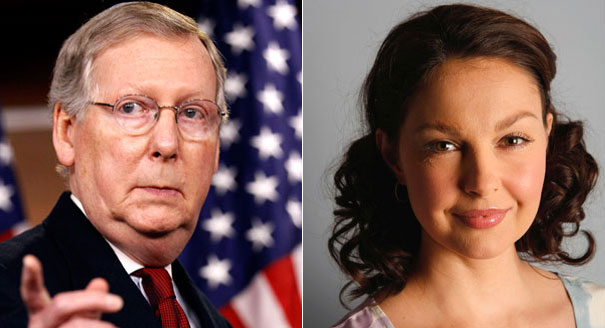
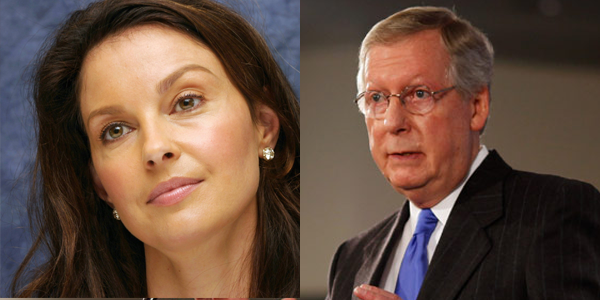
Be sure to subscribe to The Recovering Politician‘s KY Political Brief (click here RIGHT NOW to do so — It’s delivered daily to your inbox FOR FREE!), for all the news on the potential epic 2014 U.S. Senate battle between Ashley Judd and Mitch McConnell.
As Ashley Judd considers making an historic bid for the U.S. Senate against Republican Leader Mitch McConnell, GOP forces — abetted by a handful of Democrats — have been spreading piles of disinformation about the race.
In separate stories, ABC News and CBS News have helped clear through the fog of spin.
ABC reveals this morning that the widely reported tale that former President Bill Clinton was actively opposing an Ashley Judd candidacy is, in fact, a fabricated myth:
ABC News has learned that Clinton encouraged Judd to enter the race and promised he would help her, according to several Kentucky political sources. That conversation happened sometime between the November election and President Barack Obama’s second inauguration…
The Clintons are longtime friends and allies of Grimes’s father, Jerry Lundergan, a former state party chairman, and Grimes herself who became secretary of state in 2011 after beating her primary challenger who was backed by Democratic Gov. Steve Beshear. Allies of hers say she is considering this race, but has not made a decision. Jerry Lundergan was a strong supporter of Bill Clinton, but also of Hillary Clinton’s presidential bid in 2008, and they remain close.
However, the Clintons are also close to Judd, who publicly backed Hillary Clinton over then Senator Obama in 2008 and even campaigned with Bill Clinton on behalf of Hillary in March 2008. Just days before the Texas primary, Clinton and Judd campaigned together standing in the back of a pickup truck at a private airport hangar in Abilene, Texas. She entertained the crowd, while Clinton was hours late due to a lightning storm…
Rep. John Yarmuth (D-KY) is Judd’s most vocal proponent in the state and in an interview said Grimes would also “be a strong opponent against Mitch McConnell,” but “nobody brings to the table the unique assets that Ashley Judd does.”
“There are a lot of Democrats right now who are expressing some concern about her candidacy and what I would say to them is, We’ve tried five conventional campaigns in a row against Mitch McConnell and been unsuccessful,” Yarmuth said, adding that he called Grimes, but she had not called him back yet.
Meanwhile CBS This Morning ran this following clarifying piece on the race:
We all know that RP and MSNBC’s “The Cycle” co-host Krystal Ball loves to talk politics all over MSNBC. She is not afraid to dish out her opinion about what is going on in the political world. But, did you know that her five-year-old daughter enjoys talking politics as well? Like her mom, Krystal’s daughter Ella is not shy to voice her opinion when it comes to President Obama, what is happening in Washington, and even her thoughts on Mitt Romney.
Be sure to subscribe to The Recovering Politician‘s KY Political Brief (click here RIGHT NOW to do so — It’s delivered daily to your inbox FOR FREE!), for all the news on the potential epic 2014 U.S. Senate battle between Ashley Judd and Mitch McConnell.
By John Y. Brown III, on Thu Mar 21, 2013 at 12:00 PM ET
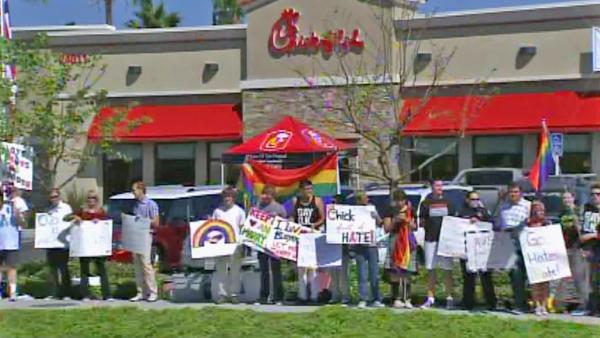
I just went through Chik-fil-A drive through in my hometown in Louisville. Mainly because it’s after 9pm and most their clientele are home for the night —praying with one another, talking about heterosexuality, and getting ready for bed.
At least that’s the media stereotype we have in my mind
I figure that between 9-10pm each night the city’s liberal and hypocritical underbelly slithers through the Chik-fil-A drive-thru wearing sunglasses and masking their real voice as they order. And not making eye contact as they ask for extra ketchup for the Waffle Fries before careening out of the parking lot before one of their liberal brethren recognizes them and turns them into the local Whole Food Market.
But the food is so good at Chik-fil-A, otherwise idealistic Ashley Judd Democrats (it is Kentucky) are, at least during a weak moment (between 9-10pm Mon-Sat, but not Sun) willing to risk everything they stand for to munch on a Spicy Chicken Sandwich or toasted Chicken Salad Sandwich.
Is that really so wrong?
Of course it is!
Rand Paul was willing to talk for 13 consecutive hours last week (4 1/2 hours longer than his typical interview and floor speech) because of what he believed. Period. A conviction politician with a consistent and principled ideological diet. No carry-out order of Dan Dan Noodles from the ultra liberal and multicultural PF Changs would have caused him to waiver.
Shame. Shame. I know your name! John Y Brown III! You Daniel in the Lion’s Den! Or Chik-Fil-A’s double drive-thru line.
But at least I had the decency NOT to park and eat in Chik-fil-A parking lot. I clandestinely drove across the street and parked in the Taco Bell parking lot where I noticed two other cars parked with Chik-Fil-A bags on the dashboard with incognito drivers wolfing down a chicken pot pie.
But then I saw something truly shocking. It was, if true, reminiscent of the moment when Sen Joe McCarthy was castigated by the Army Colonel and General Counsel, “At long last, sir, have you no sense of decency?” Only worse because it was more brazen and nakedly hypocritical.
It was a high profile and celebrated local republican operative, whose name I’ll leave anonymous for now (or someone who looks just like him) wearing dark sunglasses in a corner booth eating a Bacon Club Chalupa inside Taco Bell. As he chewed blissfully he simultaneously belied his party’s rigid policy position on immigration, symbolically anyway. “What a sanctimonious hypocrite!” I thought to myself.
Sure,I was outraged and wanted to lash out at this blatant policy hypocrisy. But I thought to myself, maybe –just maybe—all this hyper partisanship had gone a step too far. Instead I asked myself what would Democratic Patron Saint US Senator Daniel Patrick Moynihan do if he were alive and found himself in this identical situation? Easy. He was discreetly walk inside Taco Bell and quietly offer his political nemesis his now empty Chick-Fil-A bag to disguise the rest of his Taco Bell order.
But Daniel Patrick Moynihan was a better man than I am. I left the scene and am posting the entire episode on the Recovering Politician blog! For sake of our children and our children’s children’s future. Or something like that.
As Grover Norquist taught us, “Bipartisanship is another name for date rape.” Or, I would add, an unreported partisan breach involving a Taco Bell Bacon Club Chalupa or Chik-fil-A Charbroiled Chicken Wrap.


 Blog this!