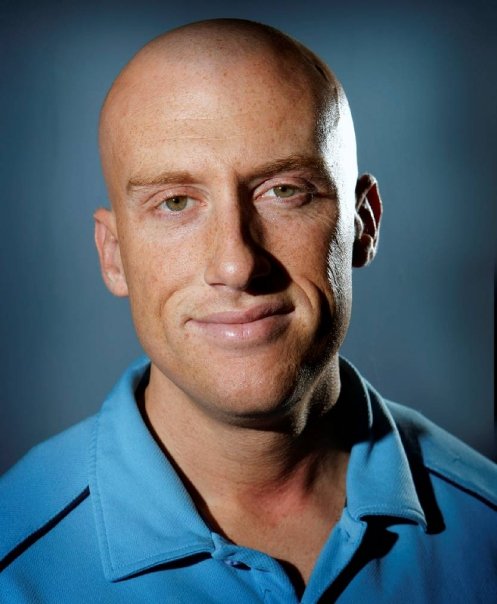
By Saul Kaplan, on Mon Jun 16, 2014 at 8:30 AM ET  I got a heavy dose of design vibe last week in NYC. You know. Hanging around really smart design thinkers and the places they hang out in hopes that some of it will rub off. I designed the boondoggle around an invite by Business Week and Smart Design to sit in on an innovation and design discussion hosted by my friend and BIF-5 co-host, Bruce Nussbaum. Bruce has gotten the design vibe thing longer than the rest of us and has a great new gig at Parson’s. I needed to go over a few BIF-5 things with Bruce anyway so off to the big apple it was. I got a heavy dose of design vibe last week in NYC. You know. Hanging around really smart design thinkers and the places they hang out in hopes that some of it will rub off. I designed the boondoggle around an invite by Business Week and Smart Design to sit in on an innovation and design discussion hosted by my friend and BIF-5 co-host, Bruce Nussbaum. Bruce has gotten the design vibe thing longer than the rest of us and has a great new gig at Parson’s. I needed to go over a few BIF-5 things with Bruce anyway so off to the big apple it was.
Bruce invited me to Parson’s so we could catch up and I could see the vibe up close. The village and Parsons conspire to draw you in. I also spent time with Helen Walters and Reena Jana, who cover the Design and Innovation beat at Business Week. Interesting week for them as they learned McGraw Hill put Business Week up for sale. The event I came down for took place at Smart Design (known for Oxo, and flip design) at their very cool (high on the design vibe meter) space in Manhattan. The event was well done with an active conversation about design’s place in the U.S. economic narrative. My visit was complete when I also got to spend time with my friend Alice Wilder of Blues Clues, and Super Why fame.
I left NYC charged up and more convinced than ever that design has an important role to play in transforming social systems, including health care, education, and energy. I also left with a strong sense that the design community needs to move on from the incessant argument over the importance of design thinking and process. It is time to claim victory. Get over it. The argument is boring. Design is important. We stipulate that design is about more than sexy products. We get that design is about delivering a compelling customer experience. Now, can we get on with putting it to work to solve real world problems?
No more books are needed to convince us that design thinking and process are a priority. They are important tools. If you want to convince us, stop talking about design thinking, and start putting it to work to mobilize real systems change. I want the next book I read about design to be about the “how”. I want case studies of how design enabled system experiments in health care, education, and energy. I want to know what we learn from these experiments and how we can try even better system configurations to deliver value to the patient, student, and citizen.
I am grateful for a strong design vibe because it gives me hope that we can create a better future. I just want the vibe to translate into trying more stuff and putting the tools to work rather than the navel gazing of today’s design thinking debate. Time to move the design conversation to a new, actionable, place.
By Julie Rath, on Fri Jun 13, 2014 at 8:30 AM ET 
‘Tis true, I talk about henleys a lot in general as smart layering pieces, but this number ($310) from PS by Paul Smith is currently at the top of my favorites list. Here, the devil is in the details: the marled wool and red button thread stitching are just the right unexpected touches to make its wearer stand out without being party-pants obnoxious. I got this piece for a client during Mr. Porter‘s Friend’s and Family sale a few weeks back, and in person the red button hole thread is much more visible than in the image above. The cool thing about this detail is that it allows you to wear red elsewhere in your outfit as a way of pulling an entire look together. With that in mind, here are some ideas of how to style it:
Under a sport coat…

Opt for a neutral-colored fabric with a thin red line running through it as part of the pattern like this GANT by Michael Bastian sport coat. (Red elbow patches optional.)
Under a sweater…

Because both red references are on your top half, wearing a red sweater like this one above, from Polo Ralph Lauren, is a bit of a no-brainer. Bonus: if you want to tie in your bottom half, add socks that have some red in them like those from Corgi below. Note that solid red socks would be overkill.

Under a sport shirt…

Another somewhat straightforward choice, throw it on under a sport shirt that has red in its pattern, like this one from Bonobos, as an alternative to a v- or crewneck t-shirt.
With red footwear…

Red deck shoes like these from Polo Ralph Lauren and Shoo respectively are as bold as I’d suggest you go for pulling in red elsewhere in your outfit. Of course, bright red shoes are not for everyone, so as always, make sure to stick with what suits your personality when choosing your look.
With red laces…

Wearing red laces like those in these Diemme boots is a more low key way of bringing your upstairs and downstairs together.
Using the red button thread stitching on this henley as above is just one example of how to subtly tie in any color in one part of your outfit with the same color elsewhere. You can do this with almost any clothing detail. As always, I welcome your questions and comments about how to accomplish this.
By Josh Bowen, on Thu Jun 12, 2014 at 8:30 AM ET
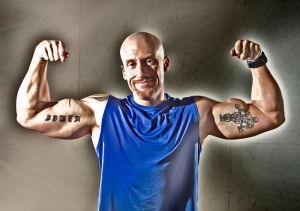 My 11 years in the fitness industry has taught me a lot about life. It has taught me what to do and in some cases what not to do. Life often emulates art and I have always thought of personal training as art, it makes sense that I have learned some important life lessons. In no particular order, these are the 5 things I have learned about life from being a personal trainer: My 11 years in the fitness industry has taught me a lot about life. It has taught me what to do and in some cases what not to do. Life often emulates art and I have always thought of personal training as art, it makes sense that I have learned some important life lessons. In no particular order, these are the 5 things I have learned about life from being a personal trainer:
1. Anything can be achieved with passion.
I’m not the best personal trainer and I am far from perfect. I am however passionate, a word that is thrown around in the fitness industry more than anything. My definition is simply one who eats, sleeps, breathes their work. That I do. Fitness taught me how. Through ups in downs, passion has let me conquer personal issues as well as professional. An unrelenting quest to be the best version of myself was taught to me from my experience in this industry. I attribute everything I have accomplished personally and collectively due to that passion. Without it, I have nothing.
2. If you want something bad enough you will do whatever it takes to achieve it.
My clients and clients of other trainers have taught me this. My client Rolodex is full of people who conquered the odds, all because they wanted it bad enough. In my book 12 Steps to Fitness Freedom I tell a story about a woman from Columbus who lost an extraordinary amount of weight and developed a community of enthusiastic people wanting to do the same. Or the woman who I have trained for many moons, who at first just wanted to be fit but now owns her own personal training business, all because wanted it more than other people. If you want it bad enough, you’ll go get it.
3. No one gets to where they are, alone.
I didn’t get to this point by myself. I had help…a lot of help. That help came in the form of support from others a long this 11 year journey. It also came in the form of detractors and negative people who taught me what I didn’t want be. No matter how successful you are, you got there with help. If I was never given a shot to train at Gold’s Gym in 2004, I would never be here today.
4. Bad times will always pass.
Obstacles are put in front of us not to stay and best us down but to leave after we have conquered it. I’ve seen it a thousand times, some one who goes through turmoil but keeps at it and never quits, always turns out for the better. If I have learned anything from working with trainers and clients is, regardless of the situation, if you keep at it, never waiver and never quit you will come out of the dark and into the light. It’s that simple.
5.Look to add value versus make money.
Money comes and goes like the wind blows. No matter how much you have you cannot take it with you. Having money is not impressive, adding value to other’s is. I have learned this through experience in the fitness industry. I have seen people with lots of money that truly had nothing, nothing because they were not adding value to others. The single most important lesson we can all learn is how to add value to someone else’s life. Whether it is to listen, be a shoulder to cry on or help a friend in need, adding value to someone means so much more than money. “Choose legacy over currency,” is a favorite quote of mine and it means to simple to add so much value to someone that you build a legacy and are never forgotten. A very important lesson.
I could write a list longer than this but for time purposes I will keep it short. Being in fitness has taught me so much that I feel honored to talk about it day. The lessons I have learned are so important not only to my life but the lives that interact with on a daily basis.
By Lauren Mayer, on Wed Jun 11, 2014 at 8:30 AM ET I’ve used my teenage son’s line before here, about how ‘over 100 views is viral for old people.’ (Yes, I am shameless about using my kids’ comments for comedic purposes. And actually, they really like it – I do a whole routine about their reactions to learning the facts of life, which you’d think would be humiliating, but for a generation raised on Family Guy and The Daily Show, any kind of reference is apparently a good thing! But I digress . . . )
I do what I can to increase my views – I am now on Twitter (where I have tens of followers), and I send out email links, contribute content to Facebook groups, etc. I’ve even considered adding footage of our very adorable dog (who looks like the live action model for Tramp, from Lady And The Tramp), but it turns out, all I have to do is mention gun control. Suddenly, I’m a youTube sensation!
Of course, fame has its drawbacks – in my case, it’s dozens of really mean comments, disparaging my intelligence, my politics, my attractiveness and my singing. But it’s hard to take these kinds of insults seriously when they’re often so badly spelled, it makes my teenagers’ texts look positively erudite. And in any case, these anti-fans are still making my video go old-people-viral, and in the words one could imagine being tweeted by Kim Kardashian, “like, the only bad publicity is like not having any, like right?”
By Erica and Matt Chua, on Tue Jun 10, 2014 at 8:30 AM ET Walking past gorillas and robots, followed by a church dating back 200 years, then skyscrapers with men in business suits pouring out and finally sitting down to a steak lunch while watching tango dancers…just another day in Buenos Aires. Navigating from neighborhood to neighborhood the scenes change quickly from graffitied buildings in San Telmo featuring gorillas and robots to the financial district with smartly dressed business men on Florida Avenue.
Buenos Aires has something for everyone and being such a walk-able place there is no better way to explore than on foot. Below is a short summary of my favorite neighborhoods in Argentina’s beautiful capital:

Monserrat
Home to the Casa Rosada where Eva Peron famously addressed the nation, Monserrat forms part of Buenos Aires’ business district. The concentration of significant public buildings and local history make this a requisite stop for any visitor. This small neighborhood can trace it’s roots back to colonial times, it was here in 1580 that Spanish conquistador Juan de Garay first arrived with settlers from Asuncion and Santa Fe.
Must see: Casa Rosada, the elegant pink government building (feature in the above photo)- guided tours are interesting and worth checking out, take a stroll around Plaza de Mayo, which is always busy and offers great people watching. You can see Buenos Aires oldest church in this barrio, Iglesia de San Ignacio de Loyola sanctified in 1734. And don’t miss Manzana de las Luces (Block of Enlightenment), a block of 18th century buildings including Buenos Aires National College
 Puerto Madero Puerto Madero
Puerto Madero is one of the newest barrios in Buenos Aires, located in the old port area, the brick warehouses have been transformed into trendy restaurants and offer excellent dining. Porteños (residents of Buenos Aires) spend weekend afternoons strolling along the docks, riding bikes on the wide pathways, and lingering over coffee and pastries at riverfront cafes offering great people watching.
Must see: Enjoy lunch at on of the many luxurious riverfront cafes, the all-you-can-eat lunch buffets are a great deal!
Read the rest of…
Erica and Matt Chua: Buenos Aires Walking Tour
By Saul Kaplan, on Mon Jun 9, 2014 at 8:30 AM ET I love conversations about ideas worth scaling. Many of the comments to my BW column on biotech disruption are from industry stalwarts fighting to defend the industry. Thinking about how biotechnology can help enable a transformed health care system seems worth talking about.
I am not criticizing either the pharmaceutical or biotech industry or any of its companies and executives that work hard every day trying to bring forward life extending and life saving drugs. I have the utmost respect for the industry having spent nearly my entire career in and around it. I am suggesting that the current blockbuster industry model may have served its purpose and can be changed by the disruptive potential of biotechnology. It is this disruptive potential that will enable us to get under the buzzwords of personalized medicine and begin to understand how a new and better health care system can work.
It is predictable that existing industry players will fight to strengthen their relative position in the industry and to sustain the current industry model. I don’t criticize them for that. I expect it. I can hear Clay Christensen saying that companies and industries don’t disrupt themselves. He is so right.
Our current health care system is unsustainable and until we experiment and scale new system approaches that take advantage of technology to put the patient and citizen at the center of a well care system our current system will expand out of control.
I have lived and worked in every nook and cranny of the pharmaceutical and biotech industry over a 30 year career and have helped design and build capabilities at the function, company, and industry scale.
One commenter mentions Leigh Thompson from Lilly. Leigh was a friend of mine from old Lilly days and one of the smartest people I have ever known. We worked together during the latter stages of clinical and regulatory development as well as on the U.S. launch planning for Prozac. Leigh was remarkable and is sorely missed. He was indeed a big proponent of internal systems to fail fast for product and clinical development programs. I know Leigh would be an active participant in today’s conversation about the need to experiment with new business models and industry systems. He saw the promise of biotechnology and knew the industry would have to change to take advantage of it. He was a world-class innovator.
I had a front-row seat during the early days of the biotech industry. I remember like it was yesterday touring the very first industry scale production facility for a recombinant DNA derived product, human insulin (Humulin). As a road warrior consultant over too many years I worked with many project teams building new capabilities for both pharma and emerging biotech companies. Some even harbored early hopes of leveraging biotechnology to create new platforms for discovery and development for personalized medicine. I was in many great discussions about the difference between a platform and a product business model. In every case the siren call of the blockbuster industry model reinforced by a VC exit strategy dependent on either an IPO or Big Pharma acquisition won out. It was predictable and companies did the right thing to maximize shareholder value.
There is a lot more technology development work needed to enable personalized medicine but biotechnology has advanced enough for us to demonstrate how a system can work in several specific diseases and care path areas. All key levers and stakeholder roles must be on the table to fully explore available system options. At the non-profit Business Innovation Factory we are creating actionable lab platforms for exactly this kind of experimentation.
There has been a lot of talk about business models built around outcomes that deliver better care for less money. The hypothesis has always been that drugs are cheaper than other types of health care and should be used, more not less, to save the health care system money. The theory goes that if you squeeze the toothpaste tube in one place it only pops up in another. Only looking at the entire tube not just squeezing all over the place will result in an opportunity to design and test possible new systems.
The pharma industry has never done particularly well at selling the “toothpaste tube” story and seems content working the current system for maximum return. The current blockbuster model is bringing continued consolidation and is not sustainable.
New business model discussions with industry friends that are open to the discussion and not defensive about the history and current position of the industry are always interesting. Discussions with the “lean against” crowd that don’t think the system has to change don’t go very far or last long. Most of this crowd just point at another silo in the rugby scrum as the source of the inertia. It is the fault of doctors. No, it’s the insurance companies, the hospitals, the government, the patients etc. Everyone points at everyone else as the source of the problem and nothing changes.
In the current health care system drugs, whether they are from chemical or biological processes, are treated as a cost center or one more silo to manage. The industry fights every day to make sure the silo is managed in a way that benefits the industry. Rules form the architecture that the industry operate and compete under including patent law, FDA regulations, and federal/state legislation. I don’t blame the industry for fighting for rules that are in their best interest. I am suggesting that we should at least consider that with today’s technology we can do better and should be testing new system designs to see what works and can scale.
The silver tsunami is coming as the first baby boomer turns 65 in 2011. We had better get on with exploring new system approaches before the current system crashes. I am proud of the industry I grew up in and want it to be an innovator and leader in shaping a new and better health care system. The patient is waiting.
By Julie Rath, on Fri Jun 6, 2014 at 8:30 AM ET  Do you ever wish you looked a little taller? Many of my clients, even if they are above average height, list this as an image goal. At 5′ 1″ myself, I appreciate the sentiment. Luckily for us vertically-challenged folks, we can use clothing as smoke and mirrors to achieve (or at least get closer to) the look we want. Below are 11 tips on how to dress so you look taller: Do you ever wish you looked a little taller? Many of my clients, even if they are above average height, list this as an image goal. At 5′ 1″ myself, I appreciate the sentiment. Luckily for us vertically-challenged folks, we can use clothing as smoke and mirrors to achieve (or at least get closer to) the look we want. Below are 11 tips on how to dress so you look taller:
Patterns and Color
1) Wear the same color (or at least similar tones of color) on top as you do on bottom. That way, you avoid the horizontal line of a color break across your middle, which would cut you in half otherwise.
2) Similarly, you should avoid wearing a belt that contrasts strongly with the rest of your outfit, as it will abbreviate you.
3) Wear socks in the same color as your pants. It makes your legs look longer.
4) Everyone knows to wear vertical stripes, but did you also know that diagonal lines create illusion of length? In addition to vertically striped pants, suits, jackets, and socks, try a repp (diagonal stripe) tie.
Lines of Clothes
5) Dressing in layers allows you to add lots of elongating verticals. Think a hoodie or sweater with a zip or a cardigan left open (try under a sport jacket or a casual jacket).
6) Wear a pocket square. It draws the eye up to your chest favorably.
Sportcoats or Suit Jacket Details
7) Opt for peak lapels, as the detail and upward-pointing angles guide the viewer’s eye in an upward direction, making you look taller.
8) As in #1, the diagonal lines of a suit jacket or sportcoat’s lapels will extend your height. Choose one with a “low button stance,” which means it buttons lower on your body, extending those diagonal lines.
9) The gorge on your jacket is where the collar meets the lapel. If you’re buying custom, tell them you want a “high gorge,” which will have the same upward-orienting effect as in #7.
10) Buy your jacket on the short side (or have it tailored that way) so that it just covers the curve of your seat. This makes your legs look longer.
11) When you have your jacket sleeves tailored, ask for at least 1/4″ of shirt cuff to show. If not enough or no cuff shows, it can make your arms (and the rest of you by proxy) look short.
Is there anything about your appearance you’d like to balance or camouflauge? Let me know in the comments below, and I’ll tackle it in an upcoming post.
-Content provided by Rath & Co. Men’s Style Consulting. Read more: http://rathandco.com/2014/05/look-taller-with-these-11-tips/#ixzz32ecGeINS
By Josh Bowen, on Thu Jun 5, 2014 at 8:30 AM ET  It is inevitable, we will all get in a rut. No matter good you are at something or how passionate you are, someday you will find yourself in a hole. A hole that, if not careful, could snowball, and create havoc on your goals, fitness or otherwise. As I discuss in my book 12 Steps to Fitness Freedom you must “ride the waves” in order to be successful in any aspect of life. Challenges will come and how you respond will dictate the end result. It is inevitable, we will all get in a rut. No matter good you are at something or how passionate you are, someday you will find yourself in a hole. A hole that, if not careful, could snowball, and create havoc on your goals, fitness or otherwise. As I discuss in my book 12 Steps to Fitness Freedom you must “ride the waves” in order to be successful in any aspect of life. Challenges will come and how you respond will dictate the end result.
I am reminded of a perfect example for present day, my beloved University of Kentucky Wildcats. Currently we are preparing for the Final Four in Dallas, something that was expected before the season started and anything less would of been considered a failure. However, what happened after the season started and how the regular season ended you would called someone crazy if they thought this would come to fruition.
The Wildcats hit a rut. They were immature, made poor decisions and didn’t play well (that is putting it lightly). They had succumbed to the pressure. Their talent was high but there performance was lackluster. They were in a funk.
After an exhilarating win against LSU, UK dropped their next two games against non-tournament teams including a jaw-dropping loss to SEC bottom feeders South Carolina. To the fans, the season was over. Many gave up on the young Cats. Their on and off funk had taken over their season and it showed.
Miraculously, the team entered SEC tournament play on a mission, prove everyone wrong. After a few “tweaks” the Cats blitzed their first two opponents and nearly knocked off the best team in the country, Florida. A month later and four big time victories later the Wildcats have gone wild and “shot” themselves out of their funk and are two games away from a National Championship, the school’s ninth. How did it happen? How did they get out of their funk?
If you are in a funk, in any part of life here are three steps to “shooting” your way out of it:
1. Simplify don’t complicate
Life is easier when you isolate a situation and simplify it versus throwing your hands up and over complicating it by letting your frustrations impact your decisions. Every situations has it’s own set of legs, do not let one frustration creep into other aspects of your life. Had the Cats let their turnover issues creep into their passing, the season would of been a loss. Thankful, with help, they isolated their problems and improved collectively.
2. Keep going
The old saying goes, “if you are going through hell, keep going” applies here. It is easy to quit, it’s easy to let your funk get the best of you but you must keep going. Miss a day at the gym? Go back tomorrow. Slip up on your nutrition today? Eat better tomorrow. Life not go the way you planned? Keep pushing and never look back.
3. Be consistent
If the shots are not falling, keep shooting until they start dropping. Consistency during a rut is key because your first reaction is to change something and sometimes drastically. Changes maybe necessary but you must evaluate each individually and game plan for what needs to change. UK is who they are, they haven’t changed. They have just changed their perception and the way they approach the game. It has worked.
Nothing is perfect and nothing will go as planned. How we react to failure and frustration dictates our success pattern moving forward. Like the Wildcats have done, shoot your way out of a funk.
By Lauren Mayer, on Wed Jun 4, 2014 at 8:30 AM ET It seems that nearly everyone has a different opinion about what is and is not funny. One common definition is that “comedy equals tragedy plus time.” Another explains that “when I fall into a sewer, it’s bad, but when someone else falls in, it’s funny.” And you can find thousands of websites purpoting to explain why The Three Stooges are hilarious to men but not to women.
Humor is frequently used as a coping mechanism, to release anxiety or to vent frustration (this explains the huge number of Jewish Mother jokes). And some of the most insightful comedians have used it to vent – think of George Carlin’s rant about the 7 words he couldn’t say on television, or Rita Rudner’s jokes about relationships (e.g., when she wanted to dump a guy, she just told him she wanted to have his baby, and “usually he would leave skidmarks”). But it can be touchy – what about when you’re dealing with highly sensitive or politicized issues? (Although I am still impressed by the first Saturday Night Live show after 9-11, when we all wondered when it would be okay to laugh again. After a moving tribute to New York’s first responders, producer Lorne Michaels asked Mayor Guiliani, “Is it okay to be funny?” and Guiliani responded, “Why start now?”, totally diffusing the tension and making laughter okay. I hope I can write a line that perfect someday!)
Writing political humor frequently means tackling subjects that provoke strong feelings. Sure, every now and then completely neutral stories pop up like the crack-smoking Mayor of Toronto, or the scndal involving oh-so-aptly named Anthony Weiner. But it can be difficult to find humor in an issue that makes me angry – which is why it’s also so important. Laughing at a challenge makes it easier to deal with – even if that challenge involves not screaming at C-Span. Which explains the enormous popularity of programs like The Daily Show (not to mention the fact that it’s the primary news source for most millenials . . . ).
Irvine, my home town, is in Orange County, which I like to think of as ‘the red state’ in the middle of California (in the ’60s and ’70s, there were even fewer Democrats than Jews . . . cue rim shot). But many of my uber-conservative high school classmates have seen my videos and will send me messages like “that was really funny, even though you’re totally wrong” or “cute song coming from a commie pinko.” So when I write my songs, I aim for a tone that even those who disagree with me could enjoy.
Normally. (As my father used to say, “Moderation in all things – including moderation.) Sometimes it doesn’t work – and this week may be one of those times.
By Erica and Matt Chua, on Tue Jun 3, 2014 at 8:30 AM ET Get up close and personal to whales, icebergs and flying penguins…what’s not to love about an Antarctic zodiac ride? A certain highlight of any Antarctica expedition are the zodiac rides cruising between massive icebergs, having whales swim up to check you out and seeing the unexpected beauties of Antarctica. While the view from the ship is great and the landings incredible, the zodiac rides provide an opportunity to get close to key parts of the Antarctic ecosystem.
.

.
How often do you get to be in a boat that is dwarfed by an animal? Not just an animal, but a curious animal that wants to see what you’re all about? The sealife’s interest in the zodiacs is unforgettable, especially if you get to have a leopard seal try to eat your zodiak (it can’t, but that doesn’t stop them from taking a bite).
.
 . .
Icebergs are beautiful from a distance, but stunning up close. Often I found myself just staring, mouth agape, at the array of colors, textures and angles of the icebergs. What my mind tells me should look like giant ice cubes are really so much more, acting as kaleidoscopes, coloring everything nearby.
Read the rest of…
Erica and Matt Chua: Rafting Through Amazing Antarctica
|
|