By John Y. Brown III, on Fri Jan 4, 2013 at 12:00 PM ET One of the greatest gifts a parent can give a child is not being a role model for achievement (although that is important), or being present at many of their activities (although that is very important, too), or being actively engaged in molding their child to be a good citizen (although that is needed), or being a good financial provider (although that is expected).
Rather one of the greatest gifts a parent can give to their children, in my opinion, is regular transparent glimpses into that parent’s humanness. Not showing flaws or foibles for the sake of exposure—like showing off a war wound. But an honest reflection of what that parent is thinking, feeling, and experiencing (to the extent the parent really knows him or herself). In other words, not playing the role of “Father Knows Best” or “How I Became the Queen Bee” But rather the daily role of “Father (or Mother) Tries Hard Most Days and Gets it Wrong about as Often as he (or she) gets it Right.”
The other qualities listed in the first paragraph teach children how to “appear” and be perceived by others as successful. But a parent who is consistently transparent can help set an internal barometer for children that will serve them well—helping them to know themselves and trust their instincts. Not just seem to be holding it together.
 Of course, it’s important for children to grow up to exemplify model behavior, to be consistent and active and responsible. But I believe it is even more important for them to have the confidence be be real. To be authentic…..and not be confused about how to do that. And if they haven’t learned how by watching their parents it’s like expecting a child to know the native language even though it was never spoken in the home. Of course, it’s important for children to grow up to exemplify model behavior, to be consistent and active and responsible. But I believe it is even more important for them to have the confidence be be real. To be authentic…..and not be confused about how to do that. And if they haven’t learned how by watching their parents it’s like expecting a child to know the native language even though it was never spoken in the home.
No one strives to be merely authentic as an end in itself. Or the related traits of transparent and self-aware. We strive instead to be successful, great, courageous, and a dozen other various forms of “achievement.” But authenticity is often the precondition for these so called achievements. And even when it’s not, it is the greatest consolation. A person who has a long resume but isn’t comfortable in his or her own skin, isn’t self-aware or genuine, is a shell of the person who has these attributes but, for the moment, possesses a slimmer resume.
The former is more like an automaton–a robot. A well trained animal who performs on cue and is applauded.
But the latter is someone who is worth getting to know and who has something meaningful to say. And is leading a life worth living. Not merely seeking to perform a life worth applauding.
By Jonathan Miller, on Fri Jan 4, 2013 at 10:00 AM ET We at The Recovering Politician are proud to announce that one of our own, contributing RP and former Congressman Tom Allen, has published an outstanding new book, Dangerous Convictions: What’s Really Wrong with the U.S. Congress. Here’s a summary:
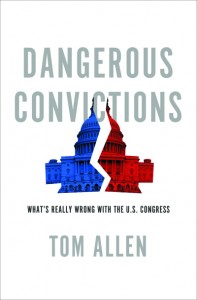 Click here to review and/or purchase The rhetoric of the 2012 presidential campaign exposed the deeply rooted sources of political polarization in American. One side celebrated individualism and divided the public into “makers and takers;” the other preached “better together” as the path forward. Both focused their efforts on the “base” not the middle.
In Dangerous Convictions, former Democratic Congressman Tom Allen argues that what’s really wrong with Congress is the widening, hardening conflict in worldviews that leaves the two parties unable to understand how the other thinks about what people should do on their own and what we should do together. Members of Congress don’t just disagree, they think the other side makes no sense. Why are conservatives preoccupied with cutting taxes, uninterested in expanding health care coverage and in denial about climate change? What will it take for Congress to recover a capacity for pragmatic compromise on these issues?
Allen writes that we should treat self-reliance (the quintessential American virtue) and community (our characteristic instinct to cooperate) as essential balancing components of American culture and politics, instead of setting them at war with each other. Combining his personal insights from 12 years In Congress with recent studies of how human beings form their political and religious views, Allen explains why we must escape the grip of our competing worldviews to enable Congress to work productively on our 21st century challenges.
Already the book has garnered some impressive reviews:
“With historically low ratings, Congress is regarded as ‘dysfunctional’ by Americans of all political persuasions. Why that is so, and what can be done to reduce excessive partisanship, is the subject of Tom Allen’s well-informed and provocative book.” -Former U.S. Senator George J. Mitchell
“This is an extraordinarily valuable examination of the most troubling concern of our time: the inability of our leaders in Washington to find consensus and forge compromise in the public interest. Readers will discover here a deeply penetrating analysis by an author who had unique opportunities to observe from the inside the causes and consequences of our current polarization. Anyone who wants to understand why contemporary politics so often results in failure cannot afford to miss this essential book.” -G. Calvin Mackenzie, Goldfarb Family Distinguished Professor of Government, Colby College
“Allen, a former Democratic congressman from Maine and current president and CEO of the American Association of Publishers, offers a panoramic critique of Congress based on his 12 years in office (1997-2009), covering policy areas from the budget to health care….Allen’s pragmatism and reason help frame major issues for Americans hungering for some legislative wisdom after the election.” –Publishers Weekly
Click here to review and/or purchase.
By John Y. Brown III, on Thu Jan 3, 2013 at 12:00 PM ET I just found out my identity has been stolen and there are over a dozen fraudulent charges on my credit card that are now being investigated.
Thankfully, I’m not as frantic as I thought I would be if my identity got stolen. I am covered by insurance and should be reimbursed for the fraudulent charges within the next 30 days.
But what really got to me is the notion that my identity was stolen nearly 3 weeks ago. That’s 21 days. And no one. Not friends, not family, and not a single colleague ever noticed.
I’ll eventually recover the money. But my confidence has been shattered beyond repair.
And here’s the kicker. I fully recovered my identify about 15 minutes ago with a new card being issued. And I deliberated but casually struck up a conversation with my wife to see if she even noticed my identity was back. Well, guess what? She never said a word. And sthe still hasn’t commented on my haircut which I got nearly a week ago.
Whoever stole my credit card identity thought they were stealing money from me. Maybe they did. But what they really stole was something much deeper than that. Or apparently, based on the lack of notice by others, they stole something much shallower than money.
My identity.
As soon as I get my new card, I’m not only checking charges daily. I’m also considering developing a loud, over-the-top and obnoxious new identity.
One that no one will forget.
Or want to steal.
By Artur Davis, on Thu Jan 3, 2013 at 10:00 AM ET Tim Scott’s appointment to represent South Carolina in the US Senate has been met with a notable skepticism from most African American commentators, with Adolph Reed’s essay in the New York Times and Jamelle Bouie’s column in the Washington Post providing articulate examples of a common theme: that Scott’s status as a strict fiscal and social conservative means that he will be an impediment to black economic interests as well as the socially liberal agenda that most African American intellectuals have embraced; and that the selection of Scott is an empty and false token meant to prove a Republican inclusiveness that does not exist.
To be sure, Scott’s ascension is the polar opposite of the kind of racial breakthrough that the same critics have fantasized about. When Scott stands for election in 2014, he will depend on the conventional alliance of white suburban and rural conservatives that sustains the GOP’s hold on the Deep South, as opposed to the coalition of blacks and metropolitan whites that liberals assume as a prescription for the election of a black candidate to statewide office. In blunter terms, Scott’s win would mean that he had reassured voters who hold the prevailing right-leaning views in his state that he is one of them, and of a piece with their vision of limited government and traditional cultural values, as opposed to the ideal progressive pathway of convincing those voters to rethink their mindset.
 But regardless of the reservations on the left, Scott’s victory scenario is likely the only kind of African American electoral win in the Deep South that is conceivable at this point. In the parts of the region (Alabama, Louisiana, Mississippi) where the Democratic share of white voters has slipped to the upper teens, and even in the slightly less polarized areas of Georgia, South Carolina, and Tennessee, not a single one of the seven black Democrats who hold congressional seats are regarded as plausible statewide figures. Only Atlanta’s Mayor Kasim Reed, a pro-business moderate, is regularly cited as a prospective black contender for a governorship or a Senate seat, and it is worth noting that the last two black Democrats nominated for Senate seats in Georgia have hovered around the 40 percent threshold. But regardless of the reservations on the left, Scott’s victory scenario is likely the only kind of African American electoral win in the Deep South that is conceivable at this point. In the parts of the region (Alabama, Louisiana, Mississippi) where the Democratic share of white voters has slipped to the upper teens, and even in the slightly less polarized areas of Georgia, South Carolina, and Tennessee, not a single one of the seven black Democrats who hold congressional seats are regarded as plausible statewide figures. Only Atlanta’s Mayor Kasim Reed, a pro-business moderate, is regularly cited as a prospective black contender for a governorship or a Senate seat, and it is worth noting that the last two black Democrats nominated for Senate seats in Georgia have hovered around the 40 percent threshold.
Read the rest of…
Artur Davis: Tim Scott’s Rise
By John Y. Brown III, on Wed Jan 2, 2013 at 12:00 PM ET I am coming to the conclusion that all human relationships are a variation of parasite-host.
That’s not as bad as it sounds. And often can work. For a while.
Some hosts don’t know they are the host and once they find out are appalled and demand change.
By contrast, a parasite always knows (or suspects) he (or she) is a parasite. And if they learn they are acting like a host, they are appalled and demand change immediately back to their original role exclusively as parasite only.
The stages of most human relationships seem to follow this course:
Stage 1: Host —Host
Stage 2: Parasite–Host
Stage 3: Host–Parasite
Stage 4: Parasite-Parasite.
It’s usually during stages two and three that problems start to occur. But not until stage four before the parties realize these problems. And by the time both parties are behaving like a parasite, it is too late. Hosts can become parasites. But parasites almost never become hosts.
There are instances of this happening with medication, group therapy and behavioral modification. But takes a long time and changes are unstable. It is usually more efficient for each party (each parasite) to instead find a new host to befriend than try to change or get the partner to change.
Or simply try to eat one another.
By RP Staff, on Wed Jan 2, 2013 at 10:00 AM ET From the St. Louis Beacon:
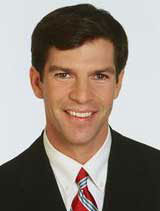 More than three years after a federal campaign-finance probe destroyed then-state Sen. Jeff Smith’s political career, he has worked to create a new life for himself that still includes politics. More than three years after a federal campaign-finance probe destroyed then-state Sen. Jeff Smith’s political career, he has worked to create a new life for himself that still includes politics.
And it appears that he may have succeeded.
In fact, Smith’s role in Missouri governmental affairs appears to have grown, even though he continues to reside in suburban New York City.
Smith confirms that, as of a few months ago, he became executive director of the Missouri Workforce Housing Association, which is made up of 135 groups – up from 35 members just 18 months ago. The association’s chief mission is advocating for affordable housing.
Smith said the member groups include “community organizations, public agencies, contractors, private and nonprofit developers, construction material suppliers, and other professionals.”
“I’d consulted for them for over a year and we agreed that, given the organization’s growth and increased capacity, it made sense to formalize the arrangement,” Smith said in an interview.
“My role has been to a) grow the membership; b) work with our diverse membership to shape our policy objectives; c) manage our grassroots advocacy efforts; and d) oversee our day-to-day efforts within the Capitol, which are handled by Jorgen Schlemeier of Gamble & Schlemeier.”
Although he travels to Missouri about once a month, Smith expects to remain in New York for the foreseeable future. Now 39, he is married and has a 15-month-old son, along with two dogs.
“Life is great,” Smith said. “We just bought a home in the ‘burbs — sort of. We’re in the Montclair, N.J., area, which is like University City….Lots of restaurants, culture, diversity, vibrancy. Home to a lot of academics, writers, and other creative types, most of whom commute to the city.”
Smith is among them. He has a full-time position as a professor in the urban policy graduate program at the New School. “The students are bright and passionately committed to making a difference in the world; I love teaching them,” he said. “And my colleagues are both impressively credentialed as scholars and keenly interested in real-world issues — a relatively rare combination in academia. It’s a special place.”
Click here for the full piece.
By John Y. Brown III, on Tue Jan 1, 2013 at 12:00 PM ET
My New Year’s Resolution for 2013?
To overcome my Triskaidekaphobia (fear of the number 13).
I think it’s important that New Year’s resolutions be practical, sensible and attainable.
This one just seems timed so perfectly on every level.
And if I wait until next year to tackle it, I would be almost cheating myself from an opportunity to daily get over this phobia.
You know what would be an absolute disaster though?
If I overcame my phobia of 13 in the year 2013 —only to substitute a new phobia for it.
The number 14.
By Artur Davis, on Tue Jan 1, 2013 at 10:00 AM ET  Why, despite its periodic low points, does conservatism always rebound? The reason is that much more than their liberal rivals, conservatives understand the weaknesses of our modern bureaucratic, too balkanized society. The strings of bureaucracy do tie the hands of genuine innovators in the public space, and the costs include a substandard education system and income support structures that actually perpetuate poverty. The growth of government has taken on a relentless pace that has weakened constitutional values from the separation of powers to the Commerce Clause. Entrepreneurship is vulnerable to regulatory overreach. And the subdivision of Americans into factions and grievances based on identity has diminished the concept of a national interest. Why, despite its periodic low points, does conservatism always rebound? The reason is that much more than their liberal rivals, conservatives understand the weaknesses of our modern bureaucratic, too balkanized society. The strings of bureaucracy do tie the hands of genuine innovators in the public space, and the costs include a substandard education system and income support structures that actually perpetuate poverty. The growth of government has taken on a relentless pace that has weakened constitutional values from the separation of powers to the Commerce Clause. Entrepreneurship is vulnerable to regulatory overreach. And the subdivision of Americans into factions and grievances based on identity has diminished the concept of a national interest.
But while conservatism has endured, it’s worth pointing out that in my lifetime, voters have tended to turn right primarily as a correction to liberal failure or disarray—the freefall of the sixties, the ineptness of Jimmy Carter, the excesses of Democratic Congresses in 1994 and 2010.
The challenge the political right faces today, and that it failed in 2012, is the one of earning American confidence during a crossroads period, when the country is middling along and neither left nor right seem to bear exclusive responsibility for the train wrecks around us. Of late, conservatism has failed to offer its own account of how the middle class became poorer and less upwardly mobile, much less how to turn their fortunes around. It has seemed incapable of defending its cultural values without resorting to derision or wishful thinking. It has seemed tongue-tied about the immorality of financial markets that squander investors’ capital with not an inch of respect for the restraint that orders the lives of smaller, less entitled businesses, much less the standards around kitchen tables.
Read the rest of…
Artur Davis: A New Year’s Resolution for Conservatives
By John Y. Brown III, on Mon Dec 31, 2012 at 12:00 PM ET Disclosure and children.
How much is too much?
How little is not enough?
As with most things, it’s a delicate balance and specific to the situation. One never should like to ones children. But one should probably never disclose gratuitous details that weren’t specifically requested.
For example, a few weeks ago my son and I were on the topic, somehow, of Christmas song and which ones were probably best known.
I told him that Bing Crosby’s White Christmas was recognized as the greatest Christmas son ever –and had sold more records than any other Christmas song by far.
That was an “appropriate, informative, and measured response” to share with my 18 year old.
What I didn’t share with him is that my favorite Christmas song of all time is Christmas in Hollis by Run DMC.
I just can’t resist the lyrics,
“It’s Christmas time and we got the spirit
Jack Frost chillin, the orchas out?
And that’s what Christmas is all about
The time is now, the place is here
And the whole wide world is filled with cheer”
And
“My name’s D.M.C. with the mic in my hand
And I’m chilling and coolin just like a snowman
So open your eyes, lend us an ear
We want to say: “Merry Christmas and Happy New Year!”
But to have shared that, in my view, would have been a “parental over-share.”
Even thought its true.
By John Y. Brown III, on Fri Dec 28, 2012 at 12:00 PM ET iSoap
We so live in an iWorld. iPads with iTunes and iPhones with iNews (the news as I want to read it).
The 70s were called by se the Me Decade. But the 2010 will likely be known as the iDecade.
Why do I say this?
I just left Walgreens because I was out of “Body Wash.”
I know. Look….I had used soap for 48 years and it worked fine . But soap wasn’t personal enough for me in our new iWorld. So when I was offered a chance to switch to something hipper and cooler sounding , like “Body Wash, ” I went for it. In retrospect, I was simply at a weak and susceptible point in my bodily hygiene regimen. But mostly looking for something more tailored to me and my generation than an old fashioned bar of soap could provide.
But I find myself standing in Walgreens tonight and taking over 5 minutes to pick out the “right” body wash for me–because now there are too many choices. There is Relax, Energy, High Energy, Sensitive, Vibrant, Extreme Comfort, Secret Wonderland, and many, many others.
And I think I picked the wrong one now to fit my mood tomorrow morning. I thought I would feel “vibrant” but now worry I may feel like “secret wonderland” –and I don’t have the right body wash for that mood.
Which made me wonder if maybe I never should have given up that simple yellow bar of Dial soap I used for 48 years.
Life was so much simpler prior to the iMovement.
|
|


